Sponsored

Death Wobble

Punkn_Gladiator

Well-Known Member
Joined
Dec 18, 2020
Threads
12
Messages
113
Reaction score
226
Location
New Braunfels, TX
Vehicle(s)
2020 Jeep Gladiator
Just experienced the "wobble" kinda freaked me out I was going about 50mph.. Did some quick reading on here and it appears this could be caused by several things..

My dual steering stabilizer could be bad, Trac bar loose, Ball joint, Wheel bearing, etc..

My steering seemed like it had more slack than usual a couple weeks ago so I had an alignment done and all seemed better until this morning.. Obviously I need to make sure everything is good and tight on the items mentioned above.. Any other advice?
Sponsored


 

Jay Gatsby

Well-Known Member
Joined
Jun 26, 2019
Threads
12
Messages
444
Reaction score
524
Location
SoCal
Vehicle(s)
2020 Firecracker Red JT
Occupation
Retired
Are you stock? Any lift, tires?
 

cmb396

Well-Known Member
Joined
May 30, 2021
Threads
26
Messages
360
Reaction score
471
Location
WV
Vehicle(s)
2018 JLUR
Make sure everything is tight on the front end bolt/nut wise. Check tire pressure. My front end was getting "loose", and got DW the other day for the first time too, noticed my psi had dropped down with the colder weather more than i realized. Aired up to 38psi from 34psi on my 39's and made all the difference.
 
OP
OP
Punkn_Gladiator

Punkn_Gladiator

Well-Known Member
Joined
Dec 18, 2020
Threads
12
Messages
113
Reaction score
226
Location
New Braunfels, TX
Vehicle(s)
2020 Jeep Gladiator
Make sure everything is tight on the front end bolt/nut wise. Check tire pressure. My front end was getting "loose", and got DW the other day for the first time too, noticed my psi had dropped down with the colder weather more than i realized. Aired up to 38psi from 34psi on my 39's and made all the difference.
Going to verify everything in the front end is torqued but I will also check tire pressure as well! Thanks
 

Sponsored

OP
OP
Punkn_Gladiator

Punkn_Gladiator

Well-Known Member
Joined
Dec 18, 2020
Threads
12
Messages
113
Reaction score
226
Location
New Braunfels, TX
Vehicle(s)
2020 Jeep Gladiator
Make sure everything is tight on the front end bolt/nut wise. Check tire pressure. My front end was getting "loose", and got DW the other day for the first time too, noticed my psi had dropped down with the colder weather more than i realized. Aired up to 38psi from 34psi on my 39's and made all the difference.
It is 19 degrees this morning so can't rule out tire pressure even though that seems odd too me that it would cause that.. First time experiencing this issue so I am going to check everything..
 

JustinLentz

Well-Known Member
First Name
Justin
Joined
Sep 9, 2021
Threads
3
Messages
140
Reaction score
275
Location
Raleigh, NC
Vehicle(s)
23' Mojave RIP: 20JT 09jk, 03jgc, 97tj, 95yj, 73cj
Occupation
Operations Coordinator
Something could have come loose after the alignment since that sounds like the only change before you experienced this to now. Make sure they tightened all of their work. If something feels off to you, take it back to them and have them check. If they are a good shop, they would want to make sure their work is correct. Sometimes people make mistakes.


Going to verify everything in the front end is torqued but I will also check tire pressure as well! Thanks
 

P.Lo

Well-Known Member
First Name
Philippe
Joined
Feb 1, 2020
Threads
13
Messages
220
Reaction score
309
Location
LKN
Vehicle(s)
2020 Gladiator Overland
Tell your alignment shop to check the Track bar ends........ usually the first culprit and fortunately a simple fix.
 

Sponsored

bgenlvtex

Well-Known Member
First Name
Bruce
Joined
Jun 8, 2019
Threads
11
Messages
1,313
Reaction score
1,984
Location
Texas/Alaska
Vehicle(s)
2020 JTR
Make sure everything is torqued

"Tight" does not equal torqued unless luck falls into the equation.

Torque has a specific value or in some cases range. Too much, too little can be a problem in either case. Every fastener in that suspension has a torque value (or the vehicle as designed does, and I would expect a quality lift to have one as well).
 
OP
OP
Punkn_Gladiator

Punkn_Gladiator

Well-Known Member
Joined
Dec 18, 2020
Threads
12
Messages
113
Reaction score
226
Location
New Braunfels, TX
Vehicle(s)
2020 Jeep Gladiator
Make sure everything is tight on the front end bolt/nut wise. Check tire pressure. My front end was getting "loose", and got DW the other day for the first time too, noticed my psi had dropped down with the colder weather more than i realized. Aired up to 38psi from 34psi on my 39's and made all the difference.
Just checked air pressure and they are 26-27 psi.. Airing them up now and see what happens..
 

DirtGadgets

Well-Known Member
First Name
Heath
Joined
Sep 9, 2020
Threads
2
Messages
54
Reaction score
87
Location
Papillion, NE
Vehicle(s)
2020 Jeep Gladiator Mojave
Occupation
Owner/Designer/Fabricator
Vehicle Showcase
1
Death wobble is definitely unnerving to experience. Shimmy in the steering column is usually caused by incorrect suspension geometry (including caster angle), something loose in the 4-Link suspension components, or deflection in the steering components. My journey to correct this took months of learning and trial-and-error. Here's a quick checklist:

Shimmy/Death Wobble Checklist

  1. Check Tire Pressure & Balance. Consistent tire pressure all the way around can make a difference, though if you're within a few PSI it shouldn't make much difference. What's more important is tire balance. Many shops bead balance larger tires/wheels. Bead balancing has some pros and cons... one con being that if moisture gets inside the tire and it freezes out the beads can freeze together, resulting in the tires being out of balance. If traditionally balanced with clamped weights, have a tire shop double-check your wheels for balance.
  2. Check Your Tie-Rod Ends. There are a lot of forces on these connecting points. Only a minute amount of shimmy -OR- one serious experience with death wobble can be enough to prematurely wear out your tie-rod ends. Check them. If they're loose, replace them.
  3. Check for worn bushings. Inspect the bushings in your upper and lower control arms and track bars. Also inspect the connecting points on your frame and axles. Worn bushings can result in deflection that is amplified as it travels through your drivetrain and into your steering system. Replace if loose/worn.
  4. Tighten/Re-Torque bolts. Tightening and re-torquing all your hardware/fasteners is always a good practice. I also recommend upgrading your bolts/fasteners. The stock bolts are fully threaded, rather than shouldered. The stock, fully threaded bolts will oval-out the mounting points over time resulting in death-wobble and other undesirable handling characteristics. Replacing them with grade 8 or 10.9 shoulder bolts will provide better fastening and mitigate the frame holes from ovaling-out.
  5. Steering Gear. The factory steering gear may be either aluminum or cast iron.
    1. If it's aluminum (2020 Gladiators mostly) you should contact the dealership you bought your Gladiator from and inquire about a steering gear Technical Service Bulletin ("TSB") and schedule an appointment to replace it with the cast iron version. The aluminum steering gear is prone to 10 - 20+ thousands of an inch of deflection in its stock configuration. That results in slop or play at the steering wheel, which will only be amplified if you put larger tires and wheels on your build.
    2. If you've got the cast iron version, check the bolts. Make sure they're torqued to spec and do NOT over tighten them. I've read of a few instances where dealers over tighten these bolts, effectively stripping out the threads from the steering gear casting and making it impossible to firmly affix it to the inside frame rail. If that occurs you'll experience more deflection that you would have with the aluminum steering gear.
  6. Geometry Correction Brackets. After lifting your Gladiator the front control arms are now sloped downward at a shallow angle. This change in geometry results in some of the undesirable steering characteristics you noted. I recommend installing geometry correction brackets. These are available from a number of manufacturers. I installed the JKS versions. These brackets refine steering and ride quality by mitigating front axle ā€˜precession’ caused by uncorrected suspension lift geometry. The corrected physics permit the front tires to move up and rearward in response to a bump rather than trying to ā€˜lunge’ over it. They also dramatically reduce front-end ā€˜dive’ during hard braking. This is accomplished by relocating the ā€˜virtual instant center’ of the front suspension. Lastly they provide alignment correction for:
    1. Proper tracking by restoring caster angle without the need for cam bolts or different/adjustable arms
    2. Slightly reducing the maximum front driveshaft angle during suspension travel.

Bonus Feedback

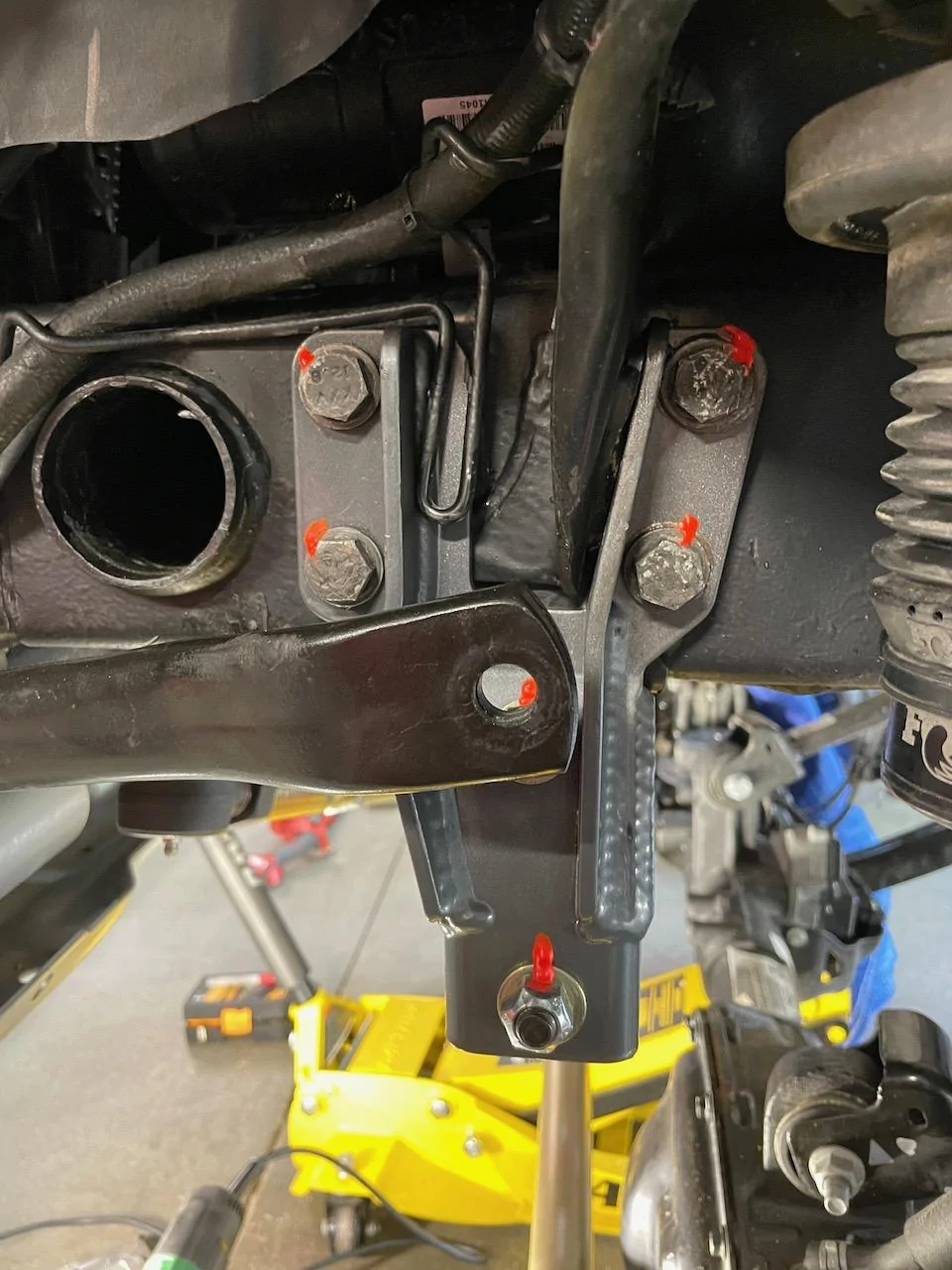
Death wobble aside, one of the biggest challenges you'll encounter going to 37's is premature wear on bushings, bearings, and tie-rod ends. You're adding a lot more weight and that stresses everything. Beefing up all your steering linkage is advisable. It's likely you'll encounter more deflection in the steering gear box. That deflection is what makes the steering feel floaty or like it wanders. If you have the aluminum steering gear box, that's automatically going to be problematic. Heavier tires amplify the deflection in the aluminum steering gear box. If you've got the cast iron steering gear box, then spend the coin on the Synergy Manufacturing Track Bar & Sector Shaft brace kit or the Steersmarts equivalent. You'll be thankful you did. It will tighten everything up significantly.

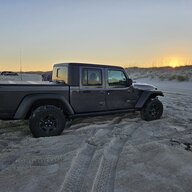
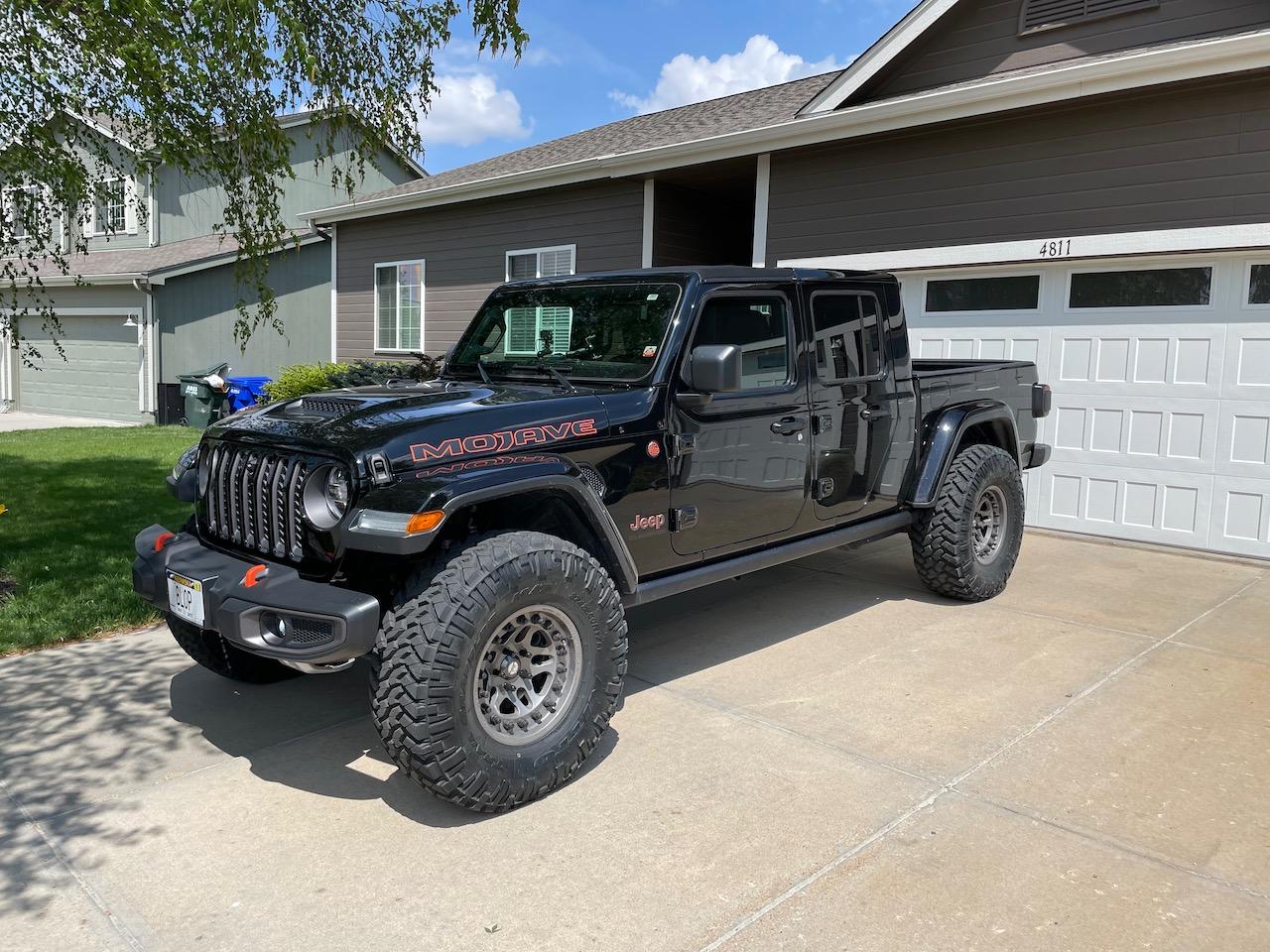
This is my ride after 37's before a 3.5" lift.

Before-Lift.jpeg


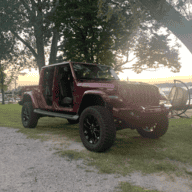
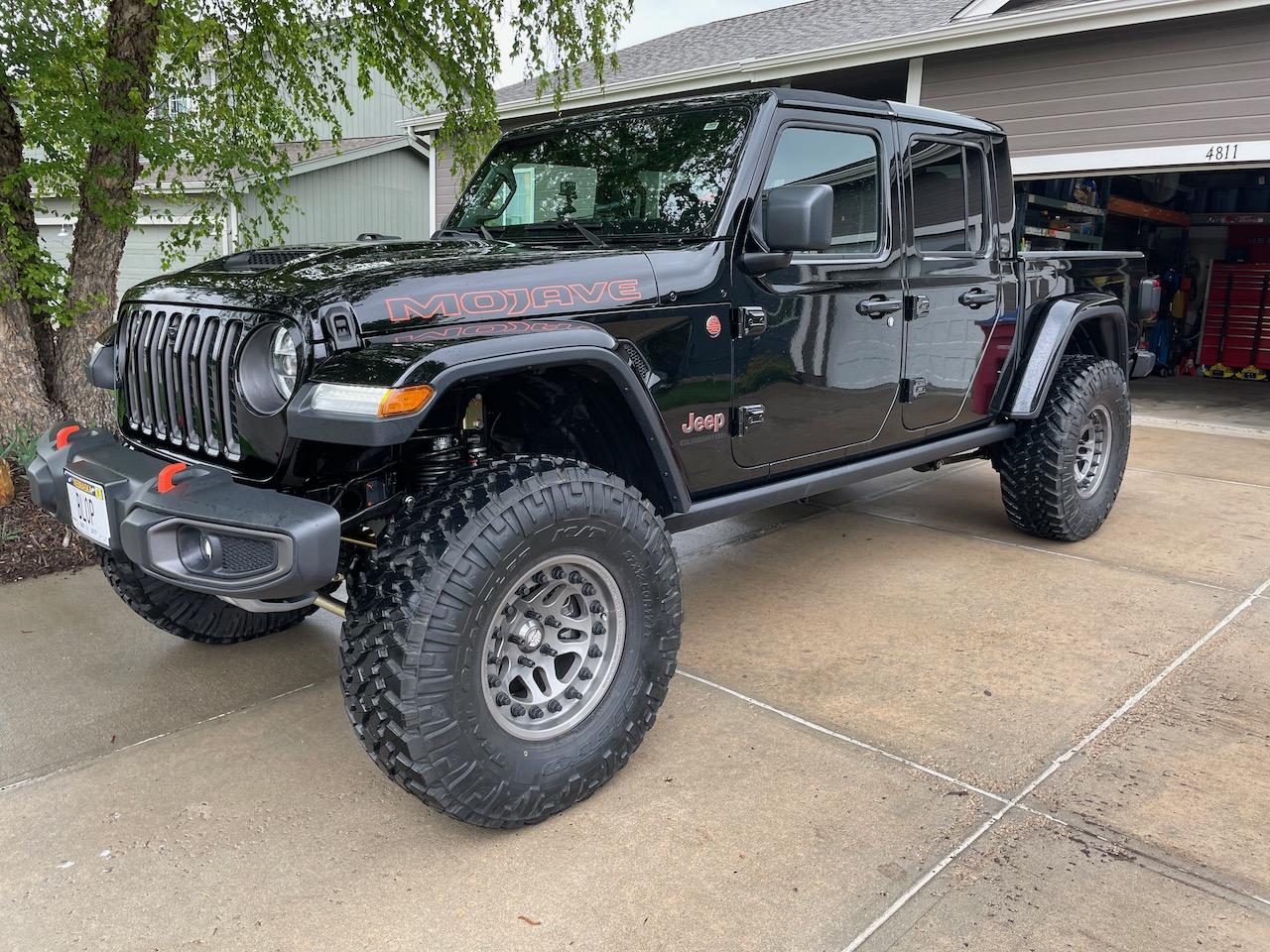
... and after the lift.

After-Lift.jpeg


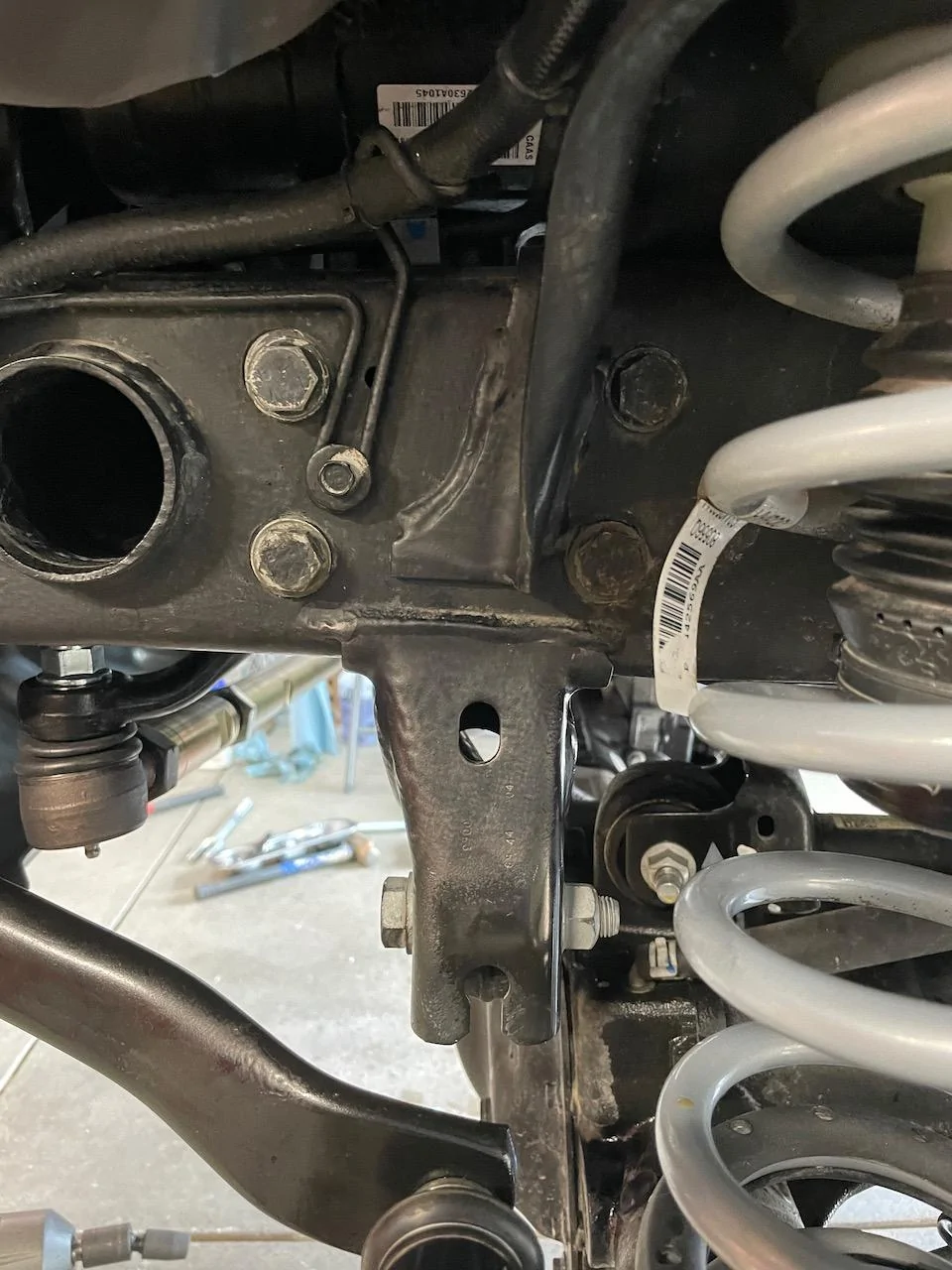
before the Synergy Mfg. Track Bar & Sector Shaft brace

Before-Brace.webp


... and after

After-Brace.webp
 

Wheelin98TJ

Well-Known Member
First Name
Ryan
Joined
Jul 27, 2021
Threads
11
Messages
3,702
Reaction score
4,358
Location
Devils Lake, MI
Vehicle(s)
2021 Jeep Gladiator
Occupation
Bean Counter
Death wobble is definitely unnerving to experience. Shimmy in the steering column is usually caused by incorrect suspension geometry (including caster angle), something loose in the 4-Link suspension components, or deflection in the steering components. My journey to correct this took months of learning and trial-and-error. Here's a quick checklist:

Shimmy/Death Wobble Checklist

  1. Check Tire Pressure & Balance. Consistent tire pressure all the way around can make a difference, though if you're within a few PSI it shouldn't make much difference. What's more important is tire balance. Many shops bead balance larger tires/wheels. Bead balancing has some pros and cons... one con being that if moisture gets inside the tire and it freezes out the beads can freeze together, resulting in the tires being out of balance. If traditionally balanced with clamped weights, have a tire shop double-check your wheels for balance.
  2. Check Your Tie-Rod Ends. There are a lot of forces on these connecting points. Only a minute amount of shimmy -OR- one serious experience with death wobble can be enough to prematurely wear out your tie-rod ends. Check them. If they're loose, replace them.
  3. Check for worn bushings. Inspect the bushings in your upper and lower control arms and track bars. Also inspect the connecting points on your frame and axles. Worn bushings can result in deflection that is amplified as it travels through your drivetrain and into your steering system. Replace if loose/worn.
  4. Tighten/Re-Torque bolts. Tightening and re-torquing all your hardware/fasteners is always a good practice. I also recommend upgrading your bolts/fasteners. The stock bolts are fully threaded, rather than shouldered. The stock, fully threaded bolts will oval-out the mounting points over time resulting in death-wobble and other undesirable handling characteristics. Replacing them with grade 8 or 10.9 shoulder bolts will provide better fastening and mitigate the frame holes from ovaling-out.
  5. Steering Gear. The factory steering gear may be either aluminum or cast iron.
    1. If it's aluminum (2020 Gladiators mostly) you should contact the dealership you bought your Gladiator from and inquire about a steering gear Technical Service Bulletin ("TSB") and schedule an appointment to replace it with the cast iron version. The aluminum steering gear is prone to 10 - 20+ thousands of an inch of deflection in its stock configuration. That results in slop or play at the steering wheel, which will only be amplified if you put larger tires and wheels on your build.
    2. If you've got the cast iron version, check the bolts. Make sure they're torqued to spec and do NOT over tighten them. I've read of a few instances where dealers over tighten these bolts, effectively stripping out the threads from the steering gear casting and making it impossible to firmly affix it to the inside frame rail. If that occurs you'll experience more deflection that you would have with the aluminum steering gear.
  6. Geometry Correction Brackets. After lifting your Gladiator the front control arms are now sloped downward at a shallow angle. This change in geometry results in some of the undesirable steering characteristics you noted. I recommend installing geometry correction brackets. These are available from a number of manufacturers. I installed the JKS versions. These brackets refine steering and ride quality by mitigating front axle ā€˜precession’ caused by uncorrected suspension lift geometry. The corrected physics permit the front tires to move up and rearward in response to a bump rather than trying to ā€˜lunge’ over it. They also dramatically reduce front-end ā€˜dive’ during hard braking. This is accomplished by relocating the ā€˜virtual instant center’ of the front suspension. Lastly they provide alignment correction for:
    1. Proper tracking by restoring caster angle without the need for cam bolts or different/adjustable arms
    2. Slightly reducing the maximum front driveshaft angle during suspension travel.

Bonus Feedback

Death wobble aside, one of the biggest challenges you'll encounter going to 37's is premature wear on bushings, bearings, and tie-rod ends. You're adding a lot more weight and that stresses everything. Beefing up all your steering linkage is advisable. It's likely you'll encounter more deflection in the steering gear box. That deflection is what makes the steering feel floaty or like it wanders. If you have the aluminum steering gear box, that's automatically going to be problematic. Heavier tires amplify the deflection in the aluminum steering gear box. If you've got the cast iron steering gear box, then spend the coin on the Synergy Manufacturing Track Bar & Sector Shaft brace kit or the Steersmarts equivalent. You'll be thankful you did. It will tighten everything up significantly.

This is my ride after 37's before a 3.5" lift.

Before-Lift.jpeg


... and after the lift.

After-Lift.jpeg


before the Synergy Mfg. Track Bar & Sector Shaft brace

Before-Brace.webp


... and after

After-Brace.webp
Steering wheel shimmy is probably most often caused by tires/wheels.
Sponsored


Top