
Sponsored

Diesel cooling options and ideas

LOGS

Well-Known Member
Joined
Jul 20, 2016
Threads
19
Messages
243
Reaction score
321
Location
MN
Vehicle(s)
2005 LJ Rubicon
lol what crap up front? My bumper and winch don’t block my grille. Also, I don’t tow. I drive a lot of steep grades and don’t see oil temps over mid 220s. They could be lower but that’s not overheating.
Ah apologies, I thought yours was the one with the bullbar and huge fog lights.
Sponsored


RudeJeepin

Well-Known Member
First Name
Carl
Joined
May 6, 2022
Threads
5
Messages
1,500
Reaction score
2,367
Location
Washington
Vehicle(s)
2022 JTRD
Build Thread
Link
Been a while since I have been on the board... Been focused on rebuilding my CJ. I was hoping to find that some of you super smart gearheads figured out a solution ;). I caught a post from another user on the forum saying that there is NO WAY a modern vehicle would overheat.... LOLOL I guess technically my jeep doesn't overheat, it just says "nope, we aint going no more, Hope you don't die cuz your trying to merge with traffic that is going 80mph"
Anybody thought about a coolant additive, or replacement like that 40 Below stuff Summit sells? Wonder if this would affect my warranty.

When I hear about all the guys in hot climates claiming to drive 70-80 up steep grades I really question what the deal is. Like I have said many times... Mine will derate going up Mount Hood, with my family and some suitcases and a cooler in the bed.

Any idea if Jeep changed coolants year over year? Maybe I got a bad batch???

My dads Grand Cherokee Eco has never derated, even pulling a 26' trailer through the hills. (Different airflow design, I know... just sayin)

Not even sure how to approach this with the dealer.....
We have both a Wrangler Rubicon diesel and Gladiator Rubicon diesel, and I've been all over Mt Hood without ever having a heating problem.
Been up and down Hwy 35 and 26 between Hood River and Gresham with various different loads and no issues.
I have yet to pull my cargo trailer over there, but we'll see.


I've been driving diesels for years, and many different makes. Most don't usually need/want more than about 3/4 or so throttle to run optimally. I've yet to have a diesel derate from excess heat. (Knock on wood)
While the EcoDiesel is a modern V6, it is still a diesel. Don't try to drive it like a modern gas V6 and Rev it to the moon. Like someone else mentioned, climbing a hill at 75 caused them to get hot, but backing down to 55 or so helped cool the motor off. Maybe try speeding up before the hill and slowly scrub some speed off as you climb. Finding that happy medium between speed and heat.
Obviously everybody's mileage may vary.

I’ve been able to reduce my normal highway driving temperatures by 15/20 degrees. I have a 4K trailer that I have only towed since making modifications. I can keep temps below 240* with oil cooler fan turned on. Fan is only needed going up long grades when towing
I posted everything I did in another thread with more details.
I was derating on long drives with oil temps above 230*. Wire harnesses got to hot.
Redline water wetter did help as mentioned above.
The biggest thing I did was add a bypass oil filter tapped into the bottom of the oil filter housing with oil cooler/fan. Return oil tapped into oil pan.
Can you steer us to this other thread with a better explanation, I'm curious about it?
Thanks
 

22EcoDs

Well-Known Member
Joined
Oct 14, 2021
Threads
16
Messages
1,513
Reaction score
1,684
Location
NY
Vehicle(s)
22jtsD , 06XK, 21KL - Retired(97ZJ,15JKU, 00WJ,)
I was thinking about this thread and wondering if Jeep came out with a real fix, or an aftermarket company did, .
I heard that an Aftermarket company is coming out with a cooling solution specifically for the diesel.
 

OrangeCJ

Well-Known Member
Joined
Jan 11, 2021
Threads
2
Messages
140
Reaction score
135
Location
WA, USA
Vehicle(s)
1971 CJ5, 2021 JTRD
Thanks for the info @RudeJeepin ! Although I am not as experienced of a diesel owner as you, I get what your saying about letting off the throttle and I always get my speed up before a hill, years of towing trailers behind small SUV's :)

By far the worst I have experienced was is Idaho where the speed limit is 80, and everybody drives 80. My Dad has a diesel JL as well and he seems to derate more than I do... Normally it happens after we take a rest stop on a long road trip... obviously Heat Soak is a real issue... But I do see the temps spike when going up any hill, especially a long, higher altitude climb.

I know sometimes slowing down is the solution, but I still believe that a truck with a family and some suitcases should be able to manage the speed limit (60mph) with out getting so hot it needs to shut the turbo down... Especially when the ambient temp is below 80. Mine derated one time just cruising with traffic up Hood between Gov Camp and Meadows, not racing, or passing, or pulling just going with the flow. Glad your experience has been much better than mine!

@NCJL post up that thread you mentioned, we need to read it!

Thanks guys, love this forum, very informational and always good for a laugh.

KeepJeepin!
 

RudeJeepin

Well-Known Member
First Name
Carl
Joined
May 6, 2022
Threads
5
Messages
1,500
Reaction score
2,367
Location
Washington
Vehicle(s)
2022 JTRD
Build Thread
Link
Thanks for the info @RudeJeepin ! Although I am not as experienced of a diesel owner as you, I get what your saying about letting off the throttle and I always get my speed up before a hill, years of towing trailers behind small SUV's :)

By far the worst I have experienced was is Idaho where the speed limit is 80, and everybody drives 80. My Dad has a diesel JL as well and he seems to derate more than I do... Normally it happens after we take a rest stop on a long road trip... obviously Heat Soak is a real issue... But I do see the temps spike when going up any hill, especially a long, higher altitude climb.

I know sometimes slowing down is the solution, but I still believe that a truck with a family and some suitcases should be able to manage the speed limit (60mph) with out getting so hot it needs to shut the turbo down... Especially when the ambient temp is below 80. Mine derated one time just cruising with traffic up Hood between Gov Camp and Meadows, not racing, or passing, or pulling just going with the flow. Glad your experience has been much better than mine!

@NCJL post up that thread you mentioned, we need to read it!

Thanks guys, love this forum, very informational and always good for a laugh.

KeepJeepin!
Govvy to Meadows, I know that stretch well. There's no way you should derate/overheat there, under any somewhat normal circumstances. Have you mentioned this to a dealer?

Heat soak seems to be a somewhat common issue. I usually try to let mine cool down a bit at rest stops. Let it idle for awhile, or leave it running with it locked. All depending on the area, length of stop. Gotta let the turbo cool down before shutting off the oil circulation.
That makes me wonder, if we could add an auxiliary oil circulation pump to kick in after we shut down, for those rest stop. Along with an auxiliary oil cooler could do wonders maybe.


So far I haven't had heating/derate issues, but if I do, I was thinking about looking into the new 25th Anniversary grille.
Just so thoughts and ramblings.
 

Sponsored

yrwins

Well-Known Member
First Name
Yrwins
Joined
Aug 27, 2020
Threads
37
Messages
134
Reaction score
86
Location
Texas
Vehicle(s)
N/a
Occupation
IT
Warm Up & Cool Down Periods
Warm Up & Cool Down Procedures for Diesel Engines
Recommended warm up and cool down times will vary considerable depending on a number of variables. Diesels rely on compression for ignition and therefore tend to run on the rough side when the engine is cold. Likewise, a diesel does not produce much heat unless it is put under a load. Talk about a contradiction - a diesel doesn't like to run cold, but it needs to be driven to reach operating temp. While jeep provide owners with our own recommendations with regards to warm up and cool down procedures, the subject is widely controversial and there is much debate with regard to what is acceptable.

Warm up Considerations
Excessive idling and warm up periods are widely controversial as a result of the phenomenon in compression ignition engines known as "wet stacking". Wet stacking is the process by which relatively cool combustion temperatures results in an incomplete combustion event. When this occurs, partially and unburnt fuel has a tendency to stick to the cylinder walls, through which a portion of the contaminants will enter the engine crankcase. Fuel in the crankcase is typically known as fuel dilution, and since diesel fuel has nowhere near the lubricity of engine oil it can lead to excessive wear in extreme cases. It's worth noting that fuel dilution is invertible in a diesel engine - since it's impossible to avoid entirely, it's necessary to take certain steps in order to reduce the degree to which it occurs.

As a result of wet stacking and fuel dilution of the engine oil, manufacturers typically categorize engines that idle excessively under "Severe Duty" with regard to recommended maintenance intervals. Under this service category, vehicles are subject to more frequent oil changes, amongst other interval alterations. While wet stacking concerns are greatest when an engine is dead cold, wet stacking occurs in vehicles at normal operating temperature while idling - a diesel engine consumes a relatively low amount of fuel while idling, and as such combustion temperatures rapidly drop while there is no load placed on an engine.

And since diesel engines consume little fuel at idle, they tend to take a long time to reach operating temperature without driving. In fact, a diesel engine that is started and left idle may not reach operating temperature at all until it is driven. Driving places a load on the engine, essentially making it work harder and therefore creating more heat. The combustion process is much more efficient at normal operating temperature and fuel dilution concerns are significantly reduced.

On the contrary, driving while the engine is dead cold can have its own set of consequences. The primary concern with placing a load on a cold engine is related to the oil viscosity. As the temperature of oil increases it becomes less viscous - likewise, oil becomes more viscous (thicker) as temperature decreases. The viscosity of oil is related to both its flow and lubrication properties. After starting a cold engine ("cold" referring to an engine whose temperature has reached equilibrium with its surroundings), oil pressure typically takes time to stabilize and it may not be of best interest to drive a vehicle during this period (which typically lasts no more than a minute in most instances).

Cool Down Considerations
Allowing an engine to cool before turning it off is important to turbodiesels, although mostly irrelevant in naturally aspirated engines. A turbocharger is manufactured with low tolerances and relatively high precision, as its operating conditions are somewhat severe. Modern turbochargers can experience compressor/turbine speeds in excess of 100,000 rpm, while even older models will see rotational speeds in the 40,000 to 60,000 rpm range. At these speeds, lubrication and the condition of the turbocharger bearings are of the utmost importance to longevity.

All turbochargers are lubricated via the engine's pressurized oil system, meaning that engine oil is constantly circulated through passages entering and exiting the bearing cartridge. While a vehicle is driving and the turbocharger is functioning, it becomes hot - the temperature of the turbocharger is relative to load. When a vehicle has been driven and is abruptly shut off (and the oil flow to the turbocharger ceases), engine oil contained in the turbocharger absorbs heat from its surroundings. If the temperature of the turbocharger prior to shut down is great enough, the oil risks burning and will have a tendency to create deposits in and around the turbo bearings in addition to contaminating the engine oil supply.

Recommended Warm up & Cool Down Times
Warm Up Recommendations
Diesel engines are not "start-and-go" machines and therefore a warm up period, however brief, is recommended after starting a cold engine. The length of the warm up period depends significantly on ambient temperature. If the OE manufacturer has provided recommended warm up procedures, follow them accordingly. However, most manufacturers don't provide this information as it is not an exact science.

Ambient Temperature
Acceptable Warm Up Period
< 0° F​
up to 7 minutes​
0° F - 50° F​
3 to 5 minutes​
> 50° F​
1 to 2 minutes​
The warmer the ambient temperature, the lower the recommended warm up idling period. However, the opposite is not necessarily true; there is a point of diminishing return and, therefore, extended idling (>7 minutes) is typically ill advised and provides no benefit regardless of climate conditions. A diesel will almost always require driving to reach full operating temperature. The warm up process is more oriented toward increasing the combustion chamber temperature and not placing any excess load on an engine while its components soak in heat and begin to slowly expand. You may also consider the following in determining an appropriate warm up procedure based on your needs:

• All diesel engines have block heaters and you should be using yours per the manufacturer recommendations. Block heaters reduce warm up idle times and significantly aid starting in cold weather. When using a block heater, the aforementioned acceptable warm up periods can be notably reduced.

• Glow plug and heater grid systems typically "post cycle" in extremely cold temperatures, which reduces engine warm up times and increases the efficiency of combustion while an engine is cold in addition to providing sufficient heat for starting. In cold climates, consider cycling the glow plug/heater grid twice prior to starting, which may allow for less cranking and easier starts.

• 15W-40 is a common oil weight for diesel applications. However, this viscosity is not always recommended for temperatures below 0° F. Mind your engine manufacturers recommendations with regards to oil viscosity and ambient temperature.

• If you plan on towing, consider a slightly extended warm up period as it is not ideal to place a great load on a cold engine.

• Keep the engine speed low and drive with only light throttle input until an engine reaches its normal operating temperature.

• If cold climate has you idling extensively, make sure to follow the manufacturer's recommended service intervals accordingly.

Cool Down Recommendations
An appropriate cool down period depends on the situation. Following light/normal driving, for example, a cool down period should not typically exceed 30 seconds. After towing, hauling, or other high load condition, the cool down period should be slightly longer.

Conditions
Acceptable Cool Down Period
After light/normal driving​
30 seconds to 1 minute​
After towing/hauling​
1 to 3 minutes​
This short cool down period allows for circulating engine oil to remove heat from the turbocharger so that the engine oil does not "cook" in the turbocharger upon shutdown. While not always necessary, it's considered good practice and will promote longevity and reliability of a turbo. Allowing the turbo to cool down is, however, extremely important following a regeneration cycle in DPF equipped pickups, as the turbocharger tends to reach relatively high temperatures following this process.
 

NCJL

Well-Known Member
First Name
Dean
Joined
Jul 22, 2021
Threads
31
Messages
249
Reaction score
288
Location
New Mexico
Vehicle(s)
JLURD
Build Thread
Link
Occupation
Electrical
https://www.jeepgladiatorforum.com/forum/threads/ecodiesel-power-derating-as-temps-rise.45447/

I started posting in the thread around page 44. Lots of good info thru the entire thread.
The highlights of what I verified through my own personal testing.

RPM’s below 2K is the most economical way to keep oil temps low.

The oil filter housing has an oil T-Stat that does not open until 240*. I actually never got flow thru the factory oil cooler when testing with pressure gauge. I was only able to get the temps in the low 230* while testing. Under heavy load the oil temps rise fast until about 240* then slowly increase from there. Pictures of a new oil cooler housing posted in the thread mentioned show what looks like a TStat in the center of housing.

Ambient temps do not play as big a roll as I thought. Driving thru TX panhandle, instant change from 90* to 60* had no noticeable effect on engine temps. I was monitoring very closely due to derating on that trip. Low RPM’s, below 2K was the only thing that keep temps low.
 
Last edited:

@californiajeeping

Well-Known Member
Joined
Apr 1, 2020
Threads
16
Messages
953
Reaction score
1,006
Location
California
Vehicle(s)
2022 Jeep Gladiator diesel, 1977 cj5 LS swapped
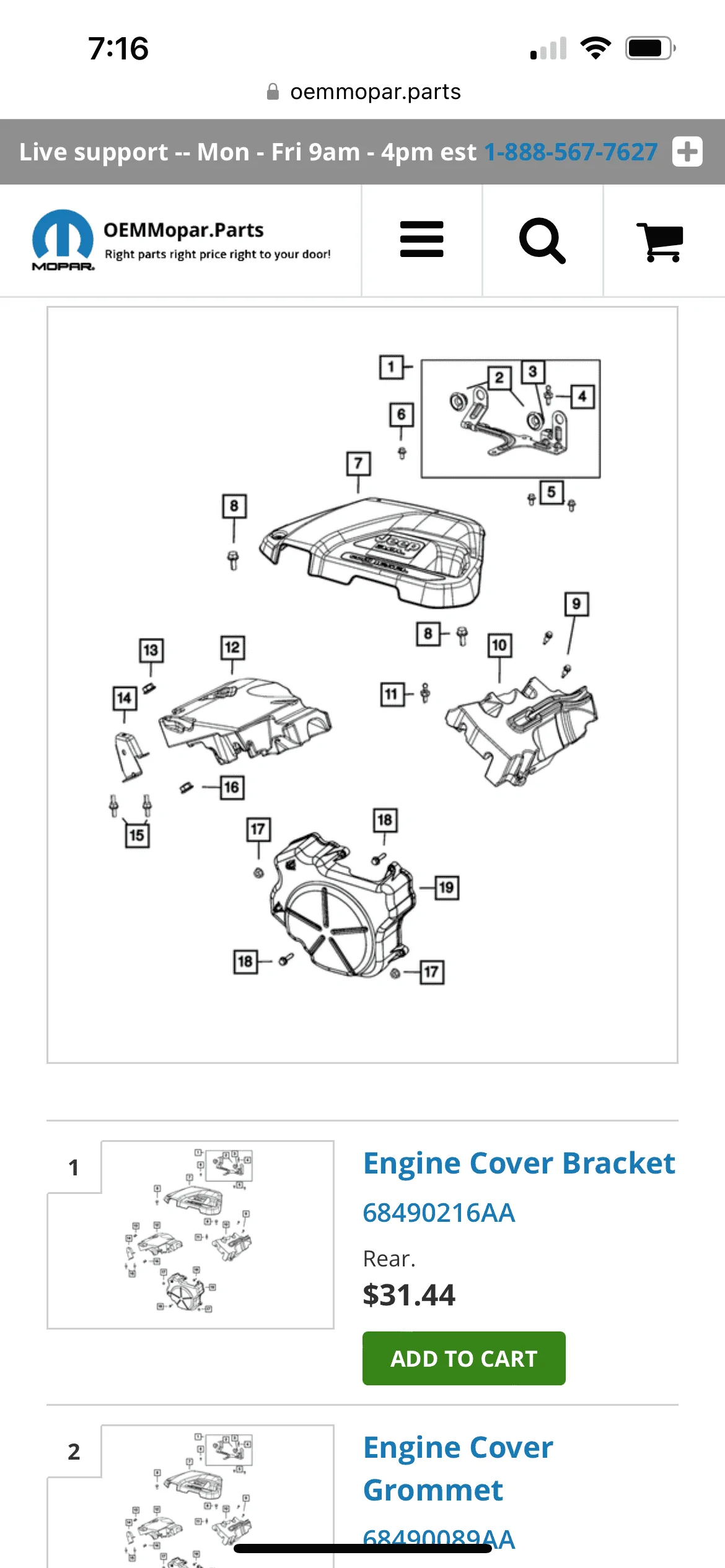
Remove these covers and install a hood vent. This will almost eliminate heat soak. Atleast in California I’m 100+ summer weather.

Jeep Gladiator Diesel cooling options and ideas 83CB255D-789F-4727-91BB-43B30EDC8178
 

CreepyJeepy

Well-Known Member
First Name
Ryan
Joined
Jul 2, 2021
Threads
34
Messages
463
Reaction score
627
Location
Denver
Vehicle(s)
2021 Jeep Gladiator Rubicon 3.0
Occupation
Cyber Security
Has anybody tried a water sprayer for the radiator?

I don't think basic air cooling is going to make enough difference, especially if it doesn't involve increasing airmass over the radiators. I don't want to cut holes, or increase water flow over the top of engine components...

But I do wonder if a water sprayer for the intercoolers would improve heat transfer and help. in those high heat moments.
 

Sponsored

@californiajeeping

Well-Known Member
Joined
Apr 1, 2020
Threads
16
Messages
953
Reaction score
1,006
Location
California
Vehicle(s)
2022 Jeep Gladiator diesel, 1977 cj5 LS swapped
Has anybody tried a water sprayer for the radiator?

I don't think basic air cooling is going to make enough difference, especially if it doesn't involve increasing airmass over the radiators. I don't want to cut holes, or increase water flow over the top of engine components...

But I do wonder if a water sprayer for the intercoolers would improve heat transfer and help. in those high heat moments.

Yes I tried this last summer. Water methanol evaporated too quickly when it hits the radiator. It would need to be water only. I tried a 5gpm nozzle in front of the intercooler.
 

LBL Chief

Active Member
First Name
Robin
Joined
Jan 12, 2023
Threads
7
Messages
43
Reaction score
46
Location
SoCal
Website
lamhbatalann.com
Vehicle(s)
2021 Jeep Gladiator Rubicon EcoDiesel Red
Occupation
Martial arts instructor
Speaking of different grills
Now that summer is here, it is clear that the Diesel Gladiators will get hot if you push them ( towing ), and a LOT of us are pissed about it. Before I sell mine I want to do everything I can to see if I can make something work.

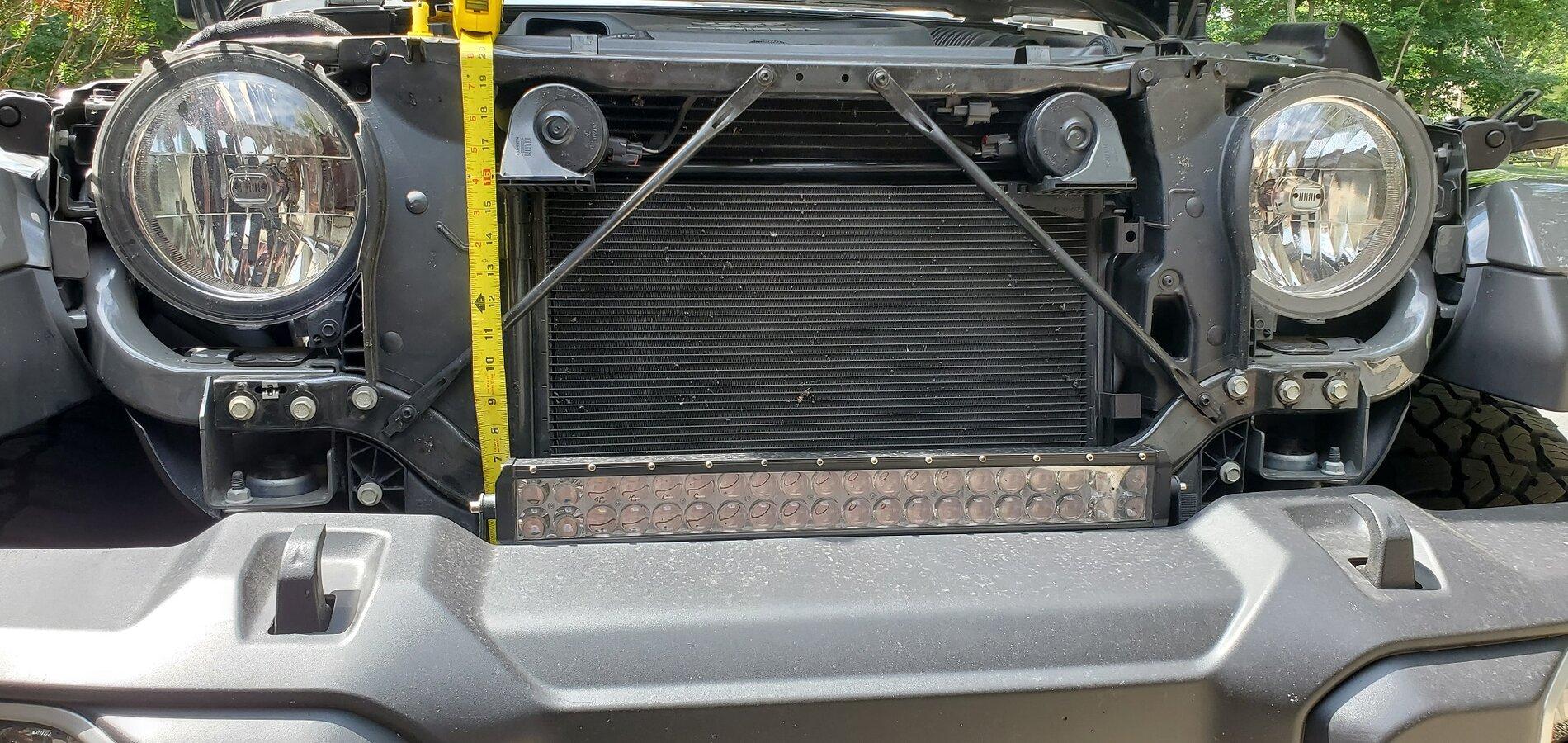
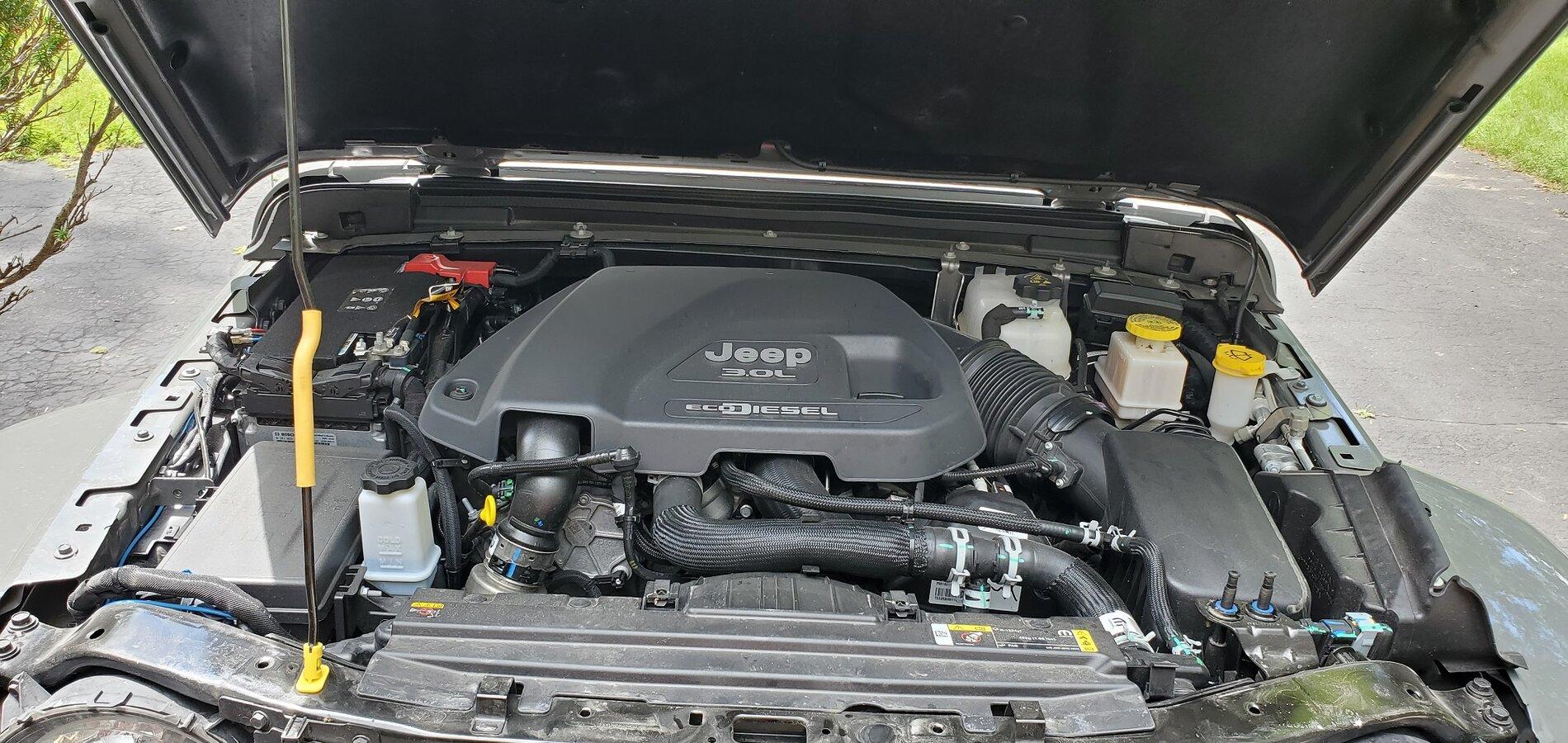
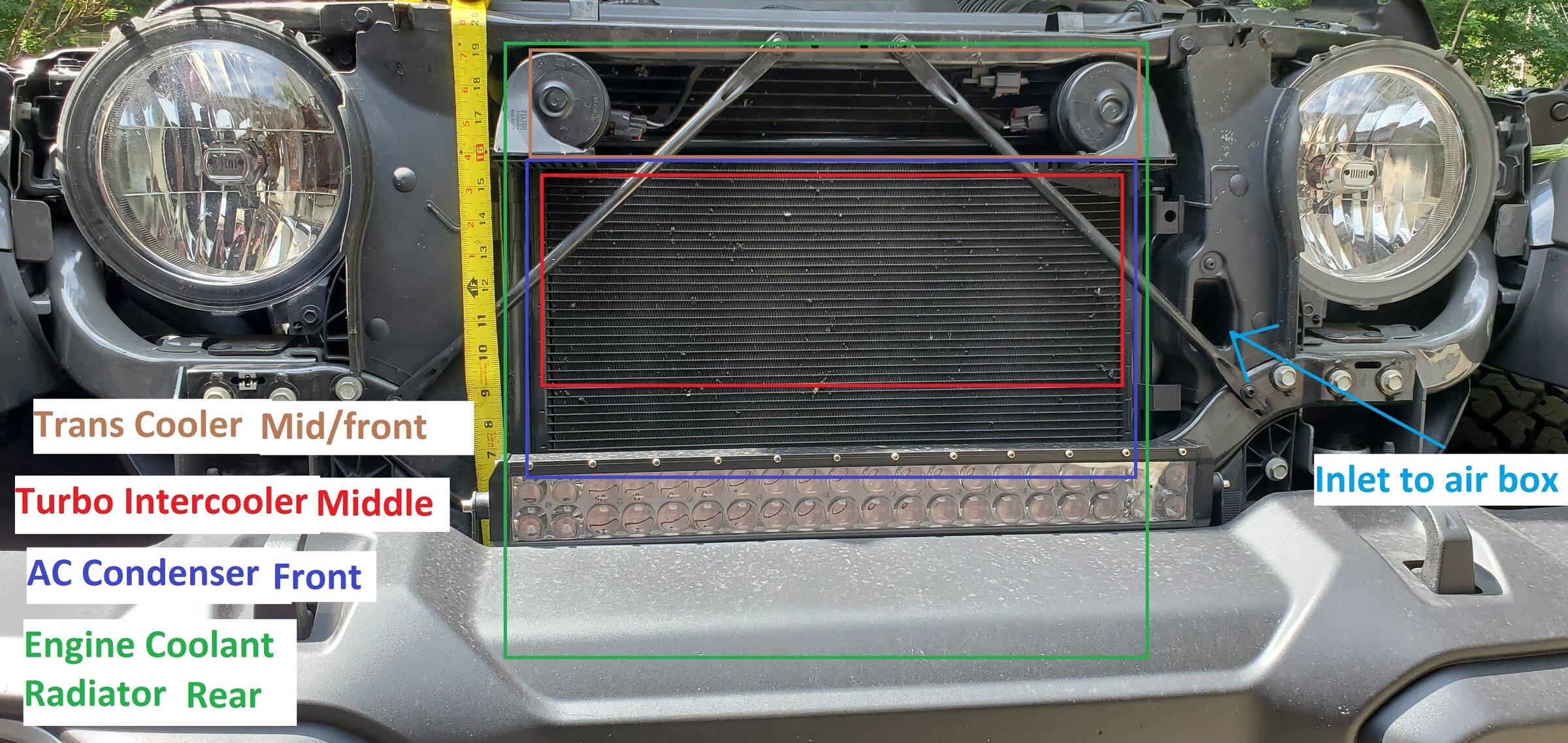
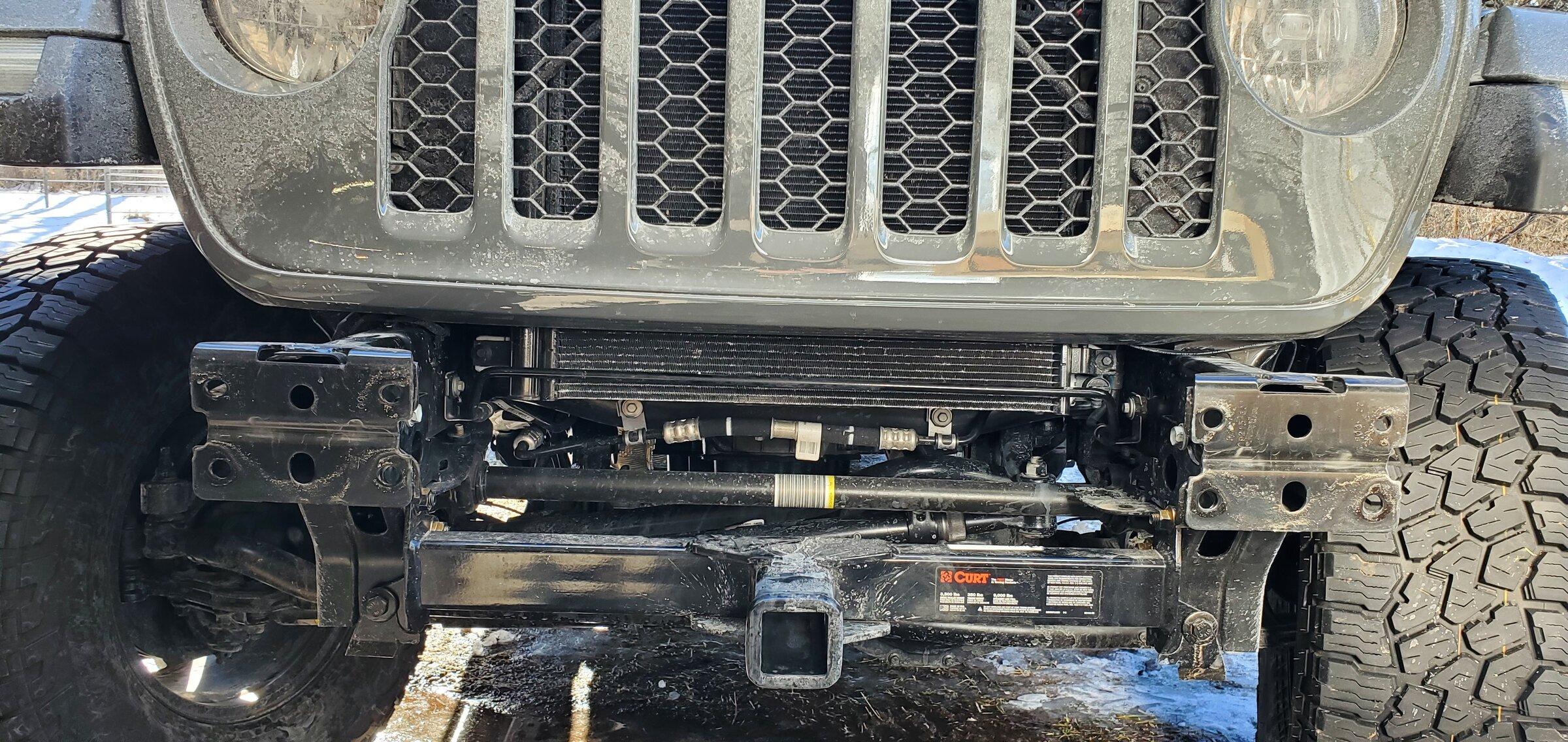
We have all heard FCA mention that the 3.0L was limited by its cooling and that is likely because they were not going to redesign the front end. Once I started dissecting mine it was clear there are plenty of issues with this current setup.
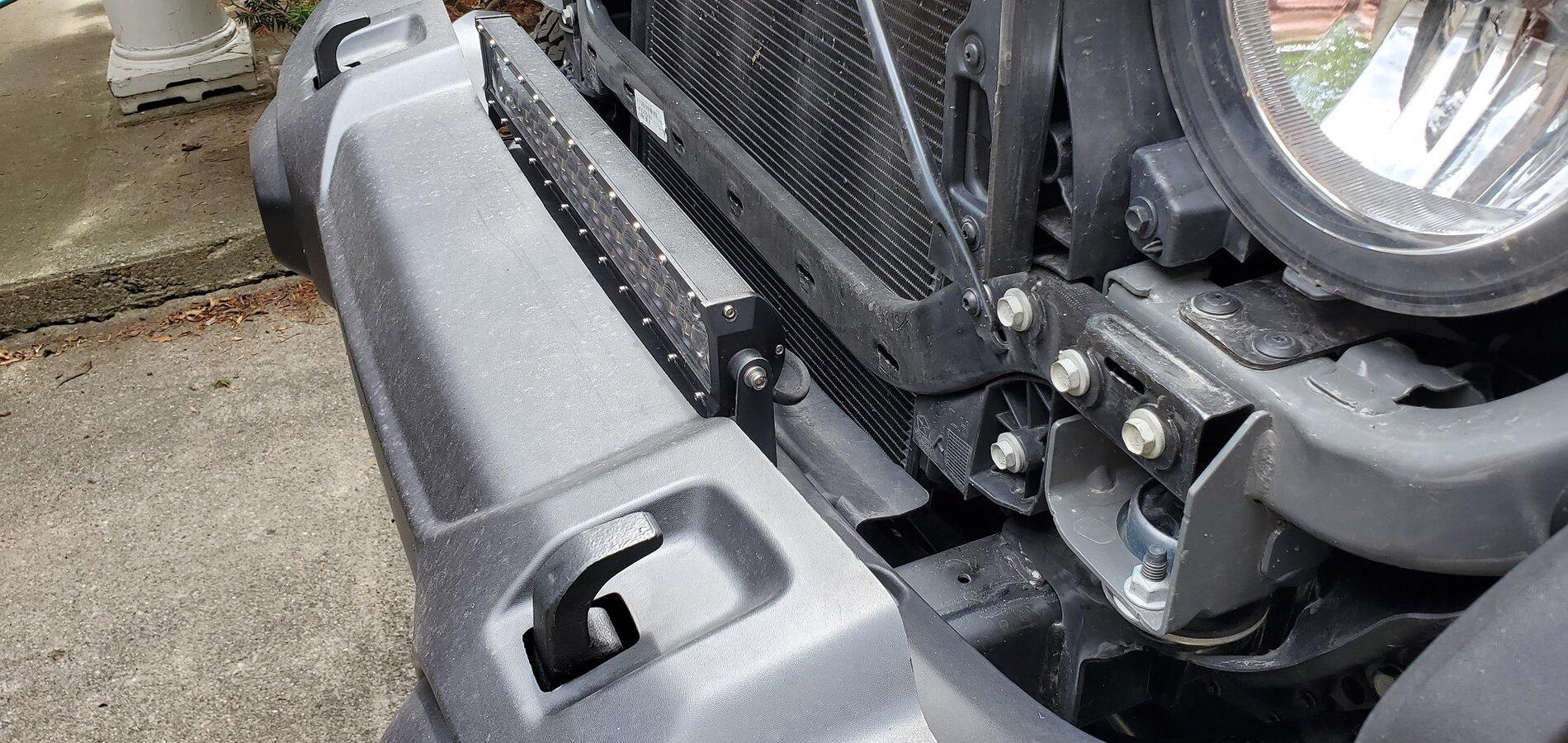
First off all the bottom 6" of the radiator is blocked by the plastic bumper.
Second, the horns should go somewhere else. Why block perfectly good airflow
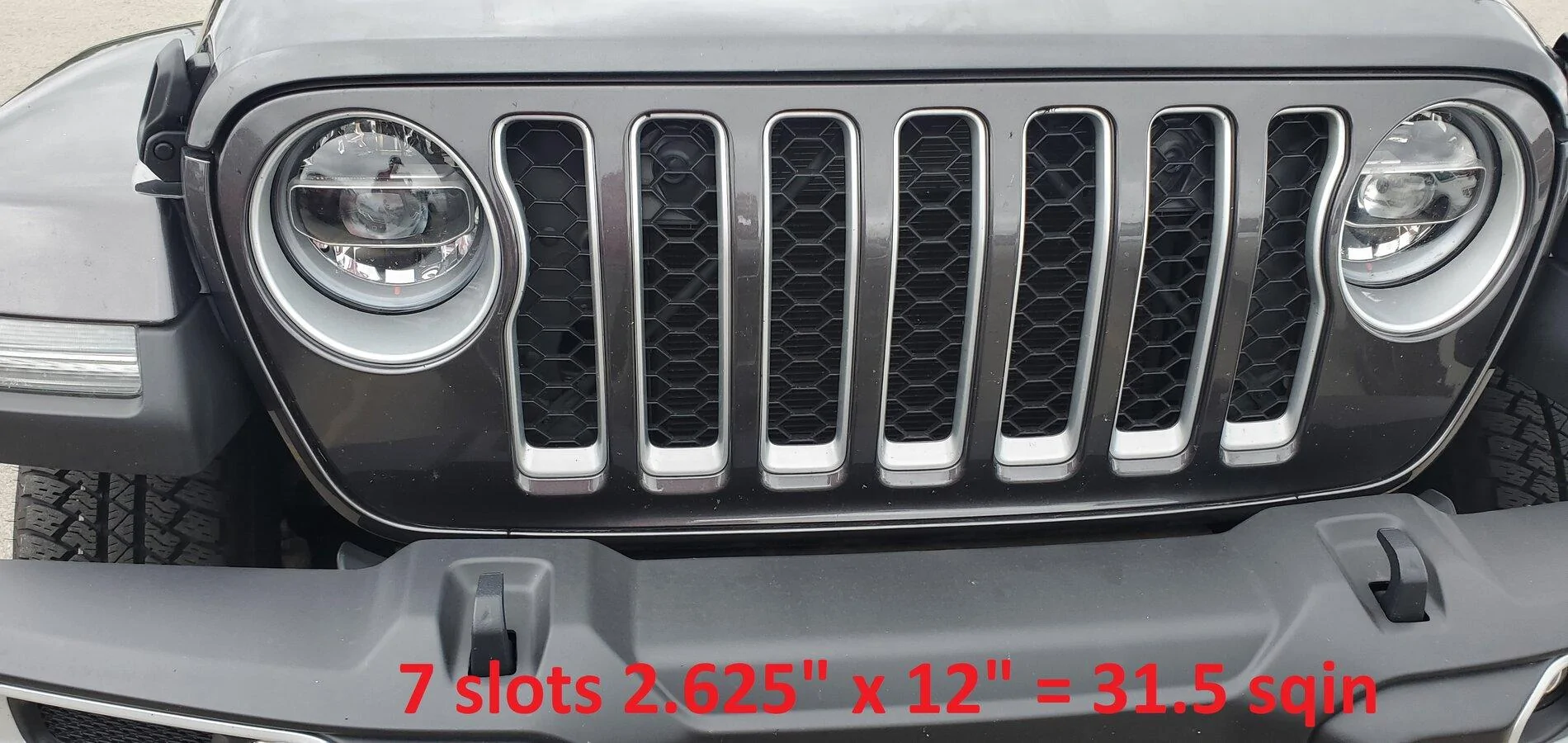
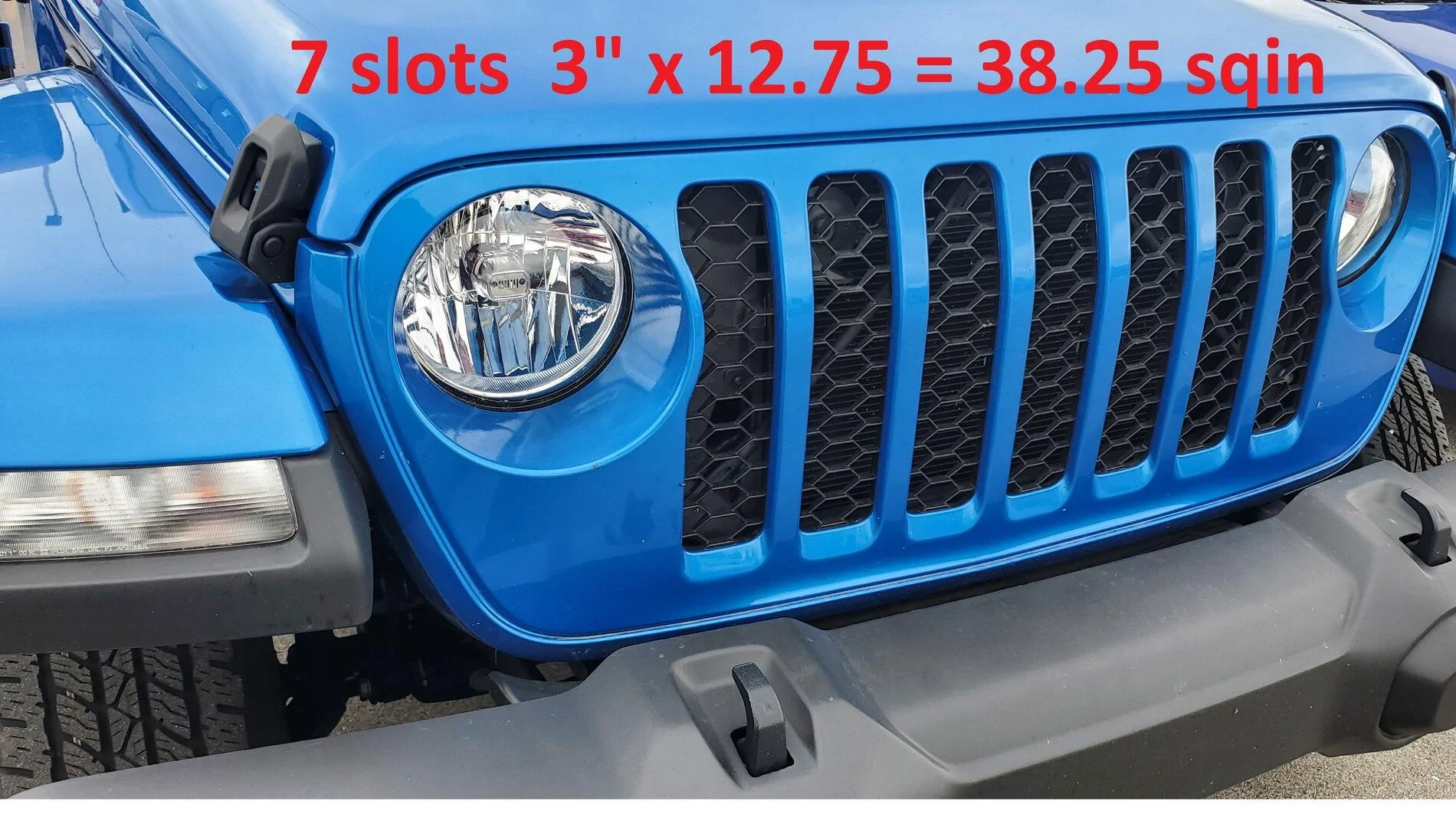
Third, there are multiple types of grills that may help air flow. The Overland and Rubicon grills have decorative bezels that narrow the slots. The Sports and black grill option have narrow slots which adds 15% area.

The next hot day I get I am going to do a 30 mile out and back trip and document my Engine Coolant, Oil Temp, Trans Temp, and add another thermocouple under the hood somewhere. I will be towing my 5600 lb camper and try to hold 70mph.

Test 1 - Remove the grill completely and compare.
Test 2 - If changes were not significant I will add to it by cracking the hood open with spacers and straps to hold it in place. Hopefully it will allow more air movement around the engine.

From here I think the results will determine if grill modifications or hood vends will do anything and what the best case scenario would be. If either work I will consider removing the front bumper.

To get an idea of "best case" I would say start looking at the RAM eco diesel forums. They have much bigger radiators and the engine is basically the same. If they are doing well and not having towing issues than maybe we can hope for that. If they are also struggling with overheating while towing than it will be a sign to sell and move on ?.

I would like to keep this thread solution based if possible so if you have any ideas, lets get testing.


Radiator.jpg


Overland grill.webp


Sport grill.webp


engine.jpg


side.jpg


layout.jpg


20220220_160029.jpg
Now that summer is here, it is clear that the Diesel Gladiators will get hot if you push them ( towing ), and a LOT of us are pissed about it. Before I sell mine I want to do everything I can to see if I can make something work.

We have all heard FCA mention that the 3.0L was limited by its cooling and that is likely because they were not going to redesign the front end. Once I started dissecting mine it was clear there are plenty of issues with this current setup.
First off all the bottom 6" of the radiator is blocked by the plastic bumper.
Second, the horns should go somewhere else. Why block perfectly good airflow
Third, there are multiple types of grills that may help air flow. The Overland and Rubicon grills have decorative bezels that narrow the slots. The Sports and black grill option have narrow slots which adds 15% area.

The next hot day I get I am going to do a 30 mile out and back trip and document my Engine Coolant, Oil Temp, Trans Temp, and add another thermocouple under the hood somewhere. I will be towing my 5600 lb camper and try to hold 70mph.

Test 1 - Remove the grill completely and compare.
Test 2 - If changes were not significant I will add to it by cracking the hood open with spacers and straps to hold it in place. Hopefully it will allow more air movement around the engine.

From here I think the results will determine if grill modifications or hood vends will do anything and what the best case scenario would be. If either work I will consider removing the front bumper.

To get an idea of "best case" I would say start looking at the RAM eco diesel forums. They have much bigger radiators and the engine is basically the same. If they are doing well and not having towing issues than maybe we can hope for that. If they are also struggling with overheating while towing than it will be a sign to sell and move on ?.

I would like to keep this thread solution based if possible so if you have any ideas, lets get testing.


Jeep Gladiator Diesel cooling options and ideas Radiator


Jeep Gladiator Diesel cooling options and ideas Overland grill


Jeep Gladiator Diesel cooling options and ideas Sport grill


Jeep Gladiator Diesel cooling options and ideas engine


Jeep Gladiator Diesel cooling options and ideas side


Jeep Gladiator Diesel cooling options and ideas layout


Jeep Gladiator Diesel cooling options and ideas 20220220_160029
Now that summer is here, it is clear that the Diesel Gladiators will get hot if you push them ( towing ), and a LOT of us are pissed about it. Before I sell mine I want to do everything I can to see if I can make something work.

We have all heard FCA mention that the 3.0L was limited by its cooling and that is likely because they were not going to redesign the front end. Once I started dissecting mine it was clear there are plenty of issues with this current setup.
First off all the bottom 6" of the radiator is blocked by the plastic bumper.
Second, the horns should go somewhere else. Why block perfectly good airflow
Third, there are multiple types of grills that may help air flow. The Overland and Rubicon grills have decorative bezels that narrow the slots. The Sports and black grill option have narrow slots which adds 15% area.

The next hot day I get I am going to do a 30 mile out and back trip and document my Engine Coolant, Oil Temp, Trans Temp, and add another thermocouple under the hood somewhere. I will be towing my 5600 lb camper and try to hold 70mph.

Test 1 - Remove the grill completely and compare.
Test 2 - If changes were not significant I will add to it by cracking the hood open with spacers and straps to hold it in place. Hopefully it will allow more air movement around the engine.

From here I think the results will determine if grill modifications or hood vends will do anything and what the best case scenario would be. If either work I will consider removing the front bumper.

To get an idea of "best case" I would say start looking at the RAM eco diesel forums. They have much bigger radiators and the engine is basically the same. If they are doing well and not having towing issues than maybe we can hope for that. If they are also struggling with overheating while towing than it will be a sign to sell and move on ?.

I would like to keep this thread solution based if possible so if you have any ideas, lets get testing.


Jeep Gladiator Diesel cooling options and ideas Radiator


Jeep Gladiator Diesel cooling options and ideas Overland grill


Jeep Gladiator Diesel cooling options and ideas Sport grill


Jeep Gladiator Diesel cooling options and ideas engine


Jeep Gladiator Diesel cooling options and ideas side


Jeep Gladiator Diesel cooling options and ideas layout


Jeep Gladiator Diesel cooling options and ideas 20220220_160029
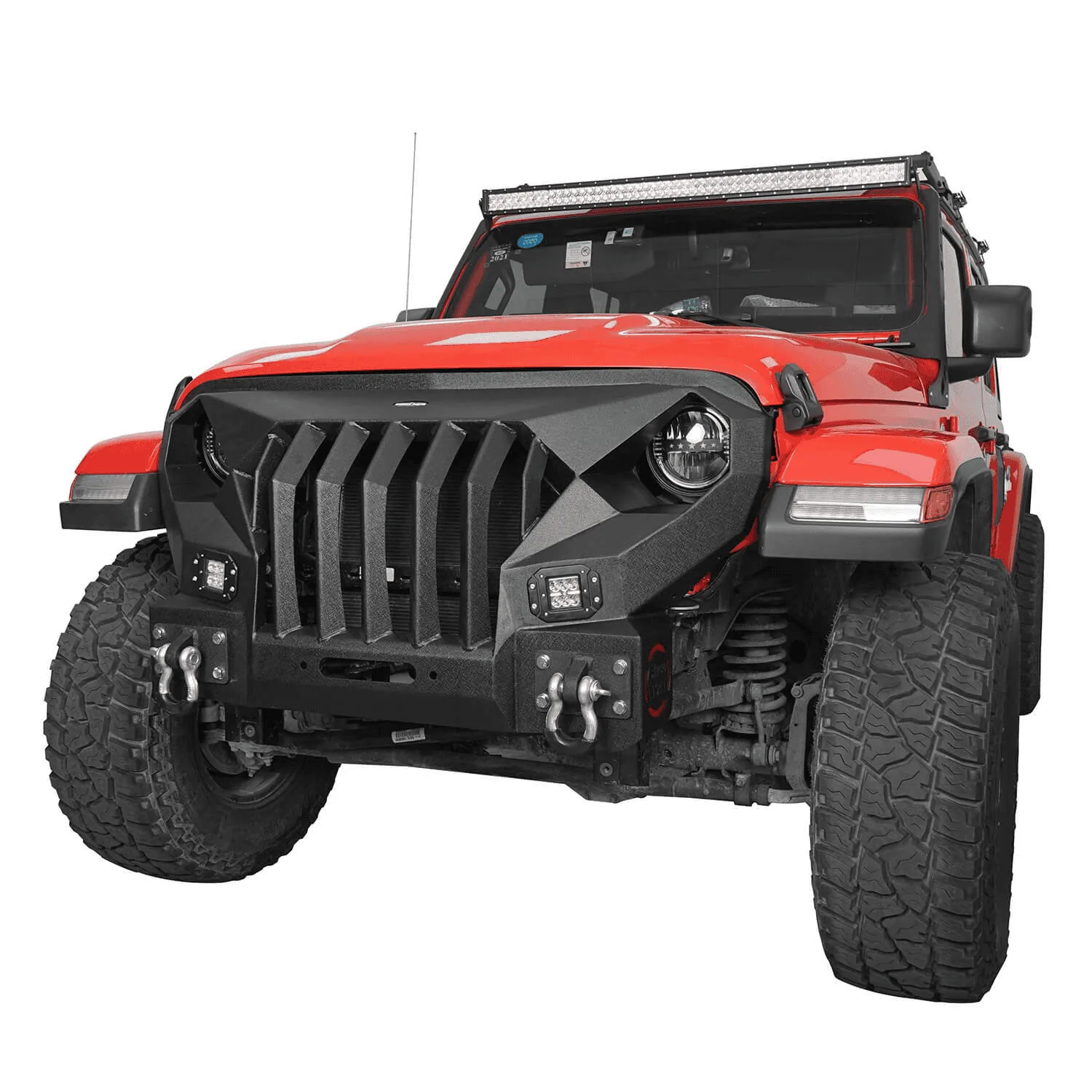
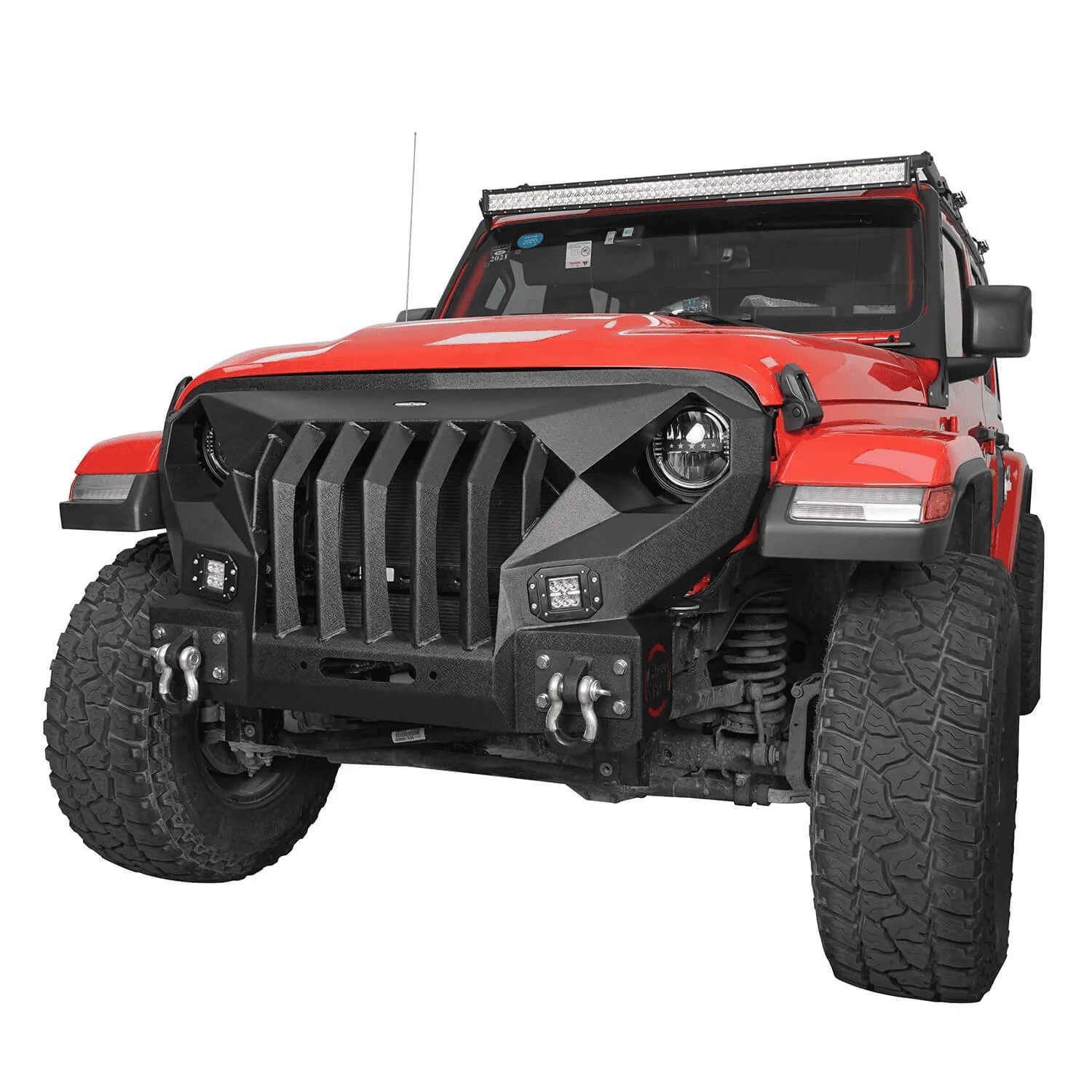
Returning to this thread with a grill I came across. Looks like it might have better air flow..
HookeRoad Jeep JL Front Bumper for 2018-2023 Jeep Wrangler JL
Jeep Gladiator Diesel cooling options and ideas 1680062937627
 

22EcoDs

Well-Known Member
Joined
Oct 14, 2021
Threads
16
Messages
1,513
Reaction score
1,684
Location
NY
Vehicle(s)
22jtsD , 06XK, 21KL - Retired(97ZJ,15JKU, 00WJ,)

EddyArnold

Well-Known Member
First Name
Eddy
Joined
Jun 28, 2021
Threads
21
Messages
303
Reaction score
487
Location
louisville area
Vehicle(s)
21 JTRD | 88 300zx | 00 z3
Occupation
TheCyber

Rusty PW

Well-Known Member
First Name
Russ
Joined
Jan 10, 2022
Threads
37
Messages
11,353
Reaction score
30,295
Location
Fayette Nam, Pennsyltucky
Website
www.youtube.com
Vehicle(s)
'22 JTRD, '11 370Z Nismo, '07 Honda VFR
Build Thread
Link
Occupation
Muff Diver
Even if it did, I'd have a realllllly hard time doing that! :puke:
That's a nope....nope...and double nope. There is an angry grill and a ugly grill. This one is fugly.
Sponsored


Top