
OP
OP

Sw00per
Well-Known Member
- First Name
- John
- Joined
- Sep 16, 2023
- Threads
- 62
- Messages
- 605
- Reaction score
- 921
- Location
- California - S.F. Bay (Fog Town)
- Vehicle(s)
- 2023 Mojave
- Thread starter
- #16
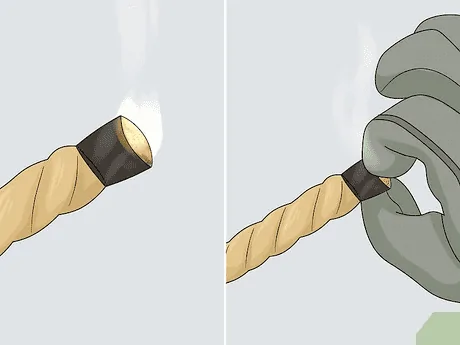
Based on your response, I think you have misunderstood what I meant about the shrink tubing. What I was referring to is putting tape on the end of the loom to prevent fraying. The loom itself is not waterproof so to your statement about how water proof the tape is, that doesn't apply here. The loom itself is braided nylon (so again, porous and not waterproof) and if you don't do something at the end of the loom itself, it will fray and unravel. I was referring to someone in a previous post who recommended using heat shrink tubing to secure the end of the loom, but my point is that once you heat shrink the tubing to the nylon braiding, it really can't be undone. I choose to seal the end of the loom not unlike you would a braided rope. This graphic shows how they seal the end of the rope with a shrink tube-like product to prevent fraying and unraveling:

The wire itself will have whatever ring/butt/spade connectors that you are using and those should be sealed as you suggested, but the loom will be loose over the wiring. I hope I explained that but it might still be confusing as I read it back.
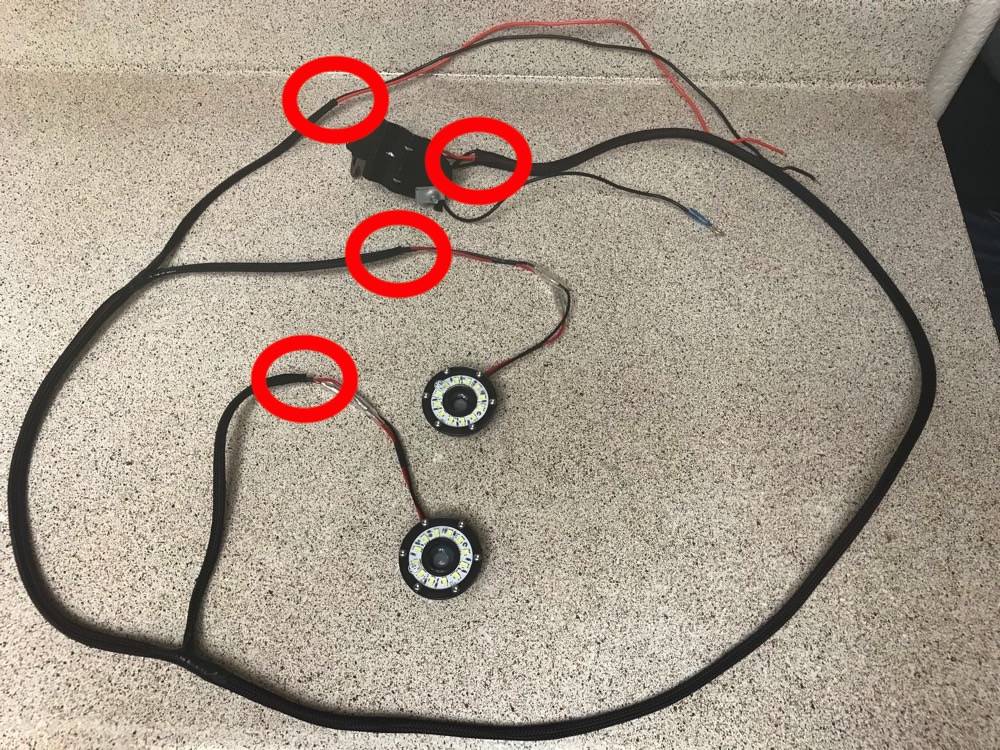
Here's a pic of the harness I made for my underhood lights (while I was building it):

You'll see that my wire connectors are sealed as you mentioned. But the loom is just open at it's end (red circles) and can fray and come apart. This is what you would want to put shrink tube or harness tape or electrical tape, etc. on.
As for the service loop, I could go either way on that concept. You certainly see that with home construction, but look under your hood and see how many service loops there are on any factory harnesses. What I have found building out Jeeps for 30+ years is that if I'm making an adjustment, as you say, I need more than a few inches of extra wire. And that is typically because, any adjustment I might be doing is more of a relocation or installation of something entirely different and again, a few inches never seems to help (I know...that's what she said). HOWEVER, while you are building your harness or running your wire, I absolutely advocate leaving a bunch of extra wire at the ends of your run and then trimming to the appropriate length when you are ready to terminate. Every electrician will tell you that they have pulled a wire run having measured it and once it all routed around bends and such, the wire was too short.
When I built the above pictured harness, I ran all the wire where I wanted it with about 6 inches of excess at each end, lights hung, switch mounted, etc. as I mocked it up. Once everything was where I wanted it, I then trimmed wires, terminated ends AND last was put the loom on.
Hope that answers the question but happy to help with further questions.
Thanks brother. Yes I did not get your point but now I do, and I have learned something new!
Sponsored