
Sponsored

Mesh loom for wire protection in the engine bay or?

Sw00per

Well-Known Member
First Name
John
Joined
Sep 16, 2023
Threads
62
Messages
605
Reaction score
921
Location
California - S.F. Bay (Fog Town)
Vehicle(s)
2023 Mojave
HI All,

Planning on istalling some A-Pillar lights and was thinking of using some heat resistant mesh loom to protect the wires and just have a cleaner look. Not having done this before I figure someone with some experience can validate this or provide a better option.

Thanks!
Sponsored

 

Jeepmonster

Well-Known Member
Joined
Jun 1, 2020
Threads
8
Messages
493
Reaction score
1,514
Location
Socal
Vehicle(s)
2020 JTR, 1968 Chevy C10
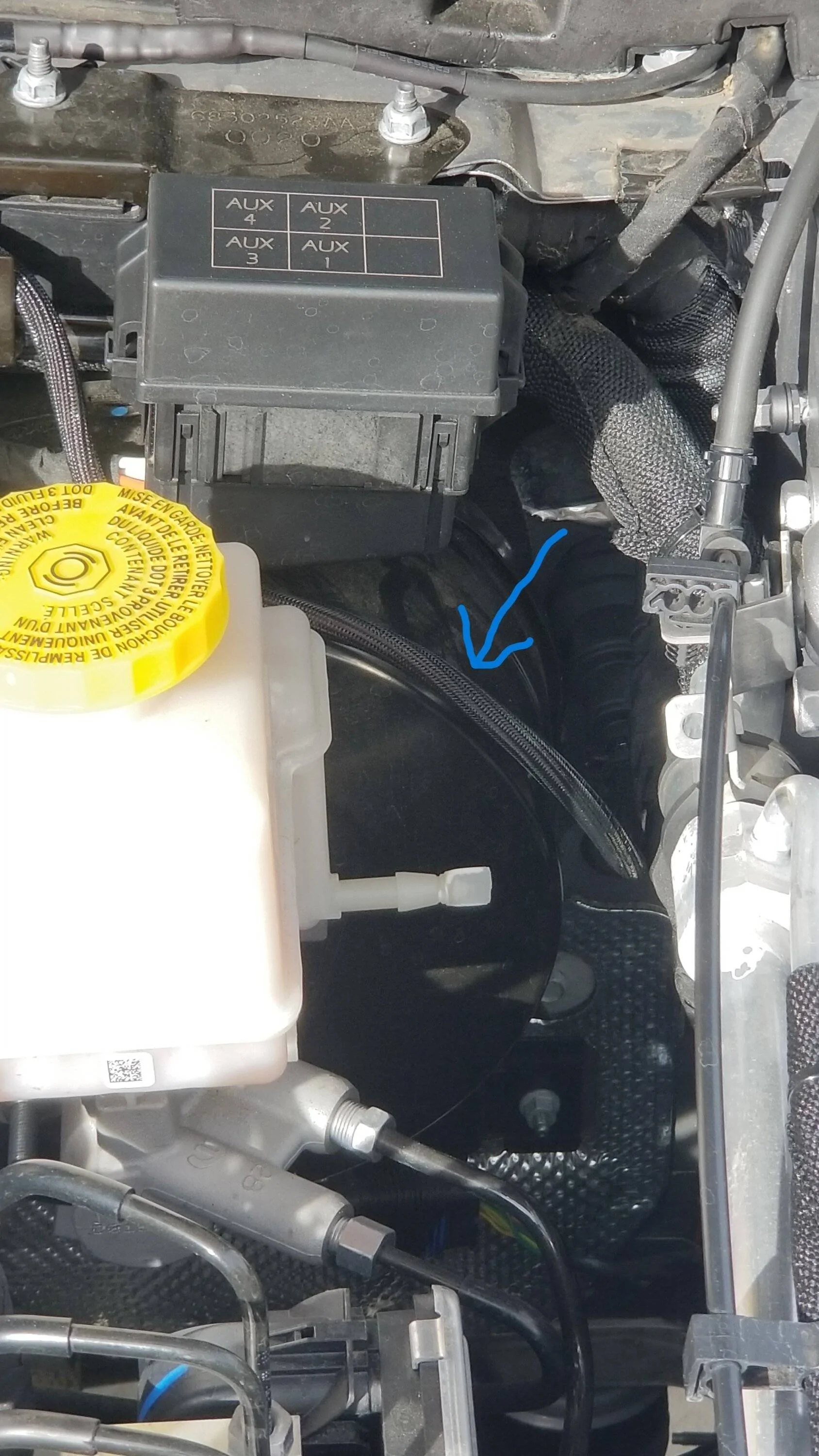
I've used braided split loom and Tesa tape under the hood. Picture below is the firewall boot with 6 AWG wire for my subwoofer amp. I used the mesh loom for added abrasion protection. I don't have a picture, but I used Tesa tape at the ends to keep the mesh from fraying.
Jeep Gladiator Mesh loom for wire protection in the engine bay or? 20210214_142221


If you just need a durable two conductor cable for lights and accessories, you might want to consider a heavy duty wire that has thick insulation (link below). I used this for a harness from the back of the bed to my Aux switch terminal under the hood. At the ends, you can use waterproof heat shrink or just wrap with Tesa tape, which is how some of the OEM harnesses are made. The split mesh looms are great for bundling multiple wires. It makes it easier to route and it doesn't look as cluttered as zip ties every few inches.

https://www.amazon.com/gp/product/B07CZPWZK1/ref=ppx_yo_dt_b_search_asin_title?ie=UTF8&psc=1

https://www.amazon.com/gp/product/B01I2MLN2Q/ref=ppx_yo_dt_b_search_asin_title?ie=UTF8&psc=1
 
Last edited:
OP
OP
Sw00per

Sw00per

Well-Known Member
First Name
John
Joined
Sep 16, 2023
Threads
62
Messages
605
Reaction score
921
Location
California - S.F. Bay (Fog Town)
Vehicle(s)
2023 Mojave
I've used braided split loom and Tesa tape under the hood. Picture below is the firewall boot with 6 AWG wire for my subwoofer amp. I used the mesh loom for added abrasion protection. I don't have a picture, but I used Tesa tape at the ends to keep the mesh from fraying.
20210214_142221.jpg


If you just need a durable two conductor cable for lights and accessories, you might want to consider a heavy duty wire that has thick insulation (link below). I used this for a harness from the back of the bed to my Aux switch terminal under the hood. At the ends, you can use waterproof heat shrink or just wrap with Tesa tape, which is how some of the OEM harnesses are made. The split mesh looms are great for bundling multiple wires. It makes it easier to route and it doesn't look as cluttered as zip ties every few inches.

https://www.amazon.com/gp/product/B07CZPWZK1/ref=ppx_yo_dt_b_search_asin_title?ie=UTF8&psc=1

https://www.amazon.com/gp/product/B01I2MLN2Q/ref=ppx_yo_dt_b_search_asin_title?ie=UTF8&psc=1
Looks like we are taking the same thing. I called it mesh but it is labeled braided. It is HEAT-RESISTANT — Rated for temperatures up to 150°C (302°F). I also have some of this which is similar to TESA https://www.amazon.com/dp/B0B87FT2ZP?psc=1&ref=ppx_yo2ov_dt_b_product_details
 

1stXMan

Well-Known Member
Joined
Jan 5, 2022
Threads
2
Messages
142
Reaction score
127
Location
DFW, TX
Vehicle(s)
2021 Jeep Gladiator Rubicon Diesel
Mesh is great stuff. Use it all the time. They have fancy colors if you want to be silly with it.
 

Sponsored

HooliganActual

Well-Known Member
First Name
Robert
Joined
Jun 27, 2020
Threads
9
Messages
1,410
Reaction score
3,601
Location
10 miles from the Sun
Vehicle(s)
2020 Gladiator Rubicon
Occupation
Retired
I don't run a wire that doesn't have some sort of abrasion protection. Typically, if the wiring is external, I'll use the plastic loom just to minimize the amount of dust that gets in; braided loom just holds so much dirt when used exterior to the vehicle:
Plastic Loom example:
Jeep Gladiator Mesh loom for wire protection in the engine bay or? 14_SolarCableGland


But if it is internal, I use a combination of braided loom and harness tape. I like the harness tape versus shrink wrap to close the ends of braided loom, because it's easier to remove if I need to get back into the loom. You'll notice that most factory harness are nothing but harness tape.
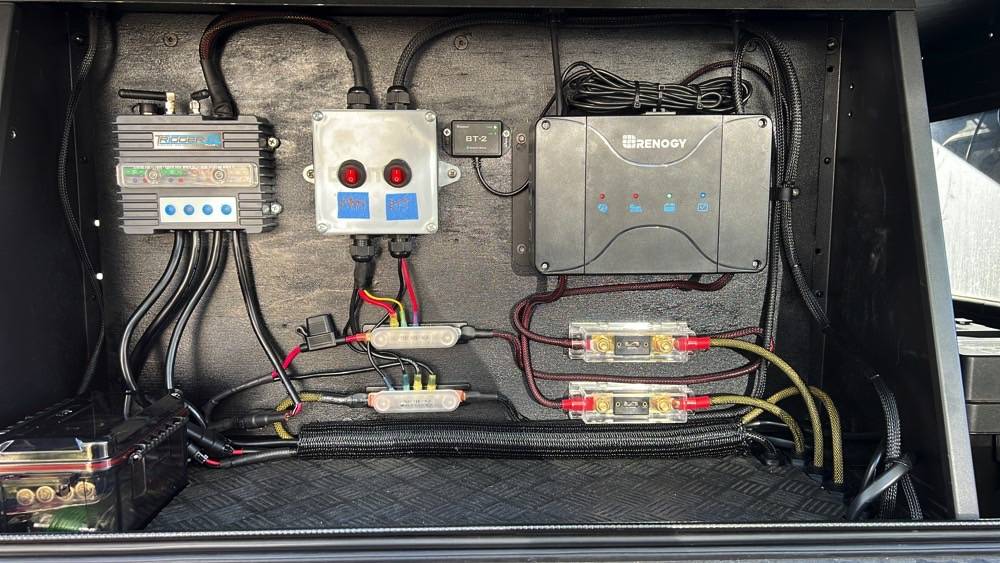
Jeep Gladiator Mesh loom for wire protection in the engine bay or? 15_HouseElectricalPanel_1


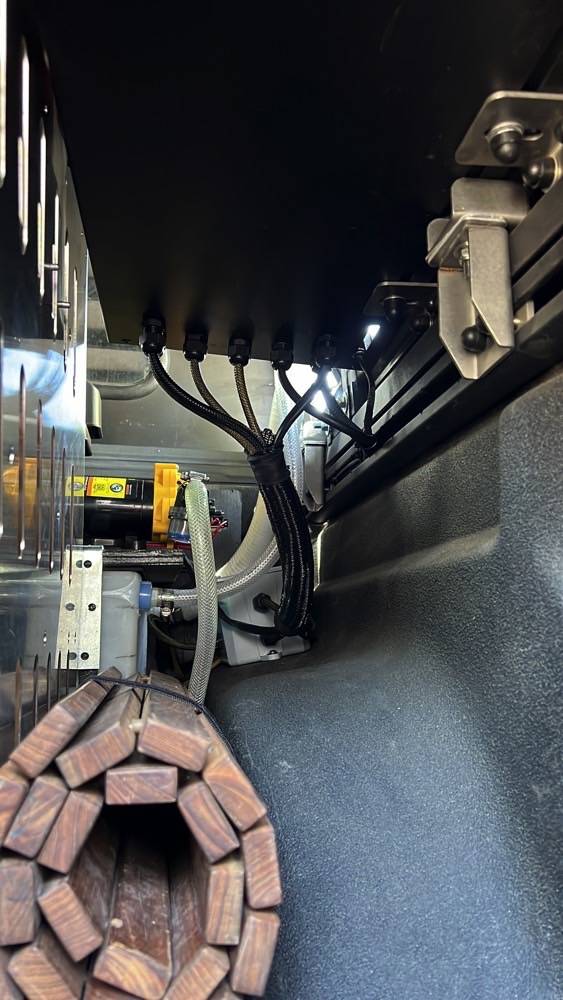
I also like to use some form of strain relief whenever possible. You'll se in the following pic, every cable coming out of my "electrical panel" has a nylon cable gland which accomplishes strain relief AND locks the cable due to the watertight bushing in the gland:
Jeep Gladiator Mesh loom for wire protection in the engine bay or? 15_HouseElectricalPanel_2


@Sw00per Definitely use the braided loom for your project. Personally, I just buy it from Amazon:
https://www.amazon.com/gp/product/B07F5G1RNF/ref=ppx_yo_dt_b_search_asin_title?ie=UTF8&psc=1
-OR-
https://www.amazon.com/gp/product/B074GM1PK1/ref=ppx_yo_dt_b_search_asin_title?ie=UTF8&psc=1
 
OP
OP
Sw00per

Sw00per

Well-Known Member
First Name
John
Joined
Sep 16, 2023
Threads
62
Messages
605
Reaction score
921
Location
California - S.F. Bay (Fog Town)
Vehicle(s)
2023 Mojave
Thanks for all the replies. @HooliganActual interesting point on why not to use shrink tube. Not sure how water resistant the tape will be. In my mind sealing the ends makes sense... YMMV ;) As far as running wire I was told or heard that is a good idea to have a service loop in the event later you need to make adjustments. Thoughts?
 

HooliganActual

Well-Known Member
First Name
Robert
Joined
Jun 27, 2020
Threads
9
Messages
1,410
Reaction score
3,601
Location
10 miles from the Sun
Vehicle(s)
2020 Gladiator Rubicon
Occupation
Retired
Thanks for all the replies. @HooliganActual interesting point on why not to use shrink tube. Not sure how water resistant the tape will be. In my mind sealing the ends makes sense... YMMV ;) As far as running wire I was told or heard that is a good idea to have a service loop in the event later you need to make adjustments. Thoughts?
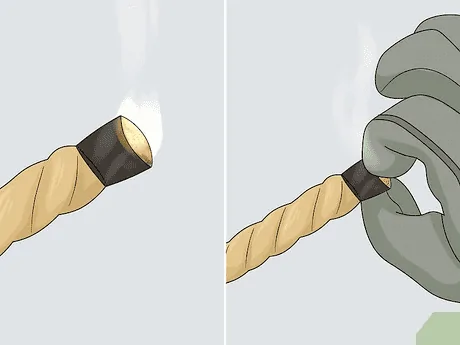
Based on your response, I think you have misunderstood what I meant about the shrink tubing. What I was referring to is putting tape on the end of the loom to prevent fraying. The loom itself is not waterproof so to your statement about how water proof the tape is, that doesn't apply here. The loom itself is braided nylon (so again, porous and not waterproof) and if you don't do something at the end of the loom itself, it will fray and unravel. I was referring to someone in a previous post who recommended using heat shrink tubing to secure the end of the loom, but my point is that once you heat shrink the tubing to the nylon braiding, it really can't be undone. I choose to seal the end of the loom not unlike you would a braided rope. This graphic shows how they seal the end of the rope with a shrink tube-like product to prevent fraying and unraveling:
Jeep Gladiator Mesh loom for wire protection in the engine bay or? 1708118433810


The wire itself will have whatever ring/butt/spade connectors that you are using and those should be sealed as you suggested, but the loom will be loose over the wiring. I hope I explained that but it might still be confusing as I read it back.

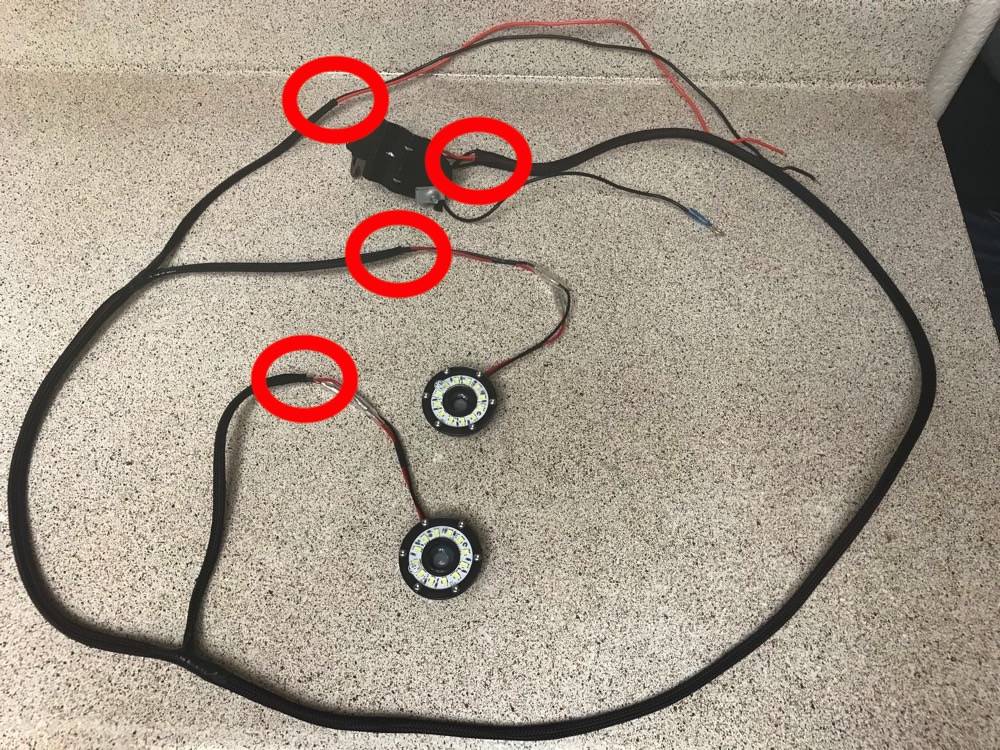
Here's a pic of the harness I made for my underhood lights (while I was building it):
Jeep Gladiator Mesh loom for wire protection in the engine bay or? rocklights3


You'll see that my wire connectors are sealed as you mentioned. But the loom is just open at it's end (red circles) and can fray and come apart. This is what you would want to put shrink tube or harness tape or electrical tape, etc. on.

As for the service loop, I could go either way on that concept. You certainly see that with home construction, but look under your hood and see how many service loops there are on any factory harnesses. What I have found building out Jeeps for 30+ years is that if I'm making an adjustment, as you say, I need more than a few inches of extra wire. And that is typically because, any adjustment I might be doing is more of a relocation or installation of something entirely different and again, a few inches never seems to help (I know...that's what she said). HOWEVER, while you are building your harness or running your wire, I absolutely advocate leaving a bunch of extra wire at the ends of your run and then trimming to the appropriate length when you are ready to terminate. Every electrician will tell you that they have pulled a wire run having measured it and once it all routed around bends and such, the wire was too short.

When I built the above pictured harness, I ran all the wire where I wanted it with about 6 inches of excess at each end, lights hung, switch mounted, etc. as I mocked it up. Once everything was where I wanted it, I then trimmed wires, terminated ends AND last was put the loom on.

Hope that answers the question but happy to help with further questions.
 
Last edited:

Forum Crawler

Well-Known Member
Joined
May 14, 2020
Threads
2
Messages
335
Reaction score
545
Location
USA
Vehicle(s)
2020 Gladiator
Occupation
Working for the man every night and day
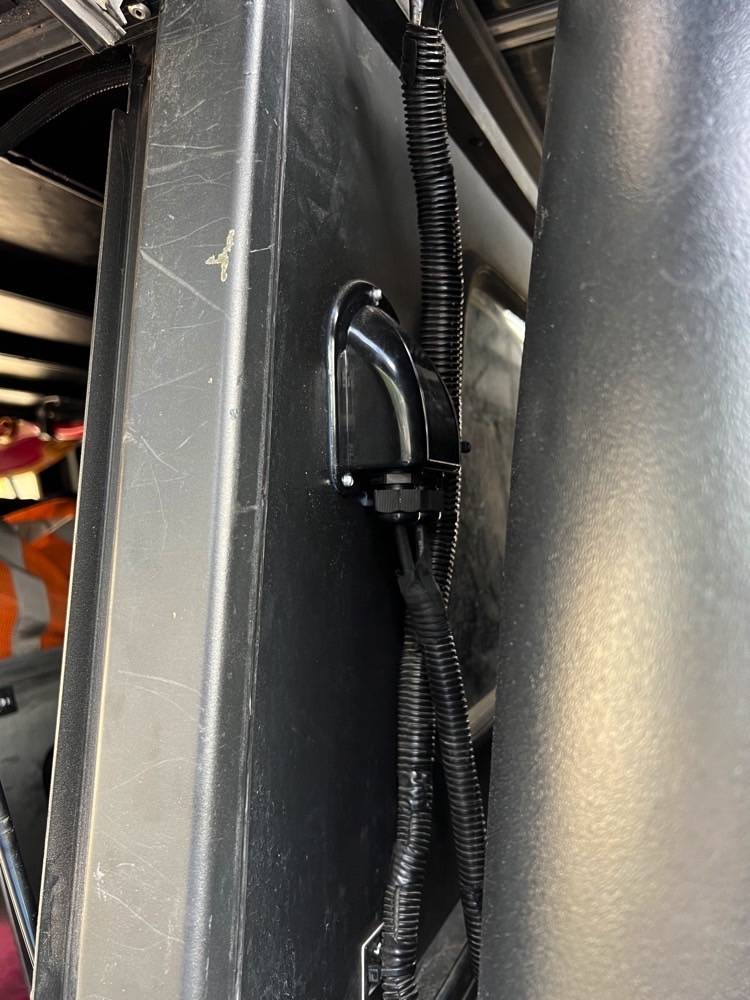
I use it religiously in projects involving wiring. It's cheap insurance to prevent an unwanted short and looks better than OEM if you do it right (heat shrink the ends;)). Get the 100' spools and you will always have it handy.

This
 

ShadowsPapa

Well-Known Member
First Name
Bill
Joined
Oct 12, 2019
Threads
247
Messages
40,463
Reaction score
53,908
Location
Runnells, Iowa
Vehicle(s)
'25 JTMX, '23 JLU 4xe, '82 SX4, '73 Javelin
Occupation
Retired auto mechanic, frmr gov't ntwrk security admin
Vehicle Showcase
3
Based on your response, I think you have misunderstood what I meant about the shrink tubing. What I was referring to is putting tape on the end of the loom to prevent fraying. The loom itself is not waterproof so to your statement about how water proof the tape is, that doesn't apply here. The loom itself is braided nylon (so again, porous and not waterproof) and if you don't do something at the end of the loom itself, it will fray and unravel. I was referring to someone in a previous post who recommended using heat shrink tubing to secure the end of the loom, but my point is that once you heat shrink the tubing to the nylon braiding, it really can't be undone. I choose to seal the end of the loom not unlike you would a braided rope. This graphic shows how they seal the end of the rope with a shrink tube-like product to prevent fraying and unraveling:
1708118433810.png


The wire itself will have whatever ring/butt/spade connectors that you are using and those should be sealed as you suggested, but the loom will be loose over the wiring. I hope I explained that but it might still be confusing as I read it back.

Here's a pic of the harness I made for my underhood lights (while I was building it):
rocklights3.jpeg


You'll see that my wire connectors are sealed as you mentioned. But the loom is just open at it's end (red circles) and can fray and come apart. This is what you would want to put shrink tube or harness tape or electrical tape, etc. on.

As for the service loop, I could go either way on that concept. You certainly see that with home construction, but look under your hood and see how many service loops there are on any factory harnesses. What I have found building out Jeeps for 30+ years is that if I'm making an adjustment, as you say, I need more than a few inches of extra wire. And that is typically because, any adjustment I might be doing is more of a relocation or installation of something entirely different and again, a few inches never seems to help (I know...that's what she said). HOWEVER, while you are building your harness or running your wire, I absolutely advocate leaving a bunch of extra wire at the ends of your run and then trimming to the appropriate length when you are ready to terminate. Every electrician will tell you that they have pulled a wire run having measured it and once it all routed around bends and such, the wire was too short.

When I built the above pictured harness, I ran all the wire where I wanted it with about 6 inches of excess at each end, lights hung, switch mounted, etc. as I mocked it up. Once everything was where I wanted it, I then trimmed wires, terminated ends AND last was put the loom on.

Hope that answers the question but happy to help with further questions.
Just like nylon rope after cutting, i use heat to "seal" the ends to prevent more fraying, then depending on my application (and need or lack of need to modify in the future) will decide how I terminate the woven sheath.
There's a crazy amount of wiring for my snow plow, and I modified it further by making pigtails to connect into the TS/parking lights rather than splicing into them so I can could simply unplug things (they wanted those connections made using splices into the factory wiring - ugh, that bugs me)
I can't believe how many meters of wiring there is in that system, there's harnesses on every side of the engine bay and of course poking out front for connections to the plow itself.
I guess I use various methods - depending on need to be future-proof or if it's the final wire, seal it up, all done type of thing.
 

Sponsored

RudeJeepin

Well-Known Member
First Name
Carl
Joined
May 6, 2022
Threads
5
Messages
1,512
Reaction score
2,388
Location
Washington
Vehicle(s)
2022 JTRD
Build Thread
Link
As far as service loops go, I tend to leave some extra.
I used to be a mechanic and was usually the go to guy for electrical problems. I've replaced countless electrical connectors. I've also had to splice in extra wire, or make complete new runs because there wasn't enough extra wire.
So I tend to leave myself extra wire whenever possible.

I wired in some lights for the interior of my enclosed trailer. I bought a couple of decent extension cord and clipped the 110v plug ends off and used them to run the wiring. No need for loom since the wires are encased in heavy insulation of the outer cord.

I've done this several times without any issues. Extension cords can be bought in numerous lengths and 2 or 3 wire. It's also cheaper than buying wire and loom at the auto parts store.
 

HooliganActual

Well-Known Member
First Name
Robert
Joined
Jun 27, 2020
Threads
9
Messages
1,410
Reaction score
3,601
Location
10 miles from the Sun
Vehicle(s)
2020 Gladiator Rubicon
Occupation
Retired
Just like nylon rope after cutting, i use heat to "seal" the ends to prevent more fraying, then depending on my application (and need or lack of need to modify in the future) will decide how I terminate the woven sheath.
There's a crazy amount of wiring for my snow plow, and I modified it further by making pigtails to connect into the TS/parking lights rather than splicing into them so I can could simply unplug things (they wanted those connections made using splices into the factory wiring - ugh, that bugs me)
I can't believe how many meters of wiring there is in that system, there's harnesses on every side of the engine bay and of course poking out front for connections to the plow itself.
I guess I use various methods - depending on need to be future-proof or if it's the final wire, seal it up, all done type of thing.
I agree with using a heat gun or such to melt the ends similar to a nylon rope. What I do find though is that by the time I get it “melted”, the diameter is a bit small and can split/open up again after I feed wires through, mind you not bad, but enough that my OCD gets the better of me. So for that “extra protection” I’ll put on a wrap or two of harness tape just to keep everything tight.
 

ShadowsPapa

Well-Known Member
First Name
Bill
Joined
Oct 12, 2019
Threads
247
Messages
40,463
Reaction score
53,908
Location
Runnells, Iowa
Vehicle(s)
'25 JTMX, '23 JLU 4xe, '82 SX4, '73 Javelin
Occupation
Retired auto mechanic, frmr gov't ntwrk security admin
Vehicle Showcase
3
I agree with using a heat gun or such to melt the ends similar to a nylon rope. What I do find though is that by the time I get it “melted”, the diameter is a bit small and can split/open up again after I feed wires through, mind you not bad, but enough that my OCD gets the better of me. So for that “extra protection” I’ll put on a wrap or two of harness tape just to keep everything tight.
Not to mention - it looks neat/professional.
 

HooliganActual

Well-Known Member
First Name
Robert
Joined
Jun 27, 2020
Threads
9
Messages
1,410
Reaction score
3,601
Location
10 miles from the Sun
Vehicle(s)
2020 Gladiator Rubicon
Occupation
Retired
Not to mention - it looks neat/professional.
I used to heat shrink the end of the looms but then found at times I wanted to run wires through that same loom for another application. The tape is just easier to undo than heat shrink. Also it’s hard to put a heat shrink tube around the new wires and the old wires without undoing everything. The tape is just easy and as you say, looks like you know what you’re doing.
Sponsored


Top