
Sponsored
Search results
-

ACT clutch engagement noise
Sorry for the delay. No, the noise is not associated with the judder. Although we expect the ACT clutch to be more aggressive, if the judder is not easy to avoid, this is not normal. There are a few things that could cause this related to the parts or the install. With the tight tolerances we...- ACTman
- Post #21
- Forum: Transmission, Axles and Gears
-
What's the consensus on the revised/post-recall clutch?
If getting the CF, I recommend the CF2, not the dual friction, since it has more friction material for better heat capacity. Of course I recommend the ACT (JP6-HDSS), but that's because I own the company. :)- ACTman
- Post #14
- Forum: Transmission, Axles and Gears
-
ACT clutch engagement noise
Sort of... Let me explain what I found. I only received a handful of people with feedback, and as we were waiting for data and time for testing, clutch sales have soared but the noise complaints stopped. This seemed strange until we did some testing. On the Jeep JL/JT, we use very little marcel...- ACTman
- Post #19
- Forum: Transmission, Axles and Gears
-
JT/JL Clutch and Flywheel explained by ACT
The delay valve is in the port to the slave cylinder.- ACTman
- Post #78
- Forum: Transmission, Axles and Gears
-
JT/JL Clutch and Flywheel explained by ACT
Yes, there is a clutch delay valve in the slave cylinder. The restrictor can be removed with some effort, but it will not make much difference. The restrictor slows the flow of fluid in one direction (as clutch is engaging), but it only prevents very fast or sudden clutch drops. This can make a...- ACTman
- Post #76
- Forum: Transmission, Axles and Gears
-
Clutch recall driving review
I think what people don't realize is the improvement in feel whenever you freshly lubricate the operating system (clutch arm, release bearing sleeve) and install new parts. It is not due to a change in design.- ACTman
- Post #7
- Forum: Issues, Repairs, Warranty, TSB, Recalls
-
Swapping out clutch
Our (ACT) JP6-HDSS would work great. Check reviews,- ACTman
- Post #5
- Forum: Transmission, Axles and Gears
-
ACT clutch engagement noise
Also on that thread I shared some direction I can take to possibly alieviate the noise issue. Since I haven't experienced the issue (and most don't) I need more information: "After seeing how many other stock applications have this issue, the "chewbacca" noise is more common that I ever...- ACTman
- Post #13
- Forum: Transmission, Axles and Gears
-
ACT clutch engagement noise
I am just seeing this thread. Below is from the discussion on the JL WRangler Forum when people were suggesting not to drive the car, I was sharing how common the noise is on other applications: "For a bit of background, I did a quick search for the same/similar noise for other clutches. I was...- ACTman
- Post #12
- Forum: Transmission, Axles and Gears
-
Clutch Recall (2/23/23): Clutch Pressure Plate May Overheat -- Affecting 70,000 Manual Jeep Wranglers and Gladiators
I haven't seen many issues with the stock bearing/arm arrangement. In theory, I don't have an issue with running a concentric slave cylinder IF it is super reliable, and set up correctly for the vehicle and clutch, since once it fails, you have to drop the transmission to get to it. Remember...- ACTman
- Post #446
- Forum: Issues, Repairs, Warranty, TSB, Recalls
-
Clutch Recall (2/23/23): Clutch Pressure Plate May Overheat -- Affecting 70,000 Manual Jeep Wranglers and Gladiators
Thanks for taking the time to share your experience.- ACTman
- Post #438
- Forum: Issues, Repairs, Warranty, TSB, Recalls
-
Clutch Recall (2/23/23): Clutch Pressure Plate May Overheat -- Affecting 70,000 Manual Jeep Wranglers and Gladiators
There are a few variables, but from our testing, the clutch doesn't give you much in reserve, as with most vehicles with self-adjusting pressure plates, only a bit worse on the Jeeps. For a full explanation, see the following thread, especially post #19...- ACTman
- Post #436
- Forum: Issues, Repairs, Warranty, TSB, Recalls
-
JT/JL Clutch and Flywheel explained by ACT
This is usually caused by the slave cyl not connecting with the clutch arm correctly. It is so common AllData instructs to use a scope to make sure it is installed correctly. It should be fine just make sure it is installed right.- ACTman
- Post #61
- Forum: Transmission, Axles and Gears
-
Clutch Recall (2/23/23): Clutch Pressure Plate May Overheat -- Affecting 70,000 Manual Jeep Wranglers and Gladiators
Some have had success, but I think it will become difficult to get Stellantis to cover aftermarket clutch replacements now that they have finally started rolling out their "fix".- ACTman
- Post #422
- Forum: Issues, Repairs, Warranty, TSB, Recalls
-
ACT Gladiator Clutch/Promass flywheel installed
Thanks for sharing the positive feedback!- ACTman
- Post #31
- Forum: Transmission, Axles and Gears
-
Clutch Recall (2/23/23): Clutch Pressure Plate May Overheat -- Affecting 70,000 Manual Jeep Wranglers and Gladiators
Sorry, IMO that is just like putting lipstick on a pig. It fails to address the reasons why the clutch overheats in the first place. Also, the other mating surfaces are thin and susceptible to failure.- ACTman
- Post #414
- Forum: Issues, Repairs, Warranty, TSB, Recalls
-
Clutch Recall (2/23/23): Clutch Pressure Plate May Overheat -- Affecting 70,000 Manual Jeep Wranglers and Gladiators
They didn't actually say they are going to fix the clutch. They only say they will replace the clutch and change the software. On a new vehicle, I would be interested to know if they are only changing the software.- ACTman
- Post #380
- Forum: Issues, Repairs, Warranty, TSB, Recalls
-
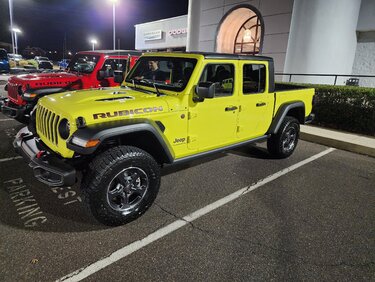
Duecius Maximus, a build...
Thanks for putting your trust in us. I think you will be quite satisfied! BTW, which dog tag did you get?- ACTman
- Post #170
- Forum: Build & Rig Journals
-
Clutch Recall (2/23/23): Clutch Pressure Plate May Overheat -- Affecting 70,000 Manual Jeep Wranglers and Gladiators
The diaphragm spring is essentially what you feel with your foot, minus the pedal assist spring (and friction). One benefit of a twin disc is to hold high torque without a heavy diaphragm spring. In this case, since the Jeep doesn't make high torque, the spring is super light. We have also found...- ACTman
- Post #377
- Forum: Issues, Repairs, Warranty, TSB, Recalls
-
2020 Gladiator Clutch Plate exploded
So sorry for your loss but glad everyone is okay. If you look at my post, it may explain why the clutches are failing: https://www.jeepgladiatorforum.com/forum/threads/jt-jl-clutch-and-flywheel-explained-by-act.68758/page-2#post-1142680 For a extensive explanation of the Gladiator clutch, grab...- ACTman
- Post #23
- Forum: Issues, Repairs, Warranty, TSB, Recalls