
ShadowsPapa
Well-Known Member
- First Name
- Bill
- Joined
- Oct 12, 2019
- Threads
- 247
- Messages
- 40,501
- Reaction score
- 54,022
- Location
- Runnells, Iowa
- Vehicle(s)
- '25 JTMX, '23 JLU 4xe, '82 SX4, '73 Javelin
- Occupation
- Retired auto mechanic, frmr gov't ntwrk security admin
- Vehicle Showcase
- 3
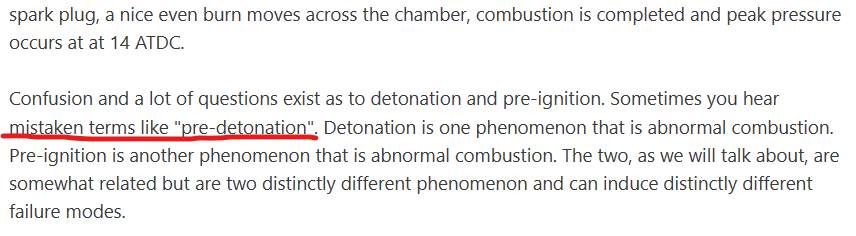
LOL - not possible because of what detonation is.All that pre-detonation implies is that the detonation is occuring BEFORE the sequence related to the ignition timing marks on the crank complete the appropriate denotation sequence in the cylinder/s!
Detonation can ONLY happen after the spark ignites the charge. So there's no way to have any such thing as "pre-detonation".
Pre means before - so that term means before detonation.
There simply is no bloody such thing as pre-detonation. No way, no how. It's not a thing.
I've studied this for years and have written articles and referenced engine designers in my writing. There isn't such a thing. it's a made up term.
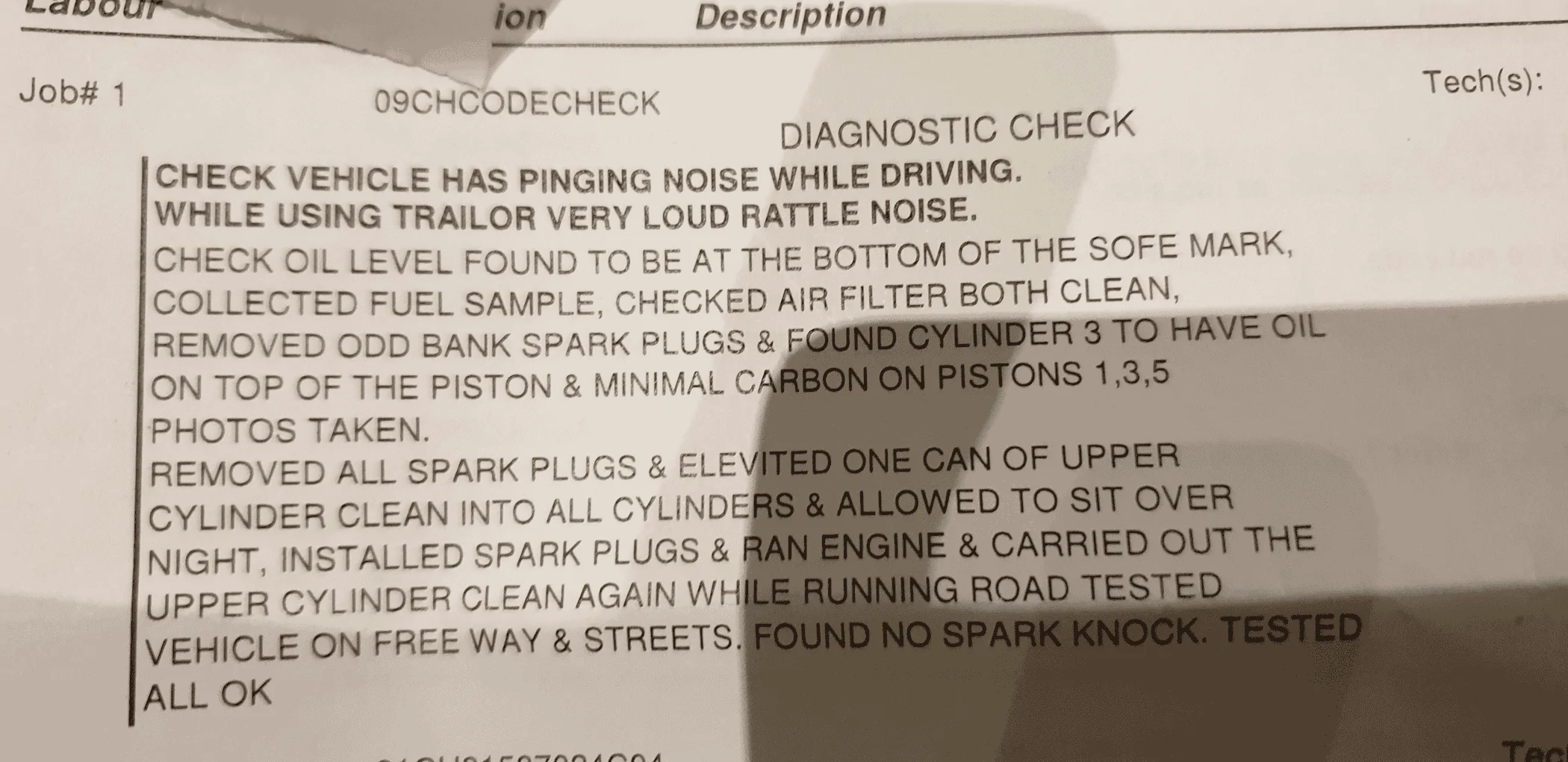
It doesn't explode - it's a controlled systematic burn.When fuel air explodes too early in an engine, it causes a loud pinging noise.
That's the static theoretic compression ratio at 100% pumping efficiency, valves totally closed at BDC and valves totally closed at TDC.1. high compression - Jeep increased the compression ratio in the 3.6 litre engines from 10.5:1 to 11.5:1...and that makes them prone to this issue
Running, it's usually well under that in reality because the intake doesn't close at exactly BDC and the exhaust doesn't fully close at TDC.
Dynamic compression pressures are far more important.
They can release some of the compression pressures by changing valve timing, and, by using low lift at RPM below about 2800 RPM, you can't fully fill the combustion chamber. So you won't get that 11.5:1 number.
Depending on the cam grind, cam timing, LSA, and other factors, you may end up well under that, or with valves at full lift, even over 100% pumping efficiency.
I have built quite a few engines, and even dealt with the factors that cause detonation (again, that pre-detonation term is a total joke), used various factors to control detonation.
Yeah, we have to be picky here because the causes and results are different. You don't use the same methods to resolve detonation as you would preignition.
It matters very much. No real mechanic or tech that knows anything about either would confuse the two. Only journalists who write about cars and engines but really know nothing created that term not understanding what they were hearing about.
PREIGNITION is very different. It is absolutely caused by something igniting the charge BEFORE the spark, thus the PRE prefix - BEFORE IGNITION - BEFORE SPARK.
Detonation is caused when the compressed and burning fuel charge flame front pushes against the unburned charge in the chamber, raising the pressure and heat on the unburned fuel to the point of self-ignition.
So now you have TWO flame fronts, both burning, not exploding, and the hit each other, blowing away the boundary layer protecting the top of the piston, allowing the full heat of the burning charge to hit the piston top, causing melting or breaking from the force of the colliding flame fronts and intense pressures.
Higher octane fuels resist self-ignition. The molecular structure resists self-igniting under intense heat and pressure. It burns the same, same energy content, same burn speed and so on, it simply resists DETONATING or self-igniting. That's it.
I could post all of my articles on the topic, but most will still insist they know more or better.
DETONATION has no "pre" prefix on it! Detonation is detonation. That's it.
I can post a ton of materials - including this bit from a detailed study and explanation of each - look at the terms!
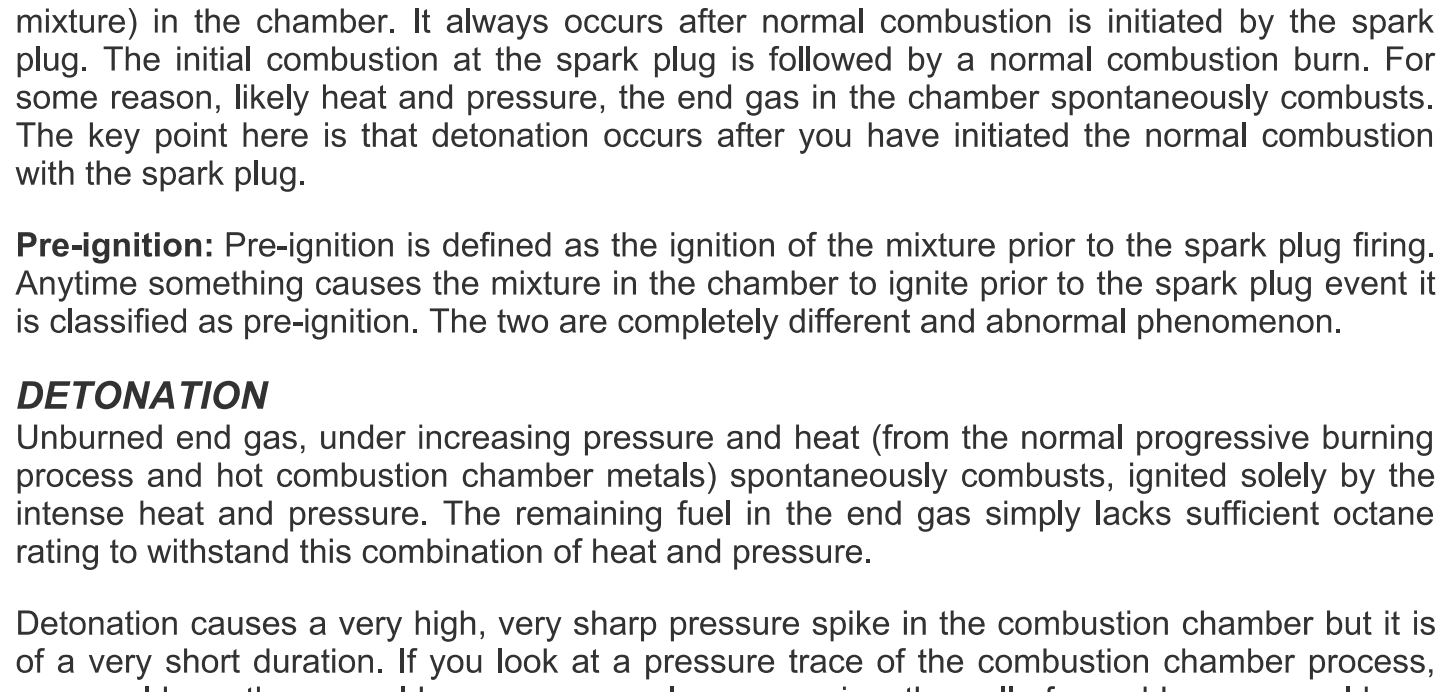
This is from a GM engineer who actually designed engines and wrote on the science of combustion -
Sponsored
Last edited: