chorky
Well-Known Member
- First Name
- Chad
- Joined
- Feb 26, 2022
- Threads
- 175
- Messages
- 3,466
- Reaction score
- 3,802
- Location
- Montana
- Website
- www.youtube.com
- Vehicle(s)
- '22JTR, '06 LJ, '06 TJ GE
- Build Thread
- Link
- Occupation
- GIS Specialist
- Thread starter
- #1
Disclaimer - I didn't know what portion of the forum to put this in, admins feel free to relocate as needed.
Ok - so I am considering the idea of a permanent modification to my current set-up. Everyone can thank a fellow forum member for this, you know who you are! hah. But it was actually in mind months ago.
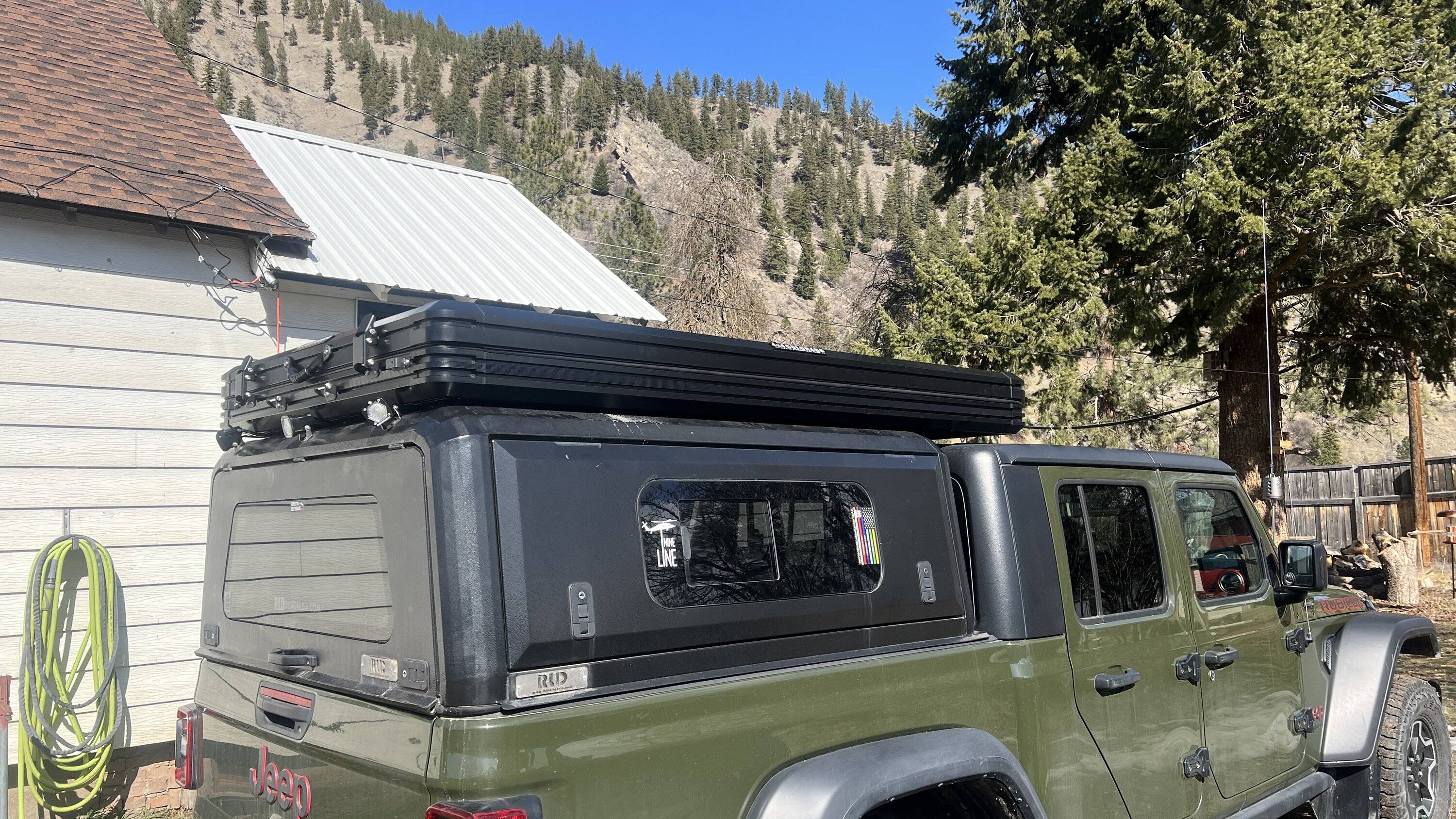
I like my current tent and canopy. And it's paid for. Despite them both being on the heavy side. I also really like the alu-cab idea (too heavy and WAY too expensive for me), and also like a lot the OvrlndCamper - a great family and product. Both of those options offer something I don't have with a RTT - inside seating/standing space. Not that 'inside' space in a JT offers a lot anyway, but I do see the benefit in my personal situation where winter temps easily get to -20. So to extend camping season to 3 seasons (like late fall and early spring) one either has to suck it up (too old and broken for that) or find a fix.
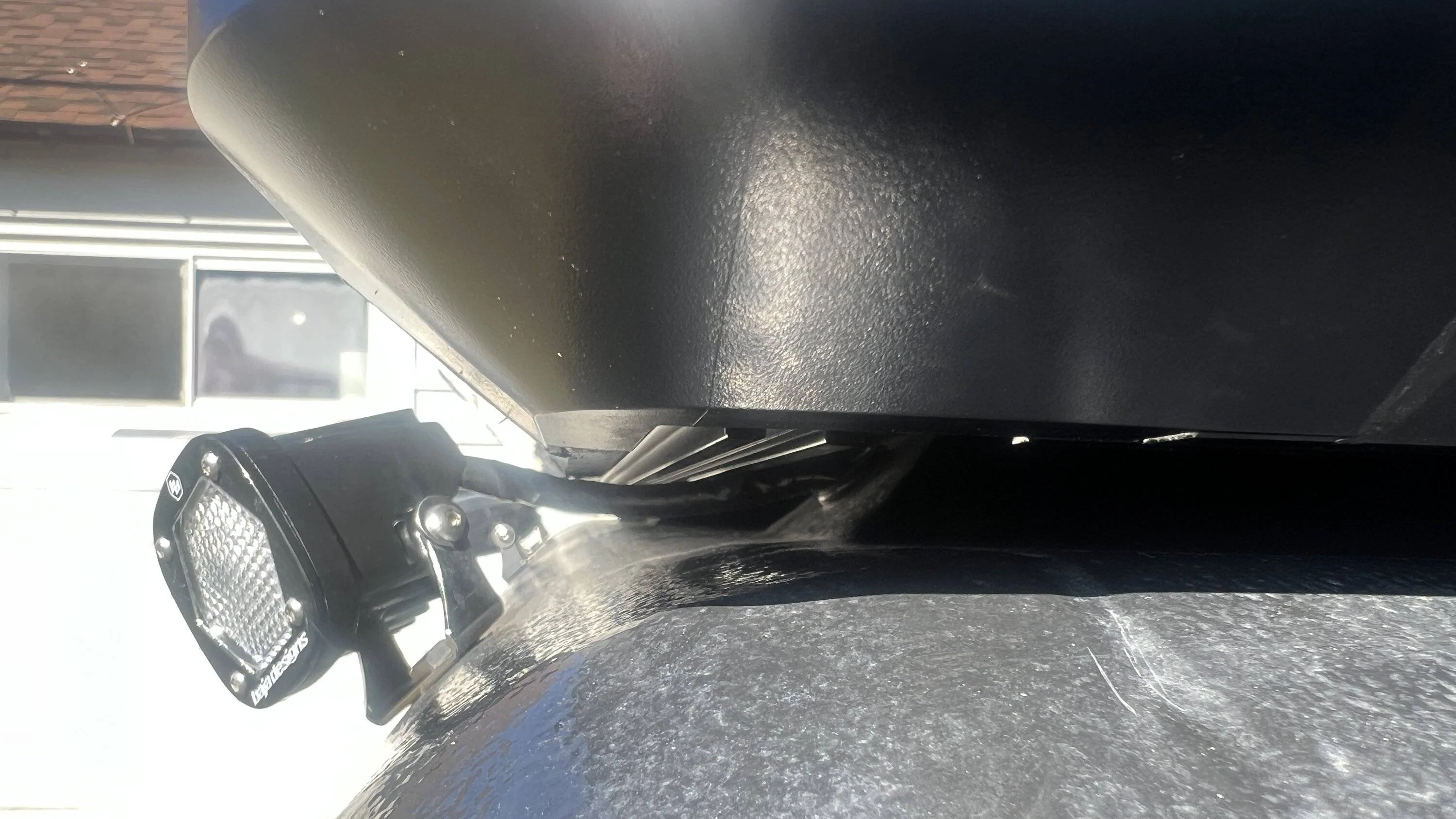
The Idea I am considering is, well to just cut a big hole in the bottom of the tent and top of the canopy and make my own version of a pop-up canopy. What I am specifically curious about though is if anyone has any direct experience (pictures would be awesome) of the honeycomb aluminum all of our RTT's have. I have seen various videos and pictures online, but I am curious if those pics and videos align up with the real world. I have no fabrication experience with RTT's. Obviously cutting a big hole is a pretty permanent mod - although I can replace the floor as the entire tent is rebuildable as per the manufacturer, it would be nice to have an idea of what to expect and to determine if it's even a route I want to explore further.
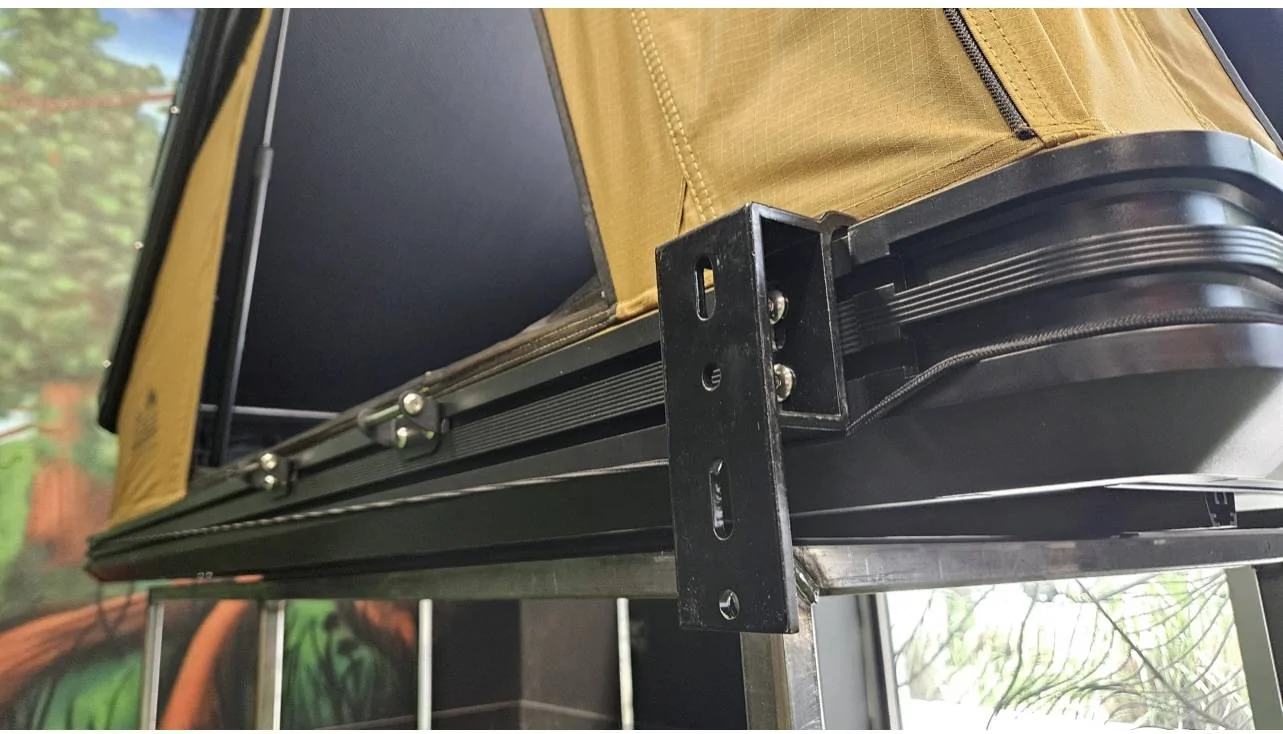
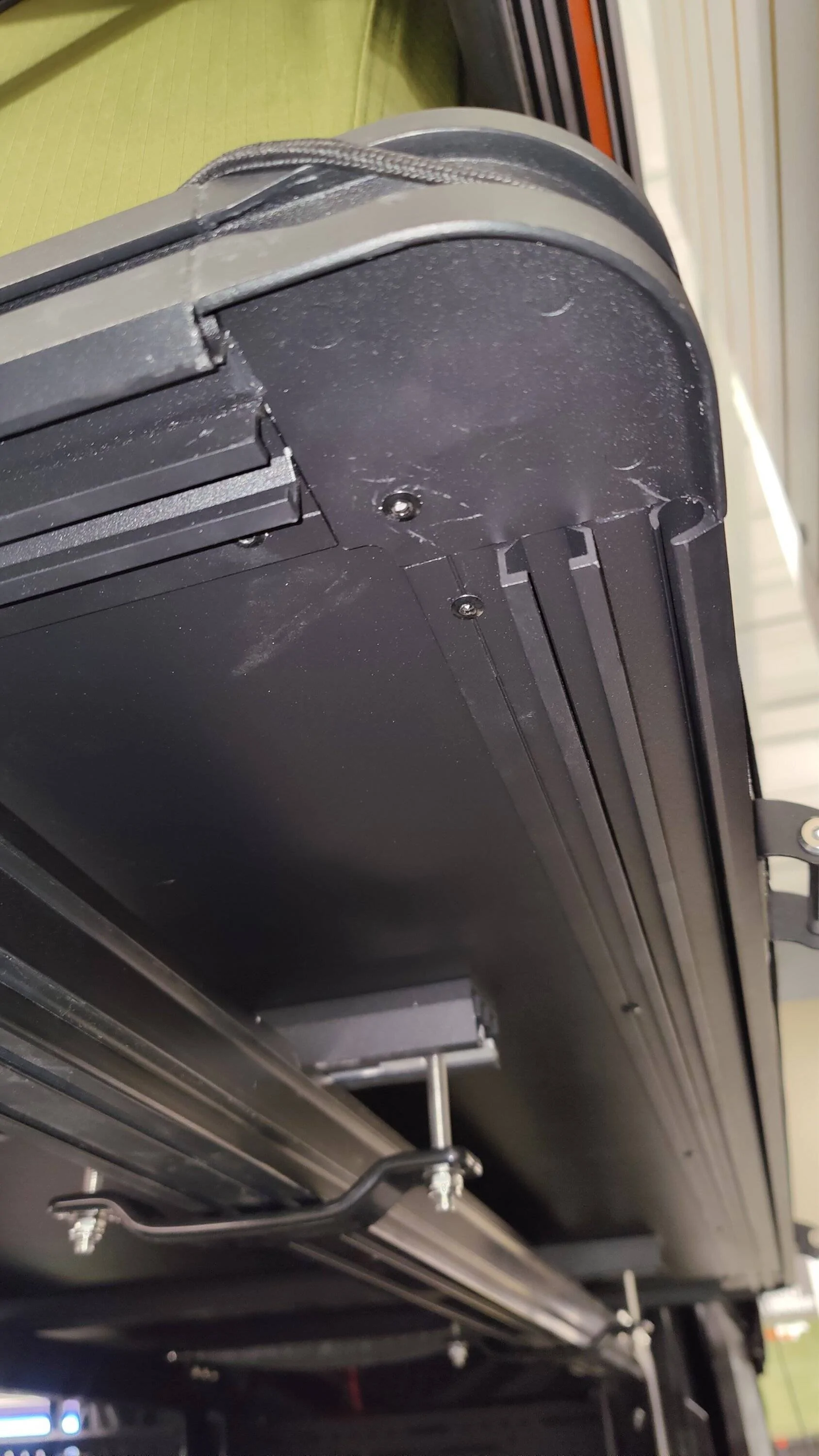
Question two is - how are the floors of these tents married to the sides. They are all basically the same, some type of fancy extruded alum on the sides with a 1 to 1.5" C channel on the inside that the floor slides into. But are they bonded together with some type of adhesive? And are the sides (front and back) just bolted together, or bonded, or using some type of L bracket? I dont know about your tent but on mine, the rounded corners are plastic and I think they are just a cover for something. This matters as it could change how I consider attaching the tent to the canopy as well as if I even want to continue considering this option. But, with a large hole in both the tent and canopy, that means more stress loading on the frame of the tent instead of the extruded floor, so how the frame is attached to the floor, and how the frame sides are attached to each other is important. especially considering the frame is what the hinges and struts are attached to that lift the roof.
My idea, in a simple explanation, would result in cutting a big hole, then covering the exposed honeycomb with a C channel strip of alum (probably 1") on all 4 interior sides which, if I source C channel with an additional lip facing outward (so facing into the new hole) would also serve as a place to lay the new platform on for sleeping. This way it can lift up, essentially like all the other canopy campers, but have a solid base to rest on when occupied by my body weight. It also would reduce total weight - my canopy being stainless steel (supposedly) I am sure would lose at least 1/3 of the weight by removing almost the entire roof of the canopy. Additionally, I could use the cut out portion of the extruded floor as the hinged 'base' to lie on, or consider a different option - it would depend on the structural stability of the extruded floor itself, as well as the weight.
So just to restate the initial question - does anyone have experience with understanding the design and structure of these honeycomb alum panels - how they are structurally bonded to themselves, as well as the outside frame of these tents? @Dan Grec I think you might be best able to speak on this with your experience in composite panels?
Here is a quick video I found the other day for a reference -
And for those reading this totally confused on what honeycomb alum even is, here's some links to photos - but its basically thin thin material of aluminum (or fiberglass) formed into the shape of honeycomb, that is sandwiched by panels of wood, alum, glass, etc.... Usually very thin sheets though. I think most RTT panels are a total of 1" thick but the alum sheeting is as thick as a piece of card stock or crafting paper.
https://www.google.com/imgres?imgur...d=0CDQQMyh-ahcKEwjQuu7d2_GBAxUAAAAAHQAAAAAQDA
Let the "your crazy" comments commence!
Ok - so I am considering the idea of a permanent modification to my current set-up. Everyone can thank a fellow forum member for this, you know who you are! hah. But it was actually in mind months ago.
I like my current tent and canopy. And it's paid for. Despite them both being on the heavy side. I also really like the alu-cab idea (too heavy and WAY too expensive for me), and also like a lot the OvrlndCamper - a great family and product. Both of those options offer something I don't have with a RTT - inside seating/standing space. Not that 'inside' space in a JT offers a lot anyway, but I do see the benefit in my personal situation where winter temps easily get to -20. So to extend camping season to 3 seasons (like late fall and early spring) one either has to suck it up (too old and broken for that) or find a fix.
The Idea I am considering is, well to just cut a big hole in the bottom of the tent and top of the canopy and make my own version of a pop-up canopy. What I am specifically curious about though is if anyone has any direct experience (pictures would be awesome) of the honeycomb aluminum all of our RTT's have. I have seen various videos and pictures online, but I am curious if those pics and videos align up with the real world. I have no fabrication experience with RTT's. Obviously cutting a big hole is a pretty permanent mod - although I can replace the floor as the entire tent is rebuildable as per the manufacturer, it would be nice to have an idea of what to expect and to determine if it's even a route I want to explore further.
Question two is - how are the floors of these tents married to the sides. They are all basically the same, some type of fancy extruded alum on the sides with a 1 to 1.5" C channel on the inside that the floor slides into. But are they bonded together with some type of adhesive? And are the sides (front and back) just bolted together, or bonded, or using some type of L bracket? I dont know about your tent but on mine, the rounded corners are plastic and I think they are just a cover for something. This matters as it could change how I consider attaching the tent to the canopy as well as if I even want to continue considering this option. But, with a large hole in both the tent and canopy, that means more stress loading on the frame of the tent instead of the extruded floor, so how the frame is attached to the floor, and how the frame sides are attached to each other is important. especially considering the frame is what the hinges and struts are attached to that lift the roof.
My idea, in a simple explanation, would result in cutting a big hole, then covering the exposed honeycomb with a C channel strip of alum (probably 1") on all 4 interior sides which, if I source C channel with an additional lip facing outward (so facing into the new hole) would also serve as a place to lay the new platform on for sleeping. This way it can lift up, essentially like all the other canopy campers, but have a solid base to rest on when occupied by my body weight. It also would reduce total weight - my canopy being stainless steel (supposedly) I am sure would lose at least 1/3 of the weight by removing almost the entire roof of the canopy. Additionally, I could use the cut out portion of the extruded floor as the hinged 'base' to lie on, or consider a different option - it would depend on the structural stability of the extruded floor itself, as well as the weight.
So just to restate the initial question - does anyone have experience with understanding the design and structure of these honeycomb alum panels - how they are structurally bonded to themselves, as well as the outside frame of these tents? @Dan Grec I think you might be best able to speak on this with your experience in composite panels?
Here is a quick video I found the other day for a reference -
And for those reading this totally confused on what honeycomb alum even is, here's some links to photos - but its basically thin thin material of aluminum (or fiberglass) formed into the shape of honeycomb, that is sandwiched by panels of wood, alum, glass, etc.... Usually very thin sheets though. I think most RTT panels are a total of 1" thick but the alum sheeting is as thick as a piece of card stock or crafting paper.
https://www.google.com/imgres?imgur...d=0CDQQMyh-ahcKEwjQuu7d2_GBAxUAAAAAHQAAAAAQDA
Let the "your crazy" comments commence!
Sponsored