Sponsored

Engine clatter when cold

chorky

Well-Known Member
First Name
Chad
Joined
Feb 26, 2022
Threads
175
Messages
3,466
Reaction score
3,801
Location
Montana
Website
www.youtube.com
Vehicle(s)
'22JTR, '06 LJ, '06 TJ GE
Build Thread
Link
Occupation
GIS Specialist
I know this topic has been covered in detail for the '19-'21 years but I dont recall this topic of discussion very prevalent for the 22 years.

about 9 months old. gasser. 6,500 miles.

The temps have been below zero for the last 3 days. Below freezing for almost a month now. I have noticed a worsening engine clatter sound. I have poor hearing, but I can only really notice it when the engine is not warmed up. I can't quite tell if it is upper engine type noise, or piston slap type noise - or neither and just cold engine 'normal' noise, which I dont think is normal for newer engines. So for example, starting remotely and letting warm up for about 10 minutes before driving home, it will still clatter on acceleration noticeably. Once the engine has warmed up (oil temps not coolant temps) the noise is gone and it sounds normal. I have not noticed any drivability issues (misfires, etc...).

Now if I let it run for 15-20 minutes in the driveway before going anywhere, enough to warm up the oil, then it does not make noise.

My first instinct is this is NOT normal. However, I am asking because 1) I am still not used to new engines, so on my old TJ it does clatter and make noise until warm, and on other old vehicles I had in the past that was relatively 'normal' and 2) with over 2' of snow now at my house, I have to hit the skinny pretty well in 4wd just to get out of the driveway. So I am currently warming the engine as long as feasible before doing so as everyone knows cold steel is not fond of heavy force.

Trying to debate if this is really worth worrying enough to take to dealer and drop off for a cold start. Getting transport back home from the dealer 1.5 hours away (and back again for pickup) is extremely difficult and usually requires taking 2 full days off of work, so not a simple task like for most people in developed areas. Or, just not worrying about it until something bad happens or when summer arrives seeing as how I have the extended warranty.

@ShadowsPapa - I know you hate talking about noises but calling you out specifically since you have a good amount of experience here if you don't mind chiming in.

Also, does anyone know if there is a 'high idle' option for these to aid in warmup?
Sponsored

 

ShadowsPapa

Well-Known Member
First Name
Bill
Joined
Oct 12, 2019
Threads
247
Messages
40,463
Reaction score
53,908
Location
Runnells, Iowa
Vehicle(s)
'25 JTMX, '23 JLU 4xe, '82 SX4, '73 Javelin
Occupation
Retired auto mechanic, frmr gov't ntwrk security admin
Vehicle Showcase
3
I know this topic has been covered in detail for the '19-'21 years but I dont recall this topic of discussion very prevalent for the 22 years.

about 9 months old. gasser. 6,500 miles.

The temps have been below zero for the last 3 days. Below freezing for almost a month now. I have noticed a worsening engine clatter sound. I have poor hearing, but I can only really notice it when the engine is not warmed up. I can't quite tell if it is upper engine type noise, or piston slap type noise - or neither and just cold engine 'normal' noise, which I dont think is normal for newer engines. So for example, starting remotely and letting warm up for about 10 minutes before driving home, it will still clatter on acceleration noticeably. Once the engine has warmed up (oil temps not coolant temps) the noise is gone and it sounds normal. I have not noticed any drivability issues (misfires, etc...).

Now if I let it run for 15-20 minutes in the driveway before going anywhere, enough to warm up the oil, then it does not make noise.

My first instinct is this is NOT normal. However, I am asking because 1) I am still not used to new engines, so on my old TJ it does clatter and make noise until warm, and on other old vehicles I had in the past that was relatively 'normal' and 2) with over 2' of snow now at my house, I have to hit the skinny pretty well in 4wd just to get out of the driveway. So I am currently warming the engine as long as feasible before doing so as everyone knows cold steel is not fond of heavy force.

Trying to debate if this is really worth worrying enough to take to dealer and drop off for a cold start. Getting transport back home from the dealer 1.5 hours away (and back again for pickup) is extremely difficult and usually requires taking 2 full days off of work, so not a simple task like for most people in developed areas. Or, just not worrying about it until something bad happens or when summer arrives seeing as how I have the extended warranty.

@ShadowsPapa - I know you hate talking about noises but calling you out specifically since you have a good amount of experience here if you don't mind chiming in.

Also, does anyone know if there is a 'high idle' option for these to aid in warmup?
These automatically adjust idle speed as needed. Any further "upping" the speed really won't warm it up much faster. Loads warm them up. Idling burns little fuel, 800 RPM for example. Upping it to say 1100 RPM doesn't burn that much more fuel, so there's very little extra BTU released as heat into the engine, not converted into "power" moving the parts. (you can set the idle up once in the truck using JSCAN, a live option, I use that for winch use and may look into it for plowing snow since raising and lowering the plow in sub-zero temps REALLY works that pump hard, taking quite a bit of electrical energy)
In the "old days" the fast idle was mostly to prevent dying as the choke was closed and the extremely inefficient carburetor with a partially closed choke offered no power at idle speeds.
My 4.0 idles a bit faster when it's really cold out and it's first started, then slowly ramps down - but it's an in-between engine so it was still fairly necessary then.

Hard to tell without being there but you are likely to have a more noisy engine in the colds we are seeing for the last couple of days and into the first of the week - highs of -5 just really shrink things down and even this light oil doesn't flow real fast.
Piston slap is possible, valve train noise - possible.
Mine isn't as quiet as normal but it's not "clattered" either and it only takes a couple of minutes for things to quiet down. I open the garage door, point the fob through the window glass to start the truck - I didn't hear the honk-honk so I open the door to listen and can't hear it running. Walk out to the garage in a couple of minutes, hopeful, and yeah, it's running and really not much louder than usual.

Not helpful, I'm sure - but there shouldn't be a clatter that lasts more than a minute or so unless you have excessive piston slap. Valve train noises should be taken care of by the lash adjusters in short order.
Around here I can drive several miles and see a coolant temp of 195, a transmission temp of 80 and an oil temp of a bit over 100.
 
OP
OP
chorky

chorky

Well-Known Member
First Name
Chad
Joined
Feb 26, 2022
Threads
175
Messages
3,466
Reaction score
3,801
Location
Montana
Website
www.youtube.com
Vehicle(s)
'22JTR, '06 LJ, '06 TJ GE
Build Thread
Link
Occupation
GIS Specialist
These automatically adjust idle speed as needed. Any further "upping" the speed really won't warm it up much faster. Loads warm them up. Idling burns little fuel, 800 RPM for example. Upping it to say 1100 RPM doesn't burn that much more fuel, so there's very little extra BTU released as heat into the engine, not converted into "power" moving the parts. (you can set the idle up once in the truck using JSCAN, a live option, I use that for winch use and may look into it for plowing snow since raising and lowering the plow in sub-zero temps REALLY works that pump hard, taking quite a bit of electrical energy)
In the "old days" the fast idle was mostly to prevent dying as the choke was closed and the extremely inefficient carburetor with a partially closed choke offered no power at idle speeds.
My 4.0 idles a bit faster when it's really cold out and it's first started, then slowly ramps down - but it's an in-between engine so it was still fairly necessary then.

Hard to tell without being there but you are likely to have a more noisy engine in the colds we are seeing for the last couple of days and into the first of the week - highs of -5 just really shrink things down and even this light oil doesn't flow real fast.
Piston slap is possible, valve train noise - possible.
Mine isn't as quiet as normal but it's not "clattered" either and it only takes a couple of minutes for things to quiet down. I open the garage door, point the fob through the window glass to start the truck - I didn't hear the honk-honk so I open the door to listen and can't hear it running. Walk out to the garage in a couple of minutes, hopeful, and yeah, it's running and really not much louder than usual.

Not helpful, I'm sure - but there shouldn't be a clatter that lasts more than a minute or so unless you have excessive piston slap. Valve train noises should be taken care of by the lash adjusters in short order.
Around here I can drive several miles and see a coolant temp of 195, a transmission temp of 80 and an oil temp of a bit over 100.
it is a little helpful. Figured these would self adjust idle but wasnt sure how much. My clatter is only under load. And if i take off right after starting usually its gone in 5 minutes or so. Just sorta thought such an advanced engine wouldnt have so much. But. -25 like I have here is hard on everything! Shoulda put in that block heater when I had the chance lol

thanks for your input ?
 

JTDay

Well-Known Member
First Name
Josh
Joined
Sep 19, 2021
Threads
14
Messages
358
Reaction score
422
Location
Georgia
Vehicle(s)
2022 Sport S
Occupation
EHS
My 22 is the same. Little clatter noise the first mile or so on a cold start. Ive reas others mention the same thing on here.
 

Rusty PW

Well-Known Member
First Name
Russ
Joined
Jan 10, 2022
Threads
37
Messages
11,385
Reaction score
30,368
Location
Fayette Nam, Pennsyltucky
Website
www.youtube.com
Vehicle(s)
'22 JTRD, '11 370Z Nismo, '07 Honda VFR
Build Thread
Link
Occupation
Muff Diver
When it's cold like this. The engine tolerances get a bit looser. Some parts may shrink from 0,0005" to 0,001". So if you stack the tolerances up. What may have been 0,001" clearance, is now 0,002" or more. Once the engine is at normal operating temperature. All the tolerances should go back to normal.

The other thing is oil. When the oil is cold. It doesn't flow as fast. Plus it's sticky. It will cling to the surfaces more. Not penetrating the areas where it acts like a cushion. Like the valve tips for an example.

Once you put a few miles on it. And to operating temperature. Everything should quite down. If it don't, then I would suspect something.
 

Sponsored

Not2Late

Well-Known Member
First Name
Tarik
Joined
Jul 2, 2022
Threads
15
Messages
222
Reaction score
393
Location
kansas
Vehicle(s)
2021 Jeep Gladiator Mojave, 2017 Jeep JK
Occupation
Education
It has been below zero in my neck of the woods for several days. I hear a little extra noise on start-up, but it seems to go away in a few minutes. Seem to recall a post somewhere that these have self-adjusting valvetrains and that may take some time or make more noise when it is cold. But, I always advise folks to take it to the dealer if you are still under warranty. Even if they don't find anything now, it puts your issue in the system on the chance it gets worse or if there really is something amis.

Usually I let it sit until the revs come down on start-up. Seems to cause it to "thunk" less when I shift it out of park.

I remember the days of having to put a screw driver in the top of the carb to start my cars, so there is that... :)
 

Hootbro

Well-Known Member
First Name
Don
Joined
Apr 13, 2019
Threads
57
Messages
10,194
Reaction score
19,969
Location
Delaware
Vehicle(s)
2025 Gladiator Sport
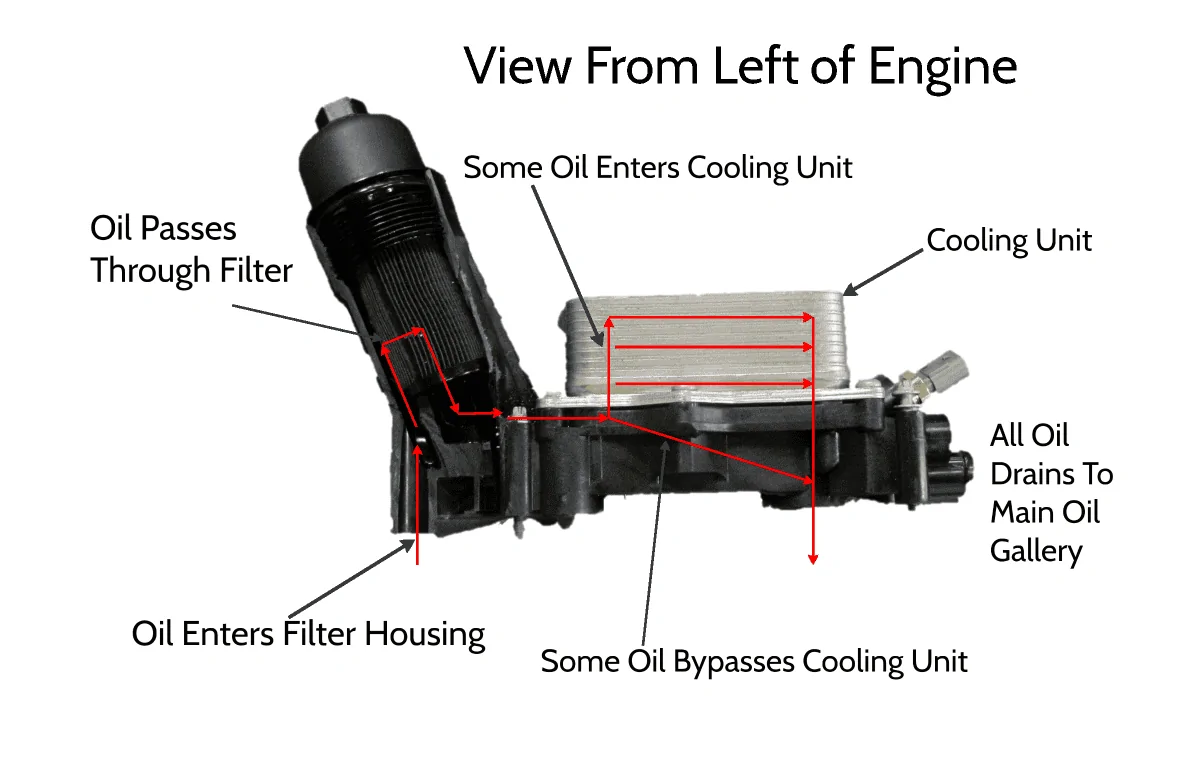
Another thing to understand is that our oil filter design on the 3.6L gasser does not have a anti-drain back feature and lets the majority of the oil drain back into the crankcase. So every time you start back up after sitting in cold weather, that sluggish oil has to refill the oil filter and housing and delays somewhat the oil flow circulation.
 

ShadowsPapa

Well-Known Member
First Name
Bill
Joined
Oct 12, 2019
Threads
247
Messages
40,463
Reaction score
53,908
Location
Runnells, Iowa
Vehicle(s)
'25 JTMX, '23 JLU 4xe, '82 SX4, '73 Javelin
Occupation
Retired auto mechanic, frmr gov't ntwrk security admin
Vehicle Showcase
3
OP
OP
chorky

chorky

Well-Known Member
First Name
Chad
Joined
Feb 26, 2022
Threads
175
Messages
3,466
Reaction score
3,801
Location
Montana
Website
www.youtube.com
Vehicle(s)
'22JTR, '06 LJ, '06 TJ GE
Build Thread
Link
Occupation
GIS Specialist

Hootbro

Well-Known Member
First Name
Don
Joined
Apr 13, 2019
Threads
57
Messages
10,194
Reaction score
19,969
Location
Delaware
Vehicle(s)
2025 Gladiator Sport
Link below has a pretty good slide presentation of the prior generation Pentastar oil system schematic. You click on the first slide and then click on the arrow to the right of it and it will go through a active presentation of the oil system


Around slide 76, to shows the oil path through the oil filter, cooler and drain back to case. Around slide 96, it shows the drain port when the filter is lifted out, but that is only draining a few ounces left that did not make it out the main oil path through the cooler and direct drain back to the crank case. No mention is made of a anti drain back valve that keeps the whole oil filter housing pressurized and filled with oil.

Jeep Gladiator Engine clatter when cold 848a50b4dad8216a1c7f66cc7bf1200
Sponsored

 
Last edited:


Top