Sponsored

Fuel impacting motor wear

OP
OP

ErylFlynn

Well-Known Member
First Name
Brett
Joined
Aug 15, 2023
Threads
40
Messages
447
Reaction score
397
Location
Washington
Vehicle(s)
2023 Punkn Mojave, 2008 JK Unlimited Det Yellow
Yes, the benefit is not from higher octane but from the additives they add to the fuel later as it is sent to the brands. I am not saying this is gospel and works, but something to think about and got me thinking it might be worth the extra money. Safeway here has gas at 3.47 all the time, but they are not even top tier. Be another 50 cents a gallon to move that way and might be worth it.
Sponsored


 
OP
OP

ErylFlynn

Well-Known Member
First Name
Brett
Joined
Aug 15, 2023
Threads
40
Messages
447
Reaction score
397
Location
Washington
Vehicle(s)
2023 Punkn Mojave, 2008 JK Unlimited Det Yellow
And dam I don't know how I screwed up the link copy. But I fixed it since I saw someone mention the link was bad. And added again below.

Fixed
 

ShadowsPapa

Well-Known Member
First Name
Bill
Joined
Oct 12, 2019
Threads
247
Messages
40,442
Reaction score
53,859
Location
Runnells, Iowa
Vehicle(s)
'25 JTMX, '23 JLU 4xe, '82 SX4, '73 Javelin
Occupation
Retired auto mechanic, frmr gov't ntwrk security admin
Vehicle Showcase
3
Yes, the benefit is not from higher octane but from the additives they add to the fuel later as it is sent to the brands. I am not saying this is gospel and works, but something to think about and got me thinking it might be worth the extra money. Safeway here has gas at 3.47 all the time, but they are not even top tier. Be another 50 cents a gallon to move that way and might be worth it.
QT, or QuickTrip, is TT gas, and typically the same prices as most other stations. Costco is TT gas and runs about the same as any other station like a Casey's or similar around here.
I really find almost no difference between an 87 top tier gas and an 87 non-top tier gas in our area - just depends on if I want to drive an extra couple of blocks.
My stuff tends to last forever anyway, so I run whatever is close and cheap.
My 82's 258 wore out the oil pump (and lower end a bit) but the compression was still great and it ran fine with NO oil consumption. Just that the prior owner had not taken good care of it with oil changes and so on, so it only lasted about 160,000 miles before the oil pressure started dropping below 10 psi at stop lights when all warmed up.

Today's rings are very different technology as well - to reduce friction and gain mpg, they are a very low tension design, meaning I doubt you'll see any difference unless you plan on driving your rig well over 400,000 miles. There's just not appreciable tension, thus much less wear on these compared to rings before the 3.6 PUG.
 

GeneralMaximus

Well-Known Member
Joined
Sep 12, 2023
Threads
2
Messages
572
Reaction score
1,048
Location
Las Vegas
Vehicle(s)
JTM
IF it can help reduce carbon build-up and valve wear, it might have some value.
But it's not going to "reduce engine wear".
That's what oil does.
In my case, I use Seafoam more for its fuel stabilizing properties. I’ve got multiple vehicles that sit, sometimes for months. I havent had one carburetor gunk up on me yet.
 

Dave D

Well-Known Member
First Name
Dave
Joined
Jan 18, 2024
Threads
8
Messages
96
Reaction score
94
Location
Ontario Canada
Vehicle(s)
2023 Gladiator Willys
My wife had an old mercury villager van with 200k on it and started running rough. Purchased used at 100k.
Tried new plugs but no change.
Put in STP fuel system cleaner and it got a bit better. By the 3rd treatment it was like new.
I now put in a STP treatment every 6k miles. Normally same time I do the oil change on all my vehicles.
 

ShadowsPapa

Well-Known Member
First Name
Bill
Joined
Oct 12, 2019
Threads
247
Messages
40,442
Reaction score
53,859
Location
Runnells, Iowa
Vehicle(s)
'25 JTMX, '23 JLU 4xe, '82 SX4, '73 Javelin
Occupation
Retired auto mechanic, frmr gov't ntwrk security admin
Vehicle Showcase
3
In my case, I use Seafoam more for its fuel stabilizing properties. I’ve got multiple vehicles that sit, sometimes for months. I havent had one carburetor gunk up on me yet.
I haven't either......... but I typically use Sta-Bil. Sometimes I forget, and in the case of my Javelin, I had it all torn apart to replace door hinges (a real #@$% because the entire dash structure has to come out and that's 50 year old plastic that's been in the sun for years) and I got disgusted with it and let it sit for almost 3 years before deciding I was cooled down enough to work on it again. I had to prime it - that's the old fuel pump not sucking, well, it does suck, but not gas out of the tank over 10 feet away, and once she fired, it was fine and I drove around on 3 year old gas for several days - no stabilizer or anything. Would I do it on purpose or recommend it? LOL - @#$# no, but it happened.
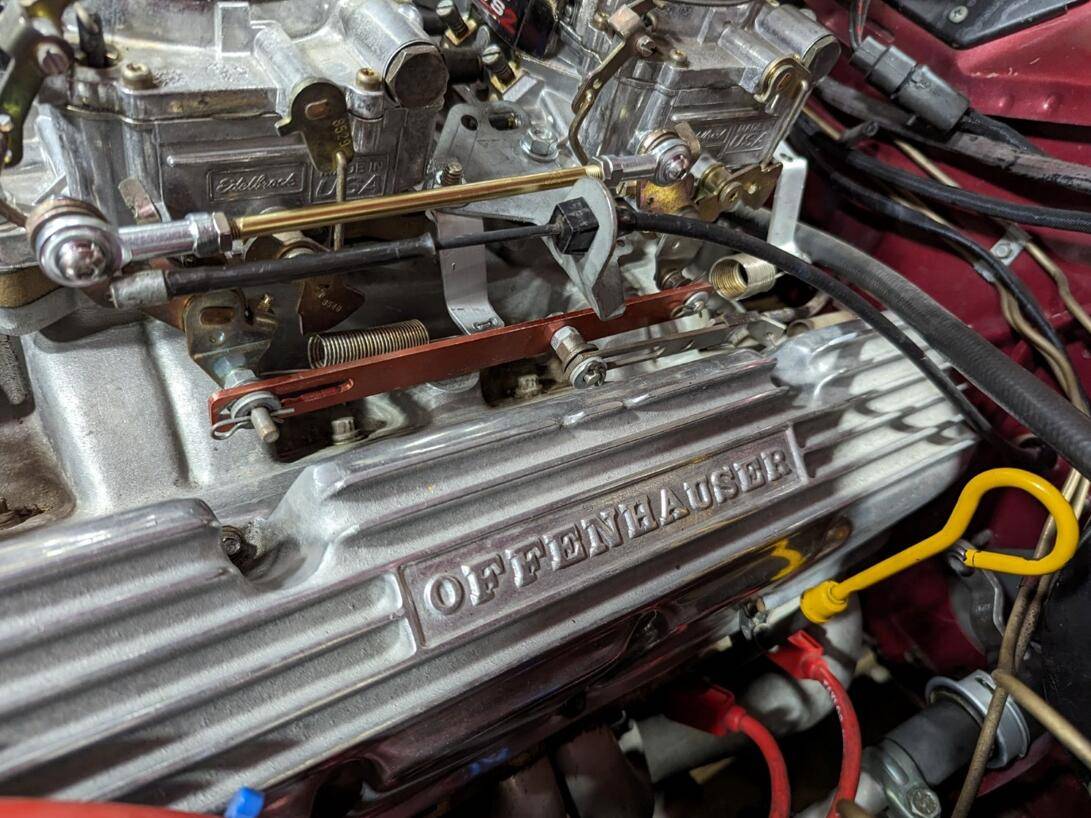
$1,000 worth of carburetors on that intake, don't even want to think of having damaged them let alone cleaning and rebalancing everything.

Jeep Gladiator Fuel impacting motor wear 1725818888006-sh


The only additives I put in my vehicles are fuel stabilizer for the classics with carbs, and once in a while, a "fuel injector cleaner" or similar in the fuel.
Seafoam and the likes are newer generations (and improved) of what we did in the 70s and 80s. The carbon removers and injector lubes I'm good with - decades of seeing results.

As far as the videos claiming gas additives in the better gasolines (meaning top tier the like) - I've not looked at the one linked in this thread. I'll bet a steak dinner it's the same one I saw months ago if not even longer ago. In that case, they used a piece of ring scraped against a piece to represent the cylinder wall, and measured the wear. (I'm over simplifying, but then, so did THEY - explanation below)

It's fine to scrape one metal against another and measure wear, but that leaves out almost everything that REALLY happens in your engine, and doesn't consider ring structure, shape, torsion effects, the finishes on modern cylinder walls and so on.
Over the years, I've torn down either for repair or total rebuild more engines than I can even try to remember - Ford (everything from Pinto I4 up to big blocks in Lincolns), Chevy - from the Vega up to the big boys of the 60s), Chrysler - again slant 6 up to the 440s and such, AMC (you name an AMC engine, I've been into it), Datsun (boy, that dates me), Honda and so on.
I've torn down engines with 100,000 and more miles on them that still showed the factory hone finish, and NO ridge. What's that say? It says the owner maintained the engines and used decent oil, and they just didn't wear the rings and cylinders.
OK, so why did I even have them apart? Valve issues, usually caused by those old design valve seals going bad, building up carbon, causing the valve and/or seat to burn.
That was an age issue coupled with design issue, not the fault of the oil or gasoline or the result of excessive, preventable wear. No additive in the world would have mattered.

Another reason I believe IF, IF this is the same video I saw long ago - they leave out how a ring really functions inside the running engine. They over-simplified, IMO.
Rings are not cut square and don't sit flat against the cylinder wall. They literally flex and twist. With some designs, they have a backcut that causes the ring to twist one way going up, and the other way going down. Then there's the oil control ring, most of us just call the "oil ring".
The job is to wipe off excessive oil on the way down, but not TOO much, leaving just enough in that complex factory finish (which, BTW, is designed to hold a certain amount of oil within the surface of the cylinder) so that the rings glide over a very thin layer of oil.
As the piston moves up, oil is sprayed and flung against the cylinder wall.
On the way down, the oil control ring wipes off the excess and it moves through the openings in the OCR back down into the crankcase.
In the case of the combustion or power stroke, pressure from the burn causes the rings to twist a bit and seal more against the cylinder, riding on that layer of oil trapped in the special honed surface of the cylinder.
On the way back up, the ring usually (depending on the engine and ring design) has a shape to it so that it drags over the oil layer in the cylinder wall - sort of like a paint brush at an angle gliding over paint on your siding.
The rings don't simply drag flat, back and forth over the cylinder, they twist and flex, by design, engineering, science.
I could literally take up 2 or 3 pages on ring design, cylinder wall finishes and so on.

Today's engines, like the 3.6 PUG, have low tension ring designs. They literally glide with a lot less pressure against the cylinder, to reduce friction. (oil of too high a viscosity can cause excessive wear in some engines)

So, while that video I saw way back held some interest, I didn't watch the whole thing - I just saw some things that bugged me, things being left out, and so on.

Do whatever, it ain't my engine and I'm not taking on engine rebuilds other than my own or AMC cars or classic Jeeps these days, so I don't care any more like I used to care about how people took care of their engines.
Top tier, or at least a quality fuel, is always a good idea. No one needs any video for that. We've been talking top tier fuels here for years - I suspect even before I joined here back in the last decade.

Do I run top tier all the time? No - it's often an extra few miles to find it, but I DO tend to buy from certain chains around here, and observe how well things are cared for.
Sponsored


Top