Sponsored

JK/JKU D44 vs JT D44 Differences?

imallcrawl

Well-Known Member
First Name
imallcrawl
Joined
Apr 4, 2025
Threads
19
Messages
531
Reaction score
846
Location
Honolulu, Hawaii
Vehicle(s)
Jeep - 84 CJ7, 90 YJ, 06 WK, 13 JKU, 15 JKU, 20 JL, 21 JT
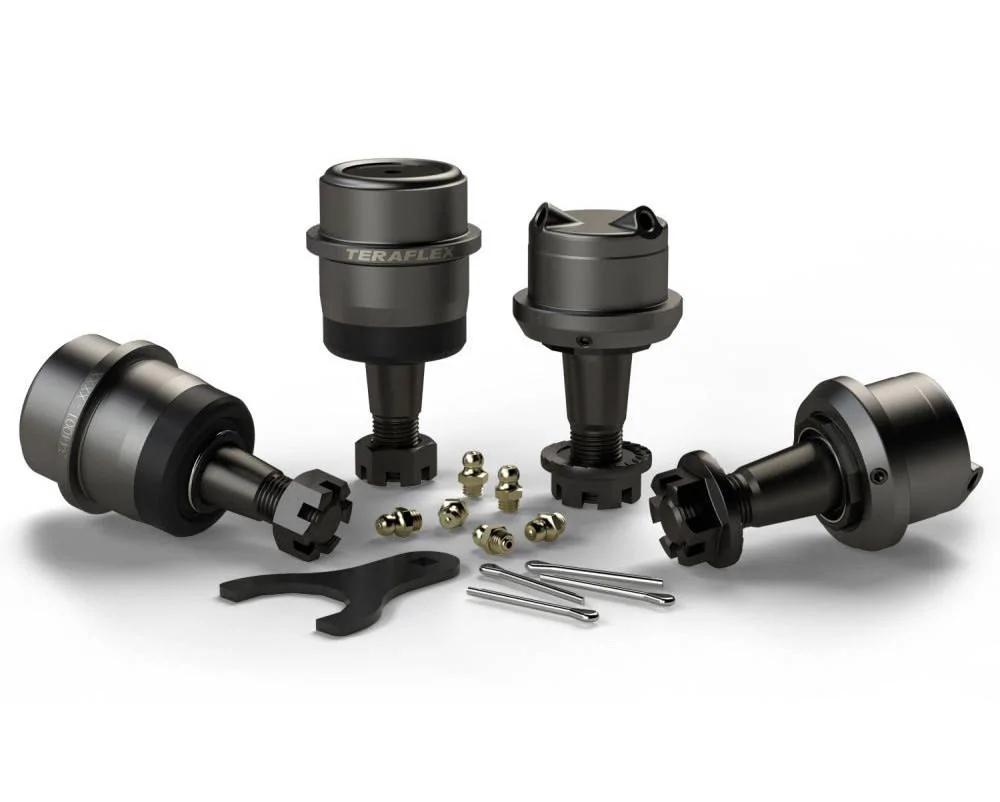
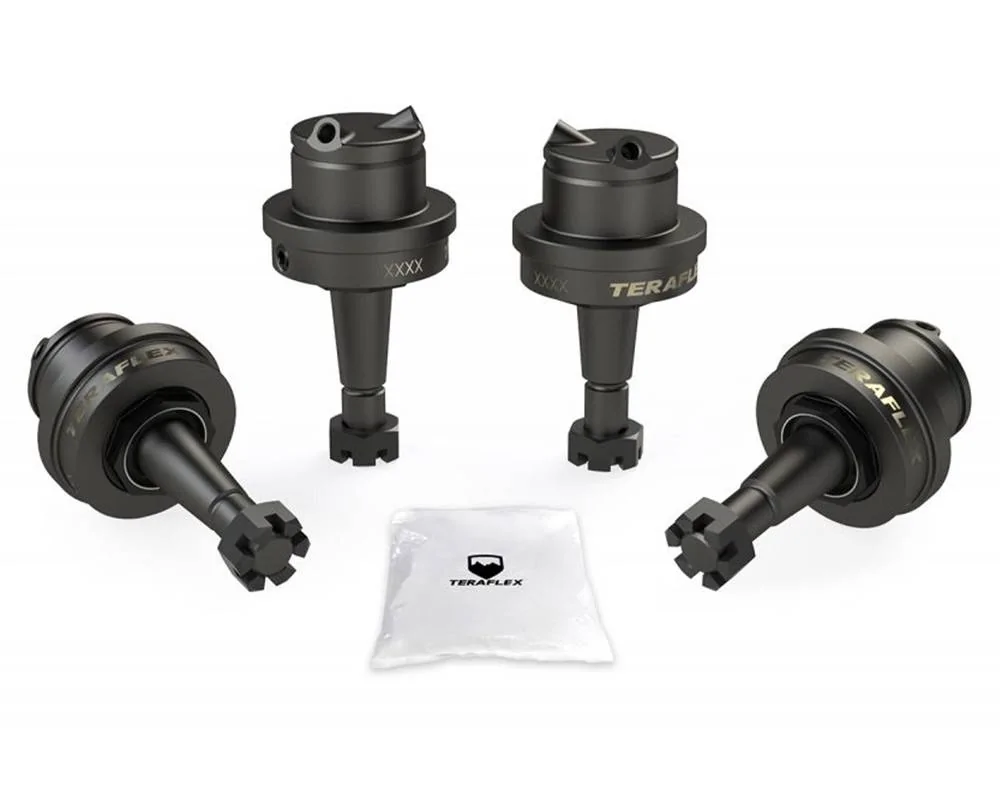
Besides the D44 width and cast iron knuckles on Mojave/Rubicons, are there any differences between the JK/JKU D44s vs the JT D44s? The reason I'm asking is I have a set of Teraflex HD ball joints for both Dana 30/44 that I was going to use on my JKU, but my ball joints never went bad so its just sitting here. Would I be able to use them on my JT Overland D44's with aluminum knuckles? It does seem that Teraflex do sell a set specifically for the JL/JT but they look very similar to the ones I have now.

JK/JKU:
Jeep Gladiator JK/JKU D44 vs JT D44 Differences? jk-jku


JL/JT:
Jeep Gladiator JK/JKU D44 vs JT D44 Differences? jl-jt
Sponsored


jac04

Well-Known Member
First Name
Jeff
Joined
Apr 20, 2021
Threads
27
Messages
1,545
Reaction score
2,246
Location
CT
Vehicle(s)
2021 Mojave, 2014 JKRX SWB
The JTs use the newer Dana AdvanTEK axles. I doubt the ball joints are the same - if they were, then TFlex would not have developed new ones.
 
OP
OP
imallcrawl

imallcrawl

Well-Known Member
First Name
imallcrawl
Joined
Apr 4, 2025
Threads
19
Messages
531
Reaction score
846
Location
Honolulu, Hawaii
Vehicle(s)
Jeep - 84 CJ7, 90 YJ, 06 WK, 13 JKU, 15 JKU, 20 JL, 21 JT
Thanks for the clarification! I feel dumb now :facepalm::LOL:
 
OP
OP
imallcrawl

imallcrawl

Well-Known Member
First Name
imallcrawl
Joined
Apr 4, 2025
Threads
19
Messages
531
Reaction score
846
Location
Honolulu, Hawaii
Vehicle(s)
Jeep - 84 CJ7, 90 YJ, 06 WK, 13 JKU, 15 JKU, 20 JL, 21 JT
Now that we cleared up the ball joint question, I still wanted to find out what is the major differences between the JK/JKU D44s vs the non Mojave/Rubicon JT D44s? So I asked AI and this is what it spit out:

---------------------

The newer JL/JT Dana 44 axles have several key improvements over the JK/JKU Dana 44s, including stronger axle tubes, larger brakes, a larger pinion shaft, and a larger ring gear. The JL/JT axles also feature a more robust design with a stronger pinion and larger yoke, leading to increased strength and durability.

Here's a more detailed breakdown:

JL/JT Dana 44 Improvements:

Larger Axle Tubes:

  • The JL/JT Dana 44s have 2 3/4-inch diameter axle tubes, addressing the bending issues reported with the JK's 2 1/2-inch tubes.
Larger Brakes:
  • The front brakes on the JL Rubicon Dana 44 are one inch larger than those on the JK Rubicon.
Larger Pinion Shaft:
  • Both the front and rear JL/JT Dana 44s have larger pinion shafts compared to the JK.
Larger Ring Gear:
  • The rear low-pinion axle on the JL/JT also features a larger ring gear.
Stronger Yokes and Splines:
  • The JL/JT axles have a more robust design with larger yokes and splines, contributing to increased strength.
Different Gear Cut:
  • While the gear teeth on the JL/JT are shallower, they have a more curved profile, resulting in more tooth contact and potentially greater strength

---------------------

Knuckles:

When comparing the Dana 44 knuckles found in the older Jeep JK/JKU models to the newer JL/JT models, there are several key differences:

Material
  • JK/JKU: Knuckles are generally made from ductile iron, a strong and durable material.
  • JL/JT: Knuckles are made from aluminum, which helps reduce weight and potentially improve fuel economy.
Design and strength
  • JL/JT Dana 44 axles, also known as Advantek Dana 44s, feature knuckles with improved strength, particularly addressing potential weaknesses in the factory aluminum components and making them an essential upgrade for any Jeep owner, according to SYNERGY MFG. This is particularly important for off-road use where components are subjected to greater stress.
  • JL/JT Dana 44 axles also boast one-inch larger front brakes compared to the JK models.
Steering
  • JL/JT Dana 44 axles are equipped with a new electro-hydraulic power steering system. This system offers excellent assist, even when using larger tires at lower pressures for off-road driving. This setup potentially minimizes horsepower loss and offers a slight improvement in fuel economy compared to the hydraulic systems used in the JK.
Steering Stops
  • JL/JT knuckles are designed with adjustable steering stops for better adjustability, which helps reduce strain on steering components during full steering lock. Aftermarket knuckles, like those from RockJock, also feature adjustable steering stops.
Compatibility and upgrades
  • While JK knuckles are made of ductile iron and are considered durable, aftermarket manufacturers like Reid Racing and TeraFlex offer heavy-duty replacement knuckles for both JK and JL/JT models.
  • Some aftermarket JL/JT knuckles, such as those from RockJock, are designed to reuse stock outer components (ball joints, unit bearings, axles, brakes) for simpler installation.
In summary, the JL/JT Dana 44 knuckles differ significantly from their JK counterparts in material (aluminum vs. iron), design, braking capacity, and steering system. These changes aim to improve the performance and durability of the axles, particularly in demanding off-road conditions

---------------------

Ball joints:


In a nutshell, the most significant difference between the JK/JKU and JL/JT Dana 44 ball joints lies in their installation and how they handle loads:

JK/JKU Dana 44 Ball Joints:
  • The upper ball joint is pressed in from the top down, while the lower ball joint is pressed in from the bottom up.
  • In the JK, only the lower ball joint carries the load of the vehicle.
  • The upper ball joint acts as a telescopic joint, adjusting to the slight differences in the tapered seats of the knuckle during assembly.
  • In the JK design, the ball joints are "captured", meaning the knuckle is secured even if a ball joint fails, according to JLwranglerforums.com.
JL/JT Dana 44 Ball Joints:
  • Both the upper and lower ball joints are pressed in from the bottom up.
  • In the JL, the load is distributed more evenly between the upper and lower ball joints, ideally at a 50/50 split.
  • This design relies on the weight of the vehicle to keep the ball joints seated in the knuckle.
  • In a JL, a shaft failure could lead to the lower ball joint being pushed out, potentially allowing the knuckle to detach from the axle. To mitigate this risk, aftermarket ball joint delete systems for the JL/JT offer an upper joint that presses in from the top, featuring a ledge to prevent complete knuckle separation in the event of a shaft failure.
  • The JL Dana 44 also introduces aluminum knuckles and a two-piece long side axle shaft designed to improve fuel economy, potentially at the expense of strength.
Important Note: It's important to remember that aftermarket ball joints exist for both JK/JKU and JL/JT models that are designed to be more robust and durable than the factory counterparts, often featuring features like grease zerks and metal-on-metal construction for enhanced strength and lifespan

---------------------

It looks like the JK/JKU ball joints press in from different directions, upper joint goes top down, while bottom joint is bottom up, the JT/JL ball joints both press in from the bottom up. Now that make sense in the difference of Teraflex's HD ball joint designs!

Sorry guys I'm not a mechanic and I am still learning every day and I guess when in doubt ask Artificial Intelligence!! :CWL::like:
 

Sponsored

OP
OP
imallcrawl

imallcrawl

Well-Known Member
First Name
imallcrawl
Joined
Apr 4, 2025
Threads
19
Messages
531
Reaction score
846
Location
Honolulu, Hawaii
Vehicle(s)
Jeep - 84 CJ7, 90 YJ, 06 WK, 13 JKU, 15 JKU, 20 JL, 21 JT
There is literally NOTHING Dana 44 about the M210/220 axles! ;)
I don't know what that is, but a quick search in this forum and I found this:

Total new guy, Bought my first Jeep last week, Gladiator Sport S with max tow. I am trying to understand some of the listing on both the Sticker and the Jeep website. The Sticker says I got the HD Dana 44 Wide front/rear axles and the Jeep page says i go M210 and M220 axles (F/R). I am at a loss as to what that really means. Help the new guy learn something important today, Somebody explain this please. I have been reading this forum and the knowledge out there is incredible. Looking forward to increasing my knowledge base and using my Gladiator for something besides a commuter with attitude.
They're both the "same". The F/R different PNs are steer VS non-steer versions of the wide track D44s that come on Max Tow and Rubicons.
Sponsored


Top