
Sponsored

Large wire crimpers

Lost1wing

Well-Known Member
First Name
Tim
Joined
Dec 22, 2020
Threads
24
Messages
2,606
Reaction score
2,846
Location
West Georgia
Vehicle(s)
2020 Jeep Gladiator Rubicon
Occupation
Retired AMT
Best to match the wire, terminal and tool. Use the wrong one and over or under crimp is possible. Just know there is a difference and it does matter.
Sponsored


 

ShadowsPapa

Well-Known Member
First Name
Bill
Joined
Oct 12, 2019
Threads
247
Messages
40,442
Reaction score
53,859
Location
Runnells, Iowa
Vehicle(s)
'25 JTMX, '23 JLU 4xe, '82 SX4, '73 Javelin
Occupation
Retired auto mechanic, frmr gov't ntwrk security admin
Vehicle Showcase
3
Thats exactly what happened. I should have ordered a 4ga specific connector - but time is not on my side right now so I went with it. The connection is still very solid, it just doesn't look nice. And these connectors being Chinese made, they are not the greatest. The wall thickness is way too much.
I get what you are saying and you did what you had to do at the time. My theory is that those sides have no tight contact to the wire and the wire there is not physically bonded to the terminal. There's a gap. Likely ok not using the full capacity of the wire anyway so I'm not saying "man, did you really screw up, it's gonna FAIL!" - just that the ideal crimp puts even pressure around the wire for a sealed connection.

There's all sorts of reasons to or not to use solder - heat changes the characteristics of copper, copper work hardens, heat and slow cooling anneals metals, there's an abrupt point between the soldered wire and the untouched wire and so on........
But over time, long periods of time, and certain conditions, I've seen some of those go out the door as crimped connections failed because the wire vibrated or moved and broke the wires exactly where they entered the crimped connection, even oxidation getting into the crimped connection (factory connections)
So for automotive use, depending, a well-done solder joint for many won't be any issue for the life of the vehicle or their ownership.
I have tubs of wiring harnesses from cars - and somewhere, photos of the wires that broke where they entered the crimp because the wire could vibrate a bit while the connector was held fast - and the wire literally broke where it went into the factory crimp.

So I guess my take-away from all I've seen in automotive is this - secure the wires, don't let them vibrate or shake at all, not even a little. Copper work hardens. Back and forth makes it hard and even brittle and it will break - either right at the crimp or right where the solder ends.
Whatever method you use - secure that wire.
The factory doesn't have a wire clip every few inches because they got a heck of a good deal on crates of wire clips and straps. It's because vibration and movement will destroy wire connections.

I'd bet aircraft wiring is secured like crazy with nothing allowed to move. Just a guess, could be wrong!
 
Last edited:
OP
OP
chorky

chorky

Well-Known Member
First Name
Chad
Joined
Feb 26, 2022
Threads
175
Messages
3,466
Reaction score
3,801
Location
Montana
Website
www.youtube.com
Vehicle(s)
'22JTR, '06 LJ, '06 TJ GE
Build Thread
Link
Occupation
GIS Specialist
I get what you are saying and you did what you had to do at the time. My theory is that those sides have no tight contact to the wire and the wire there is not physically bonded to the terminal. There's a gap. Likely ok not using the full capacity of the wire anyway so I'm not saying "man, did you really screw up, it's gonna FAIL!" - just that the ideal crimp puts even pressure around the wire for a sealed connection. In fact probably later in the fall I will take the time to go back through all of my large wire connectors and replace them now that this crimp tool is in the basement.
Oh for sure. It is mostly just to get the second battery in place so it's not sitting in my basement un-used on a maintainer. I realized yesterday evening I will be redoing my entire electrical - again, and hopefully for the last time. So there will be ample opportunity to get the right connectors here in the next few months or so. I will be shortening the wire as well doing that so I dont need to worry about weak copper at the ends of the line either. Also just for sake of discussion I did still put shrink wrap on that, so nothing is exposed. I just wanted to share how well the hydraulic too crimped. I wasn't sure what to expect as not having access to a hydraulic crimp in the past, and my personal experience with the 'hammer' type crimp tools have not been very positive. I'm very pleased at the pressure this tool provides and in the future will definitely do all of my own wiring unless for some reason I need something larger than 0 ga. Based on how hard this thing compressed, I have no doubt it can handle 0 ga easily. In fact, I actually over-crimped the 4 ga Anderson connectors. I'm sure I broke several strands with how much it tightened down. the wire I am using is nice, flexible - at the cost of having lots of super thin copper. I'll try and remember to post up a picture for reference. But that is something needing to be considered as well. I have seen plenty of crimped wires crimped too tight.


There's all sorts of reasons to or not to use solder - heat changes the characteristics of copper, copper work hardens, heat and slow cooling anneals metals, there's an abrupt point between the soldered wire and the untouched wire and so on........
But over time, long periods of time, and certain conditions, I've seen some of those go out the door as crimped connections failed because the wire vibrated or moved and broke the wires exactly where they entered the crimped connection, even oxidation getting into the crimped connection (factory connections)
So for automotive use, depending, a well-done solder joint for many won't be any issue for the life of the vehicle or their ownership.
I have tubs of wiring harnesses from cars - and somewhere, photos of the wires that broke where they entered the crimp because the wire could vibrate a bit while the connector was held fast - and the wire literally broke where it went into the factory crimp.

So I guess my take-away from all I've seen in automotive is this - secure the wires, don't let them vibrate or shake at all, not even a little. Copper work hardens. Back and forth makes it hard and even brittle and it will break - either right at the crimp or right where the sold ends.
Whatever method you use - secure that wire.
The factory doesn't have a wire clip every few inches because they got a heck of a good deal on crates of wire clips and straps. It's because vibration and movement will destroy wire connections.
Oh man I remember way back during school dealing with a, mmmm I think it was a Lincoln that had a intermittent 'stall' as explained by the customer, only on hard acceleration and only half the time. Long story short, it was because a wire going to, I can't remember what specific component anymore, had half the strands broken internally, causing just enough of a lack of connection for things to go wonky causing drivability issues. The only way it was found was through some destructive testing - as there was enough good strands that your standard voltage and resistance tests turned out ok. The issue was the wire, as the engine rotated by forces applied, caused the wire to bend/move, which was just enough movement to cause said strands that were broken to not touch, thus causing too much voltage drop/resistance which then put it into limp mode, throwing codes, until the wires reconnected. That being said, I know I definitely have some wires that have too much movement in them - but they are non-critical systems and won't be an issue for at least 10 years. Usually these days I only solder connections that are mid-wire. Most connectors I use do a good job of holding the wire so it does not bend right at the crimp point - which is the worst place for constant bending.
 

ShadowsPapa

Well-Known Member
First Name
Bill
Joined
Oct 12, 2019
Threads
247
Messages
40,442
Reaction score
53,859
Location
Runnells, Iowa
Vehicle(s)
'25 JTMX, '23 JLU 4xe, '82 SX4, '73 Javelin
Occupation
Retired auto mechanic, frmr gov't ntwrk security admin
Vehicle Showcase
3
Also just for sake of discussion I did still put shrink wrap on that, so nothing is exposed. I just wanted to share how well the hydraulic too crimped. I wasn't sure what to expect as not having access to a hydraulic crimp in the past, and my personal experience with the 'hammer' type crimp tools have not been very positive. I'm very pleased at the pressure this tool provides and in the future will definitely do all of my own wiring unless for some reason I need something larger than 0 ga. Based on how hard this thing compressed, I have no doubt it can handle 0 ga easily.
I was going to ask, and forgot - how that tool worked out, and how you think it might work with proper connectors matched well to wire sizes.

I also still use heat shrink on such connectors. The tubs of wiring and all of the repairs and harnesses I've had to build or rebuild over the years tells me if I want it to last - I need to keep the environment out and off that copper where it enters the crimp plus it's just another way of relieving stress on the wire and securing the area against vibrations and such.
 
OP
OP
chorky

chorky

Well-Known Member
First Name
Chad
Joined
Feb 26, 2022
Threads
175
Messages
3,466
Reaction score
3,801
Location
Montana
Website
www.youtube.com
Vehicle(s)
'22JTR, '06 LJ, '06 TJ GE
Build Thread
Link
Occupation
GIS Specialist
I was going to ask, and forgot - how that tool worked out, and how you think it might work with proper connectors matched well to wire sizes.

I also still use heat shrink on such connectors. The tubs of wiring and all of the repairs and harnesses I've had to build or rebuild over the years tells me if I want it to last - I need to keep the environment out and off that copper where it enters the crimp plus it's just another way of relieving stress on the wire and securing the area against vibrations and such.
My first impressions, it is a quality tool. There are several like it - Amazon has knockoffs, for about the same price. I have had Pitsburgh tools in the past, more industral level, and they never failed. I'm sure this and all the lookalikes are made in the same factory. Anyway, I think it is great. It has an internal spring or something that even pulls back the lugs when you open the relief valve - so it's the little things. And it does not take much effort at all to crimp even these overly large walled Chinese junk Anderson connectors. The wall thickness is darn near 1/8 thick which is much thicker than others I have seen. It's so thick that with the old Chinese crap crimpers I literally broke through the metal while crimping it, so sealing it with shrink tube was an absolute must!

Anyway, for $70 - I think this is a tool everyone who does electrical should have. Knowing your aging body I think you would appreciate having one.


Oh yea, I will never forget seeing all of those 90's era cars with corrosion in connectors because at that time, wire sealing via quality connectors or shrink tube from the factory didn't really exist. It was from day one that I knew if you want wires to last, you absolutely must shrink tube them with the glued versions, otherwise water will find a way, even if it's just condensation, so I use shrink tubing on literally every single connection. Wires breaking mid-length of a wire run is fairly rare. I only had to use the 'compass' method to find a break maybe 3 or 4 times at the most. usually it's always the connector that fail. I bet your wiring outlives you, which is good because you then dont need to worry about it again.
 

Sponsored

Lost1wing

Well-Known Member
First Name
Tim
Joined
Dec 22, 2020
Threads
24
Messages
2,606
Reaction score
2,846
Location
West Georgia
Vehicle(s)
2020 Jeep Gladiator Rubicon
Occupation
Retired AMT
I have used a metal-working chisel that has the cutting end blunted to hammer a crimp, and then solder using rosin core solder and a propane torch for heavy cables. I use the size connector that is as close as possible to the actual wire diameter--which sometimes says it is for 6 gauge (as an example) but 4 gauge wire will go in if you are careful.
I also drill a small hole at the
I get what you are saying and you did what you had to do at the time. My theory is that those sides have no tight contact to the wire and the wire there is not physically bonded to the terminal. There's a gap. Likely ok not using the full capacity of the wire anyway so I'm not saying "man, did you really screw up, it's gonna FAIL!" - just that the ideal crimp puts even pressure around the wire for a sealed connection.

There's all sorts of reasons to or not to use solder - heat changes the characteristics of copper, copper work hardens, heat and slow cooling anneals metals, there's an abrupt point between the soldered wire and the untouched wire and so on........
But over time, long periods of time, and certain conditions, I've seen some of those go out the door as crimped connections failed because the wire vibrated or moved and broke the wires exactly where they entered the crimped connection, even oxidation getting into the crimped connection (factory connections)
So for automotive use, depending, a well-done solder joint for many won't be any issue for the life of the vehicle or their ownership.
I have tubs of wiring harnesses from cars - and somewhere, photos of the wires that broke where they entered the crimp because the wire could vibrate a bit while the connector was held fast - and the wire literally broke where it went into the factory crimp.

So I guess my take-away from all I've seen in automotive is this - secure the wires, don't let them vibrate or shake at all, not even a little. Copper work hardens. Back and forth makes it hard and even brittle and it will break - either right at the crimp or right where the sold ends.
Whatever method you use - secure that wire.
The factory doesn't have a wire clip every few inches because they got a heck of a good deal on crates of wire clips and straps. It's because vibration and movement will destroy wire connections.

I'd bet aircraft wiring is secured like crazy with nothing allowed to move. Just a guess, could be wrong!
The majority of the connectors have a strain relief as part of the connector. That solves the problem of the crimp connections work hardening and failing. There are several clamps securing the wire or harness along the way. Engines have clamps even closer than on the airframe. Most aviation connectors are moisture resistant. Some how corrosion still happens and kept me busy for 32 years.
 

ShadowsPapa

Well-Known Member
First Name
Bill
Joined
Oct 12, 2019
Threads
247
Messages
40,442
Reaction score
53,859
Location
Runnells, Iowa
Vehicle(s)
'25 JTMX, '23 JLU 4xe, '82 SX4, '73 Javelin
Occupation
Retired auto mechanic, frmr gov't ntwrk security admin
Vehicle Showcase
3
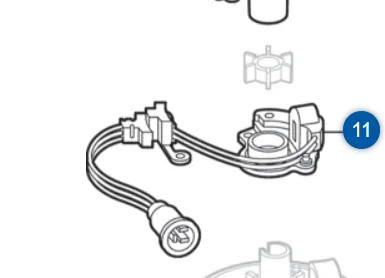
Oh man I remember way back during school dealing with a, mmmm I think it was a Lincoln that had a intermittent 'stall' as explained by the customer, only on hard acceleration and only half the time. Long story short, it was because a wire going to, I can't remember what specific component anymore, had half the strands broken internally, causing just enough of a lack of connection for things to go wonky causing drivability issues.
inside the distributor, the wires going to what Ford/Motorcraft called the magnetic pickup assembly. There was a toothed armature that passed by a coil mounted in place of the points. As the vacuum advance turned that plate, it flexed the wires.
GM and Chrysler had similar issues - if I recall correctly, GM's wires were even more fine than Ford. That flexing of those fine wires as the vacuum advance was applied and released as you hit the throttle or let off caused a lot of issues. The thing might start and run fine at idle, then you give it a bit of gas, vacuum advance kicked in and broke the connection to the pickup coil in the distributor.

Jeep Gladiator Large wire crimpers 1714327004988-07
Sponsored


Top