BearFootSam
Well-Known Member
Having towed an unbraked 1800lb trailer down steep mountain passes, my experience is that the stock brakes are better than fine. Some off road oriented vehicles will use lower friction pads on beefy rotors to provide better control and modulation so that you don't lock wheels as easily on slick ground. In the driver seat this will feel like soft brakes with less initial bite that increase force progressively with application. I have no idea if this was the intent with the gladiator brakes but I do know that when I have gotten deep on the pedal, they have been great. I have a triump tiger with big Brembo stylema monoblocs and they also feel soft until I really grip it and then they will stand you on end. That progressive feel helps with finesse.Something to remember. Many things go into effective braking.
Tires are the first most obvious factor. You could have Brembo calipers with carbon ceramic rotors and if you have a MT tire, there is only so much friction the tire can make.
After that there are a couple of scenarios that we should explore.
1) Lets first talk about a one time emergency stop or general braking in day to day driving.
In a situation like this, big fancy brakes make no difference. Stock brakes, starting from a cool state, make more than enough friction to lock the wheel. So going bigger, and better makes no difference.
Its all about friction, which the stock brakes make enough of.
Back before ABS, the next things that would matter in a panic stop are
a) modulation - how do the brakes feel. can you approach incipient lockup and hold the brakes close to locking. Its all about feedback.
b) brake bias or balance - Do the front wheels lock before the rears or the other way around, or do they all lock about the same time?? Properly designed bias played a big factor in how fast you could stop.
For the most part those items don't matter any more. For most drivers, the fastest way to stop is to mash the pedal to the floor and let the ABS modulate both braking power and bias.
So for most vehicles driven day to day, big fancy brakes only get you better modulation. Which is irrelevant other than in the tactile joy it provides you in working a good set of brakes.
2) When we are talking about repeated stops from high speeds, towing downhill, or road racing then the ability to shed heat becomes the most important factor.
One thing to remember is that the kinetic energy of an object in motion increases as the square of its velocity. That means that a car going 100 mph doesn't have 4x the energy of a car going 25. Its got 16 (!!!) TIMES the energy of a car going 25.
So when you are braking from high speeds the ability to shed heat (brakes turn kinetic energy into heat. So 16x the kinetic energy means 16x the heat) becomes most important.
That's why road race cars have huge brakes. They need to shed enormous amounts of heat.
But again, these huge brakes don't provide any better braking when cold than smaller, cheaper, lighter brakes.
You can see this on autocross cars. Autocross cars tend to have small brakes and small wheels. This is because an autocross run takes about a minute. In this time you drive as hard and fast as you can. But its so short that nothing has time to heat up.
Smaller wheels, tires, and brakes weigh a LOT less and are faster. It also allows you to lower the center of gravity of the car without changing springs and other stuff like that.
When we used to autocross my dad's RX7, it had 16" street wheels but we ran 14s when we autocrossed it.
If we take all of this and apply it to the Gladiator it works out like this.
A stock truck has plenty of friction to lock a wheel. So in regular driving the stock brakes are close to the optimal compromise of power, weight, and cost.
If you make repeated hard stops from 80 mph, they will probably fade and you would be better served by upgraded brakes. By upgraded, I primarily mean something with larger diameter rotors. That's the most efficient way to upgrade brakes. Eventually if you keep making hard stops from 80 mph on the stock brakes, you will probably warp a rotor.
So brakes that are too small can become a maintenance issue. I used to drive a company car that was a Ford Taurus. I warped the rotors about every 6 months. I braked too hard for them and they would get hot and warp over time.
I never worked them hard enough to actually feel any fade, but over time they warped.
If you install fancy brakes on your Gladiator you will not experience any increase in maximum braking force available simply because that maximum force is limited by the tires, not the brakes.
You may say they feel "stronger". Sure, they may be. There may be more braking for a given amount of pedal pressure. So they "bite"faster. But that also means that they will get into the ABS(or lock if there isn't ABS) sooner with less pedal pressure. Either way, this PERCEPTION of power is what sells most people. You could achieve the same thing with high friction pads, by the way.
If you were do do instrumented tests of the Gladiator's braking from 75 mph or so you would see slightly better numbers than stock brakes. This is caused by 2 factors.
1) the quicker initial bite means that you will approach the maximum braking force faster than you would with stock brakes. Remember that at 75 mph, you are moving 110 ft per second. So even a 1/10th of a second faster bite would give you a 11 ft shorter stopping distance.
But before you use this to justify fancy brakes, remember that you could achieve more initial bite by simply swapping the pads for high friction pads.
2) Fancy brakes modulate better. This allows the ABS to manage traction better and hold the tires closer to lock without actually locking them. This is a very very minor factor. But it does seem to be real. But then again, you could make large improvements modulation of the factory brakes by installing braided steel "aeroquip" brake lines.
So in summary. Unless you are towing down mountains, or road racing your truck, larger brakes are either eye candy or unnecessary.
One last thing. If you put a Rubicon on mudders with $3000 of Wilwood brakes up against a stock High Altitude, the High Altitude would smoke the Rubicon in any braking test because of the superior traction its low profile tires provided, right up until the stock brakes started to fade. By the way. There's nothing dumber than a rock crawler with upgraded brakes.
They are sexy as hell though. Aren't they.

I hope this is of value. There's an hour of my time I'll never get back. Ha.
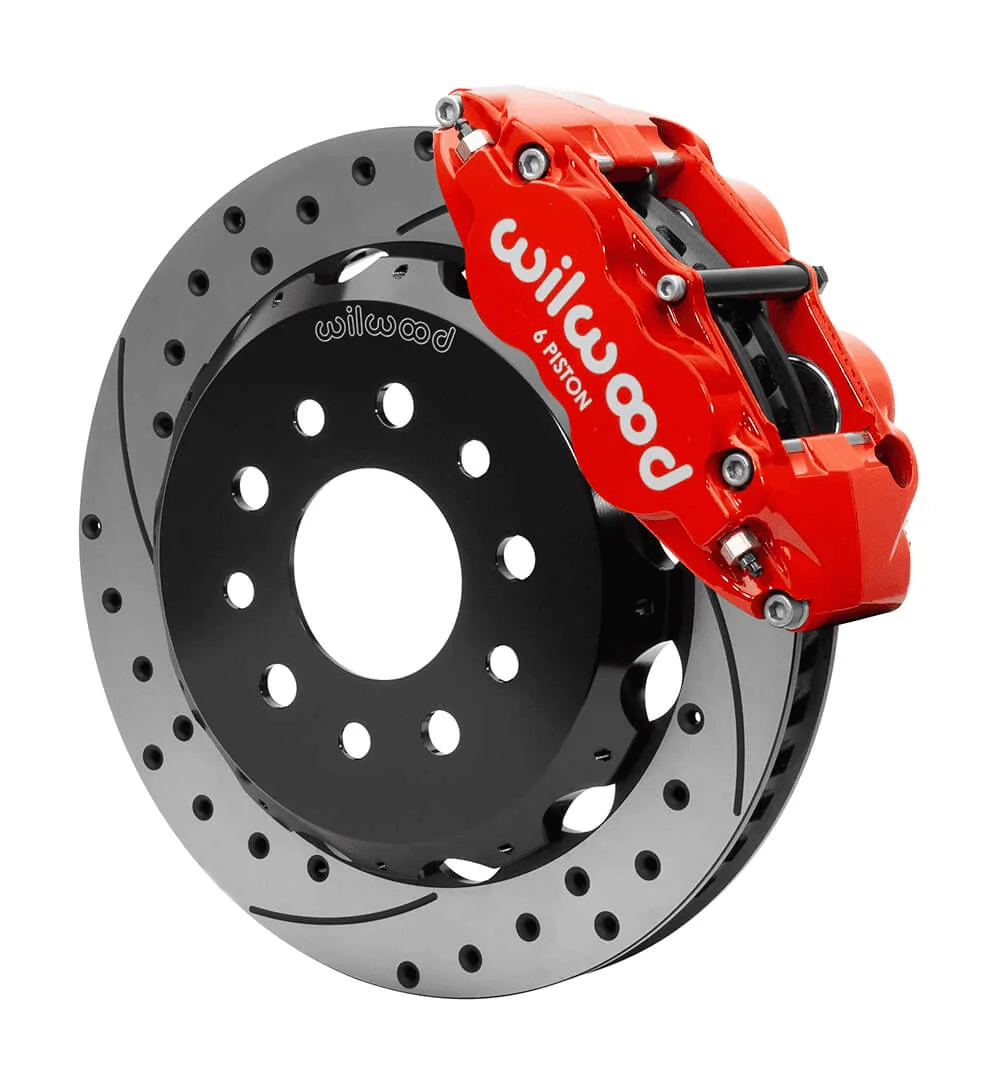
Frankly for the weights the glad is rated to manage the stock brakes are sufficient. If you feel you need more I would start with more aggressive pads as the next iterative step.
Sponsored