
Sponsored

Sazabi19

Well-Known Member
Joined
Apr 11, 2020
Threads
18
Messages
889
Reaction score
1,074
Location
USA
Vehicle(s)
2014 Kia Cadenza, 2020 Jeep Gladiator JT Sport S
Cuts Emissions, Increases Fuel Economy And Is More Powerful. Anything that gives more Power and cuts emission means more problems with buildup and failure due to higher stresses. Not my type of thing. Still love the old blocks. Just enough power and live forever.

It is the same with the Diesels. Great engines, until you mess with recirculating emission and trying to add systems to make it fart rainbows and butterflies.
All of those things sure, but only for the V8.
 

mrmo

Well-Known Member
First Name
Mrmo
Joined
Jan 26, 2021
Threads
56
Messages
863
Reaction score
545
Location
East Tn
Vehicle(s)
2022 Gladiator
Occupation
nuke
The big HP version will be special, and you better have your wallet ready. These lightweight trucks dont need any 500hp engines in them. You will start seeing the statistics as unknowledgeable people wreck them on slick roads, being stupid, or playing around. That much torque means tire wear will be excessive in the rear.....but whatever.
 

Geoarch

Well-Known Member
First Name
Steve
Joined
Feb 3, 2022
Threads
26
Messages
1,528
Reaction score
1,431
Location
Albuquerque, NM
Website
swxrflab.net
Vehicle(s)
2024 JTR, Bright White AT; 2022 JTR MT (traded)
Occupation
geoarchaeologist (retired)
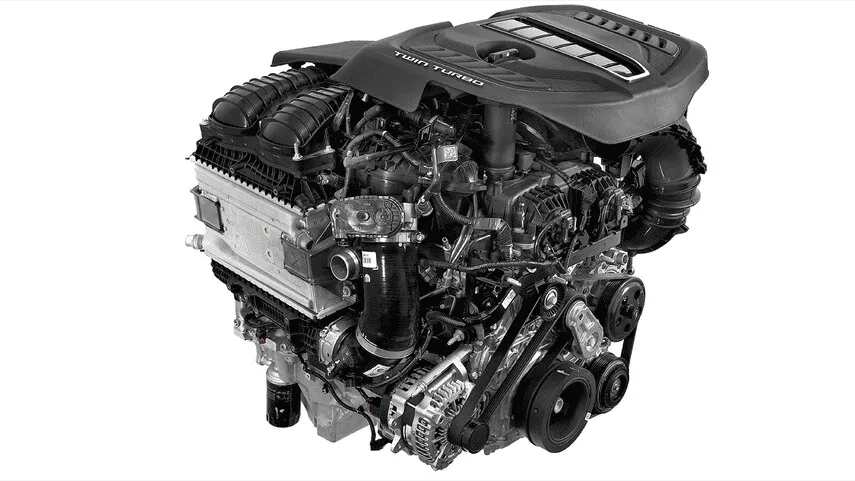
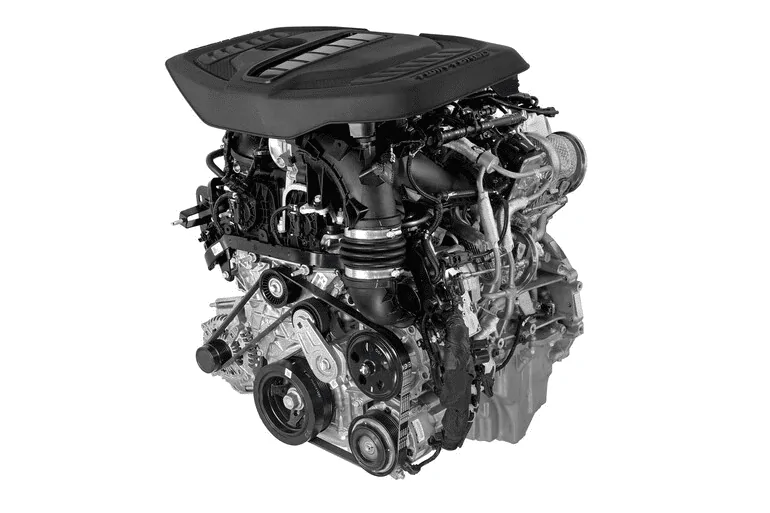
Stellantis Debuts Hurricane Twin-turbo I-6 Engine That Cuts Emissions, Increases Fuel Economy And Is More Powerful
  • New 3.0-liter Hurricane twin-turbo, inline, six-cylinder engine puts out less tailpipe emissions and uses less gasoline than larger engines, yet delivers V-8 levels of power
  • Robust architecture enables Stellantis Propulsion Systems to deliver two distinct variants – one tuned for efficiency, one tuned for performance
  • Hurricane twin-turbo I-6 designed to account for potential future integration with electrification for low-emission vehicles (LEVs)
  • Two low-inertia turbochargers power the Hurricane’s rapid response to throttle inputs, along with enhanced torque output for chores such as towing without sacrificing fuel economy
  • State-of-the-art technologies include Plasma Transfer Wire Arc (PTWA) sprayed cylinder coating, high-pressure gasoline direct injection
  • First vehicles with Hurricane reach dealership showrooms this year
  • Cleaner-running Hurricane twin-turbo moves Stellantis toward its commitment of a 50% reduction in carbon emissions by 2030 and to be Carbon Net Zero by 2038, key elements of the Dare Forward 2030 strategic plan
March 25, 2022 , Auburn Hills, Mich. - Stellantis today revealed its new, 3.0-liter, twin-turbo, inline, six-cylinder engine, named Hurricane, that delivers better fuel economy and fewer emissions than larger engines while at the same time generates more horsepower and torque than many competitors’ naturally aspirated V-8 and boosted six-cylinder power plants.

Designed with an inherently smooth-running I-6 configuration and state-of-the-art technology, the Hurricane twin-turbo’s robust base architecture enables Stellantis propulsion systems engineers to create two distinct variants:
  • Standard Output (SO): Optimized for fuel economy, including the use of cooled exhaust gas circulation (EGR), while delivering enhanced power and torque (more than 400 hp/450 lb.-ft. of torque)
  • High Output (HO): Optimized for great performance (more than 500 hp/475 lb.-ft.) while maintaining significant fuel economy during heavy use, such as towing.
The Hurricane twin-turbo achieves this V-8-rivaling performance while being up to 15% more efficient than larger engines.

“As Stellantis aims to become the U.S. leader in electrification, with a 50% battery-electric vehicle (BEV) sales mix by 2030, internal combustion engines will play a key role in our portfolio for years to come and we owe it to our customers and the environment to provide the cleanest, most efficient propulsion possible,” said Micky Bly, Stellantis head of propulsion systems. “The Hurricane twin-turbo is a no-compromise engine that delivers better fuel economy and an important reduction in greenhouse gases without asking our customers to give up performance.”

Reducing greenhouse gas emissions is one part of Stellantis’ commitment to cut its carbon footprint by 50% by 2030 and to lead the transportation industry by achieving Net Carbon Zero by 2038. Those goals are key elements of the Stellantis Dare Forward 2030 strategic plan.

The Hurricane twin-turbo flexes its muscle with a broad, flat torque band that sees the engine maintain at least 90% of peak torque from 2,350 rpm all the way to its red line.

Specific horsepower and torque ratings will vary based on vehicle. The first vehicles powered by the Hurricane twin-turbo I-6 reach dealership showrooms this year.

The foundation of the Hurricane twin-turbo is a deep-skirt cast-aluminum block with a structural aluminum alloy oil pan. Cross-bolted steel main bearing caps contain the strong rotating assembly of a forged steel crankshaft and forged steel connecting rods. During manufacturing the block is deck-plate honed to optimize the cylinder bore shape, which helps improve fuel efficiency.

Stellantis propulsion system engineers employed a suite of state-of-the-art technologies for the Hurricane twin-turbo to deliver reduced emissions and attain big-engine power:
  • Two low-inertia, high-flow turbochargers, each feeding three cylinders, for rapid response to throttle inputs
  • Plasma Transfer Wire Arc (PTWA) coating in the cylinder bores for an ultra-thin, low-friction wear surface
  • High-pressure (5,075 psi/350 bar) direct fuel injection with pumps (single for SO/dual for HO) actuated by a dedicated chain-driven shaft
  • Dual overhead camshafts with wide-range, fully independent variable valve timing
  • Fuel-saving engine stop-start (ESS) function with robust starter motor for quick restarts
  • Engine-mounted water-to-air charge cooler with a dedicated cooling circuit (single inlet for SO/dual inlet for HO)
  • Dual water-cooled exhaust manifolds integrated in the cylinder head
  • Continuously variable displacement oil pump with integrated scavenge stage tailors pump output to engine demand, reducing frictional losses and helping save fuel
  • High-flow ball-valve thermostat minimizes restriction in the cooling system, reducing mechanical losses
The Incredible Power of Air
Each turbocharger in the Hurricane twin-turbo I-6 feeds three cylinders. From a performance standpoint, two smaller turbochargers with less inertia spin up faster and deliver boost to the engine at lower rpm than a single, large turbo.

The compressed air passes through an engine-mounted water-to-air charge air cooler to reduce its temperature before entering the intake manifold. Cooler air is denser, enabling better performance via advanced ignition timing, and helping manage in-cylinder temperatures. An electric pump circulates coolant after the engine is shut down to help cool the turbocharger units for enhanced durability.

The high-pressure direct fuel injection system runs at 5,075 psi (350 bar) and uses injectors mounted centrally in the cylinder head combustion chamber. This design promotes finer atomization and super-fine control of fuel delivery into the cylinder for the optimum air/fuel mixture, enhanced by the turbocharged intake air, for higher power and lower emissions.

The Hurricane’s turbochargers are optimized for each version. The turbos on the Hurricane SO deliver peak boost of 22 psi, while the Hurricane HO turbos deliver 26 psi of peak boost.

Helping the Hurricane HO deliver its enhanced performance are lightweight, oil-jet cooled, forged aluminum pistons with an anodized top ring land and a diamond-like coating (DLC) on the pins to minimize friction. The Hurricane HO runs with a 9.5:1 compression ratio and uses 91 octane premium fuel.

With a focus on fuel economy, the Hurricane SO uses cast aluminum pistons with cast iron top ring land insert, running with a 10.4:1 compression ratio. It’s use of cooled EGR helps reduce engine pumping losses and manage in-cylinder temperatures. Premium fuel is recommended.

Tough Coating for the Cylinders
Less friction, reduced weight and unparalleled wear resistance from a thermal sprayed microstructure of metallic and oxide components that metallurgically transform are the key benefits of the PTWA coating inside the cylinders, an alternative to the traditional cast-in-place or pressed-in cast iron cylinder liners. The PTWA coating is ultra-thin, compared with 3 to 4 millimeters of a cast iron liner and has 10 times the wear resistance.

Minimizing friction throughout the engine enhances its efficiency, reducing its emissions and fuel consumption.

The PTWA coating is applied to the Hurricane block during the manufacturing process at the Saltillo Engine Plant. The process, adapted from the aerospace industry, melts a steel alloy wire at 2,300 degrees Celsius (4,150 degrees Fahrenheit), producing microscopic particles sprayed onto the cylinder walls at high velocities, where the particles splat-cool to form the coating and form a physical bond to the aluminum cylinder bore. Honing the surface gives it a super-fine cross hatch pattern with controlled micro porosity for oil retention.

The PTWA spray process leaves more aluminum between the cylinders for better heat transfer and engine cooling. This enables propulsion engineers to optimize the air-fuel mixture and advance the ignition timing (spark) over a wide operating range, another mechanism to reduce carbon dioxide and other emissions.

New Member of the Stellantis Propulsion System Family
The 3.0-liter Hurricane twin-turbo I-6 shares design features, including bore and stroke and cylinder spacing, with the globally produced turbocharged 2.0-liter I-4. In North America, the 2.0-liter engine is currently available in the Jeep® Wrangler, Wrangler 4xe, Cherokee and recently launched Grand Cherokee 4xe.

The Hurricane twin-turbo I-6 is the primary internal combustion power plant of the future in North America for vehicles using the STLA Large and STLA Frame platforms.

The 3.0-liter Hurricane twin-turbo I-6 is produced at Stellantis’ Saltillo Engine Plant in Mexico.


1648182767536-png.png


1648182804430-png.png
I'm not an engineer, but it appears that it is an "expansion" of the I-4 that has been around for a while. I know many really want this in the Gladiator, but it's probably a good thing that it will be "tested" in other Jeeps before it hits the Gladiator. The Pentastar had a rough introduction until they worked out the bugs. I wouldn't want to be a beta-tester for Stellantis. Also if you noticed, it is seen as something to be paired with electric for maybe a hybrid.
 

dcmdon

Well-Known Member
First Name
Don
Joined
Mar 31, 2021
Threads
60
Messages
3,656
Reaction score
4,427
Location
Boston Metro-West, Northern NH
Vehicle(s)
.
You may be right.
I guess I am talking also pre crazy emissions for emissions sake changes. I love the 427 Tri Power, L88 and Z1, LS6. The FE or the crazy silly AV1970 Hemi. HEck a new 6.4 Hemi or a ton of the duramax
But it seems sadly many want to see that era end. Heck maybe we find something everyone can be happy with.
So I will enjoy my Grand Cherokee 3.0 OM642 CRD until it dies, the pentastar until it burns and then try to still get it hemi-swapped (2 companies in Germany that may do it) before we are not allowed to do that kinda thing any more. 2025/30/35 depending on who you ask :angel:
My point is that even compared to pre-emissions stuff, todays stuff is better. Its fun to wax nostalgic but current tech is amazing.

A friend of mine just put a Chevy LT1 with a 10 speed AT in his JK. It was done at MoTech in Vegas. 460 net HP in a light Sport (roll down windows and manual locks) Unlimited. Its insane. MoTech has some old installs with well over 100k miles on them.

The LT1 is itself a modern marvel. (far better than the 392 hemi imho). He gets 2mpg better with the LT1 than I get with my Gladiator with the 3.6 and the thing accelerates effortlessly.
 

dcmdon

Well-Known Member
First Name
Don
Joined
Mar 31, 2021
Threads
60
Messages
3,656
Reaction score
4,427
Location
Boston Metro-West, Northern NH
Vehicle(s)
.
Meanwhile, I would have been happier with something simpler: a modern straight 6 4.0L without turbo or direct injection.
A modern 4L straight 6 without a turbo or direct injection would have been for all intents and purposes the same as the current engine. Sure its 11% bigger. But that's hardly what is demanded by the marketplace.

An empty Gladiator weighs FIVE THOUSAND POUNDS. Holy smokes that is heavy.

If your memory of the 4.0L straight6 from the 90s has you thinking that it had more torque than the pentastar, you are mistaken. Our perception has changed. The old 4.0 made less than 200 hp and in the area of 230 ft-lbs of torque. So it was no torquier than the pentastar. The difference was that when you revved it, it quickly choked. Since you got nothing from revving it, it was "torquey" by the standards of 30 years ago. By todays standards it was anemic.
Sponsored


Top