
Sponsored

Wageslave
Well-Known Member
Don’t disrespect burnt band-aids by comparing them to Malört.
betsy
Well-Known Member
- First Name
- jeffrey
- Joined
- Jun 2, 2019
- Threads
- 3
- Messages
- 116
- Reaction score
- 98
- Location
- maine ,usa
- Vehicle(s)
- 2016 jk rubicon hard rock 2dr ,2020 jt gladiator
- Occupation
- Retired
Mud flaps
jac04
Well-Known Member
On both my JK and new Mojave, I have treated all the hinges with Boeshield. I drizzle the stuff all over them (it's a messy job), making sure to get not only the hinge bushings & pins, but also the 'seams' where they meet the doors and around the screws. It stays liquid and seeps/creeps for a while, but it eventually dries and I remove any excess with a mild solvent or paste wax.
I recently got some ACF-50 which I might try using for my yearly application, but it stays wet, so I'm on the fence about using it.
I recently got some ACF-50 which I might try using for my yearly application, but it stays wet, so I'm on the fence about using it.

ShadowsPapa
Well-Known Member
- First Name
- Bill
- Joined
- Oct 12, 2019
- Threads
- 247
- Messages
- 40,442
- Reaction score
- 53,860
- Location
- Runnells, Iowa
- Vehicle(s)
- '25 JTMX, '23 JLU 4xe, '82 SX4, '73 Javelin
- Occupation
- Retired auto mechanic, frmr gov't ntwrk security admin
- Vehicle Showcase
- 3
IF you are referring to aluminum oxide - it's actually protective.
Aluminum oxide, a whitish deposit on the surface of aluminum is HARD and protective. It's an electrochemical reaction due to the presence of atmospheric oxygen. It's technically corrosion and not rust.
A thin aluminum oxide (Al2O3) forms on the surface due to oxidation, which protects the substrate from further corrosion because the film is not brittle. The aluminum oxide film is fairly stable in the presence of water.
Galvanic action relies on moisture or water and two dissimilar metals being in contact with each other and and electrolyte - meaning something like water/moisture.
Keep the moisture out, isolate the two metals from each other (like plumbers do when joining copper pipe to steel pipe) and it can't happen.
Aluminum and carbon steel don't get along, cast iron is even worse, and don't use aluminum and stainless steel together.
Look up noble metals, galvanic reaction charts, etc......
Aluminum oxide, a whitish deposit on the surface of aluminum is HARD and protective. It's an electrochemical reaction due to the presence of atmospheric oxygen. It's technically corrosion and not rust.
A thin aluminum oxide (Al2O3) forms on the surface due to oxidation, which protects the substrate from further corrosion because the film is not brittle. The aluminum oxide film is fairly stable in the presence of water.
Galvanic action relies on moisture or water and two dissimilar metals being in contact with each other and and electrolyte - meaning something like water/moisture.
Keep the moisture out, isolate the two metals from each other (like plumbers do when joining copper pipe to steel pipe) and it can't happen.
Aluminum and carbon steel don't get along, cast iron is even worse, and don't use aluminum and stainless steel together.
Look up noble metals, galvanic reaction charts, etc......
Sponsored

Mac
Well-Known Member
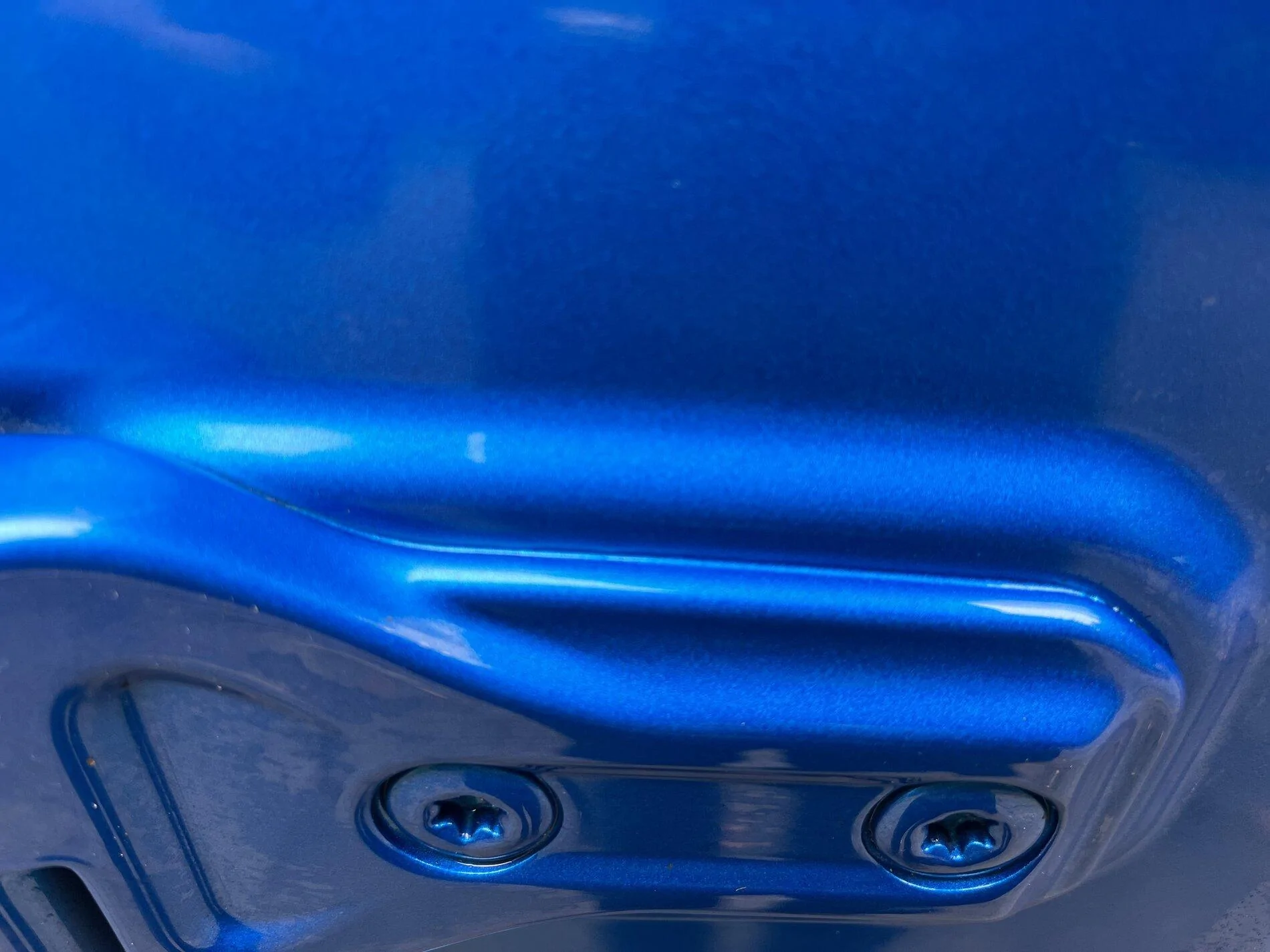
Problem is the hinges are painted with them bolted to the doors so the paint makes a seal between the two, spraying anything on the outside will not protect it from happening in any way, when the corrosion starts it starts from the inside out and bubbles up the paint. My 2014 JKU had it happen.On both my JK and new Mojave, I have treated all the hinges with Boeshield. I drizzle the stuff all over them (it's a messy job), making sure to get not only the hinge bushings & pins, but also the 'seams' where they meet the doors and around the screws. It stays liquid and seeps/creeps for a while, but it eventually dries and I remove any excess with a mild solvent or paste wax.
I recently got some ACF-50 which I might try using for my yearly application, but it stays wet, so I'm on the fence about using it.
jac04
Well-Known Member
If the paint made a seal, then how does moisture get in there to start corrosion in the first place? I can tell you that on my 2014 JK and my 21 Mojave, the hinges are definitely not 'sealed' by paint.Problem is the hinges are painted with them bolted to the doors so the paint makes a seal between the two, spraying anything on the outside will not protect it from happening in any way, when the corrosion starts it starts from the inside out and bubbles up the paint. My 2014 JKU had it happen.
My 2014 JK still has perfect hinges, unlike yours.
Mac
Well-Known Member
Not sure how the hinges couldn’t be sealed by the paint as they are assembled on the doors then painted. Don’t know how the corrosion gets started but it comes from between the hinge and door and bubbles up the paint at the edge of where they meet, if the paint wasn’t sealing it it wouldn’t bubble.If the paint made a seal, then how does moisture get in there to start corrosion in the first place? I can tell you that on my 2014 JK and my 21 Mojave, the hinges are definitely not 'sealed' by paint.
My 2014 JK still has perfect hinges, unlike yours.
jac04
Well-Known Member
Actually, if the paint was sealing it, it wouldn't bubble. Water gets in between the hinge & door and results in corrosion starting. If the paint sealed the hinges, no water would get in. The corrosion starts and then continues to migrate under the paint causing the bubbles you see. Mine aren't sealed by paint, that's all I know. The Boeshield wicks in between the hinge and door when I apply it.... if the paint wasn’t sealing it it wouldn’t bubble.
farris2003
Member
- First Name
- Lance
- Joined
- Aug 9, 2021
- Threads
- 2
- Messages
- 21
- Reaction score
- 13
- Location
- Saint Louis, Missouri
- Vehicle(s)
- 2021 Jeep Gladiator Willys Sport
I had this on my 2018 JLU. Dealership replaced and repainted all of the hinges on all of the doors free of charge and provided a loaner while it was in the shop. Took about 10 days total. They told me that the problem is that the hinges are painted after they are attached to the door and don't have any protection on the back side, so if/when moisture gets in there, the paint will bubble inevitably. I believe they told me that the vehicle comes with a 5 year corrosion warranty, someone correct me if I'm wrong, and they will repair it any time this happens. They actually painted them on the back side before they attached them to the door, so they told me anyways. I had the vehicle for about 6 months longer before I traded it in for a JT. Dealership said they are having the same problem on Pacifica hoods on a certain year. They didn't say if they had any problems with the JT however. This is at South County Dodge in STL, MO. Can't say enough about how well I was treated there FYI. Recommend 10/10 times.
Sponsored
Zswickliffe
Well-Known Member
I would wager a bet that it's not water ingress post-manufacturing causing the issue. There are so many different corrosion mechanisms, especially for aluminum.
Material incompatibility is what aluminum is the most sensitive to but I wonder if it's more related to an electrical charge differential. Maybe improper grounding of the door metal? Or possibly their initial assembly process isn't free of contaminates.
I could be totally wrong - I haven't disassembled one to look. Interesting though. Ford doesn't seem to have any issues with their F150 aluminum assemblies.
Material incompatibility is what aluminum is the most sensitive to but I wonder if it's more related to an electrical charge differential. Maybe improper grounding of the door metal? Or possibly their initial assembly process isn't free of contaminates.
I could be totally wrong - I haven't disassembled one to look. Interesting though. Ford doesn't seem to have any issues with their F150 aluminum assemblies.
ShadowsPapa
Well-Known Member
- First Name
- Bill
- Joined
- Oct 12, 2019
- Threads
- 247
- Messages
- 40,442
- Reaction score
- 53,860
- Location
- Runnells, Iowa
- Vehicle(s)
- '25 JTMX, '23 JLU 4xe, '82 SX4, '73 Javelin
- Occupation
- Retired auto mechanic, frmr gov't ntwrk security admin
- Vehicle Showcase
- 3
Yuuuuuuup.Actually, if the paint was sealing it, it wouldn't bubble. Water gets in between the hinge & door and results in corrosion starting. If the paint sealed the hinges, no water would get in. The corrosion starts and then continues to migrate under the paint causing the bubbles you see. .................
Oxygen is required for either "oxidation" on aluminum, zinc, magnesium, whatever or for "rust" on steel - which is oxidized rust but more aggressive. Seal it and oxygen can't get to it - so no oxidation.
For galvanic action, an electrolyte IS REQUIRED. I've posted this multiple times - anyone doubting it can look at sites related to science, chemistry and metallurgy.
You cannot have galvanic action without an electrolyte (water in simple cases - which is never pure anyway) Seal it - no electrolyte (no water - and no oxygen)
For rust, I clean away as much as is possible and then CONVERT - NOT SEAL - it using a rust converter product like Extend or similar (it's a product with tannin)
Once the rust is converted to an inert layer, I then seal it and paint it. I've done that on multiple classic cars and the rust hasn't returned and that's been over a decade ago in a couple of cases.
Bottom line - for rust on steel or oxidation of other metals, you need oxygen.
For galvanic action, you need an electrolyte.
Like jac04 posted - if it's sealed, neither can happen.
If there were a difference in charge or potential - you'd still require an electrolyte. (and door electrics are grounded via a wire and not the hinges)
There are charts that show which metals react most with which other metals - those close on the charts don't react as much as those with distance between them in the charts (noble vs. less noble, active vs. less active metals. )
I'm not a chemist or a degreed scientist, just someone who does classic car restorations and metal restoration and preservation, plating, powder coating, etc..
I have thousands invested in equipment and chemicals and it took years to get to where I'm at.
I use electrolysis to reverse steel rusting - "de-rust", among other processes. I use caustic and electro-cleaning processes.
From a metal finishing site I frequent -
The galvanic corrosion of aluminum is usually mild, except in highly conductive media such as slated slush from road deicing salts, sea water and other salty electrolytes. The contact area must be wetted by an aqueous liquid or humidity in order to ensure ionic conduction. Otherwise, there will be no possibility of galvanic corrosion.
NOTE - this should stop the "it's galvanic action" thing -
The dissolution rate depends on the surface ratio between the two metals: corrosion = cathodic surface area / anodic surface area. The most favorable case is a very large anodic surface area and a small cathodic surface area. The galvanic corrosion is a local corrosion and is, therefore, limited to the contact zone.
Last edited:
Mac
Well-Known Member
IMO anytime I have painted parts that are tightly bolted together and surfaces are flush paint creates a seal at the edge where the two meet. Jeep door hinge looks exactly how I would expect based on my experience.

Sponsored


