

Flanders
Well-Known Member
- Thread starter
- #1
The Victron Blue Smart IP22 is a 4-stage constant voltage charger, available in 15, 20 and 30A versions. Its presets are good for general users, but its real strength is that just about everything can be configured using a bluetooth app, and configurations saved in custom presets.
First, some potential dealbreakers:
It has a power supply mode, configurable from 12.70 to 14.70V. Current limit is configurable, within 25-100% of rating in increments of 0.1A. Voltages are configured in increments of 0.01V. Temperature compensation is configurable and can be disabled. Charging voltage and current are shown on the bluetooth app's main screen. Charging times and charge delivered are in a separate history page.
The charging stages are

Current is not as smooth as the Noco Genius 10 but voltage doesn't oscillate.
I turned it off after the previous trace and restarted to not miss the transition to float.
A closer look at float current:
After 8 hours of float it transitioned to storage.
Current fell below 20mA and voltage regulation became a little sloppy.
Here it was charging a LiFePO4 battery at 14.2V. It became unstable when current fell below 2A.
I've seen this only once when charging the Jeep. It got better once current fell a little further.
A longer trace shows the instability in context.
Settings:

Main screen and history:

These are my goto chargers, a 15A and a 30A model. They're in another league from the popular chargers - and they don't cost that much more. I often use power supply mode for a low float voltage when a full charge cycle is not needed, e.g., plugging the Jeep in right after driving it.
They have some issues and limitations, some of which might be resolved by a firmware update. Victron is pretty slow with updates.
First, some potential dealbreakers:
- No DC leads. Instead, it has rising clamp screw terminals that accept up to 6AWG. I prefer this to overly long thin lamp cord and cheap alligator clamps that come permanently attached on most chargers. A solution could be as simple as cutting a jumper cable in half. Or a 10AWG SAE extension cable (there's a wrong way to do this).
- No reverse polarity detection, or any other idiot-proofing. When it's plugged in there's voltage on the output.
- Not waterproof. There are IP65 and IP67 variants with similar configurability but chatter in the solar forums suggests they may have some problems.
- Temperature compensation will not reduce voltage at high temperatures at the start of a cycle. The manufacturer says this is because the charger has no way of knowing it's not just hot from a previous charging session. I work around this with custom profiles with lower absorption voltage for hot weather charging. It's a gotcha to be aware of.
- I've also observed some instability in voltage regulation. The traces show some weird behavior at higher voltages around 1-2A. I've seen but wasn't able to replicate an issue at low temperature and very low current trying to maintain 13.2V.
It has a power supply mode, configurable from 12.70 to 14.70V. Current limit is configurable, within 25-100% of rating in increments of 0.1A. Voltages are configured in increments of 0.01V. Temperature compensation is configurable and can be disabled. Charging voltage and current are shown on the bluetooth app's main screen. Charging times and charge delivered are in a separate history page.
The charging stages are
- Bulk - constant current
- Absorption - constant voltage with configurable time limit and cutoff current
- Float - constant voltage, fixed 8 hours (not configurable)
- Storage - constant voltage
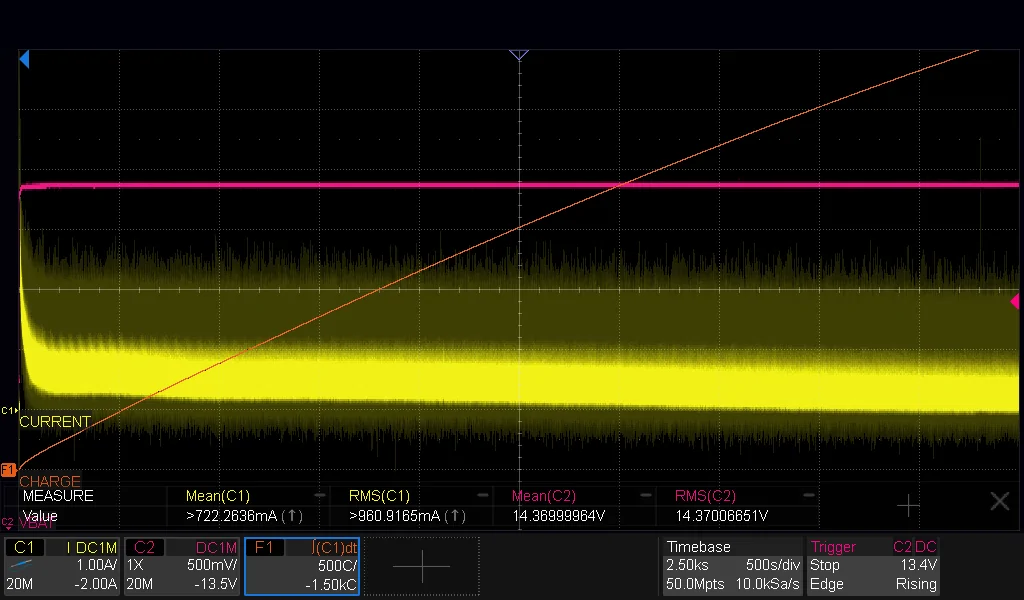
Current is not as smooth as the Noco Genius 10 but voltage doesn't oscillate.
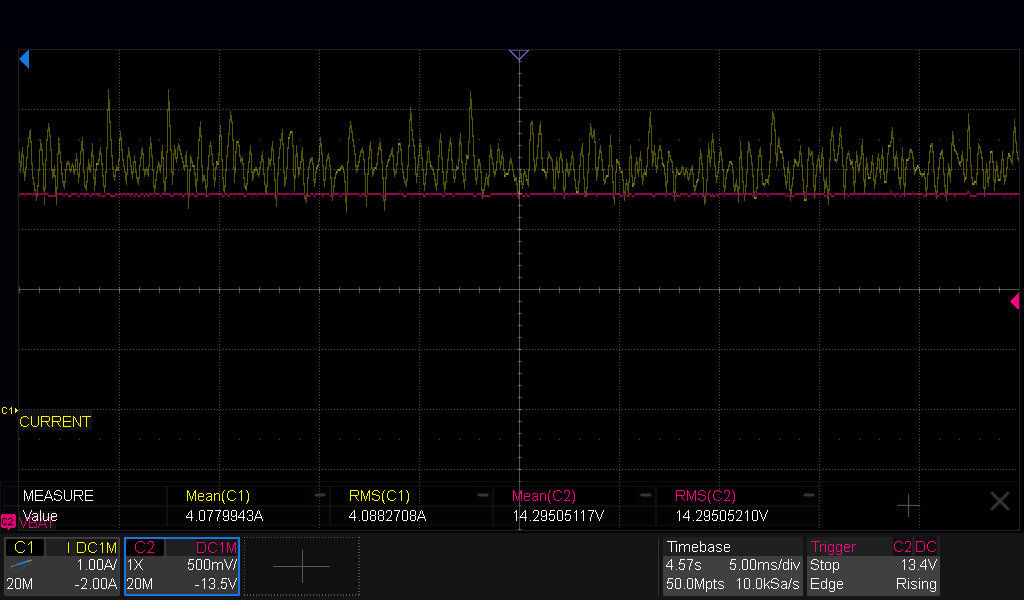
I turned it off after the previous trace and restarted to not miss the transition to float.
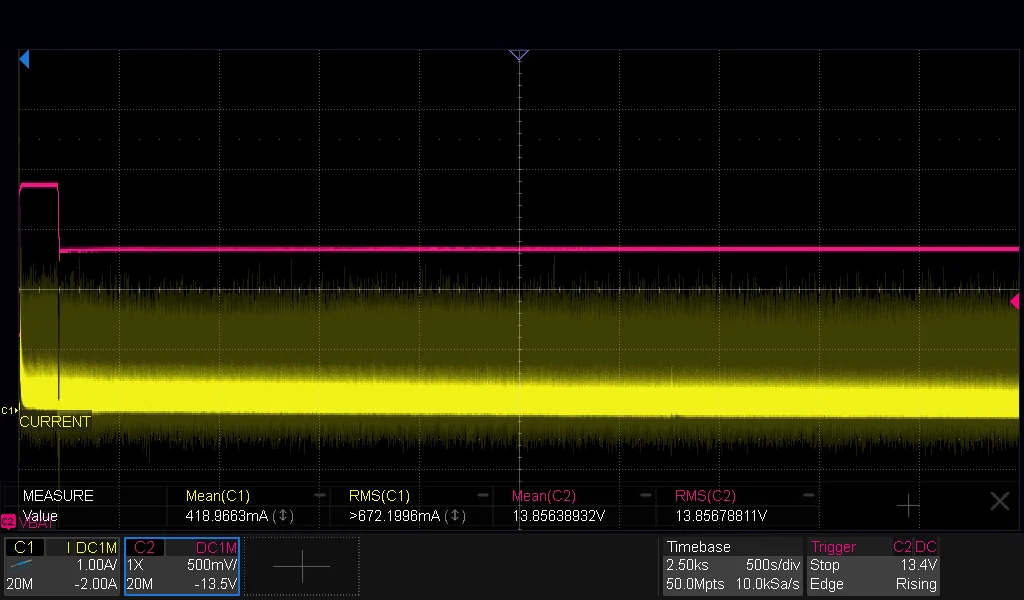
A closer look at float current:
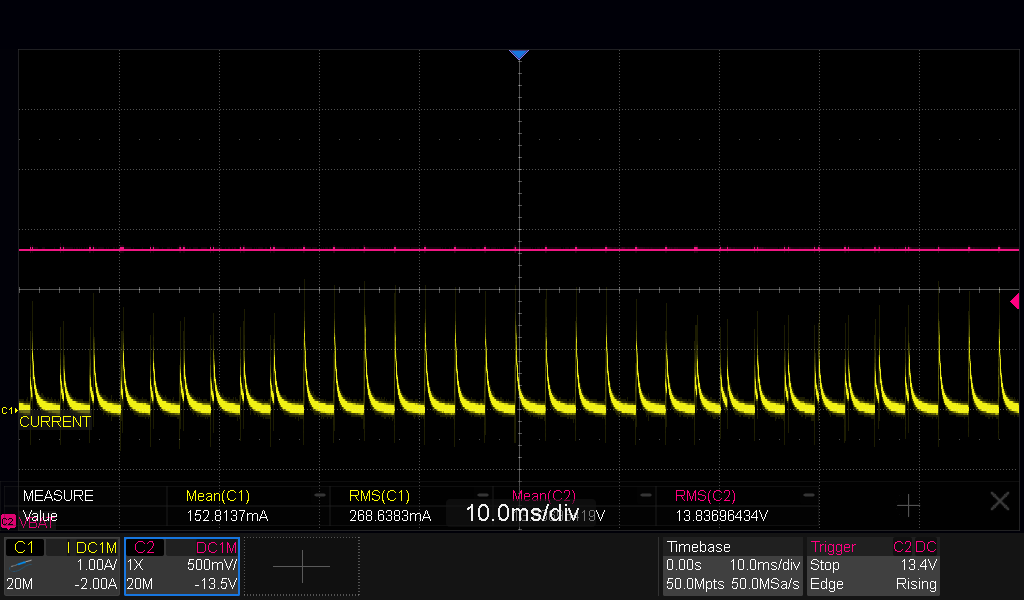
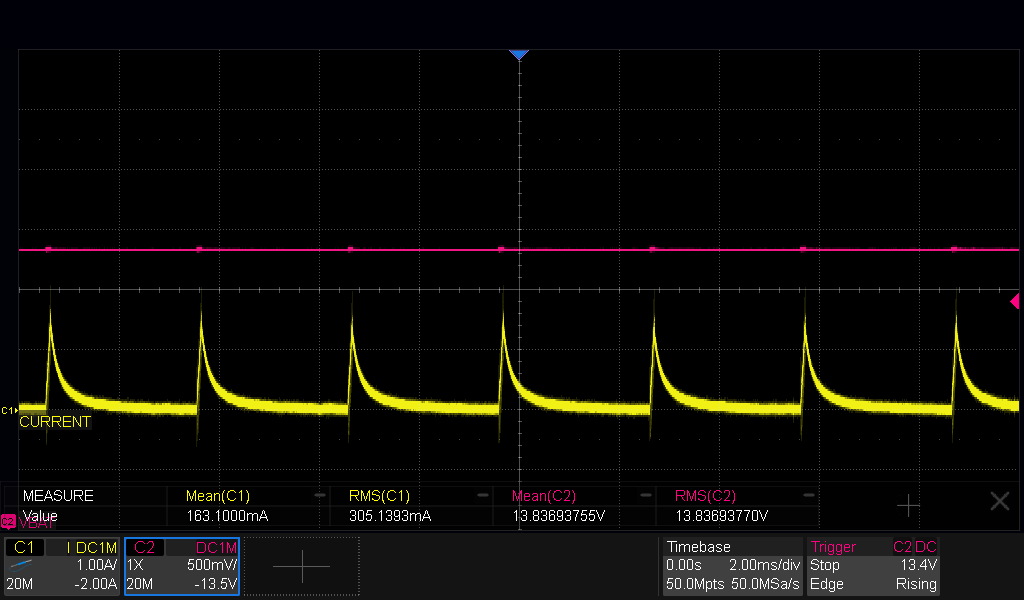
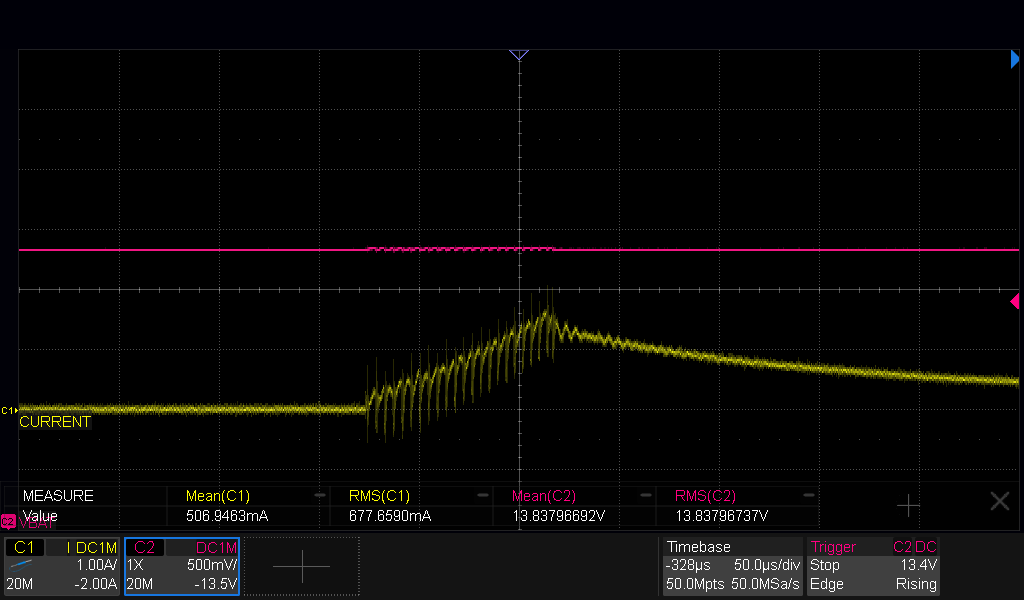
After 8 hours of float it transitioned to storage.
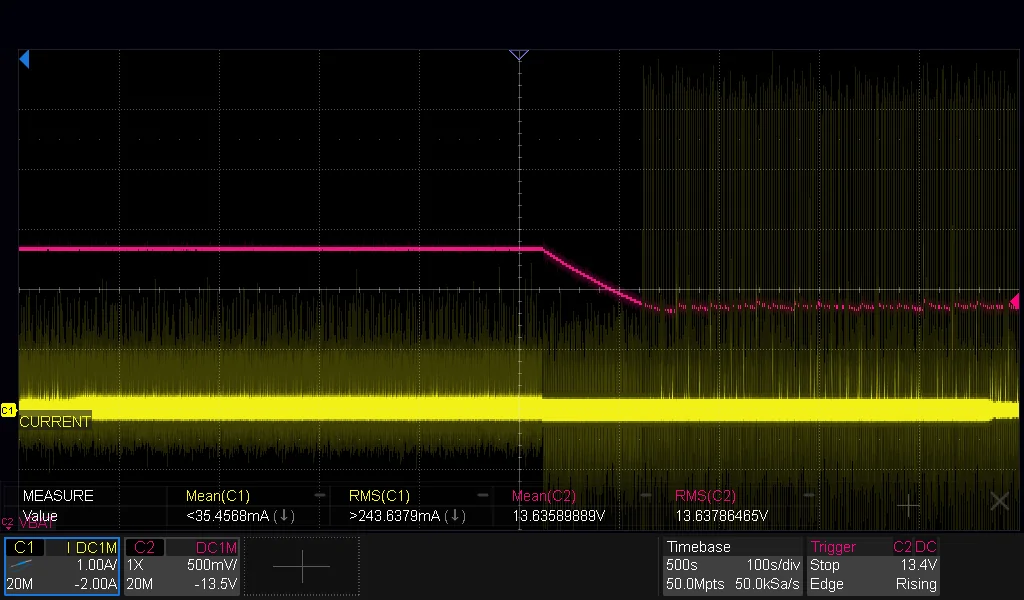
Current fell below 20mA and voltage regulation became a little sloppy.
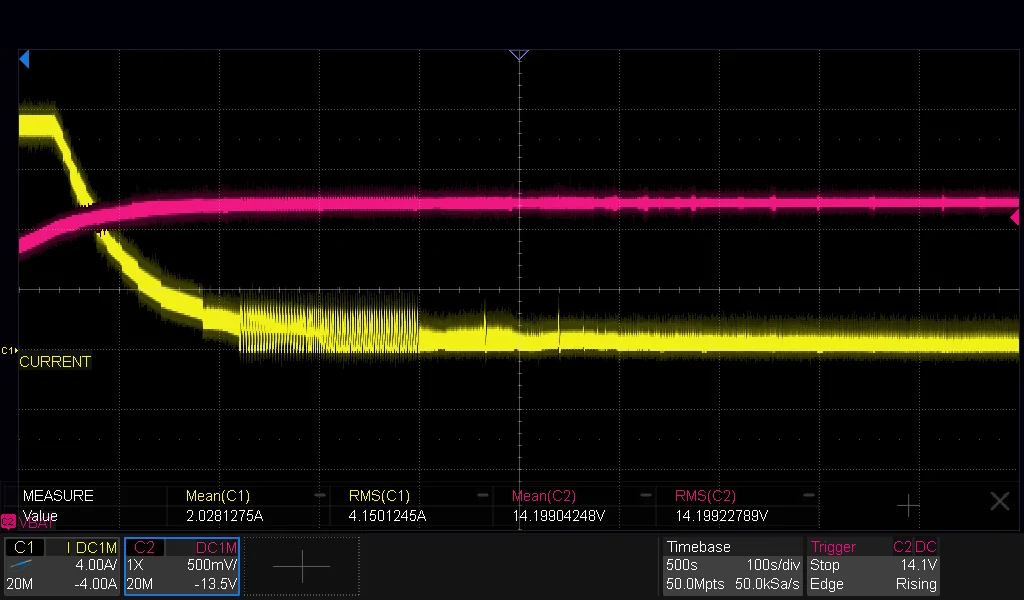
Here it was charging a LiFePO4 battery at 14.2V. It became unstable when current fell below 2A.
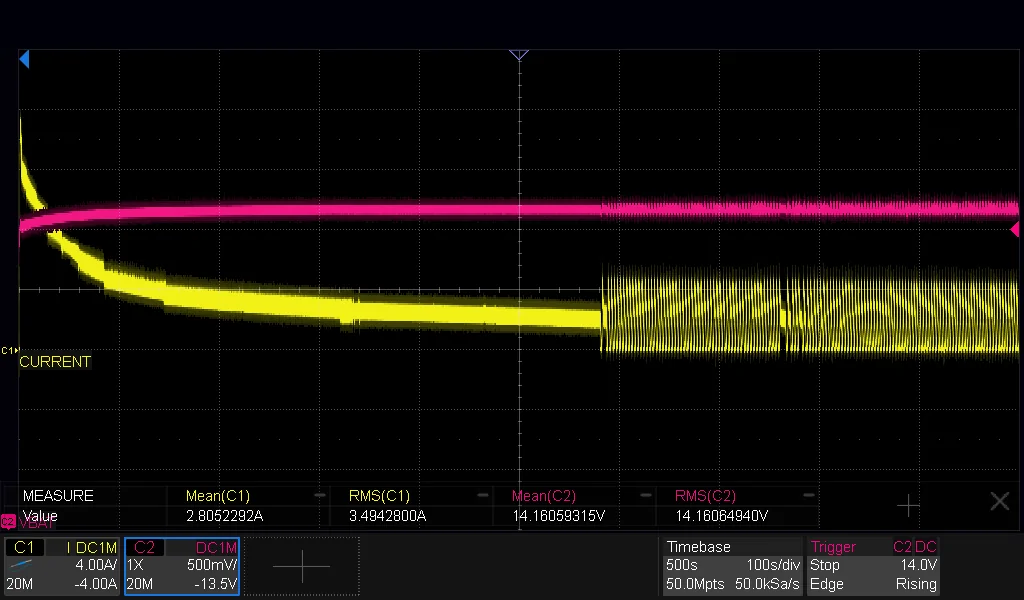
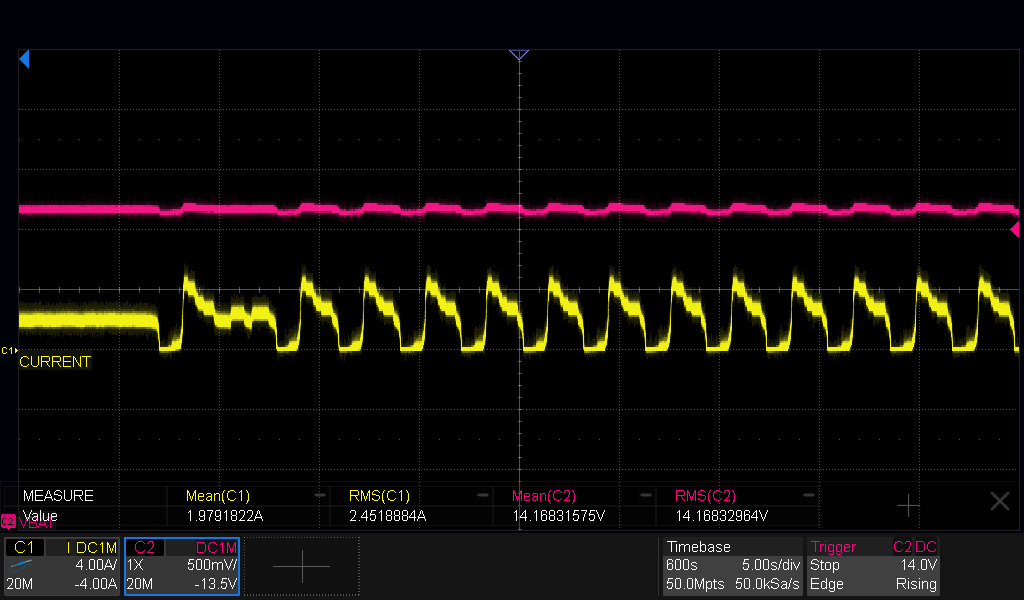
I've seen this only once when charging the Jeep. It got better once current fell a little further.
A longer trace shows the instability in context.
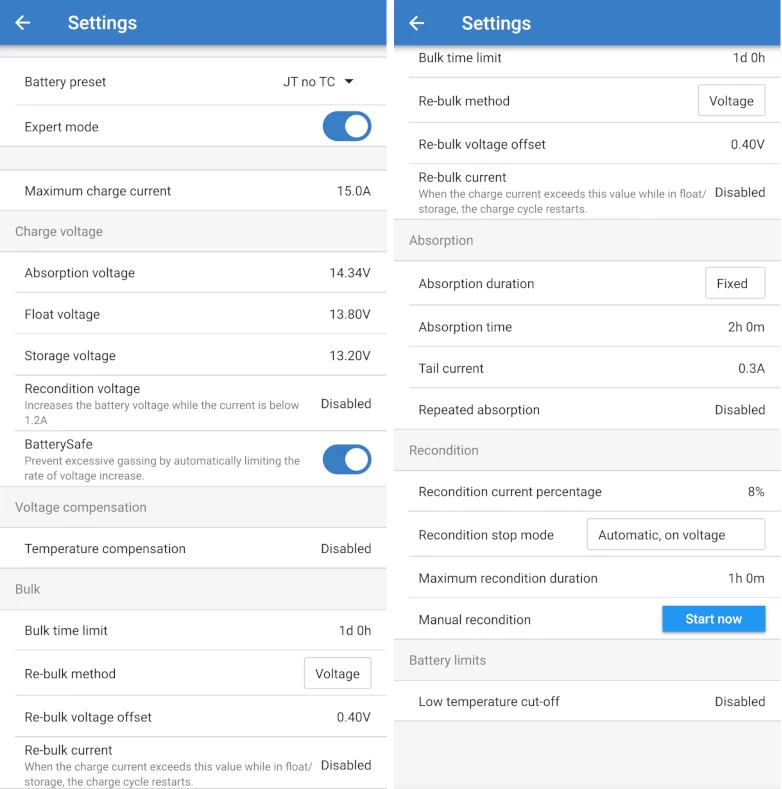
Settings:
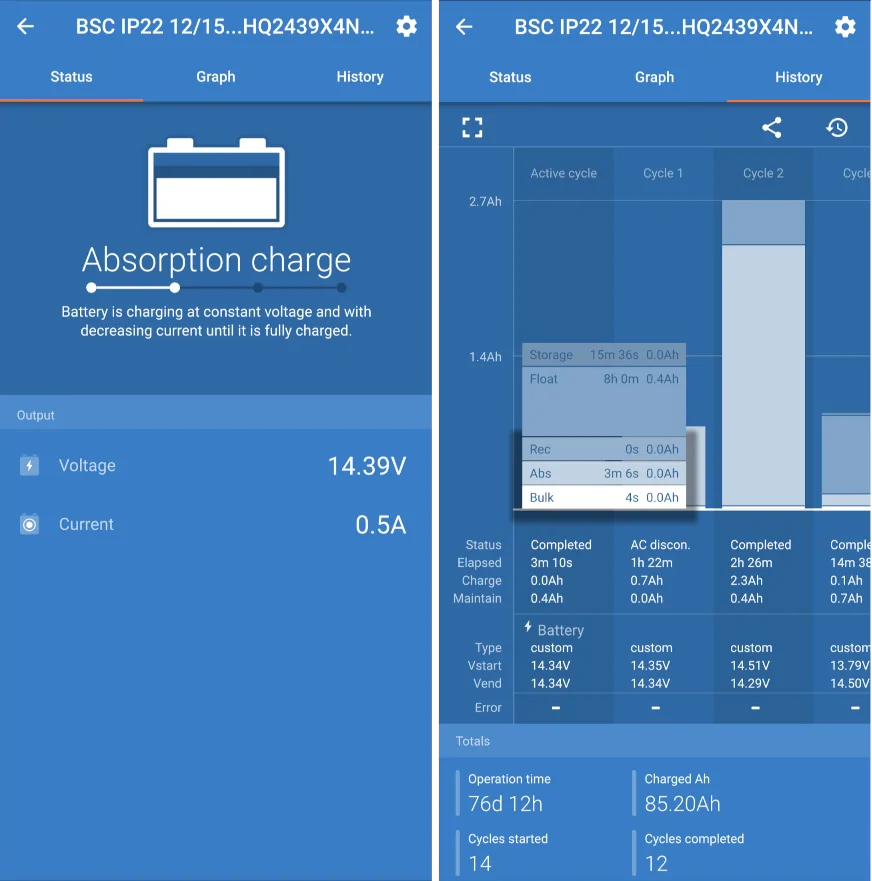
Main screen and history:
These are my goto chargers, a 15A and a 30A model. They're in another league from the popular chargers - and they don't cost that much more. I often use power supply mode for a low float voltage when a full charge cycle is not needed, e.g., plugging the Jeep in right after driving it.
They have some issues and limitations, some of which might be resolved by a firmware update. Victron is pretty slow with updates.
Sponsored
Last edited:


