Jeeperjamie
Well-Known Member
- First Name
- Jamie
- Joined
- Feb 12, 2020
- Threads
- 135
- Messages
- 4,754
- Reaction score
- 5,412
- Location
- Kannapolis nc
- Vehicle(s)
- 2020 jeep gladiator
- Occupation
- Weyerhaeuser
- Vehicle Showcase
- 1
Where's @ShadowsPapa at?
Sponsored





Make sure you use Dawn Professional Dish Detergent, and most important that it's the original scent.For the last 10 years, I’ve just pulled the drain plug, filled it with water, put a little dish soap or laundry detergent in there, drove it around the block a couple times and this seemed to do the trick. No need to bring it to somebody to clean it out when you can do it yourself with some stuff around the house!

So flushing an engine with things like ATF fluid is/was acceptable practice for non-modern engines?I wonder how many modern engines are messed up, cam phasers, and other things of extreme tight tolerances are screwed up by putting things other than oil in an engine.............
I've seen a lot done over the years, including comet put into a 56 Chevy V8 to help seat rings (not by me!).

This is the way to do it.As long as the engine isn't being starved for oil, the generally accepted method for cleaning up a sludged engine is to use a newer oil (API SN, for example), and let that oil break down the sludged oil over multiple short oil change intervals (500-1k miles). This is intended to remove the sludge without dislodging so much sludge at once that it clogs oil passages. It is also backwards compatible, so the new oil ratings won't damage older seals and gaskets.
That's because the automakers consider 150,000 miles to be "lifetime".According to the Owner's Manual, the automatic transmission is a sealed unit that should need no service. There is no method provided for the owner to check the level, add, or change the fluid or filter.
while they are expensive in a JT, much cheaper than a new transmission.There are plenty of people who plan to drive a $55,000 vehicle longer than 150,000 miles. I would strongly suggest trans. fluid changes every 60k.
Acceptable? Not really. A lot of backyarders and DIYers did it - uncle Bubba's cousin's friend Jim knew someone who had a neighbor who did it and it worked, so now they all swear by it. Or some guy once changed the oil in a friends truck and flushed it and it ran so now they are the neighborhood go-to person on all things auto.So flushing an engine with things like ATF fluid is/was acceptable practice for non-modern engines?
What was the result of the comet into the V8?
I would not even put diesel into the crankcase or cylinders of an engine and let it sit. It has sulfur and that makes me nervous - even the low sulfur type has some, and that can combine with moisture to cause issues.DO NOT put anything other than oil into your engine if you want your seals and cam lobes to survive very long.
Using ATF, diesel, etc. in an engine that is not intended to be started for years is done to prevent the cylinders from seizing up. This is done when the engine is about to undergo an eventual rebuild and is opened up.
Thank you for your learned and expert opinion in answering the question. That is what I wanted to knowAcceptable? Not really. A lot of backyarders and DIYers did it - uncle Bubba's cousin's friend Jim knew someone who had a neighbor who did it and it worked, so now they all swear by it. Or some guy once changed the oil in a friends truck and flushed it and it ran so now they are the neighborhood go-to person on all things auto.
People did it.
I won't, no matter the age.
I have used engine flush products on older engines - but those got quickly changed out and the owner was told to bring it back in for another oil/filter change after something like 100 miles or so.
You start breaking things loose you plug a filter, the bypass opens and you are running unfiltered oil with crud in it. (best just to keep it clean inside to begin with!)
Believe it or not, the comet did appear to have reduced oil consumption. Did the engine last? I have no idea. I can't tell you how much or how hard it was driven, or the long-term results.
Short term, it did reduce oil consumption. For all I know, however, it may have needed a rebuild a few thousand miles later due to damage - don't know.
I would not even put diesel into the crankcase or cylinders of an engine and let it sit. It has sulfur and that makes me nervous - even the low sulfur type has some, and that can combine with moisture to cause issues.
Kerosene, perhaps, a mix of kerosene and ATF, perhaps - it's thin and will soak down past things better than squirting oil in but what I do is use a low viscosity oil, squirt oil into cylinders, turn it over by hand to work it around inside, oil down the intake to coat valves, turn it over a few times.
If it's in a car I MIGHT add something like STP (to an old engine only) and crank it over good as that stuff will coat cam lobes and other parts and stay better than straight oil.
You want the valve stems coated good as I've seen guys store away cars or engines, turn them over - only to bend all the push rods because the valves rusted in the guides.
I've got several engines stored away at this time - a 343, a 401, a 4.0 and a partially assembled 360.
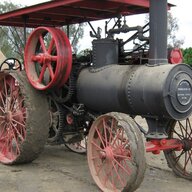
 Once free, complete tear down to get everything out including the ATF, 50+ year old sludge (yes, water and oil DO mix and it's disgusting), rusty tidbits, varmints, varmint shit, varmint nests (all also disgusting), and various bits and pieces explaining why the engine was left to sit for 50+ years under a leak in the roof. Granted, them old hit and miss barely ran to begin with and the notion of tolerances was "free range" at best with poured babbitt bearings; so, along with the beef of everything being exposed cast iron and YOU being the oil pump, throw some go-go juice in and let her sing.