
Sponsored

SOLVED: Broke my Gladiator by drilling into wires

RealMcCoy

Well-Known Member
First Name
Kevin
Joined
Jan 23, 2020
Threads
1
Messages
74
Reaction score
59
Location
Fayetteville
Vehicle(s)
2020 Jeep Gladiator JT
Occupation
Retired
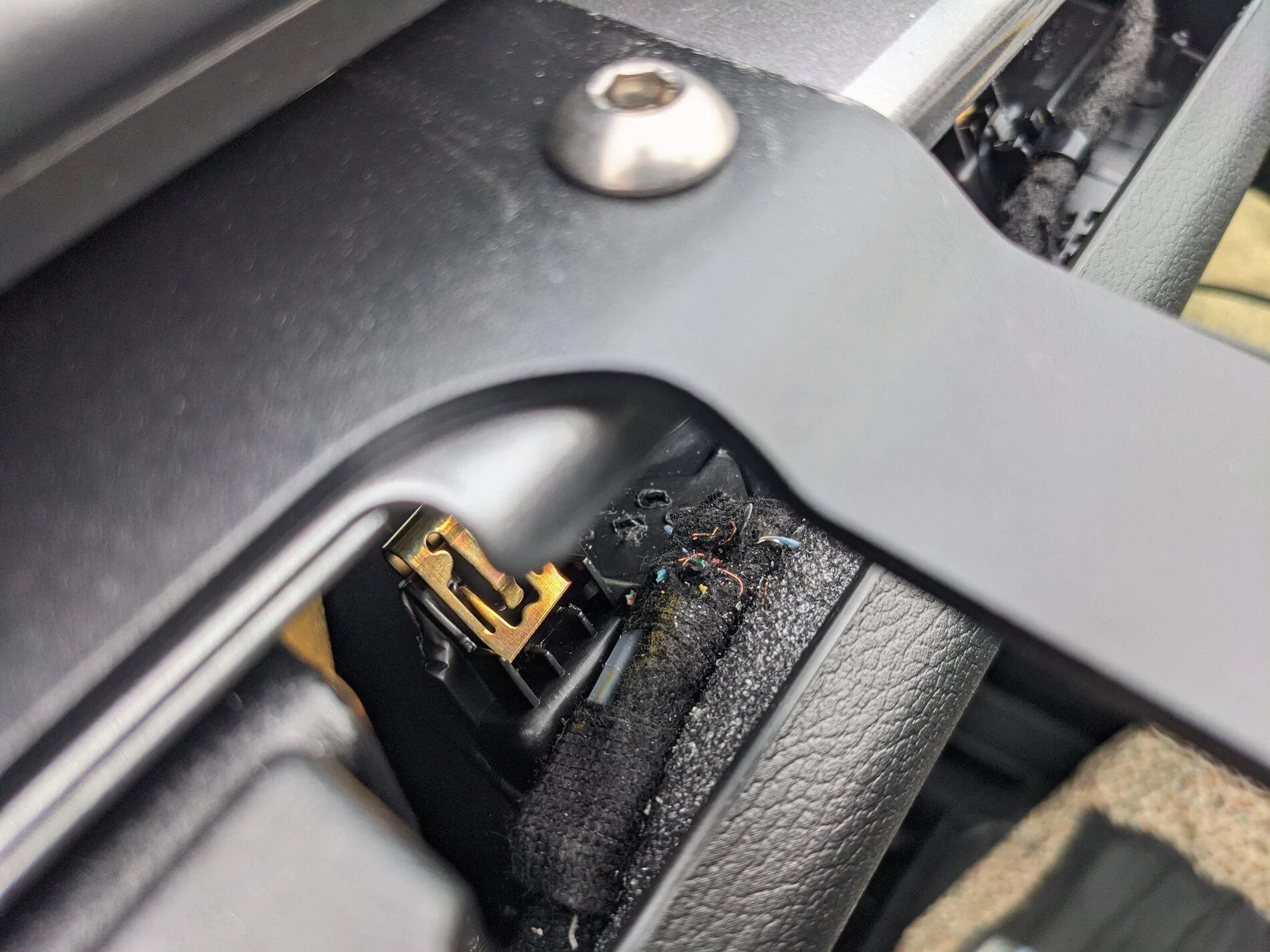
I have a 2021 Jeep Gladiator Sport and I wanted to mount a ham radio. So I ordered an Overhead MOLLE Panel from JcrOffroad and mounted it tonight. Unfortunately I've had nothing but trouble ever since.

The symptoms I noticed:
- It didn't detect my key fob so I had to push the start button with the key fob.
- The windshield wipers turn on when the ignition is running and nothing I can do will turn the wipers off.
- The turn signals don't respond.

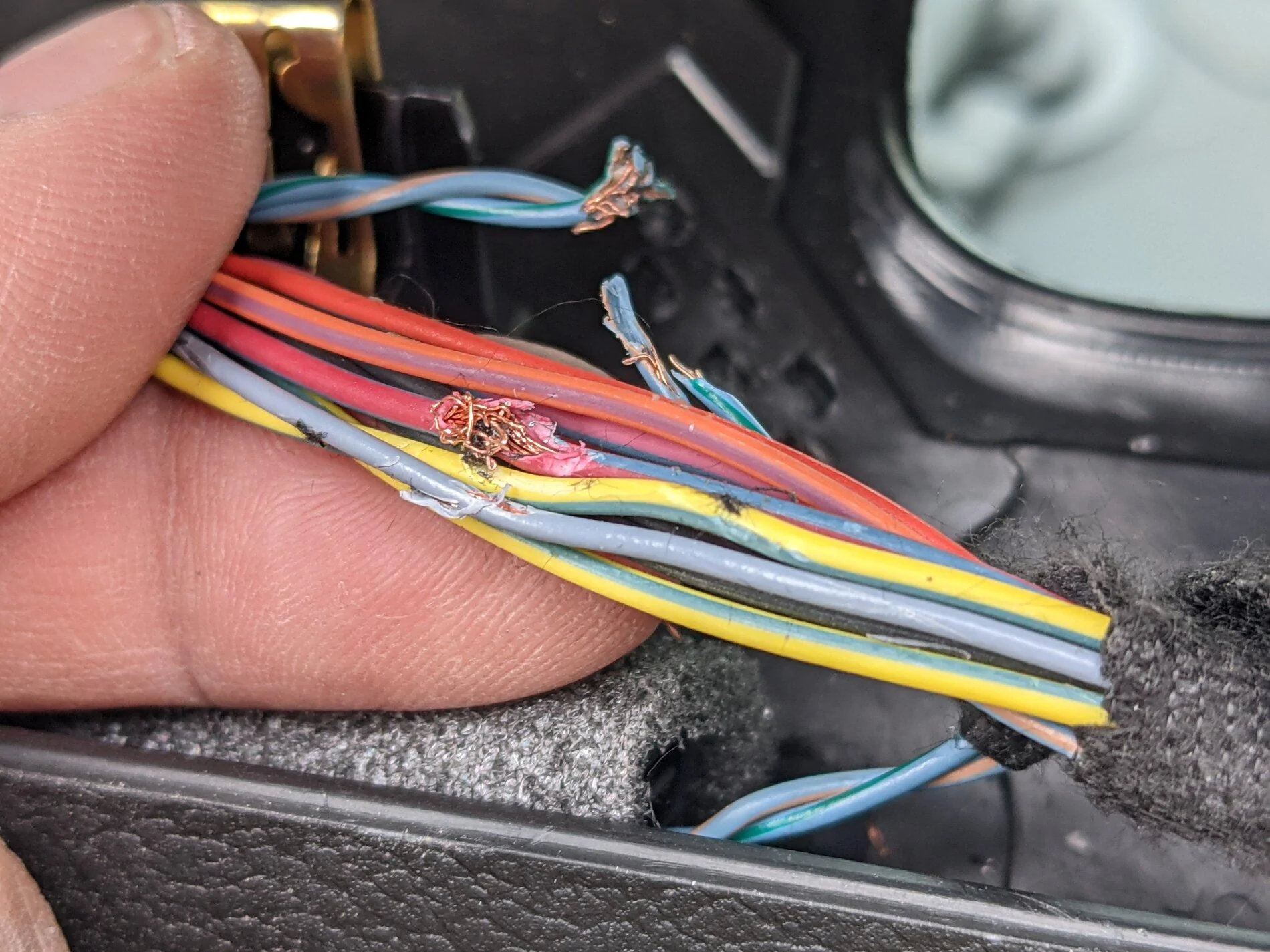
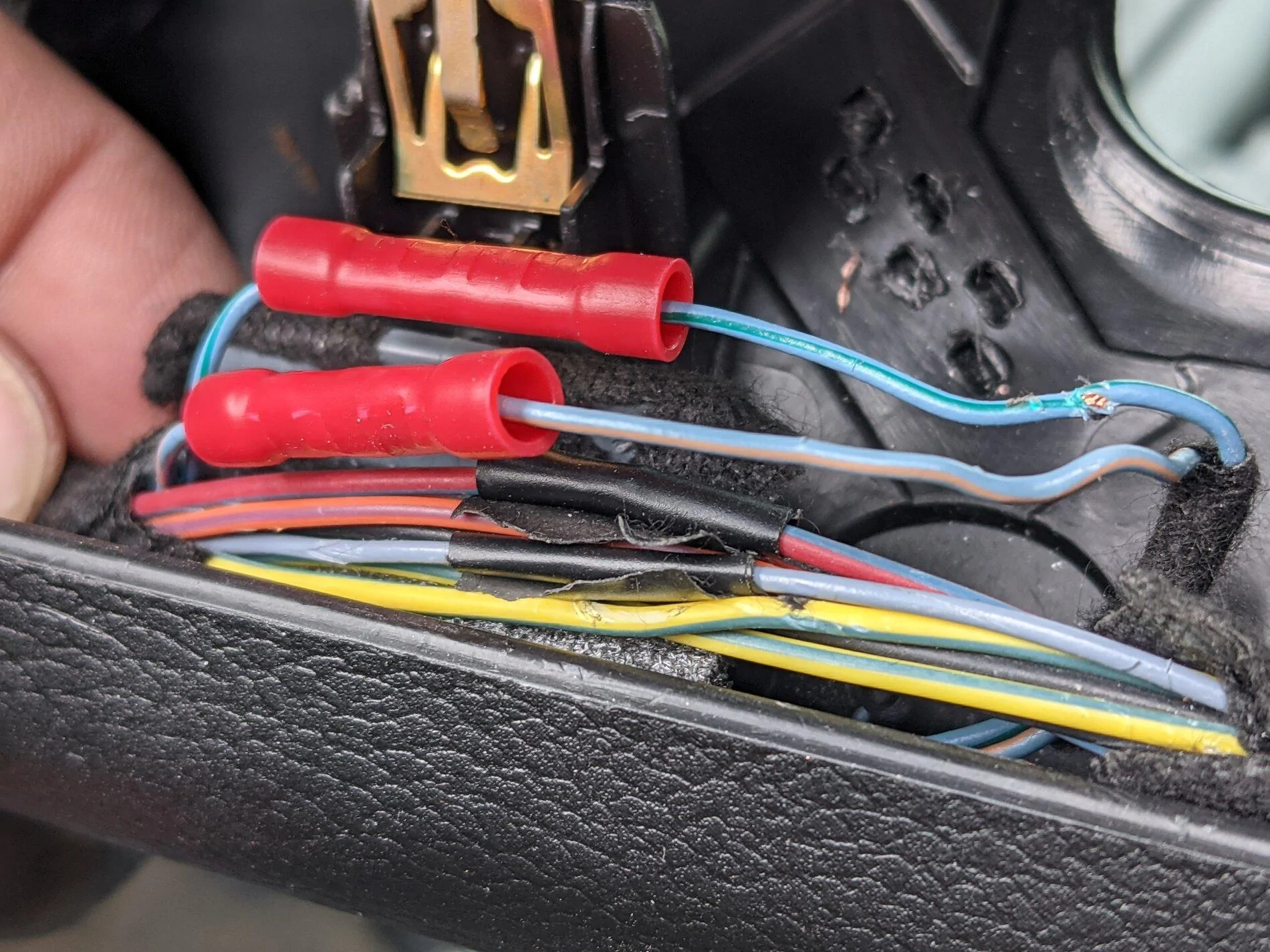
I eventually discovered I had accidentally drilled through some wires. I did my best to splice the wires back together, but the same symptoms persist.

Some things I've tried:
- Disconnect the two batteries for 20 minutes, apply the brake, then reconnect.
- Check the fuses for any signs of a failure.

Please advise.

PXL_20201230_214311469.jpg


PXL_20201230_220934718.jpg


PXL_20201230_222229144.jpg


PXL_20201230_225018449.jpg
Wow, you have my empathy for sure. S*it happens. Thank you for posting this F*ck up. I may have done the same thing soon, Mine is in route!
Seriously, appreciate you posting this.
Sponsored


RealMcCoy

Well-Known Member
First Name
Kevin
Joined
Jan 23, 2020
Threads
1
Messages
74
Reaction score
59
Location
Fayetteville
Vehicle(s)
2020 Jeep Gladiator JT
Occupation
Retired

Shankapotimus

Member
First Name
Randy
Joined
Aug 2, 2020
Threads
2
Messages
7
Reaction score
13
Location
California
Vehicle(s)
2020 gladiator Mojave
Occupation
CRNA
That twisted pair is the CAN bus wiring... that's not so simple to fix in many cases because it is super sensitive to interference and you might need to replace the entire harness. Fortunately, that top harness just runs from a-pillar to a-pillar and is about 30-60 minutes to replace so it's very do-able on your own.

edit: there's a few part numbers on BAM Wholesale so you'll need to give them your VIN but it looks like its under $60. It's #1 in the top section of this page.

You also might have shorted something out but personally, I'd throw that $60 at it and hope. If that fails, I'd be picking up a Blue Driver or some other OBDII tool that will let you read body modules and see what codes you're getting. They won't pop the light because they're not emissions related but they'll be stored in the body modules.
Hi I did the exact same thing as you are describing. Drilled for molle Panel and got all of those issues. I had to replace the harness as well as a few fuses that blew at the time.
 

aglass0fmilk

Active Member
First Name
George
Joined
Jun 20, 2019
Threads
4
Messages
32
Reaction score
61
Location
Buffalo,NY
Vehicle(s)
Jeep Cherokee 1997, 2020 Jeep Gladiator Overland
Occupation
Electrical Engineer
Despite popular belief, CAN bus is very robust. Most networks operate with a relatively low speed between 500Kbps and 1Mbps (though more modern CAN-FD supports up to 8Mbps, which may be used in the JT).

I highly doubt a few inches of untwisted wires affects signal integrity to the point of failure. The relatively low signal rate combined with differential signalling is why CAN bus is used for medium-long distance communication in vehicles -- it is very resistant to noise and fault conditions.

The twist helps to make sure both of the wires are subjected to the same ambient electromagnetic noise (ie: two antennas twisted together will pick up effectively the same radio waves). The CAN bus transceivers can then filter out this noise signal (referred to as common-mode noise) since it is present on both of the wires. Any time you see a twisted pair of wires (ethernet, etc) the concept is the same.

A few inches of missing twist, especially when the wires are still physically close together, is probably negligible for most CAN networks. It may degrade the signal on high speed CAN buses (>1Mbps) but I still doubt it. Not saying it's ideal, but an eye-balled repair of a twisted pair will likely work just fine for years to come.

I also doubt any damage would be done to ECUs connected to the CAN bus in the event of a short to ground or 12V. Every CAN bus transceiver chip I have ever worked with has built-in protection for precisely these scenarios. Automotive electronics are required to be built to a high degree of immunity when it comes to common faults like shorting to 12V or ground.

If anyone ever does this again my recommendation would be:
  • Cut the wires back to where there's no damaged insulation. Use some spare wire of the same gauge to extend the wires if the harness would shortened too much by doing this.
  • Place some heat shrink tubing of the appropriate size over the cut wires (don't forget this part or you'll be redoing the next steps...)
  • If repairing a twisted pair, twist the wires together manually, trying to approximate the number of twists-per-inch of the intact factory harness.
  • Strip the wires 1/4" or so and twist them together. Apply solder so the joint is properly wetted. Use some rosin core electronic solder and a basic $20 iron. Make sure everything is super clean! Wipe any dirt/oil away with isopropyl alcohol. Trim any sharp protrusions from the resulting joint that could pierce the heat shrink tubing (see a NASA-grade wire splice method here).
  • Shrink the heat shrink tubing over the joint. For a waterproof repair, marine-grade heat shrink tubing is also available -- the inside is coated with an adhesive that melts and seals the repair when the tubing is shrunk. Harbor Freight even carries it.
As long as your solder joints are good everything will work as it did before.

Source: I am an electrical engineer that works with CAN bus systems on occasion.
 

DaveL

Well-Known Member
First Name
Dave
Joined
Mar 18, 2020
Threads
3
Messages
226
Reaction score
202
Location
Canada
Vehicle(s)
JLUR
I’m with Gatorized on this one. CAN is sensitive, but it’s not black magic. I assume you have the new harness on order, so that is a good backup plan.

Any solid OBDII tool will help you dig deeper.

Sounds like you are using logic, keep it up.

If the steering wheel control module is out, then you’ve either got some wires that have interference (harness with fix), fuse blown (new fuse), or the computer reset and turned something off because it couldn’t find it (OBDII tool will help you check that).

There could be another blown component, true, but it sounds unlikely in what you’ve said so far.

You definitely shouldn’t panic yet :) Keep a cool head, keep posting info, and you’ll get through this!
Great advice!
 

Sponsored

gitnit

Member
First Name
Eric
Joined
Aug 28, 2020
Threads
0
Messages
22
Reaction score
15
Location
Maryland
Vehicle(s)
2020 Gladiator
Occupation
equipment operator
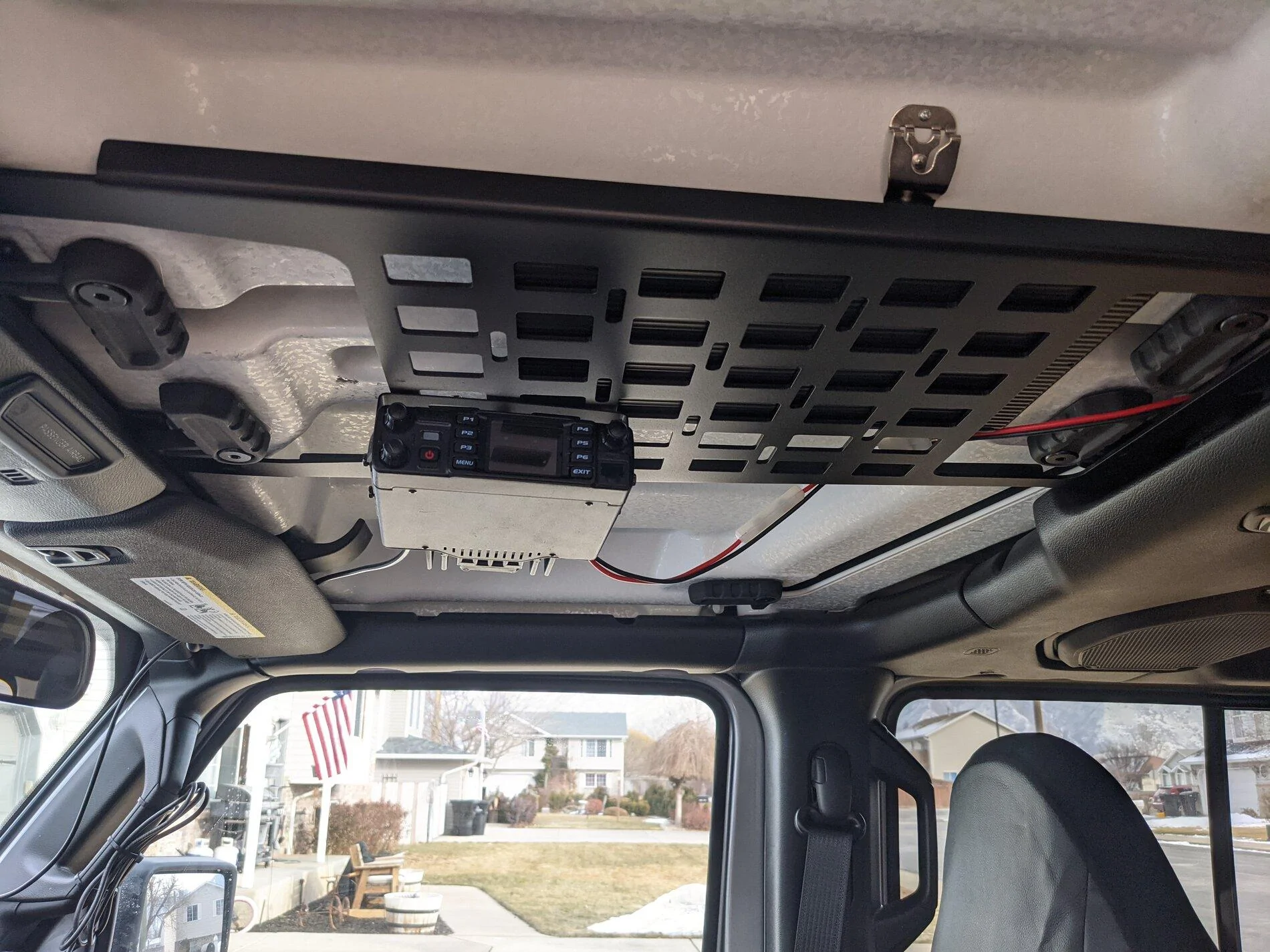
I have a 2021 Jeep Gladiator Sport and I wanted to mount a ham radio. So I ordered an Overhead MOLLE Panel from JcrOffroad and mounted it tonight. Unfortunately I've had nothing but trouble ever since.

The symptoms I noticed:
- It didn't detect my key fob so I had to push the start button with the key fob.
- The windshield wipers turn on when the ignition is running and nothing I can do will turn the wipers off.
- The turn signals don't respond.

I eventually discovered I had accidentally drilled through some wires. I did my best to splice the wires back together, but the same symptoms persist.

Some things I've tried:
- Disconnect the two batteries for 20 minutes, apply the brake, then reconnect.
- Check the fuses for any signs of a failure.

Please advise.
PXL_20201230_214311469.jpg


PXL_20201230_220934718.jpg


PXL_20201230_222229144.jpg


PXL_20201230_225018449.jpg
A great future subject would be mounting options for HAM/CB radios. My installation was a hassle not at all as easy as on my TJ
 

Cpt Adama

Active Member
Joined
Oct 29, 2019
Threads
2
Messages
37
Reaction score
45
Location
Arizona
Vehicle(s)
2008 Jeep Wrangler XL
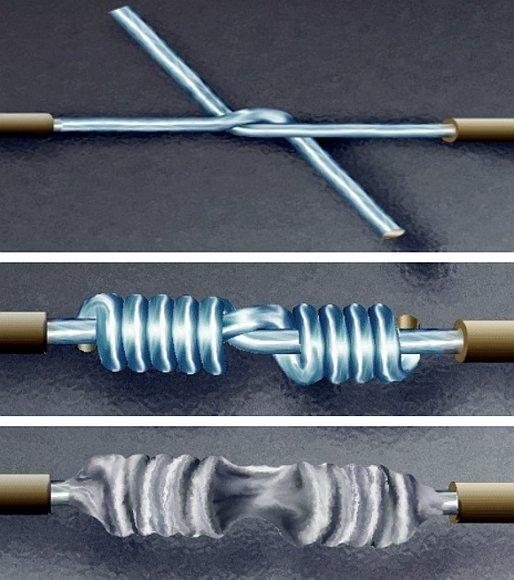
And to add more fuel to the fire ? on the right way to splice a wire let's look at NASA's spec for solid core wire anyway:


Jeep Gladiator SOLVED: Broke my Gladiator by drilling into wires western-union-or-linemans-splice


Some commenters on my post about using a washer as a soldering aid noticed my sloppy splicing technique and were kind enough to educate me about the so-called “Western Union splice,” aka the “Lineman’s splice,” which is the preferred method for twisting solid-core wire leads together for inline electrical connections.

Developed during the heyday of the telegraph, the Lineman’s splice is designed for connections that will be under tension. It is commonly claimed that, properly made, a Lineman’s splice is stronger than the wires of which it is composed. In any case, it is a time-proven method, and, coolest of all, one of NASA’s Required Workmanship Standards. To wit, in a NASA-approved Lineman’s splice:

  1. The conductors shall be pre-tinned.
  2. There shall be at least 3 turns around each conductor and the wraps shall be tight with no gaps between adjacent turns.
  3. The wraps shall not overlap and the ends of the wrap shall be trimmed flush prior to soldering to prevent protruding ends.
  4. Conductors shall not overlap the insulation of the other wire.
Though the Lineman’s splice was originally used without solder, today soldering is common. And NASA insists on it:

  1. Solder shall wet all elements of the connection.
  2. The solder shall fillet between connection elements over the complete periphery
    of the connection.
This material comes from page 84 of NASA-STD 8739.4 (PDF), which is a great reference if you’re interested in best practices for interconnecting cables and wires.
 

ShadowsPapa

Well-Known Member
First Name
Bill
Joined
Oct 12, 2019
Threads
247
Messages
40,442
Reaction score
53,859
Location
Runnells, Iowa
Vehicle(s)
'25 JTMX, '23 JLU 4xe, '82 SX4, '73 Javelin
Occupation
Retired auto mechanic, frmr gov't ntwrk security admin
Vehicle Showcase
3
The same as the Western Union splice already covered.
About all that looks any different is the amount of solder - I've always covered all wraps with solder, while it's not necessary and is over-kill - but I do it to ensure the wrapped wires of STRANDED wires stay put and can be easily heat-shrink'd without anything moving at the end of the wrap.
I know the western union joint is strong - I was taught it in HS electronics classes and the teacher did a demo - hanging by the wire sans-solder.
 

Cpt Adama

Active Member
Joined
Oct 29, 2019
Threads
2
Messages
37
Reaction score
45
Location
Arizona
Vehicle(s)
2008 Jeep Wrangler XL
The same as the Western Union splice already covered.
About all that looks any different is the amount of solder - I've always covered all wraps with solder, while it's not necessary and is over-kill - but I do it to ensure the wrapped wires of STRANDED wires stay put and can be easily heat-shrink'd without anything moving at the end of the wrap.
I know the western union joint is strong - I was taught it in HS electronics classes and the teacher did a demo - hanging by the wire sans-solder.
I just added that because it's a NASA specification and they know a thing or two about vibration, ?. Plus it gives a good visual step process. I figure if it's good enough to go to space it is probably good enough for a Gladiator.
 

ShadowsPapa

Well-Known Member
First Name
Bill
Joined
Oct 12, 2019
Threads
247
Messages
40,442
Reaction score
53,859
Location
Runnells, Iowa
Vehicle(s)
'25 JTMX, '23 JLU 4xe, '82 SX4, '73 Javelin
Occupation
Retired auto mechanic, frmr gov't ntwrk security admin
Vehicle Showcase
3
I just added that because it's a NASA specification and they know a thing or two about vibration, ?. Plus it gives a good visual step process. I figure if it's good enough to go to space it is probably good enough for a Gladiator.
Rockets? Vibration at escape velocity? Say it isn't so!
 

Sponsored

Andy29847

Well-Known Member
First Name
Andy
Joined
Oct 25, 2020
Threads
14
Messages
552
Reaction score
934
Location
South Carolina
Vehicle(s)
2020 Wrangler Rubicon, 2020 Gladiator Rubicon
Occupation
Retired
And to add more fuel to the fire ? on the right way to splice a wire let's look at NASA's spec for solid core wire anyway:

I haven't seen many solid core wires in automobiles. I'm not sure how your writing applies to the discussion.

Anyway, it might be easier to settle the "right" kind of oil to use than to decide on the right way to splice wires. FWIW, I could NOT open NASA-STD 8739.4. I could open 8739.3, and one of the first things I read was "don't splice wires." :) NASA approves both solder and crimp wire connections. The graphic that I could find that refers to splicing is here:

CABLE AND HARNESS SPLICES (nasa.gov)
 

10ecHarry

Well-Known Member
First Name
Harry
Joined
Sep 17, 2020
Threads
2
Messages
86
Reaction score
87
Location
Knoxville TN
Vehicle(s)
2020 JT sport s
Occupation
Plumber
Not much help with your wires but this is how I was gonna mount my overhead molly panel. I have a Fraken overhead panel. Very nice aluminum and strong. I decided not to use it because I figured I would eventually bump my head on the cb I was going to mount. Stryker 447. What I was gonna do to mount the Mollie panel was instead of drilling hole or using self taping screws was to mount it with 1" wide double sided 3M tape. I just Velcro the cb to the side of drivers side center console. This works but if somebody shorter than me wanted to slide the seat up the seat will hit the CB. Don't matter to me because Im the only one who drives this JT.
 

10ecHarry

Well-Known Member
First Name
Harry
Joined
Sep 17, 2020
Threads
2
Messages
86
Reaction score
87
Location
Knoxville TN
Vehicle(s)
2020 JT sport s
Occupation
Plumber
When soldering. get some more of the same gauge wire. cut wires at different lengths so solder joints are offset as to where they can't touch each other. Before soldering slide some heat shrink tubing over wires. After wires are soldered , slide the heat shrink tubing over the joints and shrink with heat gun or Bic lighter.
 

DaveL

Well-Known Member
First Name
Dave
Joined
Mar 18, 2020
Threads
3
Messages
226
Reaction score
202
Location
Canada
Vehicle(s)
JLUR
Despite popular belief, CAN bus is very robust. Most networks operate with a relatively low speed between 500Kbps and 1Mbps (though more modern CAN-FD supports up to 8Mbps, which may be used in the JT).

I highly doubt a few inches of untwisted wires affects signal integrity to the point of failure. The relatively low signal rate combined with differential signalling is why CAN bus is used for medium-long distance communication in vehicles -- it is very resistant to noise and fault conditions.

The twist helps to make sure both of the wires are subjected to the same ambient electromagnetic noise (ie: two antennas twisted together will pick up effectively the same radio waves). The CAN bus transceivers can then filter out this noise signal (referred to as common-mode noise) since it is present on both of the wires. Any time you see a twisted pair of wires (ethernet, etc) the concept is the same.

A few inches of missing twist, especially when the wires are still physically close together, is probably negligible for most CAN networks. It may degrade the signal on high speed CAN buses (>1Mbps) but I still doubt it. Not saying it's ideal, but an eye-balled repair of a twisted pair will likely work just fine for years to come.

I also doubt any damage would be done to ECUs connected to the CAN bus in the event of a short to ground or 12V. Every CAN bus transceiver chip I have ever worked with has built-in protection for precisely these scenarios. Automotive electronics are required to be built to a high degree of immunity when it comes to common faults like shorting to 12V or ground.

If anyone ever does this again my recommendation would be:
  • Cut the wires back to where there's no damaged insulation. Use some spare wire of the same gauge to extend the wires if the harness would shortened too much by doing this.
  • Place some heat shrink tubing of the appropriate size over the cut wires (don't forget this part or you'll be redoing the next steps...)
  • If repairing a twisted pair, twist the wires together manually, trying to approximate the number of twists-per-inch of the intact factory harness.
  • Strip the wires 1/4" or so and twist them together. Apply solder so the joint is properly wetted. Use some rosin core electronic solder and a basic $20 iron. Make sure everything is super clean! Wipe any dirt/oil away with isopropyl alcohol. Trim any sharp protrusions from the resulting joint that could pierce the heat shrink tubing (see a NASA-grade wire splice method here).
  • Shrink the heat shrink tubing over the joint. For a waterproof repair, marine-grade heat shrink tubing is also available -- the inside is coated with an adhesive that melts and seals the repair when the tubing is shrunk. Harbor Freight even carries it.
As long as your solder joints are good everything will work as it did before.

Source: I am an electrical engineer that works with CAN bus systems on occasion.
Excellent! Thanks for writing this.
 

Cpt Adama

Active Member
Joined
Oct 29, 2019
Threads
2
Messages
37
Reaction score
45
Location
Arizona
Vehicle(s)
2008 Jeep Wrangler XL
I haven't seen many solid core wires in automobiles. I'm not sure how your writing applies to the discussion.

A: It applies because this same technique can be applied to stranded wire as well, except not to tin the wire before making the splice, and the discussion was how to splice his current wire harness back together properly.

Anyway, it might be easier to settle the "right" kind of oil to use than to decide on the right way to splice wires. FWIW, I could NOT open NASA-STD 8739.4. I could open 8739.3, and one of the first things I read was "don't splice wires." :) NASA approves both solder and crimp wire connections. The graphic that I could find that refers to splicing is here:

CABLE AND HARNESS SPLICES (nasa.gov)
That's great info you found, but if you absolutely have no other choice it's good to know NASA has a method for splicing too.?
Sponsored


Top