OP
OP
chorky
Well-Known Member
- First Name
- Chad
- Joined
- Feb 26, 2022
- Threads
- 175
- Messages
- 3,466
- Reaction score
- 3,801
- Location
- Montana
- Website
- www.youtube.com
- Vehicle(s)
- '22JTR, '06 LJ, '06 TJ GE
- Build Thread
- Link
- Occupation
- GIS Specialist
- Thread starter
- #76
So I got the bracket and antenna on today and as you suggested I first tested continuity from of just the coax, then the antenna and then the coax and antenna together. I probably should test again now that the coax is routed to the final destination.The height in the last picture looks ok to me. If you have an ohmmetter connect it across the coax center conductor and whip then check continuity while you unscrew the antenna off the mount. If you get two turns or more before it looses continuity it should be ok.
Some antenna bases have a bendable contact that you can grab and pull out a little to make better contact. Some have a spring loaded pin that can't be moved.
The coax and antenna combination varied between .01 and .03 and I think that was just because I couldn't get a good solid connection on the antenna itself with the multimeter leads. The antenna is coated in something black.... and the tip had a rubber covering, so I pealed that off and found some fresh metal (assuming it is stainless steel). There was a little gash up there probably from the manufacturer process that showed just a touch of bear metal. So I think the lead just couldn't touch the metal fully to have a good enough connection for no resistance. All the components separately measured flat 0
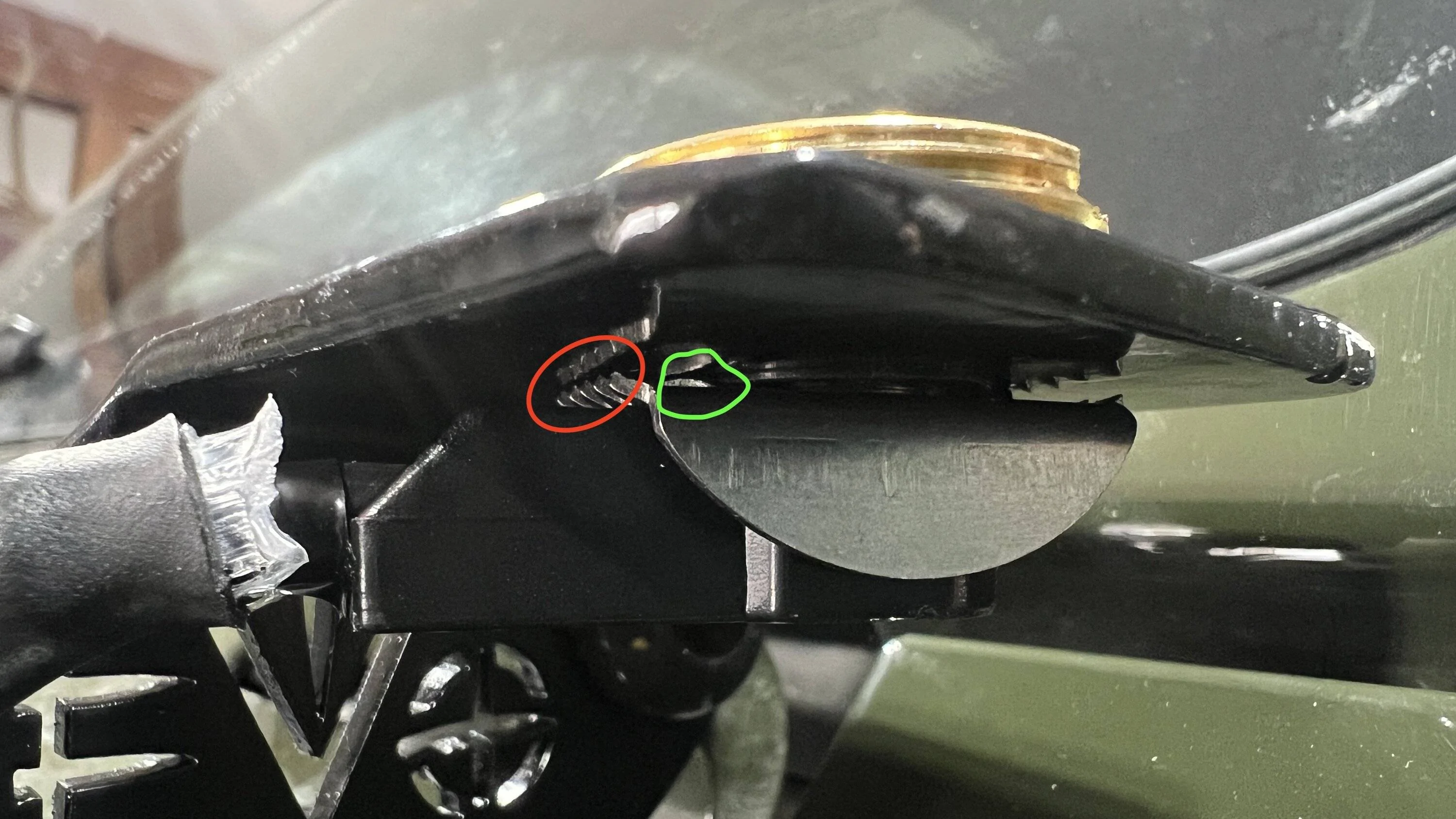
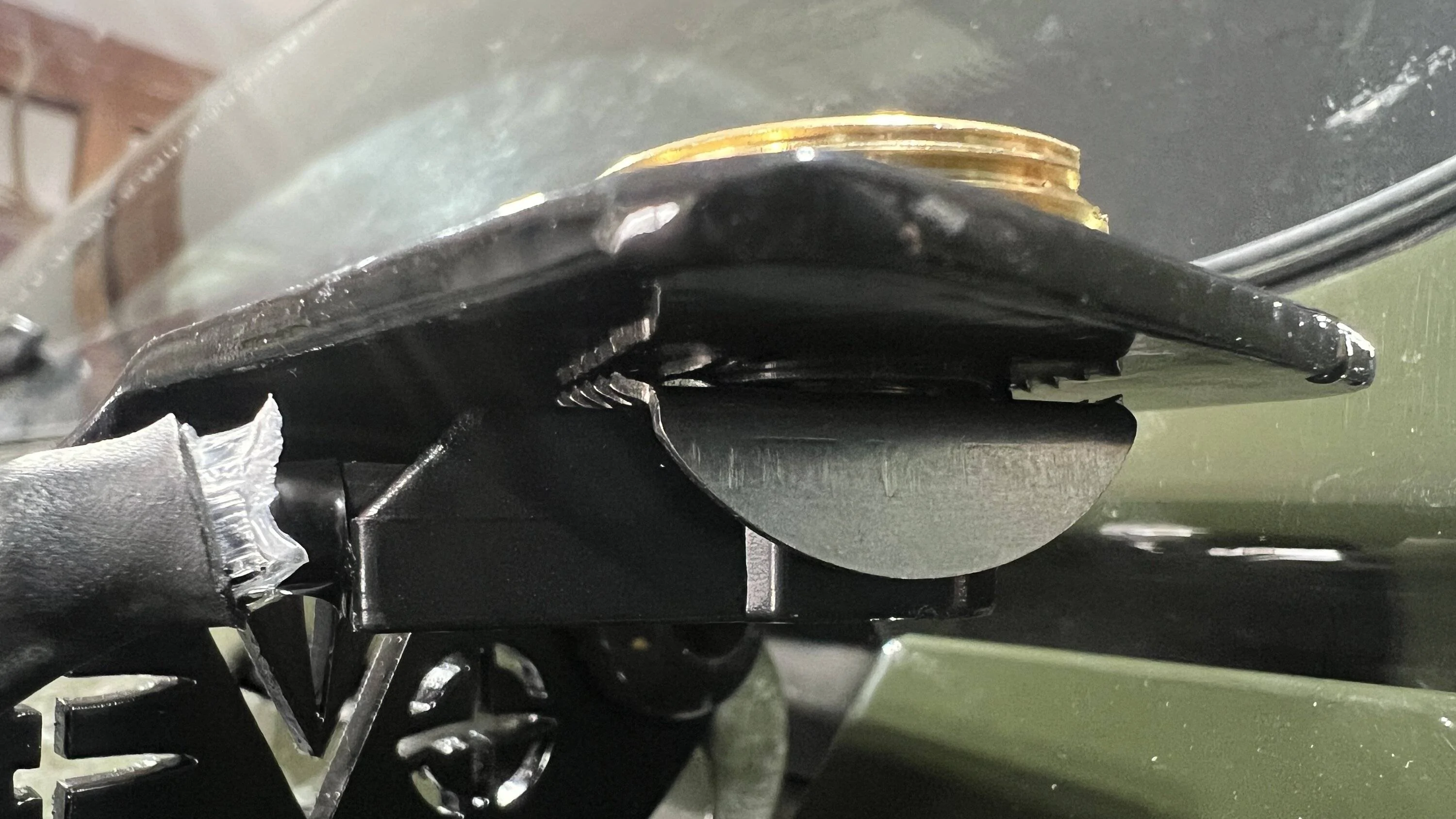
However, one thing I found interesting is that little metal bracket with the teeth on it underneath the bracket isn't touching metal. I'm not sure if it is supposed to or not? I did tighten it down quite well, and probably could go more but it doesn't feel right doing that. It seems the plastic isolator is what is preventing it from crushing into the metal bracket.
Sponsored