Sponsored

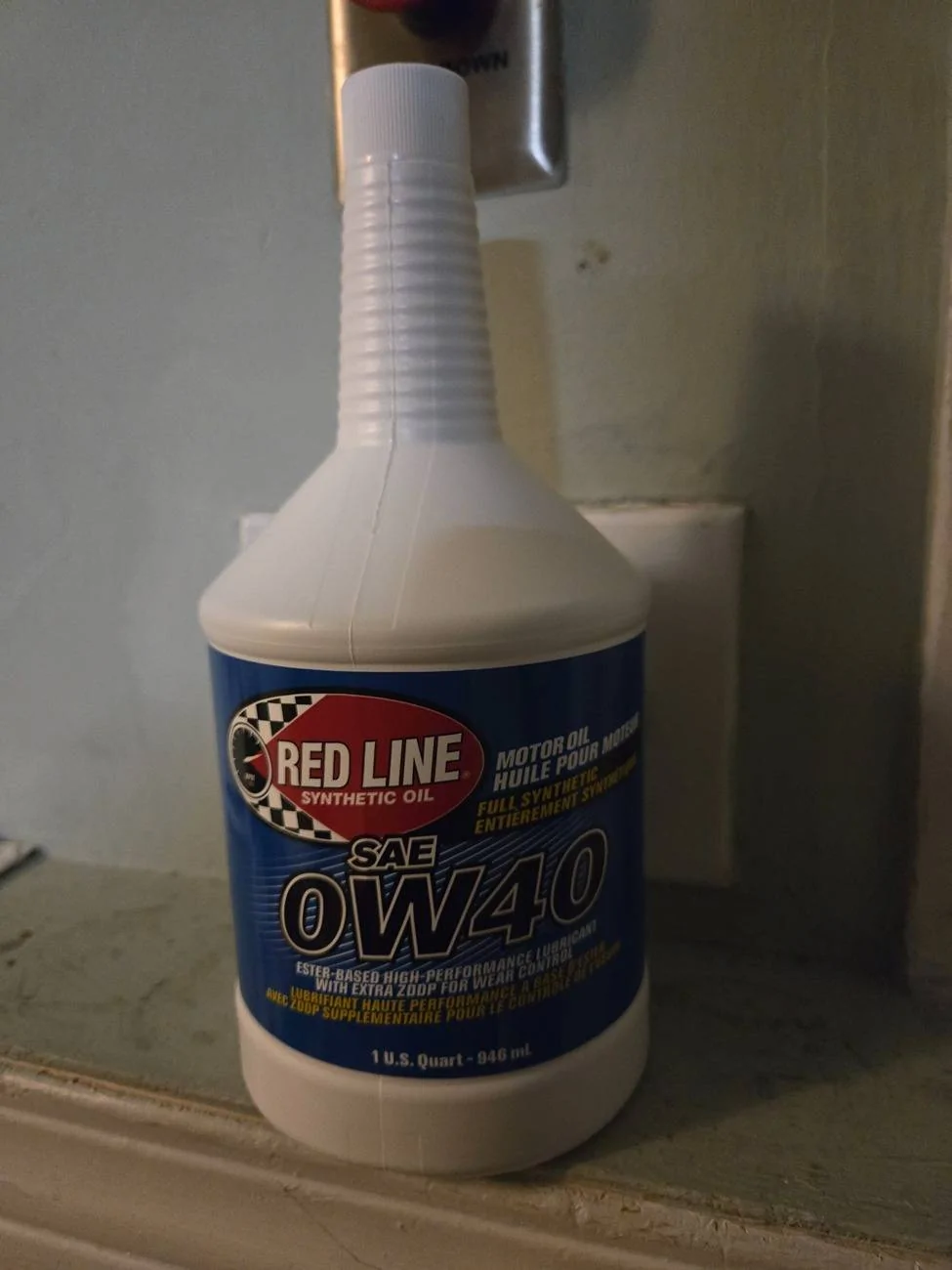
0W-40 in PUG 3.6

Gladiator007

Member
Joined
Jul 27, 2025
Threads
1
Messages
21
Reaction score
35
Location
OR
Vehicle(s)
2025 Gladiator
Howdy!
What could go wrong? At 15.7 cSt it's almost double the KV100 of a typical 0W-20.
Thanks!

Jeep Gladiator 0W-40 in PUG 3.6 20250727_224159
Sponsored


PuddleJumper

Well-Known Member
First Name
Cortlund
Joined
Jan 17, 2024
Threads
68
Messages
2,540
Reaction score
3,373
Location
Alexandria, Virginia
Vehicle(s)
23' JTM, 22' JTR, 22' F56S,
Build Thread
Link
Occupation
STACK Infrastructure Critical Operations Technician
Vehicle Showcase
1
oil is oil. I'll run anything from 0w-20 to 15w-40 in mine. I've never noticed a difference. Just change when your supposed to
 
Last edited:

ShadowsPapa

Well-Known Member
First Name
Bill
Joined
Oct 12, 2019
Threads
247
Messages
40,442
Reaction score
53,858
Location
Runnells, Iowa
Vehicle(s)
'25 JTMX, '23 JLU 4xe, '82 SX4, '73 Javelin
Occupation
Retired auto mechanic, frmr gov't ntwrk security admin
Vehicle Showcase
3
Why would you? No gain.
I laugh when people say "oil is oil" - funny stuff. They are negating all of the engineering that goes into the oil and the engines and the fact that the oil companies work with the engine designers to come up with the best oil for a given engine design.
Funny - all of the arm-chair engineers. They also can't say at all what's happening to the engine over time and ignore the testing that has proven thicker oil runs hotter at critical points in the engine, and that means - the oil should be changed SOONER than if you run the correct oil.
And then there's the response times of the phasers, multi-mode intake followers (high and low lift mode), the oil control solenoids that are made to hold specific oil in the intake follower systems based on the viscosity recommended, the fact that heavier oil won't spray as well at the parts it's supposed to cool and lubricate. Thus - you run certain parts HOTTER, likely shortening engine life.
There's also higher bearing temperatures due to the shear forces of the heavier oil, how it balls up going into bearings and between surfaces it's supposed to protect (there's videos out there on this topic)

Funny shit here.

What is up with the obsession with 40 weight oils when back in the 70s and 80s, 30 weights were recommended. Why would we run oil heavier than 45 years ago? These are very different engines with very different bearings, and different clearances, FLOW needs and more. Thicker oil flows more slowly, so you figure it out.

Amusing.

Do what you want (it's YOUR Jeep!), but don't think for a minute you are doing anything smarter or better or helping anything at all.
 
OP
OP

Gladiator007

Member
Joined
Jul 27, 2025
Threads
1
Messages
21
Reaction score
35
Location
OR
Vehicle(s)
2025 Gladiator
Why would you? No gain.
I laugh when people say "oil is oil" - funny stuff. They are negating all of the engineering that goes into the oil and the engines and the fact that the oil companies work with the engine designers to come up with the best oil for a given engine design.
Funny - all of the arm-chair engineers. They also can't say at all what's happening to the engine over time and ignore the testing that has proven thicker oil runs hotter at critical points in the engine, and that means - the oil should be changed SOONER than if you run the correct oil.
And then there's the response times of the phasers, multi-mode intake followers (high and low lift mode), the oil control solenoids that are made to hold specific oil in the intake follower systems based on the viscosity recommended, the fact that heavier oil won't spray as well at the parts it's supposed to cool and lubricate. Thus - you run certain parts HOTTER, likely shortening engine life.
There's also higher bearing temperatures due to the shear forces of the heavier oil, how it balls up going into bearings and between surfaces it's supposed to protect (there's videos out there on this topic)

Funny shit here.

What is up with the obsession with 40 weight oils when back in the 70s and 80s, 30 weights were recommended. Why would we run oil heavier than 45 years ago? These are very different engines with very different bearings, and different clearances, FLOW needs and more. Thicker oil flows more slowly, so you figure it out.

Amusing.

Do what you want (it's YOUR Jeep!), but don't think for a minute you are doing anything smarter or better or helping anything at all.
More valvetrain protection at the cost of mpg and power. That's why I chose 0W-40
 

Sponsored

ShadowsPapa

Well-Known Member
First Name
Bill
Joined
Oct 12, 2019
Threads
247
Messages
40,442
Reaction score
53,858
Location
Runnells, Iowa
Vehicle(s)
'25 JTMX, '23 JLU 4xe, '82 SX4, '73 Javelin
Occupation
Retired auto mechanic, frmr gov't ntwrk security admin
Vehicle Showcase
3
More valvetrain protection at the cost of mpg and power. That's why I chose 0W-40
That's really funny - more valvetrain protection, when in fact, it's likely LESS.
I guess you haven't followed any of the other threads, the videos and so on, and the post I made where I showed people running heavier oils suffered cam destruction.
Viscosity doesn't protect, and in fact, in this case due to the likelihood of less oil spray reaching critical parts may actually do long-term harm.

Sorry, it's not better for valvetrain protection. If flat tappet cams of the past could last perfectly fine with much higher spring pressures with 30 weight oil, why would you think 40 would be better?
Again, viscosity doesn't protect. Do some reading of the many many threads on the topic here.

Do what you want, but it's not going to help.


Jeep Gladiator 0W-40 in PUG 3.6 1753721431490-iv
 
OP
OP

Gladiator007

Member
Joined
Jul 27, 2025
Threads
1
Messages
21
Reaction score
35
Location
OR
Vehicle(s)
2025 Gladiator
That's really funny - more valvetrain protection, when in fact, it's likely LESS.
I guess you haven't followed any of the other threads, the videos and so on, and the post I made where I showed people running heavier oils suffered cam destruction.
Viscosity doesn't protect, and in fact, in this case due to the likelihood of less oil spray reaching critical parts may actually do long-term harm.

Sorry, it's not better for valvetrain protection. If flat tappet cams of the past could last perfectly fine with much higher spring pressures with 30 weight oil, why would you think 40 would be better?
Again, viscosity doesn't protect. Do some reading of the many many threads on the topic here.

Do what you want, but it's not going to help.


1753721431490-iv.jpg
Mind sharing that video
 

ShadowsPapa

Well-Known Member
First Name
Bill
Joined
Oct 12, 2019
Threads
247
Messages
40,442
Reaction score
53,858
Location
Runnells, Iowa
Vehicle(s)
'25 JTMX, '23 JLU 4xe, '82 SX4, '73 Javelin
Occupation
Retired auto mechanic, frmr gov't ntwrk security admin
Vehicle Showcase
3
Mind sharing that video
I'd have to go through dozens of posts/threads, I think it was @Stan H who shared it weeks ago.
Thicker oil rolled up, not as easily able to get between the parts to be protected, so you didn't really have any advantage, could have been a disadvantage (and likely was, or they'd not have shown it)

I've done engines for many decades, and it's amazing how people "assume" "thicker is better" or "protects better" or has advantages.

It seems just recently a couple of people here and there have jumped on the 40 - assuming that 20 is causing the issue and thus 40 is going to solve it.
Sorry, no, just not the case. Viscosity doesn't protect. Oil film protects.
Thicker oil moves more slowly. The oil system is regulated at about 30 psi at RPM below 3,000. That means that there is LESS oil flow. Less oil to carry away the heat, more shear in bearings which generates heat, oil peak temperatures in certain areas are quite a bit higher (meaning the oil is closer to the edge of thermal breakdown) the parts run hotter.
Thicker oil also holds onto aeration a lot longer - air that naturally gets into the oil stays, can't escape as quickly.

You really gain nothing at all with a jump to 40 in these engines, most likely you will have negative consequences instead.
It will not protect the valve train parts better.
That's what people uneducated in engines, with no experience in oil or engine building, seem to want others to believe.
They are afraid of the cam problem and are grasping at straws, with zero idea of what's really going on.
 

Sponsored

ShadowsPapa

Well-Known Member
First Name
Bill
Joined
Oct 12, 2019
Threads
247
Messages
40,442
Reaction score
53,858
Location
Runnells, Iowa
Vehicle(s)
'25 JTMX, '23 JLU 4xe, '82 SX4, '73 Javelin
Occupation
Retired auto mechanic, frmr gov't ntwrk security admin
Vehicle Showcase
3
OP's vehicle listed: 2015 Gladiator.

Me's guessing y'all are getting punked.
Yeah, just joined, and that's the first posts.................... either that or been reading crap posts out there and has no real idea how oil or oiling systems work. Likely also believes the battery bull crap out there as well.

But then, if it's a 25, then there's less to worry about if it's a 2025 from 2025.
Last winter and later, the 25 model year wasn't included in the TSB. Something changed in the 2025 model year.
 

Stan H

Well-Known Member
First Name
Stanley
Joined
Oct 26, 2022
Threads
10
Messages
5,481
Reaction score
5,460
Location
WV
Vehicle(s)
Gladiator Rubicon 2021
Occupation
Safety Consultant
I'd have to go through dozens of posts/threads, I think it was @Stan H who shared it weeks ago.
Thicker oil rolled up, not as easily able to get between the parts to be protected, so you didn't really have any advantage, could have been a disadvantage (and likely was, or they'd not have shown it)

I've done engines for many decades, and it's amazing how people "assume" "thicker is better" or "protects better" or has advantages.

It seems just recently a couple of people here and there have jumped on the 40 - assuming that 20 is causing the issue and thus 40 is going to solve it.
Sorry, no, just not the case. Viscosity doesn't protect. Oil film protects.
Thicker oil moves more slowly. The oil system is regulated at about 30 psi at RPM below 3,000. That means that there is LESS oil flow. Less oil to carry away the heat, more shear in bearings which generates heat, oil peak temperatures in certain areas are quite a bit higher (meaning the oil is closer to the edge of thermal breakdown) the parts run hotter.
Thicker oil also holds onto aeration a lot longer - air that naturally gets into the oil stays, can't escape as quickly.

You really gain nothing at all with a jump to 40 in these engines, most likely you will have negative consequences instead.
It will not protect the valve train parts better.
That's what people uneducated in engines, with no experience in oil or engine building, seem to want others to believe.
They are afraid of the cam problem and are grasping at straws, with zero idea of what's really going on.
 

sharpsicle

Well-Known Member
Joined
Apr 29, 2021
Threads
22
Messages
2,764
Reaction score
6,255
Location
Tampa, FL / Milwaukee, WI
Vehicle(s)
2020 Gladiator Overland, 2002 VTX1800
As long as it meets the spec specified by FCA.

Just remember that "recommended for" or "equivalent to" are not the same as meeting the spec, as other forum members have found out, and can lead to issues should you need to get warranty work done on the engine.
 

ShadowsPapa

Well-Known Member
First Name
Bill
Joined
Oct 12, 2019
Threads
247
Messages
40,442
Reaction score
53,858
Location
Runnells, Iowa
Vehicle(s)
'25 JTMX, '23 JLU 4xe, '82 SX4, '73 Javelin
Occupation
Retired auto mechanic, frmr gov't ntwrk security admin
Vehicle Showcase
3
..........
And they mention the heat generated as well.
Of course their graphic is "rotating" parts and a bearing, but it also is problematic when oil is too thick to easily get into the space between non-bearing parts (lobes against followers)
Take a spray bottle with just water and see how easily and FAR the water shoots.
Now had some honey or sugar or something to make it a bit thicker and see how it doesn't go as far and takes a lot more effort to get it there.
These have nozzles pointed at the undersides of the pistons - to lubricate and cool. Too thick, and you lose that.
Going 30 likely isn't going to make a "big" difference, but the jump up to 40 would.
The oils are engineered for the purposes - API members get together with engine designers and engineers and talk all of this out.
(the AMSOIL people know what they are doing with engine oil)
 

Stan H

Well-Known Member
First Name
Stanley
Joined
Oct 26, 2022
Threads
10
Messages
5,481
Reaction score
5,460
Location
WV
Vehicle(s)
Gladiator Rubicon 2021
Occupation
Safety Consultant
I believe them on the parasitic loss and the eddy/nip build up at the entry point between the 2 rolling surfaces . Makes total sense . I got 130k I will stay with 0W-20 . I aint claiming anything or promoting Amsoil . But I habe been using it since the very forst oil change works for me.
And dont believe that crap about use conventional for X-amount of miles before switching or the rings won't seal thats more silliness.
Sponsored


Top