
Sponsored

Are the batteries really isolated during ESS stops?

OP
OP
Flanders

Flanders

Well-Known Member
Joined
Dec 2, 2023
Threads
11
Messages
152
Reaction score
121
Location
Dyer, NV
Vehicle(s)
2023 JT
A real nerd should know the resistance across N1 and N2 on the PDC. The only path for current from N1 to N2 goes through the PCR, which is normally closed (conducting).

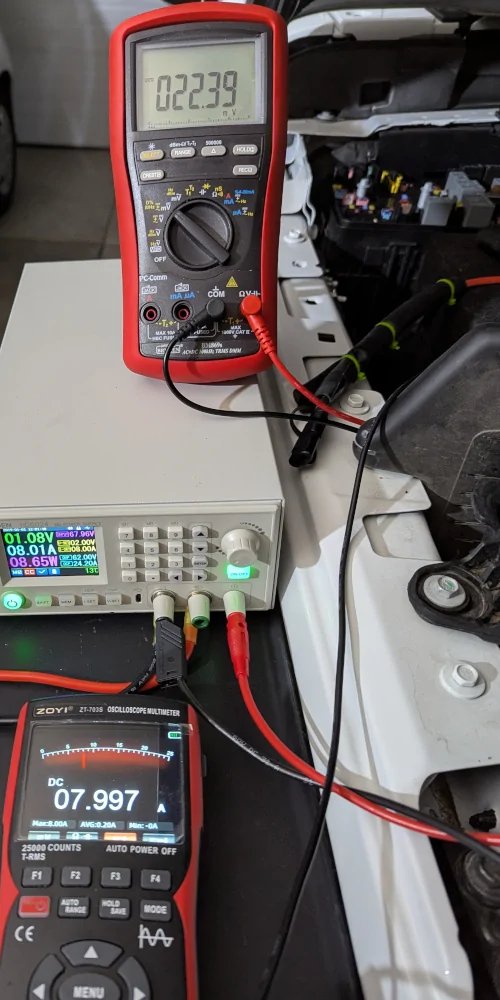
Let's put some current through it and check the voltage drop:
Jeep Gladiator Are the batteries really isolated during ESS stops? 8a

Apply Ohm's law: 22.39mV / 7.997A = 2.8 millohms.

The voltage during cold starts can be read from the scope traces I posted in this thread a year ago:

Z is the oscilloscope ground lead
Blue is the voltage from Z to N1
Yellow is the voltage from Z to N2

Kirchhoff's Voltage law says blue minus yellow equals the voltage from N2 to N1 (Z cancels out). Both cold starts show this to be about 0.75V immediately after the starter relay closes.

That means the AUX supplied over 250A to the starter for a few milliseconds. I didn't think the little guy had it in him.

It also means I was wrong when, in the very first post of this thread, I estimated the resistance at 7.5 milliohms and no less than half that. Turns out it was closer to one-third.
Sponsored


ShadowsPapa

Well-Known Member
First Name
Bill
Joined
Oct 12, 2019
Threads
247
Messages
40,460
Reaction score
53,902
Location
Runnells, Iowa
Vehicle(s)
'25 JTMX, '23 JLU 4xe, '82 SX4, '73 Javelin
Occupation
Retired auto mechanic, frmr gov't ntwrk security admin
Vehicle Showcase
3
A real nerd should know the resistance across N1 and N2 on the PDC. The only path for current from N1 to N2 goes through the PCR, which is normally closed (conducting).

Let's put some current through it and check the voltage drop:
8a.webp

Apply Ohm's law: 22.39mV / 7.997A = 2.8 millohms.

The voltage during cold starts can be read from the scope traces I posted in this thread a year ago:

Z is the oscilloscope ground lead
Blue is the voltage from Z to N1
Yellow is the voltage from Z to N2

Kirchhoff's Voltage law says blue minus yellow equals the voltage from N2 to N1 (Z cancels out). Both cold starts show this to be about 0.75V immediately after the starter relay closes.

That means the AUX supplied over 250A to the starter for a few milliseconds. I didn't think the little guy had it in him.

It also means I was wrong when, in the very first post of this thread, I estimated the resistance at 7.5 milliohms and no less than half that. Turns out it was closer to one-third.
A real nerd would simply say the PCR is NC :LOL: ;)
 

jebiruph

Well-Known Member
First Name
Jerry
Joined
Dec 9, 2018
Threads
15
Messages
806
Reaction score
730
Location
IA
Vehicle(s)
2018 Wrangler JL 2024 Grand Cherokee L WL 2020 Gladiator JT
A real nerd should know the resistance across N1 and N2 on the PDC. The only path for current from N1 to N2 goes through the PCR, which is normally closed (conducting).

Let's put some current through it and check the voltage drop:
8a.webp

Apply Ohm's law: 22.39mV / 7.997A = 2.8 millohms.

The voltage during cold starts can be read from the scope traces I posted in this thread a year ago:

Z is the oscilloscope ground lead
Blue is the voltage from Z to N1
Yellow is the voltage from Z to N2

Kirchhoff's Voltage law says blue minus yellow equals the voltage from N2 to N1 (Z cancels out). Both cold starts show this to be about 0.75V immediately after the starter relay closes.

That means the AUX supplied over 250A to the starter for a few milliseconds. I didn't think the little guy had it in him.

It also means I was wrong when, in the very first post of this thread, I estimated the resistance at 7.5 milliohms and no less than half that. Turns out it was closer to one-third.
The Aux is connected to the starter through a 150A fuse, so maybe not over 250A.

I also did some additional testing and can confirm that the residual capacitive charge in the system electronics is not capable of sustaining the initial high voltage during an ESS stop as I previously suggested and was corrected about.

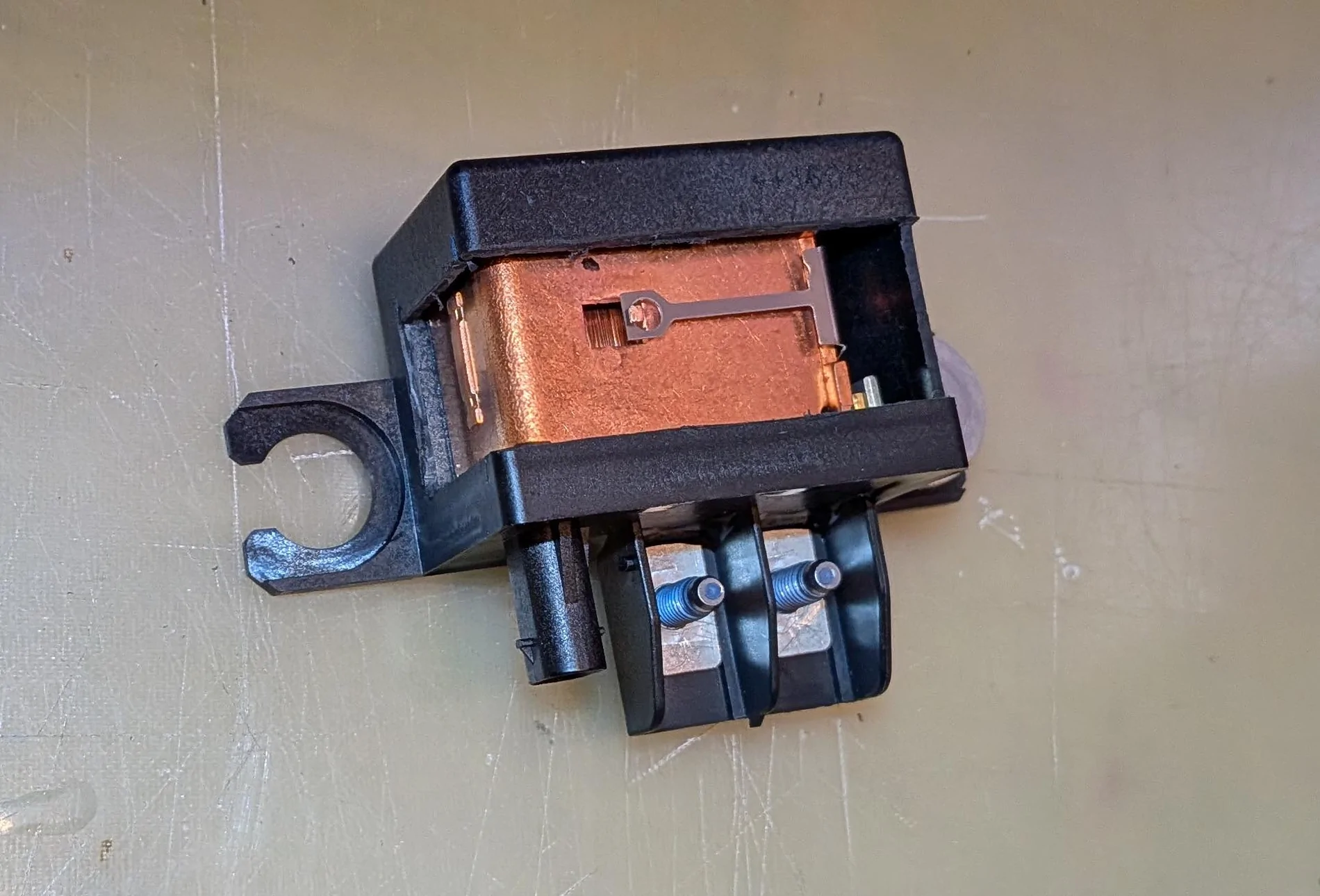
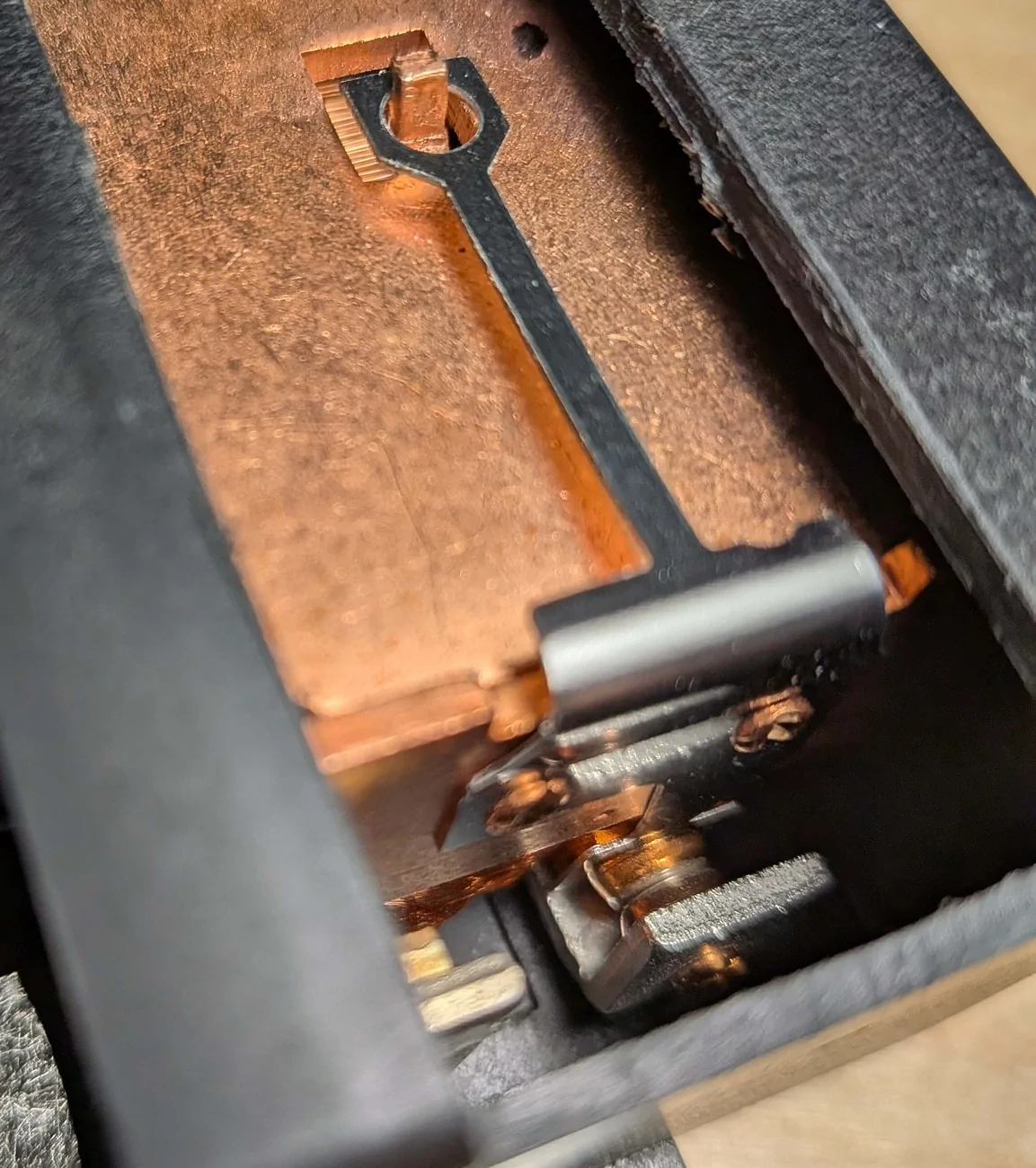
I have a spare PCR, but I don't have any meters that measure resistance that low. I cut it open to attach an external wire to monitor the control signal and am going to experiment with it after my oscilloscope gets here next week.

Jeep Gladiator Are the batteries really isolated during ESS stops? pcr


Jeep Gladiator Are the batteries really isolated during ESS stops? pcr control


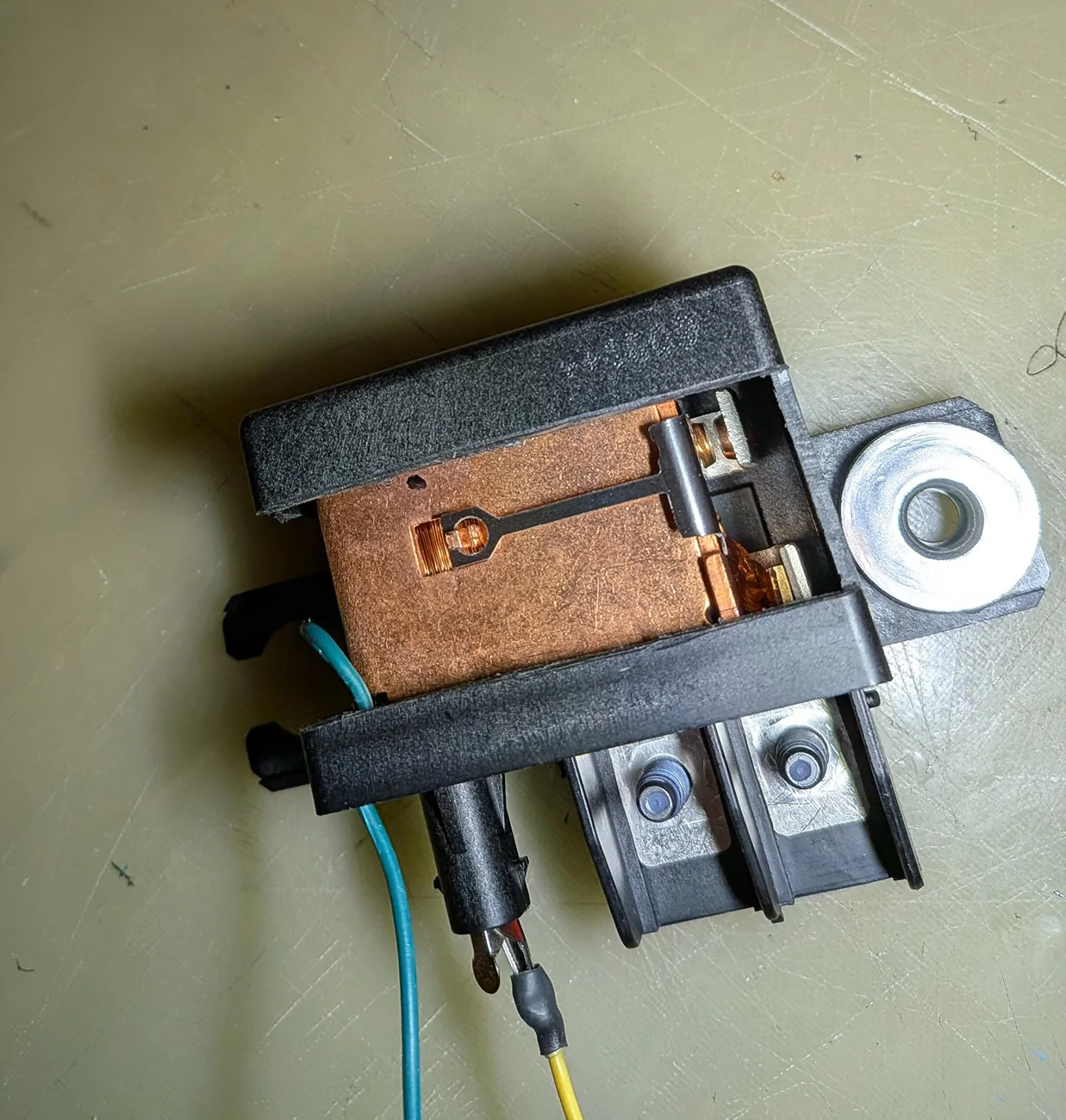
Here's a 9V battery holding the contacts open.
Jeep Gladiator Are the batteries really isolated during ESS stops? pcr contacts open
 
Last edited:

ShadowsPapa

Well-Known Member
First Name
Bill
Joined
Oct 12, 2019
Threads
247
Messages
40,460
Reaction score
53,902
Location
Runnells, Iowa
Vehicle(s)
'25 JTMX, '23 JLU 4xe, '82 SX4, '73 Javelin
Occupation
Retired auto mechanic, frmr gov't ntwrk security admin
Vehicle Showcase
3
The Aux is connected to the starter through a 150A fuse, so maybe not over 250A.

I also did some additional testing and can confirm that the residual capacitive charge in the system electronics is not capable of sustaining the initial high voltage during an ESS stop as I previously suggested and was corrected about.

I have a spare PCR, but I don't have any meters that measure resistance that low. I cut it open to attach an external wire to monitor the control signal am going to experiment with it after my oscilloscope gets here next week.

pcr.webp


pcr control.webp


Here's a 9V battery holding the contacts open.
pcr contacts open.webp
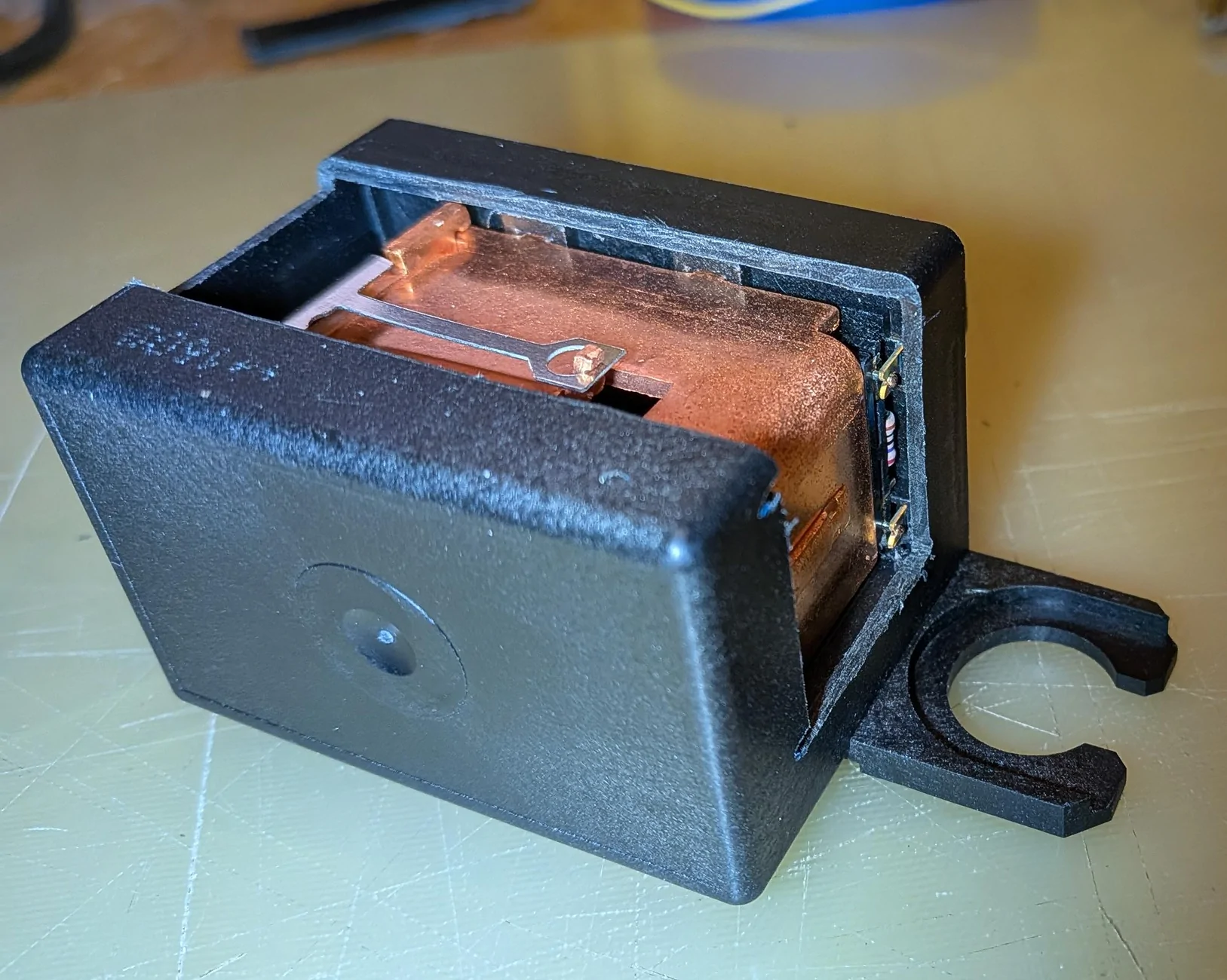
It's not just a plane "relay" - I see some discrete components in there. I wonder, is that to dissipate and bounce from the field collapsing around the coil, or, perhaps to kill any spark or arcing across the contacts.
That's no ordinary relay - there's a couple of parts in there I'd love to see up close.
 

Sponsored

ShadowsPapa

Well-Known Member
First Name
Bill
Joined
Oct 12, 2019
Threads
247
Messages
40,460
Reaction score
53,902
Location
Runnells, Iowa
Vehicle(s)
'25 JTMX, '23 JLU 4xe, '82 SX4, '73 Javelin
Occupation
Retired auto mechanic, frmr gov't ntwrk security admin
Vehicle Showcase
3
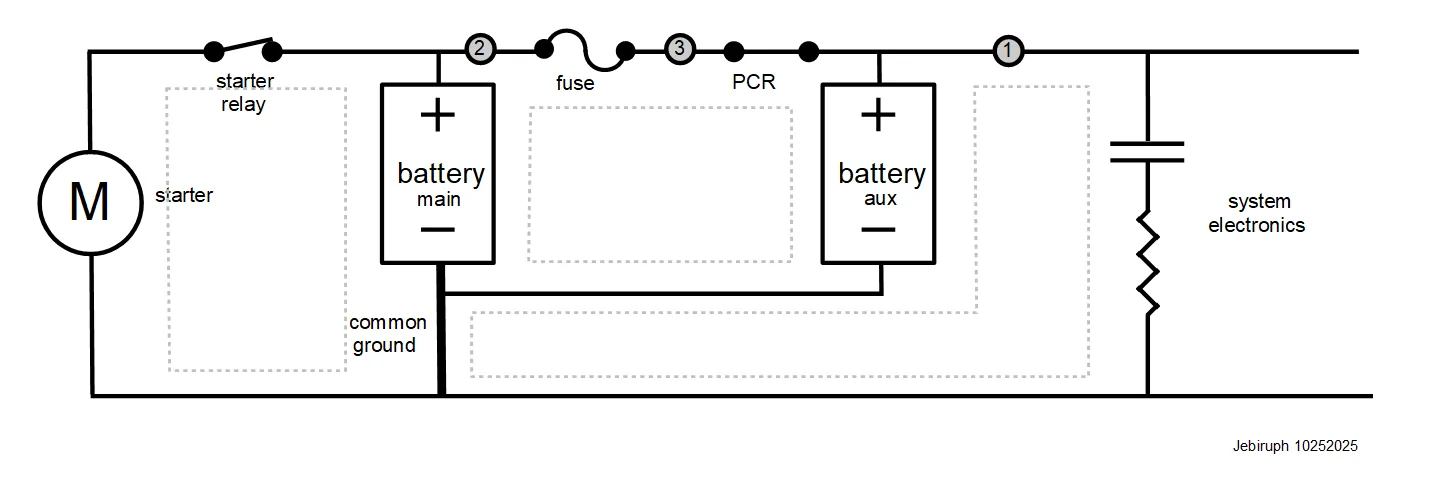
Did anyone post a wiring diagram? Here is one of the charging system that shows the most about the battery connections.
I've posted the parts that show what each battery connects to - showing the cranking battery handles only the high current things while the aux is connected to everything else - all of it, although they are connected together in parallel through the NC PCR.

So, yeah, it's been posted and pointed out what each battery is more directly connected to, back at pages 5 and 6, etc.
 

ShadowsPapa

Well-Known Member
First Name
Bill
Joined
Oct 12, 2019
Threads
247
Messages
40,460
Reaction score
53,902
Location
Runnells, Iowa
Vehicle(s)
'25 JTMX, '23 JLU 4xe, '82 SX4, '73 Javelin
Occupation
Retired auto mechanic, frmr gov't ntwrk security admin
Vehicle Showcase
3
The Aux is connected to the starter through a 150A fuse, so maybe not over 250A.
Yeah, N3 should blow with that sort of amperage, and 250 amps across the PCR contacts, it's a lot of current.

From aux + through PCR up to N3 through 150 amp fuse to the bus to get to the starter - it's a lot of current for that.
 

jebiruph

Well-Known Member
First Name
Jerry
Joined
Dec 9, 2018
Threads
15
Messages
806
Reaction score
730
Location
IA
Vehicle(s)
2018 Wrangler JL 2024 Grand Cherokee L WL 2020 Gladiator JT
It's not just a plane "relay" - I see some discrete components in there. I wonder, is that to dissipate and bounce from the field collapsing around the coil, or, perhaps to kill any spark or arcing across the contacts.
That's no ordinary relay - there's a couple of parts in there I'd love to see up close.
It looks like a spring assist for closing the contacts. There's a 1,000,000,000 ohm resistor across the control inputs. I can run it over if you want to see it in person before I seal it up for installation.
Jeep Gladiator Are the batteries really isolated during ESS stops? pcr contacts detail
 

jebiruph

Well-Known Member
First Name
Jerry
Joined
Dec 9, 2018
Threads
15
Messages
806
Reaction score
730
Location
IA
Vehicle(s)
2018 Wrangler JL 2024 Grand Cherokee L WL 2020 Gladiator JT
Did anyone post a wiring diagram? Here is one of the charging system that shows the most about the battery connections.
I have an original version of that diagram, this one has been updated (GPEC5) and is easier to read.
 

Sponsored

OP
OP
Flanders

Flanders

Well-Known Member
Joined
Dec 2, 2023
Threads
11
Messages
152
Reaction score
121
Location
Dyer, NV
Vehicle(s)
2023 JT
The Aux is connected to the starter through a 150A fuse, so maybe not over 250A.
It takes awhile to blow a fuse. We're only talking about a few milliseconds.

Fuse manufacturers provide charts or graphs showing blow time vs overcurrent. One might be surprised how long a typical fuse can endure 2x rated current. Several seconds, even minutes.
 
OP
OP
Flanders

Flanders

Well-Known Member
Joined
Dec 2, 2023
Threads
11
Messages
152
Reaction score
121
Location
Dyer, NV
Vehicle(s)
2023 JT
Yeah, N3 should blow with that sort of amperage, and 250 amps across the PCR contacts, it's a lot of current.

From aux + through PCR up to N3 through 150 amp fuse to the bus to get to the starter - it's a lot of current for that.
I'm just upholdin' the law sir. Ohm's Law.
 

ShadowsPapa

Well-Known Member
First Name
Bill
Joined
Oct 12, 2019
Threads
247
Messages
40,460
Reaction score
53,902
Location
Runnells, Iowa
Vehicle(s)
'25 JTMX, '23 JLU 4xe, '82 SX4, '73 Javelin
Occupation
Retired auto mechanic, frmr gov't ntwrk security admin
Vehicle Showcase
3
I'm just upholdin' the law sir. Ohm's Law.
You go messing against that law and we revoke your nerd license.

Apparently not enough time to get anything hot and blow that fuse.

Which is more evidence as to how quickly all of this happens.
 
Last edited:

jebiruph

Well-Known Member
First Name
Jerry
Joined
Dec 9, 2018
Threads
15
Messages
806
Reaction score
730
Location
IA
Vehicle(s)
2018 Wrangler JL 2024 Grand Cherokee L WL 2020 Gladiator JT
A real nerd should know the resistance across N1 and N2 on the PDC. The only path for current from N1 to N2 goes through the PCR, which is normally closed (conducting).

Let's put some current through it and check the voltage drop:
8a.webp

Apply Ohm's law: 22.39mV / 7.997A = 2.8 millohms.

The voltage during cold starts can be read from the scope traces I posted in this thread a year ago:

Z is the oscilloscope ground lead
Blue is the voltage from Z to N1
Yellow is the voltage from Z to N2

Kirchhoff's Voltage law says blue minus yellow equals the voltage from N2 to N1 (Z cancels out). Both cold starts show this to be about 0.75V immediately after the starter relay closes.

That means the AUX supplied over 250A to the starter for a few milliseconds. I didn't think the little guy had it in him.

It also means I was wrong when, in the very first post of this thread, I estimated the resistance at 7.5 milliohms and no less than half that. Turns out it was closer to one-third.
Kirchhoff's Voltage law states that the sum of voltages around a closed loop is equal to 0 V. The way the batteries are connected creates 3 closed loops. Your voltage readings are from the terminals to body ground and since you are calculating for the loop between the batteries, you have to at the very least subtract the voltage across the common ground wire from each of your voltage readings since the common ground is outside of that loop.

Jeep Gladiator Are the batteries really isolated during ESS stops? ess kirchhoff
 
OP
OP
Flanders

Flanders

Well-Known Member
Joined
Dec 2, 2023
Threads
11
Messages
152
Reaction score
121
Location
Dyer, NV
Vehicle(s)
2023 JT
Kirchhoff's Voltage law states that the sum of voltages around a closed loop is equal to 0 V.
The only loop I need to consider has three legs:

1. Z to N1 (through the scope)
2. N1 to N2 (through the PCR)
3. N2 to Z (through the MAIN battery, IBS and ground connection)

KVL says (voltage from Z to N1) + (voltage from N1 to N2) + (voltage from N2 to Z) = 0.

Rearrange to get

voltage from N2 to N1 = (voltage from Z to N1) - (voltage from Z to N2),

i.e., blue trace minus yellow trace.
Sponsored


Top