
Wolf Island Diver
Well-Known Member
I just used both a Weboost an InReach Mini 2 and GMRS radios on a trip up the Mid Atlantic Backcountry Discovery Route last week. This is my experience.
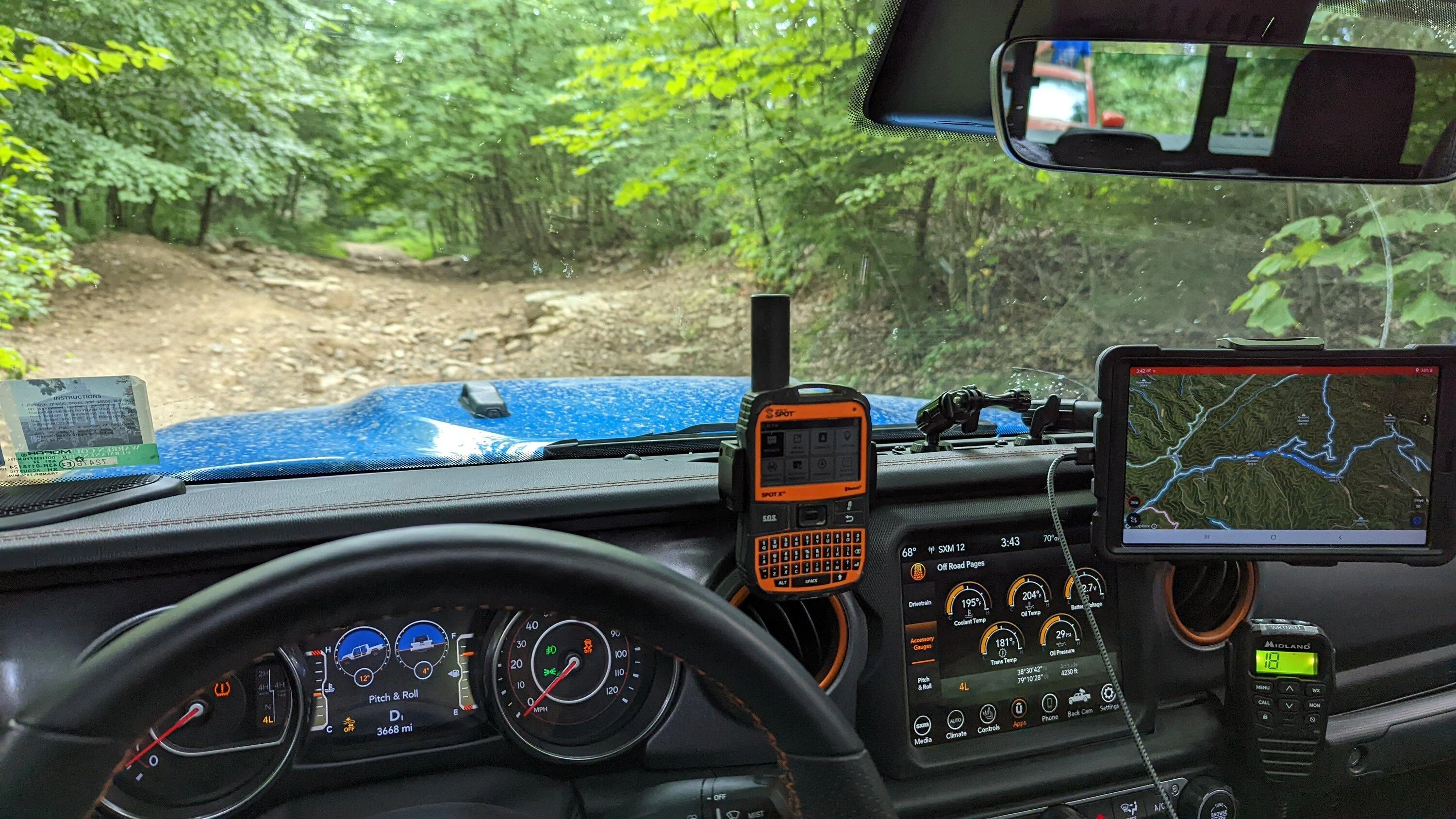
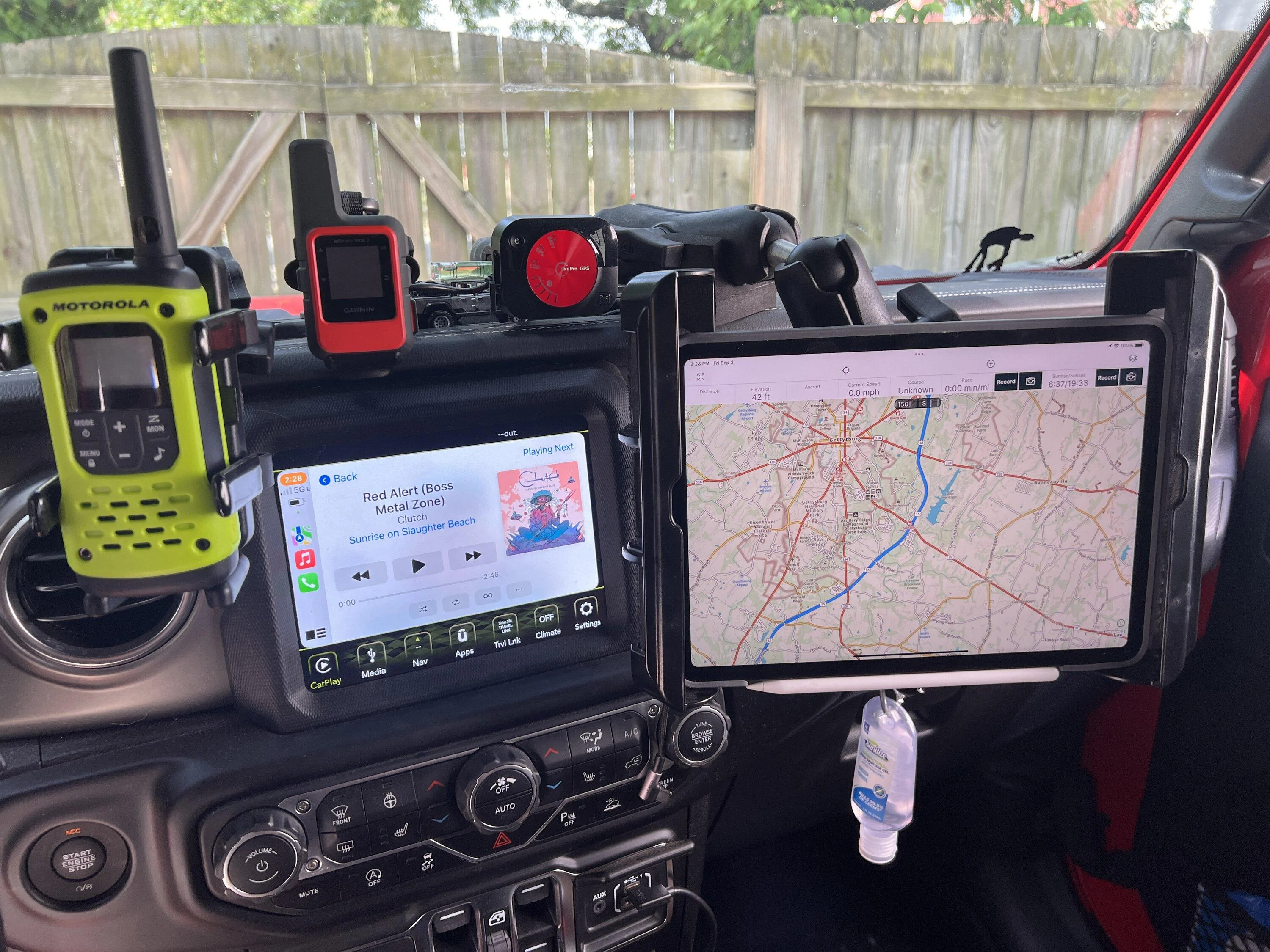
The InReach consistently couldn’t find satellites. My Dual puck GPS has no problem finding satellites sitting in the same spot at the InReach up on the dash where it services Gaia running on a mounted iPad Pro. Taking the InReach outside surprisingly didn’t help. I also kept it on for the entire week so it wouldn’t have to reacquire/initialize. That didn’t help.
Geek control central.

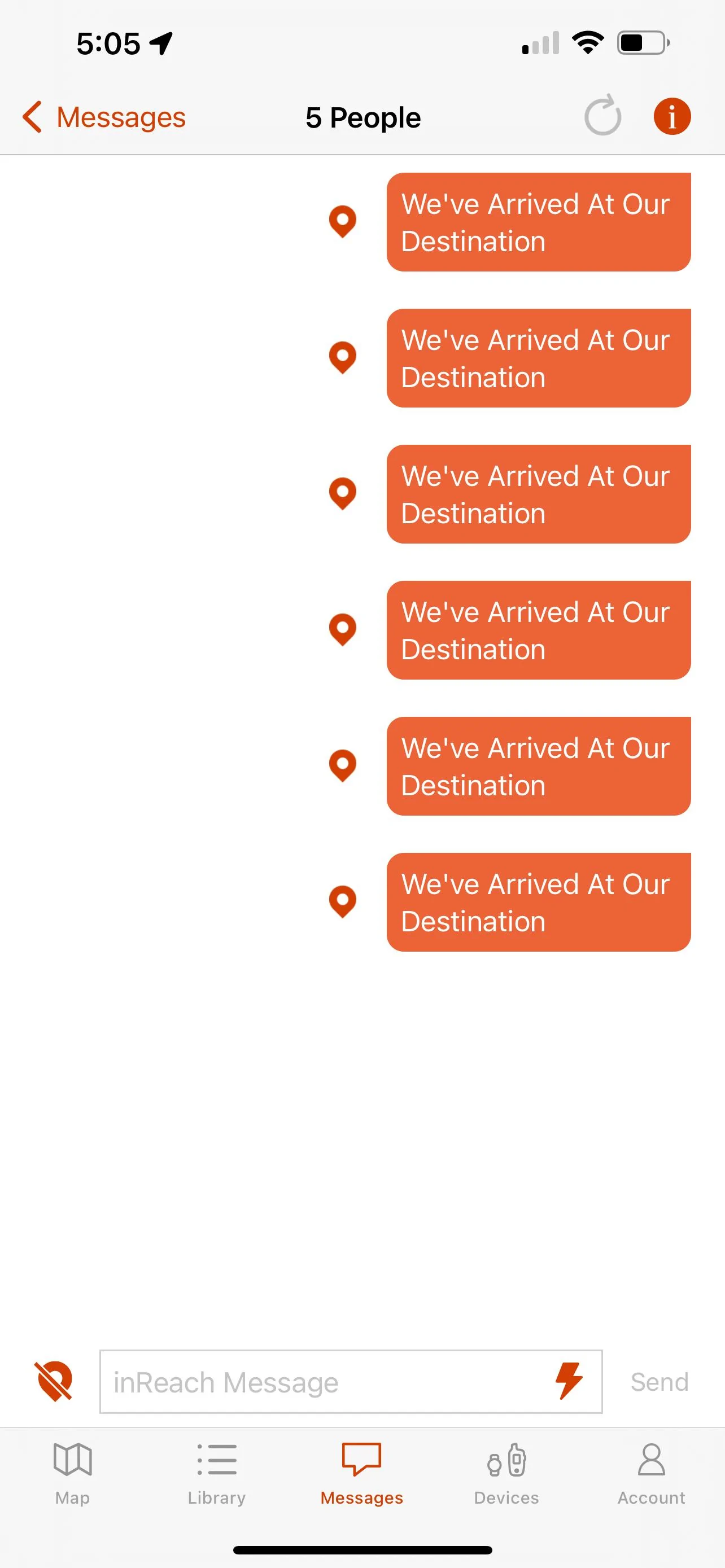
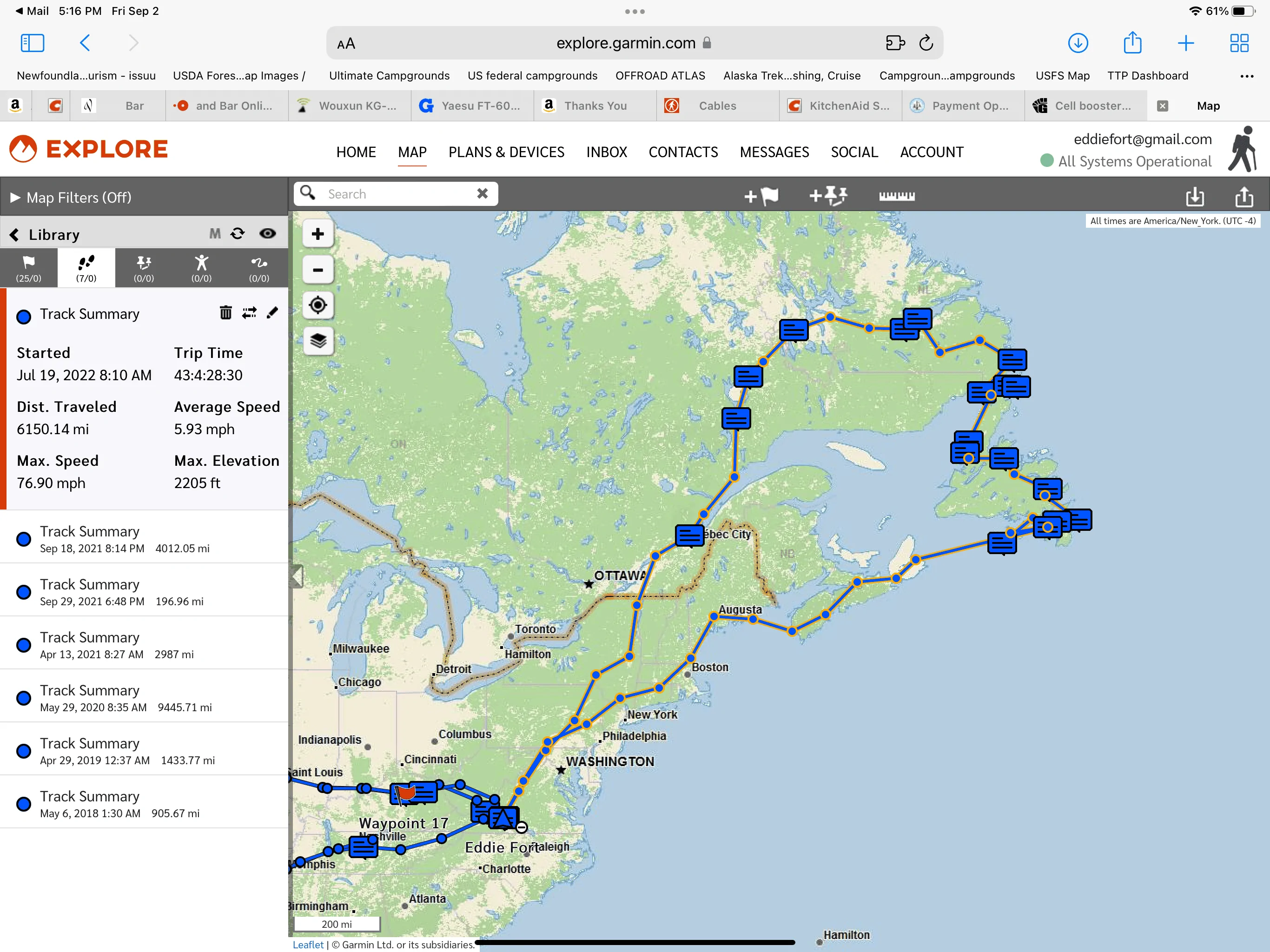
I also found that when you send a message you have to go stick it in a clearing and wait. You get no clear indication on the device that the message was sent successfully unless people respond and you see the response or hear the chime. I don’t have time to stand there pointing my arm at the sky waiting for it to work. Eventually it will work but If you’ve sent multiple messages you have no idea which one people are responding to. Even with the app it’s not clear. Also, the map link you can send with canned messages is cool but the site it goes to is janky. When I send the link to myself, the whole site is in Filipino. The whole Garmin Explore site is janky too. I’ve been a big Garmin user for years but this thing sucks. I’d rather have it than not for emergencies but it’s not reliable enough to be really convenient for general use imho.
GMRS isn’t a substitute for either satellite or cellular comms but it’s the best choice within a group or caravan. I recommend both mobile and handheld units. You’ll get a lot more use out of handhelds especially if you are at camp and have kids that wandering from your location.
For me, the InReach was always about letting family know where in am or emergencies. GMRS is about convoys or event or keeping track of your party. For general use or working remote, it was between StarLink and cell boosting. The current issue with Starlink is that it won’t work without 110 degrees of sky view and there’s a chance FCC complaints by other carriers will kill its mobile use. I hear that the $3k plus hardware will work with more obstructions but that’s a heck of a lot more than the regular $500 unit for a maybe. I used BGAN units before and they’re too expensive to be practical unless you’re at sea.
I tried the Weboost and so far it’s been a total game changer. There’s a lot of confusion about these and then peoples attempts to correct misconceptions and manage expectations are also sometimes wrong. It won’t create signals, that’s true, but it will pick up signals that don’t register on a phone’s built in antenna. I was consistently able to go from “no service” to 1 or 2 bars turning it on. I was also able to pick up higher speed networks like 5g or LTE when the phone could only get Edge. Along the interstates in Virginia I stay typically stay at 4-5 bars. So yes, you can get a signal where you would not otherwise be able to detect one with a handheld device.
In my experience in the backcountry, even having 2 bars usually still means unusable data regardless of network. I’m used to having 1 or 2 bars that still won’t work. This is where the Weboost really shines. With it you get much better speeds so the data connection worked as normal even with 1 or 2 bars. Of course there were times when I still couldn’t pick up a signal but those times were surprisingly rare all throughout central Pennsylvania on the MABDR.
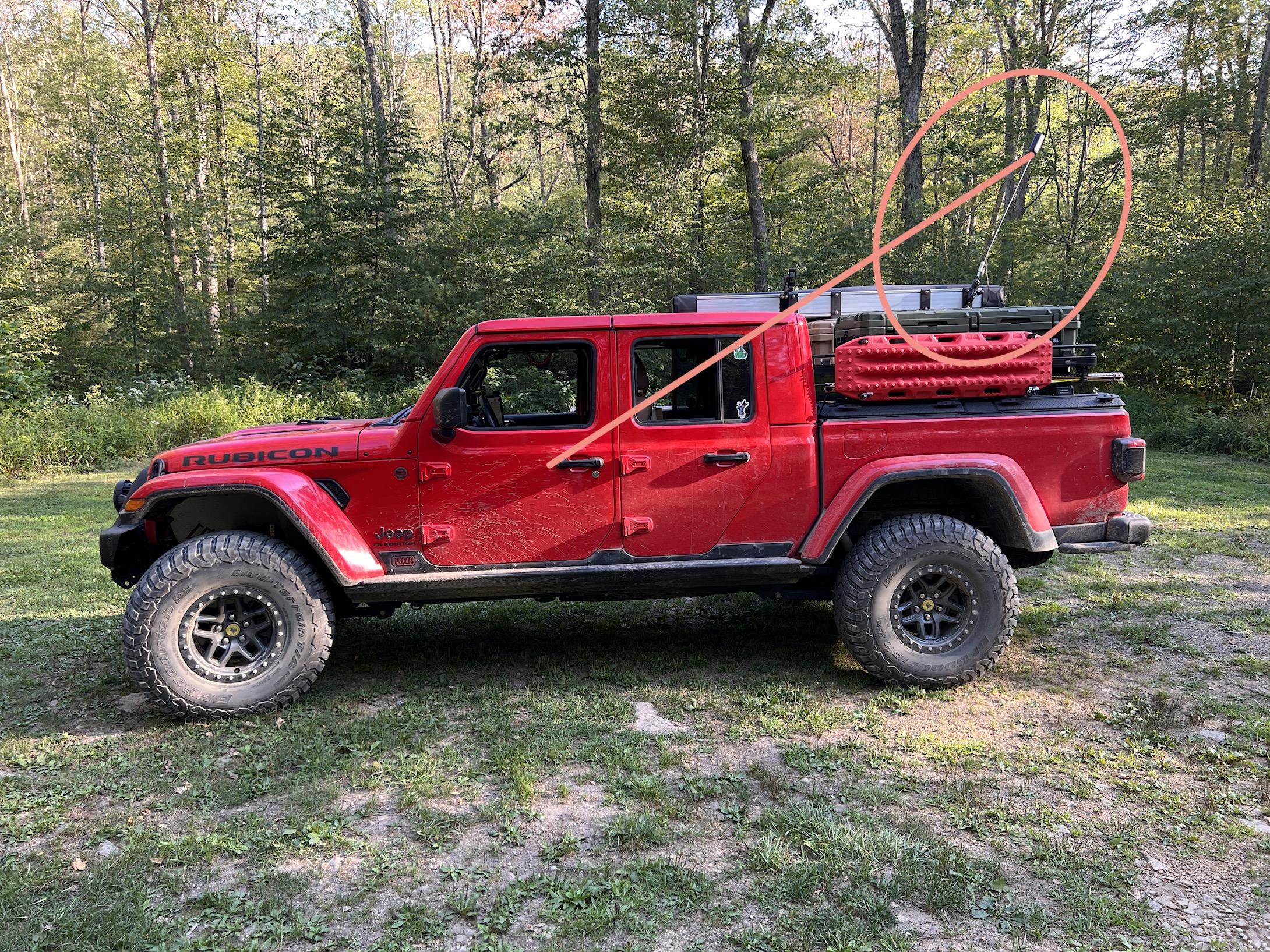
A big part of the issue I think people have with the WeBoost is antenna placement. This is where mine is below. The higher the better and the two antennas are as far apart as the included cables will allow.
The aerial antenna is circled and the straight line represents the approximate distance between the it and the inner antenna mounted to my center console. There’s a quick clamp up near the front of the awning where I can secure the antenna in a down position. It still works well in that position.

The InReach consistently couldn’t find satellites. My Dual puck GPS has no problem finding satellites sitting in the same spot at the InReach up on the dash where it services Gaia running on a mounted iPad Pro. Taking the InReach outside surprisingly didn’t help. I also kept it on for the entire week so it wouldn’t have to reacquire/initialize. That didn’t help.
Geek control central.
I also found that when you send a message you have to go stick it in a clearing and wait. You get no clear indication on the device that the message was sent successfully unless people respond and you see the response or hear the chime. I don’t have time to stand there pointing my arm at the sky waiting for it to work. Eventually it will work but If you’ve sent multiple messages you have no idea which one people are responding to. Even with the app it’s not clear. Also, the map link you can send with canned messages is cool but the site it goes to is janky. When I send the link to myself, the whole site is in Filipino. The whole Garmin Explore site is janky too. I’ve been a big Garmin user for years but this thing sucks. I’d rather have it than not for emergencies but it’s not reliable enough to be really convenient for general use imho.
GMRS isn’t a substitute for either satellite or cellular comms but it’s the best choice within a group or caravan. I recommend both mobile and handheld units. You’ll get a lot more use out of handhelds especially if you are at camp and have kids that wandering from your location.
For me, the InReach was always about letting family know where in am or emergencies. GMRS is about convoys or event or keeping track of your party. For general use or working remote, it was between StarLink and cell boosting. The current issue with Starlink is that it won’t work without 110 degrees of sky view and there’s a chance FCC complaints by other carriers will kill its mobile use. I hear that the $3k plus hardware will work with more obstructions but that’s a heck of a lot more than the regular $500 unit for a maybe. I used BGAN units before and they’re too expensive to be practical unless you’re at sea.
I tried the Weboost and so far it’s been a total game changer. There’s a lot of confusion about these and then peoples attempts to correct misconceptions and manage expectations are also sometimes wrong. It won’t create signals, that’s true, but it will pick up signals that don’t register on a phone’s built in antenna. I was consistently able to go from “no service” to 1 or 2 bars turning it on. I was also able to pick up higher speed networks like 5g or LTE when the phone could only get Edge. Along the interstates in Virginia I stay typically stay at 4-5 bars. So yes, you can get a signal where you would not otherwise be able to detect one with a handheld device.
In my experience in the backcountry, even having 2 bars usually still means unusable data regardless of network. I’m used to having 1 or 2 bars that still won’t work. This is where the Weboost really shines. With it you get much better speeds so the data connection worked as normal even with 1 or 2 bars. Of course there were times when I still couldn’t pick up a signal but those times were surprisingly rare all throughout central Pennsylvania on the MABDR.
A big part of the issue I think people have with the WeBoost is antenna placement. This is where mine is below. The higher the better and the two antennas are as far apart as the included cables will allow.
The aerial antenna is circled and the straight line represents the approximate distance between the it and the inner antenna mounted to my center console. There’s a quick clamp up near the front of the awning where I can secure the antenna in a down position. It still works well in that position.
Sponsored
Last edited: