
Sponsored

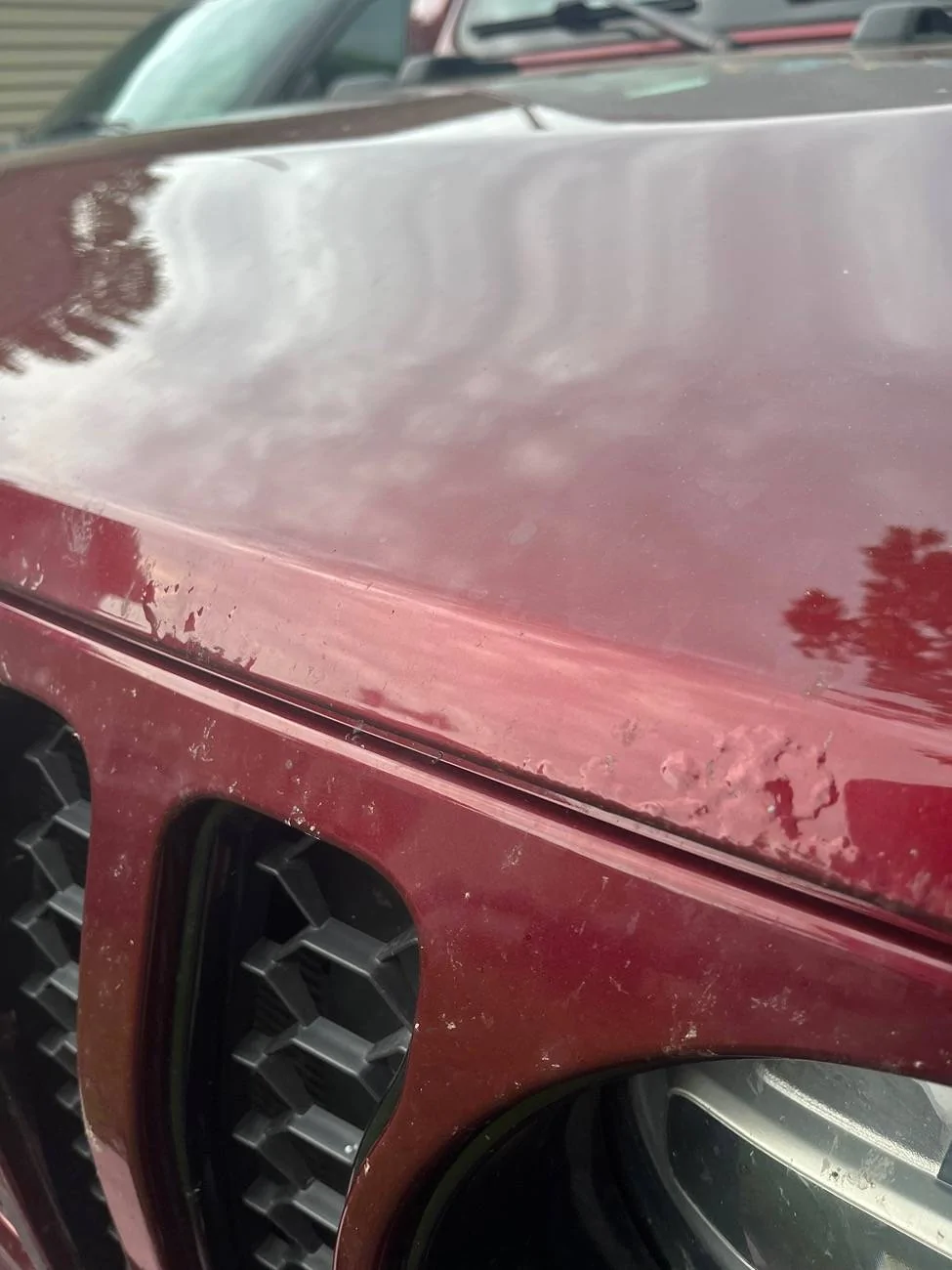
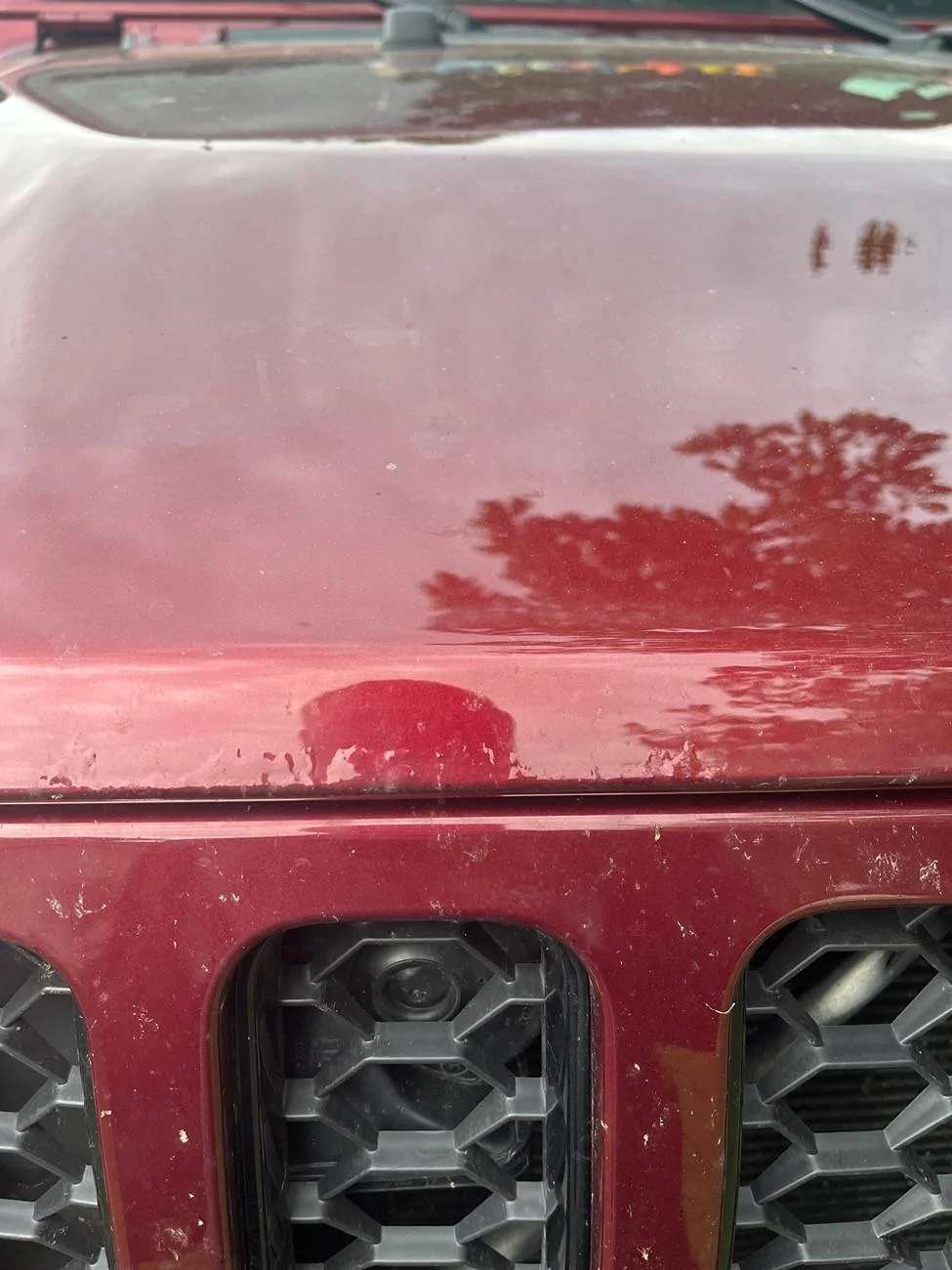
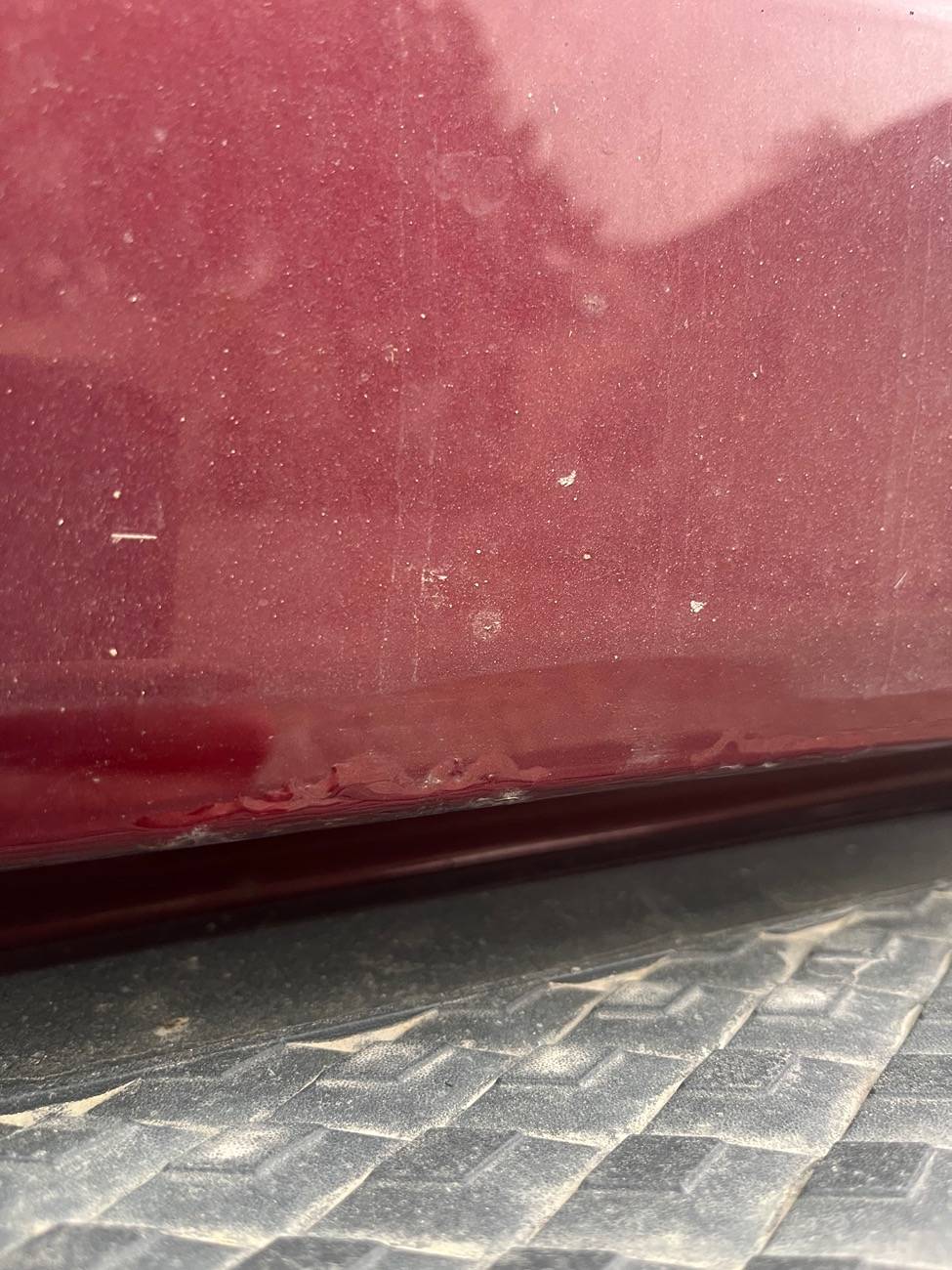
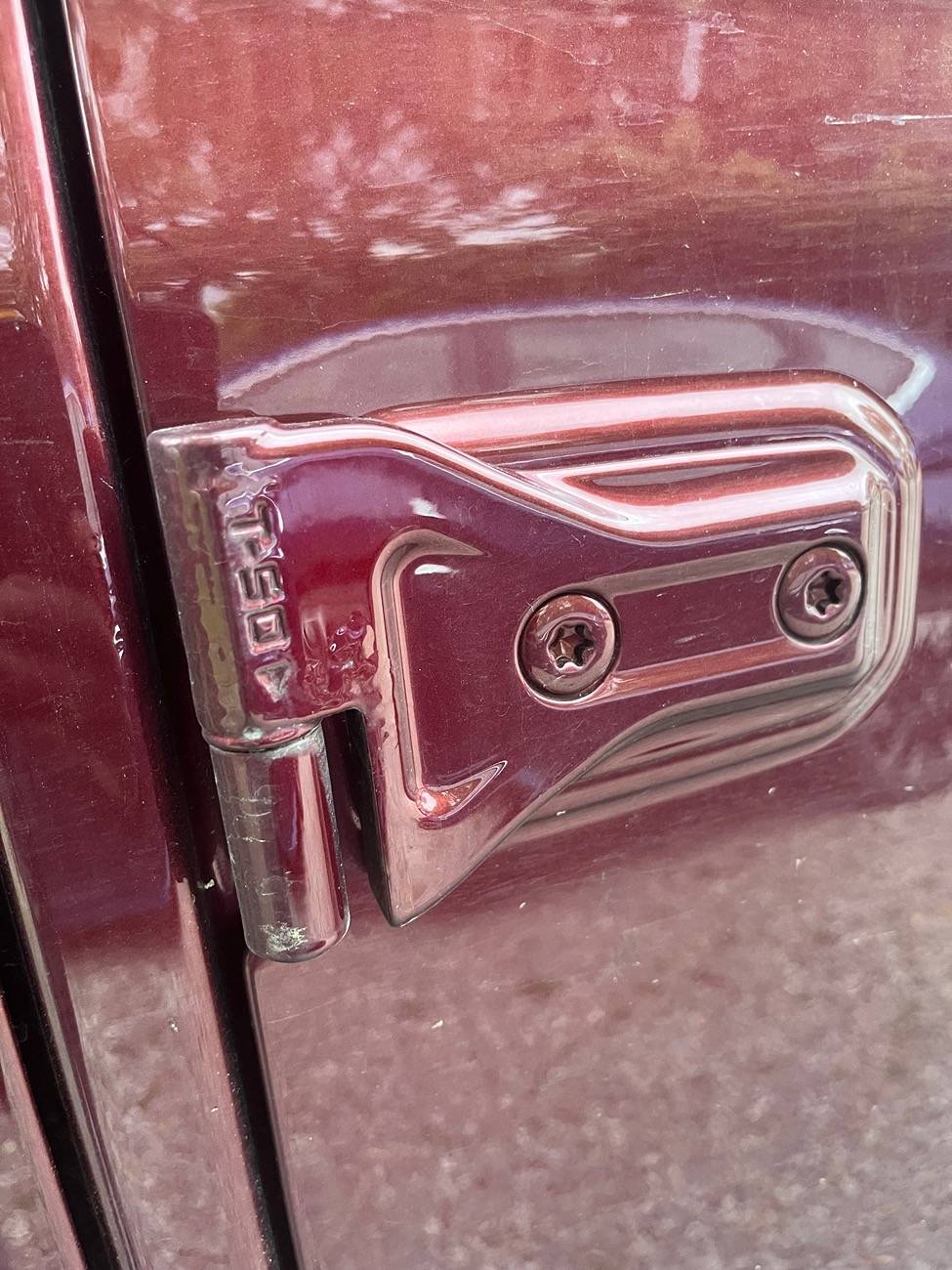
FINALLY saw my first corrosion case yesterday.

ShadowsPapa

Well-Known Member
First Name
Bill
Joined
Oct 12, 2019
Threads
247
Messages
40,442
Reaction score
53,859
Location
Runnells, Iowa
Vehicle(s)
'25 JTMX, '23 JLU 4xe, '82 SX4, '73 Javelin
Occupation
Retired auto mechanic, frmr gov't ntwrk security admin
Vehicle Showcase
3
This is my 2021 with about 65k miles. Hinges aren’t terrible, but they have a few spots.

IMG_2591.jpeg


IMG_2592.jpeg


IMG_2593.jpeg


IMG_2595.jpeg

Starting at the edge and working upward or inward............
Sponsored

 

JoeJeep74

Well-Known Member
First Name
Joe
Joined
Sep 10, 2020
Threads
2
Messages
95
Reaction score
151
Location
Grand Rapids, Mi
Vehicle(s)
2015 Willys 2dr
Occupation
Service Advisor
My 21 with 33500 miles is approximately 4 1/2 years old. I noticed some corrosion, took to dealer “A”., closet to me. Thier body shop mgr said needed all, 4 doors, hood and tail gate replaced, loaner would be provided. The kicker was if I wanted paint job blended it would cost me $2000 out of my pocket because Jeep doesn’t pay for that. Sales mgr when consulted suggested contacting Jeep Cares.
Called dealer “B”, selling dealer, farther away, have not been back since purchase do to distance. Body shop mgr was incredulous, never heard of such a thing. He assured me that Jeep did indeed pay for blending and that my truck would look like new after his shop was done. Loaner again would be provided, no extra costs would come from my wallet.
While I was having pictures taken for Jeep approval, I inspected a Jl 4 door they were finishing and it looked great! In a couple of weeks, dealer “B” and I will swap vehicles for a couple of weeks.
My advice, wait till towards the end of warranty period, hope for complete replacement of panels resulting in 1 repaint and pay nothing out of pocket unless you have other repairs done at the same time. I will report back in a month or so on results.
 

Bananaman

Well-Known Member
First Name
David
Joined
Nov 18, 2021
Threads
18
Messages
502
Reaction score
1,055
Location
Texas
Vehicle(s)
Sarge Green Sport S JTRD
Occupation
Retarded...err... I mean Retired
I'd likely wait a little while to see what else pops up - easier to make one trip and one color match than multiple times and tries.
That is exactly where the Jeep hood pictures I've seen out there do that - but yours honestly looks like there's a crack? Is there? Weird.
No, no cracks. It starts on the bottom edge/seam and starts working upward. The bubbling on the tailgate keeps getting bigger with time.
 

Stlrfan152

Well-Known Member
First Name
Jay
Joined
Mar 9, 2019
Threads
24
Messages
159
Reaction score
109
Location
Massachusetts
Vehicle(s)
21 JT
Last edited:

Sponsored

Sweetums

Well-Known Member
Joined
Mar 30, 2023
Threads
28
Messages
2,006
Reaction score
4,314
Location
Utah
Vehicle(s)
'05 LJR, '21 JTDR, '00 VFR800, RSV4, '11 MTS 1200
No it doesn’t.
Yes, it does.
https://en.m.wikipedia.org/wiki/Galvanic_corrosion

The only way to prevent it is to isolate the dissimilar metals from each other. Any flow of electricity between the metals or presence of salt or other electrolyte (including water) will cause this corrosion. Since the chassis and body are part of the electrical system the correct way to handle this would be to paint the parts prior to assembly - even then, you turn the risk of corrosion with steel fasteners in aluminum panels.

This is high school chemistry, it the same reason you can power a digital clock with a potato and two different nails.
 

ShadowsPapa

Well-Known Member
First Name
Bill
Joined
Oct 12, 2019
Threads
247
Messages
40,442
Reaction score
53,859
Location
Runnells, Iowa
Vehicle(s)
'25 JTMX, '23 JLU 4xe, '82 SX4, '73 Javelin
Occupation
Retired auto mechanic, frmr gov't ntwrk security admin
Vehicle Showcase
3
Yes, it does.
https://en.m.wikipedia.org/wiki/Galvanic_corrosion

The only way to prevent it is to isolate the dissimilar metals from each other. Any flow of electricity between the metals or presence of salt or other electrolyte (including water) will cause this corrosion. Since the chassis and body are part of the electrical system the correct way to handle this would be to paint the parts prior to assembly - even then, you turn the risk of corrosion with steel fasteners in aluminum panels.

This is high school chemistry, it the same reason you can power a digital clock with a potato and two different nails.
What we are seeing on the hinges themselves are a different animal, though. They aren't steel, eve a steel alloy. Looking at the chart of activity of metals (how noble or not are they), many metals used can be right against each other without problem.
And galvanic action takes place at the joint, and if the hinge was steel, the aluminum door skin would rot out behind the steel hinge. Instead, we see the hinge bubble, usually not at the edge (it does at times, but not all of them)

When steel is bolted to aluminum, the aluminum will corrode before the steel.
Aluminum is more reactive than steel and acts as the anode if in contact with an electrolyte

Galvanic action is why the hood and door hinge bolts don't make direct contact with the hinge parts.
I've not taken my hinges off - but I'd bet that the holes in the aluminum are large enough that the steel bolts don't touch the aluminum hood or door skin. (I don't want to break the paint seal)

Like I posted earlier, where steel is used against aluminum - the aluminum will go, the steel will survive. Even really humid air can be the "electrolyte" for galvanic action. It requires water - but.......... when you have 100% humidity, you have water. We don't see the aluminum door skin rotting away from the hinges.

Gold is among the very most noble - least active.
Magnesium, zinc, cadmium, aluminum, among the LEAST noble or most active.

In the list below, if these are against each other, those lower are the most likely to be damaged vs those above it. See steel is above aluminum as it's more noble than aluminum.
So steel on aluminum means the aluminum is damaged.
Stainless steel is another animal - "it depends". Sometimes you can use it depending on the ALLOY of the stainless, some you should not use with aluminum.

More noble up here - less likely to react
Cast iron
Steel
Indium
Aluminum
Uranium (pure)
Cadmium
Beryllium
Zinc plating (see galvanization)
Magnesium
Least noble down here - active metals.

Looking at this - if the hinges are magnesium - that's why they would be damaged and the aluminum door skin would be undamaged.

So - that could be the issue - not that the hinges are steel, but because they are not steel!
 

rhaney02

Well-Known Member
First Name
McLovin
Joined
Jun 25, 2024
Threads
1
Messages
156
Reaction score
408
Location
GA
Vehicle(s)
2023 Jeep Gladiator Willys
What we are seeing on the hinges themselves are a different animal, though. They aren't steel, eve a steel alloy. Looking at the chart of activity of metals (how noble or not are they), many metals used can be right against each other without problem.
And galvanic action takes place at the joint, and if the hinge was steel, the aluminum door skin would rot out behind the steel hinge. Instead, we see the hinge bubble, usually not at the edge (it does at times, but not all of them)

When steel is bolted to aluminum, the aluminum will corrode before the steel.
Aluminum is more reactive than steel and acts as the anode if in contact with an electrolyte

Galvanic action is why the hood and door hinge bolts don't make direct contact with the hinge parts.
I've not taken my hinges off - but I'd bet that the holes in the aluminum are large enough that the steel bolts don't touch the aluminum hood or door skin. (I don't want to break the paint seal)

Like I posted earlier, where steel is used against aluminum - the aluminum will go, the steel will survive. Even really humid air can be the "electrolyte" for galvanic action. It requires water - but.......... when you have 100% humidity, you have water. We don't see the aluminum door skin rotting away from the hinges.

Gold is among the very most noble - least active.
Magnesium, zinc, cadmium, aluminum, among the LEAST noble or most active.

In the list below, if these are against each other, those lower are the most likely to be damaged vs those above it. See steel is above aluminum as it's more noble than aluminum.
So steel on aluminum means the aluminum is damaged.
Stainless steel is another animal - "it depends". Sometimes you can use it depending on the ALLOY of the stainless, some you should not use with aluminum.

More noble up here - less likely to react
Cast iron
Steel
Indium
Aluminum
Uranium (pure)
Cadmium
Beryllium
Zinc plating (see galvanization)
Magnesium
Least noble down here - active metals.

Looking at this - if the hinges are magnesium - that's why they would be damaged and the aluminum door skin would be undamaged.

So - that could be the issue - not that the hinges are steel, but because they are not steel!
You do realize that the stock door and hood hinge sleeves/bushings are some kind of metal and not polymer or plastic as previously stated? That being said, you do realize that the steel door and hood hinge pins are constantly in contact with said hinge sleeves/bushings, constantly rubbing against each other with every opening and closing, all the while being subjected to water from rain and washes, not to mention sodium from salted roads?

There are aftermarket hinge sleeves that are polymer/plastic. Most even come with a tool to break the flange on the stock metal sleeves to facilitate removal of them.

Yes, there seems to be issues with bad preparation along the material mating, but it seems there's more to it than just that.

ETA: First video that popped up. Rather crude with the stock bushing removal, but you can get the gist....
 
Last edited:

NC_Overland

Well-Known Member
First Name
John
Joined
Feb 21, 2020
Threads
18
Messages
3,369
Reaction score
4,134
Location
Raleigh, NC
Vehicle(s)
2020 JT Overland
Yes, it does.
https://en.m.wikipedia.org/wiki/Galvanic_corrosion

The only way to prevent it is to isolate the dissimilar metals from each other. Any flow of electricity between the metals or presence of salt or other electrolyte (including water) will cause this corrosion. Since the chassis and body are part of the electrical system the correct way to handle this would be to paint the parts prior to assembly - even then, you turn the risk of corrosion with steel fasteners in aluminum panels.

This is high school chemistry, it the same reason you can power a digital clock with a potato and two different nails.
I understand about dissimilar metals. Welding training. Anyway, you act like it’s a death sentence. There are a lot of older JLs and JTs on the road that it’s never happened to. Plus, it’s like you don’t understand prep and the use of alloys. This is happening because of improper prep.
 

Sponsored

ShadowsPapa

Well-Known Member
First Name
Bill
Joined
Oct 12, 2019
Threads
247
Messages
40,442
Reaction score
53,859
Location
Runnells, Iowa
Vehicle(s)
'25 JTMX, '23 JLU 4xe, '82 SX4, '73 Javelin
Occupation
Retired auto mechanic, frmr gov't ntwrk security admin
Vehicle Showcase
3
That being said, you do realize that the steel door and hood hinge pins are constantly in contact with said hinge sleeves/bushings, constantly rubbing against each other with every opening and closing, all the while being subjected to water from rain and washes, not to mention sodium from salted roads?
They use calcium these days, but it's still a salt.

Yes, the pins are in contact - And you can expect some issues there - but the paint bubbles are not at the pins.
Hinge pins ands bushings have been problematic for years - but Jeep people "see it" because of the door removal where that doesn't happen with other vehicles - no one bothers removing pins or bushings or doors.
Metals close to or adjacent to each other in the list can be put together without issue. So you could use 1 that is between two others to help prevent issues.
 

rhaney02

Well-Known Member
First Name
McLovin
Joined
Jun 25, 2024
Threads
1
Messages
156
Reaction score
408
Location
GA
Vehicle(s)
2023 Jeep Gladiator Willys
They use calcium these days, but it's still a salt.

Yes, the pins are in contact - And you can expect some issues there - but the paint bubbles are not at the pins.
Hinge pins ands bushings have been problematic for years - but Jeep people "see it" because of the door removal where that doesn't happen with other vehicles - no one bothers removing pins or bushings or doors.
Metals close to or adjacent to each other in the list can be put together without issue. So you could use 1 that is between two others to help prevent issues.
You're arguing semantics, but okay....
 

ShadowsPapa

Well-Known Member
First Name
Bill
Joined
Oct 12, 2019
Threads
247
Messages
40,442
Reaction score
53,859
Location
Runnells, Iowa
Vehicle(s)
'25 JTMX, '23 JLU 4xe, '82 SX4, '73 Javelin
Occupation
Retired auto mechanic, frmr gov't ntwrk security admin
Vehicle Showcase
3
You're arguing semantics, but okay....
No, not really, not if you know the chemistry.
The devil is in the details - so it matters a LOT to car owners.
Sodium chloride can be left on a table in a pile and even in the summer, will attract moisture but not fast/quickly.
In dry air, it doesn't do a lot. - it's more mildly hygroscopic.

But you'd better keep that calcium chloride sealed up.

Calcium chloride is VERY hygroscopic - it STRONGLY attracts moisture - water - out of the air.

You can leave the white of sodium chloride on a vehicle and wash it when you can (of course ASAP) because unless it gets wet and stays that way, there's not a whole lot of action.
But that white of the calcium chloride I showed in my pictures (they BRINE the roads here with it, it forms puddles and pools and actually makes roads SLIPPERY) you better wash it off ASAP as the first bit of humidity, it attracts and holds water from the air and becomes active on the metals of your vehicle.

So yes, I pointed out it's calcium chloride and not sodium, even those a chloride of a metal is a salt, so it's a salt - the calcium chloride used today causes as much, if not MORE damage to steel and aluminum as the old methods.
It's more environmentally friendly, unless your environment is steel.

The devil is in the details - yeah, it matters.

A well-written explanation from elsewhere -
Calcium chloride absorbs moisture from the air more readily, even at lower humidity levels, while sodium chloride typically begins to absorb moisture at higher relative humidity. (meaning in the winter, sodium chloride won't do much at all to your steel)
This makes calcium chloride more effective as a desiccant and a de-icing agent, as it can draw moisture from the air and surrounding surfaces to facilitate ice melting.
(even in the very low humidity of winter air!)

9And since this always turns into a chemistry thing where people jump all over saying "galvanic action! Galvanic action!.............. I figured get some REAL chemistry in here.)
 

rhaney02

Well-Known Member
First Name
McLovin
Joined
Jun 25, 2024
Threads
1
Messages
156
Reaction score
408
Location
GA
Vehicle(s)
2023 Jeep Gladiator Willys
No, not really, not if you know the chemistry.
The devil is in the details - so it matters a LOT to car owners.
Sodium chloride can be left on a table in a pile and even in the summer, will attract moisture but not fast/quickly.
In dry air, it doesn't do a lot. - it's more mildly hygroscopic.

But you'd better keep that calcium chloride sealed up.

Calcium chloride is VERY hygroscopic - it STRONGLY attracts moisture - water - out of the air.

You can leave the white of sodium chloride on a vehicle and wash it when you can (of course ASAP) because unless it gets wet and stays that way, there's not a whole lot of action.
But that white of the calcium chloride I showed in my pictures (they BRINE the roads here with it, it forms puddles and pools and actually makes roads SLIPPERY) you better wash it off ASAP as the first bit of humidity, it attracts and holds water from the air and becomes active on the metals of your vehicle.

So yes, I pointed out it's calcium chloride and not sodium, even those a chloride of a metal is a salt, so it's a salt - the calcium chloride used today causes as much, if not MORE damage to steel and aluminum as the old methods.
It's more environmentally friendly, unless your environment is steel.

The devil is in the details - yeah, it matters.

A well-written explanation from elsewhere -
Calcium chloride absorbs moisture from the air more readily, even at lower humidity levels, while sodium chloride typically begins to absorb moisture at higher relative humidity. (meaning in the winter, sodium chloride won't do much at all to your steel)
This makes calcium chloride more effective as a desiccant and a de-icing agent, as it can draw moisture from the air and surrounding surfaces to facilitate ice melting.
(even in the very low humidity of winter air!)

9And since this always turns into a chemistry thing where people jump all over saying "galvanic action! Galvanic action!.............. I figured get some REAL chemistry in here.)
I didn't need a dissertation in chemistry. I'm fully aware of how the reaction happens, however I didn't stay at a Holiday Inn last night as you apparently did.

The bottom line is something is going on with paint bubbling. There is some kind of reaction going on, whether chemical or otherwise. While you should see that's plainly obvious, just want to argue with people trying to prove your superior intelligence instead of maybe trying to help out.

We see the hill that you've made camp on.
 

ShadowsPapa

Well-Known Member
First Name
Bill
Joined
Oct 12, 2019
Threads
247
Messages
40,442
Reaction score
53,859
Location
Runnells, Iowa
Vehicle(s)
'25 JTMX, '23 JLU 4xe, '82 SX4, '73 Javelin
Occupation
Retired auto mechanic, frmr gov't ntwrk security admin
Vehicle Showcase
3
I didn't need a dissertation in chemistry. I'm fully aware of how the reaction happens, however I didn't stay at a Holiday Inn last night as you apparently did.

The bottom line is something is going on with paint bubbling. There is some kind of reaction going on, whether chemical or otherwise. While you should see that's plainly obvious, just want to argue with people trying to prove your superior intelligence instead of maybe trying to help out.

We see the hill that you've made camp on.
Until or unless you know the cause, you can't find a solution.

But if instead of actual troubleshooting people want to keep tossing out the same old tired stuff, carry on.

I enjoy the laugh every time someone sees bubbling paint (anywhere) and jumps "galvanic corrosion!"
It's actually quite funny.
The internet really has dumbed people down.
Sponsored


Top