
Sponsored

IBS reset and charging batteries

Lost1wing

Well-Known Member
First Name
Tim
Joined
Dec 22, 2020
Threads
24
Messages
2,606
Reaction score
2,845
Location
West Georgia
Vehicle(s)
2020 Jeep Gladiator Rubicon
Occupation
Retired AMT
I have the information I need, but I just wanted to let everyone know what I have and how it turns out.


Nov 2019 is date on the door tag. Batteries are 3+ years old. I'm not having any issues with the exception of ESS(battery charging). So I thought I'd play around a bit to see who is the culprit, main or Aux.

Running 14.4v before charging both batteries connected. 12.6v with the engine off.

After charging both batteries still connected the engine off voltage was 12.8, running voltage remained the same at 14.4v and battery charging message remain on.

Today I have the cables disconnected. Both batteries are at 12.58 now and the IBS is unplugged. I have the Aux battery on the charger and it is showing good at a 75% discharged level. The main battery is next.
Sponsored

 
OP
OP
Lost1wing

Lost1wing

Well-Known Member
First Name
Tim
Joined
Dec 22, 2020
Threads
24
Messages
2,606
Reaction score
2,845
Location
West Georgia
Vehicle(s)
2020 Jeep Gladiator Rubicon
Occupation
Retired AMT
After independantly charging both batteries and a good 30 minutes left isolated, the aux battery was at 12.83 and the main was at 12.95. Hooked it all back up leaving the IBS for last. Couldn't remember if the IBS was last or the Negative at the fender.

Three minutes of not warm enough and then the Battery charging message came on like always. Five miles miles down the highway I did a u-turn thinking this is going to take longer than I want tonight. One minute later, Start Stop Ready message was displayed. It worked like it should. I got the battery charging message for about 5 seconds and then Start Stop Ready message again.

3 year old batteries are not perfect but at least I have an idea now. 12.82 with engine off, batteries in parallel. I will see what they read in the morning and then again on Sunday morning.
 
OP
OP
Lost1wing

Lost1wing

Well-Known Member
First Name
Tim
Joined
Dec 22, 2020
Threads
24
Messages
2,606
Reaction score
2,845
Location
West Georgia
Vehicle(s)
2020 Jeep Gladiator Rubicon
Occupation
Retired AMT
My batteries were down to 12.53v. Tomorrow I will check the voltage again before a engine start.
 

Mr._Bill

Well-Known Member
First Name
Bill
Joined
Jul 22, 2019
Threads
38
Messages
6,646
Reaction score
7,727
Location
North Las Vegas, NV
Vehicle(s)
2023 Gladiator High Altitude - 2013 Nissan Leaf SV
Vehicle Showcase
1
You're going to see a drop, especially if not regularly driven, due to all the electronics that never turn off. If they drop fairly quickly, or regularly get down in the 12.1 range, then it is time to look at replacing them.
 

Sponsored

OP
OP
Lost1wing

Lost1wing

Well-Known Member
First Name
Tim
Joined
Dec 22, 2020
Threads
24
Messages
2,606
Reaction score
2,845
Location
West Georgia
Vehicle(s)
2020 Jeep Gladiator Rubicon
Occupation
Retired AMT
Yes, replacing both would be best plan. I'd still like to play around and see how it works out. I may try and sneak the 700 cca battery in for the main. Tomorrow afternoon I will see what the voltage is down to and see how long it takes the ESS to kick in.
 

Mr._Bill

Well-Known Member
First Name
Bill
Joined
Jul 22, 2019
Threads
38
Messages
6,646
Reaction score
7,727
Location
North Las Vegas, NV
Vehicle(s)
2023 Gladiator High Altitude - 2013 Nissan Leaf SV
Vehicle Showcase
1
I replaced my main battery last September. I have the larger 94R battery. I put in a ACDelco battery that I got from Amazon for $150. It is rated at 850CCA. The factory battery shows on the label that it is rated at only 700CCA. The system was dropping to 11.9 volts overnight and I was having to jump start it every morning. Replacing just the main battery resolved all the issues. I have a new AUX battery, but have not had time to install it. Everything is working properly with the new main battery and original AUX battery, which is now almost four years old.
 

ShadowsPapa

Well-Known Member
First Name
Bill
Joined
Oct 12, 2019
Threads
247
Messages
40,442
Reaction score
53,858
Location
Runnells, Iowa
Vehicle(s)
'25 JTMX, '23 JLU 4xe, '82 SX4, '73 Javelin
Occupation
Retired auto mechanic, frmr gov't ntwrk security admin
Vehicle Showcase
3
Yes, replacing both would be best plan. I'd still like to play around and see how it works out. I may try and sneak the 700 cca battery in for the main. Tomorrow afternoon I will see what the voltage is down to and see how long it takes the ESS to kick in.
That's very much like what I did with my 2020 last spring. After independently charging each battery and an IBS reset, things worked fine. However, I noted a reduced battery capacity - the voltage dropped fairly quickly after sitting 3 days or so and it took some driving for it to come back - but things actually worked fine at the point I took it in for trading for my 2022.

I put in a ACDelco battery that I got from Amazon for $150. It is rated at 850CCA. The factory battery shows on the label that it is rated at only 700CCA.
Factory main battery in these with aux switches is the 700, 650 for others.
My 2020 had 650, my 2022 has 700.

Not surprised you found results by replacing the main battery. Quite a few have.

My batteries were down to 12.53v. Tomorrow I will check the voltage again before a engine start.
Not bad, but for one day could do better. They lose capacity over time (not talking of the CCA number). Would be interesting to see the results/voltage after sitting 2 days.
 

legacy_etu

Well-Known Member
First Name
Brian
Joined
May 19, 2021
Threads
3
Messages
1,446
Reaction score
1,786
Location
New England, USA
Vehicle(s)
23 Mojave, 25 Corvette Eray, 16 Wrangler UNLTD,
Wow, at only 3 years old. My wife’s Highlander lasted 5 with the stop/start stuff too.

Anyway, has anyone tried throwing a battery on a tender and running the repair cycle to see if they can recondition the battery? I’ve got a Nocco here with that functionality, others here must too. Looking at you Shadowspapa….
 

AmosMoses

Well-Known Member
First Name
Amos
Joined
Jun 25, 2022
Threads
41
Messages
938
Reaction score
1,846
Location
Ohio
Vehicle(s)
2020 jeep gladiator sport
Occupation
Manufacturing
I need to do something about my battery's this spring. ESS no longer works because auxiliary battery is never ready, which is great in my opinion but I know it's draining my main battery and it's only a matter of time. Haven't had to jump it yet though.
 

Sponsored

ShadowsPapa

Well-Known Member
First Name
Bill
Joined
Oct 12, 2019
Threads
247
Messages
40,442
Reaction score
53,858
Location
Runnells, Iowa
Vehicle(s)
'25 JTMX, '23 JLU 4xe, '82 SX4, '73 Javelin
Occupation
Retired auto mechanic, frmr gov't ntwrk security admin
Vehicle Showcase
3
Wow, at only 3 years old. My wife’s Highlander lasted 5 with the stop/start stuff too.

Anyway, has anyone tried throwing a battery on a tender and running the repair cycle to see if they can recondition the battery? I’ve got a Nocco here with that functionality, others here must too. Looking at you Shadowspapa….
We're finding that the batteries Jeep uses just don't last all that long - and some battery manufacturers and sellers are now even saying that unless a vehicle is driven daily, long enough to keep the batteries fully charged, 3 years isn't totally unusual.

My 1.5 amp battery tender does have the desulphate function and I've found that the batteries in my cars - which literally sit almost half of the year - last easily 5+ years. I've even found the batteries to have a bit better capacity after using the tenders on them. Could be just me hoping.

It was interesting that doing the whole charge each battery, reset IBS, put it back together thing on my 2020 that it behaved fine to the day I traded it after that.

which is great in my opinion but I know it's draining my main battery and it's only a matter of time. Haven't had to jump it yet though.
How do you know it's draining your main battery? How do you know it's not your main battery at fault? A number of people here have found the issue to be the main battery.
A battery doesn't "drain" another battery unless it's got an internal short or something causing that battery to be a load.
Do you know ESS isn't working because of the main battery not being up to snuff?
Have you disconnected them from each other, charged each, measured the voltage of each after charging, and then a few hours later to see if both are holding that charge - and in the meantime, reset the IBS?
Until or unless you actually measure each battery, it's a bit of guessing or believing everyone that posts on the internet saying "it's always your aux battery". We actually know for a fact - it's not always your aux battery.
It may be - but also may be the main battery.
And if you don't drive it enough, it's the owner, not the batteries ;)
If you let it sit for 2 or 3 days and then drive it for less than 30 minutes, it's more of how it's used than the batteries.
 

AmosMoses

Well-Known Member
First Name
Amos
Joined
Jun 25, 2022
Threads
41
Messages
938
Reaction score
1,846
Location
Ohio
Vehicle(s)
2020 jeep gladiator sport
Occupation
Manufacturing
We're finding that the batteries Jeep uses just don't last all that long - and some battery manufacturers and sellers are now even saying that unless a vehicle is driven daily, long enough to keep the batteries fully charged, 3 years isn't totally unusual.


My 1.5 amp battery tender does have the desulphate function and I've found that the batteries in my cars - which literally sit almost half of the year - last easily 5+ years. I've even found the batteries to have a bit better capacity after using the tenders on them. Could be just me hoping.


It was interesting that doing the whole charge each battery, reset IBS, put it back together thing on my 2020 that it behaved fine to the day I traded it after that.


How do you know it's draining your main battery? How do you know it's not your main battery at fault? A number of people here have found the issue to be the main battery.


A battery doesn't "drain" another battery unless it's got an internal short or something causing that battery to be a load.


Do you know ESS isn't working because of the main battery not being up to snuff?


Have you disconnected them from each other, charged each, measured the voltage of each after charging, and then a few hours later to see if both are holding that charge - and in the meantime, reset the IBS?


Until or unless you actually measure each battery, it's a bit of guessing or believing everyone that posts on the internet saying "it's always your aux battery". We actually know for a fact - it's not always your aux battery.


It may be - but also may be the main battery.


And if you don't drive it enough, it's the owner, not the batteries 


If you let it sit for 2 or 3 days and then drive it for less than 30 minutes, it's more of how it's used than the batteries.


We're finding that the batteries Jeep uses just don't last all that long - and some battery manufacturers and sellers are now even saying that unless a vehicle is driven daily, long enough to keep the batteries fully charged, 3 years isn't totally unusual.


My 1.5 amp battery tender does have the desulphate function and I've found that the batteries in my cars - which literally sit almost half of the year - last easily 5+ years. I've even found the batteries to have a bit better capacity after using the tenders on them. Could be just me hoping.


It was interesting that doing the whole charge each battery, reset IBS, put it back together thing on my 2020 that it behaved fine to the day I traded it after that.


How do you know it's draining your main battery? How do you know it's not your main battery at fault? A number of people here have found the issue to be the main battery.


A battery doesn't "drain" another battery unless it's got an internal short or something causing that battery to be a load.


Do you know ESS isn't working because of the main battery not being up to snuff?


Have you disconnected them from each other, charged each, measured the voltage of each after charging, and then a few hours later to see if both are holding that charge - and in the meantime, reset the IBS?


Until or unless you actually measure each battery, it's a bit of guessing or believing everyone that posts on the internet saying "it's always your aux battery". We actually know for a fact - it's not always your aux battery.


It may be - but also may be the main battery.


And if you don't drive it enough, it's the owner, not the batteries 


If you let it sit for 2 or 3 days and then drive it for less than 30 minutes, it's more of how it's uit sed than the batteries.


Iam not sure which battery is at fault. I assumed the auxilia ry battery was the one most people had issues with but I really don't know for sure. Iam not sure what IBS reset is, I'll have to look that up. I drive 5-6 days a week, short trips so that probably doesn't help the system charge.
 
OP
OP
Lost1wing

Lost1wing

Well-Known Member
First Name
Tim
Joined
Dec 22, 2020
Threads
24
Messages
2,606
Reaction score
2,845
Location
West Georgia
Vehicle(s)
2020 Jeep Gladiator Rubicon
Occupation
Retired AMT
I just got home from my Saturday trip. The first thing to check was the battery voltage after 40 hours of being parked. It was down to 12.38v. Like PapaShadow says, unless leaving it on a trickle charger, we can't expect the batteries to last very long, especially with it being parked. I think I will wire in a plug for the trickle charger.
 

ShadowsPapa

Well-Known Member
First Name
Bill
Joined
Oct 12, 2019
Threads
247
Messages
40,442
Reaction score
53,858
Location
Runnells, Iowa
Vehicle(s)
'25 JTMX, '23 JLU 4xe, '82 SX4, '73 Javelin
Occupation
Retired auto mechanic, frmr gov't ntwrk security admin
Vehicle Showcase
3
Iam not sure which battery is at fault. I assumed the auxilia ry battery was the one most people had issues with but I really don't know for sure. Iam not sure what IBS reset is, I'll have to look that up. I drive 5-6 days a week, short trips so that probably doesn't help the system charge.
IBS reset is very simple, especially if you are charging the batteries anyway.
Normally you should never charge by connecting below the IBS - that way it "senses" the charge going in.
But if you are going to do the whole thing, meaning charging both batteries and resetting the IBS, it won't matter.

Charge each battery independently so you can track how each acts while charging.
That means pull the ground cables off the top of the IBS - intelligent battery sensor.

Remove the IBS from the main battery negative terminal and set it aside - leaving it off disconnected for 10-15 minutes causes it to reset - to default.

Separate the two ground cables. The "thinner" black cable is the aux battery ground. You can connect to it and the main battery + to charge the aux battery since the two are tied together at the + terminal as well.

Charge the main battery as well.

Note the voltage of each right after charging, then wait a few hours and check the voltage of each again. Being disconnected, there should be no drain on them so they should maintain a full charge of around 12.7 volts (maybe better)

Then you can put it all back together again, install IBS, install ground cables.

I have more details and pics if needed.

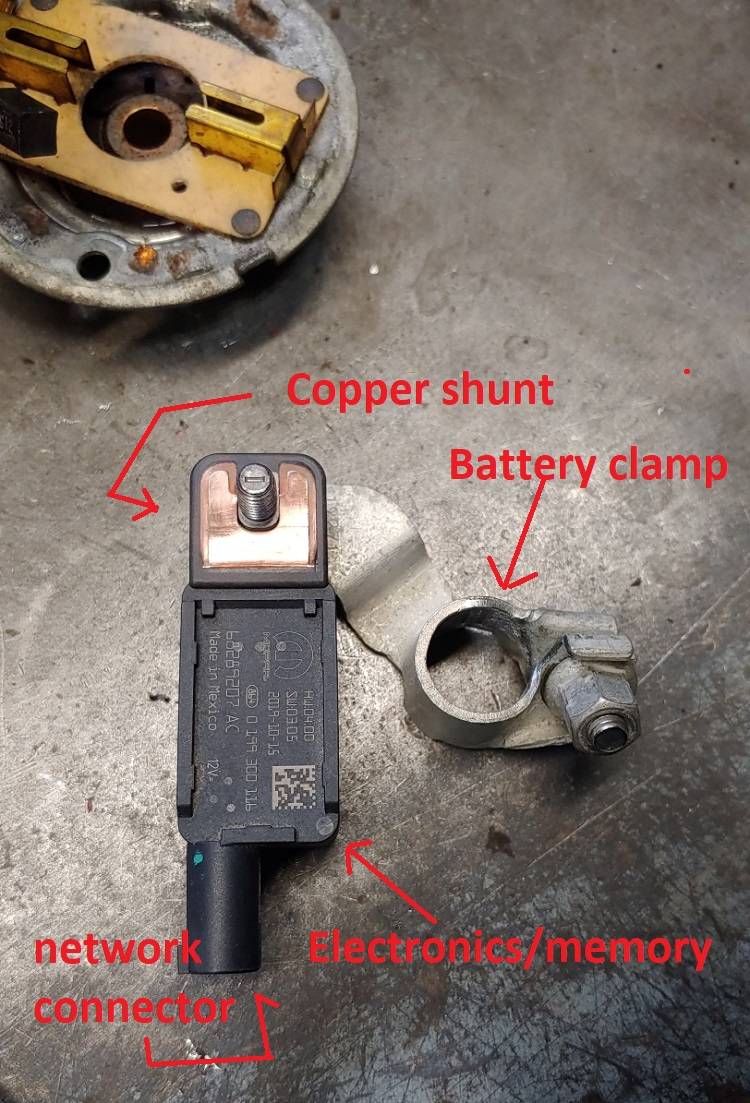
This is the IBS -

Jeep Gladiator IBS reset and charging batteries 20220329_094914


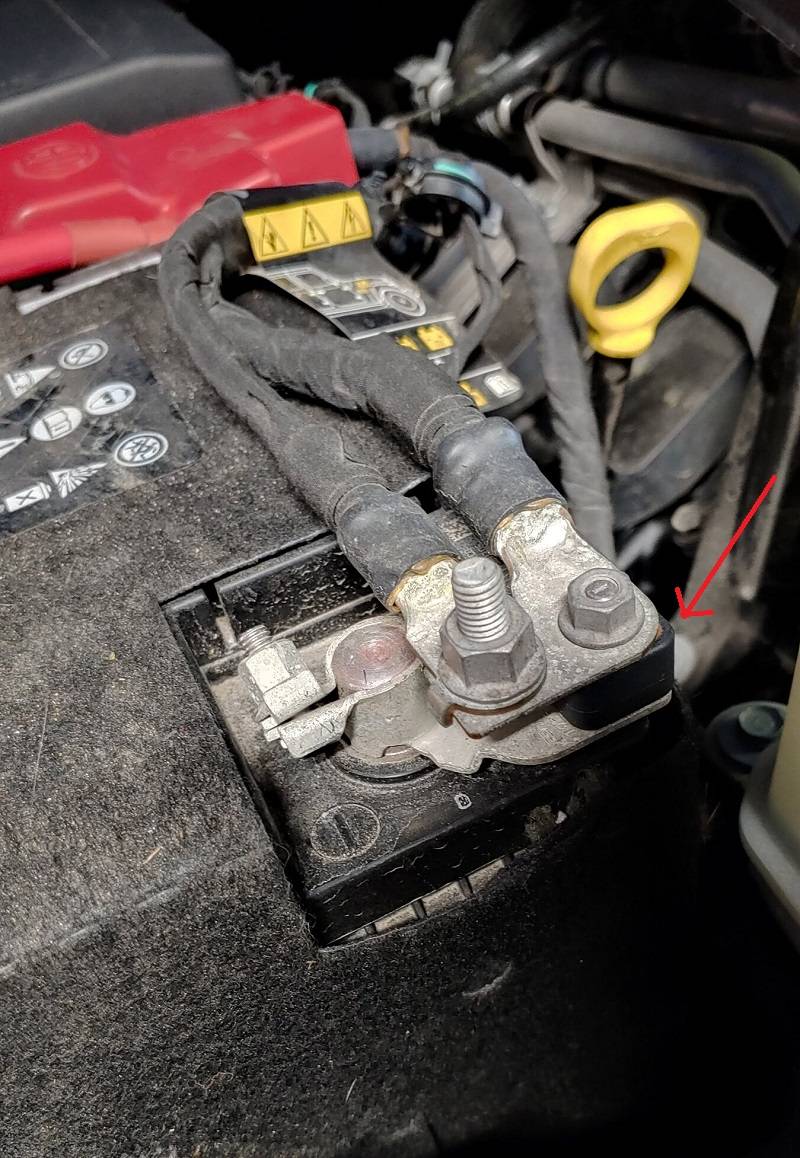
This is a 2020 where the top black cable, the smaller one, is the aux battery ground cable.
The other one, on the right in this pic, is the main battery ground.

Take both off the IBS, take one cable off the other cable, and connect battery charger negative to the smaller of the two and the positive battery charger clamp on the main battery positive - that can be used to charge the aux battery as well as the main battery.
For 2021 and later, the two black cables are reversed - Jeep made the top cable the larger one - the ground for the batteries, and the lower cable with the larger end that has the stud is the aux battery ground on 2021 and later.

Jeep Gladiator IBS reset and charging batteries JT-neg-bat-post-ibs


I just got home from my Saturday trip. The first thing to check was the battery voltage after 40 hours of being parked. It was down to 12.38v.
That's rather low for just shy of a couple of days.........
Part of the issue with batteries in general is that it takes more, longer, to charge the last few percent.
With lithium batteries as used in vehicles and other stuff the first 80% or so is pretty quick, the last 10% or so takes longer.
These follow similarly - getting up to 90% or so isn't bad, that last few percent makes me impatient as heck!
So it would just make sense that it takes longer to get them up to that top level by driving.
 
OP
OP
Lost1wing

Lost1wing

Well-Known Member
First Name
Tim
Joined
Dec 22, 2020
Threads
24
Messages
2,606
Reaction score
2,845
Location
West Georgia
Vehicle(s)
2020 Jeep Gladiator Rubicon
Occupation
Retired AMT
IBS reset is very simple, especially if you are charging the batteries anyway.
Normally you should never charge by connecting below the IBS - that way it "senses" the charge going in.
But if you are going to do the whole thing, meaning charging both batteries and resetting the IBS, it won't matter.

Charge each battery independently so you can track how each acts while charging.
That means pull the ground cables off the top of the IBS - intelligent battery sensor.

Remove the IBS from the main battery negative terminal and set it aside - leaving it off disconnected for 10-15 minutes causes it to reset - to default.

Separate the two ground cables. The "thinner" black cable is the aux battery ground. You can connect to it and the main battery + to charge the aux battery since the two are tied together at the + terminal as well.

Charge the main battery as well.

Note the voltage of each right after charging, then wait a few hours and check the voltage of each again. Being disconnected, there should be no drain on them so they should maintain a full charge of around 12.7 volts (maybe better)

Then you can put it all back together again, install IBS, install ground cables.

I have more details and pics if needed.

This is the IBS -

20220329_094914.jpg


This is a 2020 where the top black cable, the smaller one, is the aux battery ground cable.
The other one, on the right in this pic, is the main battery ground.

Take both off the IBS, take one cable off the other cable, and connect battery charger negative to the smaller of the two and the positive battery charger clamp on the main battery positive - that can be used to charge the aux battery as well as the main battery.
For 2021 and later, the two black cables are reversed - Jeep made the top cable the larger one - the ground for the batteries, and the lower cable with the larger end that has the stud is the aux battery ground on 2021 and later.

JT-neg-bat-post-ibs.jpg


That's rather low for just shy of a couple of days.........
Part of the issue with batteries in general is that it takes more, longer, to charge the last few percent.
With lithium batteries as used in vehicles and other stuff the first 80% or so is pretty quick, the last 10% or so takes longer.
These follow similarly - getting up to 90% or so isn't bad, that last few percent makes me impatient as heck!
So it would just make sense that it takes longer to get them up to that top level by driving.
The wife just got back from the store. It is a short ride 10 miles or so. The start stop did work by the time she got back home. She thinks I fixed something so we will leave it there. I'll sneak in a couple of batteries next week.
Sponsored


Top