Sponsored

Leaking axle seal?

ShadowsPapa

Well-Known Member
First Name
Bill
Joined
Oct 12, 2019
Threads
247
Messages
40,442
Reaction score
53,858
Location
Runnells, Iowa
Vehicle(s)
'25 JTMX, '23 JLU 4xe, '82 SX4, '73 Javelin
Occupation
Retired auto mechanic, frmr gov't ntwrk security admin
Vehicle Showcase
3
The number of these reports seems to be slowing now, so hopefully most have been fixed, and there won't be such a backlog on parts now.
Any 2022s reported with leaks?
They've been out a year so plenty of time to leak I'd expect.
Sponsored
 

mountainpass

Well-Known Member
Joined
Sep 7, 2020
Threads
24
Messages
455
Reaction score
392
Location
Georgia
Vehicle(s)
2021 JT Sport w/ Max Tow
Looks like I just joined this club today. :crying: Was rotating the tires and noticed fluid on the right rear.

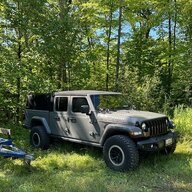
Contacted dealership to schedule diagnosis.
What is the MDH# of your truck? Its on a sticker on driver door pillar.
 

Rusty PW

Well-Known Member
First Name
Russ
Joined
Jan 10, 2022
Threads
37
Messages
11,322
Reaction score
30,205
Location
Fayette Nam, Pennsyltucky
Website
www.youtube.com
Vehicle(s)
'22 JTRD, '11 370Z Nismo, '07 Honda VFR
Build Thread
Link
Occupation
Muff Diver

Sponsored

NachoRuby

Well-Known Member
First Name
Chad
Joined
Apr 28, 2021
Threads
28
Messages
2,992
Reaction score
4,428
Location
Pennsylvania
Vehicle(s)
'21 JTR , '18 JLU, 73 VW Bug, 97 VW Jetta, all MTs
Got the axle seal leak. Someone got the cliff notes? 102 pages of kinda daunting haha
Cliff notes: Take it to the dealership and they'll fix it for free. They'll probably tell you to keep driving it, while they wait for parts, unless it's really bad. They revised the part # a few months ago.
 

Jerhemi

Well-Known Member
Joined
Nov 10, 2016
Threads
24
Messages
1,042
Reaction score
1,288
Location
Toronto, Canada
Vehicle(s)
Sting-Grey Willys
Cliff notes: Take it to the dealership and they'll fix it for free. They'll probably tell you to keep driving it, while they wait for parts, unless it's really bad. They revised the part # a few months ago.
Thanks, bud! Appreciate it. Didn’t know if there was a TSB out. Cheers ?
 

ShadowsPapa

Well-Known Member
First Name
Bill
Joined
Oct 12, 2019
Threads
247
Messages
40,442
Reaction score
53,858
Location
Runnells, Iowa
Vehicle(s)
'25 JTMX, '23 JLU 4xe, '82 SX4, '73 Javelin
Occupation
Retired auto mechanic, frmr gov't ntwrk security admin
Vehicle Showcase
3

Blade1668

Well-Known Member
First Name
Darrell
Joined
Jan 7, 2020
Threads
12
Messages
3,263
Reaction score
3,148
Location
N. AL.
Vehicle(s)
90XJ, 91XJ, 91MJ, 05 LJ, 20 JT
Build Thread
Link
Vehicle Showcase
1
How much gear oil is in the AdvanTEK 210 and 220 axles from mfg? I'm thinking that could be partially the reason of the leaks. When I changed the gear oil in front and rear axles between them it wasn't a qt. I'm sure that I used at least double compared to what was in them. So could it be due to lack of proper amounts then ruining seals from lack of lubrication. Then after some gear oil makes it past the pumpkin into axle tube it started the leak? ?
Heck I've read of the bearing being installed backwards on carrier and mashed shim packs.
Bill, Didn't you see or find that problem?
 

ShadowsPapa

Well-Known Member
First Name
Bill
Joined
Oct 12, 2019
Threads
247
Messages
40,442
Reaction score
53,858
Location
Runnells, Iowa
Vehicle(s)
'25 JTMX, '23 JLU 4xe, '82 SX4, '73 Javelin
Occupation
Retired auto mechanic, frmr gov't ntwrk security admin
Vehicle Showcase
3
How much gear oil is in the AdvanTEK 210 and 220 axles from mfg? I'm thinking that could be partially the reason of the leaks. When I changed the gear oil in front and rear axles between them it wasn't a qt. I'm sure that I used at least double compared to what was in them. So could it be due to lack of proper amounts then ruining seals from lack of lubrication. Then after some gear oil makes it past the pumpkin into axle tube it started the leak? ?
Heck I've read of the bearing being installed backwards on carrier and mashed shim packs.
Bill, Didn't you see or find that problem?
Seals die from lack of lubrication (among other things) - if there's not enough to get clear out past the bearing to the seal, the seal will over-heat and fail.
Seals are better off well-lubed - with clean lube.
Not enough lube - trouble.
You'd have to flood these with lube to be any trouble. But not enough lube - lots of trouble. Look at how long the lower crankshaft seals last on lawn mower engines - submerged in the oil in the sump, the shaft operating at speeds of 3,000 rpm or so, and HOT. They are submerged in oil - with a constantly fluctuating pressure/vacuum situation.

This from a file I have on seals ->

Excessive temperature is the leading cause of seal failures. As temperatures rise, the lubricating film becomes thinner, resulting in dry running conditions. Elevated temperatures can also lead to the elastomer cracking or blistering. Nitrile seal life decreases by a factor of two for every increase in temperature of 57 degrees F.

The oil level can be another factor in a lip seal’s lifespan if it is too low. In this situation, the seal will eventually become hard and not be able to follow the shaft, resulting in leakage.


Rotary shaft seals work by squeezing and
maintaining the lubricant in a thin layer between
the lip and shaft. Sealing is further aided by the
hydrodynamic action caused by the rotating shaft,
which creates a slight pumping action.
Rotary shaft seals provide protection by
performing two critical functions. In most
applications the primary function of the seal is to
retain the bearing or system lubricant. There are
thousands of different types of lubricants
available today, but in general bearings are either
oil or grease lubricated.

The contact lip is designed to run on a thin film
of oil. Without the oil film, the seal lip will run
directly on the rotating shaft and generate
excessive friction and fail within hours. The
lubricant selected needs to remain viable over the
expected service life.

3. Does the oil level provide adequate lubrication and cooling at the seal lip?
 

Sponsored

Blade1668

Well-Known Member
First Name
Darrell
Joined
Jan 7, 2020
Threads
12
Messages
3,263
Reaction score
3,148
Location
N. AL.
Vehicle(s)
90XJ, 91XJ, 91MJ, 05 LJ, 20 JT
Build Thread
Link
Vehicle Showcase
1
Seals die from lack of lubrication (among other things) - if there's not enough to get clear out past the bearing to the seal, the seal will over-heat and fail.
Seals are better off well-lubed - with clean lube.
Not enough lube - trouble.
You'd have to flood these with lube to be any trouble. But not enough lube - lots of trouble. Look at how long the lower crankshaft seals last on lawn mower engines - submerged in the oil in the sump, the shaft operating at speeds of 3,000 rpm or so, and HOT. They are submerged in oil - with a constantly fluctuating pressure/vacuum situation.

This from a file I have on seals ->

Excessive temperature is the leading cause of seal failures. As temperatures rise, the lubricating film becomes thinner, resulting in dry running conditions. Elevated temperatures can also lead to the elastomer cracking or blistering. Nitrile seal life decreases by a factor of two for every increase in temperature of 57 degrees F.

The oil level can be another factor in a lip seal’s lifespan if it is too low. In this situation, the seal will eventually become hard and not be able to follow the shaft, resulting in leakage.


Rotary shaft seals work by squeezing and
maintaining the lubricant in a thin layer between
the lip and shaft. Sealing is further aided by the
hydrodynamic action caused by the rotating shaft,
which creates a slight pumping action.
Rotary shaft seals provide protection by
performing two critical functions. In most
applications the primary function of the seal is to
retain the bearing or system lubricant. There are
thousands of different types of lubricants
available today, but in general bearings are either
oil or grease lubricated.

The contact lip is designed to run on a thin film
of oil. Without the oil film, the seal lip will run
directly on the rotating shaft and generate
excessive friction and fail within hours. The
lubricant selected needs to remain viable over the
expected service life.

3. Does the oil level provide adequate lubrication and cooling at the seal lip?
Thanks Bill
Early in this thread I think you covered that or a different one. :like:
I think that some of the leaking seals are possible due to lack of lubrication in tubes making it to the seals when new then making it out near the seal after seals are worn and damaged. Just my S.W.A.G. especially after having changed gear oil and finding so little in the axles.
My LJ had close to or over 200000 miles before it started to leak. In all of my Jeeps have went over 100k without axle seal leaks... other than pinion seals that might be due to rock impacts, mud and mucky water.
 

DocMike

Well-Known Member
First Name
Mike
Joined
May 28, 2020
Threads
57
Messages
2,554
Reaction score
4,766
Location
Colorado Springs
Vehicle(s)
2020 Gladiator Sport S, 2001 Audi TT Roadster, 1930 Model A Hot Rod, 1973 VW Square Back
Occupation
Education
Perhaps. He also suggested that a clogged vent tube could cause this.
I'll check mine for leaks today.


Now I'm curious - how do you over-fill these while they are in the vehicle?
Also - seals are made to work totally submerged in oil. What he's saying is that only the bottom 1/4 of the seal will hold back lube and the middle won't.
I wonder if he's just looking for reasons for the leaks.
 

ShadowsPapa

Well-Known Member
First Name
Bill
Joined
Oct 12, 2019
Threads
247
Messages
40,442
Reaction score
53,858
Location
Runnells, Iowa
Vehicle(s)
'25 JTMX, '23 JLU 4xe, '82 SX4, '73 Javelin
Occupation
Retired auto mechanic, frmr gov't ntwrk security admin
Vehicle Showcase
3
Perhaps. He also suggested that a clogged vent tube could cause this.
I'll check mine for leaks today.
Depending on seal design and material - too much pressure causes the seal to be pressed down hard against the shaft - causing it to run hot and run out of lube. A little pressure is good - it's like a reed valve in a way - to a point, pressure helps it seal, but too much is bad.

Causes of seal failure -
Improper installation (and/or seal being damaged in the install process)
Shaft finish - machining work leaves a spiral pattern on the shaft as a cutter moves along it removing material. If that tool pattern isn't ground or polished off, the spiral pattern can feed oil past the seal. Microscopic irregularities are good and hold oil where the seal runs to help lubricate it, but if there's a spiral pattern, it can feed oil out like an auger.
Non-concentric circles - the axle shaft center and the axle tube center not being perfectly one and the same. The spinning shaft has to be centered perfectly in the seal.
Not enough lube - either after the fact - differential housing low, or when the seal is installed. If the seal isn't lubed properly at install so that it can run until lube gets worked out to it, it's doomed to fail later. Assembly lube, whatever you wish to call it, if the seal is run dry until the speed of the gears and axle shaft feed it oil, it will fail.

There's other stuff - but those are common issues.

A plugged vent can cause you problems in the opposite way you might think. Assume the differential air gets hot and can slowly vent out, then it gets cooled quickly but can't normalize through the vent - if the air is made up coming in past the seals, it can draw in dust and grit along with it, cutting the seal later.

Some seals have a protective lip that reduces that - depending on the seal, even prevents it, but they aren't running that sort of seal in these.


Agree. But if it is a known issue, sometimes they issue one, no? I just don't want any grief form the service writer as I have oversized tires. Canadian's play by different rules, no MM act.

I've not run across any TSB on the axles - maybe someone else has, but I've been trying to watch for one and so far, I've not found any if it exists.


Top