Sponsored

MPG Experiment

BaliMawr

Well-Known Member
First Name
Josh
Joined
Jan 8, 2022
Threads
11
Messages
345
Reaction score
324
Location
Fredericksburg, Va
Vehicle(s)
2022 JTMT, 2004 R1150GS, 1979 R100
Build Thread
Link
Occupation
Art Teacher, Blacksmith
I'm following this because I tow a similar trailer, and am interested in the MPGs, as the JTMT will also be a daily driver. Did I see that you're running a 2" lift? With stock tire/wheel size? I'd be interested to see that in profile. I've got a spare set of wheels that I plan to set up for off-road occasions, and if you're getting these numbers with a lift, I might have to consider it.
Sponsored

 
OP
OP
Gren71

Gren71

Well-Known Member
First Name
Matt
Joined
Jul 9, 2019
Threads
143
Messages
4,004
Reaction score
6,390
Location
Delaware
Vehicle(s)
Jeep JT sports S Max Tow (Sold) '23 Ram 1500
Occupation
Magician
Vehicle Showcase
1
I'm following this because I tow a similar trailer, and am interested in the MPGs, as the JTMT will also be a daily driver. Did I see that you're running a 2" lift? With stock tire/wheel size? I'd be interested to see that in profile. I've got a spare set of wheels that I plan to set up for off-road occasions, and if you're getting these numbers with a lift, I might have to consider it.
Lol well ill start with results may vary haha driving style has a lot to do with mpg. Im a conservative driver by nature, a lot of owners aren’t!

i currently have the iron rock off road 2in spacer lift with…
Core 4x4 track bar
Fox 2.0 steering stabilizer
MPP front and rear sway bar ends
MPP front LCAs
Front geometry correction brackets
Rear Drive shaft drop block(can’t remember brand)
Rear bump stop extensions (axle side)
Sumo springs bump stops all around
Rear track bar bracket
Air lift bags
255/75/17 Bridgestone dueler a/t (bronco take offs)
Jeep JT 17in steelies (for now)


++ill add that list to the original post since im sure others will be curious well++

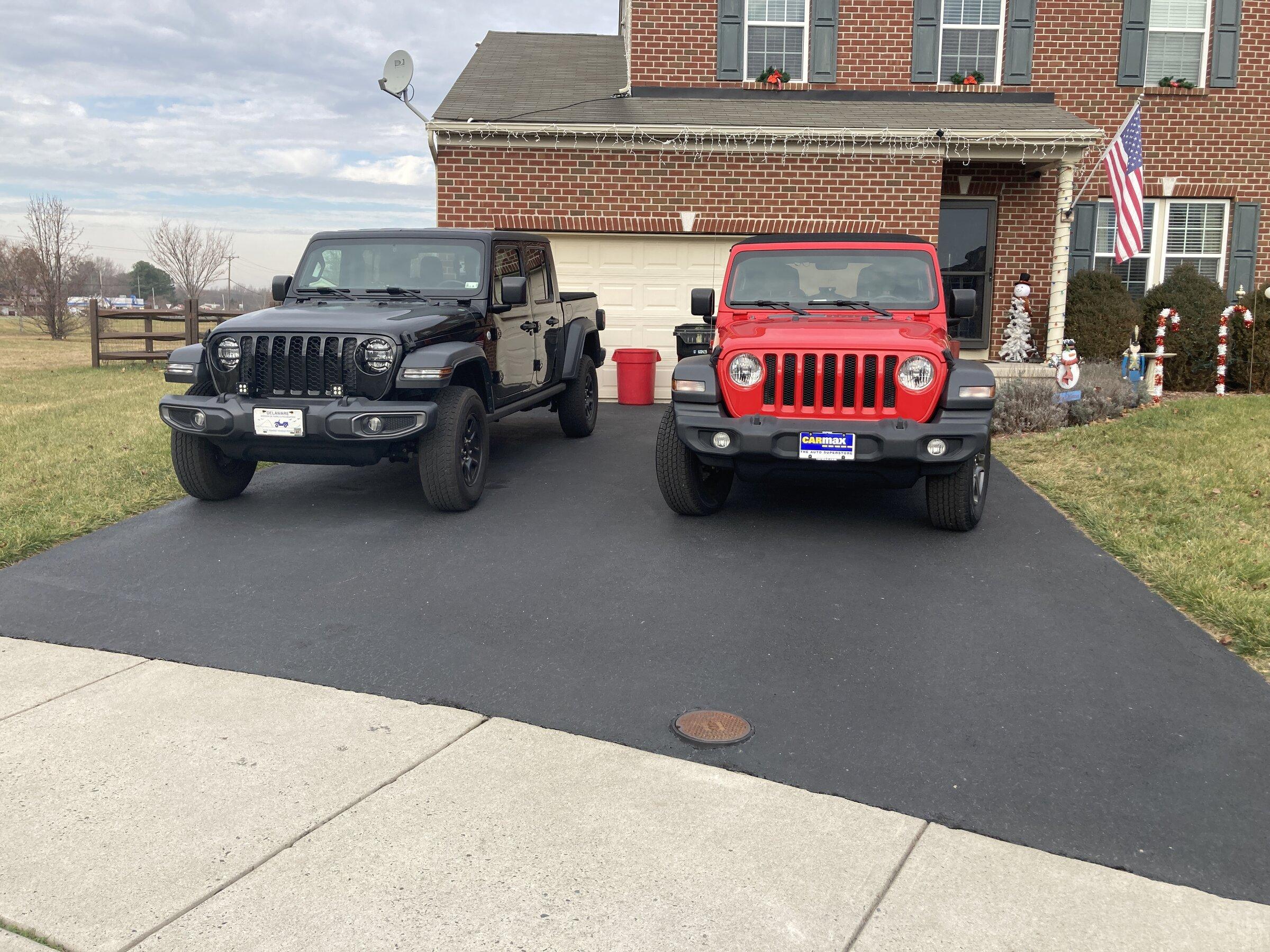
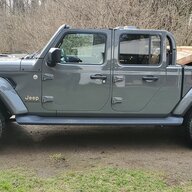
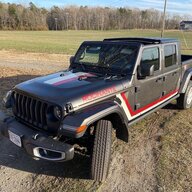
With lift and tires
Jeep Gladiator MPG Experiment A5A137B4-4CC8-45EF-8E4A-388FEAA15F73


next to a stock height JL
Jeep Gladiator MPG Experiment 7480262D-8A9B-41E4-8FF4-A5084C89366E


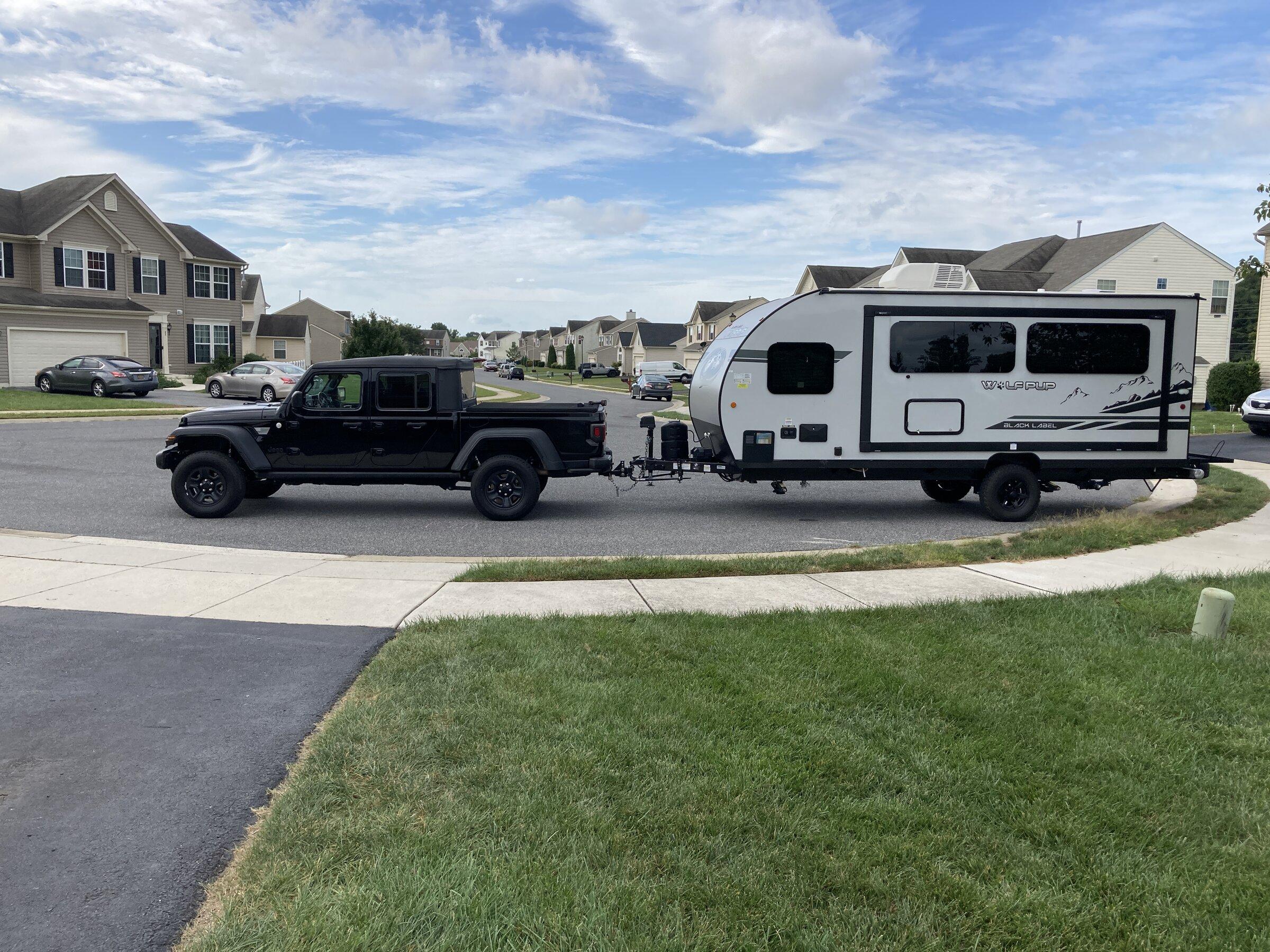
With my TT tagging along for a ride
-airbags inflated in the rear
Jeep Gladiator MPG Experiment AE0FA53E-E8ED-4E62-8D7D-009FE3269706


I can grab a side profile pic tomorrow if thats what you’re after.
 

BaliMawr

Well-Known Member
First Name
Josh
Joined
Jan 8, 2022
Threads
11
Messages
345
Reaction score
324
Location
Fredericksburg, Va
Vehicle(s)
2022 JTMT, 2004 R1150GS, 1979 R100
Build Thread
Link
Occupation
Art Teacher, Blacksmith
Lol well ill start with results may vary haha driving style has a lot to do with mpg. Im a conservative driver by nature, a lot of owners aren’t!

i currently have the iron rock off road 2in spacer lift with…
Core 4x4 track bar
Fox 2.0 steering stabilizer
MPP front and rear sway bar ends
MPP front LCAs
Front geometry correction brackets
Rear Drive shaft drop block(can’t remember brand)
Rear bump stop extensions (axle side)
Sumo springs bump stops all around
Rear track bar bracket
Air lift bags
255/75/17 Bridgestone dueler a/t (bronco take offs)
Jeep JT 17in steelies (for now)


++ill add that list to the original post since im sure others will be curious well++

With lift and tires
A5A137B4-4CC8-45EF-8E4A-388FEAA15F73.jpeg


next to a stock height JL
7480262D-8A9B-41E4-8FF4-A5084C89366E.jpeg


With my TT tagging along for a ride
-airbags inflated in the rear
AE0FA53E-E8ED-4E62-8D7D-009FE3269706.jpeg


I can grab a side profile pic tomorrow if thats what you’re after.
No, that's what I was after. Thanks for the detailed list. I'm new to Jeep; I didn't realize so much was involved in a lift! I'm planning the air bags, but it didn't occur to me to add extended bump-stops as well, or are those because of the lift? I appreciate your time!
 
OP
OP
Gren71

Gren71

Well-Known Member
First Name
Matt
Joined
Jul 9, 2019
Threads
143
Messages
4,004
Reaction score
6,390
Location
Delaware
Vehicle(s)
Jeep JT sports S Max Tow (Sold) '23 Ram 1500
Occupation
Magician
Vehicle Showcase
1
No, that's what I was after. Thanks for the detailed list. I'm new to Jeep; I didn't realize so much was involved in a lift! I'm planning the air bags, but it didn't occur to me to add extended bump-stops as well, or are those because of the lift? I appreciate your time!
Most of those mods are me being obsessed with trying to get back to factory geometry. Not really… NEEDED…. just my ocd lol

the front bump stops were because they were on sale.

The rears were for towing. To add a little buffer from the bounce of the TT.

the AEV, Iron rock off road, and the alloy usa 1.5in front + 3/4in daystar rear spacers, are all good stater setups.
 

BaliMawr

Well-Known Member
First Name
Josh
Joined
Jan 8, 2022
Threads
11
Messages
345
Reaction score
324
Location
Fredericksburg, Va
Vehicle(s)
2022 JTMT, 2004 R1150GS, 1979 R100
Build Thread
Link
Occupation
Art Teacher, Blacksmith
Most of those mods are me being obsessed with trying to get back to factory geometry. Not really… NEEDED…. just my ocd lol

the front bump stops were because they were on sale.

The rears were for towing. To add a little buffer from the bounce of the TT.

the AEV, Iron rock off road, and the alloy usa 1.5in front + 3/4in daystar rear spacers, are all good stater setups.
I'm with you on maintaining stick geometry. What are LCAs?
 

Sponsored

dcmdon

Well-Known Member
First Name
Don
Joined
Mar 31, 2021
Threads
60
Messages
3,656
Reaction score
4,427
Location
Boston Metro-West, Northern NH
Vehicle(s)
.
To the OP.

Google "coast down test". Basically you get the truck up to a certain speed on a certain road and shift into neutral at a certain speed.

If you are a 1990s car magazine the accelerometers you mount in the car or the "5th wheel" help you determine actual HP used at each speed. But if you are just a regular guy with no test equipment, you can see how much farther you coast on this same road/same speed/same gas load/same tire pressure.
 

peterpilot379

Well-Known Member
First Name
Star
Joined
Mar 13, 2021
Threads
4
Messages
227
Reaction score
336
Location
Wilmywood, NC
Vehicle(s)
‘21 Mojave Gladiator
Occupation
Pirate
Gren71….I applaud your meticulous dedication in your MPG experiment. Lots of threads on here discussing Jeep fuel economy. Reminds me of a story. When I was a teenager, an older adult friend had a big late 80s model Suburban. It got terrible gas mileage and I said to him, “doesn’t that thing get terrible gas mileage and eat you alive at the pump?”. His reply to me was, “when you’re driving the Big Easy, you don’t worry about gas mileage.” I laughed about it then but now, I kinda understand what he meant and I think it applies to our bad ass Jeeps. Anyway, not trying to undermine or criticize your efforts. Just reminded me of that childhood story. :blush:
 
OP
OP
Gren71

Gren71

Well-Known Member
First Name
Matt
Joined
Jul 9, 2019
Threads
143
Messages
4,004
Reaction score
6,390
Location
Delaware
Vehicle(s)
Jeep JT sports S Max Tow (Sold) '23 Ram 1500
Occupation
Magician
Vehicle Showcase
1
To the OP.

Google "coast down test". Basically you get the truck up to a certain speed on a certain road and shift into neutral at a certain speed.

If you are a 1990s car magazine the accelerometers you mount in the car or the "5th wheel" help you determine actual HP used at each speed. But if you are just a regular guy with no test equipment, you can see how much farther you coast on this same road/same speed/same gas load/same tire pressure.
Thanks! I googled it and this is what I found. i will be reading through it but if this ISNT what you meant let me know.

https://www.researchgate.net/public..._Test_-_Theoretical_and_Experimental_Approach
 

dcmdon

Well-Known Member
First Name
Don
Joined
Mar 31, 2021
Threads
60
Messages
3,656
Reaction score
4,427
Location
Boston Metro-West, Northern NH
Vehicle(s)
.
Thanks! I googled it and this is what I found. i will be reading through it but if this ISNT what you meant let me know.

https://www.researchgate.net/public..._Test_-_Theoretical_and_Experimental_Approach
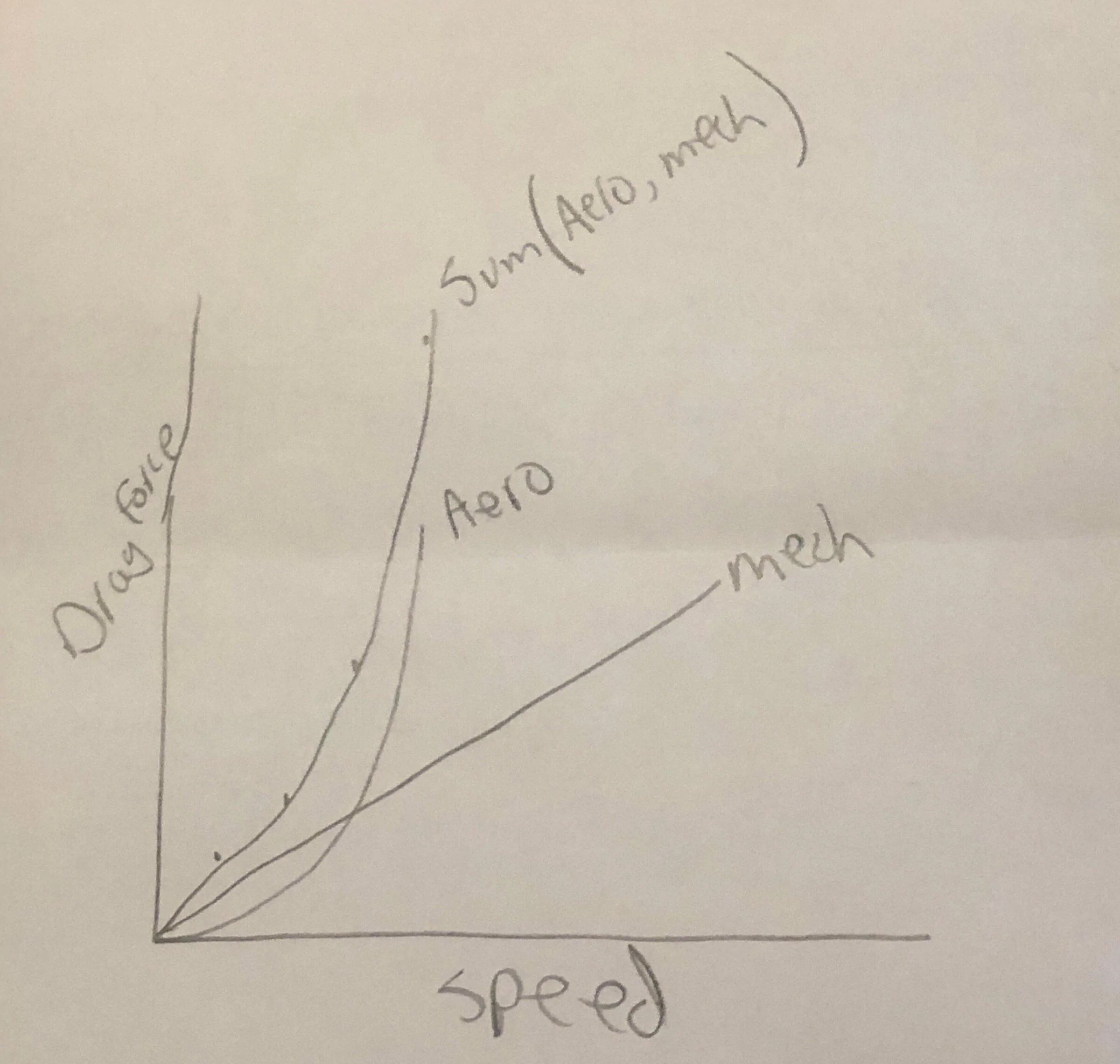
Exactly. One interesting thing is that aerodynamic drag forces change as a square function, whereas mechanical drag, including tire drag changes as a linear function.

If you get really fancy you can calculate the mechanical drag vs aerodynamic drag by tracking the rate at which the speed changes.

i.e. speed change is much greater at higher speeds because aerodynamic drag is a greater percentage of total drag.


Jeep Gladiator MPG Experiment 1643205437534
 

Sponsored

OP
OP
Gren71

Gren71

Well-Known Member
First Name
Matt
Joined
Jul 9, 2019
Threads
143
Messages
4,004
Reaction score
6,390
Location
Delaware
Vehicle(s)
Jeep JT sports S Max Tow (Sold) '23 Ram 1500
Occupation
Magician
Vehicle Showcase
1
Day 2

trip 1
22.9mpg
-notably colder this morning. Day 1 AM temp was 29d, today it was 21d. Not sure if that is a contributing factor or not. but there are no other changes Im aware of that would change the trip 1 average so much from day 1. Time will tell.
-anecdotal finding relating to shifting on an incline (now going to call this AF2) was not repeated today. The JT down shifted into 7th IAO the same place it typically would.
-anecdotal finding relating steering inputs (now going to call this AF1) seemed consistent with day 1. Fewer small steering inputs were needed during normal driving conditions.

***Ill add this, and the anecdotal findings to the first post.**
 
OP
OP
Gren71

Gren71

Well-Known Member
First Name
Matt
Joined
Jul 9, 2019
Threads
143
Messages
4,004
Reaction score
6,390
Location
Delaware
Vehicle(s)
Jeep JT sports S Max Tow (Sold) '23 Ram 1500
Occupation
Magician
Vehicle Showcase
1
Exactly. One interesting thing is that aerodynamic drag forces change as a square function, whereas mechanical drag, including tire drag changes as a linear function.

If you get really fancy you can calculate the mechanical drag vs aerodynamic drag by tracking the rate at which the speed changes.

i.e. speed change is much greater at higher speeds because aerodynamic drag is a greater percentage of total drag.


1643205437534.jpeg
I haven't read the study yet so forgive me if this is in there.

Why does mechanical drag increase at a linear rate? Wouldn't it either decrease as speed increases since the tires are now rolling and have a "fixed" resistance at a fixed speed with consistent road conditions? I could even see it remaining a constant as the mechanical components aren't changing? I see how some would heat up, or shift a bit, which could change the drag I guess.
 

jeepin48

Well-Known Member
First Name
Jake
Joined
Sep 10, 2020
Threads
10
Messages
418
Reaction score
437
Location
Michigan
Vehicle(s)
JT Overland 3.0L
Occupation
Engineer
I haven't read the study yet so forgive me if this is in there.

Why does mechanical drag increase at a linear rate? Wouldn't it either decrease as speed increases since the tires are now rolling and have a "fixed" resistance at a fixed speed with consistent road conditions? I could even see it remaining a constant as the mechanical components aren't changing? I see how some would heat up, or shift a bit, which could change the drag I guess.
Mechanical drag is linear if you ignore things like component temperature. It is essentially a fix "drag" on the mechanical system that makes it linear. Double the speed only doubles the mechanical drag. Kinda hard to explain.

Aero is exponential. If you double the speed it takes 4 times the energy so it goes up really fast.

Try using your scan tool to monitor % engine load. You will see the load goes up really fast when you go from 30 to 60mph which is MOSTLY wind drag. It could be a helpful tool to document with.
 
OP
OP
Gren71

Gren71

Well-Known Member
First Name
Matt
Joined
Jul 9, 2019
Threads
143
Messages
4,004
Reaction score
6,390
Location
Delaware
Vehicle(s)
Jeep JT sports S Max Tow (Sold) '23 Ram 1500
Occupation
Magician
Vehicle Showcase
1
Mechanical drag is linear if you ignore things like component temperature. It is essentially a fix "drag" on the mechanical system that makes it linear. Double the speed only doubles the mechanical drag. Kinda hard to explain.

Aero is exponential. If you double the speed it takes 4 times the energy so it goes up really fast.

Try using your scan tool to monitor % engine load. You will see the load goes up really fast when you go from 30 to 60mph which is MOSTLY wind drag. It could be a helpful tool to document with.
interesting, thanks.

would it maybe plateu at some point? Using tires as an example..tires can only create so much resistance. At higher speeds they would almost create less resistance as the centrifugal force would cause the tire to become more narrow, and decrease its contact with the surface...decreasing its resistance. Am I way off here? I know this is down a rabbit hole, but I like this stuff.

I will plug that scanner in during the second trip today and keep an eye on engine load.
 

dcmdon

Well-Known Member
First Name
Don
Joined
Mar 31, 2021
Threads
60
Messages
3,656
Reaction score
4,427
Location
Boston Metro-West, Northern NH
Vehicle(s)
.
interesting, thanks.

would it maybe plateu at some point? Using tires as an example..tires can only create so much resistance. At higher speeds they would almost create less resistance as the centrifugal force would cause the tire to become more narrow, and decrease its contact with the surface...decreasing its resistance. Am I way off here? I know this is down a rabbit hole, but I like this stuff.

I will plug that scanner in during the second trip today and keep an eye on engine load.
No, resistance continues to go up as speed increases. Forever.

So at very high speeds the aerodynamic drag becomes an even larger percent of total drag.

If you look at my hand drawn graph you can see that at low speeds mechanical drag is higher. At a certain speed the graphs cross and from that point aerodynamic drag is the dominant drag component.
Sponsored

 
Last edited:


Top