
Sponsored

PEAK Antifreeze + Coolant Equivalent to OEM Original

smlobx

Well-Known Member
First Name
Eddie
Joined
Jun 28, 2018
Threads
86
Messages
2,639
Reaction score
4,487
Location
Mid Atlantic
Vehicle(s)
JTR, F-350 diesel, Porsche Spyder, Model Y
Occupation
Semi retired consultant
Regarding NASCAR and other forms of racing…

You are not allowed to use antifreeze on a racetrack because if you blow your water pump or a line and spill your coolant it will probably cause a spin as the coolant is very slippery on the track.

We used water wetter in conjunction with DDW (distilled, deionized water) in our Porsche race cars as did everyone else. As Papa said that is only used in race cars not road cars..
Sponsored

 

ShadowsPapa

Well-Known Member
First Name
Bill
Joined
Oct 12, 2019
Threads
247
Messages
40,440
Reaction score
53,853
Location
Runnells, Iowa
Vehicle(s)
'25 JTMX, '23 JLU 4xe, '82 SX4, '73 Javelin
Occupation
Retired auto mechanic, frmr gov't ntwrk security admin
Vehicle Showcase
3
What id like to know is what the first shop did in using this vacuum system and flushing with descaler. 1 gallon of the OAT and the rest of it is the descaler left in there. What is that stuff? Vinegar water or something worse that strips the cooling system in short order then it’s mixed with the OAT?? This is what’s regular practice at this shop!
Some shops totally scare me. I'd be for checking the pH of the coolant in that thing (not taken at the reservoir which is likely still close to ok, but from the system's flow.
I totally drain block and radiator. It's a royal pain in the ass to get to the block drains on my Javelin - I mean seriously problematic, especially with the headers, but no way I want to leave that crud in there.
Descaler has to be acidic. Low pH - which is not good in cooling systems - and with mixed metals, aluminums and steel, that would bug me.
What we did in "home descaling" (which should not be needed in modern systems well-maintained) was to flush with pure water a couple of times. Fill with water, drive it, empty it, fill with water, drive it, empty it, then put in the mixture.
I can't imagine a working system needing any "descaling" at all. Scale and lime and deposits usually come with age, use of well or faucet water, that sort of thing.
I put a new rad in my SX4 back in about 2013 or so............. to this day, it looks clean as new inside that radiator (of course on those you can SEE inside!)
That's 12 years on old-school proper antifreeze.
It will likely never need to have any major cooling system service for the rest of my life - just normal maintenance, drain, refill.
 

ShadowsPapa

Well-Known Member
First Name
Bill
Joined
Oct 12, 2019
Threads
247
Messages
40,440
Reaction score
53,853
Location
Runnells, Iowa
Vehicle(s)
'25 JTMX, '23 JLU 4xe, '82 SX4, '73 Javelin
Occupation
Retired auto mechanic, frmr gov't ntwrk security admin
Vehicle Showcase
3
Regarding NASCAR and other forms of racing…

You are not allowed to use antifreeze on a racetrack because if you blow your water pump or a line and spill your coolant it will probably cause a spin as the coolant is very slippery on the track.

We used water wetter in conjunction with DDW (distilled, deionized water) in our Porsche race cars as did everyone else. As Papa said that is only used in race cars not road cars..
Drag racing is similar - most run pure water, perhaps a water wetter, and after the race season, it's drained out. Some that are street-strip use other methods, but when there's antifreeze on a drag strip, it stops things for a long time.
Here, you MUST run some sort of a recovery system - but these are not the bigger tracks.

Track contamination can kill.
 

ShadowsPapa

Well-Known Member
First Name
Bill
Joined
Oct 12, 2019
Threads
247
Messages
40,440
Reaction score
53,853
Location
Runnells, Iowa
Vehicle(s)
'25 JTMX, '23 JLU 4xe, '82 SX4, '73 Javelin
Occupation
Retired auto mechanic, frmr gov't ntwrk security admin
Vehicle Showcase
3
What should the pH be? I’m guessing on the acidic side of neutral but not too far?
Actually, away from the acidic side. It should be above distilled water - 7.5-9.5 (roughly)
Pure distilled water is 7 - neutral.
Lower is acidic. Higher is base or alkali.
Hard to get perfect distilled water as it can absorb carbon dioxide from the air forming acids.
 

Sponsored

Maximus Gladius

Well-Known Member
First Name
Kevin
Joined
Jan 30, 2021
Threads
74
Messages
2,901
Reaction score
3,692
Location
Calgary, AB, Canada
Vehicle(s)
2021 JTR, 2023 JTR
Actually, away from the acidic side. It should be above distilled water - 7.5-9.5 (roughly)
Pure distilled water is 7 - neutral.
Lower is acidic. Higher is base or alkali.
Hard to get perfect distilled water as it can absorb carbon dioxide from the air forming acids.
Curious now what the 50/50 OAT (organic acid technology) reads, fresh from bottle.
 

ShadowsPapa

Well-Known Member
First Name
Bill
Joined
Oct 12, 2019
Threads
247
Messages
40,440
Reaction score
53,853
Location
Runnells, Iowa
Vehicle(s)
'25 JTMX, '23 JLU 4xe, '82 SX4, '73 Javelin
Occupation
Retired auto mechanic, frmr gov't ntwrk security admin
Vehicle Showcase
3
Curious now what the 50/50 OAT (organic acid technology) reads, fresh from bottle.
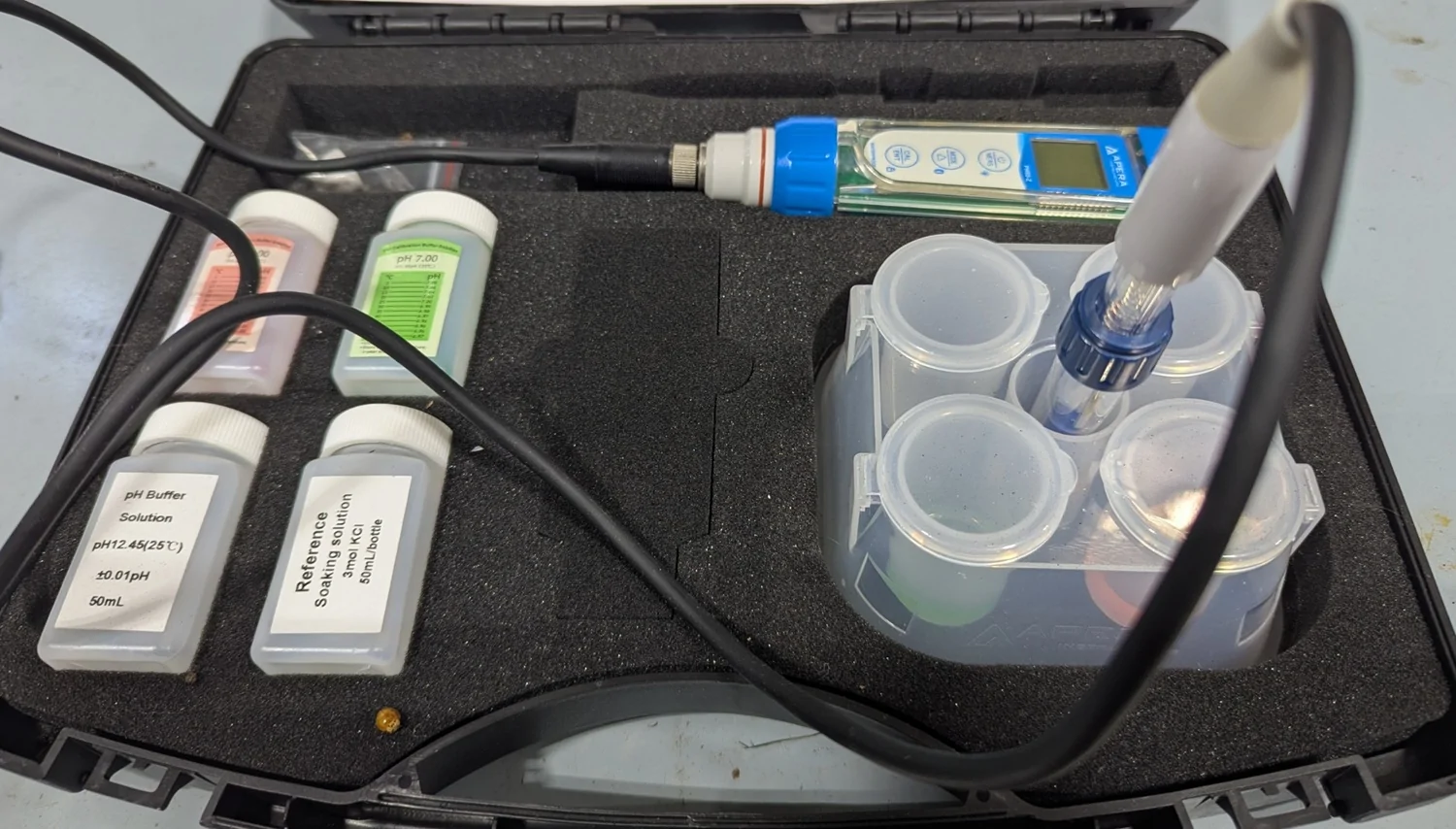
Hmmm. time to calibrate my pH meter and drag a jug of the stuff out! But then, it's an open jug so likely not as it would have been brand new.
My meter does best with extremely low pH levels but should do ok up in the 10 range or so.
 

Maximus Gladius

Well-Known Member
First Name
Kevin
Joined
Jan 30, 2021
Threads
74
Messages
2,901
Reaction score
3,692
Location
Calgary, AB, Canada
Vehicle(s)
2021 JTR, 2023 JTR
Hmmm. time to calibrate my pH meter and drag a jug of the stuff out! But then, it's an open jug so likely not as it would have been brand new.
My meter does best with extremely low pH levels but should do ok up in the 10 range or so.
Can’t wait to see it. I don’t have anything like you do, I just have test strips
 

ShadowsPapa

Well-Known Member
First Name
Bill
Joined
Oct 12, 2019
Threads
247
Messages
40,440
Reaction score
53,853
Location
Runnells, Iowa
Vehicle(s)
'25 JTMX, '23 JLU 4xe, '82 SX4, '73 Javelin
Occupation
Retired auto mechanic, frmr gov't ntwrk security admin
Vehicle Showcase
3
The plating chemistry I work with has a very narrow band of operation - 5.2 to 5.6. I found it's best at 5.3 for my uses. Above 5.6 or so, it's pretty much ruined and you start over with new chemicals.
You can lower it with hydrochloric acid, but too much lowering it and you mess with the chloride balance (potassium chloride and ammonium chloride are a large part of the makeup.

Another bath - the passivate, runs under pH 1.
I was wearing out my other testers, and they only last so long anyway before the sensor part, the glass bulb, has to be replaced. So I bought one that can more easily handle very strong acids but still handle my cleaning solution pH about 11.

Jeep Gladiator PEAK Antifreeze + Coolant Equivalent to OEM Original pH meter
 
OP
OP
g2020

g2020

Well-Known Member
First Name
David
Joined
Oct 30, 2024
Threads
22
Messages
214
Reaction score
272
Location
Texas USA
Vehicle(s)
2020 Jeep Gladiator Sport
I removed the new section called "Coolant Flush by an Independent Shop".

The original post (unchanged), without the new section, is based on content published on product labels and manufacturer websites. For example, both PEAK Purple and ZEREX G30 comply with MS-12106 (prediluted) / MS.90032 (concentrate).

This is just a fact and not a counterpoint: The manager at the first shop told me that he pours the concentrate in first. To summarize ShadowsPapa's rants, he says "don't do that".
 
Last edited:

Sponsored

Maximus Gladius

Well-Known Member
First Name
Kevin
Joined
Jan 30, 2021
Threads
74
Messages
2,901
Reaction score
3,692
Location
Calgary, AB, Canada
Vehicle(s)
2021 JTR, 2023 JTR
@ShadowsPapa made a good point (you do make good points but this one is worth its weight in gold) checking the pH level of your coolant. Having a level of 7.0 + is alkaline, lower numbers is acidic.

In all my driving life which started in about mid 80’s, I’ve never looked at the pH of coolant. I did however know from mechanic friends and early discussions of coolant that the solution turns acidic at about 4 years which can then cause rad fatigue and pin holes so I always just made sure at about 3 years I’d have a flush done. I never experienced issues.

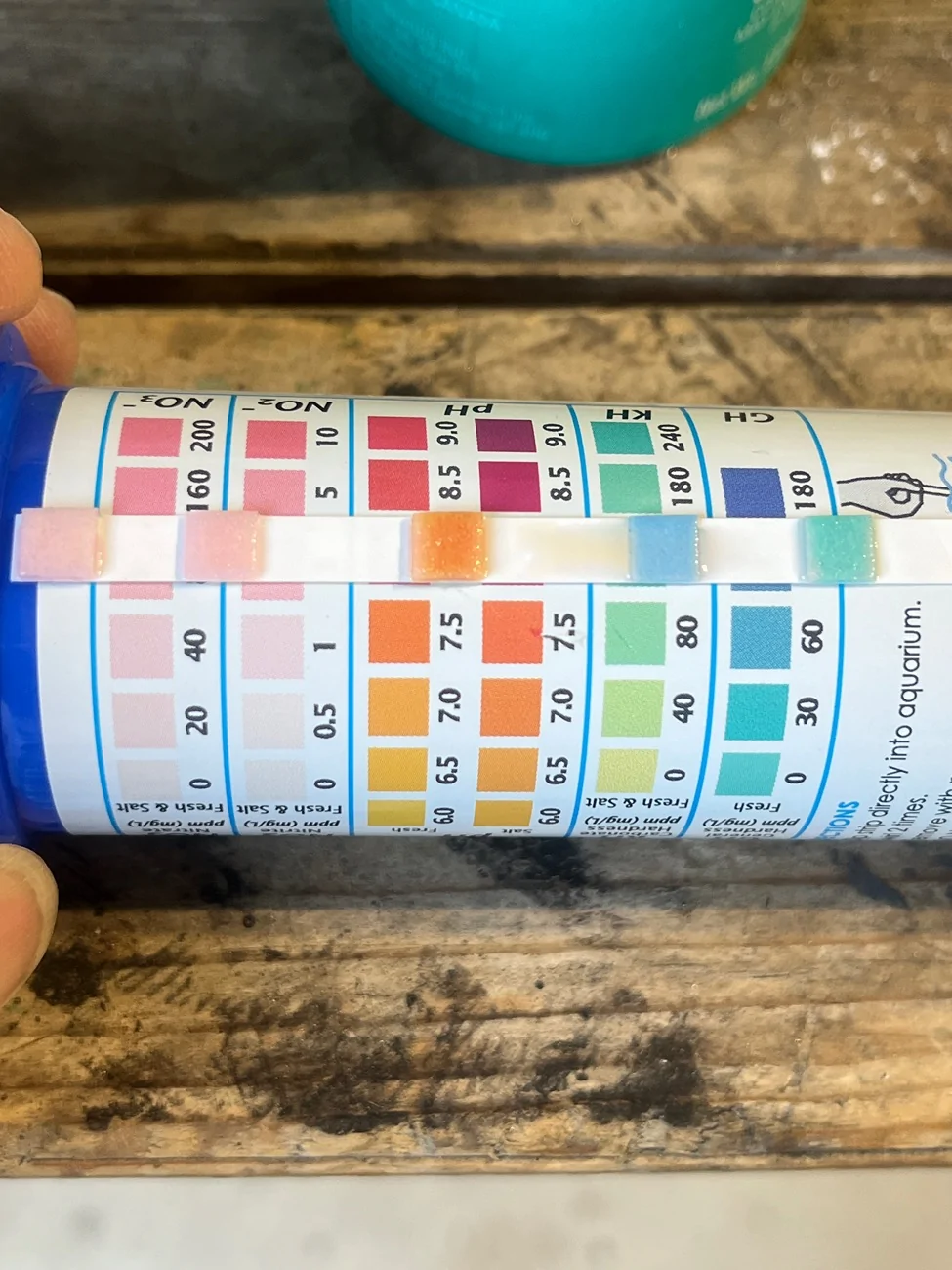
This time, this morning, I grabbed a pH test strip and sucked out some coolant and tested it. 7.0 - 7.5 is where mines at. I have just recently done my own flush so the solution is fresh but I’m pleased at what I saw. Mind you it’s a pH test strip probably paid $.20 cents each. Not anything near the rocket science lab equipment @ShadowsPapa would use.
Jeep Gladiator PEAK Antifreeze + Coolant Equivalent to OEM Original IMG_4995
 

ShadowsPapa

Well-Known Member
First Name
Bill
Joined
Oct 12, 2019
Threads
247
Messages
40,440
Reaction score
53,853
Location
Runnells, Iowa
Vehicle(s)
'25 JTMX, '23 JLU 4xe, '82 SX4, '73 Javelin
Occupation
Retired auto mechanic, frmr gov't ntwrk security admin
Vehicle Showcase
3
@ShadowsPapa made a good point (you do make good points but this one is worth its weight in gold) checking the pH level of your coolant. Having a level of 7.0 + is alkaline, lower numbers is acidic.

In all my driving life which started in about mid 80’s, I’ve never looked at the pH of coolant. I did however know from mechanic friends and early discussions of coolant that the solution turns acidic at about 4 years which can then cause rad fatigue and pin holes so I always just made sure at about 3 years I’d have a flush done. I never experienced issues.

This time, this morning, I grabbed a pH test strip and sucked out some coolant and tested it. 7.0 - 7.5 is where mines at. I have just recently done my own flush so the solution is fresh but I’m pleased at what I saw. Mind you it’s a pH test strip probably paid $.20 cents each. Not anything near the rocket science lab equipment @ShadowsPapa would use.
IMG_4995.jpeg
I suspect those strips are similar to what was used when we had our swimming pool. Gets you pretty close without spending several hundred dollars on test equipment most people might use once every 2 or 3 years.


As far as coolant - the ideal post would be (at least as far as being useful and to the point):
List of coolants that meet MOPAR specs AND are OAT
Price points.
Warranty? Meh, I'd love to know how many actually could get through the process of proving a coolant did something bad. Seriously, it's to get customers, and there are so many variables in engine uses, how hard it was used, how hot it got, many other factors, might as well skip the warranty.
As long as it meets the specs, is OAT and nothing else, and will go as far as MOPAR's suggested ranges as far as maintenance - what else is really needed?

I've used everything from Zerex (which is Valvoline) to Prestone to Peak to a German brand I can't recall the exact name of which I got at Fleet Farm and I've used a lot of coolants over a whole lot of years.
My take? As long as they meet specs, I've really seen no differences!
The biggest factor is use, cooling system integrity/maintenance and so on.
The major brands work. Even some of the "bargain brands" - which are typically made by the big boys, work out fine.
You won't make your cooling system last any longer or less longer based on some special brand or something with the best warranty. How long it lasts depends on you, the owner, and how it's used.
Working in a shop that was along the I80 corridor - we saw it all in the summer and winter. And pretty much every failure was not due to coolant choice but some other factor, including lack of maintenance.
I've got cooling systems in operation that are decades old.......... and I run whatever brand is convenient, use the correct type, and make sure the coolant still has the protection needed (by testing and by periodic out with the old, in with the new)
I've maintained thousands of vehicles over the years, including diesel and gas tractors of all ages, grain trucks, combines, cars, excavating equipment, you name it, and have yet to see a system "fail" due to a coolant - as long as it was maintained and the coolant met the specs for THAT system.

Pick your favorite, make sure it meets specs and is OAT, nothing else, regardless of color.
Maintain your system, take care of any issues right away (including leaks which can lower pressure and thus allow hot spots and boiling internally).
Don't go based on warranty, IMO - that's something you can all but ignore. If it meets specs, you're already covered.

You, the owner/operator, are the key to long cooling system life.
 
OP
OP
g2020

g2020

Well-Known Member
First Name
David
Joined
Oct 30, 2024
Threads
22
Messages
214
Reaction score
272
Location
Texas USA
Vehicle(s)
2020 Jeep Gladiator Sport
If you want the details, from each manufacturer, without having to take your own pictures or dig around for the correct web pages, just read post #1 in this thread.

When I wrote the original post in this thread, PEAK Purple was relatively new on the market. Both PEAK Purple (not violet) and XEREX G30 are formulated with OAT, and both comply with MS-12106. I have not been able to find ZEREX G30 in concentrate form. The correct MOPAR coolant, of course, is also an option.

From what I've been told, a traditional (and cheap) antifreeze tester, that uses specific gravity to determine (freezing point and) coolant mix, will give a false reading for OAT-formulated coolant. To properly test the mix of OAT-formulated coolant, a refractometer is required.

The recommended coolant mix is 50/50.

For details on pH testing, start reading at the top of page 2 of this thread. According to post #20, coolant pH should be 8.5 plus-or-minus 1.0 (low-to-mild alkaline/basic). It is my assumption that acidic coolant (below 7.0, or below neutral) can indicate that the coolant additives are no longer active. The proper OEM coolant pH can be found by testing a sample from a previously unopened container of MOPAR 50/50 prediluted coolant (68163849AB).

For those of us who have an interest in warranties, here are the details again:

MOPAR: 10Y / 150K mi / implied-only (money-back) / no coverage of damage to other parts for DIY
- For MOPAR coolant installed by a dealer, parts & labor warranty coverage is for 2 years and includes coverage of damage to other parts​
PEAK: 15Y / 350K mi / $1,500 limit / coverage of damage to cooling system for DIY
ZEREX: 5Y / 150K mi / make-it-right / coverage of damage to other parts for DIY

Prestone: 15Y / 350K mi / $1,000 limit / coverage of damage to cooling system for DIY / no compliance with MS-12106 or MS.90032 stated on label (OAT-compatible, but not OAT-formulated)

Note: Off-road vehicle use voids each coolant warranty. For a vehicle driven off-road, a coolant flush & fill is required more often than the service life stated on the label. Some members of this forum change the coolant annually. pH testing may help fine-tune when a coolant flush & fill is necessary.
 
Last edited:

ShadowsPapa

Well-Known Member
First Name
Bill
Joined
Oct 12, 2019
Threads
247
Messages
40,440
Reaction score
53,853
Location
Runnells, Iowa
Vehicle(s)
'25 JTMX, '23 JLU 4xe, '82 SX4, '73 Javelin
Occupation
Retired auto mechanic, frmr gov't ntwrk security admin
Vehicle Showcase
3
It is my assumption that acidic coolant (below 7.0, or below neutral) can indicate that the coolant additives are no longer active.
That's one interpretation....... yes. Also watch for changes that can indicate head gasket issues or other similar problems.

And that reminds me - i was going to check my new, unmixed, my 50/50 mix, and what's in my jt currently and report the results.

Again, I ignore the warranties as I have no intention of ever going any 10 or wow, 15 years!
5, yes. For my cars, it's every 2 years (reminds me, the Javelin is due but that block is a bitch to drain with the headers......) it might get just a partial change this year with my surgeries coming up...

From what I've been told, a traditional (and cheap) antifreeze tester, that uses specific gravity to determine (freezing point and) coolant mix, will give a false reading for OAT-formulated coolant.
Yes. Toss those cheapies when dealing with modern veicles.
 
OP
OP
g2020

g2020

Well-Known Member
First Name
David
Joined
Oct 30, 2024
Threads
22
Messages
214
Reaction score
272
Location
Texas USA
Vehicle(s)
2020 Jeep Gladiator Sport
I ran across a thread on Reddit about using the coolant reservoir (only) to flush the coolant a fraction at a time. (Sorry, couldn't retrace the link.) The thread lit up like a Christmas tree, but the replies were focused almost entirely on sediment & debris (contaminant removal) and left the math hanging. This "easy" replacement method will leave about one-third of the old coolant in the system. Here's the math:

Advice in advance: A flush & fill is always the way to go

Reservoir-only exchange: For anyone thinking of emptying and then refilling the coolant reservoir to swap out old coolant with new coolant, this is an ineffective substitute for a flush & fill. For a 3.25 gallon system at 1 quart per exchange using a siphon, 13 (one-quart) exchanges will, at full dilution, result in 2.1 gallons (64.7%) of old coolant being swapped out. Assuming that the vehicle is run to temperature at least once per day, it takes about a month for the quart of new coolant to reach full dilution. The incremental exchange rate is diminishing, with the 10th coolant exchange (3.7%) replacing old coolant at less than half the rate of the first exchange (7.7%). Exchanges after 3.25 gallons occur at a rate of less than 10% per gallon (not good). Assuming that 50/50 prediluted coolant is used, this method will draw the mix closer to 50/50, but will not remove sediment and other debris from the radiator.

The coolant reservoir might be clean, but it will provide a false sense of security.

To figure out the cumulative exchange rate for a volume of 3.25 gallons at 1 quart per exchange (= 64.7%), copy & paste this calculation into Google search:
1/13*((12/13)^0+(12/13)^1+(12/13)^2+(12/13)^3+(12/13)^4+(12/13)^5+(12/13)^6+(12/13)^7+(12/13)^8+(12/13)^9+(12/13)^10+(12/13)^11+(12/13)^12)
This fractional exchange calc simplifies to:
1-(12/13)^13

This calc, for any number of parts, has a result between 63.2% and 75%, or about two-thirds. To test this, try 1-(999/1,000)^1,000 (= 63.2%).


Here's the calculation for the next gallon after 3.25 gallons (= 9.7%):
1/13*((12/13)^13+(12/13)^14+(12/13)^15+(12/13)^16)
This calc simplifies to:
1-(12/13)^17-(1-(12/13)^13)


To achieve 90% replacement, 29 one-quart exchanges are required and will take years (at one exchange per month) to complete.

It is assumed that a quantity of 6 fl oz of coolant, from the reservoir, is cycled into the radiator after each engine cooldown. This small quantity is based on info from a different post on Reddit.

In other words, a flush & fill is always the way to go.

The other point of view:

For those of us who have had at least one coolant flush & fill done (a requirement to remove sediment and debris), there is a case to be made for using a 200 cc automotive syringe, such as SEDY part number 88082, to do a reservoir-only coolant replacement, using 50/50 prediluted coolant, once per month. By doing this, 99.2% of the original coolant will be replaced every sixty months (1-(12/13)^60), the concentration/mix will move closer to / be maintained at 50/50 with each exchange, and the additives & pH will be slightly refreshed each month. Use a dedicated syringe. No mid-month cheating because a period of 25-30 days of cycling and mixing (1-(26/32)^25) is a necessary part of the process. Nearly five times as much new coolant will be required (60 quarts vs. 13 quarts), but there will be no risk of damaging the petcock and very little, if any, mess. For about $5 per month, this method will help to maintain peak performance of the cooling system.

Perform a reservoir-only coolant exchange about AFTER the vehicle has cooled off. Wear protective eyewear & gloves.

The cooling system for the 3.6L V6 engine has a capacity of 13 quarts. The coolant recovery bottle has a capacity of one quart, but slightly less than one quart can be extracted from it. To recover & recycle the used coolant, grab an empty coolant jug from the trash at any auto parts store and bring the used coolant to a recycling center when the jug is full.
Sponsored

 
Last edited:


Top