Sponsored

Power Steering Flush/ Need some Tech procedural info

Maximus Gladius

Well-Known Member
First Name
Kevin
Joined
Jan 30, 2021
Threads
75
Messages
2,912
Reaction score
3,717
Location
Calgary, AB, Canada
Vehicle(s)
2021 JTR, 2023 JTR
.... Needing the info, not because I don't know what I'm doing. I've done the flush myself 3 times on 3 power steering pumps and in all cases, one 500ml bottle of fluid came out and 750ml went back in and in every case the reservoir bottle showed it was full. Hence, I've made the claim that we have an air lock in the system and I heard and watched the air bubbles come up and out the reservoir bottle but it took a lot of work and determination to see to it the air I was hearing during the fill process had come out.

Why did I think there was a problem?? The first factory pump would quit during hot exterior summer temps and I checked to see if doing a flush would fix it. As I mentioned, 500mls came out and I put 750mls back in. It worked for a while but would quit again a few times and warranty claim was made and pump replaced.

Second pump was installed and when I got it home, I jacked up the front end and did my steering lock to lock a good 30 to 60 times and it wasn't long after starting I heard the air squishing around in the system and then burped out the bottle. The air lock was 250ml. That summer, on a trip to BC for a wedding, the pump crapped out in Kamloops, BC and we still had to go to Vancouver for the wedding and get back and the dealership in Kamloops had non in stock and told me it would be a 3 week wait. I decided to just deal with it and strong arm steer the entire trip with a dead pump.

I called my dealership in Calgary and they ordered the pump right away and it was there waiting for me when I got home. After pump #3 was installed, I put up the front end at home and went through the motions again steering lock to lock 30 to 60 times and again, it wasn't long after I heard the same air bubbles gurgling around and burping out the bottle and again, 250mls it took.

So, this pump is GREAT! It has not quit on me and I want to see if I can prove there's an air lock in our systems that is discoverable but much after a tech would assume the fill job is done and sign off on a flush job.

I've discovered there is geometry involved in that when the flush is done and all the oil is out of the system, the passenger side of the truck has to be elevated slightly higher to help the air escape from the gear box to move along toward and up out the reservoir bottle. This I'm sure is not done in the service bay as vehicles are lifted level. What I need to know is why does the filling of the system stop at 500mls when it actually holds 750mls? How many lock to lock turns is done before the tech assumes they are done? If we are all looking at the level of the fluid showing FULL and only 500mls was put in, we are wrong in this case.

I'm performing a flush tomorrow and I want to do the same process as is prescribed for the tech to see if what I've said happens again.
Sponsored

 
OP
OP
Maximus Gladius

Maximus Gladius

Well-Known Member
First Name
Kevin
Joined
Jan 30, 2021
Threads
75
Messages
2,912
Reaction score
3,717
Location
Calgary, AB, Canada
Vehicle(s)
2021 JTR, 2023 JTR
Well, I got the flush done today despite no procedural processes posted to help so I rolled up the sleeves and got to it.
*Jack up the front end and disconnect the steering stabilizer cause your going to have the engine off for a bit and you'll be gripping that front tire and manually turning the steering left and right, lock to lock many MANY times.

Once I knew I had all the fluid out, I hooked up the hose to the pump, engine is off, I filled up the reservoir and man handled the passenger tire, steering it lock to lock a dozen times easy until "FULL" and fluid stopped dropping. This is one 500ml bottle. Im guessing this is when we would assume the fill is done but sadly you're not. There is 250ml more to stuff in there. Pull up the boot straps, it's about to get hard if you are by yourself.

If I had someone with me, I'd probably have them turn on the engine and slowly steer lock to lock while I was at the reservoir with cap on and off to let the differences in pressure do it's thing to chase out the air, and this would be much easier but at the end of the day, how ever you get it done, chasing out that last bit of trapped air is a BI$#CH and it takes many different ways and a lot of patients to get the remaining 250ml in there. But it can't be done in the few moments a tech is alloted to do the job.

So for what it's worth, I spent an hour steering back and forth and I heard the air in gear box the whole time. I'm convinced we all have an air lock in our steering gear boxes and best way to get rid of it is to not have the front end level. The passenger front wheel needs to be much higher than the driver's side to move the air out.
 

JTenn

Well-Known Member
First Name
Jason
Joined
Feb 21, 2022
Threads
46
Messages
821
Reaction score
1,599
Location
Middle Tennessee
Vehicle(s)
20 JT Overland, 21 JT Willys
Occupation
Mechanical Engineer
Well, I got the flush done today despite no procedural processes posted to help so I rolled up the sleeves and got to it.
*Jack up the front end and disconnect the steering stabilizer cause your going to have the engine off for a bit and you'll be gripping that front tire and manually turning the steering left and right, lock to lock many MANY times.

Once I knew I had all the fluid out, I hooked up the hose to the pump, engine is off, I filled up the reservoir and man handled the passenger tire, steering it lock to lock a dozen times easy until "FULL" and fluid stopped dropping. This is one 500ml bottle. Im guessing this is when we would assume the fill is done but sadly you're not. There is 250ml more to stuff in there. Pull up the boot straps, it's about to get hard if you are by yourself.

If I had someone with me, I'd probably have them turn on the engine and slowly steer lock to lock while I was at the reservoir with cap on and off to let the differences in pressure do it's thing to chase out the air, and this would be much easier but at the end of the day, how ever you get it done, chasing out that last bit of trapped air is a BI$#CH and it takes many different ways and a lot of patients to get the remaining 250ml in there. But it can't be done in the few moments a tech is alloted to do the job.

So for what it's worth, I spent an hour steering back and forth and I heard the air in gear box the whole time. I'm convinced we all have an air lock in our steering gear boxes and best way to get rid of it is to not have the front end level. The passenger front wheel needs to be much higher than the driver's side to move the air out.
This is good info for me. I will be installing a new steering gear box next weekend. I can't find any info on properly priming the system once I break the lines loose. I thought about actually filling the steering gear before I install it so I know the air is out but inevitably there will be air introduced to the system. If you have any more ideas or tips before I start this job I would welcome your thoughts. I should add, I have a vacuum pump that I could use at the resivore lines to pull fluid through if you think this would work. I honestly haven't looked at the line accessibility yet so that may be a no go anyway.
 
OP
OP
Maximus Gladius

Maximus Gladius

Well-Known Member
First Name
Kevin
Joined
Jan 30, 2021
Threads
75
Messages
2,912
Reaction score
3,717
Location
Calgary, AB, Canada
Vehicle(s)
2021 JTR, 2023 JTR
This is good info for me. I will be installing a new steering gear box next weekend. I can't find any info on properly priming the system once I break the lines loose. I thought about actually filling the steering gear before I install it so I know the air is out but inevitably there will be air introduced to the system. If you have any more ideas or tips before I start this job I would welcome your thoughts. I should add, I have a vacuum pump that I could use at the resivore lines to pull fluid through if you think this would work. I honestly haven't looked at the line accessibility yet so that may be a no go anyway.
I think what makes this system difficult is that there is one hose out from the reservoir down to the pump and one hose that goes from the pump to the gear box. It’s weird and that’s why air gets trapped in the gear box. You’d expect the oil to cycle around in a circle. Just look at Tacoma’s power steering hoses. There is a high pressure line out and a low pressure line in (or maybe the other way around) but it has two hoses for cycling the oil. I had this as my last vehicle.

The JT electric system is one line in. Thats it. It’s not even a high pressure line. The gurgles I heard in all 3 flushes from the 3 pumps I’ve dealt with all come from the gear box. The gears at the top side of the box is running dry. It’s that cavity that’s missing the needed 250ml of oil.

Im not sure how a vacuum system would work, as you suggested, with only one hose going in unless I’m missing something??
You need one going in and one coming out, right?

Whats been different with this third pump is I can hear it hum when there’s pressure on the steering wheel. At a stop light or in the garage and vehicle running, just touch the steering wheel with a slight turning force and the hum kicks on for a moment then shuts off. The electric pump is just applying forward oil pressure to the gear box but what’s coming out from the box?

Im hoping someone here can explain a one hose system.

So I feel the greatest need is to get the air to come down from the top of the gear box and float its way to the pump and up to the reservoir. One way is to elevate the passenger front tire way higher than the drivers side. Another way is to crack the cap open. This is when if the engine is running and you’re by yourself steering lock to lock, you risk oil shooting out or you get an air bubble exploding out the top…

Another option (I haven’t tried yet) you know that container system with a lid for doing rad flushes that you stick onto the rad fill hole and clamp it down? The container has a lid and is held in place with a locking cap and you can fill the container up with rad fluid and put the lid on and let the bubbles come up and burp and not have rad fluid go all over? That’s what’s needed here. Something like a large funnel that can be locked down, then fill it up and put a lid on it with a very small hole in it to not let the system pressure up. I’m not convinced having the system pressured up allows the air to escape.

Anyway, tons of critical thought is needed to get the air out and so far what’s worked is an elevated passenger side and physically man handling the wheel lock to lock until you flat out physically quit and you’ve put in 750ml.
 
OP
OP
Maximus Gladius

Maximus Gladius

Well-Known Member
First Name
Kevin
Joined
Jan 30, 2021
Threads
75
Messages
2,912
Reaction score
3,717
Location
Calgary, AB, Canada
Vehicle(s)
2021 JTR, 2023 JTR
Another thought that came to me is to pull the gear box, take off the top and put in a bleed valve and you’d be golden. No more air lock.
 

Sponsored

Escape.idiocracy

Well-Known Member
First Name
Rich
Joined
Jan 23, 2022
Threads
37
Messages
1,569
Reaction score
1,823
Location
PNW
Vehicle(s)
Jt
Occupation
Hitchhiker
I am fascinated by the description in this post to the issues with burping.

^^ apex cooler instructions

(could not find any instructions on the PSC site)

Does anyone have a diagram of the hose configuration? We are putting off hydro assist until next year- but the struggles described here for burping the system seem excessive, I’m curious of the layout/configuration.
guess if nothing else, I’ll find out next year when we put in a ported/tapped box and cooler. ??‍♂?
 
OP
OP
Maximus Gladius

Maximus Gladius

Well-Known Member
First Name
Kevin
Joined
Jan 30, 2021
Threads
75
Messages
2,912
Reaction score
3,717
Location
Calgary, AB, Canada
Vehicle(s)
2021 JTR, 2023 JTR
I am fascinated by the description in this post to the issues with burping.

^^ apex cooler instructions

(could not find any instructions on the PSC site)

Does anyone have a diagram of the hose configuration? We are putting off hydro assist until next year- but the struggles described here for burping the system seem excessive, I’m curious of the layout/configuration.
guess if nothing else, I’ll find out next year when we put in a ported/tapped box and cooler. ??‍♂?
So we have a high pressure line. Cool. It’s hard to see that from the drain hose. But now that I know it’s there, I may want to try something different on a filling procedure that’s easier that would include the engine off and high pressure line released at the top of the pump??? Maybe slip a hose on the end of it and run it up to the reservoir and do the physical manual turning the wheel lock to lock and get the circle flow running steady?? But for now, the jury is out on that.
Thanks for the diagram and comments
 

Badunit

Well-Known Member
Joined
Jan 31, 2023
Threads
20
Messages
817
Reaction score
1,346
Location
USA
Vehicle(s)
2023 JT Rubicon, 1997 TJ
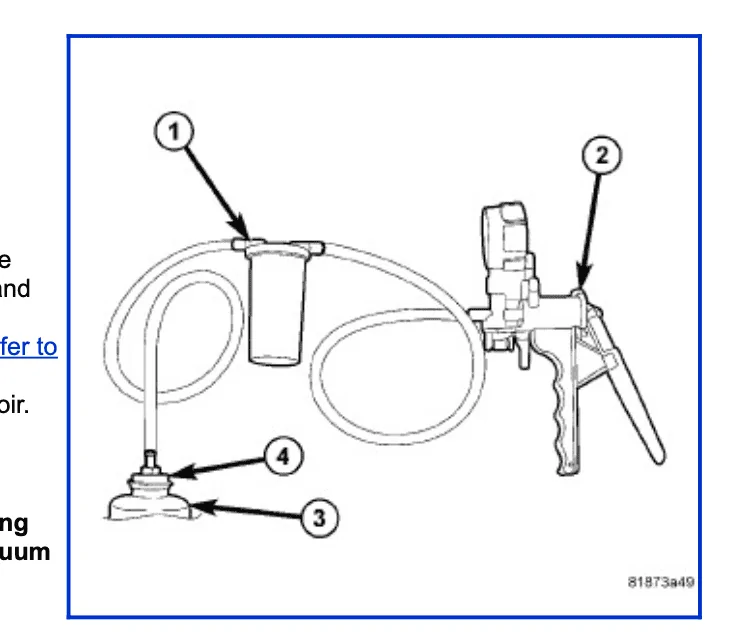
The '23 service manual says put vacuum on it for 3 minutes then remove it, check the level, start the engine, do lock-to-lock three times, check the level again, if no air is present then done. I don't know if the service department follows that procedure but I doubt they would do much more than that to discover and purge the air pocket you have found.
 
OP
OP
Maximus Gladius

Maximus Gladius

Well-Known Member
First Name
Kevin
Joined
Jan 30, 2021
Threads
75
Messages
2,912
Reaction score
3,717
Location
Calgary, AB, Canada
Vehicle(s)
2021 JTR, 2023 JTR
The '23 service manual says put vacuum on it for 3 minutes then remove it, check the level, start the engine, do lock-to-lock three times, check the level again, if no air is present then done. I don't know if the service department follows that procedure but I doubt they would do much more than that to discover and purge the air pocket you have found.
Thanks for that! Far cry from the APEX document that just says in red to put the vehicle on the ground and steer a few times. If only someone told me it was that easy…?

Does the service manual state the volume of fluid this system holds?
 

Sponsored

OP
OP
Maximus Gladius

Maximus Gladius

Well-Known Member
First Name
Kevin
Joined
Jan 30, 2021
Threads
75
Messages
2,912
Reaction score
3,717
Location
Calgary, AB, Canada
Vehicle(s)
2021 JTR, 2023 JTR
The '23 service manual says put vacuum on it for 3 minutes then remove it, check the level, start the engine, do lock-to-lock three times, check the level again, if no air is present then done. I don't know if the service department follows that procedure but I doubt they would do much more than that to discover and purge the air pocket you have found.
About the vacuum that’s mentioned, does the service manual show it to be the flush vacuum connected at the low pressure line coming into the base of the pump or the negative pressure hand pump thats placed at the reservoir cap that pulls the air out and directs air leaks?
 

Badunit

Well-Known Member
Joined
Jan 31, 2023
Threads
20
Messages
817
Reaction score
1,346
Location
USA
Vehicle(s)
2023 JT Rubicon, 1997 TJ
On the reservoir cap. 20-25 in Hg. Engine off.

Jeep Gladiator Power Steering Flush/ Need some Tech procedural info Screen Shot 2023-11-05 at 1.24.50 AM
 
OP
OP
Maximus Gladius

Maximus Gladius

Well-Known Member
First Name
Kevin
Joined
Jan 30, 2021
Threads
75
Messages
2,912
Reaction score
3,717
Location
Calgary, AB, Canada
Vehicle(s)
2021 JTR, 2023 JTR
On the reservoir cap. 20-25 in Hg. Engine off.

Screen Shot 2023-11-05 at 1.24.50 AM.webp
Thanks for clarifying that! Going to order one.
The jury’s been busy watching many YouTube videos of power steering flushes across multiple manufacturer platforms and there are three common similarities to all of them.
1. non are single line out reservoirs
2. All reservoirs I watched have two lines. One that comes in and one that goes out. (JT does not have this)
3. Non were electric pumps.

What the JT has that actually mimics the one low pressure line in and one high pressure line out is the electric pump itself.

In all the videos, the common practice is to “empty” the reservoir, pull off the low pressure line, cap off that slip on metal tube and then run a clear hose from the hose that’s pulled off and place it in a catch pan. This now has to be done at the pump. It’s not easy to do laying on your back or reaching through the fender well and it’s messy.

However, the pulling off the hose and caping the metal slide tube at the pump can be moved to a very simple and easy different location that accomplishes the same thing and you now don’t have to get underneath.

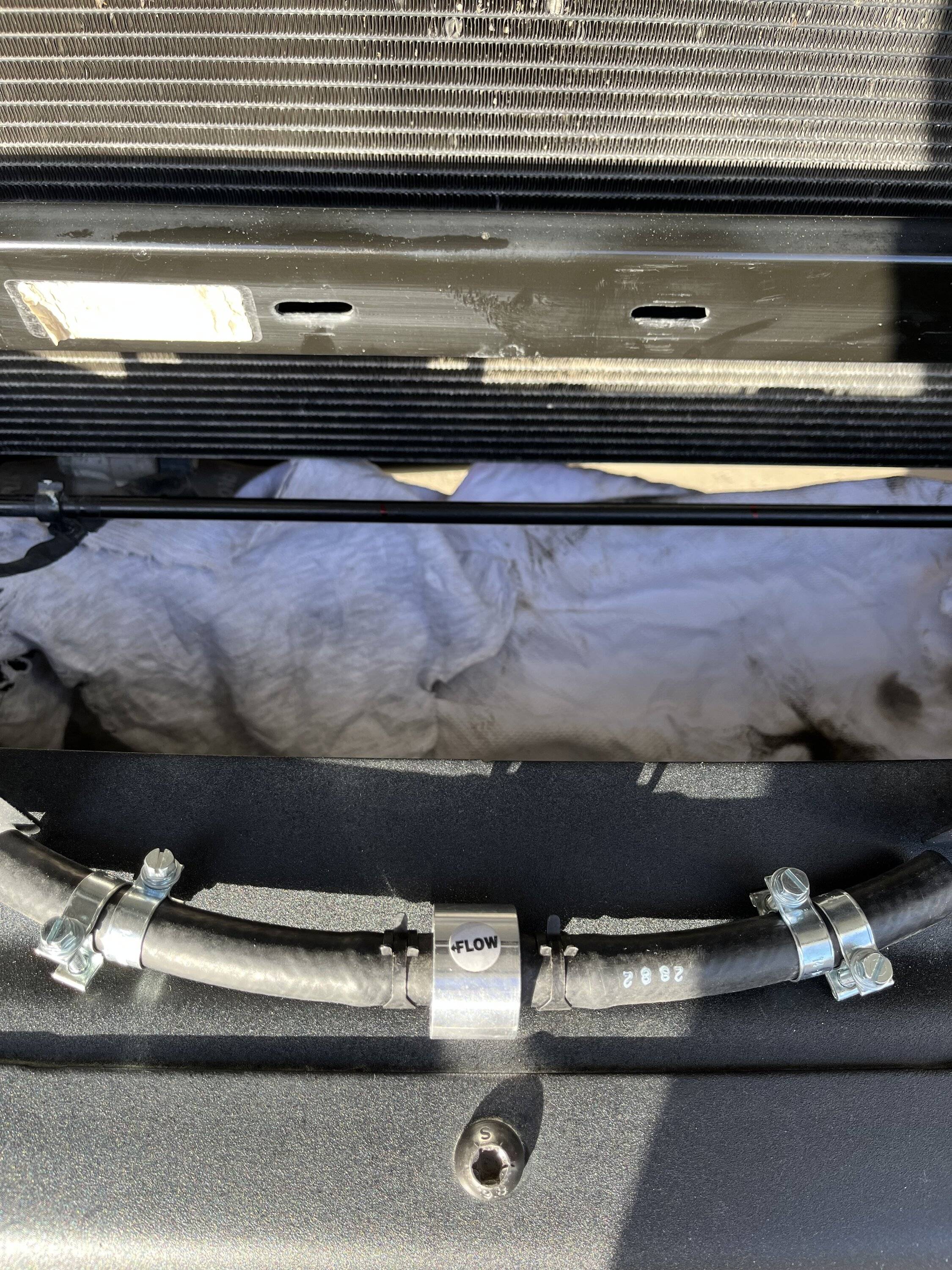
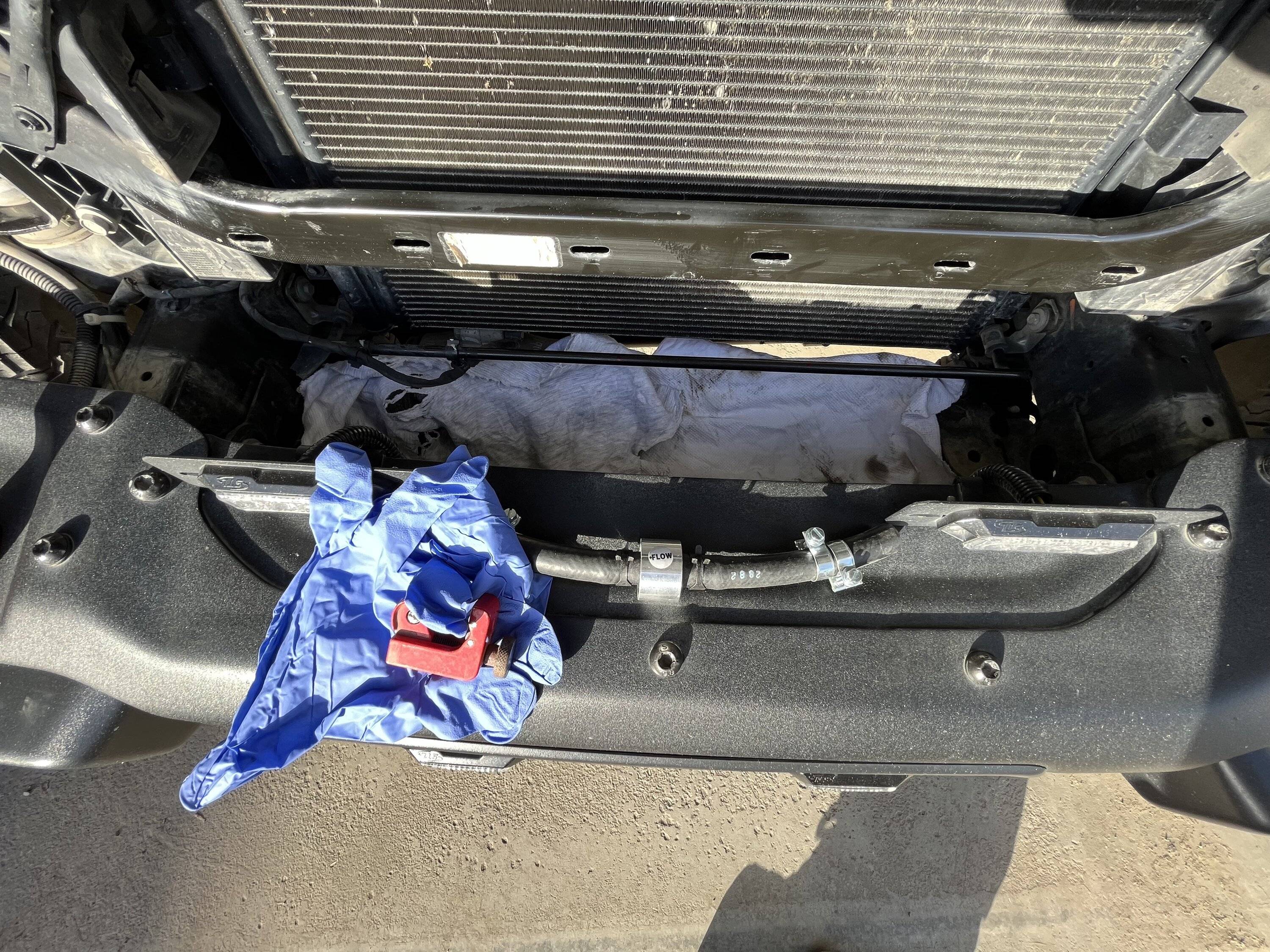
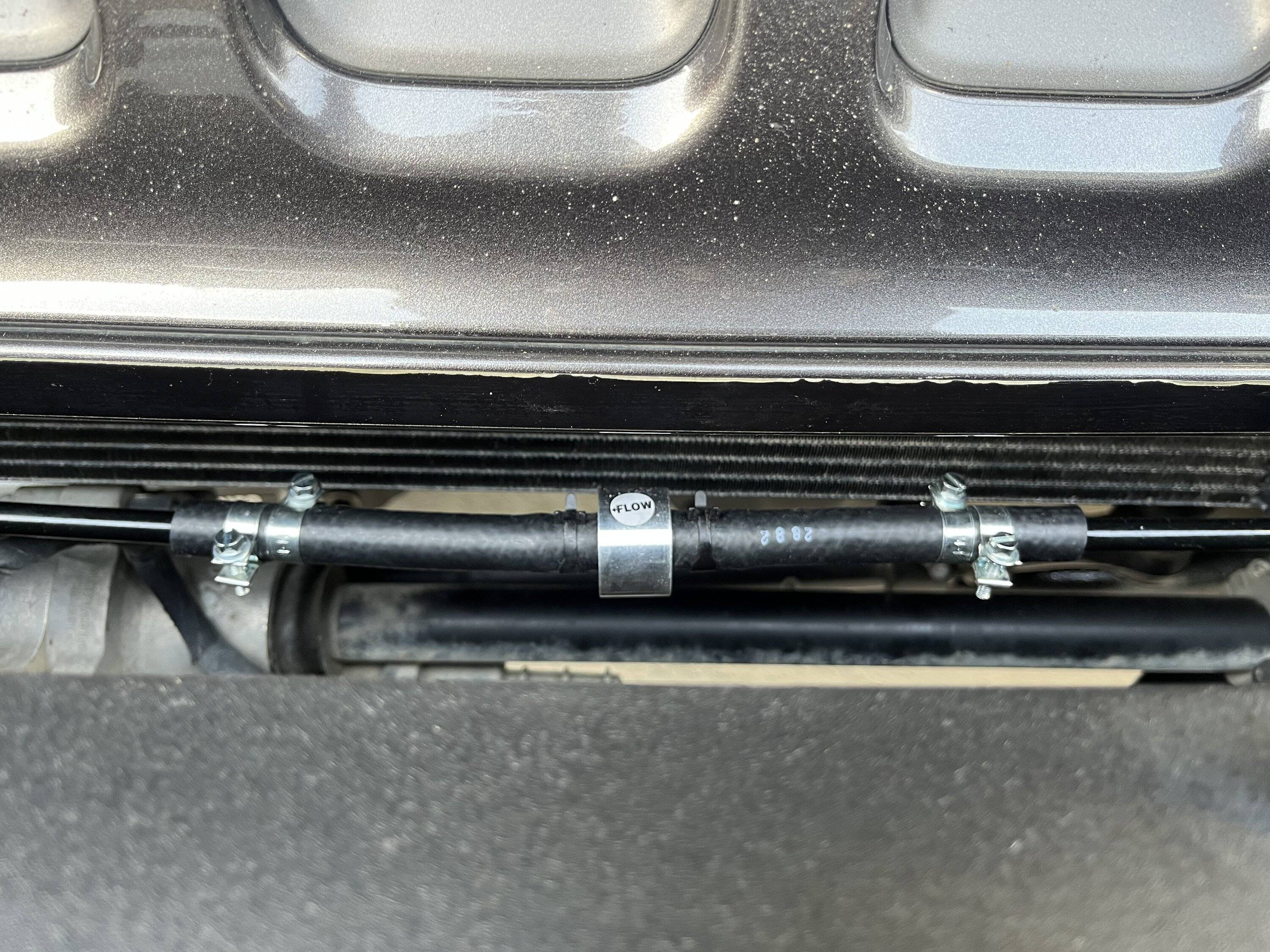
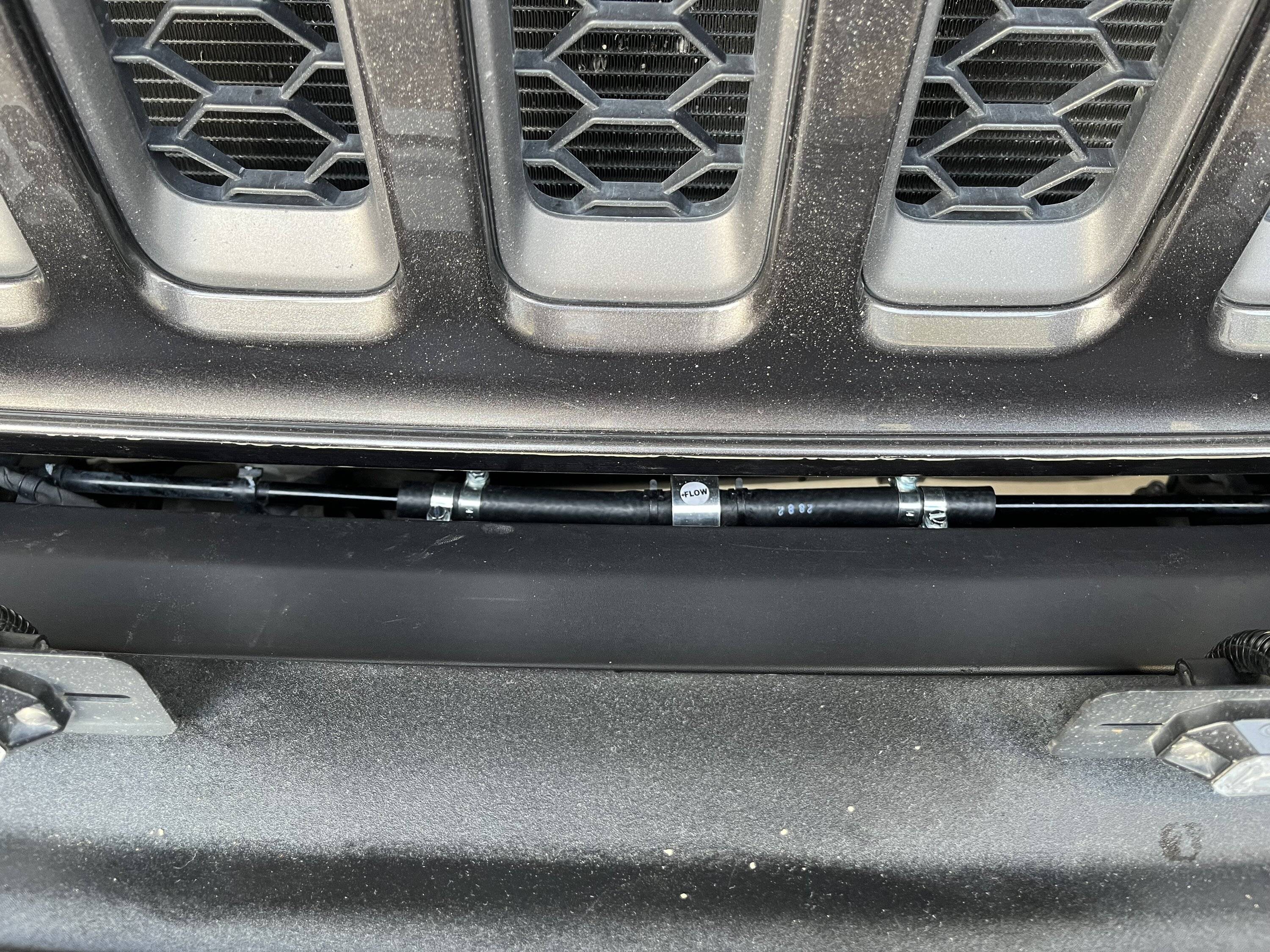
The new location is right where the APEX cooler would go. For those of us not putting in a cooler, (but those that will can just run some extra hose off the cooler to do this) a small section of that metal low pressure “in” line can be cut out, barb ends crimped on both metal ends and a fuel hose clamped in its place. The flush can now happen right there and will accomplish the same thing without all the mess and needing to be underneath. In fact, that new section of line can now have a magnetic filter put on too. The hand vacuum can still be used up top.

So these steps taken make the flush easier but it still doesn’t address the air lock in the box. I have not taken the top of the box apart so I have no clue as to the ability or the engineering of a bleeder valve inserted there.
 

ShadowsPapa

Well-Known Member
First Name
Bill
Joined
Oct 12, 2019
Threads
247
Messages
40,500
Reaction score
54,020
Location
Runnells, Iowa
Vehicle(s)
'25 JTMX, '23 JLU 4xe, '82 SX4, '73 Javelin
Occupation
Retired auto mechanic, frmr gov't ntwrk security admin
Vehicle Showcase
3
You aren't going to have a bleeder valve because it's not like a brake hydraulic system. These have constant flow - the fluid is always moving as long as the pump is turning. If you've had this type of steering sector apart for rebuild, you'd see that there's no place that's going to work because there's multiple high spots inside.
I gotta run for a meeting but will try to pull out my diagrams of the rebuild process on these things later today.
(tip - pressure from the pump also compresses any air pockets, making them much smaller than they would be with no pressure, so less likely to be caught by a moving fluid stream)

1. non are single line out reservoirs
2. All reservoirs I watched have two lines. One that comes in and one that goes out. (JT does not have this)
No need for two lines - it's more like a brake system or cooling system - you don't see an out line and an in line on the coolant tank, right? That's because it's a closed system below the reservoir. When the fluid below contracts, it pulls in fluid from the tank above. When the fluid below expands, it pushes fluid up into the tank.

I know with the 1980s 258 and 4.0 people would freak out over the air in the top of the upper radiator hose. That must be filled with coolant!! Eeek!
No, it doesn't need to be. The flow is never enough to fill that upper hose.
People would park their cars at weird angles, drill holes in things and try hard to get the air out.
These are different, not making a direct comparison, but the air itself doesn't matter - until it moves into the valves, or is pulled into the pump. It can sit there forever and not cause a problem.

IMO, the vacuum bit is the way to go - forcing the air inside to expand, form larger bubbles and move. Makes a ton more sense than using pressure which squeezes the air into bubbles of nothing, which won't move.
But the vacuum, lowering pressure is totally scientific and makes total sense - lower the pressure on the system, force the air bubble to grow and it's going to grow beyond the trap it's under and move to other places, hopefully forces out.

Doing with engine running and forcing the wheels means you are squeezing the air, causing it more difficult to get out.
Vacuum will force it to expand and literally burp out like taking the top off a soda bottle.
That's in fact a good comparison - a soda bottle under pressure - you don't see the gases, compressed into nothing. Take the pressure off and suddenly the gases are released, allowed to expand and rise out.
 
OP
OP
Maximus Gladius

Maximus Gladius

Well-Known Member
First Name
Kevin
Joined
Jan 30, 2021
Threads
75
Messages
2,912
Reaction score
3,717
Location
Calgary, AB, Canada
Vehicle(s)
2021 JTR, 2023 JTR
I got half the vacuum parts today and waiting for the other half tomorrow. So while waiting around today, I pulled the trigger on installing the power steering filter in the line where APEX has their cooler marked to go. I’m not in need of a cooler but the filter is a good idea.

I prepared the patient and laid
out the rags and tools and made the incisions and removed the section of low pressure metal tube, then installed the filter. The mod went very well and bleeding that air out was a snap.
I had also mentioned earlier that I used to hear a “hum” noise when parked or waiting at a light and I’d just have to touch the steering wheel for the hum to kick on for a moment then would shut off, touch the steering wheel again and the hum would come back. This is the electric pump. Since doing the flush, there’s no more humming noises.

Placing the east to get to filter is now the spot my future flushes will be done too. No more crawling underneath trying to reach for the hose at pump that’s quite difficult to get too.

Jeep Gladiator Power Steering Flush/ Need some Tech procedural info IMG_1837


Jeep Gladiator Power Steering Flush/ Need some Tech procedural info IMG_1838


Jeep Gladiator Power Steering Flush/ Need some Tech procedural info IMG_1839


Jeep Gladiator Power Steering Flush/ Need some Tech procedural info IMG_1840
Sponsored


Top