Sponsored

Why can’t I…Understanding the bed light circuit

Blindjustice1787

Well-Known Member
First Name
William
Joined
May 8, 2022
Threads
19
Messages
50
Reaction score
25
Location
Georgia
Vehicle(s)
2022 Gladiator Rubicon
In full disclosure, I have wired simple and complex house circuits, but have never wired anything on a vehicle.

I have read the circuit going to the bed led lights is 30A, which is kind of mind boggling as there is no way these lights draw this much power. Even being liberal, at 5A per light, these only need 10A max. I have seen people wire LED rock lights to this circuit, but even most of those draw less that 0.5A per light (8 lights = 4A). This leaves 16A to spare.

Am I missing something that is also wired to this circuit? Why would they give that much of an overage?

Why I really want to know: Can I wire the bumper mounted reverse lights to this circuit? I love the idea of these, but not being able to turn them on manually is my only gripe (first world problems, I know). It seems like being able to turn them on, on-demand, would be great. So, would this work? If not, please help me understand what I am missing?

magazine, car electrical novice attempting to understand.
Sponsored

 

Gruffid

Well-Known Member
First Name
Jay
Joined
Sep 4, 2020
Threads
24
Messages
265
Reaction score
211
Location
San Antonio, TX
Vehicle(s)
2020 JLUR 3.6L; 2021 JTR EcoDiesel
Build Thread
Link
Maybe look into the Tazer? I think it’s three presses of the unlock button on your fob. And the plus is you don’t have to cut any wires.
 

Beemer533

Well-Known Member
First Name
Zion
Joined
Oct 25, 2021
Threads
13
Messages
620
Reaction score
715
Location
Upstate NY
Vehicle(s)
2021 JT Mojave
Occupation
Field Engineer
I think all the interior lights are on F20 which is the central body controller and that fuse is rated 30A.

If the lights you are adding are really 10a total I would set up a relay and just control it with the bed lighting circuit. You could probably just grab 12v from the auxiliary power circuit on the 7 pin connector for the trailer (assuming you have it) to avoid running a new wire from the battery.

I used this harness to tap into the rear of the 7 pin to get brake and turns without cutting into the factory harness. It doesn't breakout the auxiliary power so you'd have to splice in a wire, but at least you wouldn't be cutting into the factory harness.
 

Hootbro

Well-Known Member
First Name
Don
Joined
Apr 13, 2019
Threads
57
Messages
10,212
Reaction score
20,018
Location
Delaware
Vehicle(s)
2025 Gladiator Sport
All the interior lighting to include the bed (cargo) lamps are controlled through the BCM. You really do not want to wire directly to another lamp circuit to switch another circuit you install as you run the risk of blowing out the driver circuit to the BCM of the circuit you tap into.

On my 2020 Gladiator I had tapped into the Reverse Light power to feed a set of bumper lights that drew at most 1 amp, it tripped a a pending fault in the BCM that never would post and was hidden to me had I not scanned it. That told me the BCM was sensitive to additional loading and probably would have fired the driver circuit for my reverse lights had I gone much higher than the additional 1 amp draw.
 

Attachments

ShadowsPapa

Well-Known Member
First Name
Bill
Joined
Oct 12, 2019
Threads
247
Messages
40,504
Reaction score
54,031
Location
Runnells, Iowa
Vehicle(s)
'25 JTMX, '23 JLU 4xe, '82 SX4, '73 Javelin
Occupation
Retired auto mechanic, frmr gov't ntwrk security admin
Vehicle Showcase
3
Can I wire the bumper mounted reverse lights to this circuit? I love the idea of these, but not being able to turn them on manually is my only gripe (first world problems, I know). It seems like being able to turn them on, on-demand, would be great. So, would this work? If not, please help me understand what I am missing?
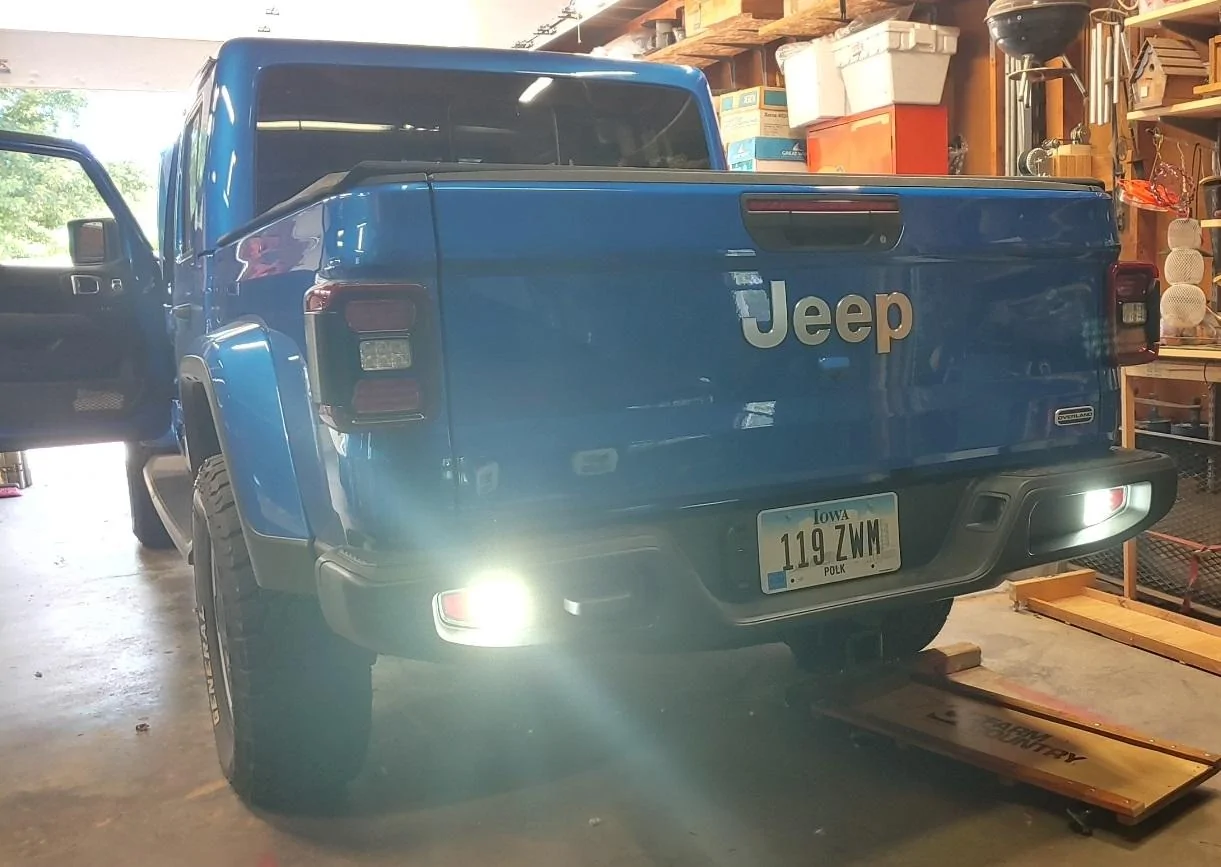
Do what I did............. My truck is not running, button not in ACC or RUN mode, it's sitting in park in this pic below ->

Jeep Gladiator Why can’t I…Understanding the bed light circuit 20220728_153407_HDR


I wired an AUX switch to run these lights if I want them on and the truck not running.
They STILL work when running and in reverse thanks to a diode.

Jeep Gladiator Why can’t I…Understanding the bed light circuit 20220728_152905


Jeep Gladiator Why can’t I…Understanding the bed light circuit 20220728_152812


Jeep Gladiator Why can’t I…Understanding the bed light circuit IMG_20220724_115758


Jeep Gladiator Why can’t I…Understanding the bed light circuit IMG_20220724_115748


If you have aux switches, it helps, but it can be done even without them with just a little bit more effort.
Doesn't hurt I'm an automotive electrician and held a maintenance electrician license for a while, but I think with the right parts, most people here could do it and not have serious issues.

Listen to HOOTBRO. The guy is smart, he's sharp, he's walked the walk and won't steer you wrong.
 

Sponsored

ShadowsPapa

Well-Known Member
First Name
Bill
Joined
Oct 12, 2019
Threads
247
Messages
40,504
Reaction score
54,031
Location
Runnells, Iowa
Vehicle(s)
'25 JTMX, '23 JLU 4xe, '82 SX4, '73 Javelin
Occupation
Retired auto mechanic, frmr gov't ntwrk security admin
Vehicle Showcase
3
I think all the interior lights are on F20 which is the central body controller and that fuse is rated 30A.

If the lights you are adding are really 10a total I would set up a relay and just control it with the bed lighting circuit. You could probably just grab 12v from the auxiliary power circuit on the 7 pin connector for the trailer (assuming you have it) to avoid running a new wire from the battery.

I used this harness to tap into the rear of the 7 pin to get brake and turns without cutting into the factory harness. It doesn't breakout the auxiliary power so you'd have to splice in a wire, but at least you wouldn't be cutting into the factory harness.
If he's got the bumper lights from Oracle and used their plug and play harness, he's got some of what he can use to make these come on both in reverse and manually, but would either need to use an AUX switch, or rig a switch of his own which frankly, could use another fuse without tripping anything.
 

WILDHOBO

Well-Known Member
First Name
Dan
Joined
Sep 24, 2021
Threads
73
Messages
11,726
Reaction score
17,862
Location
Colorado
Vehicle(s)
2021 Gladiator Rubicon
Occupation
Network Engineer
Vehicle Showcase
1
Agreed. I also use a switch and the reverse circuit, using a diode. It’s been like that for 15k miles and works absolutely flawlessly. I didn’t touch the bed lights.
 
OP
OP

Blindjustice1787

Well-Known Member
First Name
William
Joined
May 8, 2022
Threads
19
Messages
50
Reaction score
25
Location
Georgia
Vehicle(s)
2022 Gladiator Rubicon
Do what I did............. My truck is not running, button not in ACC or RUN mode, it's sitting in park in this pic below ->

20220728_153407_HDR.jpg


I wired an AUX switch to run these lights if I want them on and the truck not running.
They STILL work when running and in reverse thanks to a diode.

20220728_152905.jpg


20220728_152812.jpg


IMG_20220724_115758.jpg


IMG_20220724_115748.jpg


If you have aux switches, it helps, but it can be done even without them with just a little bit more effort.
Doesn't hurt I'm an automotive electrician and held a maintenance electrician license for a while, but I think with the right parts, most people here could do it and not have serious issues.

Listen to HOOTBRO. The guy is smart, he's sharp, he's walked the walk and won't steer you wrong.
Well, there is a lot I need to learn about-vehicle electrical systems! Any good book or reference information? I found Tony Candela’s Automotive Wiring and Electrical Systems online, and that seems like it would be a good starting point, but curious as to your thoughts? I would rather start elementary like o know nothing to ensure ego does not lead to missing vital information.

Do you have the busbar connected to the Aux switches? I ordered my Gladiator with the Aux switches and I want to hook up multiple lights to them, so that seems like a good idea rather than daisy chaining and splicing into wires mid-run. Car electrical is different, in the use of inline fuses (which I think, perhaps in error, are only necessary when coming off the battery directly) resisters, and diodes in the circuit. I am sure many people think they understand all of it, but again, I want to actually understand the difference between “it works” and “it works, but this is the best way.” Concepts are similar, but conceptual understanding vs. application only takes you so far.

So, I would love your opinions and to pick your brain!
 

ShadowsPapa

Well-Known Member
First Name
Bill
Joined
Oct 12, 2019
Threads
247
Messages
40,504
Reaction score
54,031
Location
Runnells, Iowa
Vehicle(s)
'25 JTMX, '23 JLU 4xe, '82 SX4, '73 Javelin
Occupation
Retired auto mechanic, frmr gov't ntwrk security admin
Vehicle Showcase
3
Well, there is a lot I need to learn about-vehicle electrical systems! Any good book or reference information? I found Tony Candela’s Automotive Wiring and Electrical Systems online, and that seems like it would be a good starting point, but curious as to your thoughts? I would rather start elementary like o know nothing to ensure ego does not lead to missing vital information.

Do you have the busbar connected to the Aux switches? I ordered my Gladiator with the Aux switches and I want to hook up multiple lights to them, so that seems like a good idea rather than daisy chaining and splicing into wires mid-run. Car electrical is different, in the use of inline fuses (which I think, perhaps in error, are only necessary when coming off the battery directly) resisters, and diodes in the circuit. I am sure many people think they understand all of it, but again, I want to actually understand the difference between “it works” and “it works, but this is the best way.” Concepts are similar, but conceptual understanding vs. application only takes you so far.

So, I would love your opinions and to pick your brain!
I myself am wired differently - my thinking and reasoning relies far more on perceptual reasoning than typical. Troubleshooting comes natural to me so it's often hard to explain. I found that if you know the basics, for example, engines - if you know how something works, why it works, then you can build on that. I've been asked "how did you learn to work on motorcycles". Uh, can't say, really, I just worked on them. They are just the same basics built in different ways. Same for the antique engines I have - some from 1912.......... The boss always gave me the unusual to work in knowing I'd figure it out. So I got the industrial equipment, boom trucks, tractors, trenchers, whatever.

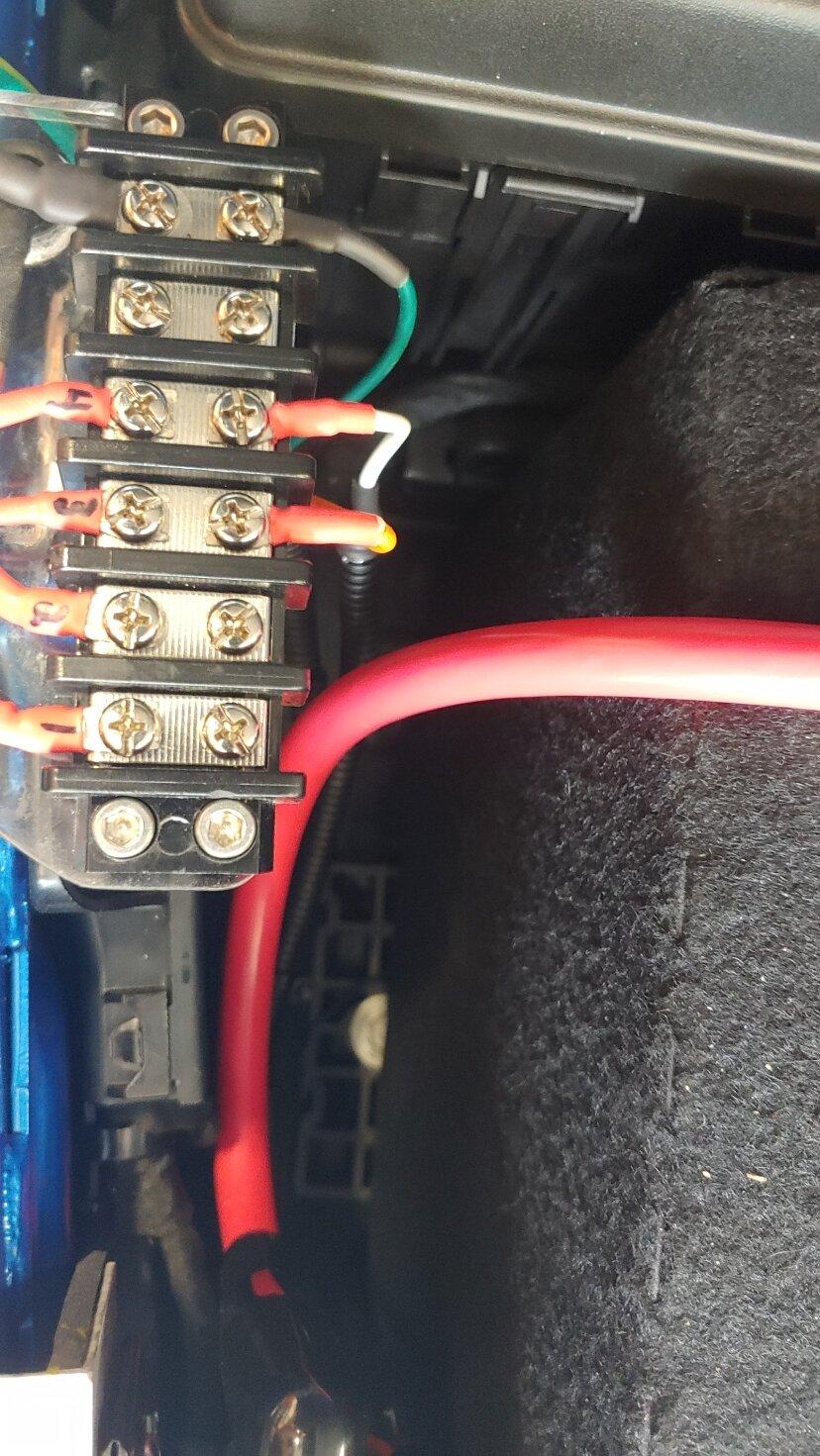
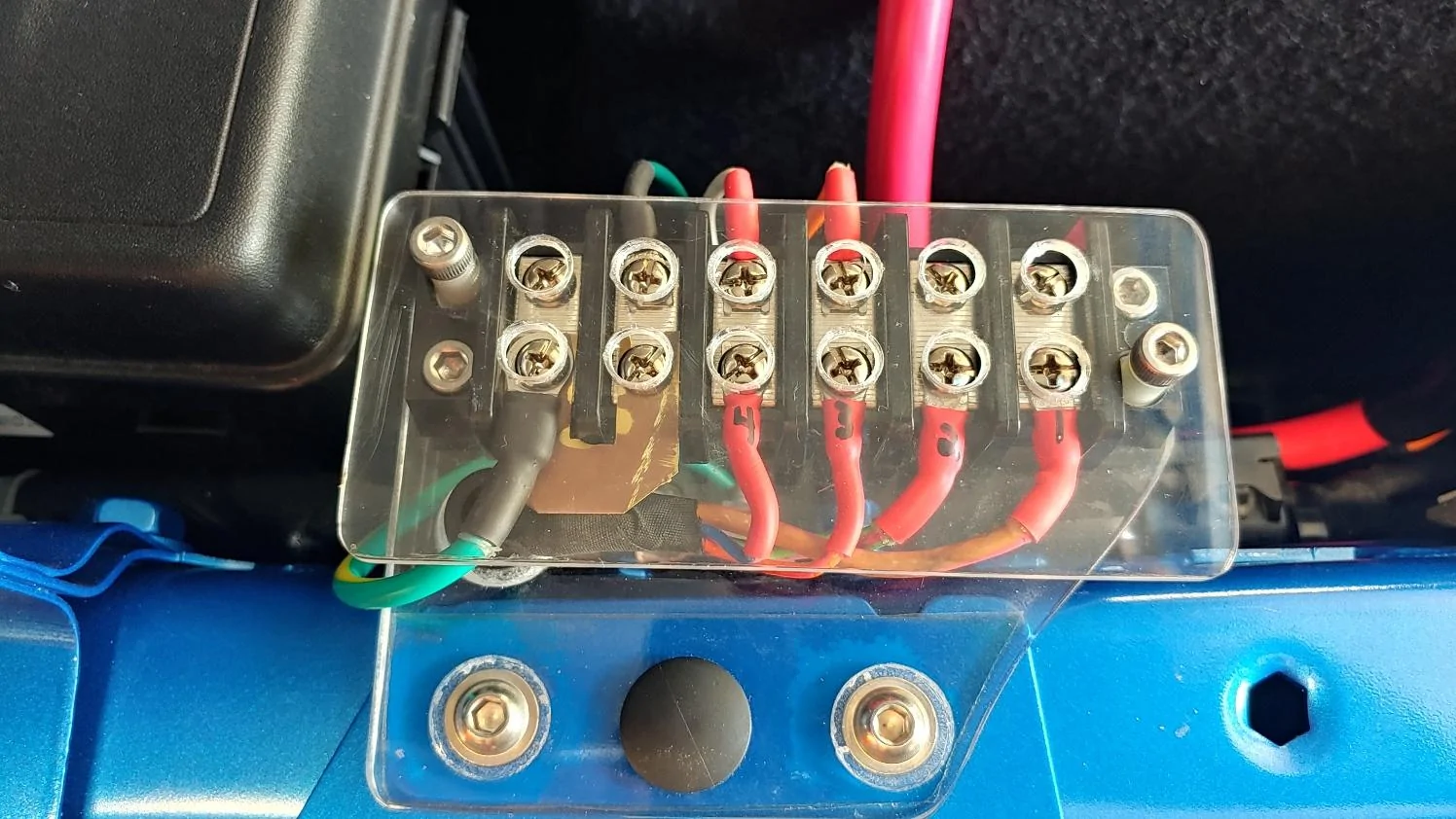
I would absolutely use a terminal block, or "bus bar" as some may refer to it.
I didn't want to pay $40 for one that I thought looked a bit showy and in your face and was much more large and blocky than needed. I wanted a clean look, so made my own.
It has a slot for each of the 4 aux switch wires, and two places for grounds. I ran the green wire (12 gauge, lower left in picture) to the ground terminal or stud on the fender below my block and used a brass jumper I made so I can use two of the terminals for grounds if needed.
#3 here goes to my winch cutoff solenoid (so I have no power to the front bumper if not using the winch) and #4 goes back to power the in-bumper LED oracle backup lights.
I put a polycarbonate cover on mine to keep me from getting clumsy and hitting wires or dropping something and shorting things out. I get that way with severe ADHD.......... so I have to protect things against me.
This is so convenient - really easy now to connect to the aux switches, change or move things around.......

Jeep Gladiator Why can’t I…Understanding the bed light circuit 20220730_140937_HDR


As far as books, wow, I'd not know where to start. I've been doing electric work since I was 14 - I started by rewiring a Prestolite windshield wiper motor so a car I wanted to buy would pass inspection. A couple of years later I was wiring alarm systems and an emergency lighting system for a hardware store I worked at part time. I was 16, this was in the 1970s.
So I started when cars were simple! And I kept going from there. Almost 100% self-taught but I did go to college for automotive, and have been to some factory classes like GM charging systems and so on. I currently restore electrical parts for classic cars.
I'm still learning on modern Jeeps (but aren't we all?!?!)
Once you know the basics, you can go from there, but the vehicle systems like the CAN and LIN networks in these really complicate things. Generally, treat those like an electric fence - don't touch them LOL.

These are even more tricky at times with two batteries - and how they are wired, and then of course Jeep changed which cable was which a few years ago (which is aux negative and which is ground cable to the crank battery)

Anyway, a bus bar or terminal block can make things LOGICAL and more easy for you - and if you mess up, you just move wires around with little cutting - and you can SEE your connections and label them.
I was an electrician for Principal Financial Group for a while - 110, 220, networking telephones and so on. The rule was - LABEL everything, keep it logical, keep it neat but not tight. You never knew when someone else has to come in on a big move and figure out what goes where in a big hurry and under pressure. The phone and network terminations were all neatly labeled (or your peers would kill you)

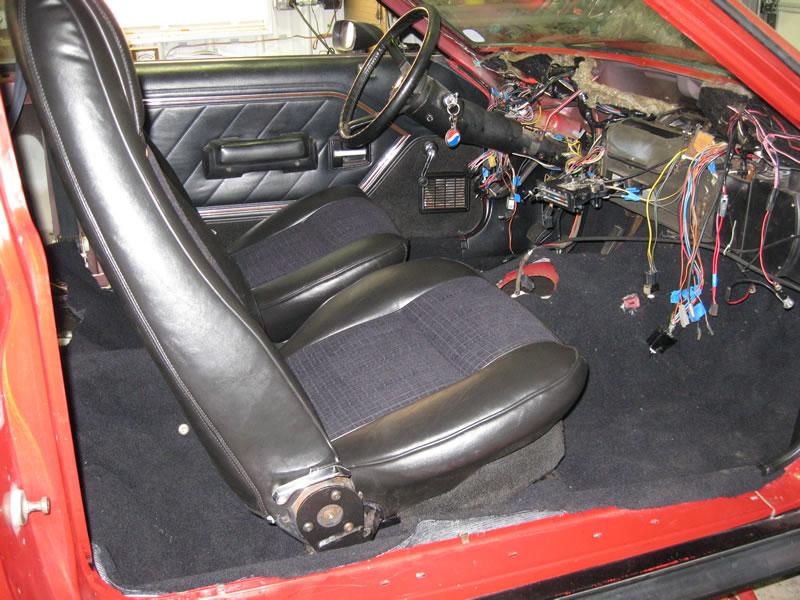
I figured out a way to make a stock AMC cruise control switch control the cruise control built into a Jeep PCM, rewired electric locks from 1982 to work with modern keyless remotes, and ran much of the circuits of this car through a Jeep PCM and PDC (power distribution center)

Jeep Gladiator Why can’t I…Understanding the bed light circuit sx4-100-dash
 
OP
OP

Blindjustice1787

Well-Known Member
First Name
William
Joined
May 8, 2022
Threads
19
Messages
50
Reaction score
25
Location
Georgia
Vehicle(s)
2022 Gladiator Rubicon
I myself am wired differently - my thinking and reasoning relies far more on perceptual reasoning than typical. Troubleshooting comes natural to me so it's often hard to explain. I found that if you know the basics, for example, engines - if you know how something works, why it works, then you can build on that. I've been asked "how did you learn to work on motorcycles". Uh, can't say, really, I just worked on them. They are just the same basics built in different ways. Same for the antique engines I have - some from 1912.......... The boss always gave me the unusual to work in knowing I'd figure it out. So I got the industrial equipment, boom trucks, tractors, trenchers, whatever.

I would absolutely use a terminal block, or "bus bar" as some may refer to it.
I didn't want to pay $40 for one that I thought looked a bit showy and in your face and was much more large and blocky than needed. I wanted a clean look, so made my own.
It has a slot for each of the 4 aux switch wires, and two places for grounds. I ran the green wire (12 gauge, lower left in picture) to the ground terminal or stud on the fender below my block and used a brass jumper I made so I can use two of the terminals for grounds if needed.
#3 here goes to my winch cutoff solenoid (so I have no power to the front bumper if not using the winch) and #4 goes back to power the in-bumper LED oracle backup lights.
I put a polycarbonate cover on mine to keep me from getting clumsy and hitting wires or dropping something and shorting things out. I get that way with severe ADHD.......... so I have to protect things against me.
This is so convenient - really easy now to connect to the aux switches, change or move things around.......

20220730_140937_HDR.jpg


As far as books, wow, I'd not know where to start. I've been doing electric work since I was 14 - I started by rewiring a Prestolite windshield wiper motor so a car I wanted to buy would pass inspection. A couple of years later I was wiring alarm systems and an emergency lighting system for a hardware store I worked at part time. I was 16, this was in the 1970s.
So I started when cars were simple! And I kept going from there. Almost 100% self-taught but I did go to college for automotive, and have been to some factory classes like GM charging systems and so on. I currently restore electrical parts for classic cars.
I'm still learning on modern Jeeps (but aren't we all?!?!)
Once you know the basics, you can go from there, but the vehicle systems like the CAN and LIN networks in these really complicate things. Generally, treat those like an electric fence - don't touch them LOL.

These are even more tricky at times with two batteries - and how they are wired, and then of course Jeep changed which cable was which a few years ago (which is aux negative and which is ground cable to the crank battery)

Anyway, a bus bar or terminal block can make things LOGICAL and more easy for you - and if you mess up, you just move wires around with little cutting - and you can SEE your connections and label them.
I was an electrician for Principal Financial Group for a while - 110, 220, networking telephones and so on. The rule was - LABEL everything, keep it logical, keep it neat but not tight. You never knew when someone else has to come in on a big move and figure out what goes where in a big hurry and under pressure. The phone and network terminations were all neatly labeled (or your peers would kill you)

I figured out a way to make a stock AMC cruise control switch control the cruise control built into a Jeep PCM, rewired electric locks from 1982 to work with modern keyless remotes, and ran much of the circuits of this car through a Jeep PCM and PDC (power distribution center)

sx4-100-dash.jpg
As a conceptual learner, I appreciate what you are saying about building on the basics and evolving. I am an analytical person, working in what many perceive as a very educated field, but I would not trust most of them to wire a basic house-hold circuit. For me, I try to "check myself" by ensuring the conclusion I have drawn is safe. Maybe not always the most practical for all parties, but as one mentor once told me "you don't know, what you don't know" so I always like to ensure there is not a ghost out there that will create issues later.

I had no background in electric work, aside from working with archaic circuit boards in a shop class in middle school, prior to teaching myself household electrical two years ago. I definitely "over built" my system, running separate 20A circuit for receptacles in rooms and separate 15A circuits for lighting, fans, etc.; but I had the ability to do so in a reliable, safe, manner. Cars obviously have their challenges, because they move, are exposed to elements, and in Jeeps, exposed to a lot of other "stuff."

I do not have a junction box to safely isolate connections within, so now, its learning what the best way to wire things together. For instances, installing the diode, which I imagine is coming from your reverse light power wire into the Oracle lights, is great, but then I think, did you have to run a diode on the line going to the Aux switch as well? I would imagine the best answer is you should, but I am not confident.

I asked about references, mainly because everyone online has an opinion. Solder connections, use heat shrink insulated connectors, t-tap connectors are good or they are the worst, etc. I am sure there are good arguments, just like in residential wiring, but what is the best (safest) and why is really what I am chasing!

I am definitely going to fabricate a terminal block as well, mainly because I too enjoy everything being there were I can easily check it/troubleshoot as needed. Do you happen to know/did you write-up building yours? Curious if you had to drill into anything to secure it. Any concerns about humidity with this setup? I live in a very humid climate, so I am always thinking about it with wiring.

Curious though, is your switch 3 just to engage/disengage the solenoid and the winches main power is connected directly to the battery?
 

Sponsored

ShadowsPapa

Well-Known Member
First Name
Bill
Joined
Oct 12, 2019
Threads
247
Messages
40,504
Reaction score
54,031
Location
Runnells, Iowa
Vehicle(s)
'25 JTMX, '23 JLU 4xe, '82 SX4, '73 Javelin
Occupation
Retired auto mechanic, frmr gov't ntwrk security admin
Vehicle Showcase
3
I asked about references, mainly because everyone online has an opinion. Solder connections, use heat shrink insulated connectors, t-tap connectors are good or they are the worst, etc. I am sure there are good arguments, just like in residential wiring, but what is the best (safest) and why is really what I am chasing!
Yeah, be VERY careful about the "facts" and "this is the right way" on the web and those YT experts and "influencers".
Some of that stuff just plain scares me.

Do you happen to know/did you write-up building yours? Curious if you had to drill into anything to secure it. Any concerns about humidity with this setup? I live in a very humid climate, so I am always thinking about it with wiring.

Curious though, is your switch 3 just to engage/disengage the solenoid and the winches main power is connected directly to the battery?
The power lead for the winch runs from crank battery positive to the side of the solenoid. When I get the winch installed again, then the other power cable will run from the other side of the solenoid down to the winch. The ground for the winch will home-run direct to the top of the IBS on top of the crank battery negative post.
This way if someone runs into my truck, I don't have full battery power at the bumper to start a nice little fire. There's only power TO the winch if I hit the aux switch to engage the solenoid.
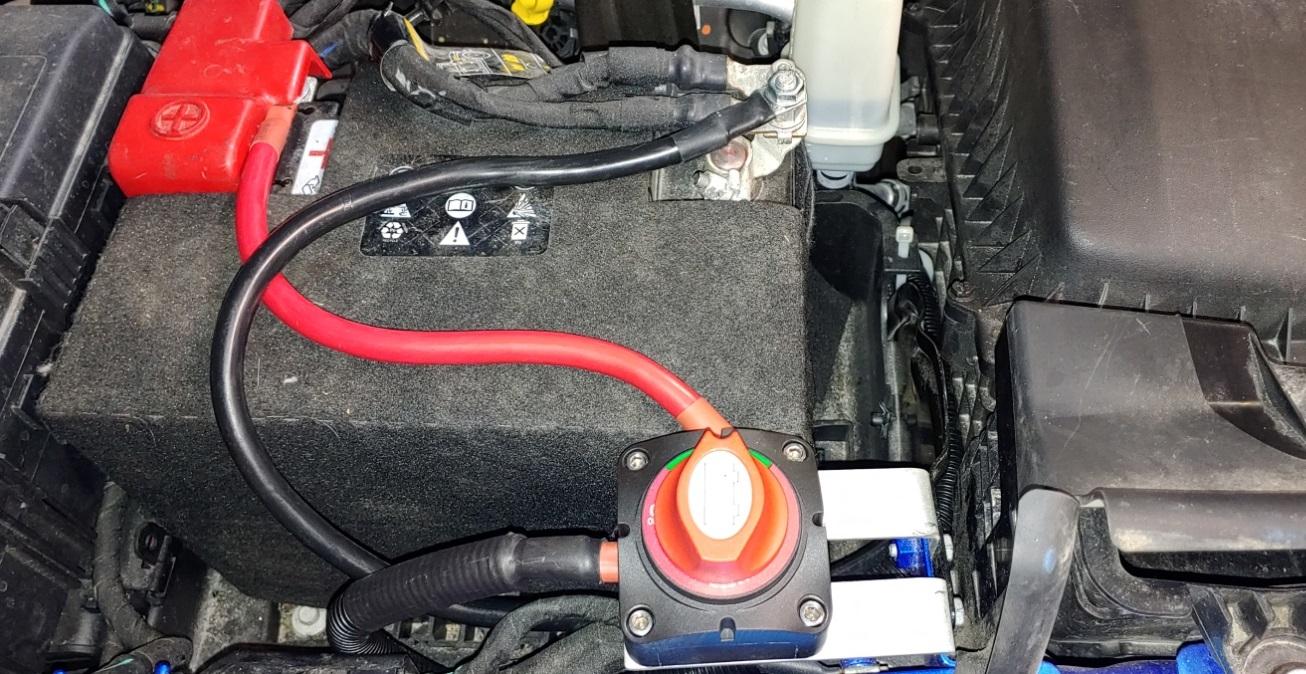
I did have a manual cutoff switch there so I had to open the hood and turn the switch to get power to the winch out front. Otherwise, there is NO power to any part of the winch.

Jeep Gladiator Why can’t I…Understanding the bed light circuit 20201017_135923_HDR

That is what I used to run - the solenoid takes the place of that manual switch. Last time I used the winch was last winter to pull a guy out of a snowy/icy ditch after one of our fabulous ice/snow events. My truck was parked on some ice and at the edge of the ditch so opening my hood and getting to the switch was fun. I thought - there's got to be a better way. With the solenoid, I'd hit the switch to give power to the winch, I'd use JSCAN to up the idle speed of the truck, then get out and use the winch's wireless remote to run things. (a truck driver hauling scrap iron stopped by to lend a hand - and said we could chain my truck to his truck if mine started sliding. But it was fine - he was a big help watching for traffic and keeping things safe)


I didn't do a detailed write-up, some is in the "what did you do TO your Gladiator today......." thread that is close to a bazillion pages.

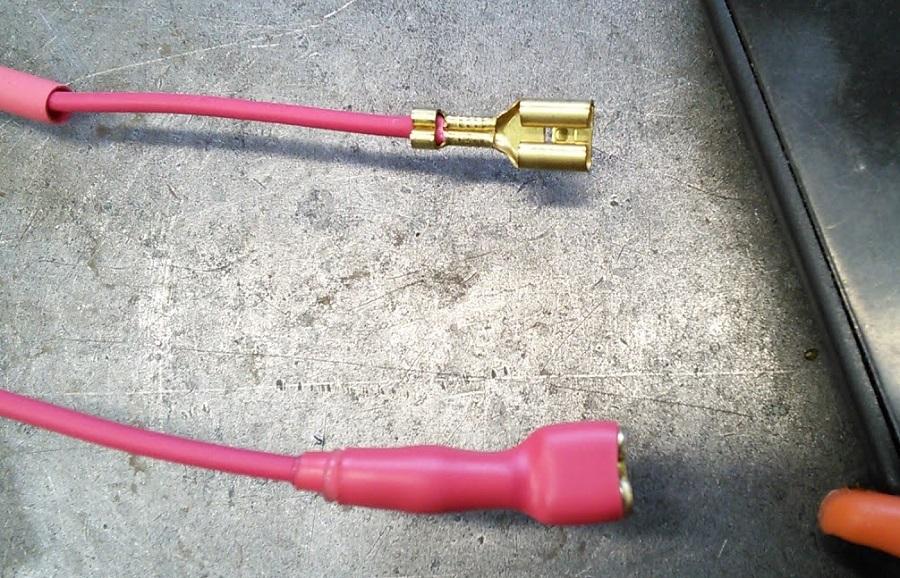
I use crimp-on connectors in most cases, sometimes I also solder. For things like this, I used the sort of heat shrink that has a "glue" in it that seals the tube against the wire and terminal as it shrinks. I also have various grease and anti-oxidation compounds I use on some terminals.

I used the bolt holes that existed in the truck. I prefer to do most things that way. It's one reason I didn't cringe too much when doing the engine swap in my SX4 - no real hacking, limited holes in the engine bay, the engine was a direct bolt-up.
I did have to recess the two screws holding the base to the truck because I have the Redline Tuning hood struts and the piece I used as a base raised the stock bolts high enough the original bolt heads touched the struts and that triggered my OCD, knowing the struts may rub and take the finish off. So I recessed the holes in the plastic base and used low profile screws.
The advantage was being able to use an original bolt to hold the solenoid bracket I made to the fender.

I like to do woodworking as a hobby and make templates and other stuff for my wife's quilting, and made a surround for her new sewing machine using a thick plastic so had scraps of that laying around and used that as a base for the black terminal block from Menards. I have band saw, scroll saw, drill press and other fun stuff in the upstairs of my shop building so I end up making a lot of jigs and such now and then (and I should be finishing the raised panel doors for the shelves I made 8 years ago for my wife's quilting fabric!)
And as a former mechanic - tools usually aren't a problem.

I do not have a junction box to safely isolate connections within, so now, its learning what the best way to wire things together. For instances, installing the diode, which I imagine is coming from your reverse light power wire into the Oracle lights, is great, but then I think, did you have to run a diode on the line going to the Aux switch as well? I would imagine the best answer is you should, but I am not confident.
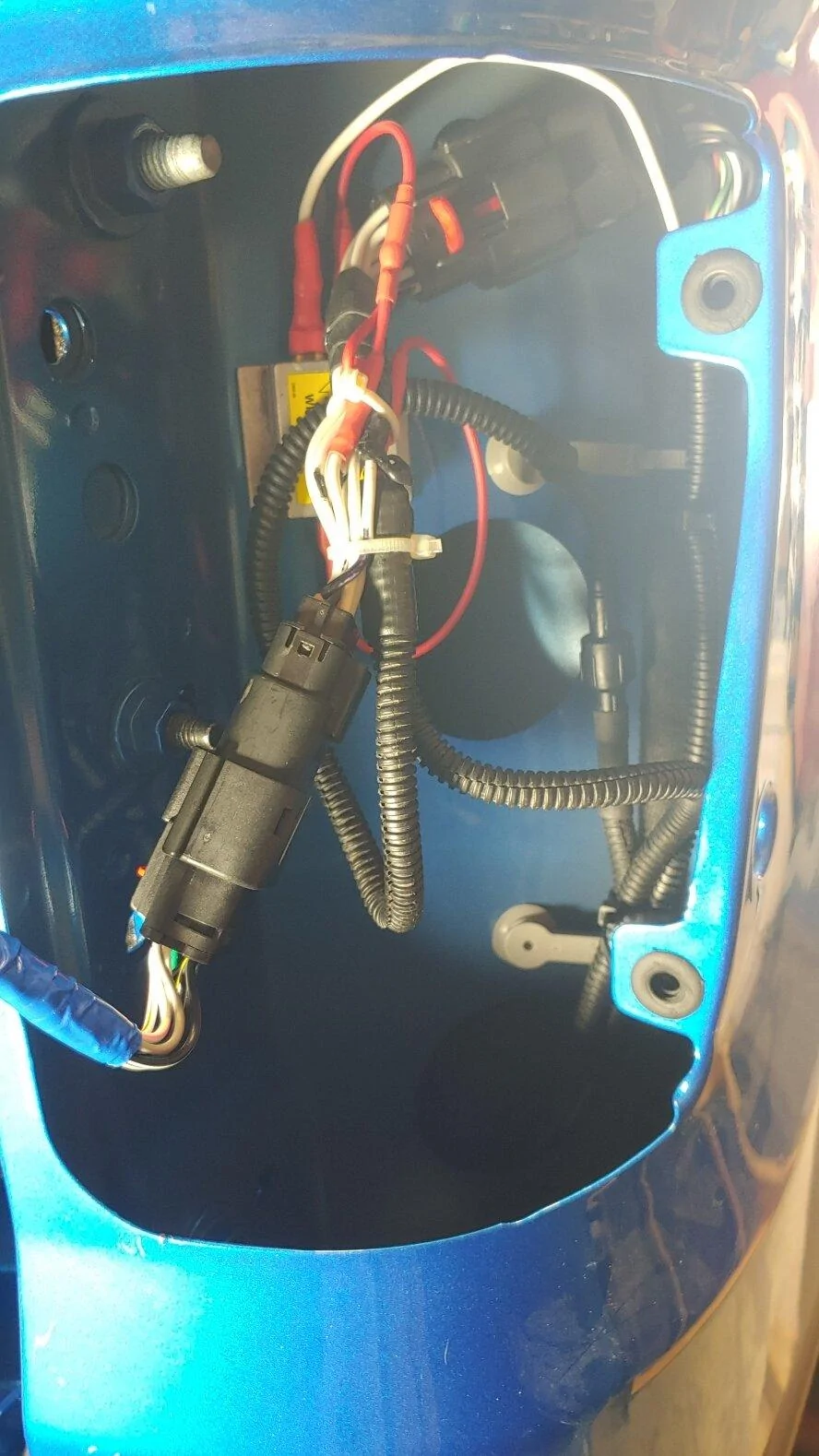
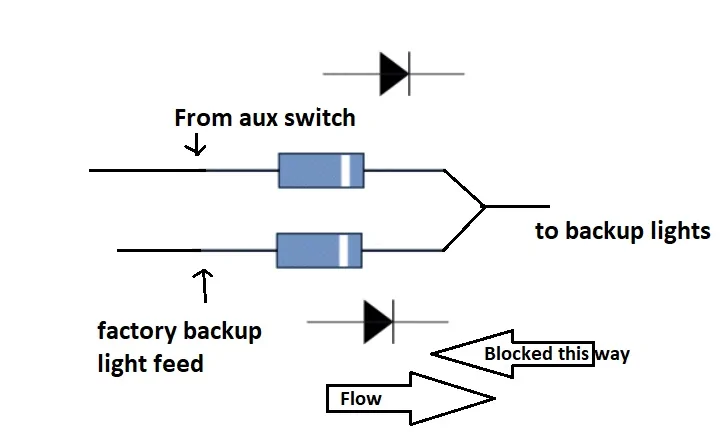
I was going to use diodes I have on hand, but opted for a "neater" commercial diode that did this same thing -

Jeep Gladiator Why can’t I…Understanding the bed light circuit diodes


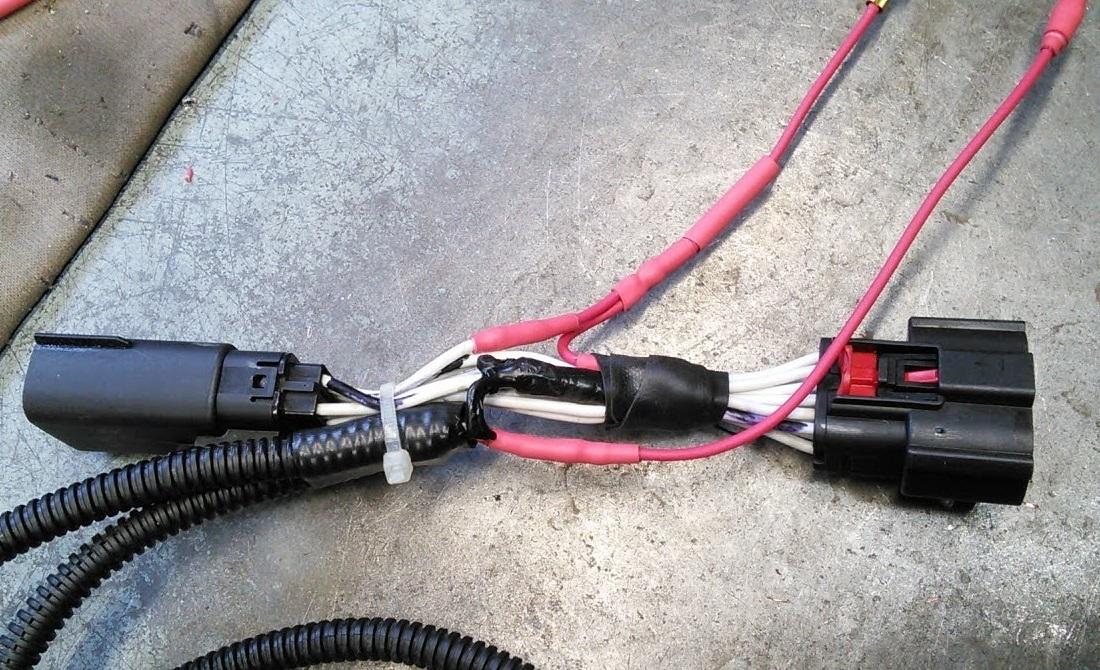
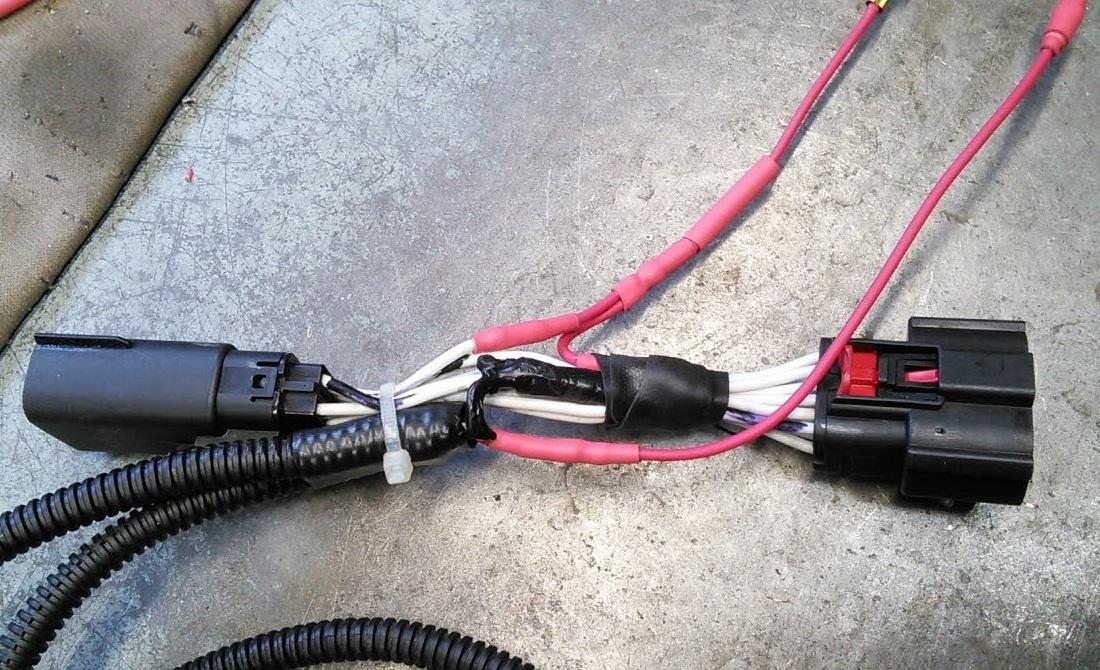
I used an Oracle plug and play harness for their lights with a couple of mods to connect to the diode.

Jeep Gladiator Why can’t I…Understanding the bed light circuit IMG_20220724_115758

Jeep Gladiator Why can’t I…Understanding the bed light circuit IMG_20220724_115748
 
OP
OP

Blindjustice1787

Well-Known Member
First Name
William
Joined
May 8, 2022
Threads
19
Messages
50
Reaction score
25
Location
Georgia
Vehicle(s)
2022 Gladiator Rubicon
Yeah, be VERY careful about the "facts" and "this is the right way" on the web and those YT experts and "influencers".
Some of that stuff just plain scares me.


I was going to use diodes I have on hand, but opted for a "neater" commercial diode that did this same thing -

diodes.jpg


I used an Oracle plug and play harness for their lights with a couple of mods to connect to the diode.

IMG_20220724_115758.jpg

IMG_20220724_115748.jpg
I have a hand drawn wiring diagram of exactly this setup! I would imagine you bought the Oracle Wiring Harness separate from the backup lights? I believe the harness that comes with the lights makes the lights have the black twist on plugs (at least that is what their website shows).

I am contemplating how I want to setup my electrical. I have been reading a lot about bed outlets, I did not order mine with one because I ultimately did not want to draw bed power from the same power inverter as the inside plug. It would be nice to have a separate inverter wired for this outlet all together. Unless I am crazy, I feel like you could wire a second inverter for the bed outlet to one of the 40A switches and have two plugs capable of pushing 400 watts. Its on my list of things to research, but I do not see a lot of value in trying to power a 12V plug to the bed.

For lights, I just need to figure out if I NEED 40A to power everything. I was thinking of running a terminal block to one of the Aux switches, and then running each light directly to the terminal block. I do not plan on getting ridiculous with lights, I am thinking four cube lights on the front, perhaps some on a rack in the future, and maybe a few extra rock lights here or there. I do not think that would require a 40A switch, but I also don't want to be squeezing everything onto a 15A.

Perhaps:
(1) 15A Aux Switch - Wheel well/underbody rock lights and reverse lights
(1) 15A Aux Switch - "Accessory" lighting for future rack build out.
(1) 40A Aux Switch - Any larger off-road cube or other lighting I decide is necessary in the future.
(1) 40A Aux Switch - Bedside Power Inverter and solenoid for winch power. - I figure I could put the solenoid anywhere, and maybe it would make more sense being on a switch with lights. You know, so when I am winching myself or someone else, people will have to try really hard to NOT see me.

So many thoughts, so many projects to think through!
 

ShadowsPapa

Well-Known Member
First Name
Bill
Joined
Oct 12, 2019
Threads
247
Messages
40,504
Reaction score
54,031
Location
Runnells, Iowa
Vehicle(s)
'25 JTMX, '23 JLU 4xe, '82 SX4, '73 Javelin
Occupation
Retired auto mechanic, frmr gov't ntwrk security admin
Vehicle Showcase
3
I have a hand drawn wiring diagram of exactly this setup! I would imagine you bought the Oracle Wiring Harness separate from the backup lights? I believe the harness that comes with the lights makes the lights have the black twist on plugs (at least that is what their website shows).

I am contemplating how I want to setup my electrical. I have been reading a lot about bed outlets, I did not order mine with one because I ultimately did not want to draw bed power from the same power inverter as the inside plug. It would be nice to have a separate inverter wired for this outlet all together. Unless I am crazy, I feel like you could wire a second inverter for the bed outlet to one of the 40A switches and have two plugs capable of pushing 400 watts. Its on my list of things to research, but I do not see a lot of value in trying to power a 12V plug to the bed.

For lights, I just need to figure out if I NEED 40A to power everything. I was thinking of running a terminal block to one of the Aux switches, and then running each light directly to the terminal block. I do not plan on getting ridiculous with lights, I am thinking four cube lights on the front, perhaps some on a rack in the future, and maybe a few extra rock lights here or there. I do not think that would require a 40A switch, but I also don't want to be squeezing everything onto a 15A.

Perhaps:
(1) 15A Aux Switch - Wheel well/underbody rock lights and reverse lights
(1) 15A Aux Switch - "Accessory" lighting for future rack build out.
(1) 40A Aux Switch - Any larger off-road cube or other lighting I decide is necessary in the future.
(1) 40A Aux Switch - Bedside Power Inverter and solenoid for winch power. - I figure I could put the solenoid anywhere, and maybe it would make more sense being on a switch with lights. You know, so when I am winching myself or someone else, people will have to try really hard to NOT see me.

So many thoughts, so many projects to think through!
15 amps will handle a winch cutoff solenoid. These are very much like the remote starter contacter/solenoid used by Ford for years and those draw under 5 amps, some say as low as 2.5, some say as high as 5 amps. I have several laying around and it would be pretty easy to measure the draw one of these days - but I have mine on a 15 amp aux. The wire supplied with the Warn winch solenoid can't be more than 18 gauge so that alone says - low amp draw. The neat thing about a solenoid is that it takes nothing to hold the core in place once it's drawn in.

I have the Oracle bumper mount backup lights and the Oracle plug and play inline harness to feed the lights through the truck's wiring. I hate hacking the factory wiring on a new vehicle, for that matter, I don't like tapping into the factory sealed wires in most cases. And when I do - it's got to be sealed up again. I've wired and re-wired so many vehicles over the years, some completely, some partially, and there's just no way after what I've seen. Once that seal is broken, stuff happens. I've seen oxidation on copper wire migrate several inches into the length of the wire - away from the compromised insulation or broken seal. I hate green copper unless it's patina on art or a building.

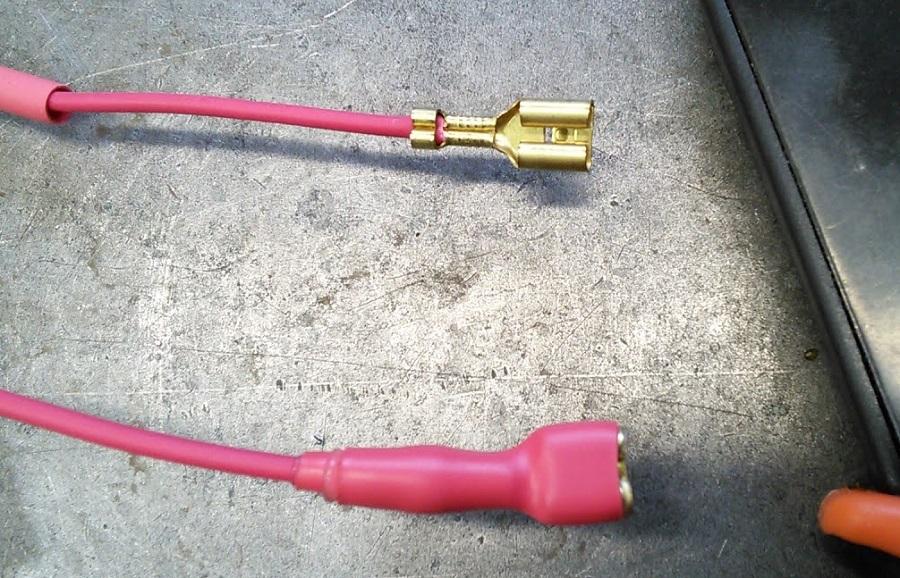
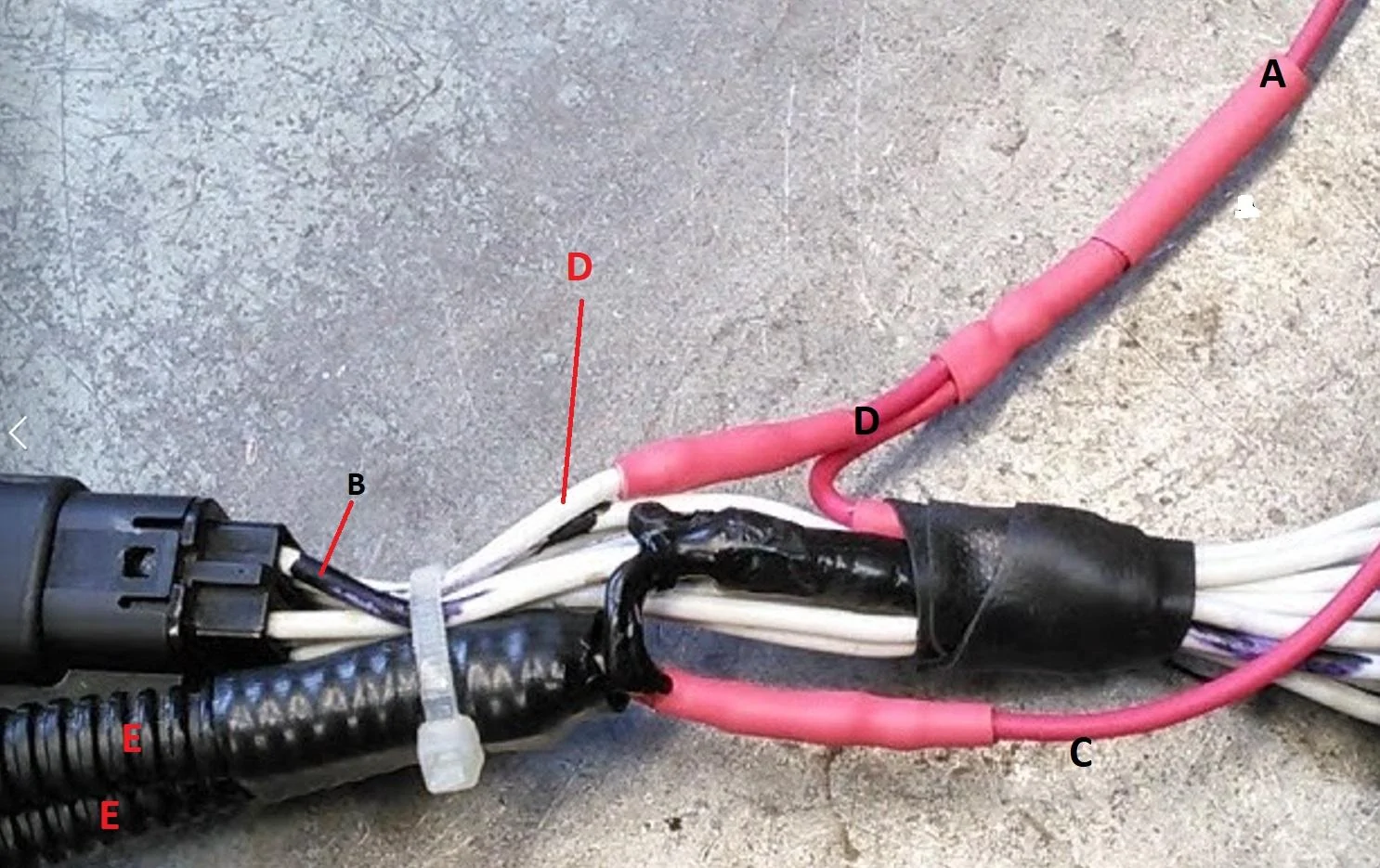
A goes to one of the diode "in" terminals. I used open barrel wire terminals and crimped onto this wire end and used sealing heat shrink.
B is the ground - the Oracle harness leads to the lights gets ground here. I didn't make any changes to that part.
C is the hot or + feed for the oracle lights - it goes to the out side of the diodes. That is connected to the red wires in the Oracle pigtails to the lights.
D is where I cut the Oracle plug and play harness to add a wire going to A. It seemed easier to me to be able to seal it doing it this way.
E is the two harness pigtails going to the lights

The aux switch feeds the other "in" diode. It's running from my terminal block #4 position, through the frame, back to the diode mounted in the tail light cavity.

Jeep Gladiator Why can’t I…Understanding the bed light circuit Backup-light-wiring
Sponsored


Top