
Sponsored

MPG improvement?

CoachA

Well-Known Member
First Name
Tom
Joined
Apr 17, 2022
Threads
5
Messages
179
Reaction score
356
Location
Damascus, MD
Vehicle(s)
2020 Jeep Gladiator Rubicon
Occupation
Teacher
For the first 20 months I owned my used when purchased 2020 JTR, I averaged about 19.8 mpg. The last 2 months, my gas mileage has improved to 20.6 mpg. I’m at 33,000 miles. Been driving the exact same daily routes all this time. I’ve made no alterations in driving technique, using the same gas, haven’t altered the build with respect to weight. The only mods I’ve made recently are installing an oil catch can and a Baxter cartridge to spin on oil filter adapter. I’m happy for the improvement but stumped as to the cause. Any thoughts?
Sponsored

 

Sandevino

Well-Known Member
First Name
Mike
Joined
Jun 14, 2022
Threads
21
Messages
946
Reaction score
1,828
Location
North Texas
Vehicle(s)
2023 Jeep Gladiator Rubicon
Hand calculated miles driven divided by gallons purchased or the MPG value on the dash?

This could be attributed to numerous factors but as vehicles age and systems break in your mileage may vary.
 
OP
OP
CoachA

CoachA

Well-Known Member
First Name
Tom
Joined
Apr 17, 2022
Threads
5
Messages
179
Reaction score
356
Location
Damascus, MD
Vehicle(s)
2020 Jeep Gladiator Rubicon
Occupation
Teacher
Hand calculated miles driven divided by gallons purchased or the MPG value on the dash?

This could be attributed to numerous factors but as vehicles age and systems break in your mileage may vary.
MPG value on the dash. Roger that on break in. Bought the JTR with 15,000 miles on the odometer and have logged about 18,000 of my own. Thanks for your thoughts.
 
OP
OP
CoachA

CoachA

Well-Known Member
First Name
Tom
Joined
Apr 17, 2022
Threads
5
Messages
179
Reaction score
356
Location
Damascus, MD
Vehicle(s)
2020 Jeep Gladiator Rubicon
Occupation
Teacher
Gas mileage can improve after an oil change. Summer blend gas is better than winter blend gas.
Sun flares and solar winds have been high too.
I am ignorant of the difference between summer and winter blends. Never would have thought of that factor. Thanks.
 

Sponsored

Blade1668

Well-Known Member
First Name
Darrell
Joined
Jan 7, 2020
Threads
12
Messages
3,263
Reaction score
3,149
Location
N. AL.
Vehicle(s)
90XJ, 91XJ, 91MJ, 05 LJ, 20 JT
Build Thread
Link
Vehicle Showcase
1
The computer has possibly adjusted to your driving style and for transmission shifts too. I've seen a change with mine not up shifting as fast and not to 8th. As I've been towing trailer a lot of miles on this oil change my MPG's have dropped substantially. Maybe Bill will chime in on this.
But I think the computer controls tune for driving conditions, fuel and oil life monitoring, it's even reduced the miles to oil change on mine from the close to 10 k down to 6-7k.
 

ShadowsPapa

Well-Known Member
First Name
Bill
Joined
Oct 12, 2019
Threads
247
Messages
40,445
Reaction score
53,880
Location
Runnells, Iowa
Vehicle(s)
'25 JTMX, '23 JLU 4xe, '82 SX4, '73 Javelin
Occupation
Retired auto mechanic, frmr gov't ntwrk security admin
Vehicle Showcase
3
I normally see improvements up through about 10,000 miles but not really after that. Things are pretty well worn in and loosened up.

As far as hand calculated vs. the cluster reading - the cluster is accurate over time.
If you take and add up the mpg the cluster states after each fill, then average by dividing by the number of fills, and do the same with a phone app, you'll likely find like I did - over 4 or 5 fills, the cluster closely matches the app figures. That's because you can't possibly get EXACTLY the same fill level every time. You will be off a small amount no matter how hard you try. The place you park the truck when filling, the temperature of the gas in the tank, the air temperature, all vary the exact amount going into the tank. So the only real test is over time - over multiple fills.
My 2020 came out almost exact over a year's worth of fills tracked. I've not bothered on my 2022, I just pay attention to trends and use observation. it's a truck, it's a jeep....... take that for what it's worth.

As said these do seem to adjust certain things based on driving.
My 2020 had some bad transmission shifting habits for the first few months, then a flash forced the transmission to relearn and I could tell it was changing over time.
Oil changes - even using the exact same oil each change, you'll get better mpg during the first miles the oil is in there compared to the last bit the oil is in there.

Yes, winter blend fuel doesn't garner quite the mpg that summer blend does. When the blends change depends on where you live and so on. Traffic patterns, more or less traffic can change the timing of stop lights.... (nitpicky, but it's why it can be hard to compare)
Air temperature matters - our electric company tracks "average temperatures" of each month and allows a comparison of this July to last July and so on. Humidity, temperatures, wind speeds, it all matters.
In this case we're only talking a fraction of a gallon per mile difference - it looks like more because it's a 19.x compared to a 20.x but it's still less than 1 mpg (0.8 difference)
That's big, but it's not so large it can't be explained with a combination of factors.
 

Blade1668

Well-Known Member
First Name
Darrell
Joined
Jan 7, 2020
Threads
12
Messages
3,263
Reaction score
3,149
Location
N. AL.
Vehicle(s)
90XJ, 91XJ, 91MJ, 05 LJ, 20 JT
Build Thread
Link
Vehicle Showcase
1
I normally see improvements up through about 10,000 miles but not really after that. Things are pretty well worn in and loosened up.

As far as hand calculated vs. the cluster reading - the cluster is accurate over time.
If you take and add up the mpg the cluster states after each fill, then average by dividing by the number of fills, and do the same with a phone app, you'll likely find like I did - over 4 or 5 fills, the cluster closely matches the app figures. That's because you can't possibly get EXACTLY the same fill level every time. You will be off a small amount no matter how hard you try. The place you park the truck when filling, the temperature of the gas in the tank, the air temperature, all vary the exact amount going into the tank. So the only real test is over time - over multiple fills.
My 2020 came out almost exact over a year's worth of fills tracked. I've not bothered on my 2022, I just pay attention to trends and use observation. it's a truck, it's a jeep....... take that for what it's worth.

As said these do seem to adjust certain things based on driving.
My 2020 had some bad transmission shifting habits for the first few months, then a flash forced the transmission to relearn and I could tell it was changing over time.
Oil changes - even using the exact same oil each change, you'll get better mpg during the first miles the oil is in there compared to the last bit the oil is in there.

Yes, winter blend fuel doesn't garner quite the mpg that summer blend does. When the blends change depends on where you live and so on. Traffic patterns, more or less traffic can change the timing of stop lights.... (nitpicky, but it's why it can be hard to compare)
Air temperature matters - our electric company tracks "average temperatures" of each month and allows a comparison of this July to last July and so on. Humidity, temperatures, wind speeds, it all matters.
In this case we're only talking a fraction of a gallon per mile difference - it looks like more because it's a 19.x compared to a 20.x but it's still less than 1 mpg (0.8 difference)
That's big, but it's not so large it can't be explained with a combination of factors.
Thanks, Bill I figured you would clarify this with a more articulated explanation. :like:

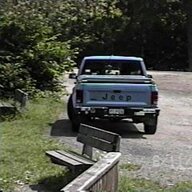
FYI: I'm one of those guys that has kept a record of all my gas purchases and miles/ mileage. Starting with the vehicle. I've got the "log of my Comanche even.
 
OP
OP
CoachA

CoachA

Well-Known Member
First Name
Tom
Joined
Apr 17, 2022
Threads
5
Messages
179
Reaction score
356
Location
Damascus, MD
Vehicle(s)
2020 Jeep Gladiator Rubicon
Occupation
Teacher
I normally see improvements up through about 10,000 miles but not really after that. Things are pretty well worn in and loosened up.

As far as hand calculated vs. the cluster reading - the cluster is accurate over time.
If you take and add up the mpg the cluster states after each fill, then average by dividing by the number of fills, and do the same with a phone app, you'll likely find like I did - over 4 or 5 fills, the cluster closely matches the app figures. That's because you can't possibly get EXACTLY the same fill level every time. You will be off a small amount no matter how hard you try. The place you park the truck when filling, the temperature of the gas in the tank, the air temperature, all vary the exact amount going into the tank. So the only real test is over time - over multiple fills.
My 2020 came out almost exact over a year's worth of fills tracked. I've not bothered on my 2022, I just pay attention to trends and use observation. it's a truck, it's a jeep....... take that for what it's worth.

As said these do seem to adjust certain things based on driving.
My 2020 had some bad transmission shifting habits for the first few months, then a flash forced the transmission to relearn and I could tell it was changing over time.
Oil changes - even using the exact same oil each change, you'll get better mpg during the first miles the oil is in there compared to the last bit the oil is in there.

Yes, winter blend fuel doesn't garner quite the mpg that summer blend does. When the blends change depends on where you live and so on. Traffic patterns, more or less traffic can change the timing of stop lights.... (nitpicky, but it's why it can be hard to compare)
Air temperature matters - our electric company tracks "average temperatures" of each month and allows a comparison of this July to last July and so on. Humidity, temperatures, wind speeds, it all matters.
In this case we're only talking a fraction of a gallon per mile difference - it looks like more because it's a 19.x compared to a 20.x but it's still less than 1 mpg (0.8 difference)
That's big, but it's not so large it can't be explained with a combination of factors.
Thanks for the insights. Very interesting.
 

Dickster

Well-Known Member
Joined
Jul 9, 2023
Threads
7
Messages
725
Reaction score
1,391
Location
Hillsboro, OR
Vehicle(s)
2021 gladiator rubicon, 2022 Ram 3500 6.7L
Occupation
Sheet metal
Driving habits influence Mpg more then most want to realize. Maybe you are used to driving it and drive it a touch better than when you first got it.
 

Sponsored

Volt0

Well-Known Member
First Name
Tim
Joined
Apr 27, 2022
Threads
31
Messages
762
Reaction score
990
Location
MidMo
Vehicle(s)
JTM,JTHA
Above 50, assuming hwy driving, the biggest factor is going to be wind, followed by rolling resistance. Air is thinner in the summer, you could be enjoying fewer windy days, possibly less humidity as well ( not where I live ). At 30k, if you’re driving AT tires or MT tires, you’re past the half way point on tire wear, and possibly getting less rolling resistance. Also check tire psi.

less drive throughs, less idling, less stop-and-go, less picking up or dropping off kids?
 

ShadowsPapa

Well-Known Member
First Name
Bill
Joined
Oct 12, 2019
Threads
247
Messages
40,445
Reaction score
53,880
Location
Runnells, Iowa
Vehicle(s)
'25 JTMX, '23 JLU 4xe, '82 SX4, '73 Javelin
Occupation
Retired auto mechanic, frmr gov't ntwrk security admin
Vehicle Showcase
3
LOL - yeah, the driver and driving habits influence MPG a Lot.
And that explains why every time I get a new vehicle it's great MPG at first, and it goes down hill more each passing year.
The new wears off, I baby it less and today I hit 6,000 RPM on an entrance ramp to get ready to merge into freeway traffic. Just shy of redline, and man did that thing sound sweet. .
My 4.0/242 or 360 would be laying in pieces.
 
OP
OP
CoachA

CoachA

Well-Known Member
First Name
Tom
Joined
Apr 17, 2022
Threads
5
Messages
179
Reaction score
356
Location
Damascus, MD
Vehicle(s)
2020 Jeep Gladiator Rubicon
Occupation
Teacher
Above 50, assuming hwy driving, the biggest factor is going to be wind, followed by rolling resistance. Air is thinner in the summer, you could be enjoying fewer windy days, possibly less humidity as well ( not where I live ). At 30k, if you’re driving AT tires or MT tires, you’re past the half way point on tire wear, and possibly getting less rolling resistance. Also check tire psi.

less drive throughs, less idling, less stop-and-go, less picking up or dropping off kids?
No drive throughs as I’m a vegan who grows most of my own food. Stop and go is pretty consistent as I don’t travel other than to work and to get groceries and dog supplies. No kids. But, all the ideas offered in this thread are thought provoking and enlightening. I’ll keep my fingers crossed that the trend holds. But, once the original Falken MT 33” tires wear out, I”m installing a Clayton 2.5” lift and going with 37” tires. Maybe a 4.88 regear as well. I’d better enjoy 20 mpg while I can still get it.
 

tcramer11

Active Member
First Name
todd
Joined
Oct 7, 2020
Threads
5
Messages
29
Reaction score
8
Location
Carbondale
Vehicle(s)
BMW X5, Cayenne
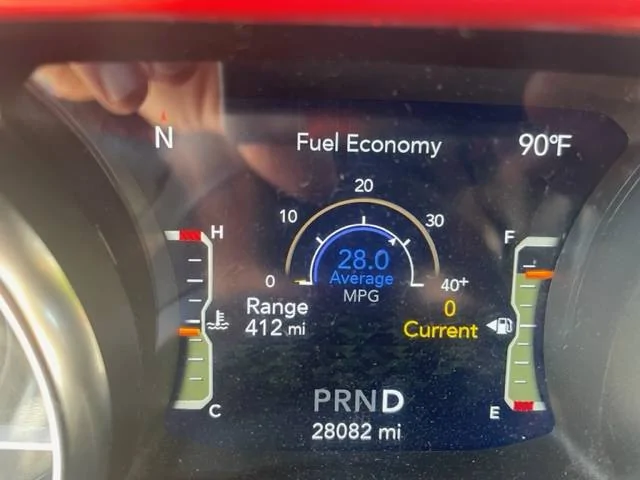
I have the ecodiesel and saw mileage go way up to top at 28MPG average. I had the bestop sun bra on with no doors or hardtop. Seemed about 4 mpg better than hard top on. Kind of floored me and lasted for the time I had on. When I swapped to hard top the mileage was not as good. Interesting

Jeep Gladiator MPG improvement? IMG_0645
 
OP
OP
CoachA

CoachA

Well-Known Member
First Name
Tom
Joined
Apr 17, 2022
Threads
5
Messages
179
Reaction score
356
Location
Damascus, MD
Vehicle(s)
2020 Jeep Gladiator Rubicon
Occupation
Teacher
I have the ecodiesel and saw mileage go way up to top at 28MPG average. I had the bestop sun bra on with no doors or hardtop. Seemed about 4 mpg better than hard top on. Kind of floored me and lasted for the time I had on. When I swapped to hard top the mileage was not as good. Interesting

IMG_0645.jpg
Interesting. I use the Bestop Sunrider from about April through October and reinstall the freedom panels for cold weather. I’d be surprised if the Bestop improved gas mileage, especially when it’s retracted into the open position.
Sponsored


Top