
Sponsored

Are the batteries really isolated during ESS stops?

ShadowsPapa

Well-Known Member
First Name
Bill
Joined
Oct 12, 2019
Threads
247
Messages
40,463
Reaction score
53,908
Location
Runnells, Iowa
Vehicle(s)
'25 JTMX, '23 JLU 4xe, '82 SX4, '73 Javelin
Occupation
Retired auto mechanic, frmr gov't ntwrk security admin
Vehicle Showcase
3
It's not really that hard to diagnose. It's just two batteries. They can be charged and tested like any other. Some of this can be done at home.

The IBS gives quite a bit of info if you know where to look and how to read it. (and properly reset it when things get out of whack)

Most people who get rid of the aux battery also disable ESS, so there's no way to get any real data, other than engineers before Jeep got involved figured out how to make modules last longer with ESS shutting down and restarting things multiple times a day.

The info is out there, but few choose to believe, most choose to hate what isn't fully understood, or they just don't want to believe because it's more work than people want to put into learning.

It's not that difficult a system. People ignore warning signs of battery issues. Gee, this isn't working right, but hey, it starts and runs, so the battery must be ok, right? LOL - very wrong.

I've seen it here over and over "mine starts fine so that's proof the battery is ok". Wow.
Sponsored

 

LowOnCash

Well-Known Member
First Name
Mike
Joined
Jun 21, 2019
Threads
11
Messages
71
Reaction score
57
Location
Blairsville Ga
Vehicle(s)
Gladiator
Biggest crock in this whole thread, or any other thread talking about this system.
You have no understanding of the electronic principals involved or the reasoning behind it - that's apparent.


Really? What patch? There's nothing needed to avoid warnings.
That's funny - you haven't followed this at all.


Hilarious - more proof you are way out of tune with this whole system. Go do some homework. 8 to 10% isn't a teaspoon.


And what about all of those owners who have a primary battery fail when the auxiliary battery is just fine? Or that have a aux battery fail, and the main battery doesn't fail or "deplete".

This whole thread has been to explain the uneducated on auto-electric systems, or electronics, on the whole purpose or reason for that second battery, why it's there, and what it does NOT do during a restart. The only time the aux battery is involved in starting is during a cold big-button start. Otherwise the smaller battery is disconnected from the starter, and doesn't participate in restarting the Jeep.
This system has been used by other companies - including BMW, Ford, GM/Chevrolet and so on. It's not an invention of Jeep and Jeep wasn't even the first to use it.


From another Jeep forum - a fairly well-known guy out there:

It exists to help protect your Jeep's computer from the surge it gets from starting your engine. Removing it WILL cause damage to the computer over time. This isn't my opinion, this is straight from the engineers at Jeep.

May as well stick with your lithium systems, you have no understanding of this system even after years of us explaining it over and over.
Nice try - "Study up" before your start correcting others factual posts. You don't have a clue regarding the principles of this "Simple" Stop & Start battery system.

Regards Mike
 

Andy29847

Well-Known Member
First Name
Andy
Joined
Oct 25, 2020
Threads
14
Messages
558
Reaction score
938
Location
South Carolina
Vehicle(s)
2020 Wrangler Rubicon, 2020 Gladiator Rubicon
Occupation
Retired
It's not really that hard to diagnose. It's just two batteries. They can be charged and tested like any other. Some of this can be done at home.

The hardest part about diagnosing battery problems at home is that the batteries still test good (using normal methods and standards), but they are not good enough for the stop/start to function. My main determination for the "hard to diagnose" statement is that my battery problems took multiple visits to the dealer resolve. Even then, the dealer notes never said they finally replaced both batteries. I guess they were ashamed.

I used my Jeep with the new batteries from 5/23 until 10/25. Last week, I started getting the Avenger light warning. I was surprised at the light. I have had the stop/start disabled with a Smart Stop/Start device for at least 2 years. I thought the batteries would last longer. I pulled the batteries out, charged them, let them sit overnight, and then tested them. The big battery measured 12.8v. The small one measured 12.7v. The battery test did not answer any of my questions. Rather than going through the dealer circle jerk again, I switched over to one battery (a new Walmart H7). Now I have peace of mind at last. :)

Jeep Gladiator Are the batteries really isolated during ESS stops? i-RsHLt8Z
 
Last edited:

ShadowsPapa

Well-Known Member
First Name
Bill
Joined
Oct 12, 2019
Threads
247
Messages
40,463
Reaction score
53,908
Location
Runnells, Iowa
Vehicle(s)
'25 JTMX, '23 JLU 4xe, '82 SX4, '73 Javelin
Occupation
Retired auto mechanic, frmr gov't ntwrk security admin
Vehicle Showcase
3
Nice try - "Study up" before your start correcting others factual posts. You don't have a clue regarding the principles of this "Simple" Stop & Start battery system.

Regards Mike
When you post a factual post about these ESS systems and the functionality of the dual battery system, then there will be nothing to correct. But so far, you've missed the target completely.
 

ShadowsPapa

Well-Known Member
First Name
Bill
Joined
Oct 12, 2019
Threads
247
Messages
40,463
Reaction score
53,908
Location
Runnells, Iowa
Vehicle(s)
'25 JTMX, '23 JLU 4xe, '82 SX4, '73 Javelin
Occupation
Retired auto mechanic, frmr gov't ntwrk security admin
Vehicle Showcase
3
I have had the stop/start disabled with a Smart Stop/Start device for at least 2 years. I thought the batteries would last longer.
There seems to be little to no connection between battery life and the ESS - as evidenced by forum members who disabled it almost from day 1, over to all of the battery failures talked about in the 4xe forums where there is no ESS and the 12 volt battery only ever runs electronics/modules/lighting, nothing else, not even a starter.

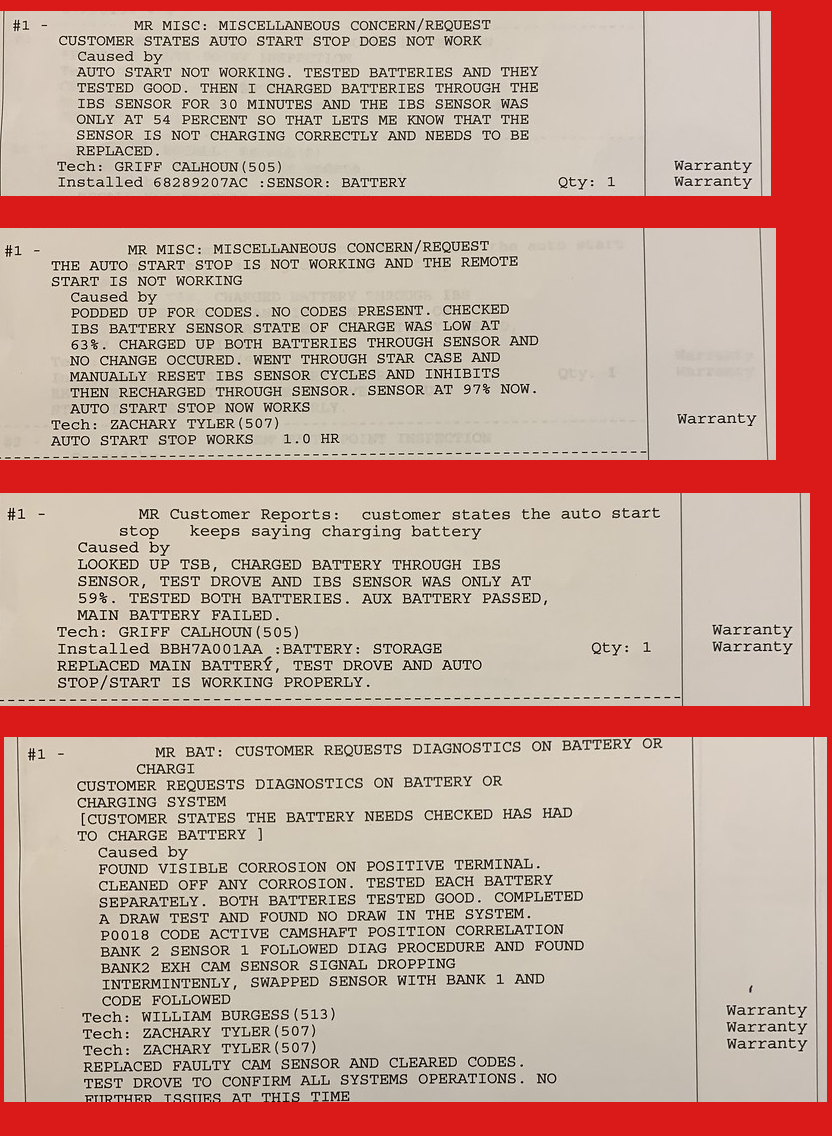
Looks like you also had a dealership that doesn't read their documentation related to the IBS and the system as a whole -
Jeep Gladiator Are the batteries really isolated during ESS stops? 1761073049850-66


I've run into that sort before - the one that told me my winch was draining the batteries and causing the issues. Their fix was to move the winch ground cable. I had a good laugh as all they did was move it to the fender ground where it still passed through the same IBS, but now went through a little bit more, and smaller cable to get there. Schematically, the same. (and they ignored the big red switch for the winch that said OFF)
I took it home, charged the batteries independently, reset the IBS and it was fine from there on.
I could have saved myself the trip and frustration - but it did show me, never have that shop work on anything electrical.
 

Sponsored

jebiruph

Well-Known Member
First Name
Jerry
Joined
Dec 9, 2018
Threads
15
Messages
806
Reaction score
730
Location
IA
Vehicle(s)
2018 Wrangler JL 2024 Grand Cherokee L WL 2020 Gladiator JT
@jebiruph

Imagine you're talking to a guy who clearly doesn't understand some basic principle. The Dunning-Kruger is strong in this one and he mistakenly believes himself to be the most knowledgeable person in the room.

You review the setup and proceed in small steps, each justified by a fundamental principle, hoping to figure out what it is he doesn't grasp. But the guy won't engage at that level. He just insists you're wrong.

What would you do in this (purely hypothetical) situation?
You have the roles reversed, this is the approach I was taking with you. Clearly the starter load was impacting the aux battery voltage reading, which you finally admitted after I simplified it by drawing a picture.

To my statement "The powered electronics act as an additional voltage source that can account for the voltage difference on the restart"
you replied
Also, this might be the dumbest statement I've read on this forum.
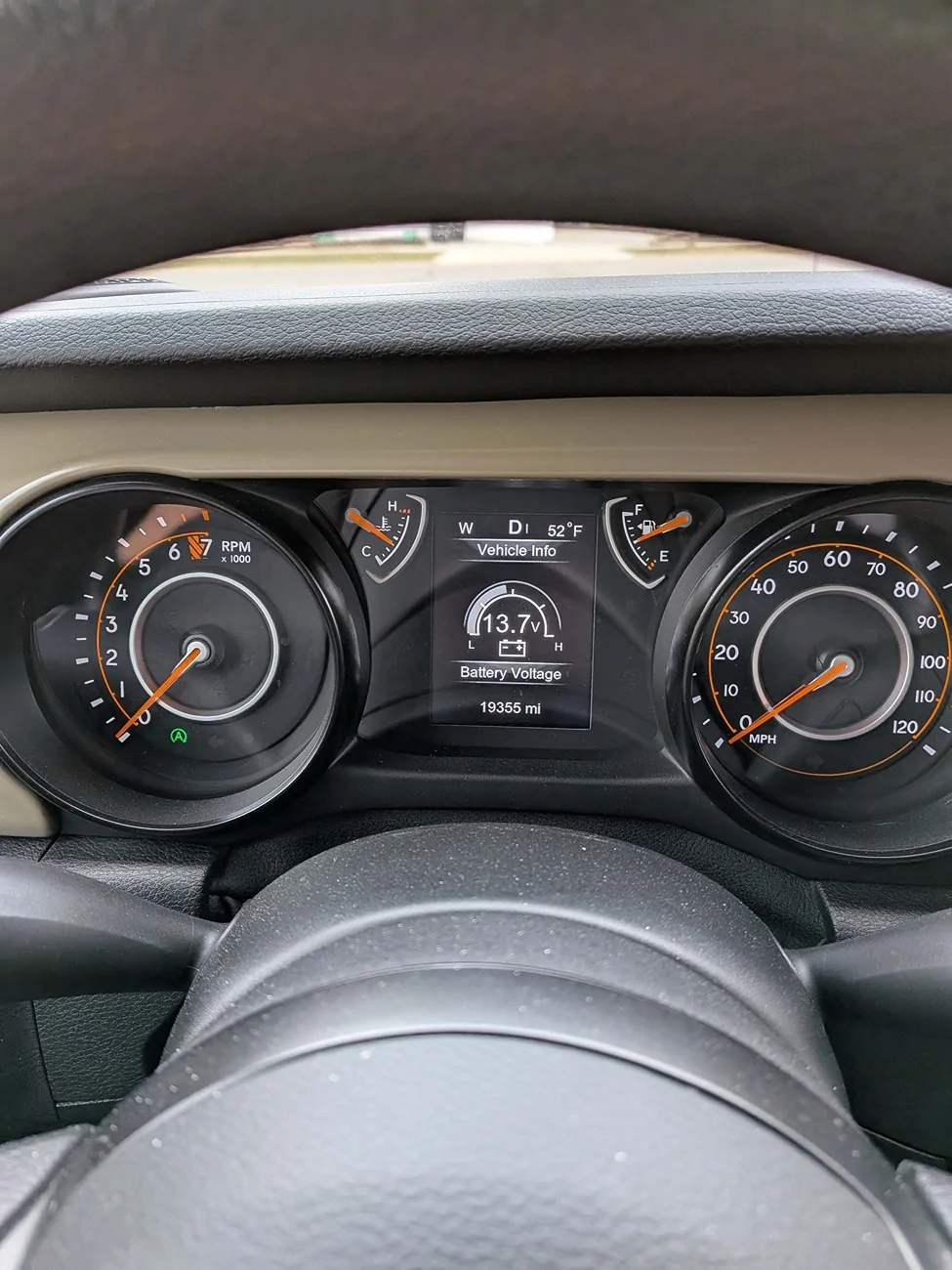
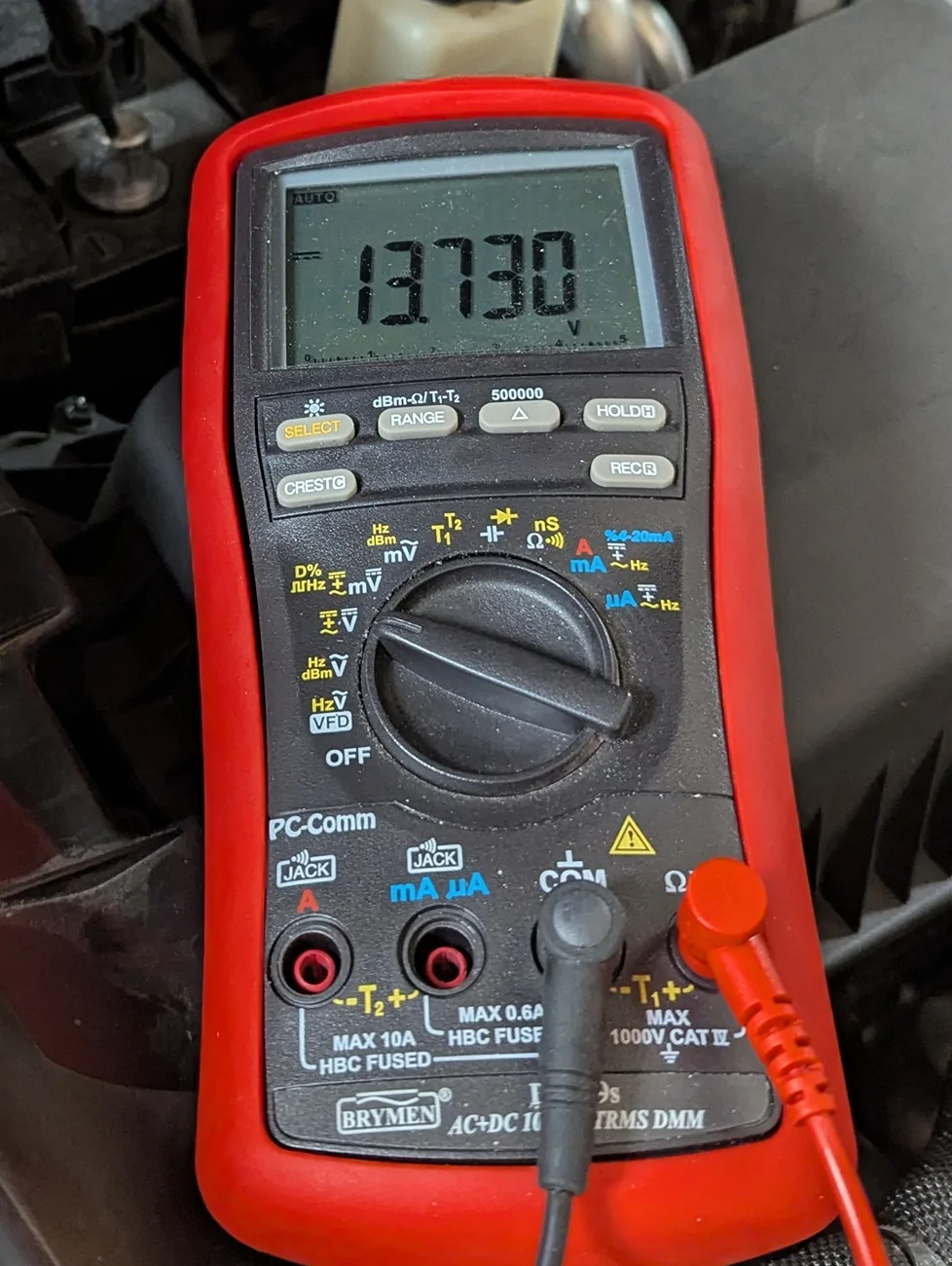
So I went out and took a picture showing my voltage at 13.7 during an ESS stop.
Jeep Gladiator Are the batteries really isolated during ESS stops? 13-7 v sto


Now I'd like to nominate a statement from your first post as the dumbest statement on the forum.
Is it plausible? I know from measuring voltages on N1 and N2 during cold start with a scope that the resistance across the PCR is very roughly 7.5 Ohms.
I'm not sure why we are revisiting this, your oscilloscope image showed evidence of an electrical connection between the aux and main during an ESS restart and once I explained that as a result of a common ground wire I thought that issue was resolved. There was never a need for math.


I did find it a little disingenuous on your part that after I explained the common ground issue you posted this;
Bingo.

The probes were at N1 and N2, and the ground clips were on the chassis. When both batteries are discharging,

Chassis potential > MAIN negative potential > AUX negative potential.

Yes, a dip at N1 should be expected, not because AUX positive is being pulled down, but because chassis ground is being pulled up relative to AUX negative.

I would have mentioned this earlier but you've been raving like a lunatic and I can't figure out what you're talking about most of the time. I didn't want to further muddy the waters.
But you posted this explanation after you posted the image.
The ESS restart was different. MAIN fell a little lower than it did on the cold start, consistent with not having help from AUX. AUX held well above 10V, compared with a low of about 8.2V on the cold start. Why AUX fell even that far is subject to discussion, but it's clearly not, IMO, driving the starter.
 

sharpsicle

Well-Known Member
Joined
Apr 29, 2021
Threads
22
Messages
2,770
Reaction score
6,260
Location
Tampa, FL / Milwaukee, WI
Vehicle(s)
2020 Gladiator Overland, 2002 VTX1800
Holy lord.....

I know you can't force the horse to drink after you lead it to water, but this is making a case for wanting to drown the horse in it to put it out of its misery.

You have the roles reversed, this is the approach I was taking with you. Clearly the starter load was impacting the aux battery voltage reading, which you finally admitted after I simplified it by drawing a picture.
This is false.

To my statement "The powered electronics act as an additional voltage source that can account for the voltage difference on the restart"
you replied


So I went out and took a picture showing my voltage at 13.7 during an ESS stop.
13-7 v stop.webp
Not even remotely what that is showing. This is residual float voltage from the batteries. Any possible latent voltage from the electronics would never be able to maintain a higher system voltage than the battery for more than a fraction of a second.

I'm not sure why we are revisiting this, your oscilloscope image showed evidence of an electrical connection between the aux and main during an ESS restart and once I explained that as a result of a common ground wire I thought that issue was resolved. There was never a need for math.
Again, this is false.


We have all done so much to try and educate you on this, but I really don't know why you aren't willing to listen and learn. You are so locked in to what you believe is right that you are unwilling to hear the facts and, worse than that, are now spinning what you hear into your own narrative. Please, just stop and admit you are wrong and open your mind to the possibility of learning something here.
 

ShadowsPapa

Well-Known Member
First Name
Bill
Joined
Oct 12, 2019
Threads
247
Messages
40,463
Reaction score
53,908
Location
Runnells, Iowa
Vehicle(s)
'25 JTMX, '23 JLU 4xe, '82 SX4, '73 Javelin
Occupation
Retired auto mechanic, frmr gov't ntwrk security admin
Vehicle Showcase
3
Not even remotely what that is showing. This is residual float voltage from the batteries.
Which drops very quickly one it shuts down.

There is no way "electronics" are holding a voltage up that high for any time. The circuits won't be running at system voltage, they'll be operating off lower voltages. Typical will be 5 and 12 volts. They can't handle the full voltage of the charging system which can hit 15 volts at times.

Batteries will be like a capacitor for a short time with the surface charge holding voltage up.

Below is from various internet sources - battery test equipment makers and so on - you need to ignore that higher voltage. It's the battery, as electronics won't be operating on system voltage directly, but will have it regulated down, they can't hold the voltage up like that.


Lead acid batteries are sluggish and cannot convert lead sulfate to lead and lead dioxide quickly during charge. This delayed action causes most of the charge activities to occur on the plate surfaces, resulting in an elevated state-of-charge (SoC) on the outside.


If you attempt to test a recently charged battery, you might find that its open circuit voltage (OCV) is 13.05V, 13.12V, or higher. Since your lead acid battery is fully charged at 12.6V or 12.8V, depending on its construction, the excess voltage represents surface charge.


But, surface charge can cause issues in the testing process, depending on the testing method used. If using an invasive load tester, the surface charge is not a big concern, because the testing process will pull down that surface charge almost immediately. If using an electronic tester, it is best to relieve the battery’s surface charge by adding a load to the battery, such as turning on the high beams for 15 seconds. This will stabilize the battery, allowing you to get a more accurate assessment of battery health

It's one reason that certain testers may say a battery is good when it's not - they don't draw that charge down, they aren't invasive, they don't actually load the battery. So if you charge it or a shop or store charges it, then tests it, you may get a false "good/OK" result with some test equipment.
 
OP
OP
Flanders

Flanders

Well-Known Member
Joined
Dec 2, 2023
Threads
11
Messages
152
Reaction score
121
Location
Dyer, NV
Vehicle(s)
2023 JT
@jebiruph Ridicule might be the best way to deal with this guy, who is totally not you.

To my statement "The powered electronics act as an additional voltage source that can account for the voltage difference on the restart"
you replied
Also, this might be the dumbest statement I've read on this forum.
Well it was at the time. You've since topped it.

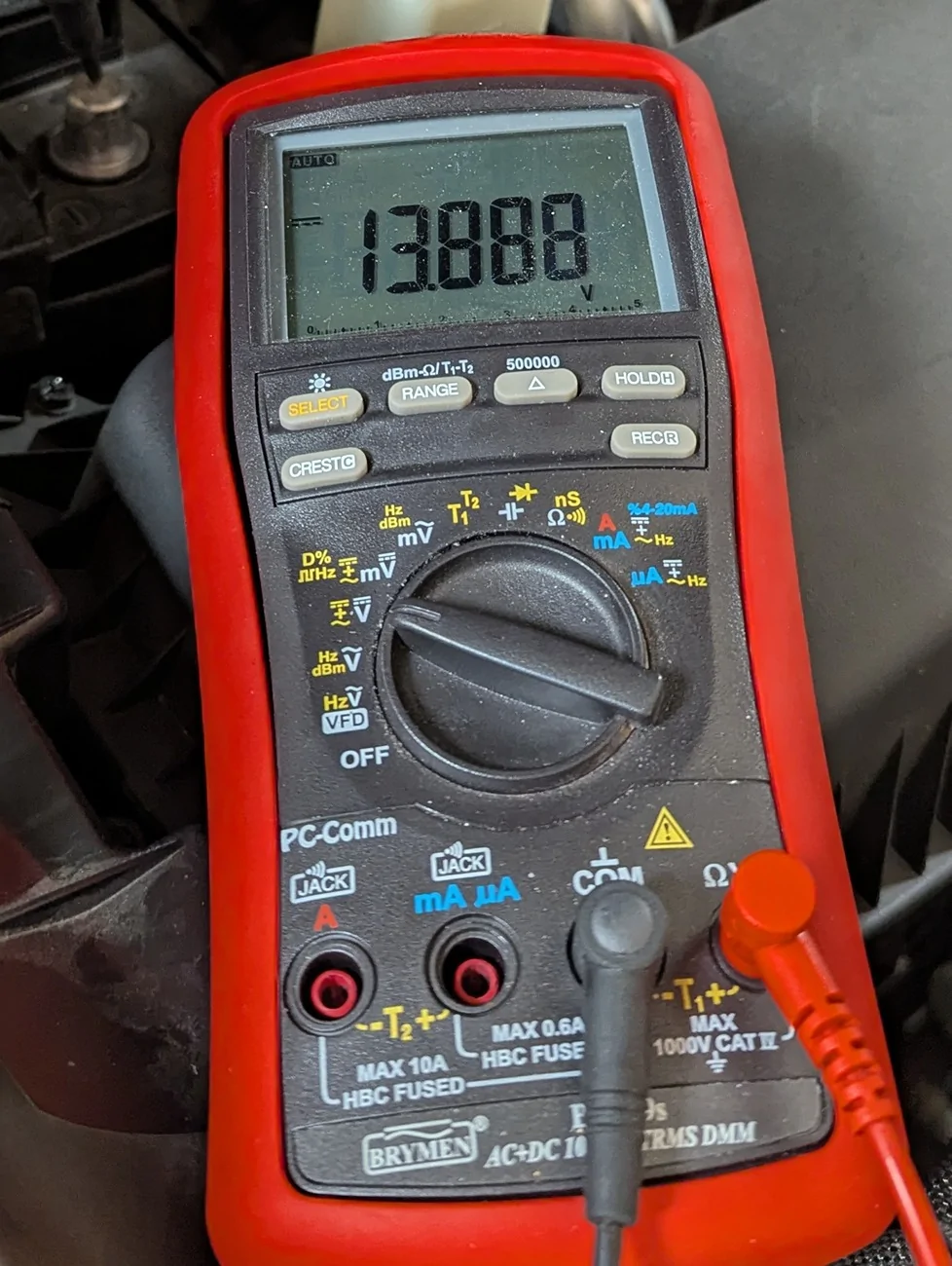
The vehicle electronics are a load on the battery, not a source holding the voltage up. Wanna see?

Here's my main battery, 1 full minute after disconnecting the negative:
Jeep Gladiator Are the batteries really isolated during ESS stops? 1_minutes


And 2 full minutes:
Jeep Gladiator Are the batteries really isolated during ESS stops? 2_minutes


It won't stay that high during a 2-minute ESS stop. The vehicle electronics pull it down below 12.5V pretty fast.

*who am I fooling of course it's you
 

sharpsicle

Well-Known Member
Joined
Apr 29, 2021
Threads
22
Messages
2,770
Reaction score
6,260
Location
Tampa, FL / Milwaukee, WI
Vehicle(s)
2020 Gladiator Overland, 2002 VTX1800
@jebiruph Ridicule might be the best way to deal with this guy, who is totally not you.


Well it was at the time. You've since topped it.

The vehicle electronics are a load on the battery, not a source holding the voltage up. Wanna see?

Here's my main battery, 1 full minute after disconnecting the negative:
1_minutes.webp


And 2 full minutes:
2_minutes.webp


It won't stay that high during a 2-minute ESS stop. The vehicle electronics pull it down below 12.5V pretty fast.

*who am I fooling of course it's you
It’s the electronics of the voltmeter holding that voltage up though!
 

Sponsored

ShadowsPapa

Well-Known Member
First Name
Bill
Joined
Oct 12, 2019
Threads
247
Messages
40,463
Reaction score
53,908
Location
Runnells, Iowa
Vehicle(s)
'25 JTMX, '23 JLU 4xe, '82 SX4, '73 Javelin
Occupation
Retired auto mechanic, frmr gov't ntwrk security admin
Vehicle Showcase
3

Andy29847

Well-Known Member
First Name
Andy
Joined
Oct 25, 2020
Threads
14
Messages
558
Reaction score
938
Location
South Carolina
Vehicle(s)
2020 Wrangler Rubicon, 2020 Gladiator Rubicon
Occupation
Retired
Not only does the TSM as you quoted state how things are supposed to work, every document I've found as far as training, troubleshooting and so on, state the exact same thing. The snippets I posted come from at least 3 different documents - 2 of them FCA/STAR publications and I sort of wonder if one I have isn't a section from the service manual - can't recall where I got it...........but it's official, where-ever it came from.
So there's the "TSM", and the 3 docs I have, 2 of them FCA/STAR documents, all saying the same thing. So - that means 4 things from FCA are wrong if they don't operate that way. Hard to believe................ they are the ones that have to diagnose and troubleshoot this stuff, and cover it under warranty.

You might like this bit -

The documentation errors might account for why dealer techs have so much trouble diagnosing battery problems. Well, that and the fact that the aux battery is difficult to access.

I'm reading through the thread for the 3rd time and some of the info is starting to congeal in my 72-year-old mind. One thought that keeps coming to the front is that the system is acting like a starter solenoid. Perhaps the intent is to provide protection above and beyond what a starter solenoid would do, since the expectation would be that the new Jeeps would have many more stop/starts than an old Jeep.

What is functioning as a starter solenoid in the Jeep system?
 

ShadowsPapa

Well-Known Member
First Name
Bill
Joined
Oct 12, 2019
Threads
247
Messages
40,463
Reaction score
53,908
Location
Runnells, Iowa
Vehicle(s)
'25 JTMX, '23 JLU 4xe, '82 SX4, '73 Javelin
Occupation
Retired auto mechanic, frmr gov't ntwrk security admin
Vehicle Showcase
3
One thought that keeps coming to the front is that the system is acting like a starter solenoid. Perhaps the intent is to provide protection above and beyond what a starter solenoid would do, since the expectation would be that the new Jeeps would have many more stop/starts than an old Jeep.

What is functioning as a starter solenoid in the Jeep system?
What do you mean acting as a starter solenoid?
There is a starter solenoid - on the starter.

The solenoid engages the drive into the ring gear (unless it's an early ford system) and connects battery to starter once it's engaged (again, unless like legacy ford systems which had no solenoid in the starter, it was a massive relay on the fender that connected the battery to the starter and a special field winding pulled a lever down to kick the drive into the ring gear and then open contacts to cut out the pull-in winding of that field pole)

These starters have a relay to initialize the starter sequence which powers the solenoid on the starter, which engages the drive and connects battery power to the starter.

Once the solenoid engages the starter, the starter is connected directly to the crank battery just like 50 years ago.
 

Andy29847

Well-Known Member
First Name
Andy
Joined
Oct 25, 2020
Threads
14
Messages
558
Reaction score
938
Location
South Carolina
Vehicle(s)
2020 Wrangler Rubicon, 2020 Gladiator Rubicon
Occupation
Retired
What do you mean acting as a starter solenoid?
There is a starter solenoid - on the starter.

The solenoid engages the drive into the ring gear (unless it's an early ford system) and connects battery to starter once it's engaged (again, unless like legacy ford systems which had no solenoid in the starter, it was a massive relay on the fender that connected the battery to the starter and a special field winding pulled a lever down to kick the drive into the ring gear and then open contacts to cut out the pull-in winding of that field pole)

These starters have a relay to initialize the starter sequence which powers the solenoid on the starter, which engages the drive and connects battery power to the starter.

Once the solenoid engages the starter, the starter is connected directly to the crank battery just like 50 years ago.

I was expressing thought from the old days. Maybe not a well-considered thought. :) I remember the lights and radio dimming on Mom's car when it was started. I've always thought that there was a function with the solenoid above and beyond starting, e.g., protecting the car's system from dramatic voltage changes. Maybe the protection actually happens in the ignition switch.
 

ShadowsPapa

Well-Known Member
First Name
Bill
Joined
Oct 12, 2019
Threads
247
Messages
40,463
Reaction score
53,908
Location
Runnells, Iowa
Vehicle(s)
'25 JTMX, '23 JLU 4xe, '82 SX4, '73 Javelin
Occupation
Retired auto mechanic, frmr gov't ntwrk security admin
Vehicle Showcase
3
I was expressing thought from the old days. Maybe not a well-considered thought. :) I remember the lights and radio dimming on Mom's car when it was started. I've always thought that there was a function with the solenoid above and beyond starting, e.g., protecting the car's system from dramatic voltage changes. Maybe the protection actually happens in the ignition switch.
Many accessories from those days were disconnected while the switch was in the crank position.
But then, radios and lights back then - could take a licking and keep on ticking.
Brownout of headlights wasn't an issue at all.
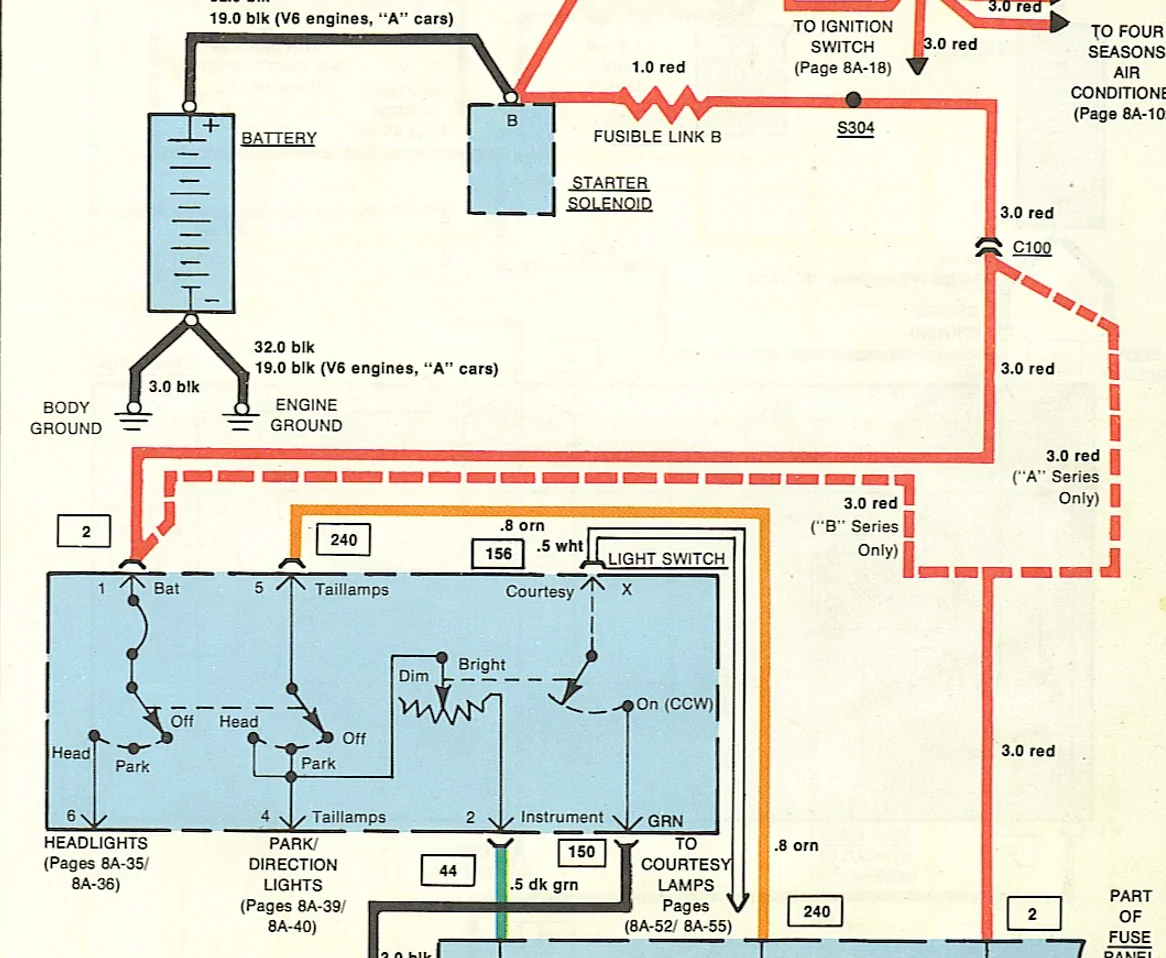
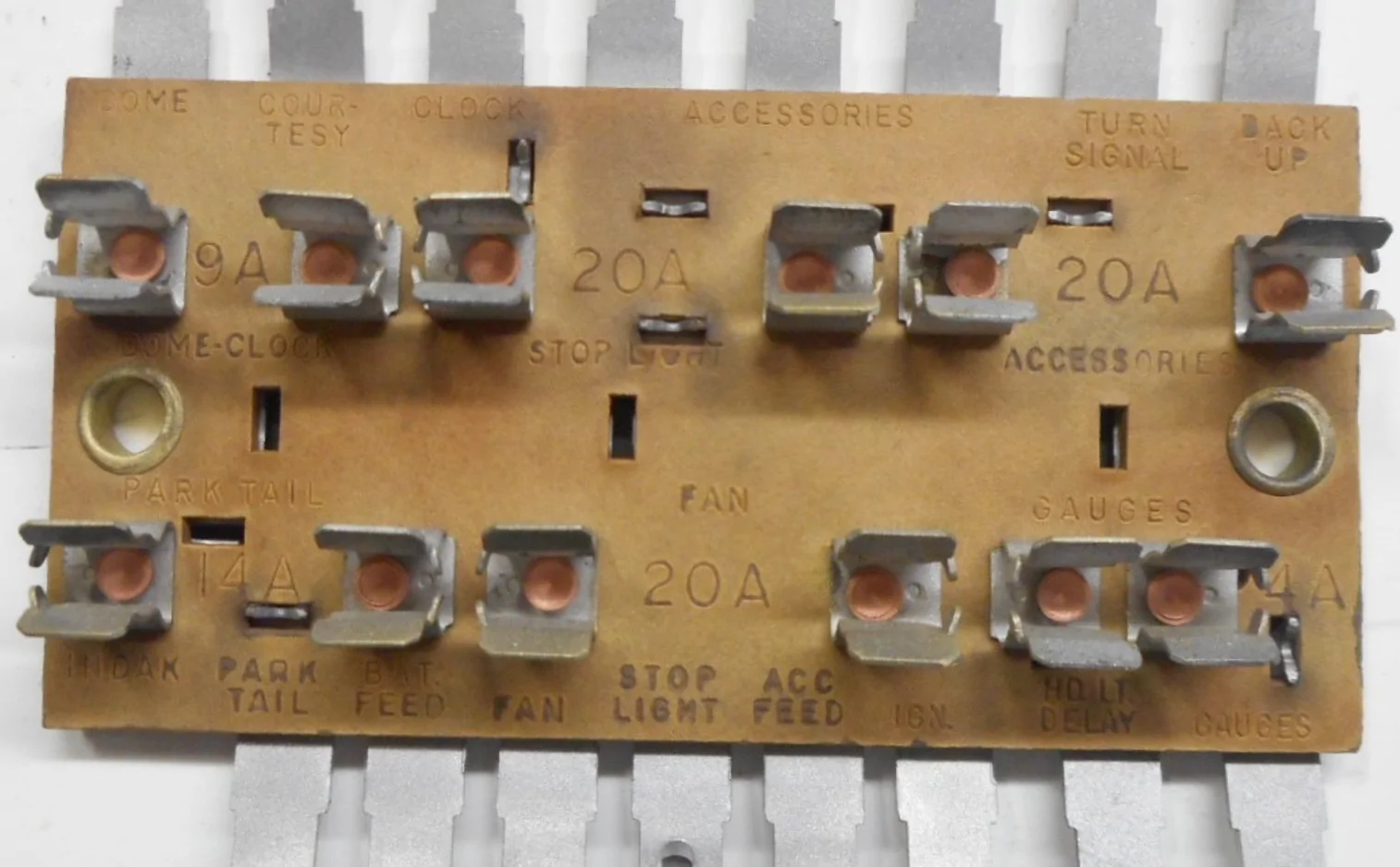
The radio and HVAC were usually disconnected at the ignition switch during cranking - anything on the ACC circuit would be cut off.

Jeep Gladiator Are the batteries really isolated during ESS stops? 1761173494380-64


Jeep Gladiator Are the batteries really isolated during ESS stops? 1761173661298-n3
Sponsored


Top