Deleted member 57233
Not really, the Euro and Asian 2.0T engines have been hitting those numbers stock for years. Some tuning gets those engines close to 500hp on standard pump gas.That little 2.0 will be running hard at that HP.
Sponsored

Not really, the Euro and Asian 2.0T engines have been hitting those numbers stock for years. Some tuning gets those engines close to 500hp on standard pump gas.That little 2.0 will be running hard at that HP.
Careful now, you'll upset the petrosexuals talking like that.Which really means you want an electric motor... but most won't ever admit it. Peak torque from 0 to about 9000 rpms. Even if they went the route of the magneto concepts and simply replaced the gas engines with an electric motor it would be the best Jeep ever built in any situation off road. Massive torque at even the slowest crawl? Wheel speed for mud? Smooth power delivery for loose hill climbs?
It's probably partially because I've been an electrician for 30 years that I've always been very open to the EV scene. Always been a car guy, love a nice choppy v8 sound, and hate government mandates and bribery schemes, but you can't argue the performance of modern EVs and there is no better way to power an off road rig.Careful now, you'll upset the petrosexuals talking like that.

It would be nice if some folks would go to the local legit drag strip and watch the big modified V8s try to tackle the high-revving lower displacement Asian and Euro cars - often almost stock.Not really, the Euro and Asian 2.0T engines have been hitting those numbers stock for years. Some tuning gets those engines close to 500hp on standard pump gas.
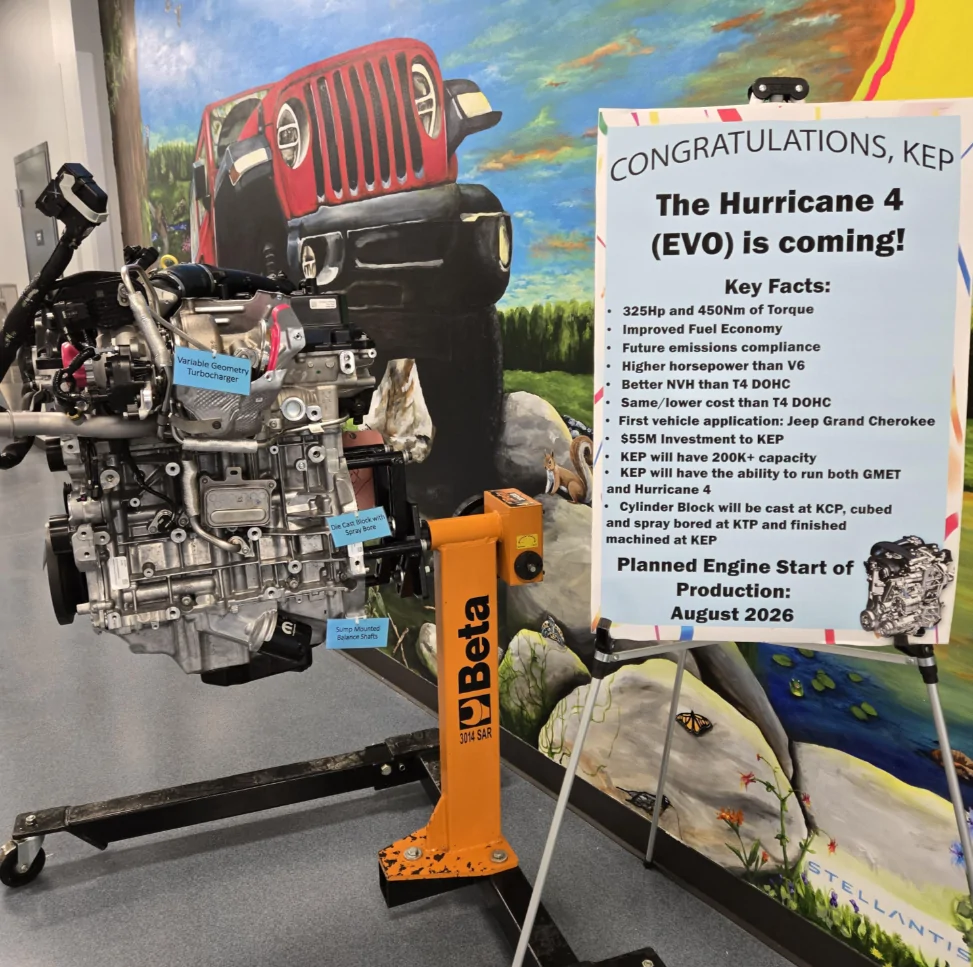
Funny. That long block is different than the one being shown in the videos. The spin on oil filter is in a different orientation and there’s no large bore going transversely thru the oil pan.It would be nice if some folks would go to the local legit drag strip and watch the big modified V8s try to tackle the high-revving lower displacement Asian and Euro cars - often almost stock.
I've watched some of those Japanese cars put American muscle to shame.
This image is from a thread started earlier -

I must admit I have been biased towards larger engines all my life but we rented a Nissan Rogue (called Qashqui or something in Europe) in Vienna and drove it all over the Autobahn and through the Alps (about 1,000 miles total). I found it hit a sweet spot cruising at about 95 mph. Response was great and it handled really good. Now, I will say, that I didn't know that it was a diesel until I put fuel into it and was getting close to 50 mpg (my wife made me stop and buy fuel since the gauge said over 1/3 full and we had driven all day).An idea - Stellantis should replace the 2.0 with a 1.0 - with even larger turbos! Just carrying the logic to its natural conclusion.
The only real advantage I see over a 392, with any high stressed 2.0 turbo engine in a Wrangler is entry price being less than half! But to say that little engine makes more hp&tq than a 392? That fact is a little skewed because it has the turbo and tune. But off idle? When you’re just crawling around, or even at highway speeds plus, the bigger engine makes more unstressed power than the smaller engine. Just the reciprocal mass without fuel added has more inertial with no stress at all.Im wondering about reliabilty.
You can biist up an engine for more HP but for how long.
Im assuming it will need premium gas so there goes any savings.
Not for me but im happy with my 3 6.
Even the 392 doesn't make peak torque until 4k+ rpm. I don't care what tune you throw at it the 2.0t isn't masking more hp (unless we are talking 10k feet plus elevation and then it very likely is), but the dyno fully proves that not only can the 2.0t make more torque than the 392 does stock with a tune, it does so at lower rpms. Who's out here trying to idle around anyway? Get into the throttle and the 2.0t with a tune quickly passes the torque output of the 392. But what about at 1500 to 2000 rpms? Who cares, if I need power I put my for in it.The only real advantage I see over a 392, with any high stressed 2.0 turbo engine in a Wrangler is entry price being less than half! But to say that little engine makes more hp&tq than a 392? That fact is a little skewed because it has the turbo and tune. But off idle? When you’re just crawling around, or even at highway speeds plus, the bigger engine makes more unstressed power than the smaller engine. Just the reciprocal mass without fuel added has more inertial with no stress at all.
I'd be interested to see dyno charts if you have images or links.Even the 392 doesn't make peak torque until 4k+ rpm. I don't care what tune you throw at it the 2.0t isn't masking more hp (unless we are talking 10k feet plus elevation and then it very likely is), but the dyno fully proves that not only can the 2.0t make more torque than the 392 does stock with a tune, it does so at lower rpms. Who's out here trying to idle around anyway? Get into the throttle and the 2.0t with a tune quickly passes the torque output of the 392. But what about at 1500 to 2000 rpms? Who cares, if I need power I put my for in it.
Obviously that's a tuned 2.0t, not stock. Those wheel numbers are crazy though. Pushing ~550ftlbs at the crank.I'd be interested to see dyno charts if you have images or links.
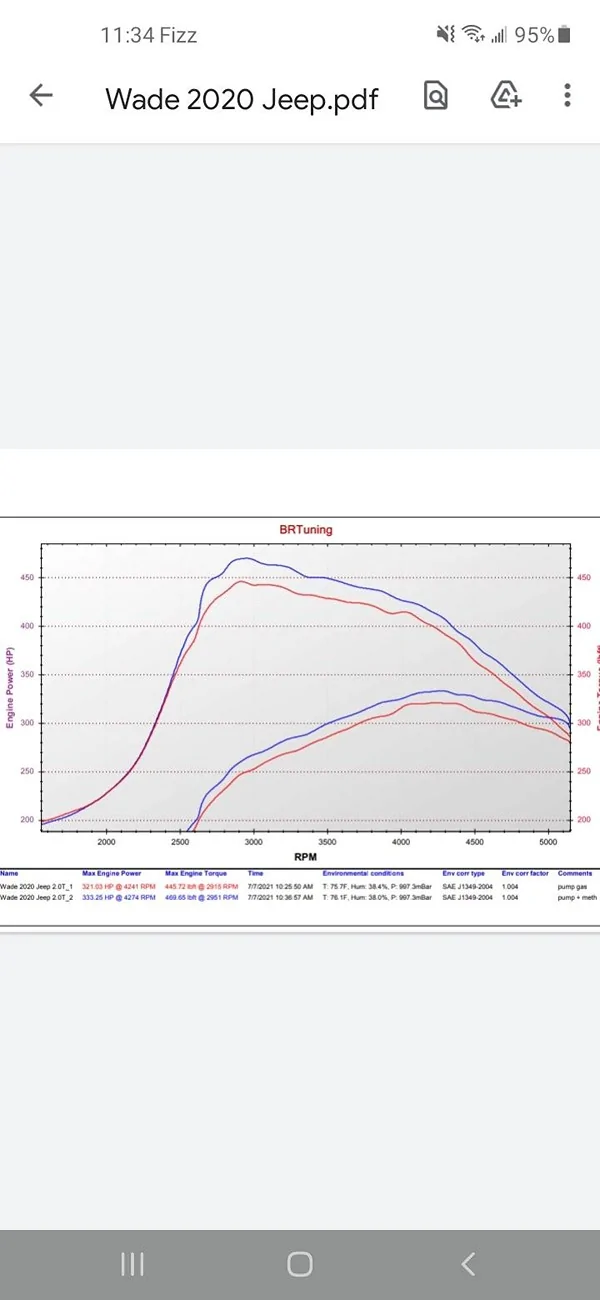
470 ft/lbs at 3k RPM, nice.Obviously that's a tuned 2.0t, not stock. Those wheel numbers are crazy though. Pushing ~550ftlbs at the crank.


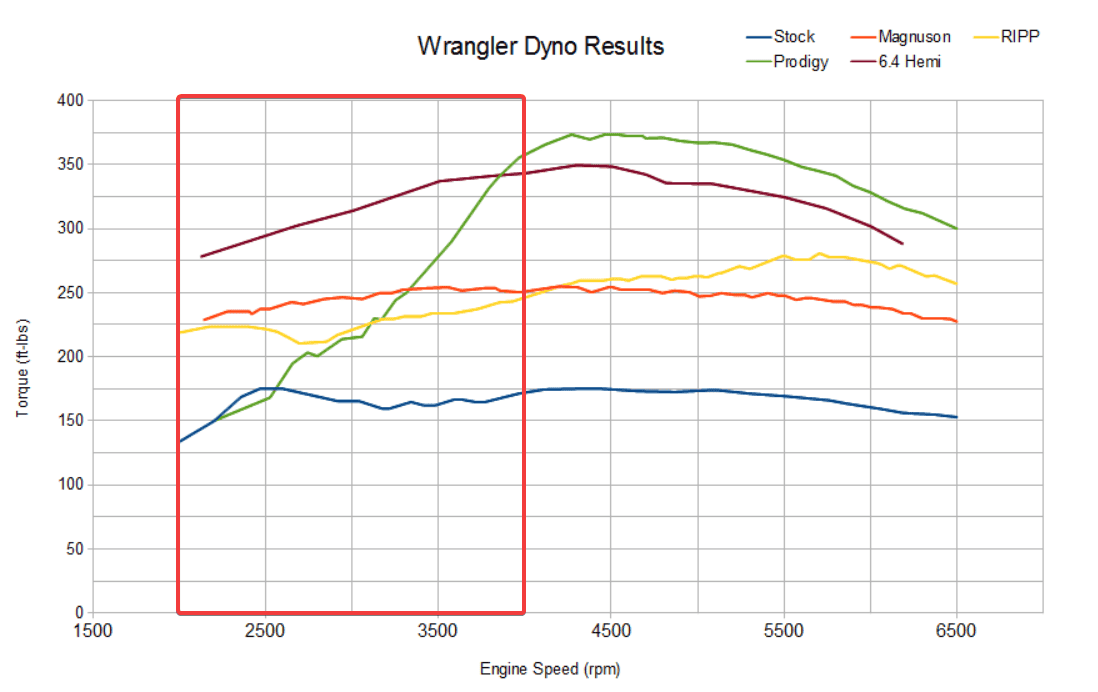
Even at 2500rpm the 392 is under 300 ftlbs and the 2.0t is about 370ftlbs. Why making more torque at idle is some kind of flex I don't know? Blip the throttle and you're well beyond 2500 rpm in an instant. The tuned 2.0t makes way more useable torque period.470 ft/lbs at 3k RPM, nice.
A stock 392 looks to be about 315 ft/lbs at 3k RPM.