
Sponsored

Not a good day on the Gladiator today…

Chance575

Well-Known Member
First Name
C
Joined
May 20, 2021
Threads
15
Messages
557
Reaction score
711
Location
Earth
Vehicle(s)
C
Occupation
D
It’s the price point of this vehicle which is causing all of this over thinking. It’s high enough now that people that don’t wrench or Do a lot of work for themselves are into them. Not as many blue collar type worker owning them. yes their are many of them out there who do work, but I’d say more who don’t.

they want to work on stuff but over think everything. Multiple forums, GTO, corvettes, srt8 Jeep, chevy SS and now the gladiator forum. It’s all the same no matter which style of automobile forum your on.
Sponsored

 

ShadowsPapa

Well-Known Member
First Name
Bill
Joined
Oct 12, 2019
Threads
247
Messages
40,465
Reaction score
53,924
Location
Runnells, Iowa
Vehicle(s)
'25 JTMX, '23 JLU 4xe, '82 SX4, '73 Javelin
Occupation
Retired auto mechanic, frmr gov't ntwrk security admin
Vehicle Showcase
3
Some bolts are only partly threaded, Would that affect the application? Discuss.
I'm a former pro - I worked hardware for years, do restorations and spent a lot of time in college learning some of this stuff.
Sorry if I bristle when someone says "a bolt is just a bolt" but that's like saying a shoe is just a shoe or that all brake pads are the same or that tight is good enough.
I'd fire some of the folks who claim it's just a bolt.
And after reading some recent posts, I'm now understanding why some people have real trouble with their dealership if people truly believe that. That's shade-tree. NO PROFESSIONAL would ever say that. It shows lack of real experience.

Here's where I come from -
One of my first jobs was at an Ace hardware store - one of the largest in Central Iowa at the time. I did the fasteners and hardware section. The boss was picky.
Machine shop classes in HS, then onto college for my automotive degree. Fasteners were again discussed there.
I worked as a professional mechanic for years. I currently do restoration work, and I restore and re-plate hardware as well as bolts and nuts and washers. I have studied each fastener used in the various locations of cars for years. Being curious, I always wanted to know why.

Each bolt or CAP SCREW has a specific purpose and function and very specific specs.
They are also MADE differently at the factory - that speaks to strength beyond the Class or Grade.
A bolt is not just a bolt. You may be buying a "bolt" or you may be buying a cap screw - but there are important differences in clamping and torqueing.
Then there are flange head screws that literally have a flange made onto the head of the "bolt" - hasn't anyone here ever wondered WHY???
Gee, that seems goofy, wonder why they'd do that? And what's up with this crap about torque plus degrees? That's stupid, just put a breaker bar on it and make it tight, or why not just torque it according to those charts at online bolt sellers!
With the need to reduce weight but keep things strong, the rules had to change........

I'll post pictures from my machinery handbook 25th edition. There are dozens of pages covering the topic of "bolts" and several pages of tech specs! Wow, yet a bolt is just a bolt.

Here's part of why I say "a bolt isn't just a bolt" and "these aren't "just bolts""
If you walk into a hardware store and ask for bolts - you will likely first see the SAE section, grade 5 (3 marks, the most common)
And if you then ask for grade 8 - they'll take you to the US SAE grade 8 bolts unless they are ignorant of metric specs and have no clue that there's no "grade" on metric, they are "class. Look at the top of the bolt - it will say right on it 8.8 or 10.9
There are no SAE bolts in these trucks - they are metric. There is no such thing as a grade 8 metric bolt. Metric "bolts" are classified literally in classes. Class 8.8 is roughly equal to our grade 5 bolts.
Class 10.9 is roughly equal to our SAE grade 8.
So you don't want a grade 8, that's US standard thread. You want a metric in class 10.9..
Anyone who has any education on hardware will listen to grade 8 and take you back to the 1/2" bolts and not the metric area. Only those who don't know better and were flipping burgers last month will do otherwise. But then you get what you get in SOME hardware stores.

So, these are all metric, thus you need either a standard class 8.8 for non-important things, and for any suspension, steering or brakes will require class 10.9

The SHAPE and type of head is critical in the clamping force and how they torque.
Some may have heard of TTY - Torque To Yield, or "torque plus degrees or angle.
Critical spots usually use this method, not always it seems, but as an example, the steering gear to frame bolts are torque plus angle.

The stress on caliper bolts is tremendous! So the CLAMPING FORCE is critical. And it's that which holds the thing in place, not the sheer strength of the bolt in the hole, but how hard it's clamped. Thus, the specific shape of the bolt head.

OK, bolt vs. cap screw, etc.
PLEASE NOTE HOW EACH IS MADE - this is important because some hardware stores sell "bolts" as bolts and some sell CAP screws as bolts and I'll bet a big mac that 90% of those reading this thread had no idea there was even a difference, this was even a thing or that one was made by cold-heading and the other were made by hot forging.
Still think a bolt is just a bolt? Sure hope not. This alone should dispel that shade-tree idea.
Cold-heading vs forged, washer shape under head vs no washer shape.
SOME hardware stores sell them interchangeably. NOT ALWAYS, some will actually show them as cap screws next to the SKU number - good for them! So take a look - is your hardware store selling you bolts or cap screws?

Of the bolts/capscrews/flange head bolts shown below - which do you want stopping a 5,000 pound truck in under 5 seconds?


What is the difference between a hex bolt and a hex cap screw?
A hex cap screw has tighter tolerances on the body dimensions and features a chamfered end and a washer face under the bolt head. A hex cap screw is often called a finished hex bolt. Hex bolts have a flat end and lack the washer face under the head.
Now, which does YOUR hardware store sell as "bolts"?


Hex cap screws
  • Flat washer facing under the head that meet specific tolerances as described under ASME B18.2.1-1996.
  • They will usually be manufactured by a cold-heading process (large runs of standard sizes) or turned CNC operation.
  • A radius under the head at the shank.
  • Body diameter of plus nothing, minus .011″ for an 1-1/4″ diameter fastener.
  • Some common fastener specifications unless otherwise specified: ASTM A449 and SAE J429 Grade 2, 5, and 8.
Hex bolts
  • A die seam across the bearing surface is permissible.
  • The typical bolt is manufactured by hot-forging process.
  • Allows a reduced body diameter to be not less than the minimum pitch diameter of the thread.
  • Some common fastener specifications unless otherwise specified: ASTM A307A, A354, and F1554.
In the pictures below - notice the difference between a simple hex head "bolt" vs a cap screw. The cap screw has a sort of washer surface made right into it. What you get at a hardware store may be a bolt, or it may be a cap screw - depending on what they order or what their supplier gives them. There's a difference and true automotive professionals know this (as opposed to DIY experts that just put bolts in holes)

Then look at the style of bolt the OP bought - bravo! A true caliper bolt complete with locking compound and washer head. There's reasons bolts have flange heads or are threaded part way or all the way - differences in stretch, clamping force and more.

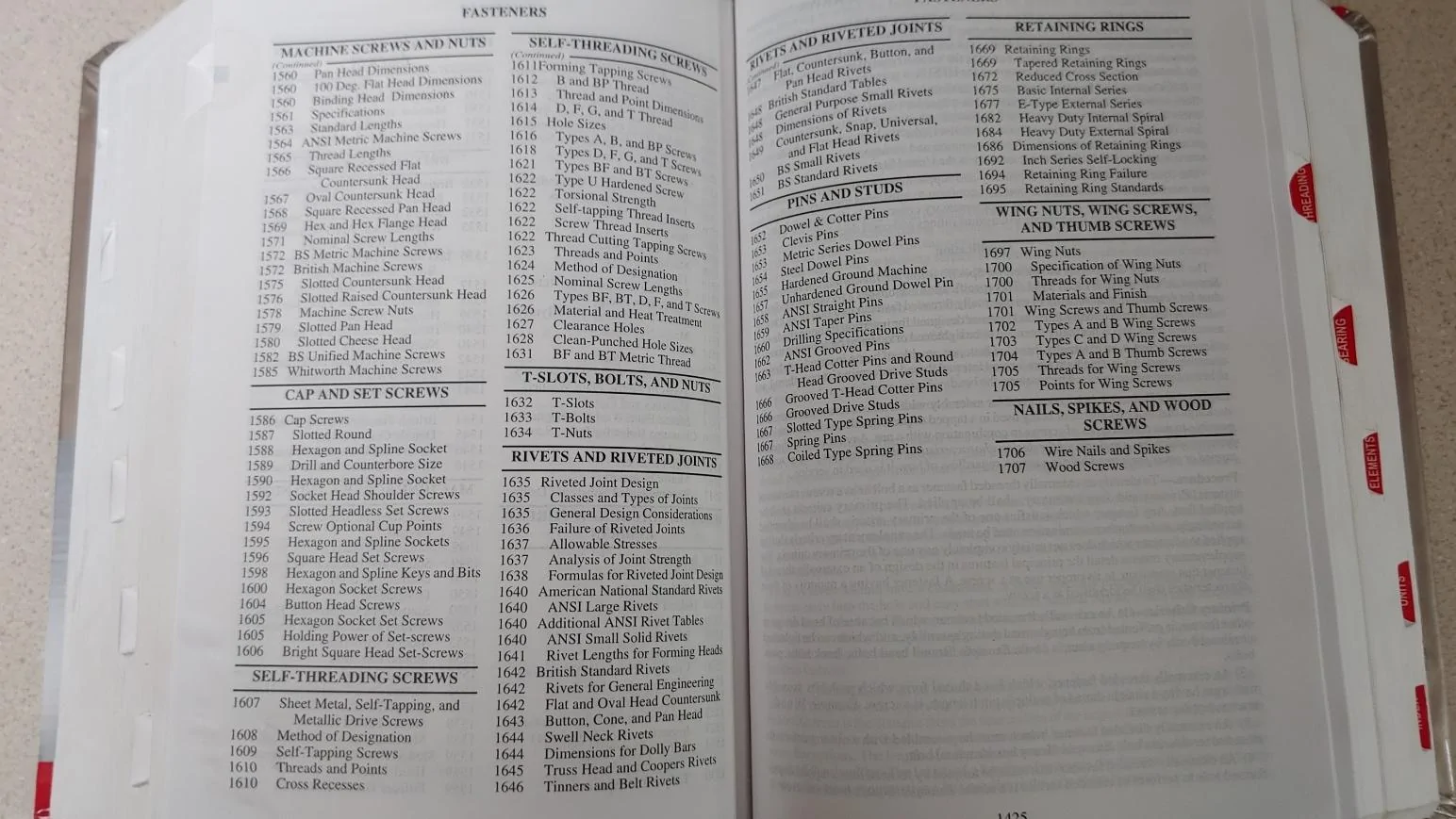
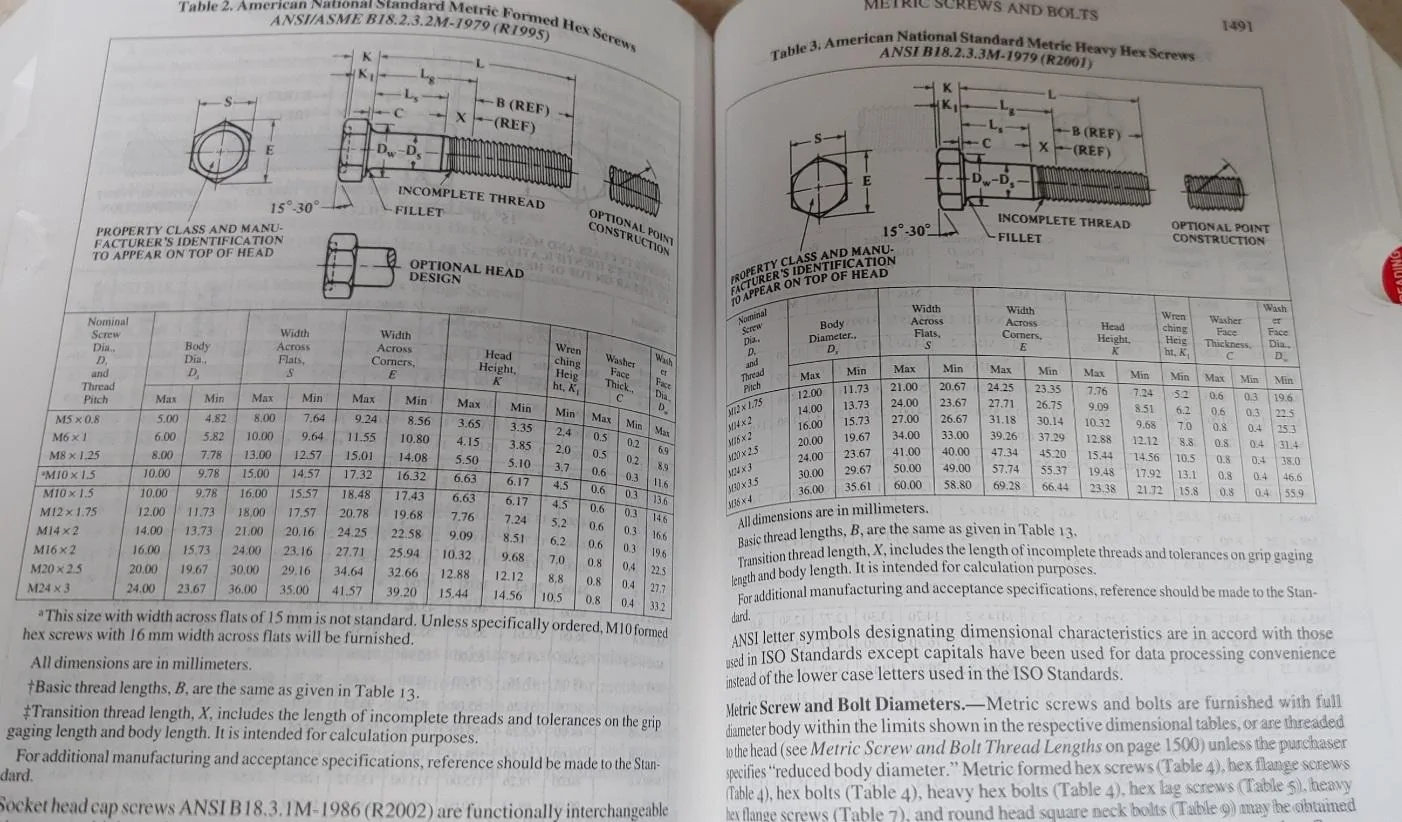
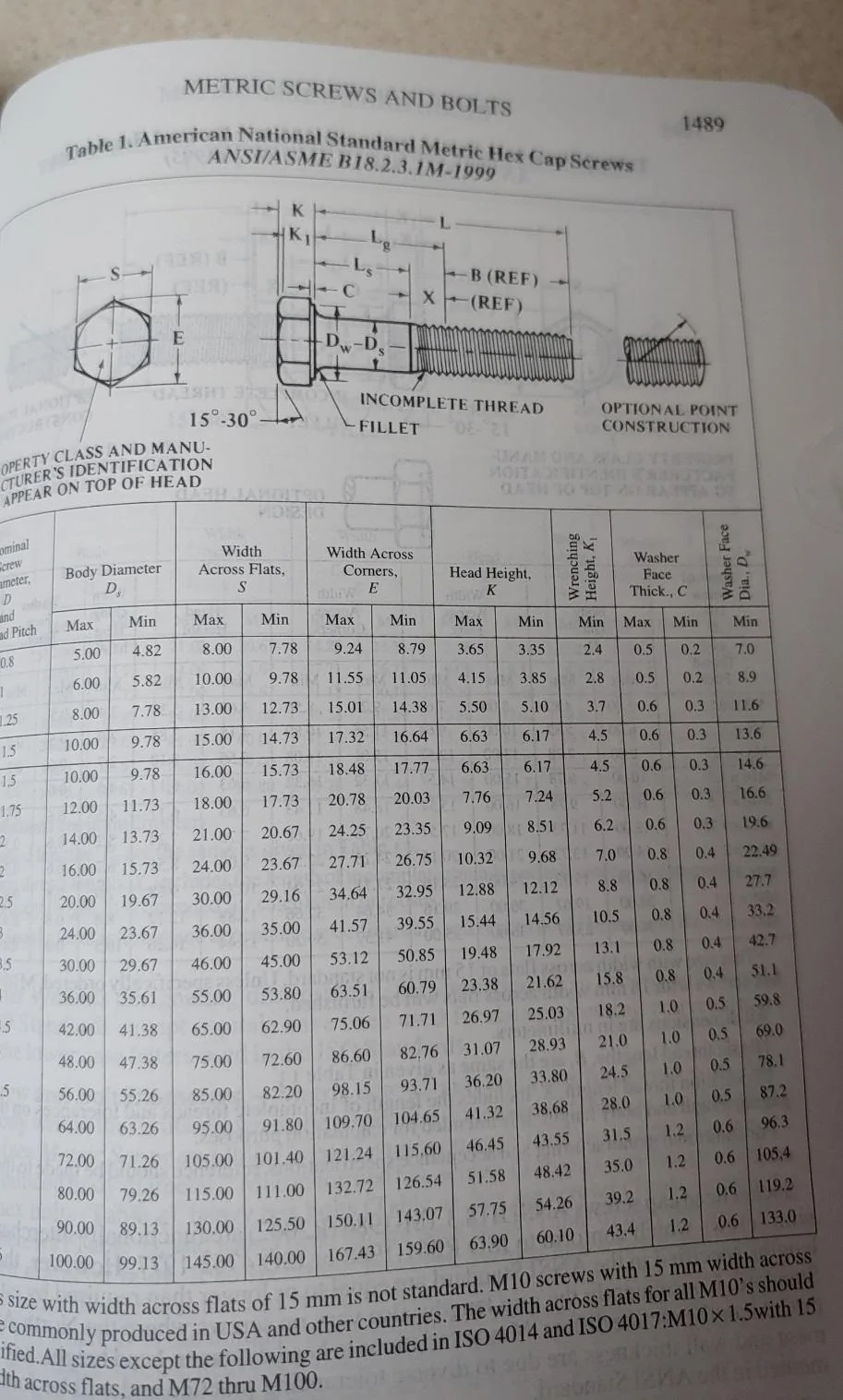
This shows dozens of pages related to various "bolt" types -
Jeep Gladiator Not a good day on the Gladiator today… 20210826_093425

Jeep Gladiator Not a good day on the Gladiator today… 20210826_093440


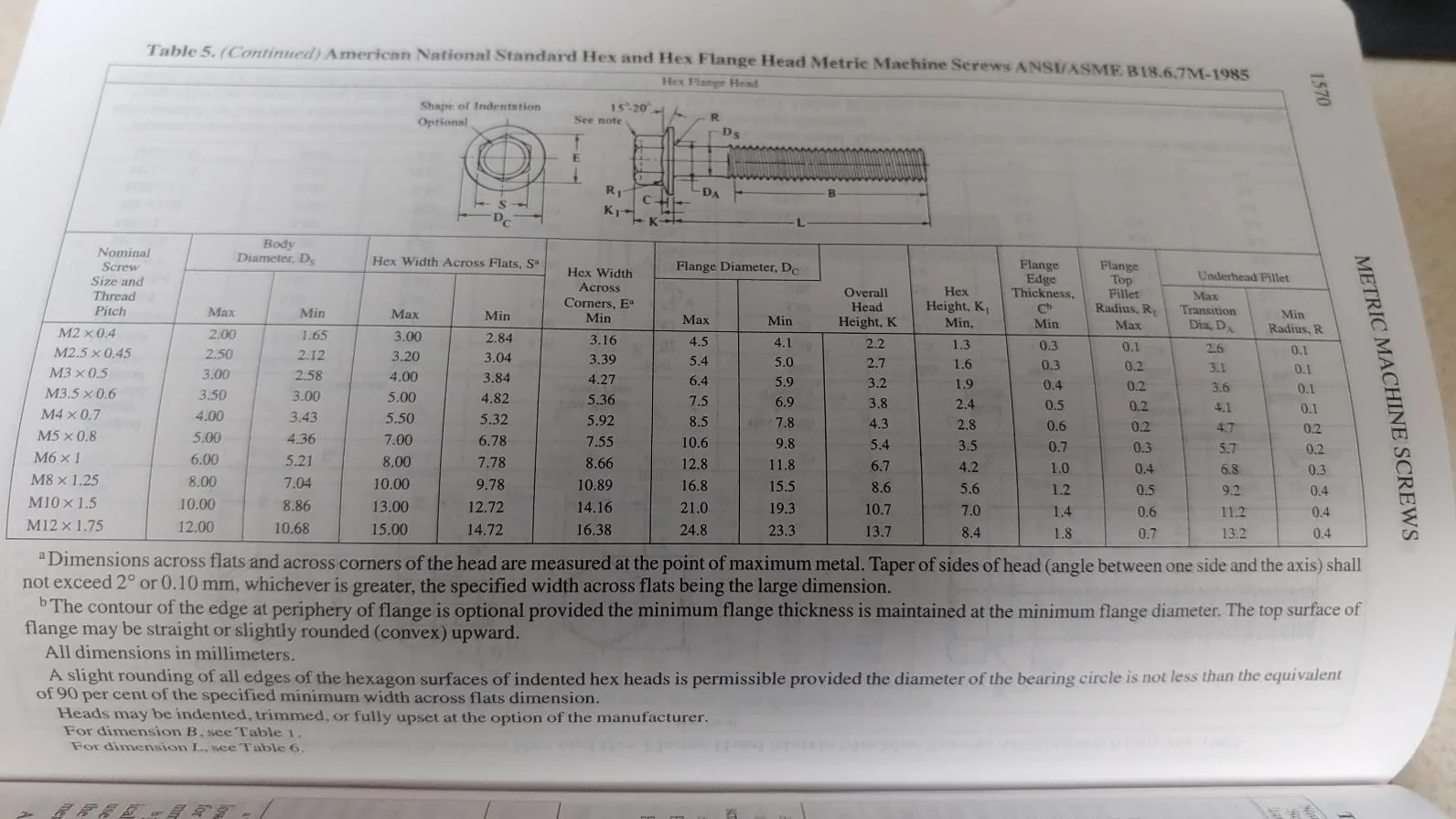
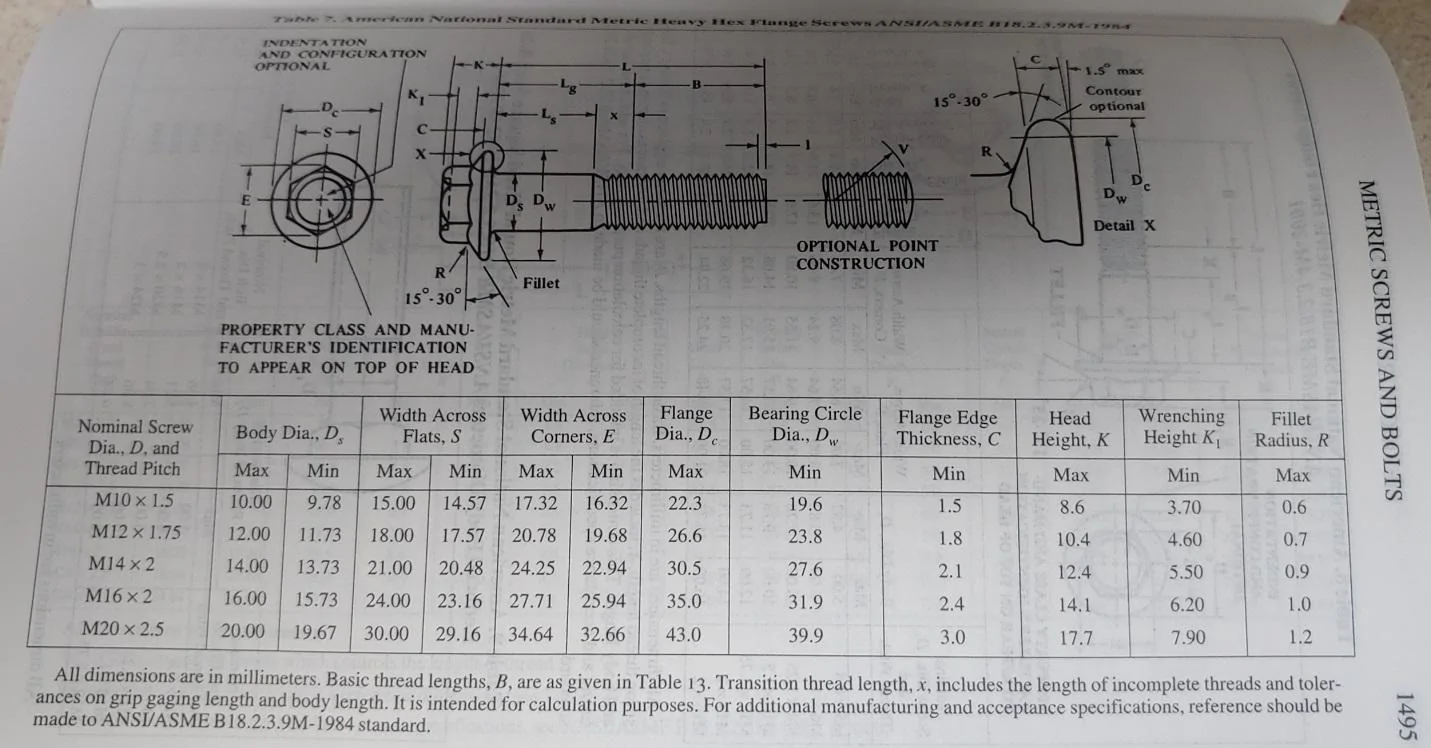
These are specs for "flange head" bolts. VERY specific on the sizes because that directly impacts the CLAMPING force and the TORQUE.
This is the type typically used on brake parts and other important parts.
Jeep Gladiator Not a good day on the Gladiator today… 20210826_093613

Jeep Gladiator Not a good day on the Gladiator today… 20210826_093814


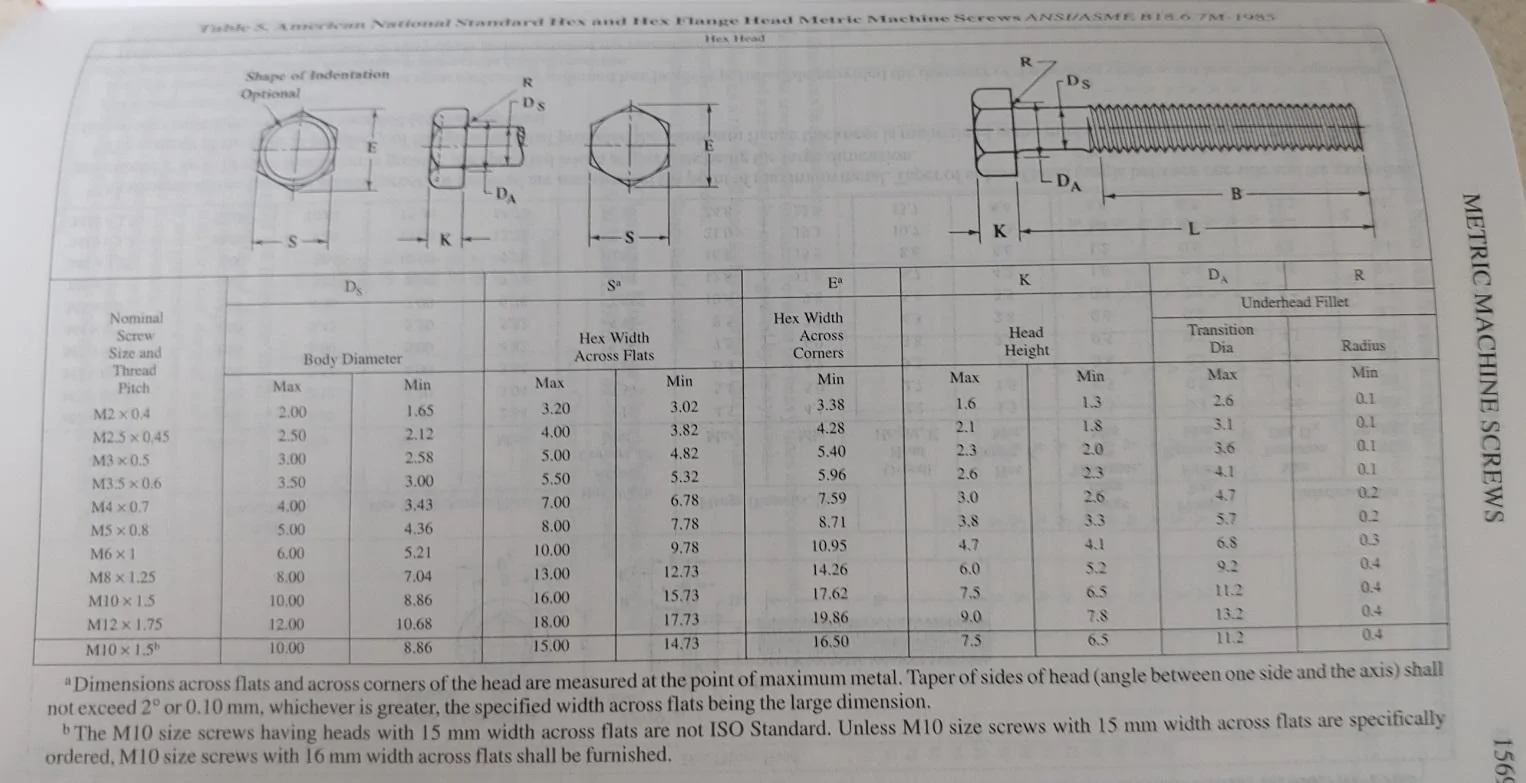
This is your "just a bolt" - no flange, no washer shape under the head - it's truly ordinary and often what's in a hardware store. The head WILL impact the torque (and thus clamping force or ability).
Jeep Gladiator Not a good day on the Gladiator today… 20210826_093647


And the cap screw - some hardware stores sell these as "bolts" - well, they sort of are, but are also different because of HOW THEY ARE MADE at the factory, and the shape under the head. Note the really close specs on that shape of the head and underside of the head.
Jeep Gladiator Not a good day on the Gladiator today… 20210826_093858

Jeep Gladiator Not a good day on the Gladiator today… 20210826_093938


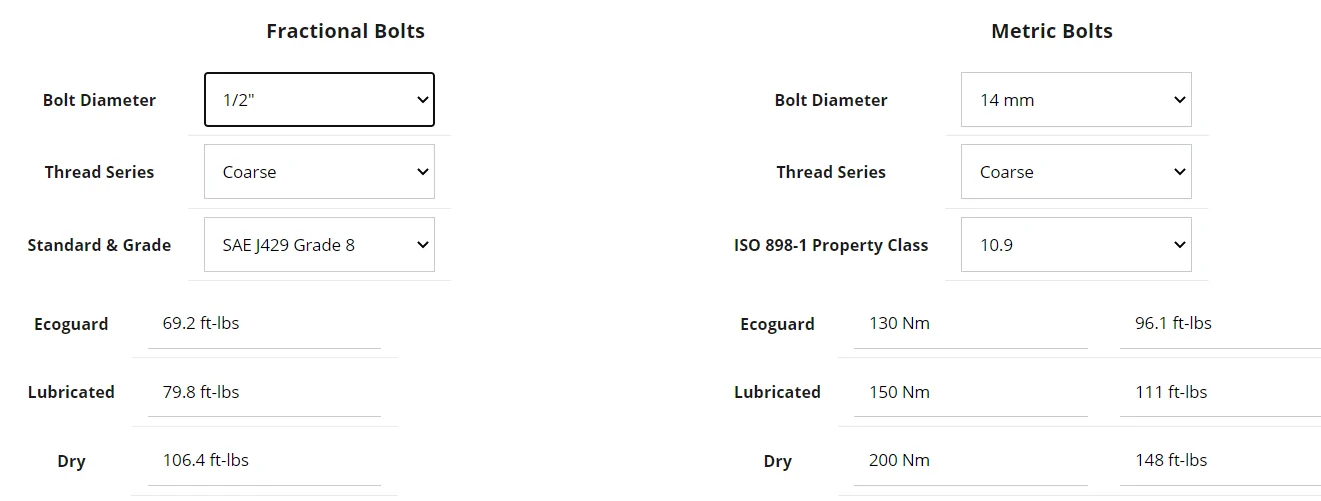
Comparing similar sized SAE/US to metric (grade 8 to CLASS 10.9)

Jeep Gladiator Not a good day on the Gladiator today… 1629995117992
 
Last edited:

ShadowsPapa

Well-Known Member
First Name
Bill
Joined
Oct 12, 2019
Threads
247
Messages
40,465
Reaction score
53,924
Location
Runnells, Iowa
Vehicle(s)
'25 JTMX, '23 JLU 4xe, '82 SX4, '73 Javelin
Occupation
Retired auto mechanic, frmr gov't ntwrk security admin
Vehicle Showcase
3
It’s the price point of this vehicle which is causing all of this over thinking. It’s high enough now that people that don’t wrench or Do a lot of work for themselves are into them. Not as many blue collar type worker owning them. yes their are many of them out there who do work, but I’d say more who don’t.

they want to work on stuff but over think everything. Multiple forums, GTO, corvettes, srt8 Jeep, chevy SS and now the gladiator forum. It’s all the same no matter which style of automobile forum your on.
OR they do stupid stuff because they don't know any better and things break. Over-thinking? So very glad I don't have to rely on others most of the time to get work done CORRECTLY and safely.
 

Gvsukids

Well-Known Member
First Name
Justin
Joined
Mar 7, 2020
Threads
26
Messages
7,303
Reaction score
6,942
Location
Grand Rapids
Website
www.youtube.com
Vehicle(s)
2020 Gladiator Sport S Max Tow
Occupation
Delivery Driver
I'm a former pro - I worked hardware for years, do restorations and spent a lot of time in college learning some of this stuff.
Sorry if I bristle when someone says "a bolt is just a bolt" but that's like saying a shoe is just a shoe or that all brake pads are the same or that tight is good enough.
I'd fire some of the folks who claim it's just a bolt.
And after reading some recent posts, I'm now understanding why some people have real trouble with their dealership if people truly believe that. That's shade-tree. NO PROFESSIONAL would ever say that. It shows lack of real experience.

Here's where I come from -
One of my first jobs was at an Ace hardware store - one of the largest in Central Iowa at the time. I did the fasteners and hardware section. The boss was picky.
Machine shop classes in HS, then onto college for my automotive degree. Fasteners were again discussed there.
I worked as a professional mechanic for years. I currently do restoration work, and I restore and re-plate hardware as well as bolts and nuts and washers. I have studied each fastener used in the various locations of cars for years. Being curious, I always wanted to know why.

Each bolt or CAP SCREW has a specific purpose and function and very specific specs.
They are also MADE differently at the factory - that speaks to strength beyond the Class or Grade.
A bolt is not just a bolt. You may be buying a "bolt" or you may be buying a cap screw - but there are important differences in clamping and torqueing.
Then there are flange head screws that literally have a flange made onto the head of the "bolt" - hasn't anyone here ever wondered WHY???
Gee, that seems goofy, wonder why they'd do that? And what's up with this crap about torque plus degrees? That's stupid, just put a breaker bar on it and make it tight, or why not just torque it according to those charts at online bolt sellers!
With the need to reduce weight but keep things strong, the rules had to change........

I'll post pictures from my machinery handbook 25th edition. There are dozens of pages covering the topic of "bolts" and several pages of tech specs! Wow, yet a bolt is just a bolt.

Here's part of why I say "a bolt isn't just a bolt" and "these aren't "just bolts""
If you walk into a hardware store and ask for bolts - you will likely first see the SAE section, grade 5 (3 marks, the most common)
And if you then ask for grade 8 - they'll take you to the US SAE grade 8 bolts unless they are ignorant of metric specs and have no clue that there's no "grade" on metric, they are "class. Look at the top of the bolt - it will say right on it 8.8 or 10.9
There are no SAE bolts in these trucks - they are metric. There is no such thing as a grade 8 metric bolt. Metric "bolts" are classified literally in classes. Class 8.8 is roughly equal to our grade 5 bolts.
Class 10.9 is roughly equal to our SAE grade 8.
So you don't want a grade 8, that's US standard thread. You want a metric in class 10.9..
Anyone who has any education on hardware will listen to grade 8 and take you back to the 1/2" bolts and not the metric area. Only those who don't know better and were flipping burgers last month will do otherwise. But then you get what you get in SOME hardware stores.

So, these are all metric, thus you need either a standard class 8.8 for non-important things, and for any suspension, steering or brakes will require class 10.9

The SHAPE and type of head is critical in the clamping force and how they torque.
Some may have heard of TTY - Torque To Yield, or "torque plus degrees or angle.
Critical spots usually use this method, not always it seems, but as an example, the steering gear to frame bolts are torque plus angle.

The stress on caliper bolts is tremendous! So the CLAMPING FORCE is critical. And it's that which holds the thing in place, not the sheer strength of the bolt in the hole, but how hard it's clamped. Thus, the specific shape of the bolt head.

OK, bolt vs. cap screw, etc.
PLEASE NOTE HOW EACH IS MADE - this is important because some hardware stores sell "bolts" as bolts and some sell CAP screws as bolts and I'll bet a big mac that 90% of those reading this thread had no idea there was even a difference, this was even a thing or that one was made by cold-heading and the other were made by hot forging.
Still think a bolt is just a bolt? Sure hope not. This alone should dispel that shade-tree idea.
Cold-heading vs forged, washer shape under head vs no washer shape.
SOME hardware stores sell them interchangeably. NOT ALWAYS, some will actually show them as cap screws next to the SKU number - good for them! So take a look - is your hardware store selling you bolts or cap screws?

Of the bolts/capscrews/flange head bolts shown below - which do you want stopping a 5,000 pound truck in under 5 seconds?

Hex cap screws
  • Flat washer facing under the head that meet specific tolerances as described under ASME B18.2.1-1996.
  • They will usually be manufactured by a cold-heading process (large runs of standard sizes) or turned CNC operation.
  • A radius under the head at the shank.
  • Body diameter of plus nothing, minus .011″ for an 1-1/4″ diameter fastener.
  • Some common fastener specifications unless otherwise specified: ASTM A449 and SAE J429 Grade 2, 5, and 8.
Hex bolts
  • A die seam across the bearing surface is permissible.
  • The typical bolt is manufactured by hot-forging process.
  • Allows a reduced body diameter to be not less than the minimum pitch diameter of the thread.
  • Some common fastener specifications unless otherwise specified: ASTM A307A, A354, and F1554.
In the pictures below - notice the difference between a simple hex head "bolt" vs a cap screw. The cap screw has a sort of washer surface made right into it. What you get at a hardware store may be a bolt, or it may be a cap screw - depending on what they order or what their supplier gives them. There's a difference and true automotive professionals know this (as opposed to DIY experts that just put bolts in holes)

Then look at the style of bolt the OP bought - bravo! A true caliper bolt complete with locking compound and washer head. There's reasons bolts have flange heads or are threaded part way or all the way - differences in stretch, clamping force and more.

This shows dozens of pages related to various "bolt" types -
20210826_093425.jpg

20210826_093440.jpg


These are specs for "flange head" bolts. VERY specific on the sizes because that directly impacts the CLAMPING force and the TORQUE.
This is the type typically used on brake parts and other important parts.
20210826_093613.jpg

20210826_093814.jpg


This is your "just a bolt" - no flange, no washer shape under the head - it's truly ordinary and often what's in a hardware store. The head WILL impact the torque (and thus clamping force or ability).
20210826_093647.jpg


And the cap screw - some hardware stores sell these as "bolts" - well, they sort of are, but are also different because of HOW THEY ARE MADE at the factory, and the shape under the head. Note the really close specs on that shape of the head and underside of the head.
20210826_093858.jpg

20210826_093938.jpg
It's good to have your input again.
 

ShadowsPapa

Well-Known Member
First Name
Bill
Joined
Oct 12, 2019
Threads
247
Messages
40,465
Reaction score
53,924
Location
Runnells, Iowa
Vehicle(s)
'25 JTMX, '23 JLU 4xe, '82 SX4, '73 Javelin
Occupation
Retired auto mechanic, frmr gov't ntwrk security admin
Vehicle Showcase
3
It's good to have your input again.
working for years in real auto shops, and one doing towing, I've seen a lot of stuff and it frankly is scary at times. I've seen bolts in calipers snapped off. (because they were just bolts and didn't have the clamping force so the thing got loose and sheered the bolt.......)
CLAMPING force holds these, not the shank fitting snug in the hole. If it's not clamped tight enough, the parts move independently and literally sheer the bolt.
The shape and size of the head helps determine when that torque wrench will click. Friction of the head against the body of the part. It's sort of like brakes, it's very much like force against an area, pressure per square inch - vary the square inches or head type (cap vs bolt vs flange head) and you vary the force.

It's not called over-thinking - it's called thinking AT ALL. And some just don't. They aren't engineers, they aren't trained.
No wonder my old boss called the internet the misinformation stupid highway.
If there wasn't a reason for the various fasteners, then they'd ALL be the SAME. Why not just have all "bolts" be identical in the head shape, why have a cap screw? Why even bother having a flange head bolt? What's the point if an ordinary BOLT will do?
No one bothers to wonder why that type of bolt was used there specifically - yet it's ok to put anything back in that hole.
 

Sponsored

OP
OP
Dryfly24

Dryfly24

Well-Known Member
First Name
George
Joined
Feb 7, 2019
Threads
47
Messages
1,426
Reaction score
4,157
Location
Las Cruces, NM
Vehicle(s)
2020 Gladiator Rubicon, 2016 Indian Springfield
Occupation
Retired and loving it
I can go to Ace hardware and get grade 8 bolts in any size I want.

Sometimes I'm absolutely miffed at the forum users here compared to users on other car forums I've been on.

Not a dig at OP, but its literally just a bolt. Go get the correct size hardware (at the HARDWARE store) and replace it, brakes arent some new complex engineering marvel. It obviously shouldnt happen but its not that big of a deal either. That bolt size is INCREDIBLY common.
Have you read through the whole thread?

That may or may not be true, but common size or not, the fact remains that there were none in my city, and I had to drive over fifty miles one way to El Paso the next day to get them. None of the auto parts stores or dealerships actually had any there at the time and had to order them.

There were only two grade 8, metric 14 bolts of that particular size physically here in the area that anyone could actually account for, and I got them both.

I tried literally every place that should have had them, including a store that specializes in bolts. Without that common little bolt you’re talking about, my truck was dead in the water.

So guess what, as soon as I can locate more I‘m buying them and carrying a few spares around with me from now on; because from everything I ve been hearing since my incident, it happens more than you’d think. But that’s just me, to each his own and all that…
 

ShadowsPapa

Well-Known Member
First Name
Bill
Joined
Oct 12, 2019
Threads
247
Messages
40,465
Reaction score
53,924
Location
Runnells, Iowa
Vehicle(s)
'25 JTMX, '23 JLU 4xe, '82 SX4, '73 Javelin
Occupation
Retired auto mechanic, frmr gov't ntwrk security admin
Vehicle Showcase
3
Have you read through the whole thread?

That may or may not be true, but common size or not, the fact remains that there were none in my city, and I had to drive over fifty miles one way to El Paso the next day to get them. None of the auto parts stores or dealerships actually had any there at the time and had to order them.

There were only two grade 8, metric 14 bolts of that particular size physically here in the area that anyone could actually account for, and I got them both.

I tried literally every place that should have had them, including a store that specializes in bolts. Without that common little bolt you’re talking about, my truck was dead in the water.

So guess what, as soon as I can locate more I‘m buying them and carrying a few spares around with me from now on; because from everything I ve been hearing since my incident, it happens more than you’d think. But that’s just me, to each his own and all that…
People seem to think their own little world defines the rest of the world. You can't go into our local Ace store and find THOSE bolts in that size. Plus, those are flange head.
Not every store is the same and yet we get told that we're idiots because THEY can buy them anywhere, so WE can buy them anywhere and they're ALL the same.
That's a really narrow view - I can buy xx here so you can get them at ANY hardware store. Right, sure, ok.
They are all the same, you know - engineers are always over-thinking things. Why don't they just stick bolts in there? A lot of people do! And of course THAT alone makes it right because the responder did it.
 
OP
OP
Dryfly24

Dryfly24

Well-Known Member
First Name
George
Joined
Feb 7, 2019
Threads
47
Messages
1,426
Reaction score
4,157
Location
Las Cruces, NM
Vehicle(s)
2020 Gladiator Rubicon, 2016 Indian Springfield
Occupation
Retired and loving it
People seem to think their own little world defines the rest of the world. You can't go into our local Ace store and find THOSE bolts in that size. Plus, those are flange head.
Not every store is the same and yet we get told that we're idiots because THEY can buy them anywhere, so WE can buy them anywhere and they're ALL the same.
That's a really narrow view - I can buy xx here so you can get them at ANY hardware store. Right, sure, ok.
They are all the same, you know - engineers are always over-thinking things. Why don't they just stick bolts in there? A lot of people do! And of course THAT alone makes it right because the responder did it.
@ShadowsPapa might appreciate this.

Reminds me of a story I read many years ago about how the Air Force was having a problem with a certain fighter plane. I’m going completely off memory so excuse me if I don’t get all the details exactly right.

They had lost several planes and pilots, when this particular model would inexplicably go into a sudden dive that the pilots couldn’t pull it out of. Upon inspection after the fact, they couldn’t find any reason for it as everything appeared to be fine. No electronic or mechanical deficiencies could be located on the rest of the fleet. They had to ground them despite the fact that they were in perfect working order.

The young at the time hot shot pilot Chuck Yeager volunteered to take one up and see what he could find. He realized that the only time it happened was during certain high stress maneuvering so he started putting the plane through its paces. To make a long story short, he got The plane to lock up and go into a nose dive. No matter how hard he tried he couldn’t pull it out so he did the unthinkable. He pushed forward on the stick at the very last remaining seconds and the plane suddenly unlocked and he was able to pull it back up.

When he got it back on the ground the engineers tore the plane apart. They looked at the rudder and wing flap mechanism and found one tiny little bolt that had been installed right side up counter to the design specs which called for it to be installed upside down.

They finally traced every plane that had been built this way back to one very senior mechanic. When he saw the specs calling for that bolt to be inserted upside down, he just knew better than than the hot shot college kid engineers who didn’t know shit about real world mechanical engineering. He knew that bolt should‘ve been put in the right way. His way.

Well, as it turned out, there was a very good reason for that bolt going in the way the specs called for. If put in right side up, the head could get in the way of the rest of the wing flap mechanism under certain conditions when under strong stress. This guy’s home spun, shade tree know how, cost not just millions of tax dollars but the lives of several good men. All over the way one insignificant little bolt was inserted counter to factory specs.
 

ShadowsPapa

Well-Known Member
First Name
Bill
Joined
Oct 12, 2019
Threads
247
Messages
40,465
Reaction score
53,924
Location
Runnells, Iowa
Vehicle(s)
'25 JTMX, '23 JLU 4xe, '82 SX4, '73 Javelin
Occupation
Retired auto mechanic, frmr gov't ntwrk security admin
Vehicle Showcase
3
Why it matters if that bolt is a bolt, a cap screw or a flange head bolt - TORQUE vs. stretch and clamping force.
Found this in my notes and documents -

During tightening roughly 90% of input energy is lost overcoming the mating friction under the head, nut, and mating threads.
Only 10% of input energy is converted into bolt stretch. (this is over-simplified of course)
In most situations there is a relatively simple relationship between the torque applied to the bolt or nut and the tension created in it. Usually this relationship is linear. For such cases, the equation:
Torque = K x d x F is applicable; where d is the nominal diameter, F is the clamp load, and K is a
torque variable (Nut Factor).
This equation implies a linear elastic zone of torque verses angle-tightening curve. For most
common fastener materials the engineering values of the first two variables (d & F) are well defined.
The problem with this equation lies in the Nut Factor (K).
The K, or nut factor, can be thought of as anything that increases or decreases the friction within
the threads of the nut. This is a combination of three sub-factors:
K1, a geometric factor- the shape of the threads. Variation in the shape of the thread may
cause friction to increase or decrease.
K2, a thread friction related factor- the friction between the threads of the bolt and the
threads of the nut. (plating or lube is a factor - zinc plating changes things)
K3, an underhead friction related factor

Hmmm, bolt has the entire hex head in contact with the surface below, cap screw has less surface area due to the built-in "washer" shape under the head. Flange head has more surface area in contact.

The question related to threads all the way to the head vs a longer unthreaded area - brake calipers rely on clamping forces to prevent sheer. The threads are the smallest part of the bolt and thus the weakest part of the bolt. If a bolt is going to break due to tension or sheer, it would most likely be in the threaded area.

I've got pages of information on clamping forces, bolt stretch, torque control, sheer forces and so on. When you modify suspension and brakes, and do restoration, or want to pass certain certifications or tests........
 

Sponsored

OP
OP
Dryfly24

Dryfly24

Well-Known Member
First Name
George
Joined
Feb 7, 2019
Threads
47
Messages
1,426
Reaction score
4,157
Location
Las Cruces, NM
Vehicle(s)
2020 Gladiator Rubicon, 2016 Indian Springfield
Occupation
Retired and loving it
Why it matters if that bolt is a bolt, a cap screw or a flange head bolt - TORQUE vs. stretch and clamping force.
Found this in my notes and documents -

During tightening roughly 90% of input energy is lost overcoming the mating friction under the head, nut, and mating threads.
Only 10% of input energy is converted into bolt stretch. (this is over-simplified of course)
In most situations there is a relatively simple relationship between the torque applied to the bolt or nut and the tension created in it. Usually this relationship is linear. For such cases, the equation:
Torque = K x d x F is applicable; where d is the nominal diameter, F is the clamp load, and K is a
torque variable (Nut Factor).
This equation implies a linear elastic zone of torque verses angle-tightening curve. For most
common fastener materials the engineering values of the first two variables (d & F) are well defined.
The problem with this equation lies in the Nut Factor (K).
The K, or nut factor, can be thought of as anything that increases or decreases the friction within
the threads of the nut. This is a combination of three sub-factors:
K1, a geometric factor- the shape of the threads. Variation in the shape of the thread may
cause friction to increase or decrease.
K2, a thread friction related factor- the friction between the threads of the bolt and the
threads of the nut. (plating or lube is a factor - zinc plating changes things)
K3, an underhead friction related factor

Hmmm, bolt has the entire hex head in contact with the surface below, cap screw has less surface area due to the built-in "washer" shape under the head. Flange head has more surface area in contact.

The question related to threads all the way to the head vs a longer unthreaded area - brake calipers rely on clamping forces to prevent sheer. The threads are the smallest part of the bolt and thus the weakest part of the bolt. If a bolt is going to break due to tension or sheer, it would most likely be in the threaded area.

I've got pages of information on clamping forces, bolt stretch, torque control, sheer forces and so on. When you modify suspension and brakes, and do restoration, or want to pass certain certifications or tests........
I’ll take your word for all that cause I have no idea what you said.

I’m just hoping this time around they tightened the damned things down good enough… ?
 

ShadowsPapa

Well-Known Member
First Name
Bill
Joined
Oct 12, 2019
Threads
247
Messages
40,465
Reaction score
53,924
Location
Runnells, Iowa
Vehicle(s)
'25 JTMX, '23 JLU 4xe, '82 SX4, '73 Javelin
Occupation
Retired auto mechanic, frmr gov't ntwrk security admin
Vehicle Showcase
3
@ShadowsPapa might appreciate this.

Reminds me of a story I read many years ago about how the Air Force was having a problem with a certain fighter plane. I’m going completely off memory so excuse me if I don’t get all the details exactly right.

They had lost several planes and pilots, when this particular model would inexplicably go into a sudden dive that the pilots couldn’t pull it out of. Upon inspection after the fact, they couldn’t find any reason for it as everything appeared to be fine. No electronic or mechanical deficiencies could be located on the rest of the fleet. They had to ground them despite the fact that they were in perfect working order.

The young at the time hot shot pilot Chuck Yeager volunteered to take one up and see what he could find. He realized that the only time it happened was during certain high stress maneuvering so he started putting the plane through its paces. To make a long story short, he got The plane to lock up and go into a nose dive. No matter how hard he tried he couldn’t pull it out so he did the unthinkable. He pushed forward on the stick at the very last remaining seconds and the plane suddenly unlocked and he was able to pull it back up.

When he got it back on the ground the engineers tore the plane apart. They looked at the rudder and wing flap mechanism and found one tiny little bolt that had been installed right side up counter to the design specs which called for it to be installed upside down.

They finally traced every plane that had been built this way back to one very senior mechanic. When he saw the specs calling for that bolt to be inserted upside down, he just knew better than than the hot shot college kid engineers who didn’t know shit about real world mechanical engineering. He knew that bolt should‘ve been put in the right way. His way.

Well, as it turned out, there was a very good reason for that bolt going in the way the specs called for. If put in right side up, the head could get in the way of the rest of the wing flap mechanism under certain conditions when under strong stress. This guy’s home spun, shade tree know how, cost not just millions of tax dollars but the lives of several good men. All over the way one insignificant little bolt was inserted counter to factory specs.
I had read that - and it relates to when I had my steering lock up after paying for a shop to do an alignment.
I KNEW these places relied on the original alignment specs released. They never updated according to supplements or amendments to the TSMs. So whatever the specs were when the car was entering production is what they aligned to. I had later little-known modified specs. I had the TSM supplement with modified specs. Further, one of the pages stated that the tie rod clamps MUST FACE DOWN! Never up, never back, ALWAYS DOWN. That was published in the book.
So I took PRINTED copies of that page and the new specs.
I went to pick up the car and as I was driving out of their lot, made a right turn onto the 4 lane street. I started into the turn but was unable to straighten the car back out. The steering was locked SOLID. I had to give it a hell of a big yank and it came loose and I just missed being hit by an 18 wheeler in the other lane.
Those idiots had faced those clamps UP and they caught the cross member and snagged the steering dampener. You buy them books, send 'em to school and all they do is eat the covers off the books. They had the info right there in front of them and ignored it.

I literally walked out of one job in a shop while I was in college - what I saw the others doing on brakes and steering scared the crap out of me. The boss wanted ME to do something I knew was dangerous, and wrong - on a station wagon belonging to a family of 5 on vacation. I said no, I am not killing anyone, walked out to my truck, calmly backed it up to the door, loaded my tools and drove away and never looked back.
Luckily my next boss wanted everything done right - or else.


Top