Stan H
Well-Known Member
My front driveshaft isnt in the greatest shape . There is the tiniest amount of slack in the splines but I also have 159,100 miles.
Sponsored

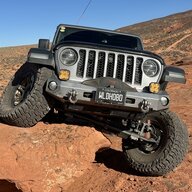
The rear is an Adam’s two piece. So I have a carrier bearing, and a spacer provided by Adam’s. All joints are 1350 single.Are you running a Dauble Cardain in the rear @WILDHOBO , and are ypu running without a carrier bearing? Or is that even possible?
How is the 2 piece designed doesnt it have to have a cardain? Or is it utilizing a rzeppa ? I really dread having to replace mine because dont you have to switch out the yoke ?The rear is an Adam’s two piece. So I have a carrier bearing, and a spacer provided by Adam’s. All joints are 1350 single.
My front is a double cardan 1350 from a local Denver driveline shop.
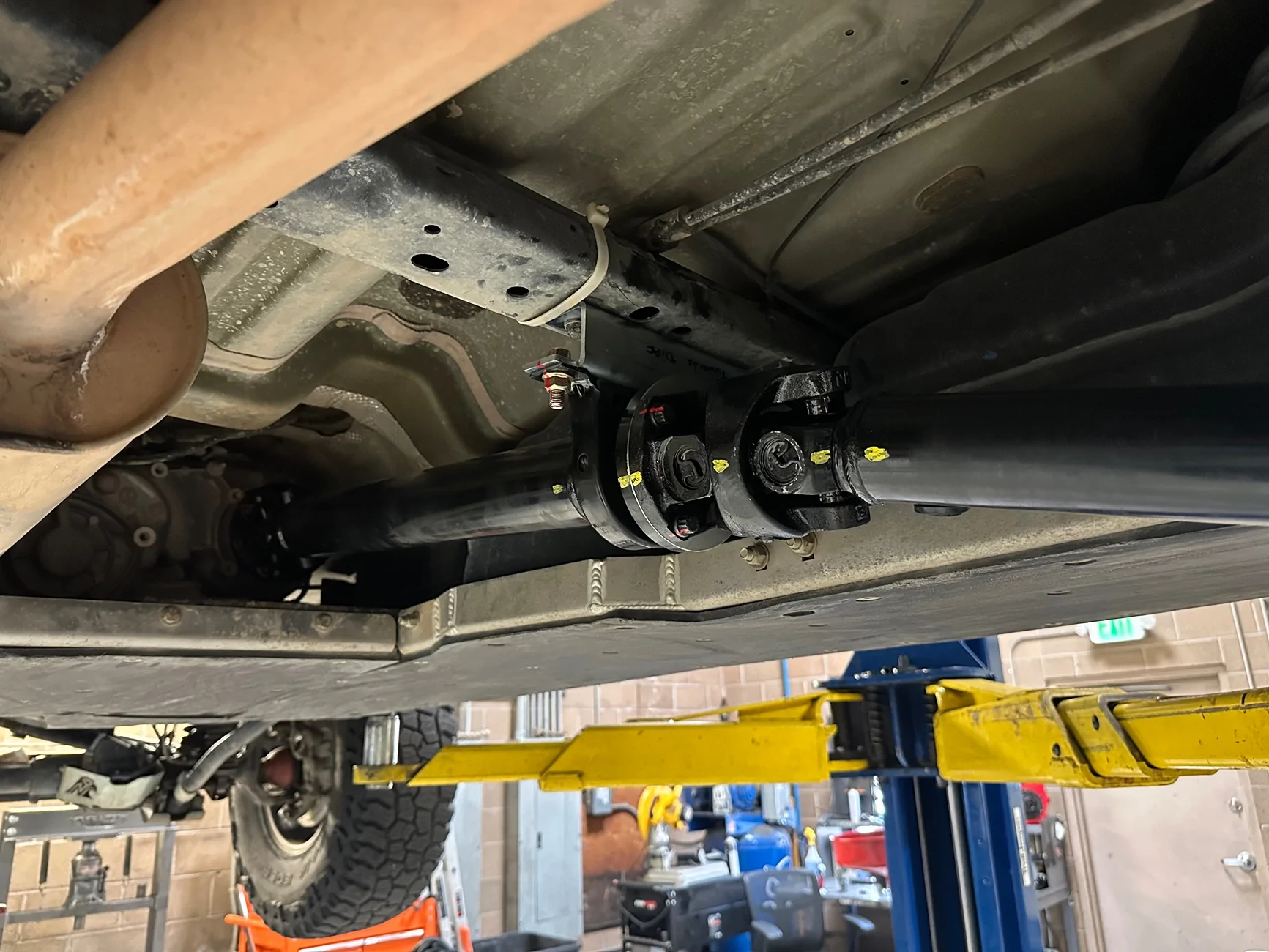
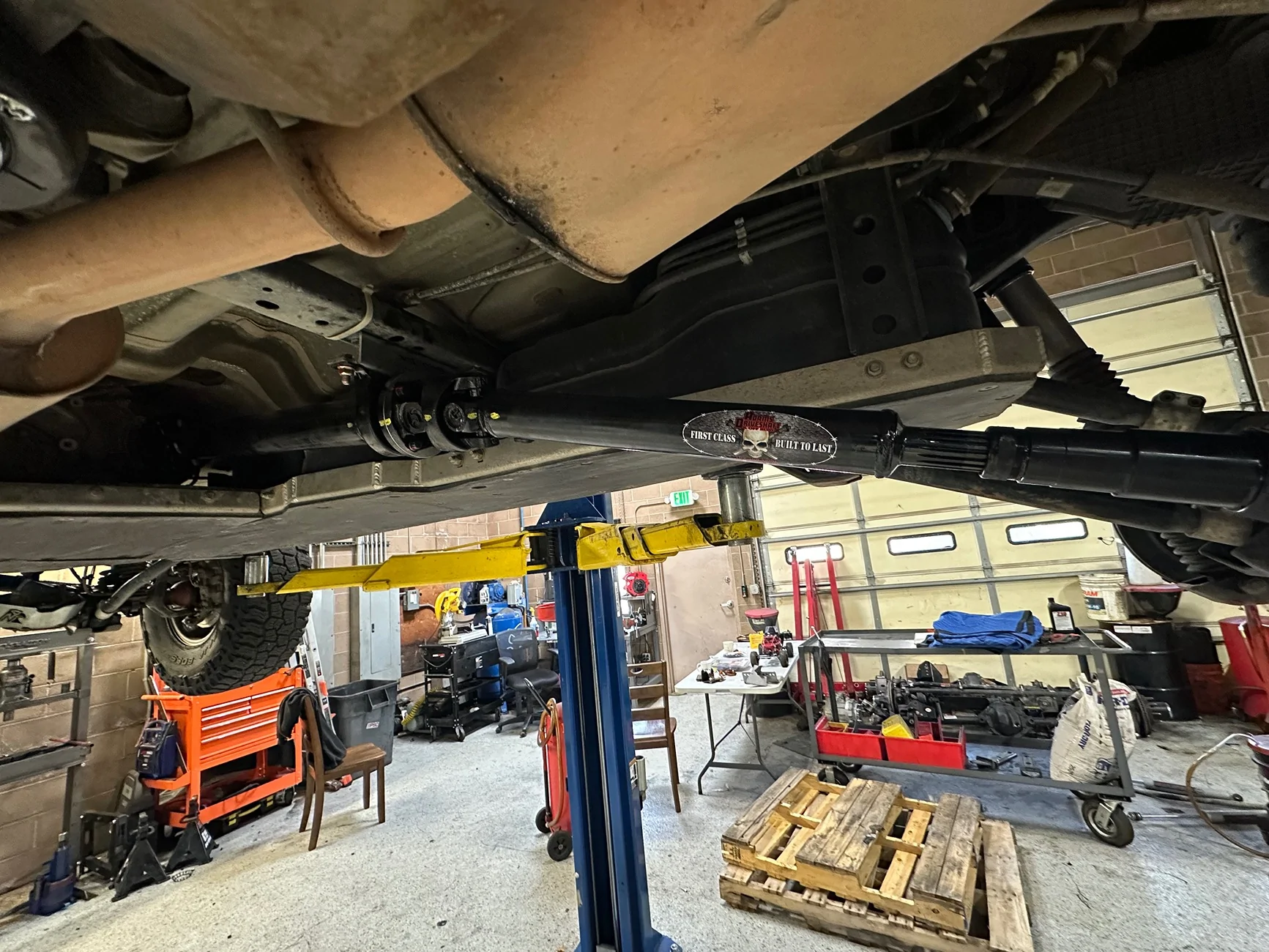
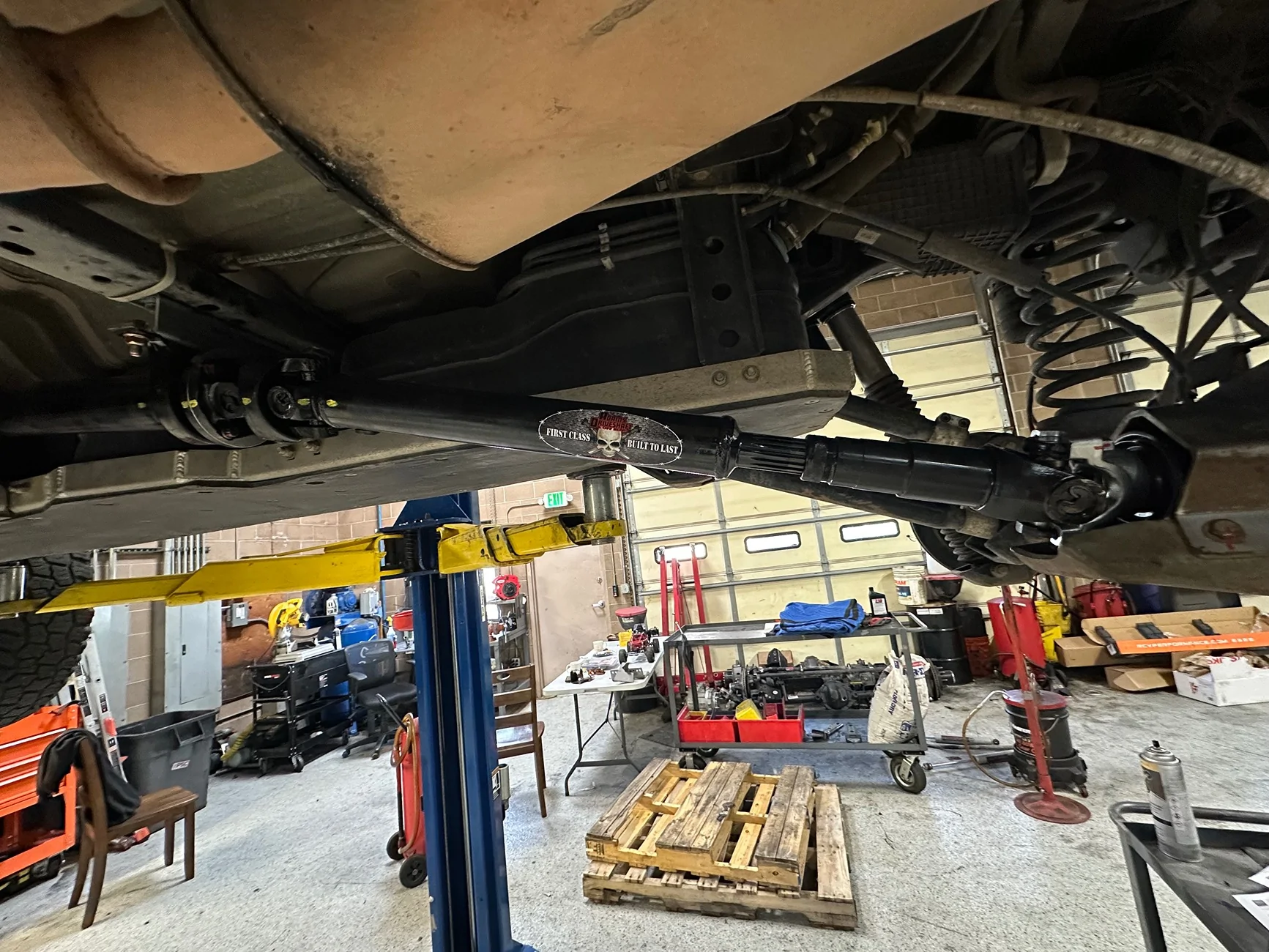
1350 to transfer case, 1350 from back of carrier bearing, 1350 into pinion yoke. I just dug up some pictures from when it went in last march. I actually think it is double at the carrier bearing. Either way. Beefy as all hell. I’ve hit it a bunch of times and it just keeps going. Don’t get me wrong. I do not like hitting my drive shaft. Avoided at mostly all costs.How is the 2 piece designed doesnt it have to have a cardain? Or is it utilizing a rzeppa ? I really dread having to replace mine because dont you have to switch out the yoke ?

I have the Teraflex geo brackets in the front with Core Crawl johnny joint control arms. I had to cut a 1/4" off of the arms to get them back to stock length. Believe that the arms are met to work without the geo brackets. When you lift, most times you have to have about 1/4" longer arms. Think you are having the same problem as I had with the geo brackets. The arms are longer than stock.I'll do my biannual check-in regarding FAD removal + 1350 front and rear (single-piece) driveshafts with u-joints/double-cardan joints all around:
I'm beyond frustrated with the vibration at this point, and seriously trying to think of options. I originally felt that FAD removal did not introduce any vibration, or at least nothing significant, but some recent data is changing my mind on that.
I think the rear is way more susceptible to and responsible for vibrations above 65-70 mph, but I have my own personal "trauma" behind that bias. When I first installed my Adam's 1350 (front and rear) the vibration was something I couldn't live with, so I had a shop check it out - they had a driveline specialist balance it out. I think it helped at first, but the first time I took it above 80 was a disaster...literally. I got severe vibrations/rumbling right before the driveshaft detached from the yoke. Yea...on the freeway. Luckily the damage was actually "minimal" - it dented my exhaust, and slammed into my gas tank skid plate bracket which in turn tweaked the carrier bracket cross-member. It was that last part that meant I couldn't "go back" to stock/two-piece because now I no longer had a mount for the carrier.
Adam's stepped up and gave me a full-refund, which I used towards a local custom built 1350 single-piece. The working theory was either the driveshaft was too short and it slipped out of the yoke, or it rubbed that same drop bracket I mentioned and compromised the shaft enough to lead to failure.
Anyways, I still got vibration with the new shaft, and have just lived with it for the last year+. Now I've been messing with the front a bit more: I installed TeraFlex control arm relocation brackets and FOX sway bar disconnects. Normally that wouldn't be related, but when pairing the relocation brackets with TeraFlex's own adjustable control arms...I basically had to shorten the lowers as far as they'd go...and even then it's pushing the axle forward a little. This means the coils are now a bit too close for comfort to the sway bar (and the disconnects), so I had to go a bit aggressive on the uppers/caster angle. I'm sitting at >7 degrees...and I think for the first time I just proved that the front is contributing in part or significantly to the vibration, because it's definitely worse than it ever was.
So now I'm thinking:
* Try to rotate the pinion back forward and get it closer to straight (without compromising caster or having clearance issues).
* Jump up to 3.5" or 4.5" springs which would naturally rotate the pinion forward (except my FOX shocks are the 2-3" range spec with a 2" extension bracket)
* Switch the front back to OEM with the Rzeppa joint (and hope that I didn't damage the joint moving it around so much)
tl;dr never. friggen. ends.
Reminds me of another option: remove the brackets to bring the axle back a little. I swear they helped mellow out some harsh bumps though.I have the Teraflex geo brackets in the front with Core Crawl johnny joint control arms. I had to cut a 1/4" off of the arms to get them back to stock length. Believe that the arms are met to work without the geo brackets. When you lift, most times you have to have about 1/4" longer arms. Think you are having the same problem as I had with the geo brackets. The arms are longer than stock.
It’s truly a rough problem. I’m on my third front driveshaft because of two rezeppa failures, both due to angle. I opted to favor the spring perch angle as much as possible, but that makes the driveshaft way worse. And I’ve killed those shafts with a fad. Without a fad, shafts would last a month tops. I truly think there is only one sure way to fix this, but it royally pisses me off, since jeep decided to remove the fad. As others have said, if they removed it to improve something, by removing the housing, fine. One thing better, one thing worse. But they improved nothing, AND made it worse.I'll do my biannual check-in regarding FAD removal + 1350 front and rear (single-piece) driveshafts with u-joints/double-cardan joints all around:
I'm beyond frustrated with the vibration at this point, and seriously trying to think of options. I originally felt that FAD removal did not introduce any vibration, or at least nothing significant, but some recent data is changing my mind on that.
I think the rear is way more susceptible to and responsible for vibrations above 65-70 mph, but I have my own personal "trauma" behind that bias. When I first installed my Adam's 1350 (front and rear) the vibration was something I couldn't live with, so I had a shop check it out - they had a driveline specialist balance it out. I think it helped at first, but the first time I took it above 80 was a disaster...literally. I got severe vibrations/rumbling right before the driveshaft detached from the yoke. Yea...on the freeway. Luckily the damage was actually "minimal" - it dented my exhaust, and slammed into my gas tank skid plate bracket which in turn tweaked the carrier bracket cross-member. It was that last part that meant I couldn't "go back" to stock/two-piece because now I no longer had a mount for the carrier.
Adam's stepped up and gave me a full-refund, which I used towards a local custom built 1350 single-piece. The working theory was either the driveshaft was too short and it slipped out of the yoke, or it rubbed that same drop bracket I mentioned and compromised the shaft enough to lead to failure.
Anyways, I still got vibration with the new shaft, and have just lived with it for the last year+. Now I've been messing with the front a bit more: I installed TeraFlex control arm relocation brackets and FOX sway bar disconnects. Normally that wouldn't be related, but when pairing the relocation brackets with TeraFlex's own adjustable control arms...I basically had to shorten the lowers as far as they'd go...and even then it's pushing the axle forward a little. This means the coils are now a bit too close for comfort to the sway bar (and the disconnects), so I had to go a bit aggressive on the uppers/caster angle. I'm sitting at >7 degrees...and I think for the first time I just proved that the front is contributing in part or significantly to the vibration, because it's definitely worse than it ever was.
So now I'm thinking:
* Try to rotate the pinion back forward and get it closer to straight (without compromising caster or having clearance issues).
* Jump up to 3.5" or 4.5" springs which would naturally rotate the pinion forward (except my FOX shocks are the 2-3" range spec with a 2" extension bracket)
* Switch the front back to OEM with the Rzeppa joint (and hope that I didn't damage the joint moving it around so much)
tl;dr never. friggen. ends.
They probably did, but I’ll take bumps over a weird axle position. I’m running teraflex alpine IR short arms, with a larger lift than you, and I’m fine without brackets. Would it be smoother with brackets or long arms? Sure. But that’s overkill for something that isn’t my daily driver anymore.Reminds me of another option: remove the brackets to bring the axle back a little. I swear they helped mellow out some harsh bumps though.
I actually still have the FAD motor, but the reason I removed it in the first place is because of the Dana 1350 half shafts I got. It's been a minute, but if I remember correctly...I had to remove the plastic insert that normally sits between the nub at the end of the outer shaft and the pilot hole on the inner shaft...basically so there isn't metal on metal rubbing when the axle is disconnected.If I were you, I’d buy a fad and wire it up. You have the housing. You might as well use it. Don’t get me wrong. That sucks and you shouldn’t have to. Jeep did this. But it’s probably the cheapest solution.
Not sure how the geo brackets would lead to a "weird axle position"? They effectively return the axle to its stock geometry and movement after lifting. I don't daily the JT and never have, but the difference the brackets make over washboards is far too good for me to give them up. With 4.5" front springs and 37s it handles bumps better than it did stock on and off road (the triangulated 4 link in the rear is another big part of that). The only negative of the brackets is the little bit of ground clearance lost. I've scraped them on rocks a few times but they've never hung me up. Even on the wife's JLUR that is our rock rig we've never had an issue with the brackets. Not in the rubicon or John Bull or Pritchett canyon.They probably did, but I’ll take bumps over a weird axle position. I’m running teraflex alpine IR short arms, with a larger lift than you, and I’m fine without brackets. Would it be smoother with brackets or long arms? Sure. But that’s overkill for something that isn’t my daily driver anymore.
Well they are fixed…so it only brings it back to stock if it has shifted by the offset they designed it for (within a margin of error). Throwing adjustable arms into the mix…at least in my case: the shortest length is longer than stock, so it pushes the axle forward. Why use both? I got the adjustable arms first to dial things in, and the brackets much later to try and level them out.Not sure how the geo brackets would lead to a "weird axle position"? They effectively return the axle to its stock geometry and movement after lifting.
Too much caster because the lowers are too long isn't a weird axle position, it is simply lowers that are too long. At lower lifts there's no reason to run both, but I'd still go brackets first as they do more for the ride quality.Well they are fixed…so it only brings it back to stock if it has shifted by the offset they designed it for (within a margin of error). Throwing adjustable arms into the mix…at least in my case: the shortest length is longer than stock, so it pushes the axle forward. Why use both? I got the adjustable arms first to dial things in, and the brackets much later to try and level them out.
I guess my point was that the lowers at their shortest length is effectively the limit to how far back you can push the axle.Too much caster because the lowers are too long isn't a weird axle position, it is simply lowers that are too long.
I’m around 4” (3” AEV HD with 1” spacer).At lower lifts there's no reason to run both, but I'd still go brackets first as they do more for the ride quality.
Adjustable uppers could fix the caster while retaining the brackets and Adjustable lowers.I guess my point was that the lowers at their shortest length is effectively the limit to how far back you can push the axle.
I’m around 4” (3” AEV HD with 1” spacer).


