
Sponsored

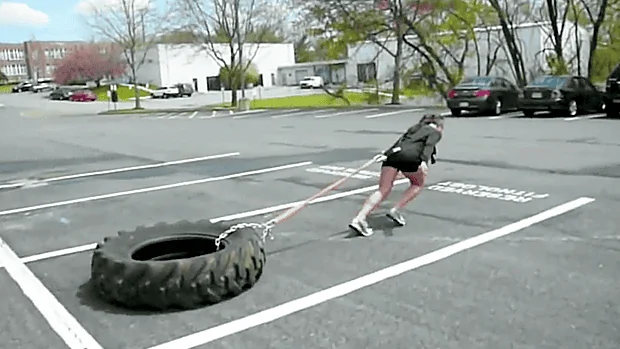
Gladiator pulling tire

Status
Not open for further replies.

jac04

Well-Known Member
First Name
Jeff
Joined
Apr 20, 2021
Threads
27
Messages
1,545
Reaction score
2,246
Location
CT
Vehicle(s)
2021 Mojave, 2014 JKRX SWB
I've never heard it the term "pulling tire". But, I have heard the term "power side" or "power tire" used to describe the side or tire that will typically start to spin first when both tires on the drive axle have similar static traction conditions and you 'hit the gas'.

If you read all of the above posts, you'll understand that "power tire" isn't really an accurate description, since the tire that starts to spin first doesn't have any more torque going to it, it simply ends up 'breaking free' first due to less traction.

On the Gladiator, it is the right rear tire that will tend to spin first. This is because the right rear tire is being unloaded or lifted slightly by the torque of the drivetrain.
 

ShadowsPapa

Well-Known Member
First Name
Bill
Joined
Oct 12, 2019
Threads
247
Messages
40,440
Reaction score
53,853
Location
Runnells, Iowa
Vehicle(s)
'25 JTMX, '23 JLU 4xe, '82 SX4, '73 Javelin
Occupation
Retired auto mechanic, frmr gov't ntwrk security admin
Vehicle Showcase
3
I've never heard it the term "pulling tire". But, I have heard the term "power side" or "power tire" used to describe the side or tire that will typically start to spin first when both tires on the drive axle have similar static traction conditions and you 'hit the gas'.

If you read all of the above posts, you'll understand that "power tire" isn't really an accurate description, since the tire that starts to spin first doesn't have any more torque going to it, it simply ends up 'breaking free' first due to less traction.

On the Gladiator, it is the right rear tire that will tend to spin first. This is because the right rear tire is being unloaded or lifted slightly by the torque of the drivetrain.
But it takes some hefty torque to do that. And once you are moving, just driving along, that effect isn't there to any great impact. Driving down the highway there's not enough forces to do that.

If you are looking at any car or truck that is rear wheel drive from the rear, the engine is turning counter-clockwise and so is the driveshaft and pinion in the rear axle assembly.
Because the pinion is on the right side of the ring gear as you look at it from the rear, if enough torque is applied, in an effort to try to climb that ring gear, the right end of the rear axle is lifted slightly.
This only happens under some pretty decent torque trying to get the forward motion of the car or truck started.
Once it's moving, there is no appreciable lift or difference on either side. It's only when the vehicle isn't moving and the laws of physics about bodies at rest apply
(bodies at rest tend to stay at rest and usually ask another body to get them a beer, bodies in motion tend to stay in motion so they can get their own beer)
Anyway yeah, you are right, but that only applies when you "hit the gas" and the vehicle is still.
I have enough torque from the built 360 in my 73 that I can break either tire loose - because the caltracs hold the rear axle steady and actually force it down hard on both sides the more gas I give it from a dead stop.
(I have since put a twin-grip differential under it and now if I do break things loose, it's both of them)
I put torque-links on my 70 to help force the rear tires down hard under heavy acceleration - they transferred weight from the body to the axle when you really nailed it.

Anyway, that torque thing where the forces taking off with enough torque from a dead stop try to lift the right end of the rear axle will pretty much only, or mostly, apply when you are sitting, or barely moving, and try to make it move faster at a quicker rate of acceleration.
Some drag racing friends run air shocks on the rear with individual lines and put several pounds more air in the right shock to offset that issue.

even if this video doesn’t add much to the convo i found it interesting
That decades old video has been on youtube since hector was a pup............

I was going to link to it from YT once I found it again because it's a good explanation of differential action and further, how BOTH WHEELS are driven!
I think there was another one similar to it from the same time period that was very good as well.
I think maybe @sharpsicle linked to it in another thread a few weeks back. I bet he knows the YT videos I'm referring to.
 
Last edited:

Sponsored

Gvsukids

Well-Known Member
First Name
Justin
Joined
Mar 7, 2020
Threads
26
Messages
7,259
Reaction score
6,898
Location
Grand Rapids
Website
www.youtube.com
Vehicle(s)
2020 Gladiator Sport S Max Tow
Occupation
Delivery Driver
Where's @hickman785 in all of this discussion? Was his question answered as he had hoped?
 

ShadowsPapa

Well-Known Member
First Name
Bill
Joined
Oct 12, 2019
Threads
247
Messages
40,440
Reaction score
53,853
Location
Runnells, Iowa
Vehicle(s)
'25 JTMX, '23 JLU 4xe, '82 SX4, '73 Javelin
Occupation
Retired auto mechanic, frmr gov't ntwrk security admin
Vehicle Showcase
3
That's the one - the whole one I was thinking of. It's a really great vid.
And it shows very well how only the very very early cars had a single wheel drive, often by a chain.
But differentials were actually invented hundreds of years earlier and were actually used in the 1800s. I believe they were actually patented almost 200 years ago.
 

ShadowsPapa

Well-Known Member
First Name
Bill
Joined
Oct 12, 2019
Threads
247
Messages
40,440
Reaction score
53,853
Location
Runnells, Iowa
Vehicle(s)
'25 JTMX, '23 JLU 4xe, '82 SX4, '73 Javelin
Occupation
Retired auto mechanic, frmr gov't ntwrk security admin
Vehicle Showcase
3
My bug would like a word with you. ;)
That's not a car.................... but even if it were, the engine is behind the differential and axles so you are actually driving it backwards. That's the problem with the VW - the engineers who designed the drivetrain didn't talk to the engineers who created the interior so the seats were put in backwards and facing the trunk instead of the front of the vehicle. ?
 

Sponsored

ShadowsPapa

Well-Known Member
First Name
Bill
Joined
Oct 12, 2019
Threads
247
Messages
40,440
Reaction score
53,853
Location
Runnells, Iowa
Vehicle(s)
'25 JTMX, '23 JLU 4xe, '82 SX4, '73 Javelin
Occupation
Retired auto mechanic, frmr gov't ntwrk security admin
Vehicle Showcase
3
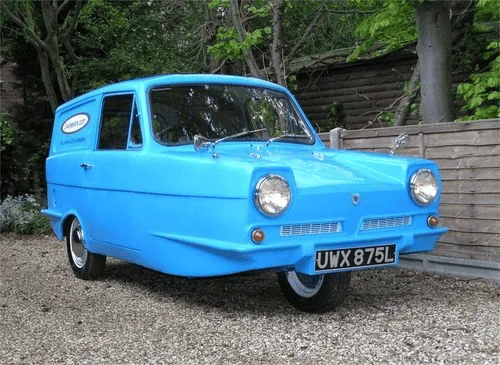
On my 1969 King Midget it is the right rear tire that does the job. Only has one chain driven rear wheel…….
Which I find interesting as I had riding lawn mowers of that era that had simple differentials, made by Peerless, a division of Tecumseh.
 

ShadowsPapa

Well-Known Member
First Name
Bill
Joined
Oct 12, 2019
Threads
247
Messages
40,440
Reaction score
53,853
Location
Runnells, Iowa
Vehicle(s)
'25 JTMX, '23 JLU 4xe, '82 SX4, '73 Javelin
Occupation
Retired auto mechanic, frmr gov't ntwrk security admin
Vehicle Showcase
3
If I'm being honest, my first thought on a "pulling tire" was this:

1647619092679.png
Obviously, that is not a Jeep owner or they'd have their strap and tow hooks hooked onto that thing.
 

jac04

Well-Known Member
First Name
Jeff
Joined
Apr 20, 2021
Threads
27
Messages
1,545
Reaction score
2,246
Location
CT
Vehicle(s)
2021 Mojave, 2014 JKRX SWB
But it takes some hefty torque to do that. And once you are moving, just driving along, that effect isn't there to any great impact. Driving down the highway there's not enough forces to do that.

If you are looking at any car or truck that is rear wheel drive from the rear, the engine is turning counter-clockwise and so is the driveshaft and pinion in the rear axle assembly.
Because the pinion is on the right side of the ring gear as you look at it from the rear, if enough torque is applied, in an effort to try to climb that ring gear, the right end of the rear axle is lifted slightly.
This only happens under some pretty decent torque trying to get the forward motion of the car or truck started.
Once it's moving, there is no appreciable lift or difference on either side. It's only when the vehicle isn't moving and the laws of physics about bodies at rest apply
(bodies at rest tend to stay at rest and usually ask another body to get them a beer, bodies in motion tend to stay in motion so they can get their own beer)
Anyway yeah, you are right, but that only applies when you "hit the gas" and the vehicle is still.
I have enough torque from the built 360 in my 73 that I can break either tire loose - because the caltracs hold the rear axle steady and actually force it down hard on both sides the more gas I give it from a dead stop.
(I have since put a twin-grip differential under it and now if I do break things loose, it's both of them)
I put torque-links on my 70 to help force the rear tires down hard under heavy acceleration - they transferred weight from the body to the axle when you really nailed it.

Anyway, that torque thing where the forces taking off with enough torque from a dead stop try to lift the right end of the rear axle will pretty much only, or mostly, apply when you are sitting, or barely moving, and try to make it move faster at a quicker rate of acceleration.
Some drag racing friends run air shocks on the rear with individual lines and put several pounds more air in the right shock to offset that issue.
I stated "static traction conditions". Static, as in not moving. All this stuff about "just driving along" is irrelevant in relation to my post.
Sponsored

 
Status
Not open for further replies.


Top