
Sponsored

Got 20 gallons of water? Why not dump it into your engine.

XraytecH

Well-Known Member
First Name
Bernie
Joined
Jan 14, 2021
Threads
208
Messages
1,893
Reaction score
2,780
Location
South San Francisco
Vehicle(s)
2021 Jeep Gladiator Sport
Occupation
Xraytech
Vehicle Showcase
1
Who needs Seafoam when you can use distilled water.

Spoiler Alert
It doesn't work.

Sponsored

 
Last edited:

ShadowsPapa

Well-Known Member
First Name
Bill
Joined
Oct 12, 2019
Threads
247
Messages
40,440
Reaction score
53,853
Location
Runnells, Iowa
Vehicle(s)
'25 JTMX, '23 JLU 4xe, '82 SX4, '73 Javelin
Occupation
Retired auto mechanic, frmr gov't ntwrk security admin
Vehicle Showcase
3
Glad he's not a mechanic in any shops around here......
I don't know what "old timer" he spoke with but no one I know ever hooked a hose to a vacuum line. I worked for two guys who had run shops for decades and had a ton of experiences. Both limited it to a "coke bottle" of water - if problems persisted they'd try again later, but there was none of this "run the water until it's clean" BS. One bottle, that's it. And it's not to "clean" the engine as in "wow, look at the aluminum" it's breaking up the carbon and burning it out. It is a bandaid fix, not a savior.
He kept looking for the piston tops to be totally clean. It's going to happen with his method, and he was cooling things off too much. RPM has to be kept up, engine has to stay hot and you have to slowly put the water in (at least in my experience)
Pay attention to the scope images here - this guy has some valve seal issues. That's a lot of wet - oil, and the open valve - that's wet. He's got oil consumption issues past the valve guides IMO.

One comment under the vid actually said "the reason old timers said it worked is they didn't have scopes to see....." uh, well, a lot of experience, and at least one case where the carbon knock would not go away, the head was pulled, the trouble found and yet, it was actually quite clean inside. That, and all of the success stories on 1960s cars, and even some 70s cars - it worked, our idea was to simply get the carbon gone and that knocking sound caused by carbon build-up hitting the piston as it got close to the head (or the other way around)
No one ever said it made things silvery and shiny. There will be black, there will be stains, unless you want to risk problems, you won't polish it inside in most cases.

If you have to go more than a bottle or two of water, which would be about 1 quart, then you have other problems. I'd never continue until you went through that much. That's just plain "let's see how much this thing will take before she blows"
He's pouring it awfully fast at the second gallon where we switch views to the other side. SLOWLY, high idle only.

In short - his goal was wrong, his methodology was wrong and if it isn't working after a gallon - what's up with 19 more??

No wonder there's so much bad info out there.
 

IamPro2A

Well-Known Member
First Name
Chris
Joined
Apr 25, 2021
Threads
11
Messages
1,101
Reaction score
1,567
Location
New Hampshire - Live Free Or Die!
Vehicle(s)
'95 YJ, '07 Ram, '25 JTR, '26 JLU (sold '16 JK, '21 JT, '25 JLU)
Occupation
Retired-ish
Well, I'm not gonna bother watching a stupid vid, but water injection was actually a thing with aircraft engines back in the 1940s, and muscle cars in the 60s and 70s. Olds and Mopar played around with it in the 60s, Saab used it on the 99 turbo in the 70s, and BMW uses it on the 2015+ M4 GTS. Not for cleaning the engine, which I guess is the jist of the video, but to reduce detonation.

Just funny to see old tech rediscovered.
 

ShadowsPapa

Well-Known Member
First Name
Bill
Joined
Oct 12, 2019
Threads
247
Messages
40,440
Reaction score
53,853
Location
Runnells, Iowa
Vehicle(s)
'25 JTMX, '23 JLU 4xe, '82 SX4, '73 Javelin
Occupation
Retired auto mechanic, frmr gov't ntwrk security admin
Vehicle Showcase
3
Well, I'm not gonna bother watching a stupid vid, but water injection was actually a thing with aircraft engines back in the 1940s, and muscle cars in the 60s and 70s. Olds and Mopar played around with it in the 60s, Saab used it on the 99 turbo in the 70s, and BMW uses it on the 2015+ M4 GTS. Not for cleaning the engine, which I guess is the jist of the video, but to reduce detonation.

Just funny to see old tech rediscovered.
We had one of those "visible engines" with the clear cylinder and could watch the effect of water injection. And it's been done for decades in other engines. It does help with detonation on the old muscle car engines. You could buy kits for a number of years.

The guy was a hack, IMO.
I had to laugh at him at times. Oh, does he love his car, and every car should have a hood that opens like his. OK, whatever.
Like I said, doesn't take talent to post how-to on YT - just a phone and an internet connection.
 

FrankFrqnkFrank

Well-Known Member
First Name
John
Joined
Dec 20, 2020
Threads
30
Messages
339
Reaction score
356
Location
NW IN
Vehicle(s)
2021 Willys Gladiator
I used GM top engine cleaner pouring it into the throttle body as I recall. I remember starting slowly and then (maybe, it was a long time ago) pouring enough in to stall the engine. It worked well.
 

Sponsored

dcmdon

Well-Known Member
First Name
Don
Joined
Mar 31, 2021
Threads
60
Messages
3,656
Reaction score
4,427
Location
Boston Metro-West, Northern NH
Vehicle(s)
.
Back when I was in HS I worked at a Saab repair shop and was friends with a guy who could fix anything.

I was up in VT with my girlfriend and her mother skiing and we suspect the carbs floats in her Escort started to sink.

It was blowing black smoke (rich) and ran ok for a while then it started to cough because everything was caboned up.
I called my friend for advice on getting the car home.

He said to run the windshield washer hose into the carb. And when it started coughing to give it a couple seconds of washer fluid.

We got the car up to speed and gave it a squirt and all kinds of nastiness came out the back but the car ran better.

We made it home from VT by doing that every 10 miles or so. This memory is 35 years old so I may have something wrong. But it was pretty impressive how the water cleared the carbon.
 

dcmdon

Well-Known Member
First Name
Don
Joined
Mar 31, 2021
Threads
60
Messages
3,656
Reaction score
4,427
Location
Boston Metro-West, Northern NH
Vehicle(s)
.
Re using water as ADF (anti-detonation fluid), my dad had one of the first Turbo cars in the country. an 1977 Saab 99 Turbo. It had come from the Saab rally race shop in Orange CT where a friend of ours was the director of the race shop.

It had a water injection system that also used a windshield washer pump and reservoir. It used an atomizing nozzle and was triggered by a full throttle switch. Like an AT kick down switch.

It ran a 50:50 mixture of water and alcohol and injected UPSTREAM of the turbo compressor. So the turbo would stir it up and evaporate the water. This was later found to create an alarming rate of compressor vane erosion so once the tech was improved it was moved downstream of the turbo. This required a higher pressure pump because now you were working against the compressed intake air. But it didn't eat up the turbos.

Done right, water injection is amazing stuff. At full throttle and max boost, a WWII fighter aircraft is injecting ADF (50:50 mix of alcohol and water) at a higher rate than it is injecting fuel.
 
Last edited:

redrider

Well-Known Member
First Name
Joe
Joined
Apr 29, 2019
Threads
5
Messages
596
Reaction score
891
Location
Columbia
Vehicle(s)
1 truck 5 motorcycles
Water injection for both recip and jet engines has been an option at military power levels although having to replace the engine after a few trips to the "job site" would be a bit much without taxpayers.
 

ShadowsPapa

Well-Known Member
First Name
Bill
Joined
Oct 12, 2019
Threads
247
Messages
40,440
Reaction score
53,853
Location
Runnells, Iowa
Vehicle(s)
'25 JTMX, '23 JLU 4xe, '82 SX4, '73 Javelin
Occupation
Retired auto mechanic, frmr gov't ntwrk security admin
Vehicle Showcase
3
I used GM top engine cleaner pouring it into the throttle body as I recall. I remember starting slowly and then (maybe, it was a long time ago) pouring enough in to stall the engine. It worked well.
Wynn's had such a product in the late 60s/early 70s. It was like that - fast idle, pour something like 3/4 of the can in slowly then the last part you poured in more quickly and let the engine die. You waited however long it said (can't remember the timing) and then you took it out for a romp on an empty highway.
It was good for clearing out the carbon that used to build up in engines back then.
The reason we did the water bit was because we had very low income customers who could barely afford to keep cars going and we'd do that for free and send them on their way.
Usually it was a customer who came in with a knock - and often the coke bottle of water bit would make the knock go away as it steam cleaned the loose carbon that was hitting as the piston hit TDC. The idea was never to clean an engine inside and make it look new - it was to remove the carbon build-up that was common.
So this guy has really got it all mixed up and the comments below the video are beyond dingy - if they'd only ask those who did it and lived through it then they'd understand and stop trying to invent a wheel that isn't needed these days.
I'd still use it on an older carbureted car, maybe even my 4.0 or an engine built with a very tight quench area where any carbon build-up will cause a knock, but these guys are talking about crap they know nothing about.
 

jsalbre

Well-Known Member
First Name
Jeremy
Joined
Mar 17, 2021
Threads
10
Messages
676
Reaction score
812
Location
Idaho
Vehicle(s)
‘21 Sarge Mojave, ‘21 VW Tiguan SEL-P RLine
Build Thread
Link
Occupation
Security Engineer, First Sergeant
Water-meth injection systems are actually pretty popular (and have been for a long time) among at least the turbo VW tuner crowd, and I’m sure other small turbo vehicles as well.
 

Sponsored

OVERLORD

Well-Known Member
First Name
Don Bob
Joined
Sep 23, 2019
Threads
129
Messages
1,397
Reaction score
2,599
Location
Hudson Valley
Vehicle(s)
2020 Jeep Gladiator Overland
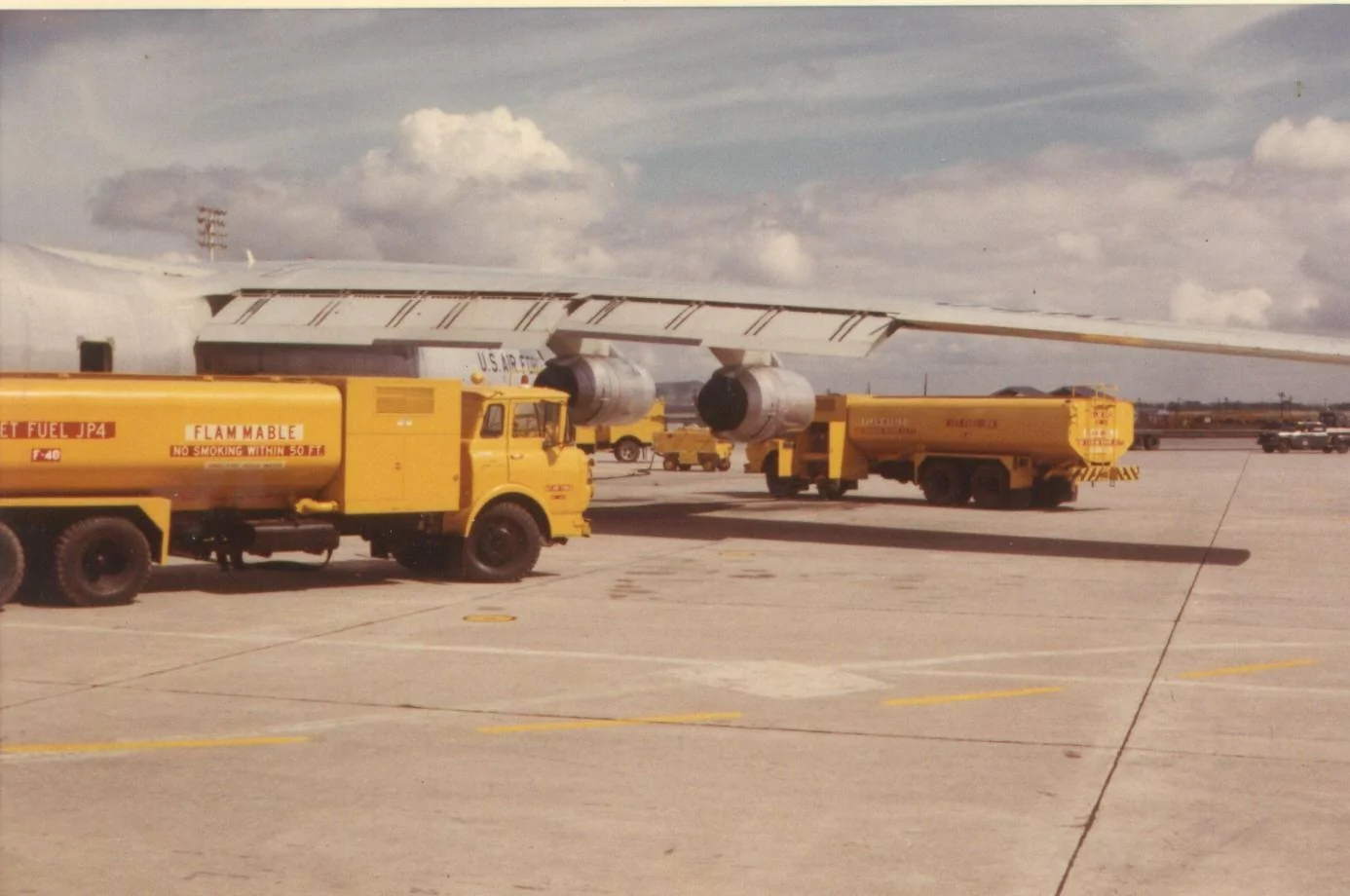
In the Air Force, in old gas engined Consolidated Diesel Electric AS32R-5 aircraft refuelers, which max operating speed was 10 MPH, we were directed monthly, to pour 12 ounces of water down the carb.

Big ol' V-6.

Followed by, I forget the amount, of Marvel Mystery Oil.

Idle raised, they would blow black when the water was added.

With the MMO, of course it would blow white.

Did it do anything?

I dunno.

I think the intention was to get carbon out of the combustion chamber?

The MMO to keep the carbon from sticking?

Got me, followed the order.

Jeep Gladiator Got 20 gallons of water? Why not dump it into your engine. 25588004_895950150568675_4129766192226856077_o
 

redrider

Well-Known Member
First Name
Joe
Joined
Apr 29, 2019
Threads
5
Messages
596
Reaction score
891
Location
Columbia
Vehicle(s)
1 truck 5 motorcycles
As a yute, I watched some folks doing the driveway tune up-use the finger to modulate water dribbling into the carb from a Coke bottle. A real bottle, not plastic. Manually controlling the throttle, the clouds of soot would subside after a bit. Much less costly than taking it out to blow it out speeding ticket.

I still use MMO as a fuel additive.
 

dcmdon

Well-Known Member
First Name
Don
Joined
Mar 31, 2021
Threads
60
Messages
3,656
Reaction score
4,427
Location
Boston Metro-West, Northern NH
Vehicle(s)
.
Wynn's had such a product in the late 60s/early 70s. It was like that - fast idle, pour something like 3/4 of the can in slowly then the last part you poured in more quickly and let the engine die. You waited however long it said (can't remember the timing) and then you took it out for a romp on an empty highway.
It was good for clearing out the carbon that used to build up in engines back then.
The reason we did the water bit was because we had very low income customers who could barely afford to keep cars going and we'd do that for free and send them on their way.
Usually it was a customer who came in with a knock - and often the coke bottle of water bit would make the knock go away as it steam cleaned the loose carbon that was hitting as the piston hit TDC. The idea was never to clean an engine inside and make it look new - it was to remove the carbon build-up that was common.
So this guy has really got it all mixed up and the comments below the video are beyond dingy - if they'd only ask those who did it and lived through it then they'd understand and stop trying to invent a wheel that isn't needed these days.
I'd still use it on an older carbureted car, maybe even my 4.0 or an engine built with a very tight quench area where any carbon build-up will cause a knock, but these guys are talking about crap they know nothing about.
the carbon takes up space and raises the effective compression ratio of the engine. So it also helped with knock. And back in the 70s, there was also lead build up. Lead could really build up if the car was driven around town a lot.

I learned when I started flying airplanes that leaded gas has lead scavenging agents designed to keep lead from building up. But they don't work unless you have a minimum level of combustion chamber temps and pressures. So lead build up mist impacted cars driven around town where power needs were low.

I finally actually watched the video. He's not an idiot. he used 20 oz first and it pretty much did what he wanted. He acknowledges that. The whole 20 gal thing was just frankly to get clicks.
 

ShadowsPapa

Well-Known Member
First Name
Bill
Joined
Oct 12, 2019
Threads
247
Messages
40,440
Reaction score
53,853
Location
Runnells, Iowa
Vehicle(s)
'25 JTMX, '23 JLU 4xe, '82 SX4, '73 Javelin
Occupation
Retired auto mechanic, frmr gov't ntwrk security admin
Vehicle Showcase
3
the carbon takes up space and raises the effective compression ratio of the engine. So it also helped with knock. And back in the 70s, there was also lead build up. Lead could really build up if the car was driven around town a lot.

I learned when I started flying airplanes that leaded gas has lead scavenging agents designed to keep lead from building up. But they don't work unless you have a minimum level of combustion chamber temps and pressures. So lead build up mist impacted cars driven around town where power needs were low.

I finally actually watched the video. He's not an idiot. he used 20 oz first and it pretty much did what he wanted. He acknowledges that. The whole 20 gal thing was just frankly to get clicks.
Yeah, I know about the carbon. It does two things - actually three if you count igniting the fuel charge -
It increases compression if it's enough, and it actually physically makes contact between the piston head and engine head, causing a physical knocking sound - not a ping from detonation, but more like a rod knock.
There's been times when engine cleaners and water didn't do the trick and heads were removed only to find highly compressed carbon literally being hammered as the piston hit TDC. It wasn't detonation, it was physical contact. The sound was without a load. Once you heard it you knew what it was. Carbon can also increase compression and cause the ping of detonation, that's a different sound under different circumstances - and there's another thing it can do - the edges of the carbon can get hot and glow leading to PRE-ignition. That's a different animal with a very similar sound to detonation - actually they sound alike in most cases but pre-ignition occurs at different times to detonation because the charge is ignited by the glowing carbon - before ignition, that's why it's called PRE-ignition - light it before the spark. That knock occurs without a heavy load or lugging.


You'd better watch it again. He isn't very smart during the whole thing. He even in the title admitted it didn't work as he had thought, he was disappointed in that it didn't clean as he thought and decided to continue and then finally figured out he was not doing it in a central point and was only hitting some of the cylinders. His whole methodology was wrong, his assumptions were wrong. A comment even pointed out his oily valves - valve seal issues and yet...........
He's shade-tree, little knowledge of how what he was doing worked.
He seemed somewhat surprised by the intake temperatures - I could have told him he'd actually FREEZE the intake and cause frost to form, ice, if the ambient temperature was in the 40s or below. Even in warm temperatures you can form frost.
I was not impressed in the slightest, it was very amateur and he seemed to not really know how or where to do it. He fumbled a lot. I'd not let him touch any of my vehicles.
In short - he was doing it all wrong and it seemed he hadn't really figured things out until he'd spent hours on it. He wasn't satisfied with the results - looked like he expected all carbon to be gone. Good luck with that - ain't gonna happen. And if he wants to keep it clean inside - fix the oil consumption issues.

As a yute, I watched some folks doing the driveway tune up-use the finger to modulate water dribbling into the carb from a Coke bottle. A real bottle, not plastic. Manually controlling the throttle, the clouds of soot would subside after a bit. Much less costly than taking it out to blow it out speeding ticket.
Yes, not as fast as the YT guy was doing it. I don't get his thinking that if a little helps, more and faster is better. It's the opposite.

I'd also be interested in checking the oil in that engine when he was done - maybe a bit of a tan color? Starbucks?
I'd be surprised if there wasn't at least some water in the crankcase, especially as cold as he was getting that engine at times (and seemed a bit surprised by it)
 
Last edited:

Alan_Hepburn

Well-Known Member
First Name
Alan
Joined
May 8, 2020
Threads
23
Messages
302
Reaction score
322
Location
Lewisburg, TN USA
Vehicle(s)
2020 JT Sport S; 2022 JLU Spport S; 2007 Fleetwood Bounder 35E
Occupation
Retired
Back in the 60s I had heard that a way to clean carbon out of engines was to slowly dump a quart of transmission fluid into the carb with the engine running at a high idle - seemed to me it was a good way to eliminate any mosquitos in about a 1/4 mile radius...
Sponsored


Top