
Sponsored

Is ethanol good for the Gladiator?

Blue Ridge

Well-Known Member
First Name
Chip
Joined
Feb 14, 2021
Threads
45
Messages
756
Reaction score
1,236
Location
Asheville, NC
Vehicle(s)
2021 Willys in sarge green
Build Thread
Link
Occupation
Pet shop owner
I've heard that fuel intake components can be damaged by ethanol, and I've heard that it's harmless, so probably depends on who you ask. It attracts water though, which is why I don't run it in small engines, so I doubt that the overall effect would be positive. I'll let someone more knowledgeable chime in, but if cost and availabilty were no issue, I'd personally run ethanol-free.
 

jhale1800

Well-Known Member
First Name
James
Joined
Mar 14, 2019
Threads
18
Messages
378
Reaction score
605
Location
Huntsville, AL
Vehicle(s)
Gladiator Overland, 2000 Ford Crown Victoria, 2011 Hyundai Genesis Coupe, 2017 Mazda3
This is my rough understanding.
Newer vehicle engines are designed to run 10% ethanol. Ethanol in your fuel isn't so great for older engines and small 2-stroke engines. Also, additives in ethanol fuel settle and gunk up over time, so if you have a vehicle you don't drive often, or a gas can that is going to sit for a while, it's better to run non-ethanol fuel.
 

Glad_he_ate

Well-Known Member
Joined
Jun 11, 2021
Threads
10
Messages
790
Reaction score
1,076
Location
Mexico ny.
Vehicle(s)
2021 gladiator Willie's ecodiesel
Occupation
Union electrician
Ethanol is good for farmers whom receive corn subsidies however it’s not good for engines or the environment. There is a so called “global food shortage “and we grow corn crops and use federal funds to subsidize said farms all so we can burn coal to make power to process corn into a fuel additive. It has always been a pork barrel spending scheme to line the pockets of corporate farmers and the politicians that invest in them.
Rant over…
 

Sponsored

jay21mojave

Well-Known Member
First Name
J. T.
Joined
Jun 28, 2021
Threads
22
Messages
449
Reaction score
419
Location
S.E. Pa. West Chester County
Vehicle(s)
2021 Mojave Gladiator 2013 JKU Sport '09 Patriot
Occupation
Sales Acct Mgr - OEM Wholesale DLR Group
From the Owners Manual 2021 Mojave..

3.6L Engine

This engine is designed to meet all emissions regulations and provide excellent fuel economy and performance when using high-quality unleaded “Regular” gasoline having an octane rating of 87 as specified by the (R+M)/2 method. The use of higher octane “Premium” gasoline will not provide any benefit over “Regular” gasoline in these engines.
Reformulated Gasoline
Many areas of the country require the use of cleaner burning gasoline referred to as “reformulated gasoline”. Reformulated gasoline contains oxygenates and are specifically blended to reduce vehicle emissions and improve air quality.
The use of reformulated gasoline is recommended. Properly blended reformulated gasoline will provide improved performance and durability of engine and fuel system components.
Materials Added To Fuel
Besides using unleaded gasoline with the proper octane rating, gasolines that contain detergents, corrosion and stability additives are recommended. Using gasolines that have these additives will help improve fuel economy, reduce emissions, and maintain vehicle performance.

Designated TOP TIER Detergent Gasoline contains a higher level of detergents to further aide in minimizing engine and fuel system deposits. When available, the usage of TOP TIER Detergent Gasoline is recommended. Visit www.toptiergas.com for a list of TOP TIER Detergent Gasoline Retailers.
Indiscriminate use of fuel system cleaning agents should be avoided. Many of these materials intended for gum and varnish removal may contain active solvents or similar ingredients. These can harm fuel system gasket and diaphragm materials.
Gasoline/Oxygenate Blends
Some fuel suppliers blend unleaded gasoline with oxygenates such as ethanol.
CAUTION:
DO NOT use E-85, gasoline containing methanol, or gasoline containing more than 15% ethanol (E-15). Use of these blends may result in starting and drivability problems, damage critical fuel system components, cause emissions to exceed the applicable standard, and/or cause the Malfunction Indicator Light to illuminate. Please observe pump labels as they should clearly communicate if a fuel contains greater than 15% ethanol (E-15).
Problems that result from using gasoline containing more than 15% ethanol (E-15) or gasoline containing methanol are not the responsibility of the manufacturer and may void the New Vehicle Limited Warranty.
Do Not Use E-85 In Non-Flex Fuel Vehicles
Non-Flex Fuel Vehicles (FFV) are compatible with gasoline containing up to 15% ethanol (E-15). Use of gasoline with higher ethanol content may void the New Vehicle Limited Warranty.
If a Non-FFV vehicle is inadvertently fueled with E-85 fuel, the engine will have some or all of these symptoms:
  • Operate in a lean mode.
  • OBD II Malfunction Indicator Light on.
  • Poor engine performance.
  • Poor cold start and cold drivability.
  • Increased risk for fuel system component corrosion.

Jeep Gladiator Is ethanol good for the Gladiator? 0911130056us=GUID-0911130056US=1=en=Lo


Jeep Gladiator Is ethanol good for the Gladiator? 0405122638US=GUID-0405122638US=1=en=Lo
 

Dqban

Well-Known Member
Joined
Jun 29, 2020
Threads
13
Messages
418
Reaction score
559
Location
Florida
Vehicle(s)
Gladiator overland
Occupation
APRN
I pay the extra .35 for 89 octane ethanol free. Wawa carries it. Sunnoco, citgo and some racetracks tend to have it around here too.
There are a couple places near the (actual) race track that have 99 and 101 (I think), ethanol free. I'll stick these in my Jap. motorcycle and can absolutely tell the difference when I do. I really cant tell a difference with ethanol free in the jeep.
 

Gunrunner72

Well-Known Member
Joined
Nov 5, 2019
Threads
3
Messages
99
Reaction score
161
Location
LaGrange, KY
Vehicle(s)
2001 Jeep TJ, 2002 HD Deuce, 2013 Corvette Z06, 2015 F-350, 2016 HD StreetGlide, 1980 CJ-7(sold), 1989 Cherokee(sold), 1985 CJ-7(sold)
Occupation
Gas Pump Jockey
Ethanol is good for farmers whom receive corn subsidies however it’s not good for engines or the environment. There is a so called “global food shortage “and we grow corn crops and use federal funds to subsidize said farms all so we can burn coal to make power to process corn into a fuel additive. It has always been a pork barrel spending scheme to line the pockets of corporate farmers and the politicians that invest in them.
Rant over…
Spot on! Ethanol sucks regardless of whatever "lipstick on a pig" the government tries to sell it as.
 

CerOf

Well-Known Member
Joined
Jan 1, 2021
Threads
18
Messages
1,375
Reaction score
1,624
Location
Dallas
Vehicle(s)
‘21 JTRD
I’d bet the fuel pump is what can’t handle the E85. Something about the lubricity or lack thereof makes the fuel pump fail.

This is a guess and based solely on experience with E85 on wrx’s.
 

Sponsored

kevman65

Well-Known Member
Joined
Mar 8, 2020
Threads
51
Messages
3,879
Reaction score
5,755
Location
H
Vehicle(s)
J
Ethanol plants use a specific type of stainless steel piping and specific elastomerics (gasket material) to prolong the life of the piping. Finished product of ethanol is VERY hard on piping, gaskets, pumps, valves, controls in an ethanol plant.

Most of the materials used in an ethanol plant to prolong pipe system life have never seen an automobile.

I don't care what the government, fuel companies, or car manufacturers say about it being safe for a vehicle. I've worked several ethanol plant builds and they spec out more robust materials to survive the product than what is used to manufacture internal combustion engines.
 

Glad_he_ate

Well-Known Member
Joined
Jun 11, 2021
Threads
10
Messages
790
Reaction score
1,076
Location
Mexico ny.
Vehicle(s)
2021 gladiator Willie's ecodiesel
Occupation
Union electrician
Or you could tune for 103 and have quality fuel. Lower over all emissions and cut government spending.
 

ShadowsPapa

Well-Known Member
First Name
Bill
Joined
Oct 12, 2019
Threads
247
Messages
40,442
Reaction score
53,860
Location
Runnells, Iowa
Vehicle(s)
'25 JTMX, '23 JLU 4xe, '82 SX4, '73 Javelin
Occupation
Retired auto mechanic, frmr gov't ntwrk security admin
Vehicle Showcase
3
Oh, not another one of those polarizing ethanol sucks things. Good grief, like there aren't enough of those already (here and elsewhere)

There's been studies back and forth as far as "environmental impact" and next year there will be another saying something different.

Here's the bottom line -
I've been a mechanic since before it was even a thing. I saw it come into Iowa in the late 70s/early 80s.
I've run it in everything - tractors, chain saws, trimmers, lawn mowers, cars, trucks, you name it. There's only one car I've ever had where I try to limit it and that's because of the very rare rubber hose fuel tank filler on that car. It's been ok for 190,000 miles but I'm wondering about cutting back because after all of these years (decades) and thousands of miles, I'm actually seeing an impact on that 1982 hose.
I have run it in Javelins, AMXs, Eagles, Ford trucks, Chevy trucks and countless Jeeps.
I've yet to see any damage from it.
I've done small engine repair for years - I've yet to see damage caused by ethanol. usually what happens is people see what happens when you let things SIT for months or you have moisture in the fuel and they blame the ethanol.
As I've said countless times - if it's so very bad for things - why have I never had, nor seen, any ethanol damage or problems in all of the years since it came to Iowa, and I've never worked on a car belonging to anyone where the car actually had ethanol-related problems. The only exceptions were in the early 80s when accelerator pump piston rubber swelled or the original fuel hoses had some issues. Once Tomco and others changed the makeup of those parts, and we rebuilt the carburetors, the problems went away.
120,000 miles on my 68 - no issues, over 80,000 miles on my AMX - no issues, about 100,000 miles on my current Javelin - dual quads, no issues.
I've worked on hundreds of cars, carburetors and all, and have never seen ethanol related issues.

Ethanol is good for farmers whom receive corn subsidies however it’s not good for engines or the environment. There is a so called “global food shortage “and we grow corn crops and use federal funds to subsidize said farms all so we can burn coal to make power to process corn into a fuel additive. It has always been a pork barrel spending scheme to line the pockets of corporate farmers and the politicians that invest in them.
Careful there, I was a farmer in the 1980s. There's no food vs. fuel, not a bit. If you looked at valid research, you'd find that's the case. WHO radio spent almost a whole day doing the "food vs. fuel" thing about 15 years ago - and debunked it. The only shortages are caused by politics and greedy leaders in other places. Corn SITS in piles, the problem is there's so much of it that it killed the markets so the government decides they are smart and gets involved.

Granted, there are other means of making it - like grass - that's better. There are a lot of studies showing that using other "crops" is more efficient and better for the environment.

This is my rough understanding.
Newer vehicle engines are designed to run 10% ethanol. Ethanol in your fuel isn't so great for older engines and small 2-stroke engines. Also, additives in ethanol fuel settle and gunk up over time, so if you have a vehicle you don't drive often, or a gas can that is going to sit for a while, it's better to run non-ethanol fuel.
Very rough LOL.
Seriously, additives don't "settle". What really happens, and I've studied this at length having used it in EVERYTHING I've ever owned that burns gasoline - is that since ethanol has an affinity for water, it absorbs the water and when it sits it's the water that does the damage. I recognize the oxidation that results - it's the water that's been absorbed. If you live in a climate that has drastic temperature changes and high humidity, don't let it sit. It will absorb the moisture or water. If it's sealed, it's not going to be a big problem but most fuel systems "breathe" to some extent.
As long as it doesn't sit for months, no problem.
I run ethanol in my JD lawn tractor, and the JD before this one. It often sits a month, even two, at a time and guess what - years later, zero issues.
My cars often sit months at a time - no problems.

ISU did studies over time and found that there's virtually no difference on cars made after about 2000 or so as far as 15% vs 10%. It's when you jump up higher you are bound to see things change.

So - I guess I must be the most lucky person in the world! I've run it in EVERYTHING since the 1980s, cars, trucks and more. I still run it in everything, including my SX4 (although for the sake of a fuel filler hose that is literally irreplaceable I've cut back) I run it in my Javelin, lawn mower and have worked on hundreds of vehicles and many dozens of small engines, and have never seen a problem. So - is it REALLY the ethanol, or are people blaming it on things they just don't understand what's really happening?

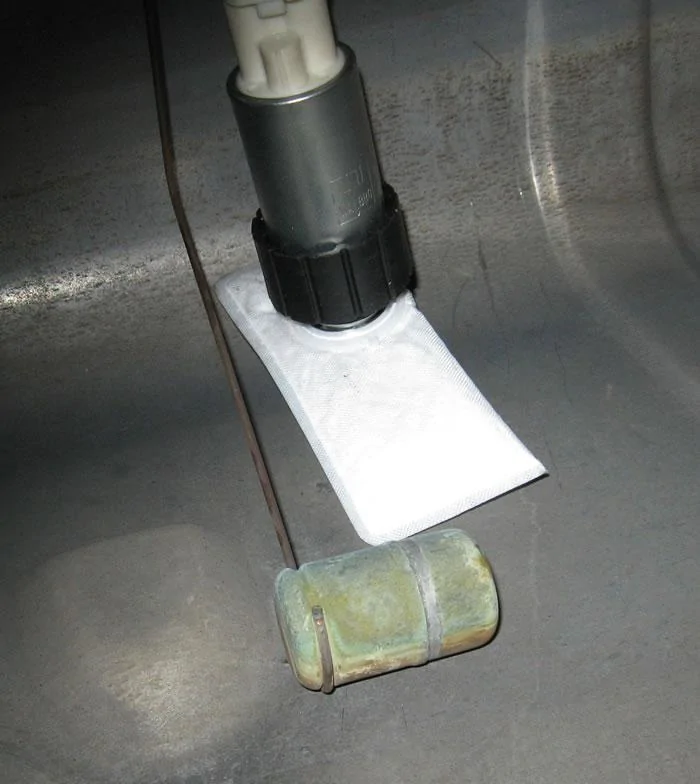
here's the gas tank inside view of my SX4 - 40 years old, some of that time it sat for weeks or longer, and I run 10%.

Jeep Gladiator Is ethanol good for the Gladiator? sx4-102
 

ShadowsPapa

Well-Known Member
First Name
Bill
Joined
Oct 12, 2019
Threads
247
Messages
40,442
Reaction score
53,860
Location
Runnells, Iowa
Vehicle(s)
'25 JTMX, '23 JLU 4xe, '82 SX4, '73 Javelin
Occupation
Retired auto mechanic, frmr gov't ntwrk security admin
Vehicle Showcase
3
Ethanol plants use a specific type of stainless steel piping and specific elastomerics (gasket material) to prolong the life of the piping. Finished product of ethanol is VERY hard on piping, gaskets, pumps, valves, controls in an ethanol plant.

Most of the materials used in an ethanol plant to prolong pipe system life have never seen an automobile.

I don't care what the government, fuel companies, or car manufacturers say about it being safe for a vehicle. I've worked several ethanol plant builds and they spec out more robust materials to survive the product than what is used to manufacture internal combustion engines.
You are talking pure stuff there.
If it doesn't damage the cheap aluminum carburetors and other parts of lawn mower engines, you think it will damage the alloys used in car engines?
My JD lawn tractors have had Kawasaki engines, aluminum, including fuel system parts, no troubles.
I've owned my SX4 since 2007 - ethanol.
I have yet to see even etching or pitting from ethanol in anything.
 

Glad_he_ate

Well-Known Member
Joined
Jun 11, 2021
Threads
10
Messages
790
Reaction score
1,076
Location
Mexico ny.
Vehicle(s)
2021 gladiator Willie's ecodiesel
Occupation
Union electrician
Oh, not another one of those polarizing ethanol sucks things. Good grief, like there aren't enough of those already (here and elsewhere)
:
Not intended to be rude, however feel free not to participate if you feel the topic has been over discussed or is not of interest to you.
Most people don’t have the time to go back through old threads to discuss what is a new topic to them, had the op dredged up and old thread someone would be up in arms about the fact the last post was 9 months ago. Moving on!
:
There's been studies back and forth as far as "environmental impact" and next year there will be another saying something different.

Correct, biased flawed studies most of them on both sides.
Fact of the matter is it takes many hrs of heavy equipment running the fields. To till soil pick rocks “yes that’s a thing picking fucking rocks, we did it by hand then tossed them
In a loader to drive them to the tree line” then plant, water, harvest, ship. Then massive amounts of power and water to process said harvest. All to dilute gas.
I’m no environmentalists I’d delete my diesel if I could.
My point is those acres of land could easily be planted into something else, however not as profitable as corn sold to ethanol plants.
:
Here's the bottom line -
I've been a mechanic since before it was even a thing. I saw it come into Iowa in the late 70s/early 80s.
I've run it in everything - tractors, chain saws, trimmers, lawn mowers, cars, trucks, you name it. There's only one car I've ever had where I try to limit it and that's because of the very rare rubber hose fuel tank filler on that car. It's been ok for 190,000 miles but I'm wondering about cutting back because after all of these years (decades) and thousands of miles, I'm actually seeing an impact on that 1982 hose.
I have run it in Javelins, AMXs, Eagles, Ford trucks, Chevy trucks and countless Jeeps.
I've yet to see any damage from it.
I've done small engine repair for years - I've yet to see damage caused by ethanol. usually what happens is people see what happens when you let things SIT for months or you have moisture in the fuel and they blame the ethanol.
As I've said countless times - if it's so very bad for things - why have I never had, nor seen, any ethanol damage or problems in all of the years since it came to Iowa, and I've never worked on a car belonging to anyone where the car actually had ethanol-related problems. The only exceptions were in the early 80s when accelerator pump piston rubber swelled or the original fuel hoses had some issues. Once Tomco and others changed the makeup of those parts, and we rebuilt the carburetors, the problems went away.
120,000 miles on my 68 - no issues, over 80,000 miles on my AMX - no issues, about 100,000 miles on my current Javelin - dual quads, no issues.
I've worked on hundreds of cars, carburetors and all, and have never seen ethanol related issues.
:
Here is a bottom to that bottom line. I was never a auto tech however I was a industrial tech for 13 years until I moved onto cleaner higher paying work.
I’m assuming the industry has made ample modifications to except e10 and be ok. But I’d never go as far as to say it’s GOOD for an engine.
:
Careful there, I was a farmer in the 1980s. There's no food vs. fuel, not a bit. If you looked at valid research, you'd find that's the case. WHO radio spent almost a whole day doing the "food vs. fuel" thing about 15 years ago - and debunked it. The only shortages are caused by politics and greedy leaders in other places. Corn SITS in piles, the problem is there's so much of it that it killed the markets so the government decides they are smart and gets involved.
:
I used to farm as well, we milked 330 a day on average depending on how many springers how many dry and so on. I’m not saying food vs fuel I’m saying there is an intentional over planting of corn to give leverage and begging power to the farmer. Here is a solution to having to much corn, PLANT LESS ?.
:

sx4-102.webp
Sponsored


Top