
ShadowsPapa
Well-Known Member
- First Name
- Bill
- Joined
- Oct 12, 2019
- Threads
- 247
- Messages
- 40,514
- Reaction score
- 54,044
- Location
- Runnells, Iowa
- Vehicle(s)
- '25 JTMX, '23 JLU 4xe, '82 SX4, '73 Javelin
- Occupation
- Retired auto mechanic, frmr gov't ntwrk security admin
- Vehicle Showcase
- 3
It depends on what you mean by "balance".It is my understanding that an inline 6 (or a V12, which is two inline 6 cyls) is the only engine that *naturally* balances, and doesn't require some sort of additional balancing system to avoid shaking itself to death. Thus helping it to better longevity.
But generically, the I6 like the 258 (4.2) and the 4.0 use a neutral-balance flywheel and "harmonic balancer".
The crankshaft rotating mass is balanced to the weight of the reciprocating mass by the counterweights - note the holes in the counterweight here -
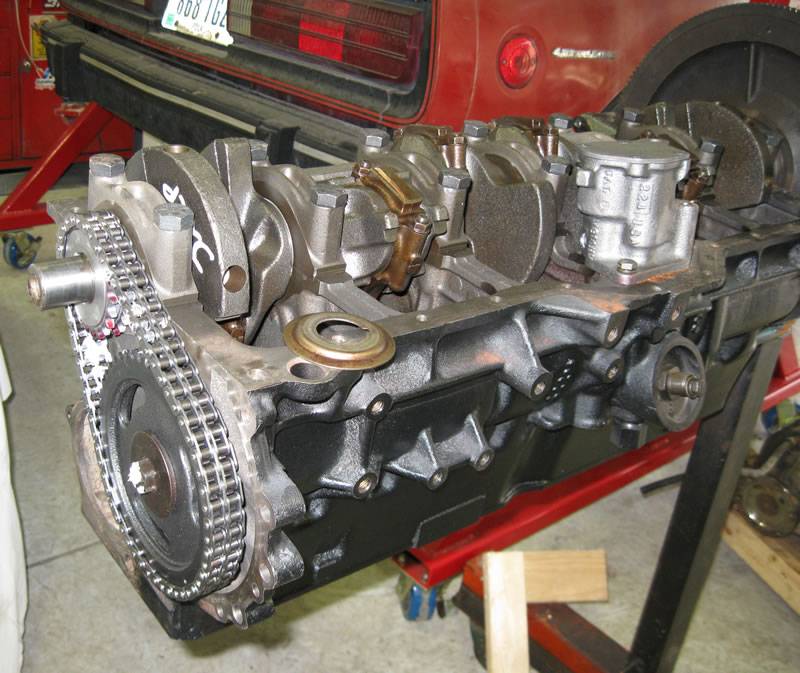
the harmonic balancer is trim and light compared to that of a V8 or I4. And you can freely swap flywheels or flexplates without needing to have things balanced out. They are all neutral balance.
A straight-six engine has perfect primary and secondary engine balance, resulting in fewer vibrations than other designs of six or fewer cylinders. (per wikipedia)
If an appropriate firing order is used, a straight-six engine has perfect primary and secondary engine balance. The primary balance is due to the front and rear trio of cylinders moving in pairs (albeit 360° out of phase), thus canceling out the rocking motion present in a straight-three engine. The secondary balance is due to the crank throws being arranged in three planes offset at 120°, resulting in the non-sinusoidal forces summing to zero for all free forces until the sixth order.
1-5-3-6-2-4
Sponsored
Last edited: