Sponsored

Let's have a conversation about inflation...

biplaneguy

Well-Known Member
First Name
Dana
Joined
Oct 28, 2023
Threads
15
Messages
221
Reaction score
270
Location
CT
Vehicle(s)
2023 Gladiator Sport
Occupation
Engineer
OK, so I replaced my OEM 245/75R17 tires with 285/70R17 Mojave takeoffs. The originals were load index 112T according to the door sticker. The new ones say 116/113Q, load range C... so do I use 116, 113 (I think that's only if used in a dually setup?), or the C chart?

Going into the 1st chart at 112 and the 36 psi on the door sticker I get 2469. The corresponding load on the 116 line gives me 32 psi; using 113 I get 35 psi, but if I use the C chart it puts me at 50 psi (!) for either 113 or 116. However, if I understand correctly the load range letter just gives a maximum inflation pressure, not the reccommended pressure?

When I had a tire shop put new sensors in the kid said I should be at something over 40 psi (I forget exactly the number). I told them no, use 38 and it drove OK. Yesterday, I did the chalk test and that evened out at 31-32 psi, so that's where I am now and that agrees with the chart. The handling is a little softer than at 38, but so is the ride and I'm thinking the tires should wear more evenly at that pressure?
Sponsored

 

Escape.idiocracy

Well-Known Member
First Name
Rich
Joined
Jan 23, 2022
Threads
37
Messages
1,569
Reaction score
1,823
Location
PNW
Vehicle(s)
Jt
Occupation
Hitchhiker
I've been running 45 psi cold according to the chart and the ride seems pretty smooth. I commute 70 miles round trip to work so most of my miles are at highway speeds. I'm gonna do the chalk test this weekend to see how it wears.

Just out of curiosity what is the lowest psi on non-beadlock wheels when off road?
My daily commute is 200mi round trip and I take the Jeep one day a week…. I’m running 37’s @32psi… at highway speeds they warm up to around 35psi.
Chalk test for sure… at the pressures you are running I would start to watch for the centers to wear faster than the rest of the tire.

Low pressures are every ones personal opinion. I run 18 on easy trails, 12 when I’m going on the rocks, and 8 in snow while being conscious of turning the wheel….. snow is a whole different show though, and I have seen dudes in the 4-6 range 😳 which to me, I don’t enjoy setting beads- so, 8 is my comfort max low.
 

TheSolarWizard

Well-Known Member
First Name
Memphis
Joined
Aug 5, 2019
Threads
107
Messages
3,117
Reaction score
3,792
Location
sun belt
Vehicle(s)
3.0 JT
Occupation
Solar & EV infrastructure
My daily commute is 200mi round trip and I take the Jeep one day a week…. I’m running 37’s @32psi… at highway speeds they warm up to around 35psi.
Chalk test for sure… at the pressures you are running I would start to watch for the centers to wear faster than the rest of the tire.

Low pressures are every ones personal opinion. I run 18 on easy trails, 12 when I’m going on the rocks, and 8 in snow while being conscious of turning the wheel….. snow is a whole different show though, and I have seen dudes in the 4-6 range 😳 which to me, I don’t enjoy setting beads- so, 8 is my comfort max low.
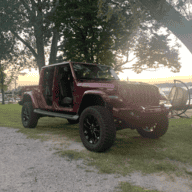
depends on the wheel. Before i switched to beadlocks I ran 4 front 3 rear in deep snow on method beadgrips with success and 10 pretty much everywhere else
 

Escape.idiocracy

Well-Known Member
First Name
Rich
Joined
Jan 23, 2022
Threads
37
Messages
1,569
Reaction score
1,823
Location
PNW
Vehicle(s)
Jt
Occupation
Hitchhiker
depends on the wheel. Before i switched to beadlocks I ran 4 front 3 rear in deep snow on method beadgrips with success and 10 pretty much everywhere else
I think this is sound advice. I went with fifteen52 wheels instead of methods…. I should have went with methods. lol beadgrips are kind of that perfect game changer of low psi and low weight wheels. šŸŗ
 

Sponsored

Wheelin98TJ

Well-Known Member
First Name
Ryan
Joined
Jul 27, 2021
Threads
11
Messages
3,709
Reaction score
4,371
Location
Devils Lake, MI
Vehicle(s)
2021 Jeep Gladiator
Occupation
Bean Counter
No. I meant inside According to chalk I’m still over inflated at 28 pounds
I figured that is what you meant.

That's one problem with the chalk test. It's only telling you ideal PSI for even wear. If the chalk test is telling you 24 PSI for even wear, I'd ignore that and run higher PSI.
 

Zachanadandy

Well-Known Member
First Name
Zach
Joined
Oct 17, 2023
Threads
4
Messages
3,000
Reaction score
4,756
Location
Patterson, ca
Vehicle(s)
2023 gladiator Mojave
Occupation
Electrical foreman
I've been running 45 psi cold according to the chart and the ride seems pretty smooth. I commute 70 miles round trip to work so most of my miles are at highway speeds. I'm gonna do the chalk test this weekend to see how it wears.

Just out of curiosity what is the lowest psi on non-beadlock wheels when off road?
10 psi is as low as I would go but 15psi will work in most situations and will have almost no risk of losing a bead. At 10 psi you could burp out air turning in large rocks and eventually lose the bead. As far as on road I'd stick to 30psi cold. Rides much better.
 
Last edited:

calling4life

Member
Joined
Nov 12, 2024
Threads
0
Messages
6
Reaction score
5
Location
N. MN
Vehicle(s)
2020 Gladiator Rubicon
Just got a Gladiator Rubicon on 37's on Friday.

I'm surprised by tire pressure and the mass amounts of confusion, you have guys that can build a 4-link system from scratch that for some reason can't handle tire pressure.

On the side of your tires there is a max weight and a max PSI, that is a MAX PSI not a recommended PSI, you should NEVER, yes, NEVER, be running max psi.

Moving on, for the 37/12.5 R17 terra grappler g2 on my truck.
Max weight on the side of the tire is 3,525lbs
Max PSI is 50psi.

So, you have 4 tires holding up your truck, 3,525 X 4 = 14,100lbs max they can support

My truck weighed 5,580 lbs when I just took it to the junk yard, with garbage in it, but that's fine, it'll be filled with tools and such when the dealer is done messing around with it anyway.

5,580lbs divided by 14,100lbs = .3957

What that means is that your truck is using 39.57% of the max load the tires can support.

What that means is that 39.57% of the max PSI (50), is going to be your go to PSI.

So, .3957 X 50 = 19.79PSI

Yes, that's right, you guys running 30 + PSI on big tires are likely WAY over inflating your tires.

Now, understand this, that 19.79psi is the minimum PSI to support that load of 5580lbs.

However, lawyers will certainly have forced a safety margin in this, so I wouldn't be afraid to run that.

But, there's your bullseye, to start.

Now, do the chalk test and see what it says, likely, it'll look right, but if it looks like they could use a little more pressure, add a little more.
Another down and dirty check: if you see that you are getting excessive heat in your tires leading to large PSI jumps, fill them a little more.

So, you have your tires filled to 20psi, now, you're driving straight, down a highway, 10 minutes in and your tires are 30psi, 15 and they are 32... that's excessive.

10 minutes in and they are 24psi, fine, curvy road... messes up everything so, worthless, 20 minutes in and they are 25 to 26psi... fine.

Now, you go, but Brett, weight distribution... ahh, yes, if we want to be even more precise we can account for that. Ideally you would get your specific front to back weight, even side to side.

But, plenty of accounts saying these vehicles are pretty precisely 53% front and 47% back.

So, how this would go.

Front: 2 tires up front so calculate using data for 2 tires.
3525lb load rating times 2 = 7050lbs
53% of my vehicle weight 5580lbs = 2957.4
2957.4/7050 = 41.95%
41.95% of max psi (50 psi) = 20.974 psi in the front

Rear: again, just 2 tires so account for such
7050lbs max weight
47% of my 5580 = 2622.6
2622.6/7050 = .372 or 37.2%
37.2% of the 50psi = 18.6 psi in the rear.

So, it is generally agreed that passenger is heavier as well, so you may go 19 in driver rear, 19.5 passenger rear, 21 driver front, 21.5 passenger front. As an example.


The main point of all this is, the math is right there for you, written on the side of the specific tire.

And you are likely way over-inflating your tires, if you are running bigger and/or different types of tires, I.E. running Light truck tires when the door is rated with passenger tires.

Your door sill card means nothing when you change parameters like we do.

Please don't run any tire at straight max psi, whether on a vehicle or trailer. Of course you are free to do as you wish.
 

Wheelin98TJ

Well-Known Member
First Name
Ryan
Joined
Jul 27, 2021
Threads
11
Messages
3,709
Reaction score
4,371
Location
Devils Lake, MI
Vehicle(s)
2021 Jeep Gladiator
Occupation
Bean Counter
Just got a Gladiator Rubicon on 37's on Friday.

I'm surprised by tire pressure and the mass amounts of confusion, you have guys that can build a 4-link system from scratch that for some reason can't handle tire pressure.

On the side of your tires there is a max weight and a max PSI, that is a MAX PSI not a recommended PSI, you should NEVER, yes, NEVER, be running max psi.

Moving on, for the 37/12.5 R17 terra grappler g2 on my truck.
Max weight on the side of the tire is 3,525lbs
Max PSI is 50psi.

So, you have 4 tires holding up your truck, 3,525 X 4 = 14,100lbs max they can support

My truck weighed 5,580 lbs when I just took it to the junk yard, with garbage in it, but that's fine, it'll be filled with tools and such when the dealer is done messing around with it anyway.

5,580lbs divided by 14,100lbs = .3957

What that means is that your truck is using 39.57% of the max load the tires can support.

What that means is that 39.57% of the max PSI (50), is going to be your go to PSI.

So, .3957 X 50 = 19.79PSI

Yes, that's right, you guys running 30 + PSI on big tires are likely WAY over inflating your tires.

Now, understand this, that 19.79psi is the minimum PSI to support that load of 5580lbs.

However, lawyers will certainly have forced a safety margin in this, so I wouldn't be afraid to run that.

But, there's your bullseye, to start.

Now, do the chalk test and see what it says, likely, it'll look right, but if it looks like they could use a little more pressure, add a little more.
Another down and dirty check: if you see that you are getting excessive heat in your tires leading to large PSI jumps, fill them a little more.

So, you have your tires filled to 20psi, now, you're driving straight, down a highway, 10 minutes in and your tires are 30psi, 15 and they are 32... that's excessive.

10 minutes in and they are 24psi, fine, curvy road... messes up everything so, worthless, 20 minutes in and they are 25 to 26psi... fine.

Now, you go, but Brett, weight distribution... ahh, yes, if we want to be even more precise we can account for that. Ideally you would get your specific front to back weight, even side to side.

But, plenty of accounts saying these vehicles are pretty precisely 53% front and 47% back.

So, how this would go.

Front: 2 tires up front so calculate using data for 2 tires.
3525lb load rating times 2 = 7050lbs
53% of my vehicle weight 5580lbs = 2957.4
2957.4/7050 = 41.95%
41.95% of max psi (50 psi) = 20.974 psi in the front

Rear: again, just 2 tires so account for such
7050lbs max weight
47% of my 5580 = 2622.6
2622.6/7050 = .372 or 37.2%
37.2% of the 50psi = 18.6 psi in the rear.

So, it is generally agreed that passenger is heavier as well, so you may go 19 in driver rear, 19.5 passenger rear, 21 driver front, 21.5 passenger front. As an example.


The main point of all this is, the math is right there for you, written on the side of the specific tire.

And you are likely way over-inflating your tires, if you are running bigger and/or different types of tires, I.E. running Light truck tires when the door is rated with passenger tires.

Your door sill card means nothing when you change parameters like we do.

Please don't run any tire at straight max psi, whether on a vehicle or trailer. Of course you are free to do as you wish.
Do you run yours at 20 PSI?
 

Sponsored

calling4life

Member
Joined
Nov 12, 2024
Threads
0
Messages
6
Reaction score
5
Location
N. MN
Vehicle(s)
2020 Gladiator Rubicon
Ran 21 rear, 22 driver front, 22.5 passenger front.

Did a drive, saw 26psi front, if you're to believe the Jeep system, 24 rear, after heating up. Which is right where you'd expect it.

But decided to try 22, 22.5 rear, 23, 23.5 front, why... who knows, new truck, plus once the dealer is done with it, several hundred pounds of tools, jack, 6 ton jackstands, winch, etc. go in it.

But with experience driving at lower PSI's.
What I owned before this was an FJ Cruiser, similar thing there, door sill was rated for Passenger tires, not Light truck, not only that they come with something like 31.6" tires stock.

Mine was lifted 3" on 35s for the last ... 7-8yrs or so. Two different 35s in this time.

The math noted a little under 26psi and I ran them at 27 for years. Many FJ guys would note you're crazy for that, but they'll say something like "the door says 46 so I run 46." Well, the door sill isn't for 35" light truck tires...

Similar thing, figure out what the math says, then chalk test, and I will also do a drive test, the drive test is... let's just say a "bonus," don't just use it and determine things are good.

It's like the people that test their tire pressure with the "thumb" test, which is where you push down on the tread with your thumb, shouldn't feel soft, shouldn't feel hard, but you want just right... what kind of magical and mystical warlord is going to be able to follow that and nail things...


I like the drive test as a bonus because it can show an extreme.

So I will run my tires now and see what comes of it. Another thing I may do, when snow flies, find an empty parking lot and run some controlled drifts, see how it handles. If I don't like it, I'll throw 10psi in the tires and try again, then walk back down to 21psi and see if there's a change.

Now, one tire for my FJ that I ran, was a Super Swamper SSR, 32x11.5R16, 32.7", before my lift.

They are an 80psi tire, given my FJ's weight, 34psi was the minimum calculated PSI.

Did a lengthy test and these things changed massively in snow traction at 39psi, for the better.

So that's where I ran them, found them excellent in winter, FJ was my daily driver, Northern, MN.

So the point was to note that the math is there to be had, no voodoo, no subjective push with your thumb. Gives you an anchored base in mathematics.

The math is there, then add the magic, chalk test, drive heat test, traction test, whatever you feel like, maybe none and you just go with the math... whatever your flavor.

It just gets nuts seeing people throw numbers out there that have nothing backing them, and then, people I've seen that literally think the PSI on the tire sidewall is the PSI you should run... no, that's max psi

Do the math for your specific tire, then let mystical feelings and such play a role from there.
 

ShadowsPapa

Well-Known Member
First Name
Bill
Joined
Oct 12, 2019
Threads
247
Messages
40,445
Reaction score
53,879
Location
Runnells, Iowa
Vehicle(s)
'25 JTMX, '23 JLU 4xe, '82 SX4, '73 Javelin
Occupation
Retired auto mechanic, frmr gov't ntwrk security admin
Vehicle Showcase
3
BUT (following the fine print at the bottom of the PDF) if original tire is P Metric and are replacing with LT than the load of the tire is reduced by 10%. Which would give you a new load of 2223. Following the chart, you would have a new PSI of 45.
The load RATING is reduced. Not the load on the tire.
The idea is to keep the same footprint of a given tire the same with increases or decreases of weight pressing down on the tire.
It's the pressure in the tire that holds the truck up. You can actually get a decent idea of the weight of a vehicle by measuring the footprint, the amount of tire on the pavement and the PSI. It works out pretty darned close.
So if a tire has 63 square inches of tire sitting on the pavement, and you have 30 PSI in that tire, you can figure out how much that corner of the car weighs. (just tossing out numbers that are probably close to the Javelin sitting 3 feet from me right now)
Watched that on a science show years ago - the guys calculations were really within a few pounds of the actual weight when they put it on a scale.
So with that in mind, as the weight of the vehicle increases you need to increase the PSI to keep the same footprint of the tire on the ground.
I know people "I know better, don't need to do that because I don't" poopoo that, but they honestly aren't getting the most/best life out of a tire, often resulting in increased wear, under inflation wear patterns on the outer edges of the tread and so on. Fine, let them run their tires with more heat, more sidewall flexing, and increased tread wear. Not me.
When I have a trailer on the back and have 500-525 pounds of tongue weight, I increase the PSI accordingly. When towing, I also carry a small, simple compressor so I can unhook at an event and use my truck without the tires bouncing like an over-inflated basketball.
My trailer tires get inflated according to the load I'm hauling as well. I've never lost a trailer tire, they don't run hot, the trailer doesn't bounce, and they'll age out long before there's any improper wear.

You can contact the tire manufacturers as well. Sent Nitto an email with the specs on my Gladiator with 315/70r17 E load Ridge Grapplers and they recommended 35 psi. Pleasantly surprised they ride more comfortably than my 33ā€ Falken C load M/Ts.
You betcha. That's what I did with my Generals. They wanted to know the truck weight, the extact General tire number I had, the prior tire size and so on and gave me a figure of about 35-36. Handles and rides like a dream, and they are wearing perfectly.

I run my 40s between 28-30 psi for daily driving.
Larger tires will take lower inflation compared to tires with a smaller footprint because the pressure converted to force across the square inches of the patch on the road needs to be lower. That means when you change either tire width, or tire diameter, or both - you will run lower PSI if the result ends up in a larger patch making contact with the pavement.


I tried the chalk test on multiple vehicles here - it never worked out. Science won, tire makers consumer engineer numbers won out.
When I did the chalk test on my Generals, I ended up with horrible wear on the outer tread, indicating with the sawtooth pattern going around the tire, they were underinflated. I went to the General engineer's numbers and after a rotation or two, the poor wear disappeared. (it was also harder to steer in some cases in parking lots with the chalk test numbers)
I know people swear by it - but it's never worked properly for me. There's a lot it can't take into account, like the rolling diameter of the tire, size/shape change at speed and so on. If you only ever go straight down a track, it might work.

Do whatever you want, there's probably 4 dozen threads on this all over here in the last 5+ years, and you'll never find the exact same answer because no one can tell you what to run for pressure unless their truck weighs the same and they have the exact same tires/size.

Me, having dealt with tires since my first jobs in HS and during college - I'll stick with the math and science and my own proven results.
I'm just tossing the above out there in case there's any interest. If not, just ignore it and do whatever.
I've never had tires I've removed that had abnormal wear patterns. Almost all lasted at least as long as was suggested they'd last. So that's where I'm coming from.
Your truck, your tires, your money.
You'll get many different takes, no consensus, so you'll have to sort through and choose.
 

Wheelin98TJ

Well-Known Member
First Name
Ryan
Joined
Jul 27, 2021
Threads
11
Messages
3,709
Reaction score
4,371
Location
Devils Lake, MI
Vehicle(s)
2021 Jeep Gladiator
Occupation
Bean Counter
Ran 21 rear, 22 driver front, 22.5 passenger front.

Did a drive, saw 26psi front, if you're to believe the Jeep system, 24 rear, after heating up. Which is right where you'd expect it.

But decided to try 22, 22.5 rear, 23, 23.5 front, why... who knows, new truck, plus once the dealer is done with it, several hundred pounds of tools, jack, 6 ton jackstands, winch, etc. go in it.

But with experience driving at lower PSI's.
What I owned before this was an FJ Cruiser, similar thing there, door sill was rated for Passenger tires, not Light truck, not only that they come with something like 31.6" tires stock.

Mine was lifted 3" on 35s for the last ... 7-8yrs or so. Two different 35s in this time.

The math noted a little under 26psi and I ran them at 27 for years. Many FJ guys would note you're crazy for that, but they'll say something like "the door says 46 so I run 46." Well, the door sill isn't for 35" light truck tires...

Similar thing, figure out what the math says, then chalk test, and I will also do a drive test, the drive test is... let's just say a "bonus," don't just use it and determine things are good.

It's like the people that test their tire pressure with the "thumb" test, which is where you push down on the tread with your thumb, shouldn't feel soft, shouldn't feel hard, but you want just right... what kind of magical and mystical warlord is going to be able to follow that and nail things...


I like the drive test as a bonus because it can show an extreme.

So I will run my tires now and see what comes of it. Another thing I may do, when snow flies, find an empty parking lot and run some controlled drifts, see how it handles. If I don't like it, I'll throw 10psi in the tires and try again, then walk back down to 21psi and see if there's a change.

Now, one tire for my FJ that I ran, was a Super Swamper SSR, 32x11.5R16, 32.7", before my lift.

They are an 80psi tire, given my FJ's weight, 34psi was the minimum calculated PSI.

Did a lengthy test and these things changed massively in snow traction at 39psi, for the better.

So that's where I ran them, found them excellent in winter, FJ was my daily driver, Northern, MN.

So the point was to note that the math is there to be had, no voodoo, no subjective push with your thumb. Gives you an anchored base in mathematics.

The math is there, then add the magic, chalk test, drive heat test, traction test, whatever you feel like, maybe none and you just go with the math... whatever your flavor.

It just gets nuts seeing people throw numbers out there that have nothing backing them, and then, people I've seen that literally think the PSI on the tire sidewall is the PSI you should run... no, that's max psi

Do the math for your specific tire, then let mystical feelings and such play a role from there.
I had a TJ with 35s that I ran at around 25 PSI on the road. It worked well for wear and handling for that vehicle and those tires.

Any hit on your MPG running 22-23 PSI, or not enough seat time yet to know?
 

Zachanadandy

Well-Known Member
First Name
Zach
Joined
Oct 17, 2023
Threads
4
Messages
3,000
Reaction score
4,756
Location
Patterson, ca
Vehicle(s)
2023 gladiator Mojave
Occupation
Electrical foreman
I had a TJ with 35s that I ran at around 25 PSI on the road. It worked well for wear and handling for that vehicle and those tires.

Any hit on your MPG running 22-23 PSI, or not enough seat time yet to know?
I run 25psi cold in the 37Ɨ12.50r17 kanati mud hogs on my mojave. Wear is good, mpg is just as bad as it was at 30psi, ride is better. Same tire in a 39x12.50r17 on the wife's JLUR and I run them at 23psi. Big tires, especially E rated just don't need a lot of pressure and nowhere near what the door jamb says. Like the Falken chart I posted earlier, there's plenty of load capacity for either vehicle at these pressures.
 

Wheelin98TJ

Well-Known Member
First Name
Ryan
Joined
Jul 27, 2021
Threads
11
Messages
3,709
Reaction score
4,371
Location
Devils Lake, MI
Vehicle(s)
2021 Jeep Gladiator
Occupation
Bean Counter
I run 25psi cold in the 37Ɨ12.50r17 kanati mud hogs on my mojave. Wear is good, mpg is just as bad as it was at 30psi, ride is better. Same tire in a 39x12.50r17 on the wife's JLUR and I run them at 23psi. Big tires, especially E rated just don't need a lot of pressure and nowhere near what the door jamb says. Like the Falken chart I posted earlier, there's plenty of load capacity for either vehicle at these pressures.
I have 35x12.50 load range E on my Gladiator and I run them at 30 PSI.

According to the sidewall, max load is 3,197 and max PSI is 65. They need about 28 PSI to carry 5,500 lbs.
Sponsored


Top