Sponsored

Lithium Battery Mounting Suggestions for the Bed

Free2roam

Well-Known Member
First Name
Robert
Joined
Mar 1, 2021
Threads
30
Messages
5,434
Reaction score
11,563
Location
89521
Vehicle(s)
Gladiator
Occupation
Fabricator by trade/ Maintenance Mechanic
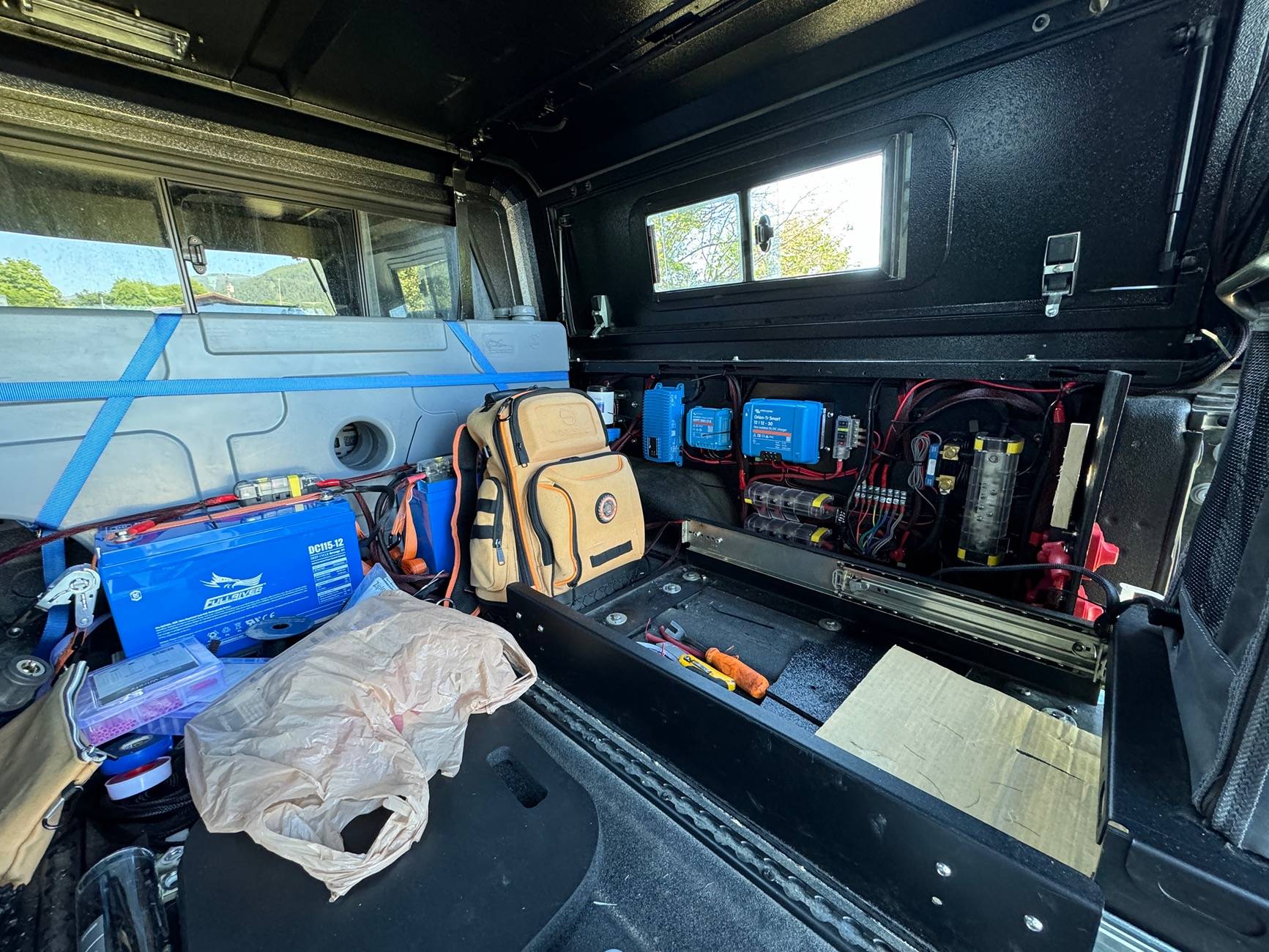
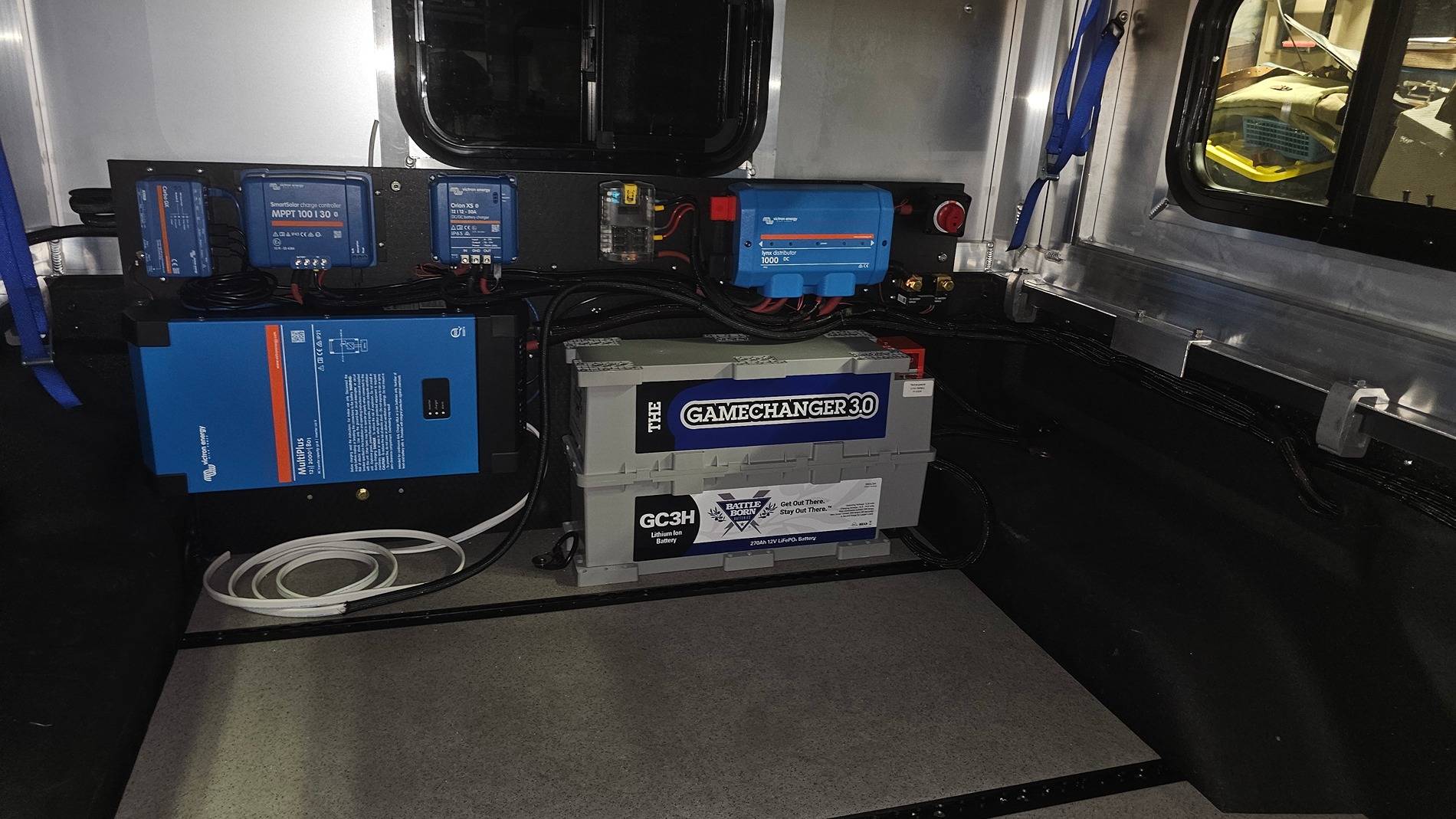
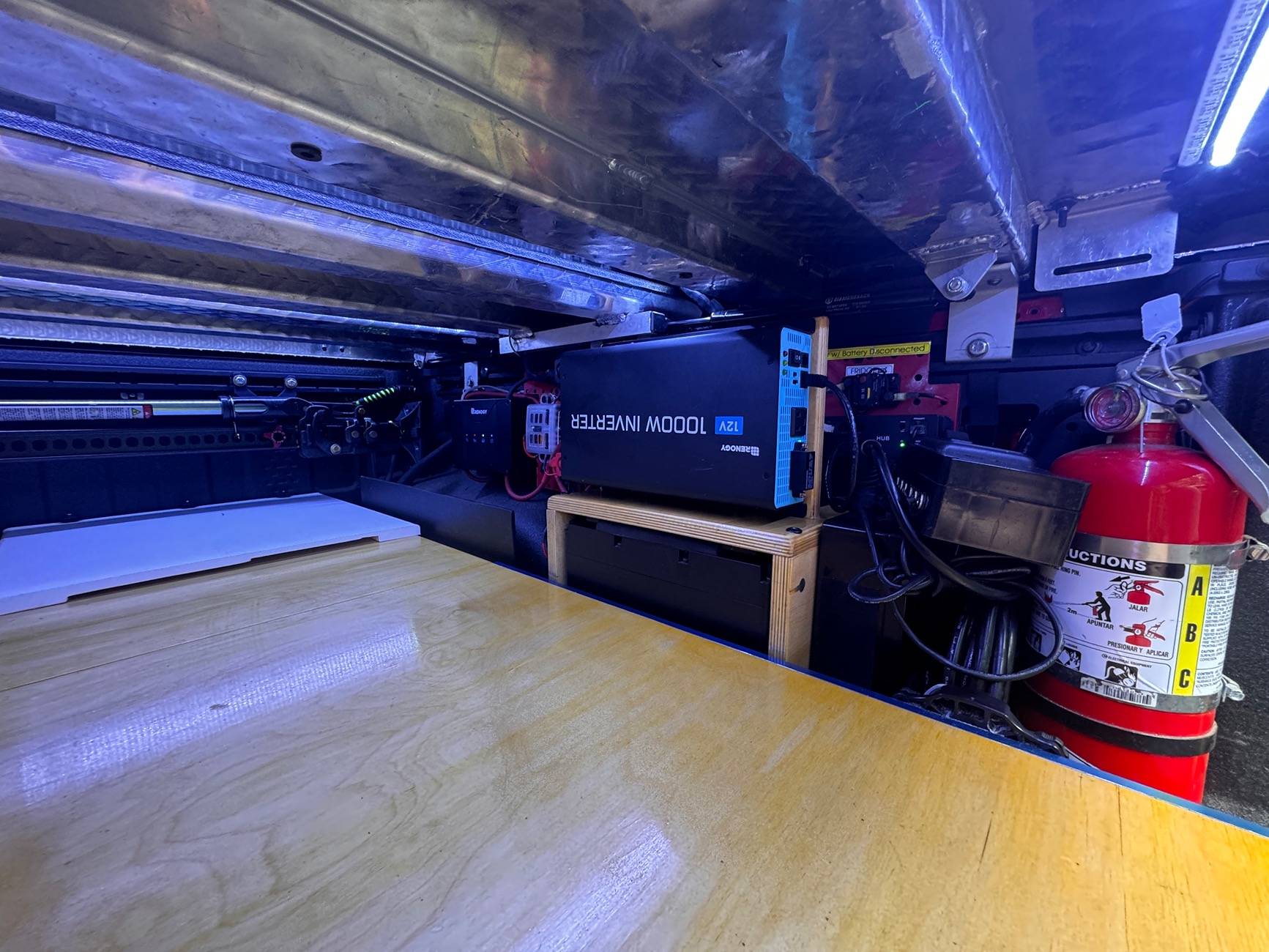
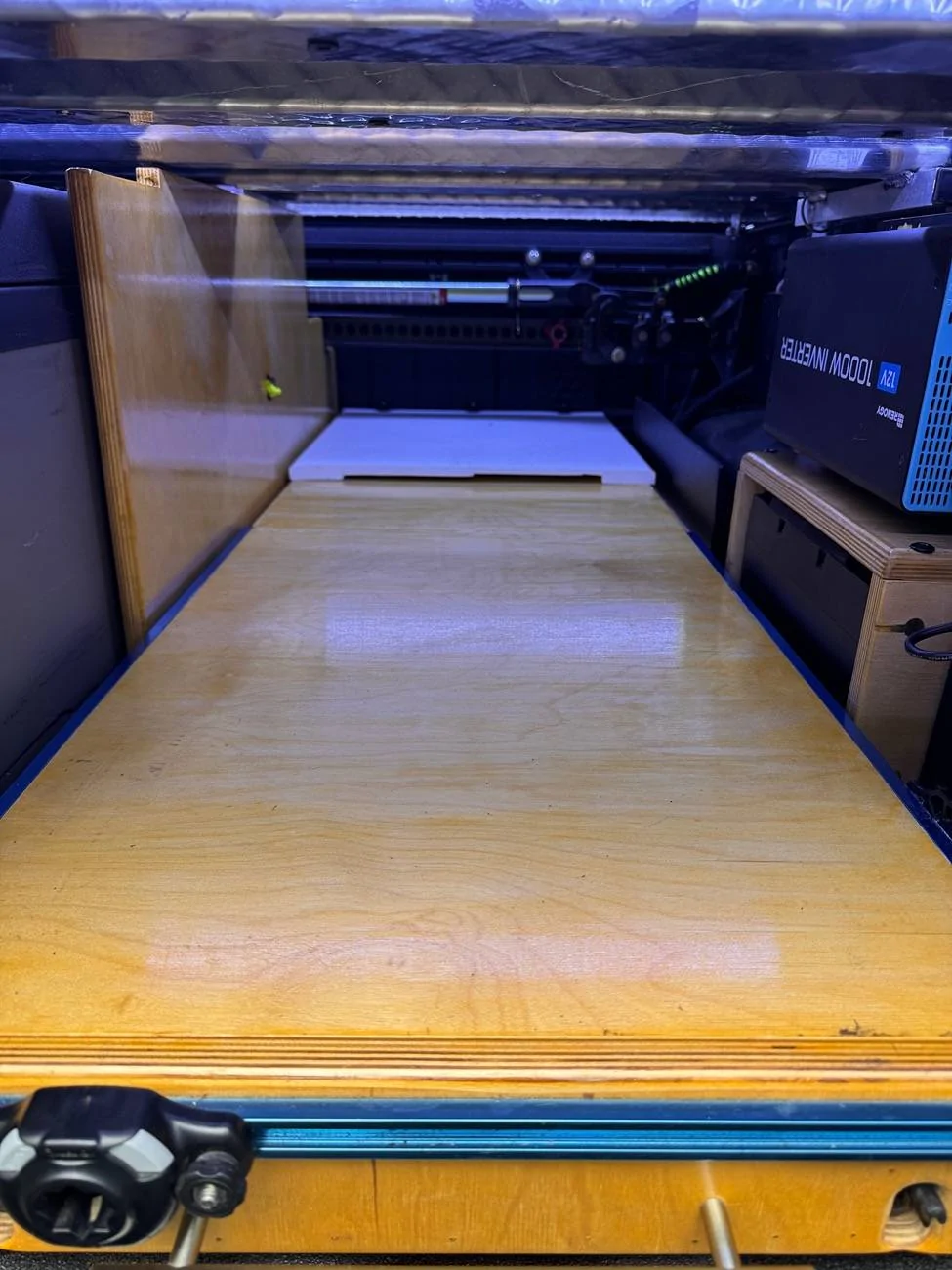
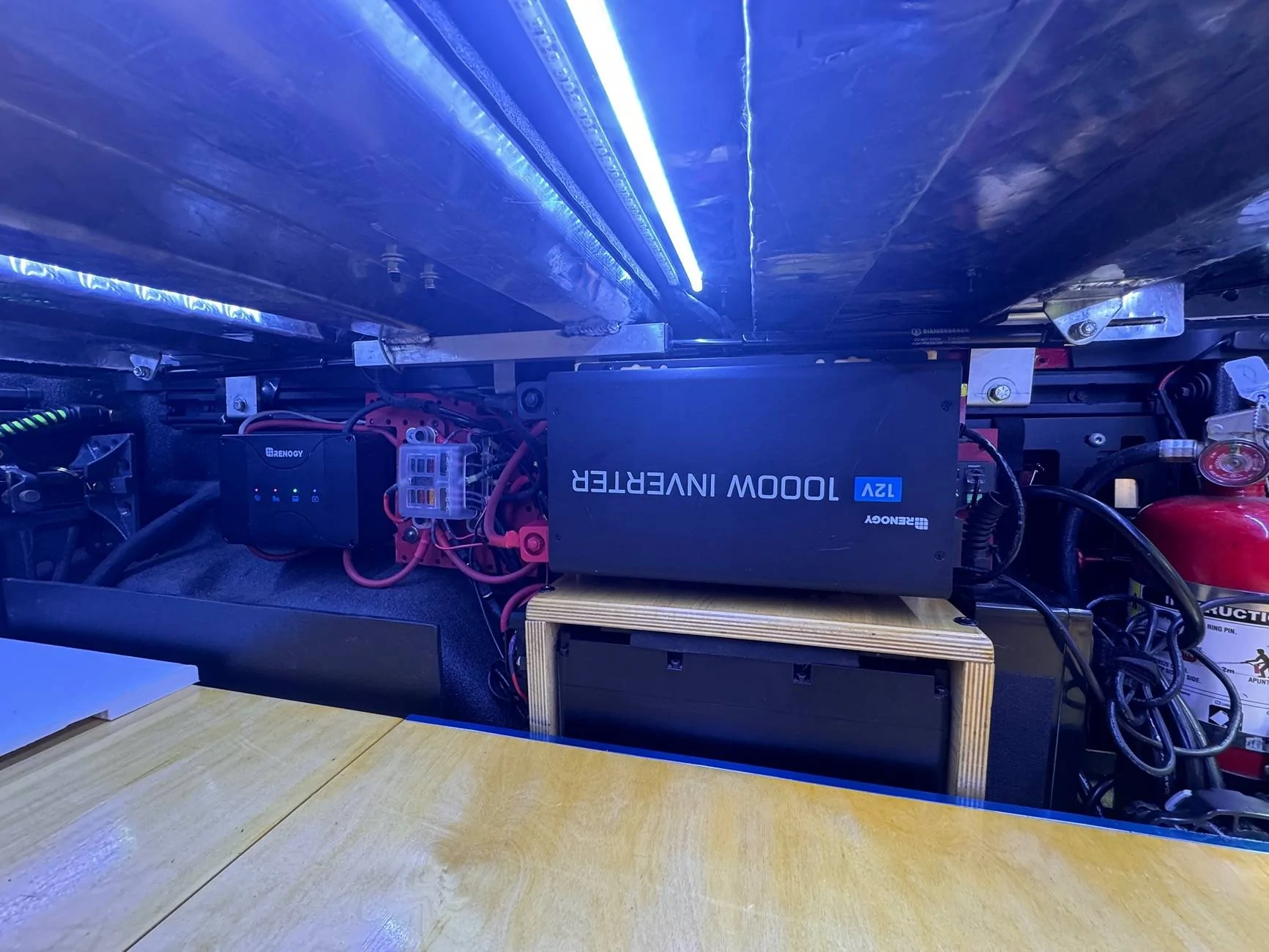
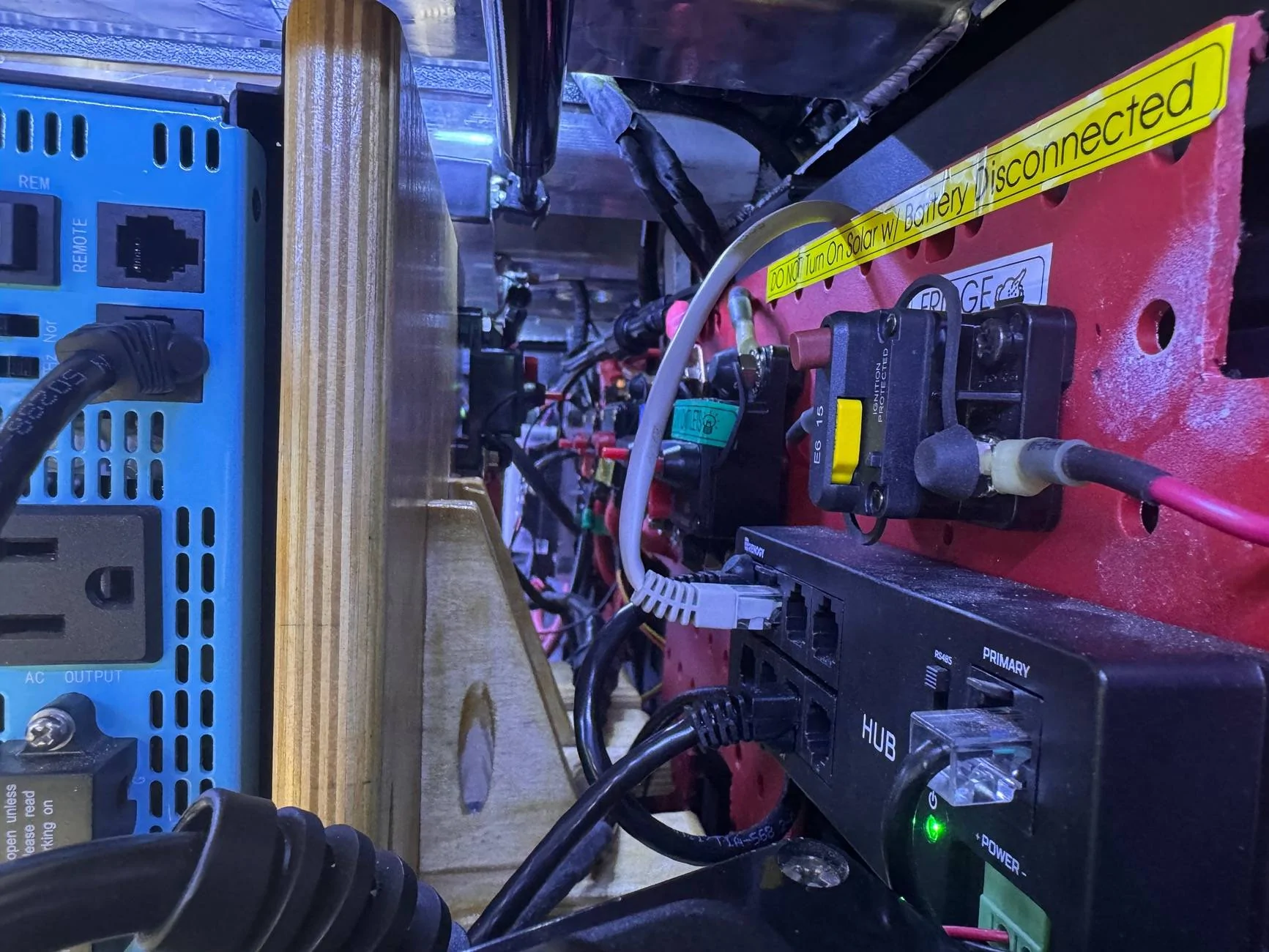
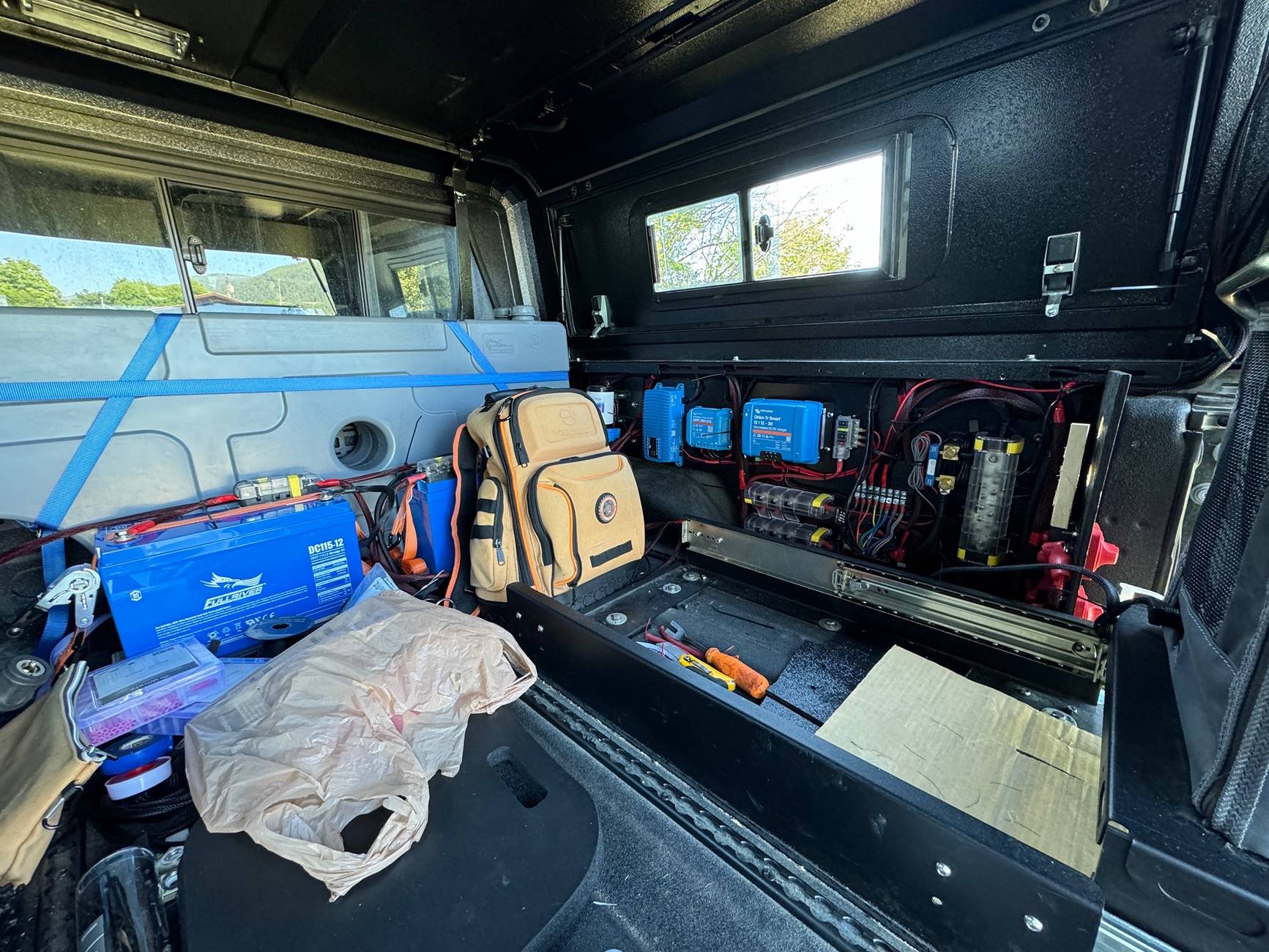
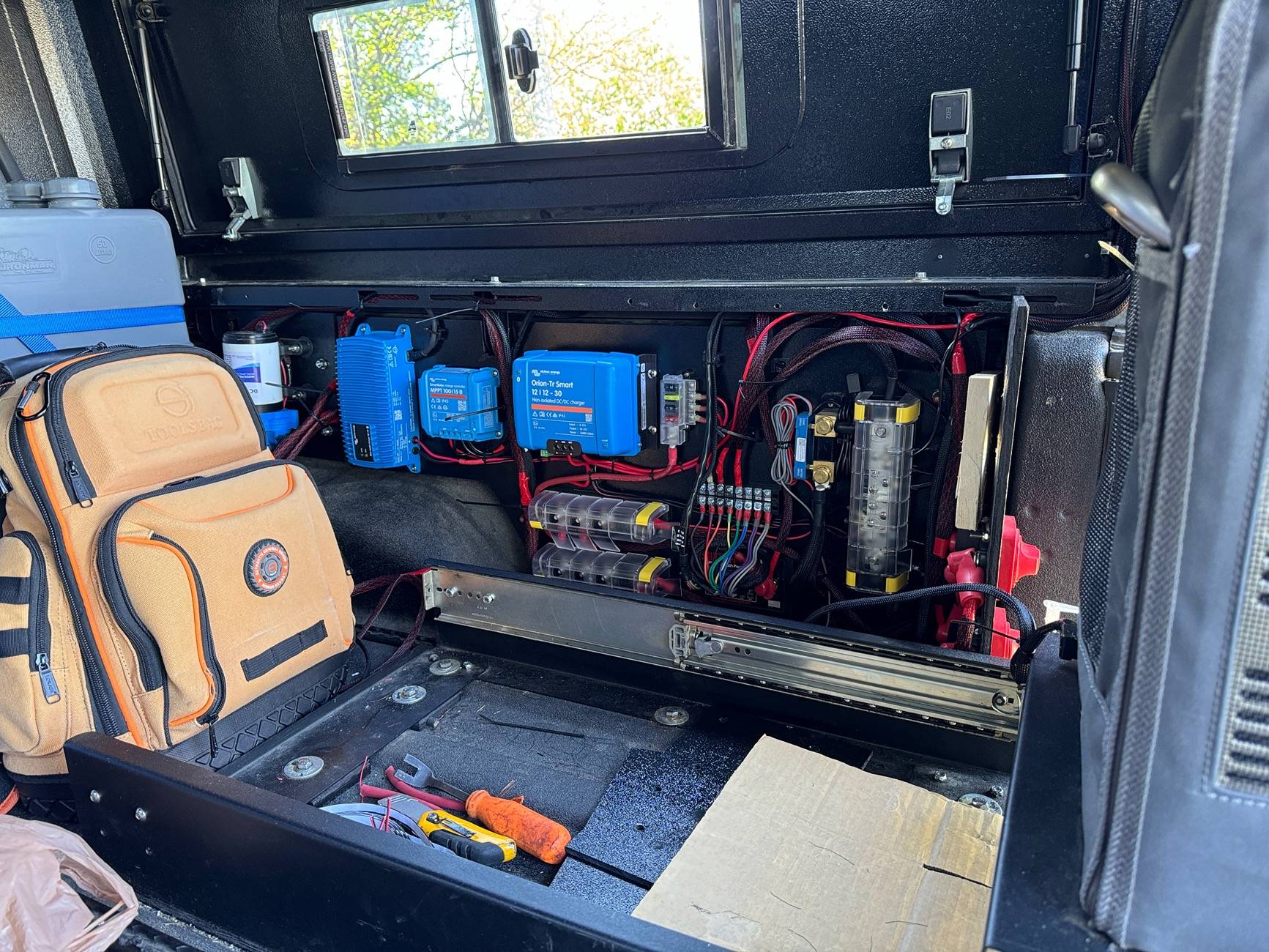
Here you go. My batteries are AGM. But my system design can utilize AGM with a DC/DC charger, AGM directly connected to the starting battery via smart solenoid, or dual lithium batteries. Currently I have 2 115ah FR DC batteries side by side. It also includes a solar controller and a shore power tender/charger than can also be switched into 'power supply' mode if your at a campground with power.


IMG_5147.JPG


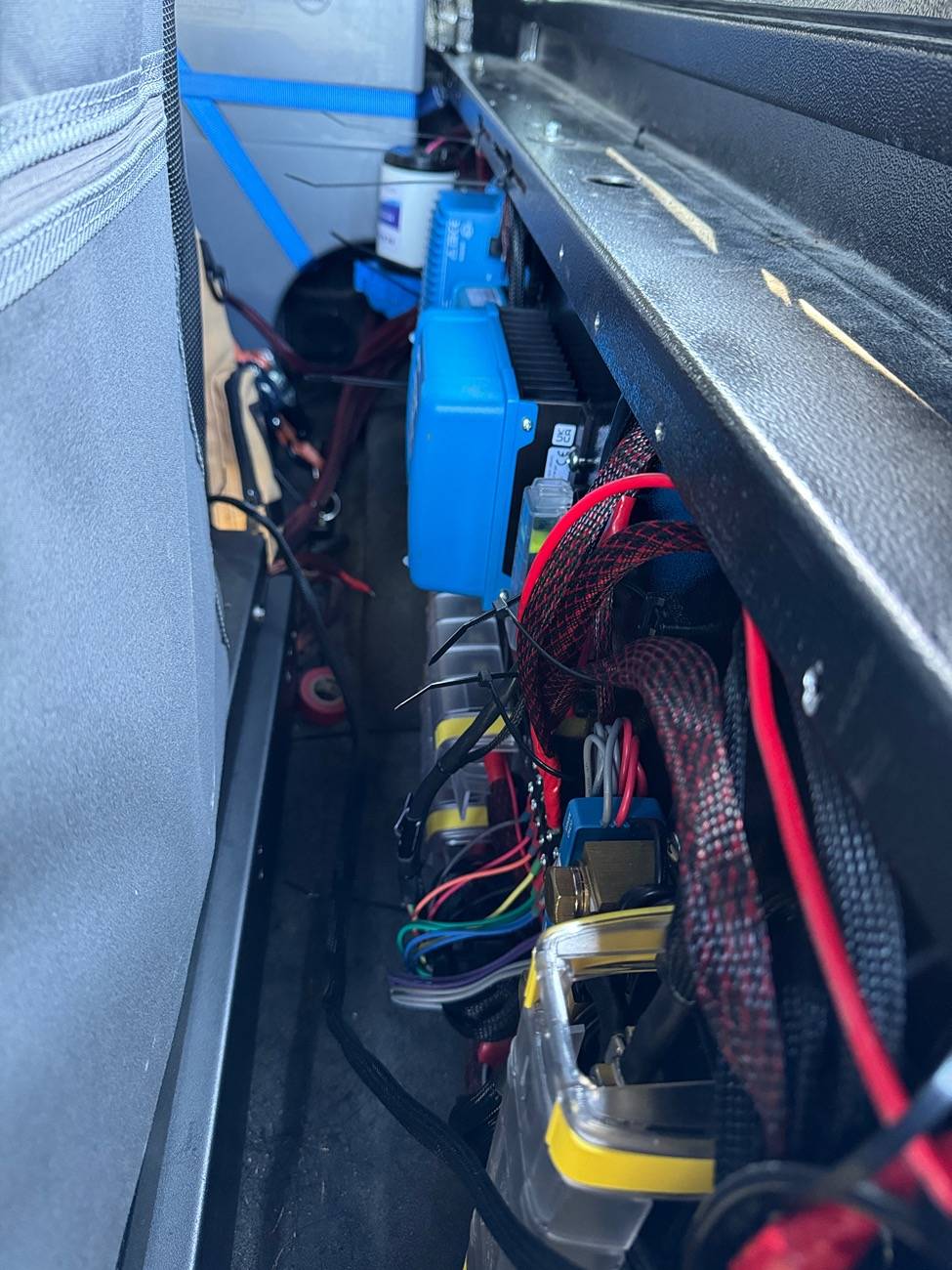
it sits probably an inch behind the wheel well. I am debating making a cover or not. A cover would keep the sun off of things but would also keep heat in and these components do make some heat.
IMG_5146.JPG


IMG_5148.JPG


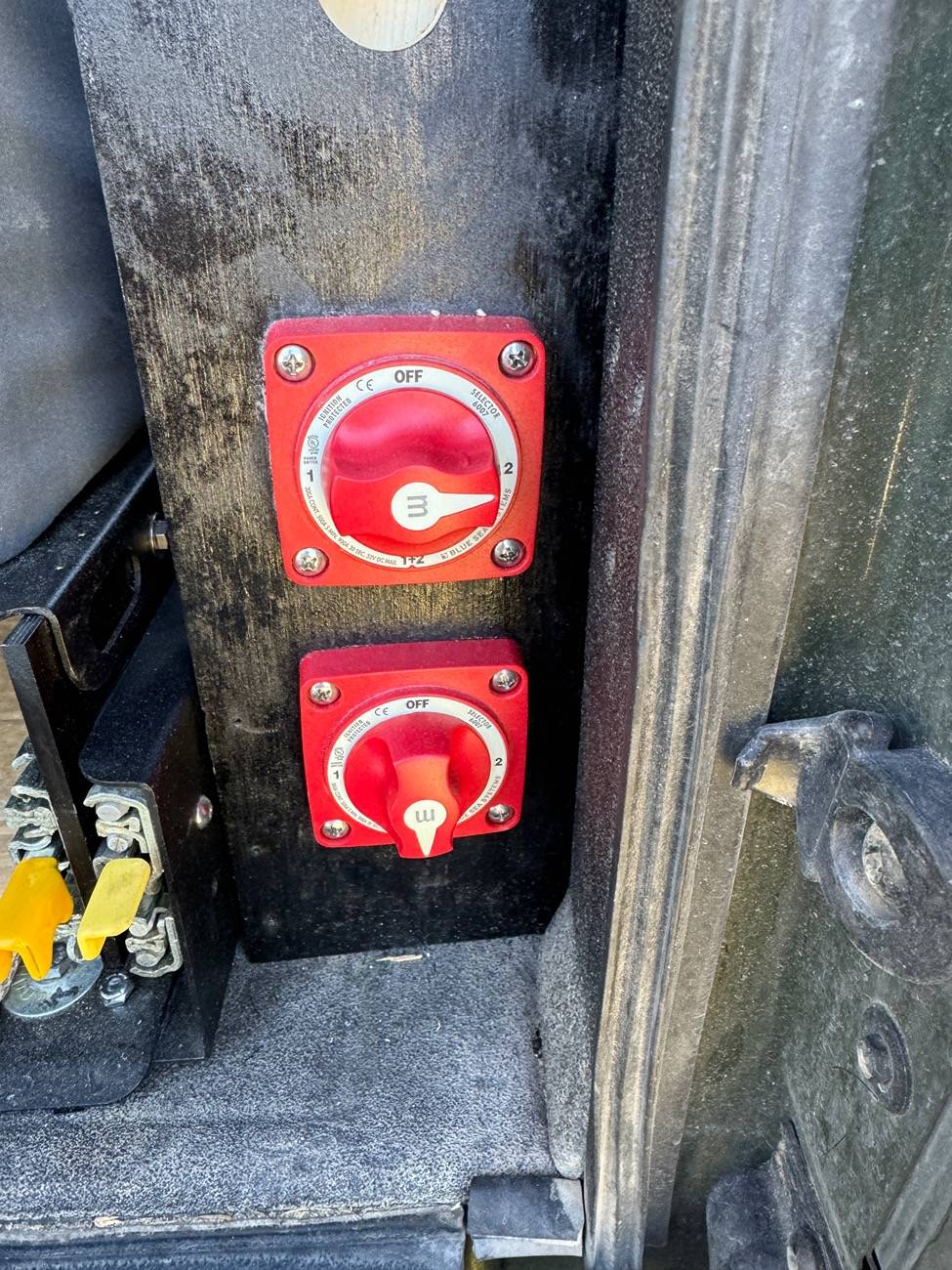
The bottom switch is for the two AGM batteries so that I can have one, two, or both connected in case one needs to be removed or for troubleshooting. The top switch is routing power to the Switch Pros system. So power can come from either #1 which is the starting battery, #2 which is fed by the switch below, both, or none. In the picture above, the bottom 3 terminal fuse block is for the main starting battery to feed to the DC/DC and run the compressor. The 3 terminal block above it is for the switch pros system, inverter, and input from all 3 charging options.
IMG_5145.JPG


I am currently using dual 115ah Full River DC series batteries. My location is not conducive to lithium and these batteries can be run to 30% SOC / 70% DOD which is more than sufficient. With the way my system is built I can easily run lithium or AGM with no modifications needed, only adjusting via phone ap the charging profiles of the victron components. The batteries sit in front of DUAL 13 gal water tanks and I oriented the batteries side by side for even weight distribution. The water tanks dictate my setup is not conducive to putting on the back wall. I am somewhat contemplating relocating the batteries in the cab under the rear seat delete but that will be a winter project if it happens.
IMG_5147.JPG
Interested in that shore power setup you have there. Got a link?
Sponsored


Free2roam

Well-Known Member
First Name
Robert
Joined
Mar 1, 2021
Threads
30
Messages
5,434
Reaction score
11,563
Location
89521
Vehicle(s)
Gladiator
Occupation
Fabricator by trade/ Maintenance Mechanic

chorky

Well-Known Member
First Name
Chad
Joined
Feb 26, 2022
Threads
175
Messages
3,466
Reaction score
3,801
Location
Montana
Website
www.youtube.com
Vehicle(s)
'22JTR, '06 LJ, '06 TJ GE
Build Thread
Link
Occupation
GIS Specialist
Interested in that shore power setup you have there. Got a link?
It's not what most people think when they discuss shore power as in an RV. It is basically just a charger/maintainer. However, there is an option in the app to activate it as a 'charger' or turn it on as a 'power supply'. Since it is only 12v, it's not going to be powerful enough to run things like AC, or power an inverter for a weekend camping trip in a RV. But it will supply a full 17a which is what this particular one is rated at. They also make a 25a option, and I think a 10a and a 5a.

https://www.amazon.com/dp/B07TJK3X71?psc=1&ref=ppx_yo2ov_dt_b_product_details

I have not yet tried it out as a power supply because the solar panels have been more than sufficient.
 

Freems

Well-Known Member
First Name
Mike
Joined
Mar 13, 2023
Threads
10
Messages
870
Reaction score
1,192
Location
Boise Idaho
Vehicle(s)
2020 Gladiator Sport 2022 Bronco Sport
Occupation
Retired
Here you go. My batteries are AGM. But my system design can utilize AGM with a DC/DC charger, AGM directly connected to the starting battery via smart solenoid, or dual lithium batteries. Currently I have 2 115ah FR DC batteries side by side. It also includes a solar controller and a shore power tender/charger than can also be switched into 'power supply' mode if your at a campground with power.


IMG_5147.JPG


it sits probably an inch behind the wheel well. I am debating making a cover or not. A cover would keep the sun off of things but would also keep heat in and these components do make some heat.
IMG_5146.JPG


IMG_5148.JPG


The bottom switch is for the two AGM batteries so that I can have one, two, or both connected in case one needs to be removed or for troubleshooting. The top switch is routing power to the Switch Pros system. So power can come from either #1 which is the starting battery, #2 which is fed by the switch below, both, or none. In the picture above, the bottom 3 terminal fuse block is for the main starting battery to feed to the DC/DC and run the compressor. The 3 terminal block above it is for the switch pros system, inverter, and input from all 3 charging options.
IMG_5145.JPG


I am currently using dual 115ah Full River DC series batteries. My location is not conducive to lithium and these batteries can be run to 30% SOC / 70% DOD which is more than sufficient. With the way my system is built I can easily run lithium or AGM with no modifications needed, only adjusting via phone ap the charging profiles of the victron components. The batteries sit in front of DUAL 13 gal water tanks and I oriented the batteries side by side for even weight distribution. The water tanks dictate my setup is not conducive to putting on the back wall. I am somewhat contemplating relocating the batteries in the cab under the rear seat delete but that will be a winter project if it happens.
IMG_5147.JPG
Maybe a modified molle panel to knock some of sun down and get plenty of air?
 

Wolf Island Diver

Well-Known Member
Joined
Apr 14, 2021
Threads
26
Messages
1,117
Reaction score
2,450
Location
Virginia
Vehicle(s)
2021 JT Rubicon EcoDiesel
Occupation
Software Engineer
Jeep Gladiator Lithium Battery Mounting Suggestions for the Bed IMG_4311


Jeep Gladiator Lithium Battery Mounting Suggestions for the Bed IMG_4313


That mess of cables on the right my power and lighting boxes. I still haven’t found a really good way to stow those. The power box is the black thing on the right side of the battery box held on with Velcro
Jeep Gladiator Lithium Battery Mounting Suggestions for the Bed IMG_4309


I used a 100AH battery and originally a plastic battery case. I wasn’t happy with that at all and wasn’t impressed with what was out on the market, so I made my own tray out of 14mm baltic birch. The top is held down with M8x60mm bolts in barrel nuts inserted crosswise in the sides of the tray. They’re held in with beeswax. Nothing screws into the wood. I used a combination of high density, compressible foam, and HDPE to hold the battery down tight. This is as solid as you can get. The tray is bolted to the floor of the bed into M8 rivnuts. The holes in the bed were painted, and the rivnuts, rtv sealed. They’re above the spare tire and protected from mud, rocks, etc. Everything is finished in waxed shellac and French polished.

The studs for connecting to the battery are accessible, but protected on the backside of the top behind the inverter mount as are the 2 comms ports on the Renogy self-heating battery.

Jeep Gladiator Lithium Battery Mounting Suggestions for the Bed IMG_4312


The tray along with all of the circuit breakers, dc-dc charger and distribution blocks all stand off from the side of the bed with air flow all around them. The breakers, charger, and blocks are mounted to plastic pegboard which is mounted to JCR molle panels. Wiring is run behind the pegboard.

Solar panels plug into an external water sealed outlet that’s mounted to the underside of my Front Runner rack There’s a power box with 2 60w USB-A/C charges and 2 12v sockets on a 10ft cable and a 6 port lighting control box with dimmer on another 10ft cable. The ARB screw in socket is mounted to the other side the bed.

I’ve found that my 63qt ARB runs essentially indefinitely on solar power with this setup using about 10% of the battery overnight along with lights, fans, etc. I carry 300w but find that the 100w mounted panel is usually all I need.


Sponsored

Wolf Island Diver

Well-Known Member
Joined
Apr 14, 2021
Threads
26
Messages
1,117
Reaction score
2,450
Location
Virginia
Vehicle(s)
2021 JT Rubicon EcoDiesel
Occupation
Software Engineer
I’ve found that if I plug in my Noco Genius to my starting battery (I have a MagCode port on the side of the truck), it will raise the voltage enough at the starting battery to activate the DCC50S. I’m not sure if Redarc systems do this but theoretically any dc to dc charger that activates off of a voltage threshold should. This isn’t true shore power at all, but it keeps both batteries topped off. I don’t think extensive charging of one battery through another is typically recommended so this isn’t a good solution for recharging a depleted house battery. So I don’t do that. My mounted solar panel usually keeps both the starting and house batteries topped off and the DCC50S will back charge the starting battery off of solar if the house battery is fully charged. The upshot is both my batteries are always fully charged when at home.
 

smlobx

Well-Known Member
First Name
Eddie
Joined
Jun 28, 2018
Threads
86
Messages
2,639
Reaction score
4,487
Location
Mid Atlantic
Vehicle(s)
JTR, F-350 diesel, Porsche Spyder, Model Y
Occupation
Semi retired consultant
When I built out my bed I installed L Track in the recesses of the bed ribbing. It sits flush with the tops of the ribs so there is no downside to it.
https://www.amazon.com/Track-Tie-Do...58e07a26d88f3fa9bd523e5874841419&gad_source=1

I used Rivnuts to secure them.

Then I got a generic battery box that was large enough for my 100 Ah Battleborn battery and associated wiring and just strapped it down.

i also used the L track to secure my fridge and water tank.
 
Last edited:

WestwallNF104A

Well-Known Member
First Name
Gary
Joined
Sep 4, 2023
Threads
7
Messages
765
Reaction score
1,460
Location
Nevada
Vehicle(s)
2023 Gladiator Rubicon
Occupation
Antique dealer
I see you got it back! What solar panels did they go with?
They used the Sol-Go 115w flexible panel. We were hoping to squeeze four of them on the roof, but ultimately settled on three. The fourth would have had a section exposed to road debris so we decided against it.
 
OP
OP
Blitzinger

Blitzinger

Well-Known Member
Joined
Aug 16, 2022
Threads
23
Messages
346
Reaction score
474
Location
New York
Vehicle(s)
None
Here you go. My batteries are AGM. But my system design can utilize AGM with a DC/DC charger, AGM directly connected to the starting battery via smart solenoid, or dual lithium batteries. Currently I have 2 115ah FR DC batteries side by side. It also includes a solar controller and a shore power tender/charger than can also be switched into 'power supply' mode if your at a campground with power.


IMG_5147.JPG


it sits probably an inch behind the wheel well. I am debating making a cover or not. A cover would keep the sun off of things but would also keep heat in and these components do make some heat.
IMG_5146.JPG


IMG_5148.JPG


The bottom switch is for the two AGM batteries so that I can have one, two, or both connected in case one needs to be removed or for troubleshooting. The top switch is routing power to the Switch Pros system. So power can come from either #1 which is the starting battery, #2 which is fed by the switch below, both, or none. In the picture above, the bottom 3 terminal fuse block is for the main starting battery to feed to the DC/DC and run the compressor. The 3 terminal block above it is for the switch pros system, inverter, and input from all 3 charging options.
IMG_5145.JPG


I am currently using dual 115ah Full River DC series batteries. My location is not conducive to lithium and these batteries can be run to 30% SOC / 70% DOD which is more than sufficient. With the way my system is built I can easily run lithium or AGM with no modifications needed, only adjusting via phone ap the charging profiles of the victron components. The batteries sit in front of DUAL 13 gal water tanks and I oriented the batteries side by side for even weight distribution. The water tanks dictate my setup is not conducive to putting on the back wall. I am somewhat contemplating relocating the batteries in the cab under the rear seat delete but that will be a winter project if it happens.
IMG_5147.JPG
Thanks and looks good. My electronics will all go in a smartcap left side bin. The batteries you have in pics, are those mounted to anything?
 

chorky

Well-Known Member
First Name
Chad
Joined
Feb 26, 2022
Threads
175
Messages
3,466
Reaction score
3,801
Location
Montana
Website
www.youtube.com
Vehicle(s)
'22JTR, '06 LJ, '06 TJ GE
Build Thread
Link
Occupation
GIS Specialist
I’ve found that if I plug in my Noco Genius to my starting battery (I have a MagCode port on the side of the truck), it will raise the voltage enough at the starting battery to activate the DCC50S. I’m not sure if Redarc systems do this but theoretically any dc to dc charger that activates off of a voltage threshold should. This isn’t true shore power at all, but it keeps both batteries topped off. I don’t think extensive charging of one battery through another is typically recommended so this isn’t a good solution for recharging a depleted house battery. So I don’t do that. My mounted solar panel usually keeps both the starting and house batteries topped off and the DCC50S will back charge the starting battery off of solar if the house battery is fully charged. The upshot is both my batteries are always fully charged when at home.
There is a little danger with this though. If your DC/DC pulls more power than the Noco charger/maintainer can supply then you will ultimately end up with a dead starting battery. I considered this option but my DC/DC is currently set up to activate based on voltage. It could be switched to activate off of an engine on circuit but I dont want to run another wire right now. I'm taking a random guess that your DCC50S will charge at a 50 amp rate, meaning it probably pulls closer to 60. So your Noco needs to be able to supply at least 60 to maintain a steady state, otherwise you are just depleting your starting battery slowly over time. This is also the reason I did not yet get a solar panel specifically to maintain the starting battery. I"M going to have a conversation with Sean at Genesis to see if they will work with me on designing and implementing a new/additional program to the G-Screen to avoid this and then you can in fact have a solar charger or maintainer for the starting battery without having to add a wire for an engine on circuit. I dont know about RedArc or others but Victron lets you set the voltage parameters for their DC/DC. I adjusted mine as my batteries are happy with a 14.7v charge rather than the standard. 14.4v. At the same time I adjusted the instant charge voltage, the delay start voltage, and shutdown voltage all to work in conjunction with the Genesis system.
 

Sponsored

chorky

Well-Known Member
First Name
Chad
Joined
Feb 26, 2022
Threads
175
Messages
3,466
Reaction score
3,801
Location
Montana
Website
www.youtube.com
Vehicle(s)
'22JTR, '06 LJ, '06 TJ GE
Build Thread
Link
Occupation
GIS Specialist
Thanks and looks good. My electronics will all go in a smartcap left side bin. The batteries you have in pics, are those mounted to anything?
They are sitting on a small wood base and ratcheted down to a L track system I installed. I'll try and get a few pics of that later today.
 
OP
OP
Blitzinger

Blitzinger

Well-Known Member
Joined
Aug 16, 2022
Threads
23
Messages
346
Reaction score
474
Location
New York
Vehicle(s)
None
There is a little danger with this though. If your DC/DC pulls more power than the Noco charger/maintainer can supply then you will ultimately end up with a dead starting battery. I considered this option but my DC/DC is currently set up to activate based on voltage. It could be switched to activate off of an engine on circuit but I dont want to run another wire right now. I'm taking a random guess that your DCC50S will charge at a 50 amp rate, meaning it probably pulls closer to 60. So your Noco needs to be able to supply at least 60 to maintain a steady state, otherwise you are just depleting your starting battery slowly over time. This is also the reason I did not yet get a solar panel specifically to maintain the starting battery. I"M going to have a conversation with Sean at Genesis to see if they will work with me on designing and implementing a new/additional program to the G-Screen to avoid this and then you can in fact have a solar charger or maintainer for the starting battery without having to add a wire for an engine on circuit. I dont know about RedArc or others but Victron lets you set the voltage parameters for their DC/DC. I adjusted mine as my batteries are happy with a 14.7v charge rather than the standard. 14.4v. At the same time I adjusted the instant charge voltage, the delay start voltage, and shutdown voltage all to work in conjunction with the Genesis system.
Why not get an isolator so energy pulls in one direction
 
OP
OP
Blitzinger

Blitzinger

Well-Known Member
Joined
Aug 16, 2022
Threads
23
Messages
346
Reaction score
474
Location
New York
Vehicle(s)
None
They are sitting on a small wood base and ratcheted down to a L track system I installed. I'll try and get a few pics of that later today.
This sounds somewhat similar to what I'm thinking. I'll get two channel nuts with a 1/2"-1" opening, get string l brackets to bolt into and have a plate on bottom of L brackets to secure
 

Wolf Island Diver

Well-Known Member
Joined
Apr 14, 2021
Threads
26
Messages
1,117
Reaction score
2,450
Location
Virginia
Vehicle(s)
2021 JT Rubicon EcoDiesel
Occupation
Software Engineer
There is a little danger with this though. If your DC/DC pulls more power than the Noco charger/maintainer can supply then you will ultimately end up with a dead starting battery. I considered this option but my DC/DC is currently set up to activate based on voltage. It could be switched to activate off of an engine on circuit but I dont want to run another wire right now. I'm taking a random guess that your DCC50S will charge at a 50 amp rate, meaning it probably pulls closer to 60. So your Noco needs to be able to supply at least 60 to maintain a steady state, otherwise you are just depleting your starting battery slowly over time. This is also the reason I did not yet get a solar panel specifically to maintain the starting battery. I"M going to have a conversation with Sean at Genesis to see if they will work with me on designing and implementing a new/additional program to the G-Screen to avoid this and then you can in fact have a solar charger or maintainer for the starting battery without having to add a wire for an engine on circuit. I dont know about RedArc or others but Victron lets you set the voltage parameters for their DC/DC. I adjusted mine as my batteries are happy with a 14.7v charge rather than the standard. 14.4v. At the same time I adjusted the instant charge voltage, the delay start voltage, and shutdown voltage all to work in conjunction with the Genesis system.
I agree. I believe the Noco supplies 10A. Unfortunately, there’s no setting to prevent this other than flipping the circuit breaker from the DCC50S to the starting battery. If the voltage at the starting battery is over 14v (I believe that’s where most dc to dc chargers turn on) it will activate the DCC50S. So yeah, conceivably, the DCC50S could drain the starting battery pulling 50A while the Noco is supplying 10A. This is why I don’t ever plug in the tender when the lithium is low. But that case basically doesn’t happen at home where the tender is.

I could conceivably use it as a pass through and eventually charge both this way depending on the delta between the two. So if the Lithium gets fully charged, the starting will then start to charge assuming the lithium wasn’t but so low. But I don’t like doing that for the exact reason you bring up. Besides a chance at killing the starting battery it’s probably not good for the chemistry. I only plug in the tender with the DCC50S still connected if the Lithium is 98-100% charged. It’s a very narrow set of circumstances where I let the Noco charge both. Then the tender is only making sure that the DEF heater isn’t depleting the starting battery (my main concern) and the Renogy BT module isn’t slowly draining the Lithium. That’s why I say it’s not a shore power solution. This is also only in winter when the truck sits, the def heater runs all the time and I usually remove the solar panel. The BT module uses minuscule power, so the lithium is steeling very little power from the starting battery.

During spring, summer and fall, the solar panel maintains a the lithium and the starting battery using the DCC50S as a charger. The other thing I’ve found in practice is that my Lithium is rarely ever being discharged very far. I’ll use it to keep groceries or beer cold for parties, brewery and Costco runs, but then it’s getting 350W while driving, so it’s always back at 98+% by the time it’s parked again. When I’m off grid, solar is keeping everything topped off during the day. The Lithium really only drops overnight in conjunction with days of parking in partial shade. Although, I’ve been impressed with the PV charging in bad lighting conditions. The DCC50S has registered PV wattage, albeit anemic wattage driving through the bridge tunnels around HR just from the lights. Today, when I was taking those pictures, it was charging the starting battery putting out a few watts and it’s completely grey and overcast.
 

Wolf Island Diver

Well-Known Member
Joined
Apr 14, 2021
Threads
26
Messages
1,117
Reaction score
2,450
Location
Virginia
Vehicle(s)
2021 JT Rubicon EcoDiesel
Occupation
Software Engineer
Why not get an isolator so energy pulls in one direction
Usually, there’s a fuse between a dc to dc charger and the starting battery. I’m using a circuit breaker so I can more conveniently separate the two. You don’t want to prevent two way flow, because the dc to dc needs to draw power from the truck when it’s running. That’s also where the risk to the starting battery comes in. It can also back feed power to the starting battery but only from solar.

When you plug a tender into the starting battery the voltage increase fools the dc to dc charger into thinking the truck is running and it activates if the house battery isn’t full. If it’s full it will occasionally turn on to trickle charge the house battery off of the starting battery, again o my assuming the voltage is above the threshold. That’s how I allow mine to work in winter at home.
Sponsored


Top