bigjmain
Well-Known Member
Soooooo, did you notice any difference performance-wise?ah I got the pro 10r option odd they have a chart for the guard7 not the other though. Interesting since they all have the same 23% flow increase.
Sponsored

Soooooo, did you notice any difference performance-wise?ah I got the pro 10r option odd they have a chart for the guard7 not the other though. Interesting since they all have the same 23% flow increase.

i only went out for a smoke test (making sure no codes) and when I got back I saw the rubber had folded in so I felt it was no gains more loss LOL but once I fixed the rubber yesterday I’ll go for a longer drive today. Not sure how that rubber folded in but a adjusted the box a little and we will see today. I was first more concerned about throwing any codes than really seeing how it felt.Soooooo, did you notice any difference performance-wise?

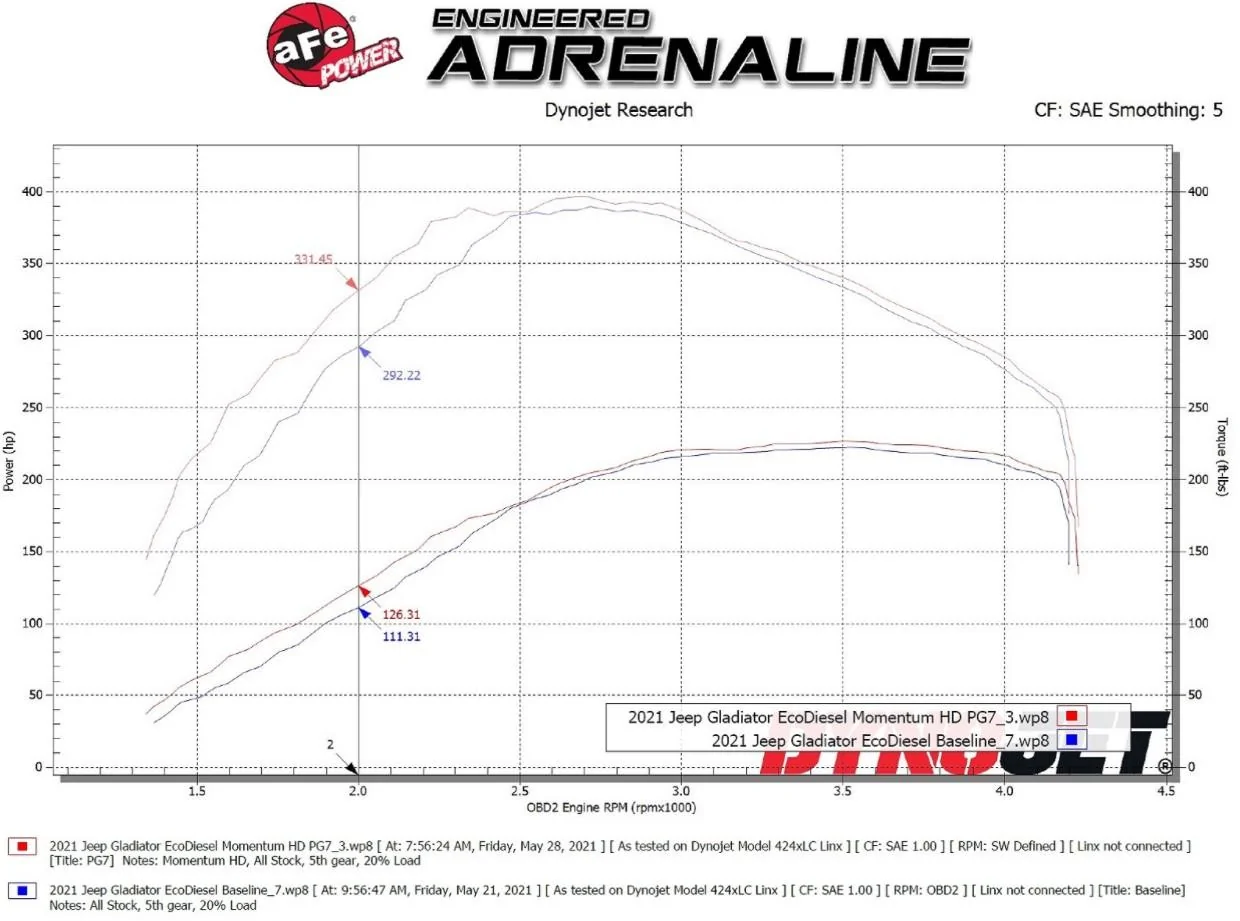
well I solved the rubber mystery. I have to call AFE. Under WOT there’s so my flow it’s sucks the flap down. Not cool.What's interesting to me is that the gains are down low where we want them. Totally the opposite of what you'd see on a gasoline engine. In this case, there isn't much to be had beyond 2,500 RPM. But from idle speed to 2,500 RPM the gains are enormous. Roughly 15 HP and 40 lb/ft through the entire curve in that range.
The advertised +39 lb/ft is at 2,000 RPM, which is about where most of us cruise on the interstate. This would be extremely noticeable while towing. I'm stoked to try this. I just can't find anybody who has one to sell me! I've called everybody I can find on Google.

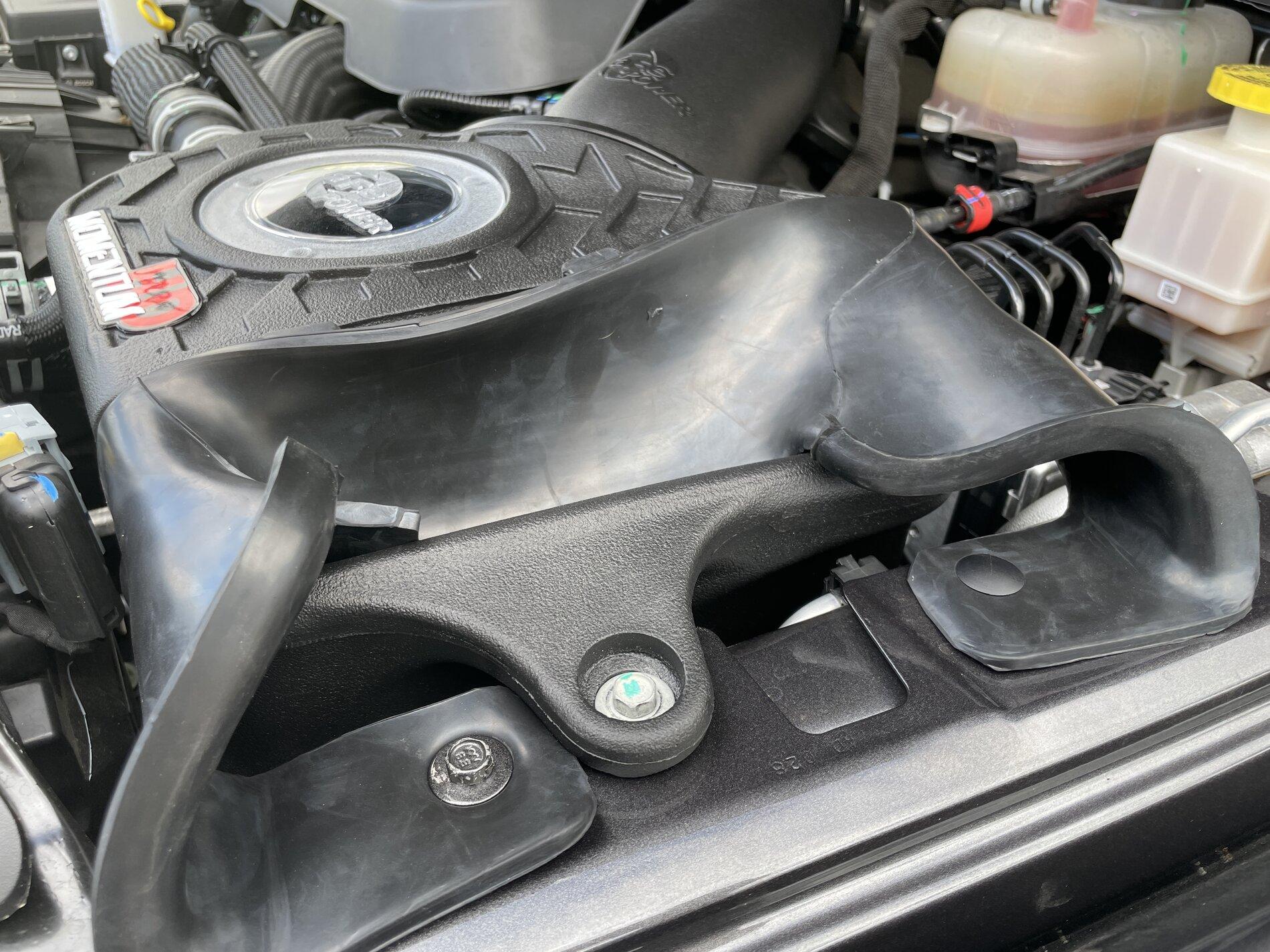
How the hell they not catch that in engineering/testing? kinda an obvious flaw. No buenowell I solved the rubber mystery. I have to call AFE. Under WOT there’s so my flow it’s sucks the flap down. Not cool.

yeah no idea. I emailed them but the only thing I can think of is to cut a chunk of the rubber out or remove the rubber snorkel all together. Honestly not 100% sure what purpose it’s serving.How the hell they not catch that in engineering/testing? kinda an obvious flaw. No bueno
You can run it without the rubber, I do. It just helps keep dust/water out of the filter box....yeah no idea. I emailed them but the only thing I can think of is to cut a chunk of the rubber out or remove the rubber snorkel all together. Honestly not 100% sure what purpose it’s serving.
My guess is dyno testing the hood is open and when closed there’s a lot of pressure/suction created. Upside it flows like a mother for sure LOL
not excusing them for not road testing at WOT so let’s see what they say. Like I said it proves it’s flowing like crazy!
I hsve the stock airbox, not same issue. bc the intake hole is facing up I would be ok with running without rubber. unless you are expedition wheeling...then I would just get a snorkel hahaDid you see the same issue?
yeh I figured it was just to create a dust / water seal against the hood which in design hindsight and the high flow wasn’t a great idea. I did email Josh to get his official opinion.I hsve the stock airbox, not same issue. bc the intake hole is facing up I would be ok with running without rubber. unless you are expedition wheeling...then I would just get a snorkel haha
I just yanked the rubber. I’ll say with the engine heat the rubber is VERY soft. I think that part needed to be plastic but still waiting to hear back from AFE directly. I’ve never had an issue like this with their products. It is a bit disappointing to say the least. I think it’ll be fine without that on there but still for the money and the waiting to ship these it’s sub par.With rubber removed... tehe... wonder if that'll help pull some of the heat out of the engine bay and allow slight decrease in under hood temps? Sure it might increase IATs, but that could also be offset by intercooler.
I passed on it and went with a K&N filter. Interested to hear @CCOlotti feedback on the performance. The gains are for such a short burst seems unlikely to be noticeable. 1500-2400 is the only RPM that there’s any bump. The whoosh seems louder from the video, the K&N is not as loud. There seems to be a slight pick up from the K&N but not much.What's interesting to me is that the gains are down low where we want them. Totally the opposite of what you'd see on a gasoline engine. In this case, there isn't much to be had beyond 2,500 RPM. But from idle speed to 2,500 RPM the gains are enormous. Roughly 15 HP and 40 lb/ft through the entire curve in that range.
The advertised +39 lb/ft is at 2,000 RPM, which is about where most of us cruise on the interstate. This would be extremely noticeable while towing. I'm stoked to try this. I just can't find anybody who has one to sell me! I've called everybody I can find on Google.
I'm running no rubber seal or mini snorkel under that seal. Removed both from the factory air box. 15-20 degree reduction in IAT now per the Scan Guage.With rubber removed... tehe... wonder if that'll help pull some of the heat out of the engine bay and allow slight decrease in under hood temps? Sure it might increase IATs, but that could also be offset by intercooler.
I'd run without a filter before I would use a K&N because the filtration would be the same without spending money.I passed on it and went with a K&N filter. Interested to hear @CCOlotti feedback on the performance. The gains are for such a short burst seems unlikely to be noticeable. 1500-2400 is the only RPM that there’s any bump. The whoosh seems louder from the video, the K&N is not as loud. There seems to be a slight pick up from the K&N but not much.
Really? You think they’re that bad? I will say the factory filter has like an extra “cotton ball” type padding on the bottom of it which I’ve never seen on any vehicle beforeI'm running no rubber seal or mini snorkel under that seal. Removed both from the factory air box. 15-20 degree reduction in IAT now per the Scan Guage.
I'd run without a filter before I would use a K&N because the filtration would be the same without spending money.


