Sponsored

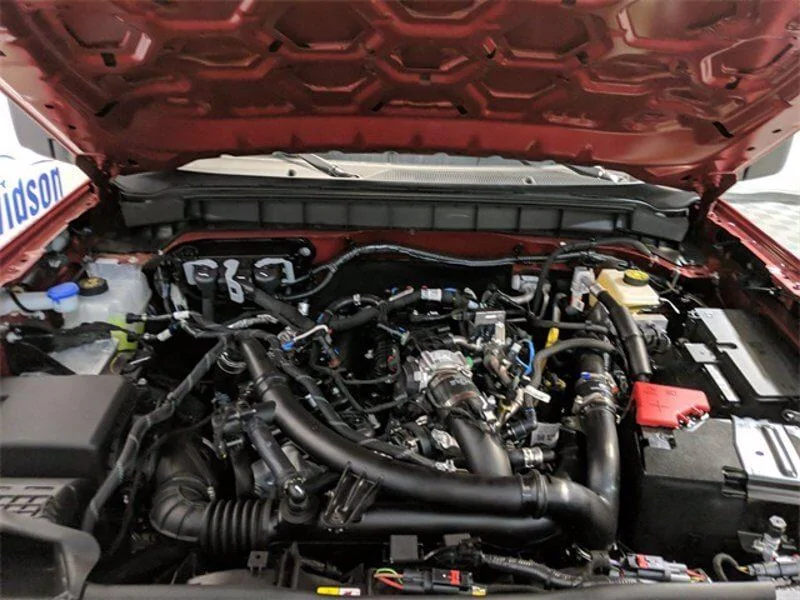
New Willys JT and no engine cover

ecidiego

Well-Known Member
First Name
Chris
Joined
Nov 3, 2021
Threads
62
Messages
3,625
Reaction score
5,580
Location
San Diego
Vehicle(s)
2021 Gladiator Mojave
Occupation
IT
Guys. Do you have any CLUE how many 24 core Intel Xeon CPUs are in those covers? Be thankful you even got a starter solenoid.
Sponsored

 

ShadowsPapa

Well-Known Member
First Name
Bill
Joined
Oct 12, 2019
Threads
247
Messages
40,442
Reaction score
53,859
Location
Runnells, Iowa
Vehicle(s)
'25 JTMX, '23 JLU 4xe, '82 SX4, '73 Javelin
Occupation
Retired auto mechanic, frmr gov't ntwrk security admin
Vehicle Showcase
3
Years back when the motor cover first started showing up, there was some reason used, they were to keep owners little fingers off the motor/engine area. There were a few of us not installing the covers after the first major tune up service. Many customers then were at least looking up the hoods & this practice stopped quickly.

Many decades back there were nearly complete under body pans that mechanics would just forget to put back in place as it usually required another set of hands & a lot of screws .
Keep in mind these were sheet steel pans. Owners never really knew & so life was good & factories stopped installing underbody pans.
To prevent customers from touching...........wow. But no.
Oh, well, if that's what some believe.
I've read the reasons and watched the air flow testing and so on. Preventing customers from touching something sure wasn't it, though. I know, that's the urban legend. That's what's been passed along so often it's become the "de facto reason".
Factories have not stopped shielding the lower sides of vehicles. In fact the car I towed out of the ditch last weekend was only a couple of years old and had a full belly cover as well as a smooth under-hood area.

Here's part of a study I have marked that shows how much the flow under a vehicle impacts drag, and why they try to smooth the underside ->

The underbody airflow is blocked due to uneven structure, and separate mostly, there are many turbulent flows at the bottom of the car, which dissipate a large amount of energy, as shown in Fig. 7. The vortex at the bottom of the car not only increases the aerodynamic drag of itself, but also converges to the rear vortex of the car, changing the flow field at the rear of the car and increasing the pressure drag.

<- basically, it's saying the rough undercarriage causes trouble.
 

Sponsored

ecidiego

Well-Known Member
First Name
Chris
Joined
Nov 3, 2021
Threads
62
Messages
3,625
Reaction score
5,580
Location
San Diego
Vehicle(s)
2021 Gladiator Mojave
Occupation
IT
To prevent customers from touching...........wow. But no.
Oh, well, if that's what some believe.
I've read the reasons and watched the air flow testing and so on. Preventing customers from touching something sure wasn't it, though. I know, that's the urban legend. That's what's been passed along so often it's become the "de facto reason".
Factories have not stopped shielding the lower sides of vehicles. In fact the car I towed out of the ditch last weekend was only a couple of years old and had a full belly cover as well as a smooth under-hood area.

Here's part of a study I have marked that shows how much the flow under a vehicle impacts drag, and why they try to smooth the underside ->

The underbody airflow is blocked due to uneven structure, and separate mostly, there are many turbulent flows at the bottom of the car, which dissipate a large amount of energy, as shown in Fig. 7. The vortex at the bottom of the car not only increases the aerodynamic drag of itself, but also converges to the rear vortex of the car, changing the flow field at the rear of the car and increasing the pressure drag.

<- basically, it's saying the rough undercarriage causes trouble.
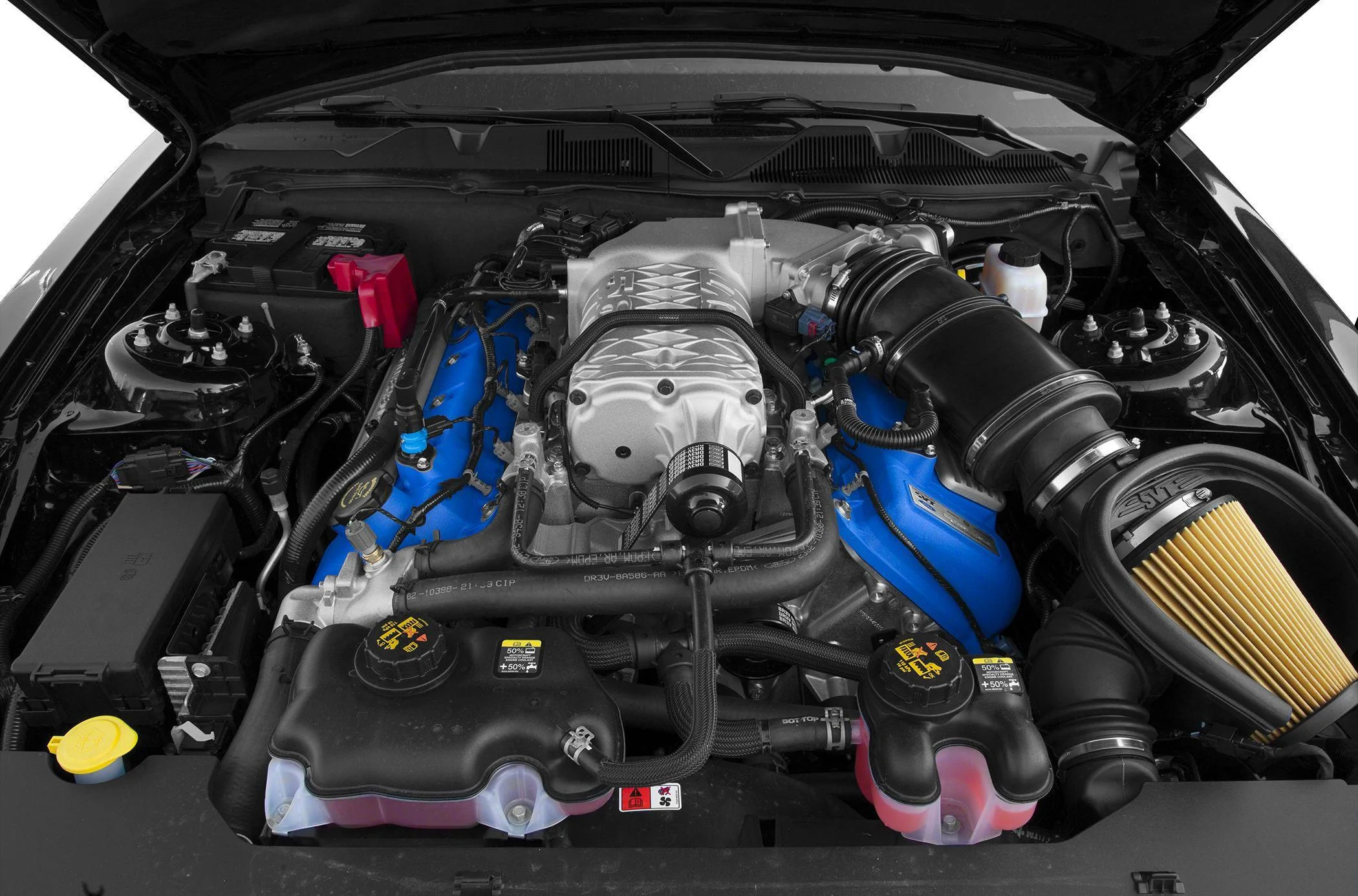
Cannot comment on the Gladiator here.. but on many vehicles in the past the engine cover was to hide the ugly engine with wire harnesses all over the place. No other purpose. Look at Ford's crown jewels - the Cobras... and GT500s too which were also Cobras....no engine cover in sight, even pre Terminator era ( no blower ). It was just a well designed aesthetic engine compartment.

2001 Cobra, NA:

Jeep Gladiator New Willys JT and no engine cover 1999_cobra_motor


Point stands - engine covers are for ugly engines.
 

ShadowsPapa

Well-Known Member
First Name
Bill
Joined
Oct 12, 2019
Threads
247
Messages
40,442
Reaction score
53,859
Location
Runnells, Iowa
Vehicle(s)
'25 JTMX, '23 JLU 4xe, '82 SX4, '73 Javelin
Occupation
Retired auto mechanic, frmr gov't ntwrk security admin
Vehicle Showcase
3
Cannot comment on the Gladiator here.. but on many vehicles in the past the engine cover was to hide the ugly engine with wire harnesses all over the place. No other purpose. Look at Ford's crown jewels - the Cobras... and GT500s too which were also Cobras....no engine cover in sight, even pre Terminator era ( no blower ). It was just a well designed aesthetic engine compartment.

2001 Cobra, NA:

1999_cobra_motor.jpg


Point stands - engine covers are for ugly engines.
We're talking performance cars there - a bit different than a vehicle trying to meet CAFE and sell based on other factors than that "look at me, I wreak of pure power and beauty".
Selling that engine sold cars. They didn't give a rip about sound or MPG.
But following the different developments of shielding and other factors, for the "average vehicle" and even more-so today, it's not because of looks.
Besides, where they hell would a cover fit under that hood! LOL. You want to see that engine - it's going to help sell the car.

Being a former auto tech person myself, I've tended to follow the science and development where it impacted me or I found it of interest.
Did you know that MOPAR added ribbing to a certain engine block to help make it quieter? "engine is too noisy". Really? I've had the before and after versions - can't say I noticed a difference.

But again, the internet rules, that's where facts are found LOL
 

Chilli

Well-Known Member
First Name
Wolfgang
Joined
Nov 25, 2020
Threads
1
Messages
142
Reaction score
141
Location
JACKSONVILLE
Vehicle(s)
GLADIATOR RUBICON
Occupation
RETIRED
Sorry I did a side track or high jack of the OP subject.

But the follow up w/ these great pix w/ these motors, well it was worth the wait in the corner.
Well done guys

Plus now I will never suggest customers have no business touching their engines.
But that's what my boss was told by his boss & both wives approved all of it.
 

Sponsored

ShadowsPapa

Well-Known Member
First Name
Bill
Joined
Oct 12, 2019
Threads
247
Messages
40,442
Reaction score
53,859
Location
Runnells, Iowa
Vehicle(s)
'25 JTMX, '23 JLU 4xe, '82 SX4, '73 Javelin
Occupation
Retired auto mechanic, frmr gov't ntwrk security admin
Vehicle Showcase
3
The problem is that some of the stuff keeps getting repeated and no one ever bothers to do the real research.

Here's more behind the smooth under-belly idea ->
------------------
Up until about 10-15 years ago, many manufacturers simply didn't care about the underbody of the car, leaving everything exposed. This is great as it allows heaps of cooling for components like the engine, transmission and exhaust, as well as being cost effective and allowing for easy maintenance. However, it's about the worst thing you can do aerodynamically, as the disruptions to the airflow under the car both increase drag and decrease downforce.

Further in their study, they took a car and modified it and did testing ->
By adding the flat floor we dropped our drag force at 180km/h by 15kg, and our downforce increased by 50kg. That's a sizeable gain for only adding a flat floor and not performing any other modifications. And the flat floor geometry I've added isn't even close to optimized for performance, so you can really see why manufacturers are starting to fit heaps of plastic panels on the undersides of their cars to smoothen it all out.
---------------------
And then has anyone noticed the upturn of the rear of most vehicles now? That air under there is FASTER and to prevent drag at the rear, they have to slow it down to meet the air over and around and at the back - so they open things up allowing it to expand and slow down before exiting the underside. There's a reason that there's that upswept bottom at the rear, and smooth lines back there.


As far as covers - most research shows it's engine noise. Engines rev higher than they used to, injectors click and make noise, etc.
Here's info from a manual for one car -
VW Jetta 1.8T - The factory service manual produced by Bentley (for Volkswagen) specifically calls this component the upper sound absorber panel.

And here's another source's explanation -

Controlling engine noise, reducing it in both the passenger cabin and the exterior vicinity of the vehicle.
Controlling airflow over parts of the engine and supporting equipment to maintain proper cooling.
(controlling air flow under the hood has been demonstrated in wind tunnel videos! They want it controlled and exiting out the bottom)

They are primarily to reduce noise - Both interior and for exterior (pass-by noise regulations).

Think about the typical family car - most customers never lift the hood so they would not spend the money on engine covers for looks.
 

dcmdon

Well-Known Member
First Name
Don
Joined
Mar 31, 2021
Threads
60
Messages
3,656
Reaction score
4,427
Location
Boston Metro-West, Northern NH
Vehicle(s)
.
22s don't have engine covers. This is a good thing.
 

ShadowsPapa

Well-Known Member
First Name
Bill
Joined
Oct 12, 2019
Threads
247
Messages
40,442
Reaction score
53,859
Location
Runnells, Iowa
Vehicle(s)
'25 JTMX, '23 JLU 4xe, '82 SX4, '73 Javelin
Occupation
Retired auto mechanic, frmr gov't ntwrk security admin
Vehicle Showcase
3
22s don't have engine covers. This is a good thing.
Jeep and "quiet" or "aerodynamic" just fit together like "Senate intelligence" - just doesn't work.
I frankly appreciate how quiet my truck is, especially up front, engine-wise, but if it made a bit more sound, I might actually like it.

I mean, I drove this thing for years, and you can imagine the sound feed-back when I went through underpasses or along those concrete highway barriers.


DobaMark

Well-Known Member
First Name
Mark
Joined
Aug 3, 2020
Threads
4
Messages
194
Reaction score
179
Location
30143
Vehicle(s)
20 JT Overland, 23 JL Sahara 4xe
The Dodge Hemi police cars don't use engine covers, haven't since they were introduced in 2006 or so (unless they've changed that recently). Therefore, I think the engine cover function is not performance related at all. I haven't seen under the hood of a new 3.6 squad to know if they ever used covers.
So I think the engine cover has two functions: appearance and sound deadening.


Top