
Sponsored
Water in Transmission from 4WD'ing, is this covered under manufacturer Car Warranty?
- Thread starter adamjedgar
- Start date
- Watchers 10

Rusty PW
Well-Known Member
- First Name
- Russ
- Joined
- Jan 10, 2022
- Threads
- 37
- Messages
- 11,515
- Reaction score
- 30,698
- Location
- Fayette Nam, Pennsyltucky
- Website
- www.youtube.com
- Vehicle(s)
- '22 JTRD, '11 370Z Nismo, '07 Honda VFR
- Build Thread
- Link
- Occupation
- Muff Diver
You missed the turn off 3 miles back.Wait, I thought this turned into a brake thread?
OP
OP
adamjedgar
Well-Known Member
- Thread starter
- #138
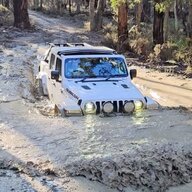
that's ok i accept your point on this. What i can say is that in the image on my avatar, yes it is my Jeep in the photo, however, i am not the one driving it...my son is. Im the one who took the photo.As for the avatar, to me it looked photoshopped but I have no problem taking your word that it is not. Believe me, many people would photoshop something like that to try to impress others.
The reason why the bow wave appears so high is because the water is actually quite shallow, however, the wheel ruts are much deeper. So the movement of the big tyres through the water is pushing water up onto the shallow section and making it appear the vehicle entered the mudhole at speed. The truth is it did not.
The car actually got stuck in this mudhole and had to be reversed back and driven forwards about 6 times to push the soft mud through it. The car didn't get fast walking pace the whole way through.
OP
OP
adamjedgar
Well-Known Member
- Thread starter
- #139
50,000 km for brake pads is about normal for work vehicles. Remember I also tow a 2.2 ton trailer with this vehicle on a regular basis as I also have a scissor lift I use for work.A family member's 2018 VW Tiguan needed its rear brake pads replaced at 15k miles. It does happen. If @adamjedgar is off road a lot, the brake-based traction control might be applying the rear brakes more often than you expect.
The reason why the brakes have worn this quickly is also because only one pad on each disk is doing on the work...that is the point actually.
Also, traction control auto disables when in low range 4wd. Those who regularly do moderate to hard 4wding all know traction control is a very poor substitute for diff lockers (mine is a Rubicon so ive got front and rear lockers from factory)

ShadowsPapa
Well-Known Member
- First Name
- Bill
- Joined
- Oct 12, 2019
- Threads
- 247
- Messages
- 40,514
- Reaction score
- 54,050
- Location
- Runnells, Iowa
- Vehicle(s)
- '25 JTMX, '23 JLU 4xe, '82 SX4, '73 Javelin
- Occupation
- Retired auto mechanic, frmr gov't ntwrk security admin
- Vehicle Showcase
- 3
In the states - trailers have brakes and the trailer brakes handle the weight of the trailer, meaning there's no appreciable extra load on the tow vehicle brakes.Remember I also tow a 2.2 ton trailer with this vehicle on a regular basis as I also have a scissor lift I use for work.
I also tow - 5,000 pounds, and my trailer brakes handle the trailer, my truck brakes handle the truck. No real extra wear.
Then your calipers are stuck and not floating.The reason why the brakes have worn this quickly is also because only one pad on each disk is doing on the work...that is the point actually.
Once applied, nearly equal pressure is applied against each pad.
I've done brake work since the early 1970s and the only time one pad wears fast and the other is still good is when you have stuck or sticking calipers.
The caliper really doesn't have to move much at all because the caliper remains mostly centered over the rotor. Once the pad on the piston side makes contact, further force slides the caliper so the other pad is forced against the rotor.
Unequal wear is not normal. If I was seeing unequal wear, I'd pull the caliper and make sure I cleaned all contact surfaces and it could slide in the bracket.
Hydraulics forced mud and muck up into things. As the wheels sank in, and with the back and forth, you were forcing mud up into things with some force, likely including up against the transmission and into the brakes.The reason why the bow wave appears so high is because the water is actually quite shallow, however, the wheel ruts are much deeper. So the movement of the big tyres through the water is pushing water up onto the shallow section and making it appear the vehicle entered the mudhole at speed. The truth is it did not.
The car actually got stuck in this mudhole and had to be reversed back and driven forwards about 6 times to push the soft mud through it. The car didn't get fast walking pace the whole way through.
Mud can actually be pumped, like concrete, and as your wheels sank into the mud, it was forced up into things as the wheels displaced it.
I have a "mud pump" from the 1930s, a gas engine mated to a pump used in construction sites to pump water and muddy water and mud out of excavations.
The water may not have been 30" deep itself, but the fact that your wheels settled into mud means the effective height of the top of the water vs. the truck...........
There's truly simple and logical explanations for the issues you experienced.
Sponsored
Stan H
Well-Known Member
You spot on with that one as usual @shadows papa. I have done my fair amount of mud .. but the entirety of the truck and I mean everything is cleaned. I also do my own brake pad changes and those bolts that the caliper slides on get fresh grease . Muddy water = Dried Mud in every nook and cranny. It can be a colossal job getting it all out.In the states - trailers have brakes and the trailer brakes handle the weight of the trailer, meaning there's no appreciable extra load on the tow vehicle brakes.
I also tow - 5,000 pounds, and my trailer brakes handle the trailer, my truck brakes handle the truck. No real extra wear.
Then your calipers are stuck and not floating.
Once applied, nearly equal pressure is applied against each pad.
I've done brake work since the early 1970s and the only time one pad wears fast and the other is still good is when you have stuck or sticking calipers.
The caliper really doesn't have to move much at all because the caliper remains mostly centered over the rotor. Once the pad on the piston side makes contact, further force slides the caliper so the other pad is forced against the rotor.
Unequal wear is not normal. If I was seeing unequal wear, I'd pull the caliper and make sure I cleaned all contact surfaces and it could slide in the bracket.
Hydraulics forced mud and muck up into things. As the wheels sank in, and with the back and forth, you were forcing mud up into things with some force, likely including up against the transmission and into the brakes.
Mud can actually be pumped, like concrete, and as your wheels sank into the mud, it was forced up into things as the wheels displaced it.
I have a "mud pump" from the 1930s, a gas engine mated to a pump used in construction sites to pump water and muddy water and mud out of excavations.
The water may not have been 30" deep itself, but the fact that your wheels settled into mud means the effective height of the top of the water vs. the truck...........
There's truly simple and logical explanations for the issues you experienced.
I only usually am on muddy roads. But have done some deeper mud it ain't good on anything.
troverman
Well-Known Member
Actually that's not true. Stability Control is what disables automatically in low range. However, traction control continues to function normally in low range, as it actually can be effective when lockers aren't engaged or aren't present.Also, traction control auto disables when in low range 4wd. Those who regularly do moderate to hard 4wding all know traction control is a very poor substitute for diff lockers (mine is a Rubicon so ive got front and rear lockers from factory)
Many people disparage traction control systems - and in many cases rightly so - but its worth noting some impressive off-road vehicles use traction control quite effectively. The Land Rover Discovery II, for example, at one point exclusively used traction control to manage wheelspin across and between the axles of its permanent 4x4 system. Keep in mind there was no throttle intervention, so momentum was never lost like most modern systems today do.
OP
OP
adamjedgar
Well-Known Member
- Thread starter
- #143
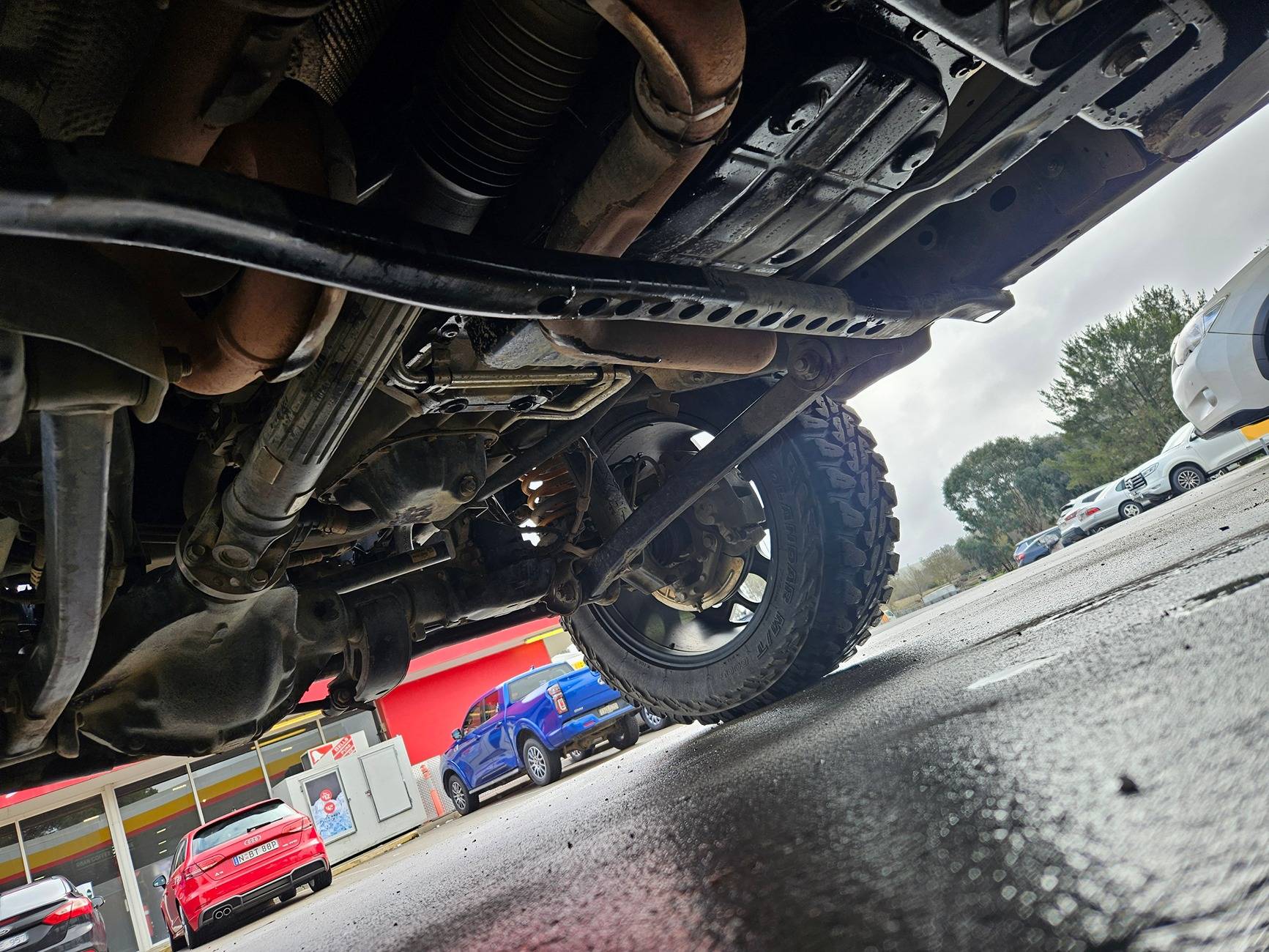
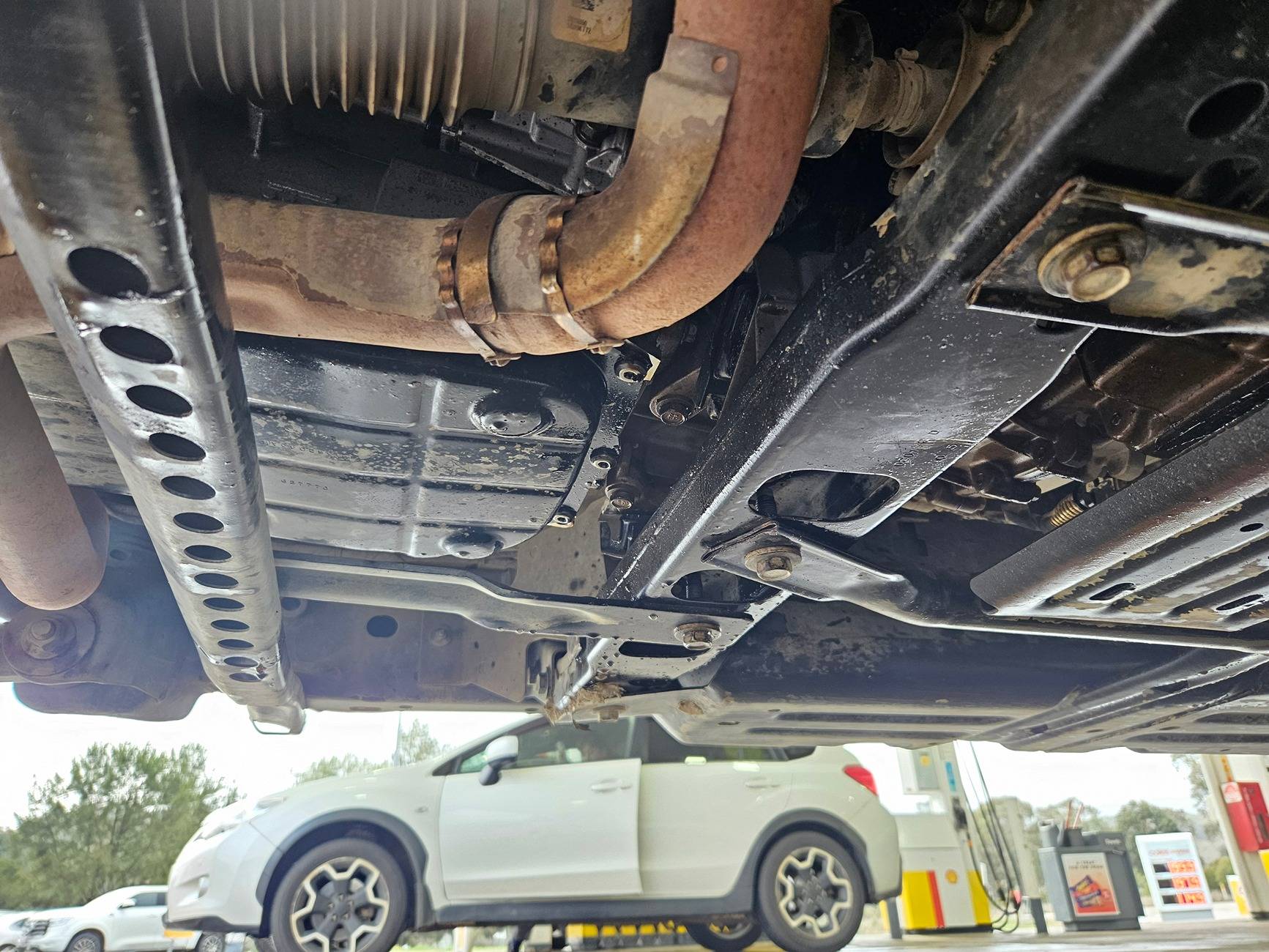
Hi guys an update...
My 2nd transmission (the one for this O.P which got water in it) was replaced under warranty.
The car was away getting replacement transmission for almost 2 months.
I picked the car up 3 weeks ago...and sadly, less than 3,000km later...
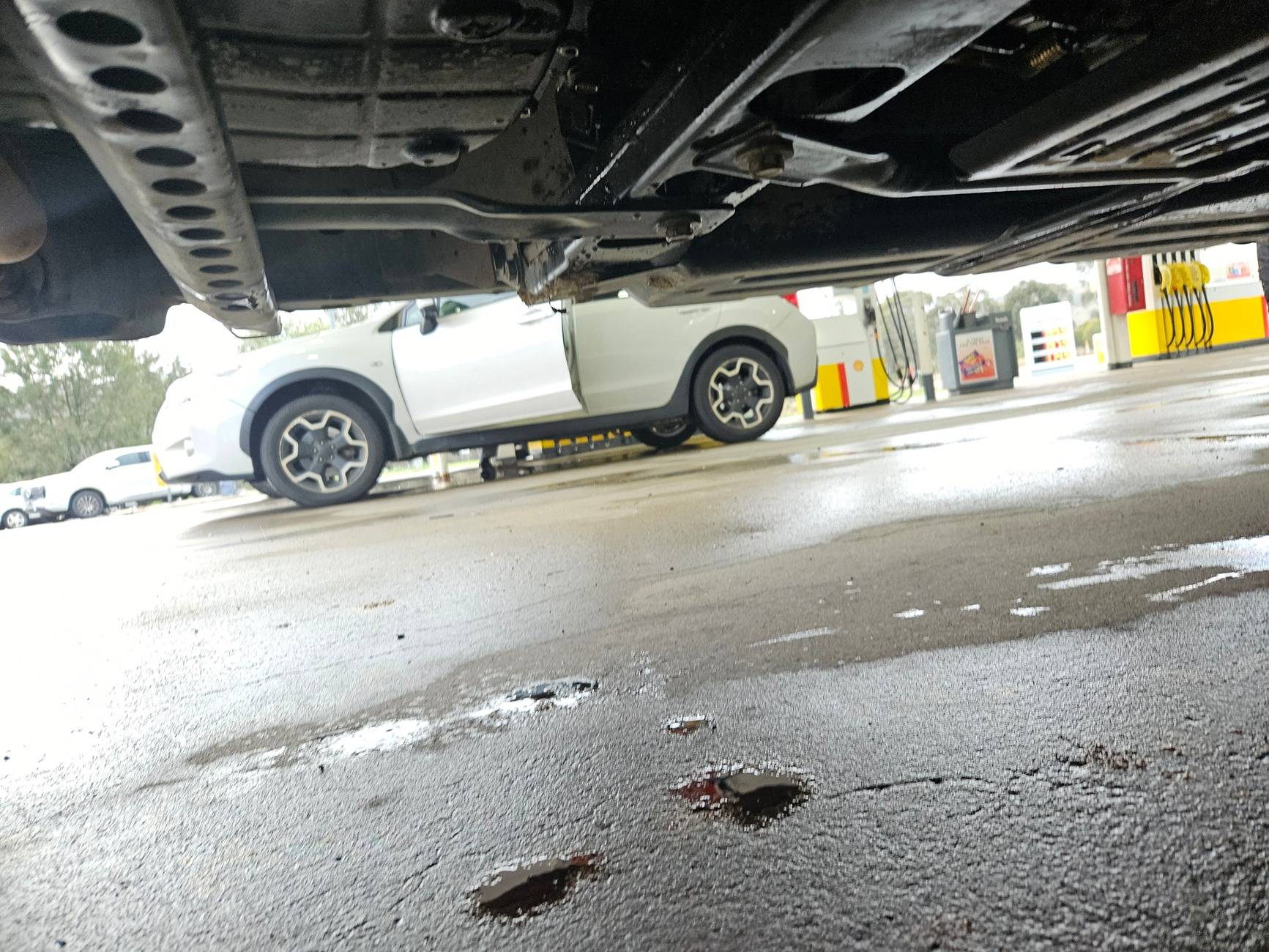
its pissing oil out of the bell housing and i think the transmission oil pan.
Somehow I need to drive 500km back to jeep dealership who installed this transmission.
note this is transmission no 3...the car has 50,000km on the clock. First one failed at 36,000km, second one at 47,000km (installer forgot to install breather hose)...this one will be lucky to make it to dealership I think...but I'm screwed I'm in the middle of no where.

My 2nd transmission (the one for this O.P which got water in it) was replaced under warranty.
The car was away getting replacement transmission for almost 2 months.
I picked the car up 3 weeks ago...and sadly, less than 3,000km later...
its pissing oil out of the bell housing and i think the transmission oil pan.
Somehow I need to drive 500km back to jeep dealership who installed this transmission.
note this is transmission no 3...the car has 50,000km on the clock. First one failed at 36,000km, second one at 47,000km (installer forgot to install breather hose)...this one will be lucky to make it to dealership I think...but I'm screwed I'm in the middle of no where.
Maximus Gladius
Well-Known Member
- First Name
- Kevin
- Joined
- Jan 30, 2021
- Threads
- 75
- Messages
- 2,919
- Reaction score
- 3,732
- Location
- Calgary, AB, Canada
- Vehicle(s)
- 2021 JTR, 2023 JTR
Don’t drive it. If you try, you’ll still be in the middle of no where…walking. If you were able to drive to your place, so can a tow truck.
Rusty PW
Well-Known Member
- First Name
- Russ
- Joined
- Jan 10, 2022
- Threads
- 37
- Messages
- 11,515
- Reaction score
- 30,698
- Location
- Fayette Nam, Pennsyltucky
- Website
- www.youtube.com
- Vehicle(s)
- '22 JTRD, '11 370Z Nismo, '07 Honda VFR
- Build Thread
- Link
- Occupation
- Muff Diver
Rent a Uhaul trailer and truck. Tow it back. Cheaper than a tow truck or flat bed for that distance. I had to do it once.
Maximus Gladius
Well-Known Member
- First Name
- Kevin
- Joined
- Jan 30, 2021
- Threads
- 75
- Messages
- 2,919
- Reaction score
- 3,732
- Location
- Calgary, AB, Canada
- Vehicle(s)
- 2021 JTR, 2023 JTR
OP, from the time you noticed the oil leak and took those photos, how many miles did you drive already? Did you drive it after those photos? How many miles back to the dealership? You mentioned being in the middle of nowhere…. Is “nowhere” at these photos at the gas station/store or you’re literally “nowhere” because you drove home?
Are you hearing any whine from the transmission (pump)? Have you pulled up the temp display on the screen to see where the transmission is at?
Your tranny holds about 9 litres. I don’t know how much you can lose before damage starts. You’d definitely hear and feel something by then but I’m not so sure if FCA will take to kindly to you driving it when you knew it had a bad leak.
Are you hearing any whine from the transmission (pump)? Have you pulled up the temp display on the screen to see where the transmission is at?
Your tranny holds about 9 litres. I don’t know how much you can lose before damage starts. You’d definitely hear and feel something by then but I’m not so sure if FCA will take to kindly to you driving it when you knew it had a bad leak.
Sponsored
Similar threads

- Replies
- 4
- Views
- 2,923


- Replies
- 8
- Views
- 3,244

