
sroberts1519
Active Member
- Thread starter
- #1
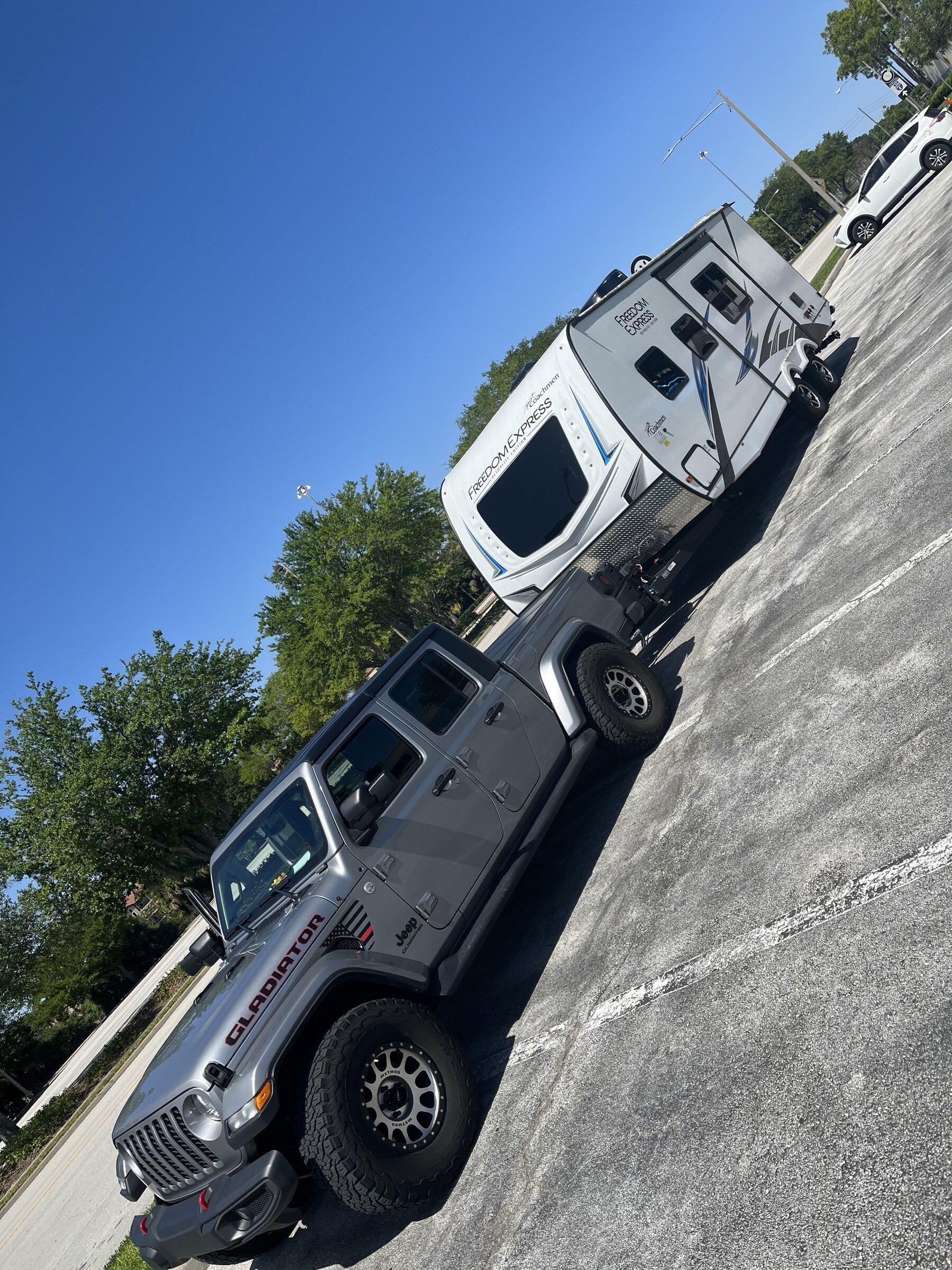
After several months waiting, we finally got our new RV delivered to us. I have a completely stock Overland (I know, worst trim level to tow with).
In an effort to get things dialed in as best as possible (I am going to be over my GVWR - my truck, my responsibility), I have a few questions.
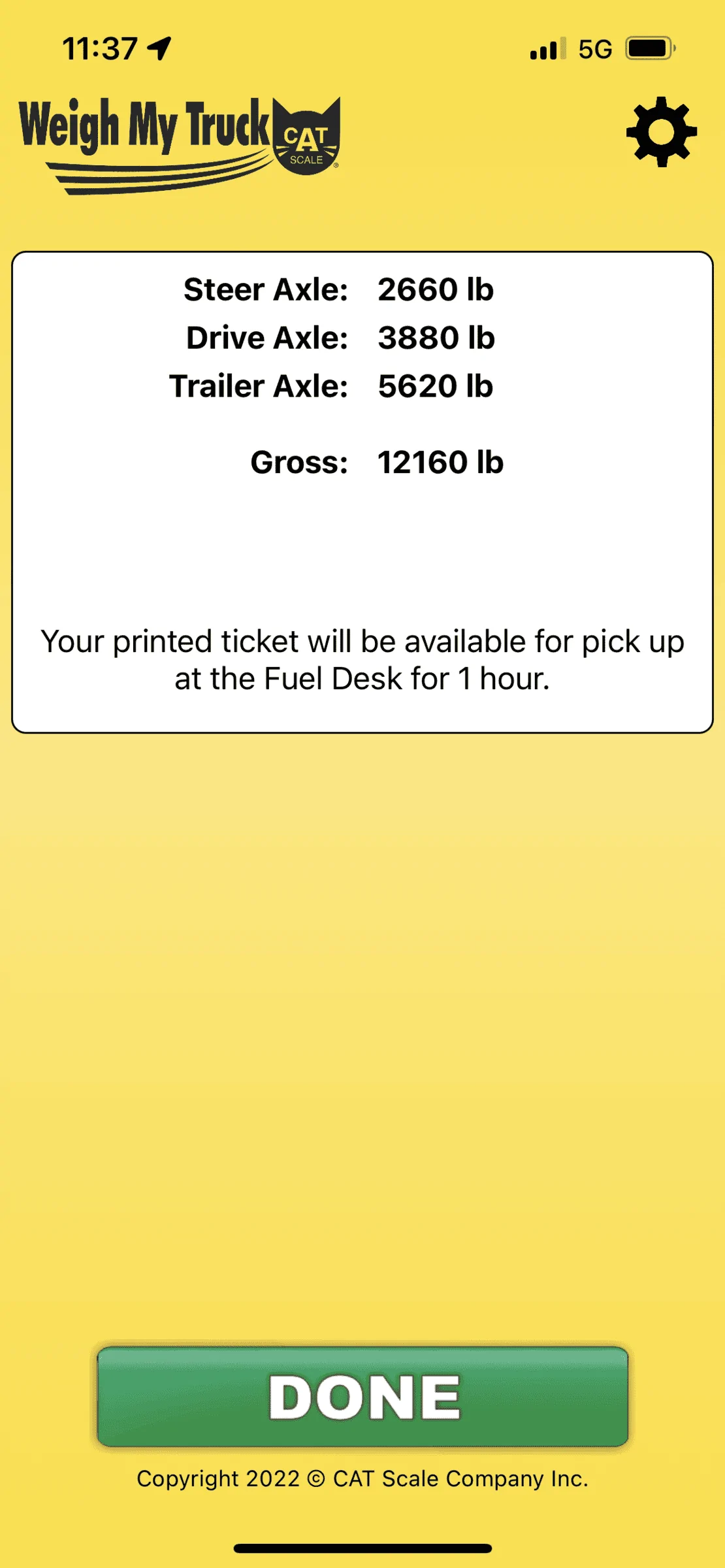
After packing up the RV, ran it across a CAT scale. As I anticipated, I am over the GVWR (5800). I am going to adjust how the RV is "packed", to reduce the amount I am over GVWR (but, regardless how I pack the RV, I will still be over GVWR).
My question is this. What is more important, the "squat" of the truck at front and rear tires, or the weight measured on each axle?
Let me explain. With the trailer loaded up with WDH (but no passengers in the truck), the measurements I made at front and rear tire (the height to the bottom of the fender) is exactly the same for the front wheel and the rear wheel. The front wheel measurement actually went up a little over 1/4" with trailer and wdh attached. I have a e2 wdh, and the manual says that the front wheel height increasing slightly is normal - but I always thought with wdh, your front wheel height should never increase. Which is correct?
Second measurement was with all passengers on board, with trailer/wdh, weighed on CAT scales. I took the front/rear measured weights and compared them to the GAWR (3100 front and 37250 rear). What I found was the weight measurement indicated that my front axle was slightly more than 85% of its gross axle weight ratio, and the rear was slightly over 86%. 85% and 86% seems pretty balanced to me (or should I not be looking at it like this).
So, should I add another spacer on the e2 hitch to add more weight distribution to keep the (no passenger) height of the front wheel from increasing, or do I go with (the weight measurement with passengers) and try to keep the front and rear axles close to the same percentage of max GAWR? Adding an additional spacer to the e2 hitch I am sure will make the front axle weight a higher percentage of it's GAWR than the rear axle percentage.
Also, what is considered a reasonable squat in the rear and/or what is considered too much?
Thanks
In an effort to get things dialed in as best as possible (I am going to be over my GVWR - my truck, my responsibility), I have a few questions.
After packing up the RV, ran it across a CAT scale. As I anticipated, I am over the GVWR (5800). I am going to adjust how the RV is "packed", to reduce the amount I am over GVWR (but, regardless how I pack the RV, I will still be over GVWR).
My question is this. What is more important, the "squat" of the truck at front and rear tires, or the weight measured on each axle?
Let me explain. With the trailer loaded up with WDH (but no passengers in the truck), the measurements I made at front and rear tire (the height to the bottom of the fender) is exactly the same for the front wheel and the rear wheel. The front wheel measurement actually went up a little over 1/4" with trailer and wdh attached. I have a e2 wdh, and the manual says that the front wheel height increasing slightly is normal - but I always thought with wdh, your front wheel height should never increase. Which is correct?
Second measurement was with all passengers on board, with trailer/wdh, weighed on CAT scales. I took the front/rear measured weights and compared them to the GAWR (3100 front and 37250 rear). What I found was the weight measurement indicated that my front axle was slightly more than 85% of its gross axle weight ratio, and the rear was slightly over 86%. 85% and 86% seems pretty balanced to me (or should I not be looking at it like this).
So, should I add another spacer on the e2 hitch to add more weight distribution to keep the (no passenger) height of the front wheel from increasing, or do I go with (the weight measurement with passengers) and try to keep the front and rear axles close to the same percentage of max GAWR? Adding an additional spacer to the e2 hitch I am sure will make the front axle weight a higher percentage of it's GAWR than the rear axle percentage.
Also, what is considered a reasonable squat in the rear and/or what is considered too much?
Thanks
Sponsored
Last edited:





![[Deleted User 30464]](https://cdn.jeepgladiatorforum.com/data/avatars/s/30/30464.jpg?1589983703)

