
Sponsored

Wheel Spacers - Pros/Cons?

piroman683

Well-Known Member
First Name
Mike
Joined
Sep 13, 2019
Threads
9
Messages
427
Reaction score
462
Location
Long Beach
Vehicle(s)
2019 Gladiator
from an engineering perspective you absolutely put more load on the original axle studs when using wheel spaces and that increases the fatigue loading on them. increased fatigue loading decreases structural integrity over time faster. Just like having a longer breaker bar makes it easier to crack a tight nut, extending the loading moment arm of the tire through a spacer increases the loading on the axle studs. Will it fail while you own it?...maybe, maybe not, depends on how you drive it and how well you make sure things never loosen up. But in simple engineering physics wheel spacers increase fatigue loading which is not ideal.
Sponsored
 

texanjeeper

Well-Known Member
Joined
Apr 22, 2021
Threads
37
Messages
718
Reaction score
1,253
Location
Texas
Vehicle(s)
2020 Gladiator Sport-S Granite Crystal Metallic
Occupation
I.T.
I decided when it is time for new tires, I'll do without spacers. They have to be installed correctly - you have to test them, then take the bolts out and use Locktite on the ones holding the spacers to the axle, then torque it down to usually something between 100 and 110 pound-foot. Then, you have to keep an eye on them and make sure that the bolts are not backing out and that anything is going wrong in your suspension. No thanks, I'll just buy the size wheel I'm looking for.
 

Mac

Well-Known Member
Joined
Nov 30, 2017
Threads
33
Messages
2,177
Reaction score
2,374
Location
MA
Vehicle(s)
2020 JT Hydro Blue Max Tow
from an engineering perspective you absolutely put more load on the original axle studs when using wheel spaces and that increases the fatigue loading on them. increased fatigue loading decreases structural integrity over time faster. Just like having a longer breaker bar makes it easier to crack a tight nut, extending the loading moment arm of the tire through a spacer increases the loading on the axle studs. Will it fail while you own it?...maybe, maybe not, depends on how you drive it and how well you make sure things never loosen up. But in simple engineering physics wheel spacers increase fatigue loading which is not ideal.
Don’t wheels with lower offset do the same thing from a leverage standpoint?
 

Elff

Banned
Banned
Joined
Dec 20, 2021
Threads
15
Messages
1,363
Reaction score
3,985
Location
Keebler
Vehicle(s)
TJ Rubicon, Buell XBRS
Occupation
Interwebs
Vehicle Showcase
2
It's the same.
 
  • Like
Reactions: Mac

Sponsored

Wheelin98TJ

Well-Known Member
First Name
Ryan
Joined
Jul 27, 2021
Threads
11
Messages
3,699
Reaction score
4,358
Location
Devils Lake, MI
Vehicle(s)
2021 Jeep Gladiator
Occupation
Bean Counter
I decided when it is time for new tires, I'll do without spacers. They have to be installed correctly - you have to test them, then take the bolts out and use Locktite on the ones holding the spacers to the axle, then torque it down to usually something between 100 and 110 pound-foot. Then, you have to keep an eye on them and make sure that the bolts are not backing out and that anything is going wrong in your suspension. No thanks, I'll just buy the size wheel I'm looking for.
Test them? Anything going wrong in your suspension?

Mine has spacers on it. They haven’t been touched since install 9-10k miles ago. I’ll check the torque when the tires are rotated soon, but they’ll be fine.

I guess I should add, if you’re the type of guy who’s had a wheel and tire come off while driving, spacers are probably not for you.
 

Elff

Banned
Banned
Joined
Dec 20, 2021
Threads
15
Messages
1,363
Reaction score
3,985
Location
Keebler
Vehicle(s)
TJ Rubicon, Buell XBRS
Occupation
Interwebs
Vehicle Showcase
2
So True.
Spacers are simple
1. Don't be a cheap ass, buy quality
2. Torque your shit and use locktite

It's really that simple and then you, like me, can get 100,000+ Trouble Free miles out of them.

100,000+ miles is a 100% accurate statement on the total number of miles both on and off-road I have driven with Zero issues with Spidertrax spacers on 2 Tis

I am approaching 20,000 miles on my Alfa Romeo with quality Otis Spacers
 

Sarge502

Well-Known Member
Joined
Jul 3, 2021
Threads
45
Messages
1,308
Reaction score
2,477
Location
Kentucky
Vehicle(s)
2020 Jeep Gladiator Overland
Build Thread
Link
Occupation
Thin Blue Line
Vehicle Showcase
1
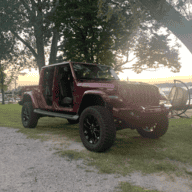
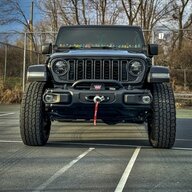
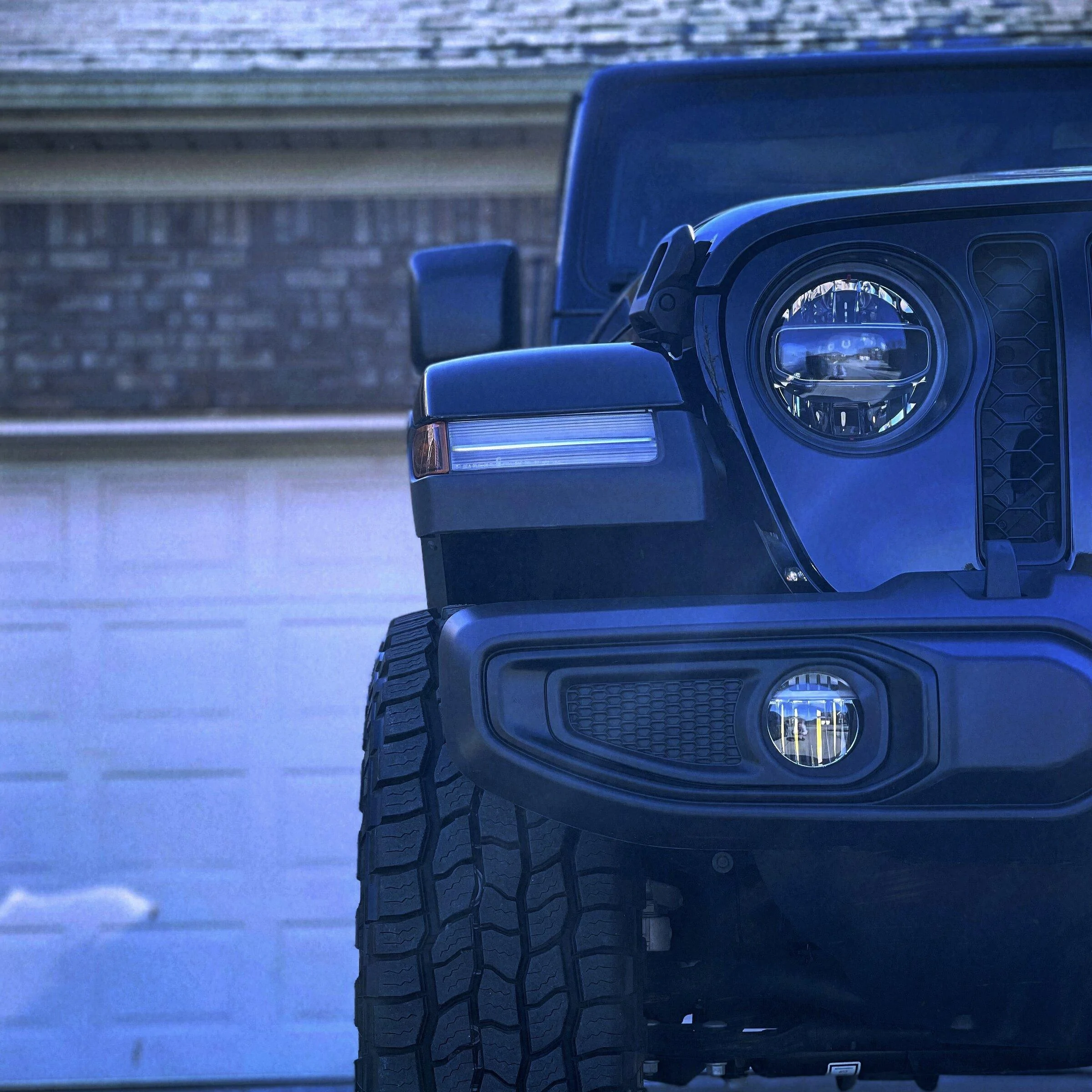
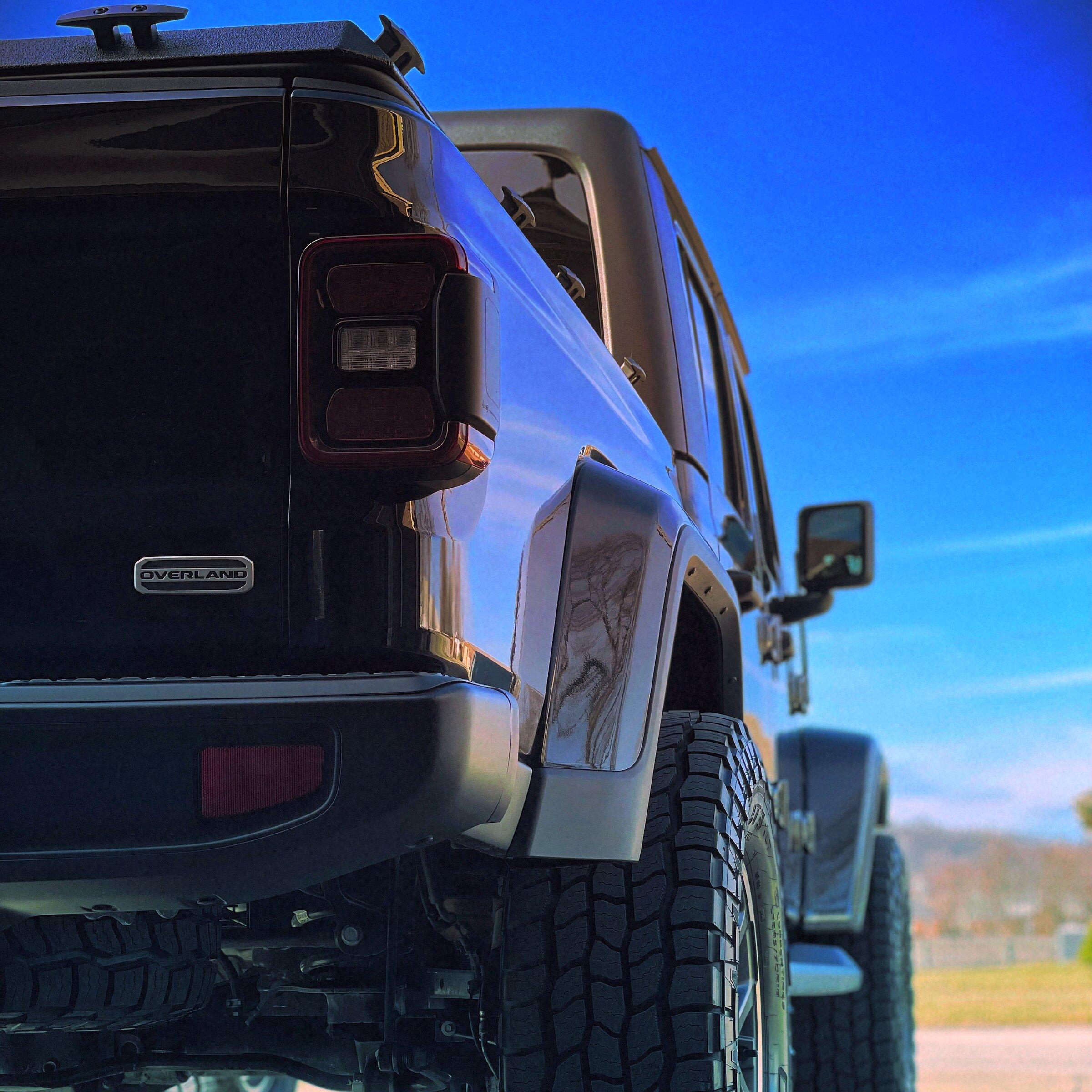
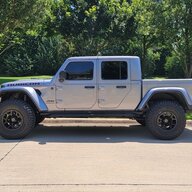
I run teraflex 1.75s and love them. I mainly did it cause I kept the stock Overland wheel which is the best stock wheel of any trim in my opinion. However As most stock, they sat flush with the fender even after bigger tires and I wanted a little poke. I haven’t had any issues. In my opinion it isn’t any difference than running an aftermarket wheel with the same backspacing. I’ve even taken it off-roading with spacers and no issues.

Jeep Gladiator Wheel Spacers - Pros/Cons? 9C95628F-CB5F-4FCA-AC19-85CB48820B68


Jeep Gladiator Wheel Spacers - Pros/Cons? EFE4739F-5A34-4B48-B296-54A4C94E18F3
 

piroman683

Well-Known Member
First Name
Mike
Joined
Sep 13, 2019
Threads
9
Messages
427
Reaction score
462
Location
Long Beach
Vehicle(s)
2019 Gladiator
Don’t wheels with lower offset do the same thing from a leverage standpoint?
technically yes, but it really is rim dependent where as spacers are typically 1.5 or 2inches rim offsets necessary for the JT are -6 to -12mm, or 1/4in-1/2in. So even though the rims have an offset it is no where close to how much additional leverage a spacer adds. Also, don't forget you double the failure points, and double the fatigue loading points with wheel spacers. These points are known as stress concentrations, and the less stress concentrations the better.
 

Wheelin98TJ

Well-Known Member
First Name
Ryan
Joined
Jul 27, 2021
Threads
11
Messages
3,699
Reaction score
4,358
Location
Devils Lake, MI
Vehicle(s)
2021 Jeep Gladiator
Occupation
Bean Counter
technically yes, but it really is rim dependent where as spacers are typically 1.5 or 2inches rim offsets necessary for the JT are -6 to -12mm, or 1/4in-1/2in. So even though the rims have an offset it is no where close to how much additional leverage a spacer adds. Also, don't forget you double the failure points, and double the fatigue loading points with wheel spacers. These points are known as stress concentrations, and the less stress concentrations the better.
Stock wheel is +44mm offset.

Going to a -6mm offset is a 50mm change which is about 2".
 

Sponsored

kgc

Well-Known Member
Joined
Jul 29, 2020
Threads
6
Messages
71
Reaction score
93
Location
AZ
Vehicle(s)
2020 Jeep Gladiator
Build Thread
Link
I have Spidertrax spacers on my Gladiator and fully believe that they are stronger than my cast aluminum. I'm confident that an OEM part or the wheel would fail before the spacer. I went this route because I didn't want the weight or expense of a true beadlock and couldn't find anything else with a +38 offset. I've driven 23,000 miles without any problems.
 

DocMcStuffins

Well-Known Member
Joined
Feb 20, 2021
Threads
6
Messages
180
Reaction score
268
Location
Central California
Vehicle(s)
2021 Gladiator Rubicon Diesel
from an engineering perspective you absolutely put more load on the original axle studs when using wheel spaces and that increases the fatigue loading on them. increased fatigue loading decreases structural integrity over time faster. Just like having a longer breaker bar makes it easier to crack a tight nut, extending the loading moment arm of the tire through a spacer increases the loading on the axle studs. Will it fail while you own it?...maybe, maybe not, depends on how you drive it and how well you make sure things never loosen up. But in simple engineering physics wheel spacers increase fatigue loading which is not ideal.
With all due respect- can you please enlighten me from an engineering perspective what is the difference between a spacer and a wheel with -3.5 or -4.5” backspacing? From my simple understanding- I can understand that there is an additional part/5 more bolts for potential failure but how is it different on bearings/axles?
 

cdyoung9799

Well-Known Member
Joined
Jun 12, 2021
Threads
4
Messages
650
Reaction score
1,383
Location
Dallas/Fort Worth, TX
Vehicle(s)
2020 Rubicon Gladiator
So True.
Spacers are simple
1. Don't be a cheap ass, buy quality
2. Torque your shit and use locktite

It's really that simple and then you, like me, can get 100,000+ Trouble Free miles out of them.

100,000+ miles is a 100% accurate statement on the total number of miles both on and off-road I have driven with Zero issues with Spidertrax spacers on 2 Tis

I am approaching 20,000 miles on my Alfa Romeo with quality Otis Spacers
+1 for this.

I bought the Teraflex hub centric spacers for my daughter's JK so she could run my stock JTR wheels/tires. Torqued them to spec using red loctite. So far, they been flawless. She's not going to be doing any major offroading (if any at all) either. Her Jeep drives and rides great.
 

piroman683

Well-Known Member
First Name
Mike
Joined
Sep 13, 2019
Threads
9
Messages
427
Reaction score
462
Location
Long Beach
Vehicle(s)
2019 Gladiator
With all due respect- can you please enlighten me from an engineering perspective what is the difference between a spacer and a wheel with -3.5 or -4.5” backspacing? From my simple understanding- I can understand that there is an additional part/5 more bolts for potential failure but how is it different on bearings/axles?
Sorry on my delay here, the details are a bit involved and I haven't taken the time to fully write them all out. It's because there's a difference in load calculations when comparing the two. Specifically when calculating with an offset you actually have loads in the X and Y direction as a function of the angle. This actually reduces the bending load but adds a tension load to the studs which is far below the yield limit. Wheel spacers results in loads only in the Y direction so you will have a larger bending moment even if the backspace is the same as the wheel spacer limit. Hopefully I'll take some time in the next 2 weeks to detail this out more. Conversely you can Google force calculations as a function of an angle to get your toes wet in the subject
 

DocMcStuffins

Well-Known Member
Joined
Feb 20, 2021
Threads
6
Messages
180
Reaction score
268
Location
Central California
Vehicle(s)
2021 Gladiator Rubicon Diesel
Sorry on my delay here, the details are a bit involved and I haven't taken the time to fully write them all out. It's because there's a difference in load calculations when comparing the two. Specifically when calculating with an offset you actually have loads in the X and Y direction as a function of the angle. This actually reduces the bending load but adds a tension load to the studs which is far below the yield limit. Wheel spacers results in loads only in the Y direction so you will have a larger bending moment even if the backspace is the same as the wheel spacer limit. Hopefully I'll take some time in the next 2 weeks to detail this out more. Conversely you can Google force calculations as a function of an angle to get your toes wet in the subject
Very well put and easy to understand with respect to X/Y axis and stress. I can see how the stresses on the studs may be greater with the spacer now. An OEM wheel with spacer and aftermarket equivalent backspaced wheel ie 3.5-4.5 should both have equal additional stresses on bearings, balljoints, u joints and other axle components though right? Also- the stud failures that I have seen/read about are on the spacer side, and have not actually seen the hub studs broken?

Thanks for taking the time to reply! ????
Sponsored


Top