
Sponsored

RudeJeepin
Well-Known Member
- First Name
- Carl
- Joined
- May 6, 2022
- Threads
- 5
- Messages
- 1,538
- Reaction score
- 2,417
- Location
- Washington
- Vehicle(s)
- 2022 JTRD
- Build Thread
- Link
For those that haven't seen this and are gonna watch it, make sure you watch the end. Starting at 15min he snaps a synthetic rope, and yes it recoils.for a video of damage from snapping winch cables, see this one by Ronny Dahl:
Mass Damage snapping winch Cables

ShadowsPapa
Well-Known Member
- First Name
- Bill
- Joined
- Oct 12, 2019
- Threads
- 247
- Messages
- 40,496
- Reaction score
- 54,011
- Location
- Runnells, Iowa
- Vehicle(s)
- '25 JTMX, '23 JLU 4xe, '82 SX4, '73 Javelin
- Occupation
- Retired auto mechanic, frmr gov't ntwrk security admin
- Vehicle Showcase
- 3
I watched that video a while back, and it supports massive damage, but also illustrates that fact that the damaging energy is stored up in the mass of the cable - he has to use a very very long straight line of cable to achieve that damage.for a video of damage from snapping winch cables, see this one by Ronny Dahl:
Mass Damage snapping winch Cables
Look at the length of cable run out there. If you take it to those distances, you have stored some energy in the mass of the cable. But cut that distance down, it won't be nearly that damaging.
Almost all videos demonstrating massive damage are doing just what he does - massive lengths of cable run out in a straight line.
Cut that length down, and the damage drops accordingly because the energy is in in the mass.
Take it around a snatch block or cut the distance in half, not nearly that much damage.
Instances of serious damage rely on straight line lengths of cable, likely more than the amount of cable on your spool. He never states the length of cable used.
Damage is a factor of the length (mass), and tension. Looks to me to be well over 100 feet of cable in a straight line.
Yes, given enough length of a cable and enough tension, you can make anything killer or dismembering.
The thing that the mythbusters didn't account for was the mass of the cable. They used such short lengths in their testing, not considering where the energy comes from.
Kinetic energy is stored in mass. Keep the distances shorter, you don't have the mass to store that energy in. Anyone running that length of cable in the ways they did in those videos is asking for trouble.
It relies on MASS, length of the cable. More length = more mass and more stored energy.
I wish they had done it with lengths of half of what they were doing - they made it look like that was always going to end that way just because it was steel cable. No, it was because of the stupid long straight runs of that cable.
Science.
Last edited:
RudeJeepin
Well-Known Member
- First Name
- Carl
- Joined
- May 6, 2022
- Threads
- 5
- Messages
- 1,538
- Reaction score
- 2,417
- Location
- Washington
- Vehicle(s)
- 2022 JTRD
- Build Thread
- Link
This is all true.I watched that video a while back, and it supports massive damage, but also illustrates that fact that the damaging energy is stored up in the mass of the cable - he has to use a very very long straight line of cable to achieve that damage.
Look at the length of cable run out there. If you take it to those distances, you have stored some energy in the mass of the cable. But cut that distance down, it won't be nearly that damaging.
Almost all videos demonstrating massive damage are doing just what he does - massive lengths of cable run out in a straight line.
Cut that length down, and the damage drops accordingly because the energy is in in the mass.
Take it around a snatch block or cut the distance in half, not nearly that much damage.
Instances of serious damage rely on straight line lengths of cable, likely more than the amount of cable on your spool. He never states the length of cable used.
Damage is a factor of the length (mass), and tension. Looks to me to be well over 100 feet of cable in a straight line.
Yes, given enough length of a cable and enough tension, you can make anything killer or dismembering.
The thing that the mythbusters didn't account for was the mass of the cable. They used such short lengths in their testing, not considering where the energy comes from.
Kinetic energy is stored in mass. Keep the distances shorter, you don't have the mass to store that energy in. Anyone running that length of cable in the ways they did in those videos is asking for trouble.
It relies on MASS, length of the cable. More length = more mass and more stored energy.
I wish they had done it with lengths of half of what they were doing - they made it look like that was always going to end that way just because it was steel cable. No, it was because of the stupid long straight runs of that cable.
Science.
I have on many occasion pulled nearly all my cable out. As you know, a winch can only pull at full rated strength at the bottom most wrap.
As a younger man/boy I spent most weekends playing in the mud or snow. If you weren't getting stuck, you weren't trying hard enough. I've used my winch in just about anyway imaginable. Multiple straight pulls were I needed most all 100ft of line to find an anchor point. Sometimes I used a snatch block. Sometimes it was close to the winch and long line on the stuck side. Other times the block was closer to the stuck rig and longer line was on the winch side. One time I was behind the stuck rig, we ran the cable the length of the stuck rig, past it to a snatch block attached to another rig in front. Then cable came back to the stuck rig. It needed to go forward, under a slow controlled pace.
Being one of the only rigs with a winch, I was usually the goto guy.
I've probably pulled atleast half the cable out more times than less than half.
I've never seen a winch cable break. But my dad has seen a few. His stories sound plenty scarey to me. Shattered windshields, dented hood, creased cabs, are these rare, but thankfully he never talked about hurt people, just scared shitless so to speak.
Are these rare, yes, but it only takes once.
So no matter what you use, be careful, be mindful and take as much time as needed to be safe.

nbennettksu
Well-Known Member
- Joined
- Sep 1, 2023
- Threads
- 4
- Messages
- 132
- Reaction score
- 162
- Location
- Fort Lauderdale
- Vehicle(s)
- Gladiator
Thats a good reminder, I want to unwind mine all the way out and put tension on it and re spool it.I've had a synthetic rope bury itself in the spool once. I had to anchor the end and back up with a little power to free it up. I don't think I started with it spooled up properly.
Sponsored
ShadowsPapa
Well-Known Member
- First Name
- Bill
- Joined
- Oct 12, 2019
- Threads
- 247
- Messages
- 40,496
- Reaction score
- 54,011
- Location
- Runnells, Iowa
- Vehicle(s)
- '25 JTMX, '23 JLU 4xe, '82 SX4, '73 Javelin
- Occupation
- Retired auto mechanic, frmr gov't ntwrk security admin
- Vehicle Showcase
- 3
Yes, max pull is at the first wrap. I guess that's one reason I also carry snatch blocks and straps that will allow me to run the line out without making it a straight line, but still hopefully able to reach an anchor point.This is all true.
I have on many occasion pulled nearly all my cable out. As you know, a winch can only pull at full rated strength at the bottom most wrap.
As a younger man/boy I spent most weekends playing in the mud or snow. If you weren't getting stuck, you weren't trying hard enough. I've used my winch in just about anyway imaginable. Multiple straight pulls were I needed most all 100ft of line to find an anchor point. Sometimes I used a snatch block. Sometimes it was close to the winch and long line on the stuck side. Other times the block was closer to the stuck rig and longer line was on the winch side. One time I was behind the stuck rig, we ran the cable the length of the stuck rig, past it to a snatch block attached to another rig in front. Then cable came back to the stuck rig. It needed to go forward, under a slow controlled pace.
Being one of the only rigs with a winch, I was usually the goto guy.
I've probably pulled atleast half the cable out more times than less than half.
I've never seen a winch cable break. But my dad has seen a few. His stories sound plenty scarey to me. Shattered windshields, dented hood, creased cabs, are these rare, but thankfully he never talked about hurt people, just scared shitless so to speak.
Are these rare, yes, but it only takes once.
So no matter what you use, be careful, be mindful and take as much time as needed to be safe.
Win-win. Max out of winch because it's on the first wrap, double that due to the snatch block, where the rope on either side is experiencing only half of the full load.

Janster
Well-Known Member
- First Name
- Jandy
- Joined
- Mar 27, 2024
- Threads
- 41
- Messages
- 1,897
- Reaction score
- 2,950
- Location
- Lancaster, PA
- Vehicle(s)
- 2024 Gladiator Mojave X
- Occupation
- Biller
If we were on the trails and used the winch…. when we got home, we’d unspool it and re-spool it (under tension) each time. We never left it in a ‘mess’ - regardless if it was wire or synthetic. Just good practice to get into.Thats a good reminder, I want to unwind mine all the way out and put tension on it and re spool it.
ShadowsPapa
Well-Known Member
- First Name
- Bill
- Joined
- Oct 12, 2019
- Threads
- 247
- Messages
- 40,496
- Reaction score
- 54,011
- Location
- Runnells, Iowa
- Vehicle(s)
- '25 JTMX, '23 JLU 4xe, '82 SX4, '73 Javelin
- Occupation
- Retired auto mechanic, frmr gov't ntwrk security admin
- Vehicle Showcase
- 3
yes, time to do that, especially going into winter when I may need it to rescue someone (even if it's myself)Thats a good reminder, I want to unwind mine all the way out and put tension on it and re spool it.
I did the respool after last use, but it's been off and on Jeeps and moved around and the rope isn't as tidy as I like. Good time to inspect it, make sure there's no grit in there to abrade the fibers.
SMART. And that reminds me that after mine has been off and on and unspooled partly and pulled back in, time to do that exact thing.If we were on the trails and used the winch…. when we got home, we’d unspool it and re-spool it (under tension) each time. We never left it in a ‘mess’ - regardless if it was wire or synthetic. Just good practice to get into.
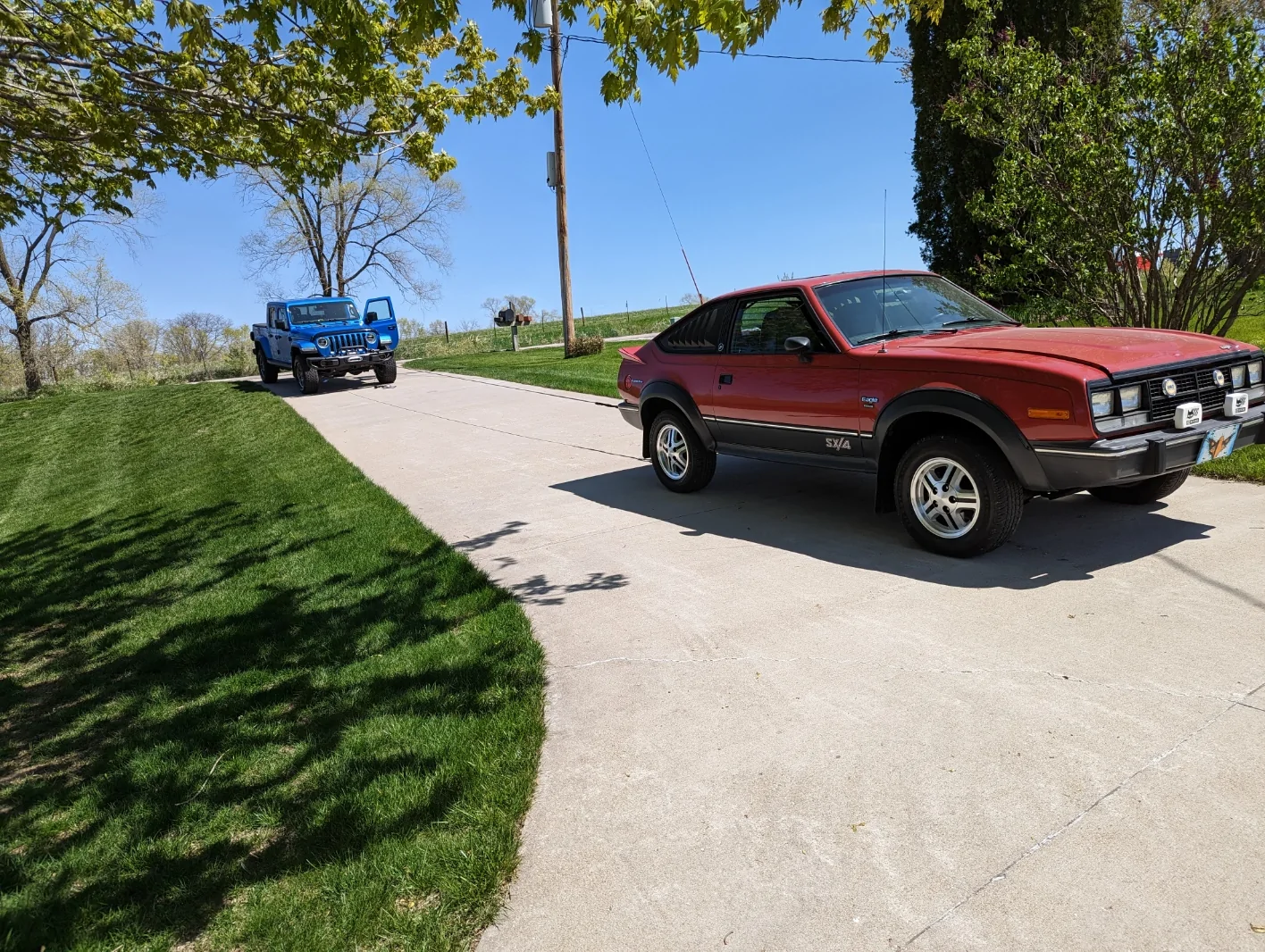
I did it before using a car at the bottom of my driveway, parking brake partially on and my JT at the top of the driveway. It allowed full unspooling, straight line, with a controlled load coming up a hill.
Good reminder!
Had a proper piece in the receiver, properly pinned, proper shackle, etc.
Driveway is about 120' long, almost all up a hill, so it works quite well.

whiteglad
Well-Known Member
Out here in the desert southwest and nearby mountains, the nearest decent sized tree or boulder could be way over 100 yards away. I carry an extra 100 foot length of winch rope, and another that I cut into sections and terminated using the Factor 55 Fast FID tool. Very little weight or bulk to carry, and several soft shackles are another thing to carry. Putting a heavy steel shackle or hook into the line means another potential missile.
VA6489
Well-Known Member
- First Name
- Rob
- Joined
- Nov 2, 2017
- Threads
- 9
- Messages
- 306
- Reaction score
- 363
- Location
- Dahlgren Va
- Vehicle(s)
- Mercedes E250 Bluetec
- Build Thread
- Link
- Occupation
- DoD
Steel or synthetic, comes down to how well you take care of it. Wire rope degrades from the inside out in most cases. That is why you inspect for rust. Synthetic dies due to UV and changes color to gray/white.
Out here most folks buy a winch and never use it. Never Tension the cable and mostly never rewind it properly if used.
Most winch folk do not listen to their equipment in a pull. Noises are never good.
As for Mr Dahl and his bulldozer and several hundred feet of line Go to extremes and you can manufacture the result you are looking for. Back to Jeeps most winch line is only 85-100 ft long. In Steel there is enough stored energy to do damage if broken under strain. With a Synthetic line much less stored energy and much less damage. Synthetic line does not store energy the way Steel does.
Issues come into play with the operators and abuse of the equipment. One drive in AZ lost his life to a recovery due to the use of a snatch strap and a tow hitch and some improper use of a snatch strap. Seen a couple of videos of improper use of a snatch strap causing major damage due to the attachment point failing.
Both line work and need to be respected and used properly.
Steel or Synthetic.
For me I would rather haul light weight line to an attachment point than heavy steel. Since I have removed the steel from my lines I can also throw it to someone to attach without fear of hurting them. Every bit of steel in you recovery scenario stores energy and is a potential fail point due to repeated stress. Plus take the mass out of the velocity equation and things become safer.
Out here most folks buy a winch and never use it. Never Tension the cable and mostly never rewind it properly if used.
Most winch folk do not listen to their equipment in a pull. Noises are never good.
As for Mr Dahl and his bulldozer and several hundred feet of line Go to extremes and you can manufacture the result you are looking for. Back to Jeeps most winch line is only 85-100 ft long. In Steel there is enough stored energy to do damage if broken under strain. With a Synthetic line much less stored energy and much less damage. Synthetic line does not store energy the way Steel does.
Issues come into play with the operators and abuse of the equipment. One drive in AZ lost his life to a recovery due to the use of a snatch strap and a tow hitch and some improper use of a snatch strap. Seen a couple of videos of improper use of a snatch strap causing major damage due to the attachment point failing.
Both line work and need to be respected and used properly.
Steel or Synthetic.
For me I would rather haul light weight line to an attachment point than heavy steel. Since I have removed the steel from my lines I can also throw it to someone to attach without fear of hurting them. Every bit of steel in you recovery scenario stores energy and is a potential fail point due to repeated stress. Plus take the mass out of the velocity equation and things become safer.
Sponsored
Similar threads

- Replies
- 15
- Views
- 5,705


