
Sponsored

Odyssey Battery Warning

Bandit’s Lair

Well-Known Member
First Name
Jason
Joined
Jul 9, 2025
Threads
29
Messages
2,373
Reaction score
3,885
Location
Southern California
Vehicle(s)
2021 Gladiator Sport S
Occupation
Retired
NorthStar was acquired by EnerSys in 2019. Started integrating more stuff into the product line and I’m pretty sure that’s when quality started to suffer.
Sponsored

 

Stan H

Well-Known Member
First Name
Stanley
Joined
Oct 26, 2022
Threads
10
Messages
5,480
Reaction score
5,459
Location
WV
Vehicle(s)
Gladiator Rubicon 2021
Occupation
Safety Consultant
Are you sure about that? Everything I see shows that EnerSys has owned Odyssey since 2002 (24 years).
I maybe was thinking of optimum . , heck I was burning up in 92 degree temps with no AC and sweating like a whore in church.
 

Bandit’s Lair

Well-Known Member
First Name
Jason
Joined
Jul 9, 2025
Threads
29
Messages
2,373
Reaction score
3,885
Location
Southern California
Vehicle(s)
2021 Gladiator Sport S
Occupation
Retired
I maybe was thinking of optimum . , heck I was burning up in 92 degree temps with no AC and sweating like a whore in church.
You and me both. I was mixing optima quality decline and odyssey parent corp purchase info. This is why I didn’t get into Business. :angel:
 

Stan H

Well-Known Member
First Name
Stanley
Joined
Oct 26, 2022
Threads
10
Messages
5,480
Reaction score
5,459
Location
WV
Vehicle(s)
Gladiator Rubicon 2021
Occupation
Safety Consultant
You and me both. I was mixing optima quality decline and odyssey parent corp purchase info. This is why I didn’t get into Business. :angel:
Op hey at least I got a few letters right 😂
 

Rusty PW

Well-Known Member
First Name
Russ
Joined
Jan 10, 2022
Threads
37
Messages
11,322
Reaction score
30,205
Location
Fayette Nam, Pennsyltucky
Website
www.youtube.com
Vehicle(s)
'22 JTRD, '11 370Z Nismo, '07 Honda VFR
Build Thread
Link
Occupation
Muff Diver

Sponsored

Stan H

Well-Known Member
First Name
Stanley
Joined
Oct 26, 2022
Threads
10
Messages
5,480
Reaction score
5,459
Location
WV
Vehicle(s)
Gladiator Rubicon 2021
Occupation
Safety Consultant

biodiesel

Well-Known Member
Joined
Dec 8, 2018
Threads
15
Messages
2,258
Reaction score
2,927
Location
New Mexico
Vehicle(s)
2015 Ram 1500 Ecodiesel
I realize I'm in the minority, but my plan is to replace the factory main and auxiliary battery with Odyssey when they are 6 years old (assuming they last that long).

I don't use the start/stop feature, but Jeep designed the dual battery system to act as a single unit. The auxiliary battery, to an extent, supports the main battery during high electrical loads. My thinking, albeit could be exaggerated or slightly flawed, is that the auxiliary battery does two things besides aiding in the start-stop process.

1) The auxiliary battery supplies power to electrical components during the startup phase so that the main battery can solely power the starter motor.

2) The auxiliary battery supplies temporary power to support the vehicle's sensitive electrical system during high-demand situations. In theory, this prevents voltage strain that could otherwise disrupt certain electronic systems.

While I'm not completely opposed to permanently bypassing the auxiliary battery, I feel that keeping the auxiliary battery function has its benefits.

I can understand why those who do not properly maintain their batteries want to bypass the auxiliary battery, but that isn't the case with me. I'm good about maintaining my batteries.
 

ecidiego

Well-Known Member
First Name
Chris
Joined
Nov 3, 2021
Threads
62
Messages
3,625
Reaction score
5,580
Location
San Diego
Vehicle(s)
2021 Gladiator Mojave
Occupation
IT
This discussion is has been had many times in this forum and I am too lazy to find the post I made or retype it so I just had AI do it for me

NOCO chargers are fine for generic AGM charging, but they do not follow Odyssey’s charging spec correctly during float/maintenance.

Odyssey AGMs are not normal consumer AGMs. They use thin plate pure lead (TPPL) construction and require a higher charging profile than most chargers provide.

Odyssey’s published spec calls for:
Bulk/absorption: roughly 14.7V
Float/maintenance: about 13.6V minimum, ideally around 13.6–13.8V depending on temperature

Most NOCO Genius chargers drop into a very conservative long-term maintenance voltage, often around 13.2V or lower after the battery reaches full charge. That is intentional for broad compatibility and to reduce overcharge risk across many battery types. The problem is that Odyssey batteries do not like sitting at low float voltage for extended periods.

What happens:
Battery slowly sulfates
Resting voltage gradually declines
Capacity and cranking performance degrade over time

Users think the battery “failed early” when it was actually chronically under-floated
This is why Odyssey themselves historically recommended chargers like CTEK, EnerSys-approved industrial chargers, or other units capable of maintaining the correct float voltage continuously.

CTEK units — especially models with AGM mode — typically maintain a float stage much closer to Odyssey’s required voltage profile. They also use a more appropriate multi-stage algorithm for TPPL batteries.

The result is:
Better long-term state of charge
Less sulfation
Longer service life
Higher resting voltage retention

People confuse “charger says AGM” with “charger is correct for Odyssey TPPL AGM.” Those are not the same thing.

A standard AGM profile:
Works for Optima, Interstate AGM, Duralast AGM, etc.
An Odyssey TPPL profile:
Requires higher absorption and higher sustained float behavior

That distinction matters.

You can still use a NOCO to recharge an Odyssey battery after use. The issue is long-term maintenance/storage charging. If the battery lives on a maintainer for weeks or months, a CTEK is generally the better choice because it actually maintains the voltage Odyssey specifies instead of dropping into an ultra-low standby float.

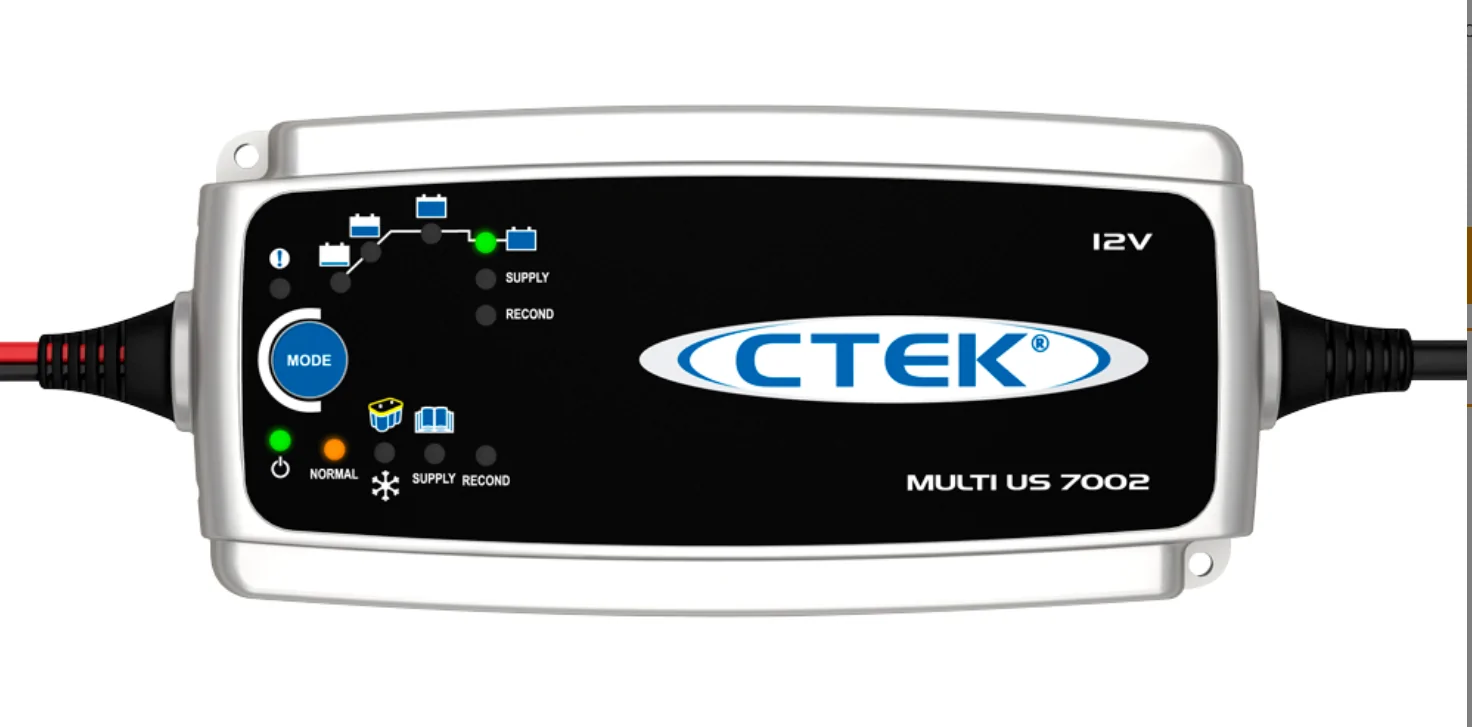
This is the one I use:

https://www.ctek.com/us/battery-chargers-12v-24v/multi-us-7002

Jeep Gladiator Odyssey Battery Warning 1779298757021-h6


If you have an Odyssey, you put it in the "snowflake" mode which correctly maintains an Odyssey. There is no NOCO that does.
 

biodiesel

Well-Known Member
Joined
Dec 8, 2018
Threads
15
Messages
2,258
Reaction score
2,927
Location
New Mexico
Vehicle(s)
2015 Ram 1500 Ecodiesel
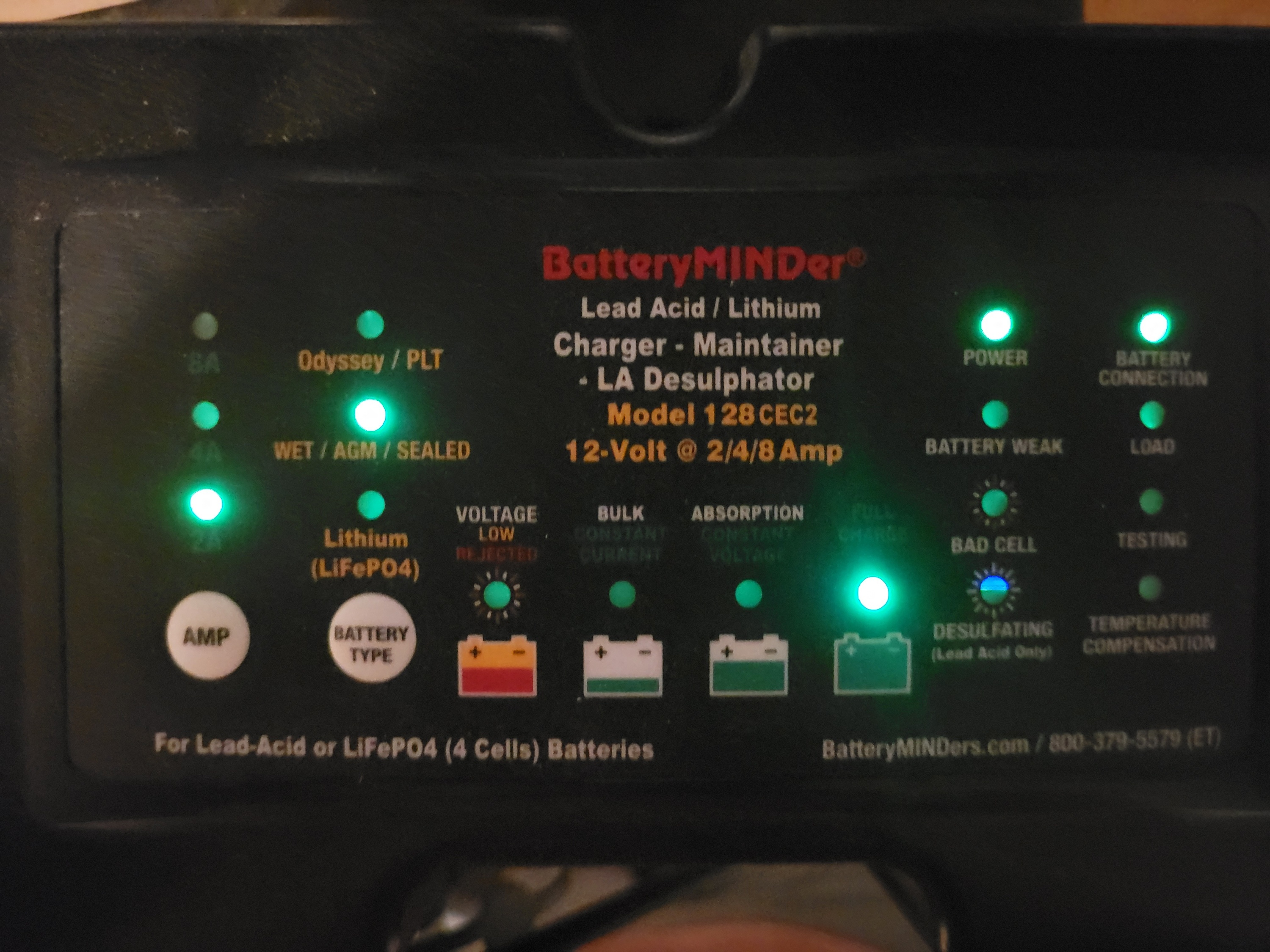
I went out to the garage and took this picture. As you can see, there is an Odyssey calibration. This particular charger/maintainer/desulfator is connected to the OE batteries in the Jeep Gladiator EcoDiesel, so it's currently set for the standard AGM.

Obviously, I'll switch to the Odyssey function when charging, maintaining, and desulfating the Odyssey battery in the 2015 EcoDiesel.

I have four BatteryMINDers. I keep one mostly hooked up to the Jeep since that gets driven maybe once per month. The second one is rotated between the 2015 and 2020 Ram EcoDiesel. The third one rotates between the John Deere tractor and John Deere lawn tractor. And the fourth one rotates between the dump trailer and travel trailer. These things pay for themselves. So far, I haven't had a battery go bad when using these. My oldest battery is 11 years old.

Jeep Gladiator Odyssey Battery Warning pPrAueo
 

Sponsored

OP
OP
Wolf Island Diver

Wolf Island Diver

Well-Known Member
Joined
Apr 14, 2021
Threads
26
Messages
1,117
Reaction score
2,450
Location
Virginia
Vehicle(s)
2021 JT Rubicon EcoDiesel
Occupation
Software Engineer
No one owns Odyssey. They're part of EnerSys.

https://matrixbcg.com/blogs/owners/enersys#:~:text=Founders and Early Ownership of,battery division from Yuasa Corporation.

Now Optima was sold. After that happened. Their quality tanked when they started to make them in Mexico.
Yep. When you call you get EnerSys, and then transfer to Odyssey. None of the extensions at Odyssey answer or return messages except for sales. It seems like there’s one woman doing everything there because she helped me with the warranty and we talked about how broken their ERP was. This isn’t necessarily indicative of anything. No one wants to pay people.
 
OP
OP
Wolf Island Diver

Wolf Island Diver

Well-Known Member
Joined
Apr 14, 2021
Threads
26
Messages
1,117
Reaction score
2,450
Location
Virginia
Vehicle(s)
2021 JT Rubicon EcoDiesel
Occupation
Software Engineer
I realize I'm in the minority, but my plan is to replace the factory main and auxiliary battery with Odyssey when they are 6 years old (assuming they last that long).

I don't use the start/stop feature, but Jeep designed the dual battery system to act as a single unit. The auxiliary battery, to an extent, supports the main battery during high electrical loads. My thinking, albeit could be exaggerated or slightly flawed, is that the auxiliary battery does two things besides aiding in the start-stop process.

1) The auxiliary battery supplies power to electrical components during the startup phase so that the main battery can solely power the starter motor.

2) The auxiliary battery supplies temporary power to support the vehicle's sensitive electrical system during high-demand situations. In theory, this prevents voltage strain that could otherwise disrupt certain electronic systems.

While I'm not completely opposed to permanently bypassing the auxiliary battery, I feel that keeping the auxiliary battery function has its benefits.

I can understand why those who do not properly maintain their batteries want to bypass the auxiliary battery, but that isn't the case with me. I'm good about maintaining my batteries.
The problem with the Aux is that they tend to fail and start to kill off the main battery, and they’re dissimilar size. There’s a global shortage of these small AGM batteries and I think the quality is probably terrible. My dealership said failed Aux and main batteries account for their single largest warranty claim issue.
 
OP
OP
Wolf Island Diver

Wolf Island Diver

Well-Known Member
Joined
Apr 14, 2021
Threads
26
Messages
1,117
Reaction score
2,450
Location
Virginia
Vehicle(s)
2021 JT Rubicon EcoDiesel
Occupation
Software Engineer
I went out to the garage and took this picture. As you can see, there is an Odyssey calibration. This particular charger/maintainer/desulfator is connected to the OE batteries in the Jeep Gladiator EcoDiesel, so it's currently set for the standard AGM.

Obviously, I'll switch to the Odyssey function when charging, maintaining, and desulfating the Odyssey battery in the 2015 EcoDiesel.

I have four BatteryMINDers. I keep one mostly hooked up to the Jeep since that gets driven maybe once per month. The second one is rotated between the 2015 and 2020 Ram EcoDiesel. The third one rotates between the John Deere tractor and John Deere lawn tractor. And the fourth one rotates between the dump trailer and travel trailer. These things pay for themselves. So far, I haven't had a battery go bad when using these. My oldest battery is 11 years old.

pPrAueo.jpg
Was just about to buy one of these but they’re out of stock and all the dealers seem to have them drop shipped. Sigh….

Edit: Found it at Aircraftspruce. 😂. Ordered.
 
Last edited:
OP
OP
Wolf Island Diver

Wolf Island Diver

Well-Known Member
Joined
Apr 14, 2021
Threads
26
Messages
1,117
Reaction score
2,450
Location
Virginia
Vehicle(s)
2021 JT Rubicon EcoDiesel
Occupation
Software Engineer
This discussion is has been had many times in this forum and I am too lazy to find the post I made or retype it so I just had AI do it for me

NOCO chargers are fine for generic AGM charging, but they do not follow Odyssey’s charging spec correctly during float/maintenance.

Odyssey AGMs are not normal consumer AGMs. They use thin plate pure lead (TPPL) construction and require a higher charging profile than most chargers provide.

Odyssey’s published spec calls for:
Bulk/absorption: roughly 14.7V
Float/maintenance: about 13.6V minimum, ideally around 13.6–13.8V depending on temperature

Most NOCO Genius chargers drop into a very conservative long-term maintenance voltage, often around 13.2V or lower after the battery reaches full charge. That is intentional for broad compatibility and to reduce overcharge risk across many battery types. The problem is that Odyssey batteries do not like sitting at low float voltage for extended periods.

What happens:
Battery slowly sulfates
Resting voltage gradually declines
Capacity and cranking performance degrade over time

Users think the battery “failed early” when it was actually chronically under-floated
This is why Odyssey themselves historically recommended chargers like CTEK, EnerSys-approved industrial chargers, or other units capable of maintaining the correct float voltage continuously.

CTEK units — especially models with AGM mode — typically maintain a float stage much closer to Odyssey’s required voltage profile. They also use a more appropriate multi-stage algorithm for TPPL batteries.

The result is:
Better long-term state of charge
Less sulfation
Longer service life
Higher resting voltage retention

People confuse “charger says AGM” with “charger is correct for Odyssey TPPL AGM.” Those are not the same thing.

A standard AGM profile:
Works for Optima, Interstate AGM, Duralast AGM, etc.
An Odyssey TPPL profile:
Requires higher absorption and higher sustained float behavior

That distinction matters.

You can still use a NOCO to recharge an Odyssey battery after use. The issue is long-term maintenance/storage charging. If the battery lives on a maintainer for weeks or months, a CTEK is generally the better choice because it actually maintains the voltage Odyssey specifies instead of dropping into an ultra-low standby float.

This is the one I use:

https://www.ctek.com/us/battery-chargers-12v-24v/multi-us-7002

1779298757021-h6.webp


If you have an Odyssey, you put it in the "snowflake" mode which correctly maintains an Odyssey. There is no NOCO that does.
I went through a nightmare with my camper and lithiums and Victron and had to get smart on charging profiles. I never really applied that same knowledge/logic to different brands of AGM but it makes sense. My Victron wasn’t even set to a Lithium profile from the factory. I have to go through 2 levels of dongles to get to where I could actually change anything on the charger/inverter. Their management ecosystem sucks. For truly deep settings you need Windows (XP, I think), but I was finally able to create a custom profile for my Renogy batteries. It makes sense, based on their float voltages, that the NOCO isn’t cutting it overnight. The alternator seems to bring the battery back upon start up. I still don’t think the NOCO killed the battery considering that it doesn’t sit undriven for long periods, but it just wasn’t doing much. Also the Odyssey died suddenly.
 

biodiesel

Well-Known Member
Joined
Dec 8, 2018
Threads
15
Messages
2,258
Reaction score
2,927
Location
New Mexico
Vehicle(s)
2015 Ram 1500 Ecodiesel
The problem with the Aux is that they tend to fail and start to kill off the main battery, and they’re dissimilar size.
I agree with you, however, if the factory batteries are maintained, then they shouldn't fail prematurely. My 2023 Gladiator EcoDiesel has 7,000 miles on it. It rarely gets driven. And when it does get driven, it goes the distance. Otherwise, it sits for 3 - 6 weeks at a time.

You would think my auxiliary battery would be dead by now, right? Even the dealer was surprised when they tested the batteries during the free multi-point inspection, and they tested good. They are testing good because I keep the maintained! The batteries are literally being maintained and desulfated for weeks at a time.

There’s a global shortage of these small AGM batteries and I think the quality is probably terrible. My dealership said failed Aux and main batteries account for their single largest warranty claim issue.
There are three philosophies, and each have their pros and cons.

1) Scheduled maintenance
2) Preventative maintenance
3) Run-to-failure

An example of scheduled maintenance would be oil and filter changes. This happens based on miles and/or time. Its purpose is to prevent wear. Preventative maintenance is when data is collected and decisions are made about the service life of a particular part. In other words, you're forecasting when a repair should be made based on service life. Its purpose is to prevent costly downtime and being inconvenienced. Run-to-failure is when you run the part until it fails.

My philosophy is preventive maintenance. I don't wait until the battery fails. The BatterMINDer will let me know if the batteries are starting to get weak, have a bad cell, or provide other clues/indicators before a failure occurs. Otherwise, I will replace the batteries when I believe that I've maximized service life. This gives me time to plan ahead and order the Odyssey batteries. During COVID, I waited 3 months before the Odyssey battery was delivered, but that was okay. The factory battery in our 2015 Ram EcoDiesel still tested good at 7 years old, but I went ahead and replaced it.
Sponsored


Top