Sponsored

Suspension: Sport S vs. Mojave?

KurtP

Well-Known Member
First Name
Kurt
Joined
Oct 9, 2020
Threads
68
Messages
2,310
Reaction score
3,020
Location
VA
Vehicle(s)
S/C Mojave
Occupation
Only Fans Content Creator
@Oboc It's a ~$3,250 upgrade or so on the non-Mojave but key point is that the Mojave is basically a 1" lift with finely-tuned bypass shocks... if you want to go higher, you're sacrificing droop and travel and, because your ride height is different, it will completely screw up the valving of the shocks. If you want to modify, go Sport S or get the Mojave and sell the suspension.

@chrisoverland are you measuring the body because the 2" vs 2.5" is the diameter of the piston inside, not the body. A 2.5 is typically around 3" but you can tell on Fox because the 2.5s have a 7/8" shaft.
-the Mojave fox shocks can go 1” up off center and function correctly per Fox

-the stock springs do not allow use of all the shock’s droop travel.

-Fabtech makes a Mojave specific lift that includes shock brackets and springs that maximize full use of the stock shocks, to the point if you whee hard or disconnect the sway bar you need a new front drive shaft for the articulation.
Sponsored
 

unixxx

Well-Known Member
First Name
Mike
Joined
Dec 15, 2019
Threads
1
Messages
84
Reaction score
84
Location
Cali
Vehicle(s)
Gladiator Mojave, Grand Cherokee SRT
Build Thread
Link
Occupation
Engineer
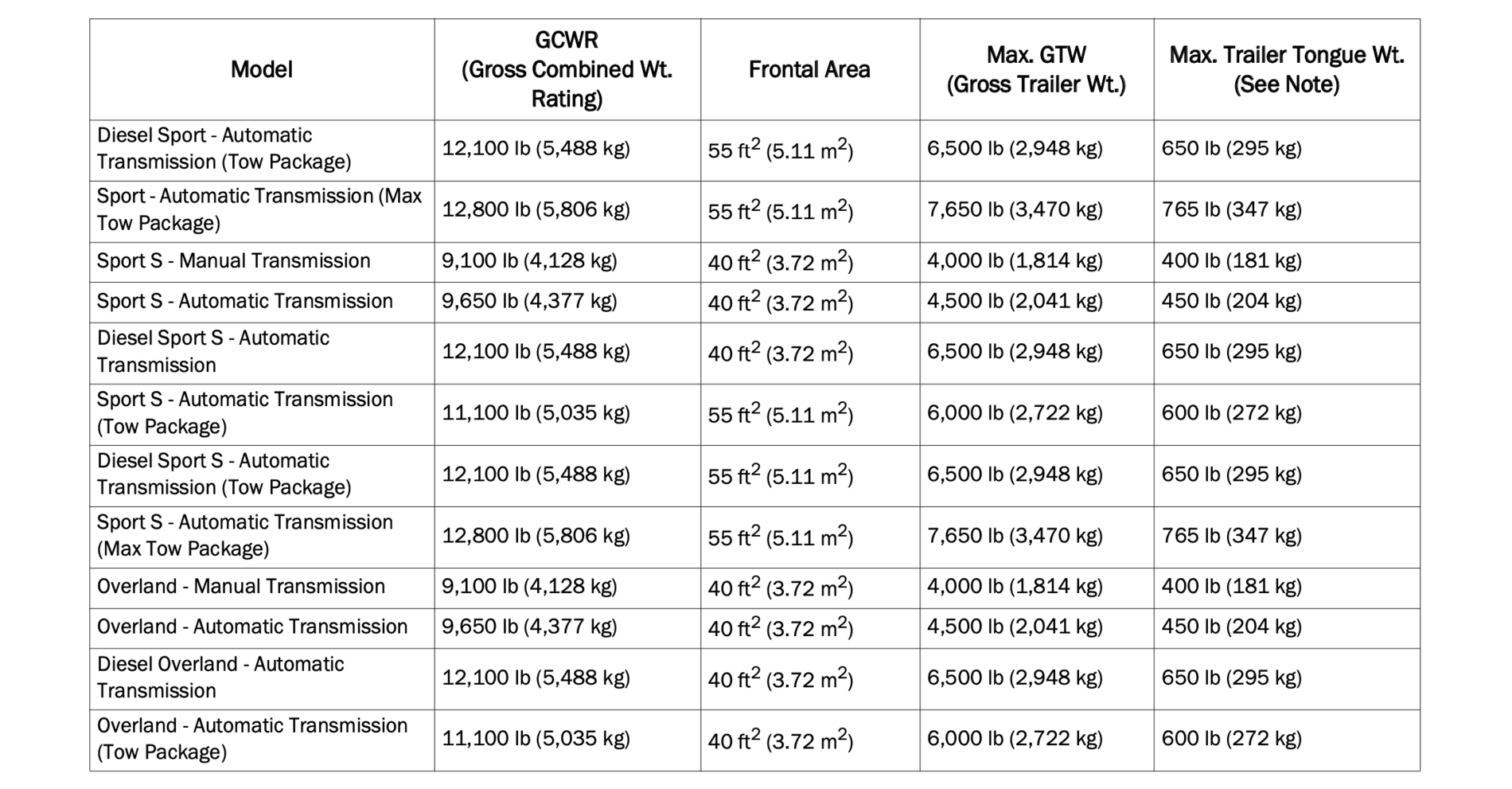
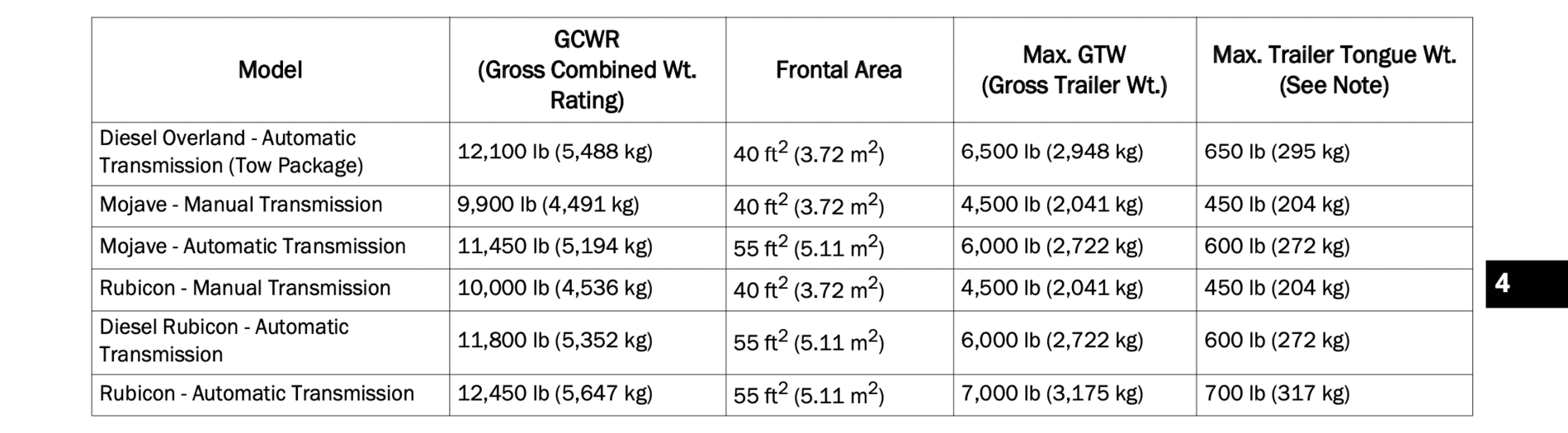
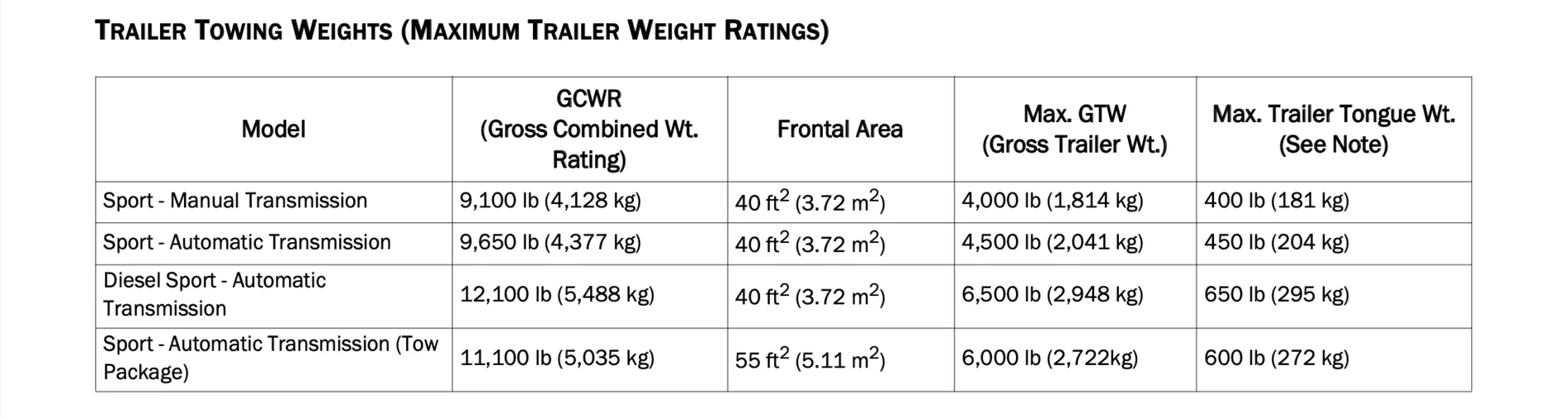
Thanks again everyone. Another question... If I swap the stock Sport S with Mojave suspension, does it change the truck's towing ability (specifically, does it decrease it)?
The Mojave has softer rear springs than some other models, which reduces the tow rating.

It seems like it depends on what type of Sport S you have.

From the 2021 Gladiator Owner's Manual:

Jeep Gladiator Suspension:  Sport S vs. Mojave? Screen Shot 2021-01-23 at 4.31.42 PM


Jeep Gladiator Suspension:  Sport S vs. Mojave? Screen Shot 2021-01-23 at 4.32.00 PM


Jeep Gladiator Suspension:  Sport S vs. Mojave? Screen Shot 2021-01-23 at 4.32.22 PM
 

KurtP

Well-Known Member
First Name
Kurt
Joined
Oct 9, 2020
Threads
68
Messages
2,310
Reaction score
3,020
Location
VA
Vehicle(s)
S/C Mojave
Occupation
Only Fans Content Creator
Thanks again everyone. Another question... If I swap the stock Sport S with Mojave suspension, does it change the truck's towing ability (specifically, does it decrease it)?
The Mojave takes a 1k hit on towing from those springs.

two options-

1- leave your max tow springs on and the truck will probably drive just fine

2- do an airbag spring helper system to rebalance the load and lose nothing.
 
OP
OP

Oboc

Member
First Name
Ray
Joined
Dec 21, 2020
Threads
3
Messages
14
Reaction score
6
Location
Long Beach, CA
Vehicle(s)
Gladiator
Yes, it decreases the towing ability, since the Mojave has softer rear springs.

From the 2021 Gladiator Owner's Manual:

Screen Shot 2021-01-23 at 4.31.42 PM.webp


Screen Shot 2021-01-23 at 4.32.00 PM.png


Screen Shot 2021-01-23 at 4.32.22 PM.png
The Mojave takes a 1k hit on towing from those springs.

two options-

1- leave your max tow springs on and the truck will probably drive just fine

2- do an airbag spring helper system to rebalance the load and lose nothing.
Yeah, -20% seems like a substantial decrease. Thanks for the data @unixxx !

@KurtP good suggestion - I think I'll probably end up adding the airbags. But, I may try keeping the springs on for a bit just to see how it does. Thanks!
 

KurtP

Well-Known Member
First Name
Kurt
Joined
Oct 9, 2020
Threads
68
Messages
2,310
Reaction score
3,020
Location
VA
Vehicle(s)
S/C Mojave
Occupation
Only Fans Content Creator
Yeah, -20% seems like a substantial decrease. Thanks for the data @unixxx !

@KurtP good suggestion - I think I'll probably end up adding the airbags. But, I may try keeping the springs on for a bit just to see how it does. Thanks!
from a frequency tuning point of view, it wont hurt you i dont think. The front springs are stiffer to keep it pitching and rolling compared to rubicon; and the rear springs soften to let it flex. Its why the rubicon has to disconnect the sway to exceed the Mojave flex; and even then its not by much.
 

Sponsored

KurtP

Well-Known Member
First Name
Kurt
Joined
Oct 9, 2020
Threads
68
Messages
2,310
Reaction score
3,020
Location
VA
Vehicle(s)
S/C Mojave
Occupation
Only Fans Content Creator
Yeah, -20% seems like a substantial decrease. Thanks for the data @unixxx !

@KurtP good suggestion - I think I'll probably end up adding the airbags. But, I may try keeping the springs on for a bit just to see how it does. Thanks!
and those softer rear springs with air bags means it drives like a dream commuting but will still carry a load.
 

LostWoods

Well-Known Member
Joined
Mar 13, 2020
Threads
15
Messages
2,027
Reaction score
2,420
Location
Gilbert, AZ
Vehicle(s)
2024 4Runner / 1995 YJ
-the Mojave fox shocks can go 1” up off center and function correctly per Fox

-the stock springs do not allow use of all the shock’s droop travel.

-Fabtech makes a Mojave specific lift that includes shock brackets and springs that maximize full use of the stock shocks, to the point if you whee hard or disconnect the sway bar you need a new front drive shaft for the articulation.
That's Fabtech making it so you can use your very expensive stock shocks without revalving. An inch is manageable but 2-3 inches of lift puts you properly into the rebound zone in normal driving. While it still works, it's not as ideal as adding them aftermarket and having them setup for your exact ride height. It also restricts down-travel because you are moving the shock instead of adding length to the body that would allow a longer shaft and more down-travel.

I also question (so a source would be great) that the stock springs don't allow full down-travel unless the Mojave has a retention bracket that the others do not. Having shocks longer than springs without limit straps is a dangerous combination that allows them to unseat under hard articulation. The driveshaft thing is also a common issue on any 2-3" lift that offers good articulation. There's not a lot of clearance in there and the shaft is like 4" stock vs 2.5" aftermarket.

I get that the Mojave is a great truck but it's just like the TRD Pro Tacomas... it's basically for someone who wants to use it mostly as it is and not heavily modify the suspension. If you want to do a larger lift, you can come in much lower with a better setup doing it aftermarket.
 

chrisoverland

New Member
First Name
chris
Joined
Jul 30, 2020
Threads
0
Messages
4
Reaction score
13
Location
61821
Vehicle(s)
2020 jeep gladiator
Occupation
Quality Supervisor
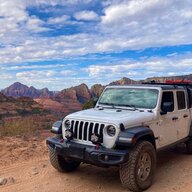
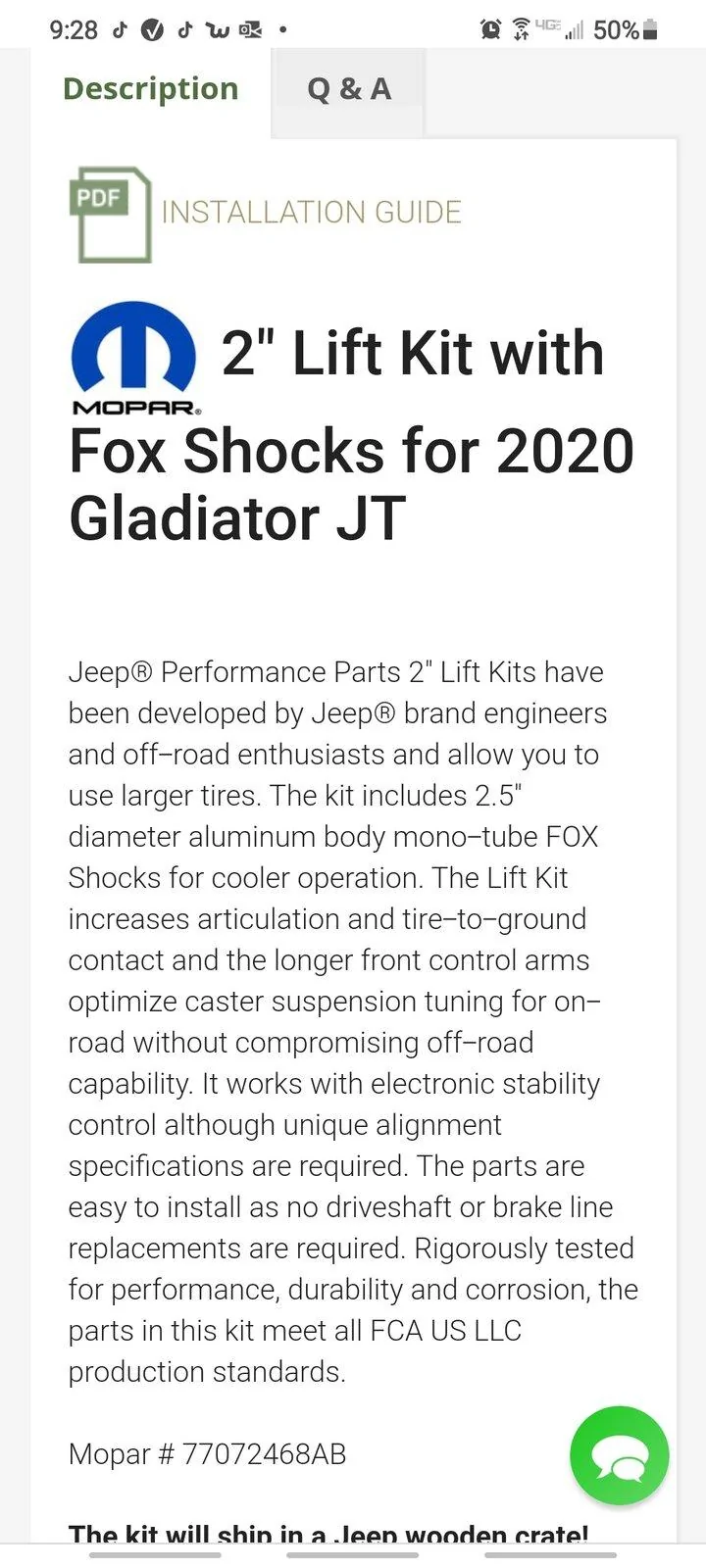
I'd love to see a pic... It's just seems off to me because Fox doesn't even make 2.5" emulsion shocks for the Gladiator (it would have to be a universal or custom application) and every Mopar kit I've seen clearly has the 2.0 body.
Jeep Gladiator Suspension:  Sport S vs. Mojave? Screenshot_20210123-212900_Chrom
 

Sponsored

KurtP

Well-Known Member
First Name
Kurt
Joined
Oct 9, 2020
Threads
68
Messages
2,310
Reaction score
3,020
Location
VA
Vehicle(s)
S/C Mojave
Occupation
Only Fans Content Creator
That's Fabtech making it so you can use your very expensive stock shocks without revalving. An inch is manageable but 2-3 inches of lift puts you properly into the rebound zone in normal driving. While it still works, it's not as ideal as adding them aftermarket and having them setup for your exact ride height. It also restricts down-travel because you are moving the shock instead of adding length to the body that would allow a longer shaft and more down-travel.
correct. Thats why they include the shock brackets to center the piston where it should be on the new spring. A full length shock would have more travel, but Its not “restricting” travel. You can set a spring’s length and rate to whatever you want. You can make a 2” spring lift that works within the length of the shock stroke.....Thats also a strong assertion to make given that you dont know what the fully compressed and fully extended length of the shock is.

valving has more to do with spring rate more than it does lift height. The purpose of valving is to control the movement speed of the shock piston. The bypass valve is set to a different rate and reacts based on piston speed from the energy it receives. So thats why bypass shocks allow a truck to corner level but soak up large bumps smoothly. Digressive valving attempts to replicate this.

I also question (so a source would be great) that the stock springs don't allow full down-travel
fox and fabtech both. Neither wanted to go into much detail about it with me.

unless the Mojave has a retention bracket that the others do not. Having shocks longer than springs without limit straps is a dangerous combination that allows them to unseat under hard articulation.
that depends entirely on where your piston position is relative to ride height to start with and what it changes to. the one thing any company working on the Mojave has with others is that they dont want to share a lot of details.

The driveshaft thing is also a common issue on any 2-3" lift that offers good articulation. There's not a lot of clearance in there and the shaft is like 4" stock vs 2.5" aftermarket.
im not aware of any other 2-3” lift that requires a front drive shaft, but i havent looked specifically at it.

I get that the Mojave is a great truck but it's just like the TRD Pro Tacomas... it's basically for someone who wants to use it mostly as it is and not heavily modify the suspension. If you want to do a larger lift, you can come in much lower with a better setup doing it aftermarket.
most people who use this phrase or similar dont understand what fully went into it’s development; or want it to not be as good as it is. Im learning that most people fall into both categories. You cannot replicate a Mojave on the aftermarket even at a $2:$1 ratio over what you spend on a lower model. But yes, most people just care about how big the tire is, can it look cool on the ‘gram parked on a fork lift, and does the shock have hoses and stuff on it...and if that’s the case, then yeah. Buy something else.

i guess we’ll see how it all turns out when i get it installed.
 
Last edited:

LostWoods

Well-Known Member
Joined
Mar 13, 2020
Threads
15
Messages
2,027
Reaction score
2,420
Location
Gilbert, AZ
Vehicle(s)
2024 4Runner / 1995 YJ
correct. Thats why they include the shock brackets to center the piston where it should be on the new spring. A full length shock would have more travel, but Its not “restricting” travel. You can set a spring’s length and rate to whatever you want. You can make a 2” spring lift that works within the length of the shock stroke.....Thats also a strong assertion to make given that you dont know what the fully compressed and fully extended length of the shock is.
If I can run an 8" shock and 2" bracket or a 10" shock, that bracket setup is restricting travel compared to a correct setup.

The limit of shock travel is almost always limited by the available room for the shock to compress. Stock shocks are ~8" travel for the Rubicon which means the travel on the Mojave is ~9" in a best case scenario. All else equal, when you lift with brackets you aren't adding any travel, you are just moving the travel lower. The only time that you add travel with brackets is if you adjust your bumps to utilize up-travel you weren't utilizing earlier which means your shocks were too short anyway and you were restricting your droop.

valving has more to do with spring rate more than it does lift height. The purpose of valving is to control the movement speed of the shock piston. The bypass valve is set to a different rate and reacts based on piston speed from the energy it receives. So thats why bypass shocks allow a truck to corner level but soak up large bumps smoothly. Digressive valving attempts to replicate this.
I typed out a response to this but realized I had a brain fart because internal bypass. I'll concede on that one but small correction that unless valved specifically to be digressive, Fox is more linear slightly tending toward progressive. This is (I assume) why the truck comes with air bumps but wouldn't be surprised either way because pretty much every vehicle out there is digressive and they might set it that way for familiarity.

Longer shock still performs better though... you can be a lot more generous on valving when you have more travel to play with.

fox and fabtech both. Neither wanted to go into much detail about it with me.
I mean an actual source... that's not exactly something easy to Google search and like I said, shocks longer than springs is a recipe for a very bad time. That means if you lifted your truck on the frame, the springs would come off their perch a significant amount.

im not aware of any other 2-3” lift that requires a front drive shaft, but i havent looked specifically at it.
Metalcloak, but I believe others have had issues on 3.5"+ lifts because the driveshaft is massive and contacts the crossmember on droop.

most people who use this phrase or similar dont understand what fully went into it’s development; or want it to not be as good as it is. Im learning that most people fall into both categories. You cannot replicate a Mojave on the aftermarket even at a $2:$1 ratio over what you spend on a lower model. But yes, most people just care about how big the tire is, can it look cool on the ‘gram parked on a fork lift, and does the shock have hoses and stuff on it...and if that’s the case, then yeah. Buy something else.
You're not wrong about the replication part but for reasons other than you think. The Mojave has a unique frame and that right there makes it an unreasonable proposition. The suspension and everything else can be done better for cheaper because they can be tuned for exactly how the truck will be set up.

But I fully understand what's going into these, I used to wrench with an amateur desert race team and I wrenched professionally for nearly a decade. Minute differences in valving are what determines who stands on the podium and who watches from the pits which tells me that without an understanding of their baseline, you're not running an ideal setup even if you want to keep it stock. You're 90% there but that 10% can make all the difference in comfort.

Everything on a consumer vehicle is a compromise because they have to meet the needs of the broad general public. The average Mojave driver won't be bombing through Ocotillo Wells or the Mojave so they're not going to be as properly valved as a custom-valved set from a dealer who takes into account use case and corner weights. $3.5k gets you a setup built for your truck at whatever height you want that maximizes travel, comfort, and ability in a way that the stock truck cannot.
 

LostWoods

Well-Known Member
Joined
Mar 13, 2020
Threads
15
Messages
2,027
Reaction score
2,420
Location
Gilbert, AZ
Vehicle(s)
2024 4Runner / 1995 YJ
Ah yeah you got fooled by the marketing and you're one of many. Fox 2.0s have a ~2.5" body diameter which is not the same as a Fox 2.5 shock which is frankly a massive shock body. You can look at the shocks you have installed and if you have an upper eye integrated with the body, that's a 2.0 and if you have a cap screwed on to the body (like the Mojave) that's a proper 2.5.
 

KurtP

Well-Known Member
First Name
Kurt
Joined
Oct 9, 2020
Threads
68
Messages
2,310
Reaction score
3,020
Location
VA
Vehicle(s)
S/C Mojave
Occupation
Only Fans Content Creator
If I can run an 8" shock and 2" bracket or a 10" shock, that bracket setup is restricting travel compared to a correct setup.
it depends on what the fully compressed and fully extended length of the spring is. If you take a spring designed around an 8” shock with a 2” bracket and put it on a 10” shock, you will not gain any travel unless you have a soft spring rate with tons of compression before it reaches static sag. Im not arguing that the shock + extension travels as much as the longer shock; im saying that it is my understanding the Mojave suspension is not making full use of possible travel off the lot; and whatever travel these shocks are capable of necessitates a front drive shaft is likely being sufficient for my needs and purposes. yes, the ideal set up would be a longer shock and spring combined with the Mojave chassis/frame tuning; but im not looking to spend a bunch of money on new shocks right now since the ones that are on here are pretty great. This method lets me clear and articulate a 37” tire, gets the belly off the ground, and drives really well. There is no point(imo) to spending another several thousand dollars on shocks to get what will amount to 1/2”-1” up/down travel; especially when these are already flexing far enough to cause driveshaft interference.


The limit of shock travel is almost always limited by the available room for the shock to compress. Stock shocks are ~8" travel for the Rubicon which means the travel on the Mojave is ~9" in a best case scenario. All else equal, when you lift with brackets you aren't adding any travel, you are just moving the travel lower. The only time that you add travel with brackets is if you adjust your bumps to utilize up-travel you weren't utilizing earlier which means your shocks were too short anyway and you were restricting your droop.
You dont know what the fully extended or compressed length of the mojave shock is. Just because it sits with a front static sag 1” higher than a rubicon does not tell you what the stroke length of the piston is or where that piston sits inside the shock body while at static sag.


I typed out a response to this but realized I had a brain fart because internal bypass. I'll concede on that one but small correction that unless valved specifically to be digressive, Fox is more linear slightly tending toward progressive. This is (I assume) why the truck comes with air bumps but wouldn't be surprised either way because pretty much every vehicle out there is digressive and they might set it that way for familiarity.
im not aware of any bypass shock that uses digressive valving for the low speed piston stack, because it would complicate the way a high speed compression bypass piston would work. when you have a large variance in valving between low speed and high speed compression valving; and the low speed is firm and high speed is soft, its easy to have the high speed piston activate prematurely. Im not saying one might not exists, im just saying im not personally aware of one. i would guess that the high speed bypass valving in the piston is softer than the low speed compressing valving Based on how it rides and drives: compliance over bumps, level around corners. but i think that valving would have to be consistent on low speed not digressive in order for the high speed bypass to function.

Longer shock still performs better though... you can be a lot more generous on valving when you have more travel to play with.
Your valving should be appropriately spec’d to the spring rate. This is why the rubicon drives like shit On the road. Its so soft to try and maximize articulation, but the trade off is a truck that pitches and rolls. If your primary objective is maximum flex, then yes, allowing more use of travel will maximize that. That is not my concern, or how the suspension tuning on the mojave was intended.


I mean an actual source... that's not exactly something easy to Google search and like I said, shocks longer than springs is a recipe for a very bad time. That means if you lifted your truck on the frame, the springs would come off their perch a significant amount.
. That came directly from each company over the phone. Im not sure how to get any better info than that. No one other than Fox or Fabtech has tested this suspension, so none of us really know. I didnt feel like paying $1600 to have the shocks dyno tested to evaluate valving, so im left with what the companies who tested it are willing to share.

again, that depends on where youre starting point is on the piston relative to static sag. I dont know how they may have altered the static sag piston position relative to ride height.


Metalcloak, but I believe others have had issues on 3.5"+ lifts because the driveshaft is massive and contacts the crossmember on droop.
right. Which means if fabtech is giving accurate data, they have a mojave flexing to the point it needs a new front drive shaft and comparing that to a metal cloak 3.5” system with control arms? id say thats pretty stellar performance, then.


You're not wrong about the replication part but for reasons other than you think. The Mojave has a unique frame and that right there makes it an unreasonable proposition. The suspension and everything else can be done better for cheaper because they can be tuned for exactly how the truck will be set up.
no, that is exactly the reason i mean. If all you want is the suspension, then go drop ~$4k on bypass shocks and hydraulic bump stops. Fox and icon and king and whoever else all make them. Its the frame and chassis changes that make the mojave impossible to replicate. I didnt buy the Mojave for the shocks. I bought it for the frame, the shocks just happen to be a great part of that chassis tuning package that work really, really damn well. Great suspension is great, but you need the right chassis to go with it. Ive had to reinforce frames on loaded expedition trucks in Africa before. The Mojave is already set up. If i dont like the ride or performance of the lifted stock shocks, i can sell them and put on adjustable fox 3.0’s or whatever and be all the more better off. When I got my Mojave, it ended up being less than same-equipped Overland stickered for. I didnt haggle an Overland so I dont know what i could have gotten it down to.

But I fully understand what's going into these, I used to wrench with an amateur desert race team and I wrenched professionally for nearly a decade. Minute differences in valving are what determines who stands on the podium and who watches from the pits which tells me that without an understanding of their baseline, you're not running an ideal setup even if you want to keep it stock. You're 90% there but that 10% can make all the difference in comfort.
the chassis as it sits is better tuned than the overwhelming majority of jeep drivers can get out of their vehicles. To think the mojave is a bad value because it doesnt stand up to $6,000 suspension + another couple grand in install and real world tuning adjustment is kinda out there, dude.


Everything on a consumer vehicle is a compromise because they have to meet the needs of the broad general public. The average Mojave driver won't be bombing through Ocotillo Wells or the Mojave so they're not going to be as properly valved as a custom-valved set from a dealer who takes into account use case and corner weights. $3.5k gets you a setup built for your truck at whatever height you want that maximizes travel, comfort, and ability in a way that the stock truck cannot.
and the average rubicon owner has no idea how to set up a real race suspension in the first place. The overwhelming majority of jeep drivers dont buy professional race suspension. And if they do, they dont pay to have them calibrated. They toss on the cool looking shocks with hoses and the dials and the thingies and turn stuff “until it feels stiff and drives good”. The Mojave is a consumer grade suspension, but its a damn good one. Fabtech wouldnt tell me one way or another what the spring rates were or if they balanced the springs, just that the springs were corner specific...fox said the same, so my guess is they may have been to a point.

Im not trying to be a dick, but the truth is you dont know what the valving of the stock shocks is, what the travel is, what the bump zone is, what the bypass is set to, or what the static piston position is, and it sounds like never driven one; so thats a pretty unrealistic claim to make. Fox spent something like 2 years testing and revalving these shocks with Jeep before the suspension was finalized. Its a damn good chassis for an off the lot truck. Even Fox admits they did a better job with the Mojave than they did the Raptor.

no one is going to take a Mojave out and win a baja with it. That doesnt mean its not incredibly good. Yes. You can buy a lower model, and $4k in suspension, whatever in a locker, whatever more in an upgraded traction control system, and whatever else and youll end up with a great driving truck if you actually know how to set it up or (most people)pay a bunch of money to a pro to do it for you. You’ll still be short the other aspects of the chassis tuning that you cant replicate without doing a frame-off mod. To people who want a REALLY well set up truck off the lot they can do very little to for big performance; or to people like me with a ton of driving, training, racing, and traveling experience, the Mojave cannot be beat.

i get its not for everyone. But it gets a bit exhausting to hear people who dont know any specs of the shocks and never drove a mojave to tell all of us with one all the thing they think they know about it and how “its just a sport with a lift kit”. the reality is, until you drive it to feel the chassis tuning and put the shocks on a shock dyno, you’re really just guessing/assuming.

we’ll see how it flexes and drives when i get it installed. No, it wont flex as much as a longer spring wound specifically to the stroke length of a maximum value shock. I guess im just not convinced that will matter. Time will tell.
 
Last edited:

LostWoods

Well-Known Member
Joined
Mar 13, 2020
Threads
15
Messages
2,027
Reaction score
2,420
Location
Gilbert, AZ
Vehicle(s)
2024 4Runner / 1995 YJ
I'm going to say this and then I'm done:

It doesn't matter what I know about the exact specs, it does matter that the stock specs are a fixed setup that are ideal for a small subset of configurations and scenarios and are at best less than ideal for any other. Valving takes spring rate into account but the weight of the truck is more important than spring rate because you're not trying to control the spring, you're trying to control the inertia generated by the weight of the truck of which spring rate is a factor.

Valving is set based on these numbers but it's also a function of shock length. A 10" shock is valved slightly softer than an 8 inch shock and slightly firmer than a 12" shock. The idea behind these shocks is to maximize their utilization and this is why a shock is better than a shock+bracket in literally every scenario. The more length you have to work with, the more oil the piston pushes through before you hit the "oh shit" point so you can soften your valving on longer shocks for a much more comfortable ride.

When people add bumpers and armor and racks and tents, that's more weight to control. When you're rolling around at GVWR with 400lbs in armor and 400 lbs of gear, that's way more weight than the stock Mojave will handle well. The stock truck rides absolutely fine over corrugations but heavier weight means heavier valving and heavier valving would make the ride harsh while unloaded. That isn't going to sell well given the average Mojave will be a mall crawler.

I've race tuned this kind of suspension before and you can't have it both ways. Even an individual truck has different tuning based on conditions whether the course be heavy on whoops or corrugations or have a high risk of a G-out. This is why use case is important in tuning because you're going to tune a rock crawler much tighter toward digressive than you would someone cruising trails or playing in the dunes.

I'm not arguing that off-the-shelf Fox 2.5s are superior, I mean literally having the shocks tuned specifically for the attributes of a given truck... shock length at full compression, static height, corner weights, use case... these things can be compensated for by a competent shop on data and description alone to get you 95% of the way there and there are several retailers out there that will deliver a custom setup for minimal added cost when you consider you're dropping $2.5k on shocks.

No suspension is one-size-fits-all and the Mojave suspension is sized for the Mojave in whatever form FCA decided to set as the baseline. Everyone's truck is going to be unique so the best setup you will find if you really want performance will be to build that suspension correctly the first time to include maximizing travel of the shock and the correct valving for the weight.

OP asked what would get his truck close to the Mojave and the hard truth is that the only thing the Mojave offers that is unreasonable to swap is the chassis - much like the kickers on the Rubicon are the locker and sway bar. Everything else on those trucks can be built better for less money starting at a max tow baseline.
Sponsored


Top