Sponsored

Leaking axle seal?

ShadowsPapa

Well-Known Member
First Name
Bill
Joined
Oct 12, 2019
Threads
247
Messages
40,442
Reaction score
53,860
Location
Runnells, Iowa
Vehicle(s)
'25 JTMX, '23 JLU 4xe, '82 SX4, '73 Javelin
Occupation
Retired auto mechanic, frmr gov't ntwrk security admin
Vehicle Showcase
3
No, you don't want oil to "condition" seals or make them swell at all.
Sorry, I strongly disagree on that.
That's for old, hard seals. New seals are supple enough. You don't need or want swelling. If you soften them too much with such things they actually "grab" the shaft and wear faster and get hotter.
I've been dealing with axles and seals since I was in my mid-teens, cars and trucks of all sorts, including the big power company boom trucks, and including 1910s stuff. A good seal needs nothing at all but a good lubricant like any other moving part. Why the hell would you want to soften an already flexible seal that's being forced against the shaft with some real pressure?

This isn't a case of lube not "conditioning" seals. That I will bet on. Only the companies selling lubricating products will throw that out at customers. The last thing you want is anything that makes seals softer unless they are aged and hard.
Now if these SEALS have a problem that's different, but a good seal will last well over 100,000 miles with any good lube, and not need conditioning. The reason they eventually start leaking is age (they get hard) and/or wear.

I've replaced axle seals and rebuilt transmissions after someone put "seal fixing products" in them.

There's already tension on the seal against the shaft - you don't want more (read up on seal design and engineering) A standard lip type seal actually will hold back at least 7psi as it sits right out of the box and as pressure builds, the lip is pressed harder against the shaft, increasing the seal's sealing power.

The damn oil companies try to sell product by convincing them they need "Seal conditioning" and that's just marketing bunk. I will never put anything that claims to soften seals or condition them in a vehicle that is A - under warranty, or B - fewer than about 100,000 miles (and I want to stretch some life out of it).
Seals don't need conditioning. We've gotten by many decades with ordinary plain hypoid lube without solvents and "seal conditioners". Why would it be "needed" now? To sell fancy oils, convincing the unsuspecting public that it's what they need.

As a guy who has made his living fixing leaks, rebuilding axles, transmissions and engines, and putting lube and fluids back in, keep that stuff away from my vehicles if it claims to soften seals or "condition" them.

Here's another reason that's not the issue - only the right seal. Think about it - ONLY the right. That's a lube issue?
Why not the 2020? You think they changed hypoid lube to something without solvents to soften seals?
The why not the front?
Why not the left?

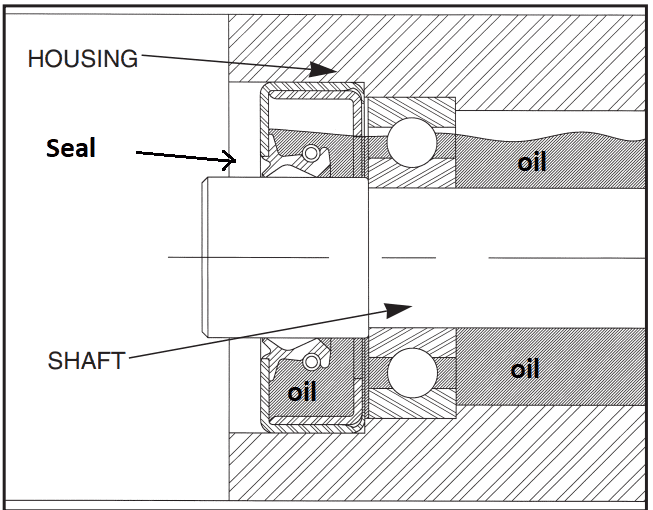
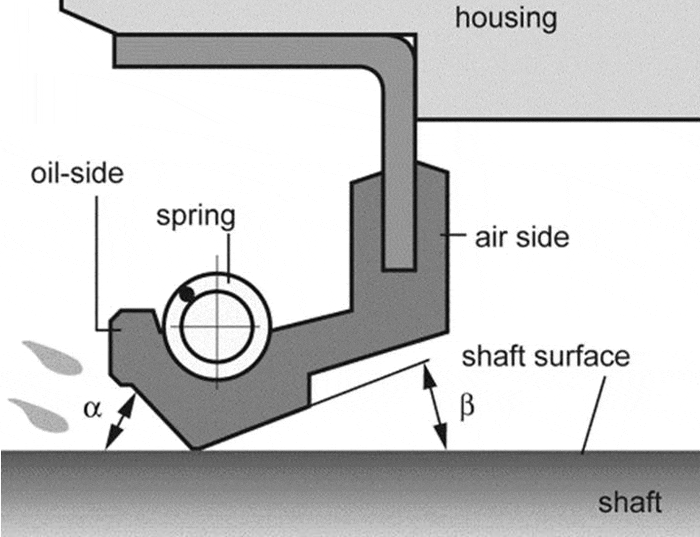
You have a sharp seal edge against the shaft surface, in most cases it's being forced against that shaft with a spring ring. Any internal pressures force the sealing lip against the shaft even harder. If you soften the seal, you flatten that sealing lip and make it LESS effective, you don't want more surface against the axle, that reduces the sealing force. You want a thin lip of rubber against the shaft - that means the pressure is higher on that thin lip for a better seal - otherwise the seal's sealing surface would be flat, not sharp.
(my college prof would be in full defense mode right now regarding seal conditioners. We were warned in no uncertain terms - only as a last resort on an already leaking seal - as a band-aid. )


Jeep Gladiator Leaking axle seal? seals-1


Jeep Gladiator Leaking axle seal? seal-2


Jeep Gladiator Leaking axle seal? radial-lip-seal_l
Sponsored


Maximus Gladius

Well-Known Member
First Name
Kevin
Joined
Jan 30, 2021
Threads
74
Messages
2,905
Reaction score
3,696
Location
Calgary, AB, Canada
Vehicle(s)
2021 JTR, 2023 JTR
No, you don't want oil to "condition" seals or make them swell at all.
Sorry, I strongly disagree on that.
That's for old, hard seals. New seals are supple enough. You don't need or want swelling. If you soften them too much with such things they actually "grab" the shaft and wear faster and get hotter.
I've been dealing with axles and seals since I was in my mid-teens, cars and trucks of all sorts, including the big power company boom trucks, and including 1910s stuff. A good seal needs nothing at all but a good lubricant like any other moving part. Why the hell would you want to soften an already flexible seal that's being forced against the shaft with some real pressure?

This isn't a case of lube not "conditioning" seals. That I will bet on. Only the companies selling lubricating products will throw that out at customers. The last thing you want is anything that makes seals softer unless they are aged and hard.
Now if these SEALS have a problem that's different, but a good seal will last well over 100,000 miles with any good lube, and not need conditioning. The reason they eventually start leaking is age (they get hard) and/or wear.

I've replaced axle seals and rebuilt transmissions after someone put "seal fixing products" in them.

There's already tension on the seal against the shaft - you don't want more (read up on seal design and engineering) A standard lip type seal actually will hold back at least 7psi as it sits right out of the box and as pressure builds, the lip is pressed harder against the shaft, increasing the seal's sealing power.

The damn oil companies try to sell product by convincing them they need "Seal conditioning" and that's just marketing bunk. I will never put anything that claims to soften seals or condition them in a vehicle that is A - under warranty, or B - fewer than about 100,000 miles (and I want to stretch some life out of it).
Seals don't need conditioning. We've gotten by many decades with ordinary plain hypoid lube without solvents and "seal conditioners". Why would it be "needed" now? To sell fancy oils, convincing the unsuspecting public that it's what they need.

As a guy who has made his living fixing leaks, rebuilding axles, transmissions and engines, and putting lube and fluids back in, keep that stuff away from my vehicles if it claims to soften seals or "condition" them.

Here's another reason that's not the issue - only the right seal. Think about it - ONLY the right. That's a lube issue?
Why not the 2020? You think they changed hypoid lube to something without solvents to soften seals?
The why not the front?
Why not the left?

You have a sharp seal edge against the shaft surface, in most cases it's being forced against that shaft with a spring ring. Any internal pressures force the sealing lip against the shaft even harder. If you soften the seal, you flatten that sealing lip and make it LESS effective, you don't want more surface against the axle, that reduces the sealing force. You want a thin lip of rubber against the shaft - that means the pressure is higher on that thin lip for a better seal - otherwise the seal's sealing surface would be flat, not sharp.
(my college prof would be in full defense mode right now regarding seal conditioners. We were warned in no uncertain terms - only as a last resort on an already leaking seal - as a band-aid. )
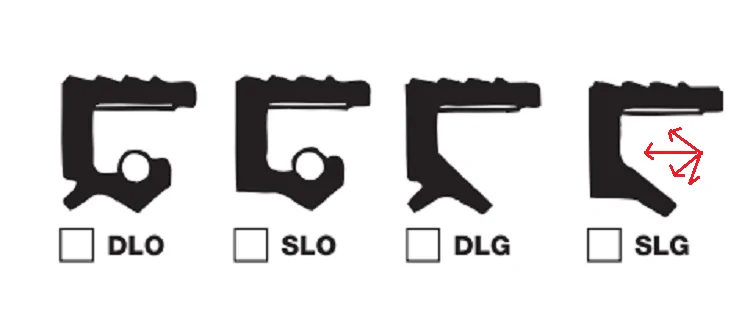
seals-1.webp


seal-2.png


radial-lip-seal_lg.gif
Please let me clarify, I am not at all saying go out to your Canadian tire and get something that says “seal conditioner”. I’m just thinking about what additives that are already in oils that address the seals…not adding something else.
Maybe MOPAR’s diff lube’s additives aren’t helping the seals here. Maybe it’s in using another oil and maybe AMSOIL, (like I’m using) has these additives that support seals.

Why only the right rear? That’s the driving wheel. More oil pressure there. Not in the front not rear left because 4Wheel drive isn’t used much.?? IDK. Maybe the solution is so simple and hiding in plain sight.

I’ll stick to my non scientifically educated theory until I get a leak and have to go back to the drawing board.
 

Hootbro

Well-Known Member
First Name
Don
Joined
Apr 13, 2019
Threads
57
Messages
10,183
Reaction score
19,949
Location
Delaware
Vehicle(s)
2025 Gladiator Sport
I skeptical of it being a gear oil related issue. GL-5 standard has been around forever and a day. Bad lot of gear oil from a reputable manufacturer is rarer than unicorn tears.
 

ShadowsPapa

Well-Known Member
First Name
Bill
Joined
Oct 12, 2019
Threads
247
Messages
40,442
Reaction score
53,860
Location
Runnells, Iowa
Vehicle(s)
'25 JTMX, '23 JLU 4xe, '82 SX4, '73 Javelin
Occupation
Retired auto mechanic, frmr gov't ntwrk security admin
Vehicle Showcase
3
I skeptical of it being a gear oil related issue. GL-5 standard has been around forever and a day. Bad lot of gear oil from a reputable manufacturer is rarer than unicorn tears.
The date range is also rather wide-spread. To have that much of the same bad batch of lube would mean a heck of a lot, bought at once, the same "lot number".
Again - right only? The same lube hits both axles.
The same forces, the same pressures, the same lube touches both axles equally.
I have only ever used "off the shelf" lube in every differential/axle assy I've ever owned or rebuilt for others. No leaks, no seal issues. Stock hypoid lube. These days I tend to use lubes formulated for limited slip differentials rather than stock additives because it will work in non-LSD obviously but still, standard stuff.
What would a gear lube do to seals that would cause them to leak? And only one side, never the left?
If we were talking leather seals like years ago -yeah. Or the old style flat seals before lip seal technology came along, maybe, but these seals rely on that sharp lip being a "cutoff point". If you've ever seen a leaking seal with age on it, the lip will be worn down, flatter and yet it will still fit snugly on the shaft. Not as snug as when new, but the point is - that lip is gone so there's not the same forces acting to shove that seal lip down hard against the shaft.
The same spring psi, or pressure from the seal itself, or internal pressures, act on that narrow surface causing it to ride the shaft harder than if the lip was flat - or if the seal was softened in any way the pressure on that lip would be reduced. Is it easier to hold a razor blade tight against a surface or a piece of cardboard? Softened rubber means less pressure to hold the seal.
I only ever want such softening agents in a lube intended for higher mileage parts.
It's similar to the engine oils aimed at high mileage engines - 75,000 miles or higher. They do put agents in to soften old engine seals and help prevent or slow leaks.

I'm back to - give me one of these axle assemblies (the whole differential assembly) pulled out for replacement because it leaks - I'd bet I could find the issue in a day or less.
I might be able to do the same with just the axle with seal and bearing if it was removed carefully.
 

Maximus Gladius

Well-Known Member
First Name
Kevin
Joined
Jan 30, 2021
Threads
74
Messages
2,905
Reaction score
3,696
Location
Calgary, AB, Canada
Vehicle(s)
2021 JTR, 2023 JTR
I skeptical of it being a gear oil related issue. GL-5 standard has been around forever and a day. Bad lot of gear oil from a reputable manufacturer is rarer than unicorn tears.
So there is a chance I’m right! YES? What we do know for sure is…there’s no fix. So until there is, I’ll stand all alone over in this corner with my theory in the suggestion box and wait it out. You’ll all be the first to know if I get a leak! Lol. I’ve already asked AMSOIL to look into it. I’ll post their response.
 

Sponsored

Maximus Gladius

Well-Known Member
First Name
Kevin
Joined
Jan 30, 2021
Threads
74
Messages
2,905
Reaction score
3,696
Location
Calgary, AB, Canada
Vehicle(s)
2021 JTR, 2023 JTR
Ok, so I have another theory and yes, it also oil related. How many folks here dealing with leaks have changed the oil in that rear diff to find it was low on oil from the factory and they drove X amount of crazy miles on the low oil?

Let’s say the oil was low enough to not reach the seal to lubricate it or cool it but oil would eventually get there but not be effective and damage was already done. ??
(But there’s that thing that it’s only the right seal, IDK…)

My last truck, 2017 Tacoma was low by half in the manual transmission, rear diff holds 4 litres (3 came out), front diff was down 1/4 litre from the factory and I didn’t know till I changed oils at 16k kms.
AMSOIL rep said this is common across the board.

When I bought the new JTR back last year, February, I had the service department check all the levels before giving it to me. They never told me if anything was low and when I got it home I checked everything and the transmission was down 1/2 litre. I called and asked about it and service manager said it didn’t mater.
 

Hootbro

Well-Known Member
First Name
Don
Joined
Apr 13, 2019
Threads
57
Messages
10,183
Reaction score
19,949
Location
Delaware
Vehicle(s)
2025 Gladiator Sport
Ok, so I have another theory and yes, it also oil related. How many folks here dealing with leaks have changed the oil in that rear diff to find it was low on oil from the factory and they drove X amount of crazy miles on the low oil?

Let’s say the oil was low enough to not reach the seal to lubricate it or cool it but oil would eventually get there but not be effective and damage was already done. ??
(But there’s that thing that it’s only the right seal, IDK…)

My last truck, 2017 Tacoma was low by half in the manual transmission, rear diff holds 4 litres (3 came out), front diff was down 1/4 litre from the factory and I didn’t know till I changed oils at 16k kms.
AMSOIL rep said this is common across the board.

When I bought the new JTR back last year, February, I had the service department check all the levels before giving it to me. They never told me if anything was low and when I got it home I checked everything and the transmission was down 1/2 litre. I called and asked about it and service manager said it didn’t mater.
That is a possibility. There has been articles written on just about all vehicle manufacturers factory filling to a minimum capacity that is lower than the stated service capacity to shave per unit costs.

AFAIK, I think DANA ships the axles already filled and they are not filled on the line when matted to the vehicle.
 

ShadowsPapa

Well-Known Member
First Name
Bill
Joined
Oct 12, 2019
Threads
247
Messages
40,442
Reaction score
53,860
Location
Runnells, Iowa
Vehicle(s)
'25 JTMX, '23 JLU 4xe, '82 SX4, '73 Javelin
Occupation
Retired auto mechanic, frmr gov't ntwrk security admin
Vehicle Showcase
3
That is a possibility. There has been articles written on just about all vehicle manufacturers factory filling to a minimum capacity that is lower than the stated service capacity to shave per unit costs.

AFAIK, I think DANA ships the axles already filled and they are not filled on the line when matted to the vehicle.
They'd have to be crazy low.......... here's another thing for you - vehicles with FAD, including the AMC Eagle of the 80s. Those things could run for miles, weeks, without that ring gear tossing lube out to the outer seals and bearings. They DID say "engage 4 wheel drive mode every xx miles to ensure proper lubrication of the carrier gears....." and so on.
But these, and others of similar design, are fed lube by the spinning ring gear - so unless that lube is SO low the ring gear isn't picking up lube and tossing it about, it's got enough lube. In most differential housings the insides are shaped to actually help guide lube to where it needs to be.
These aren't lubricated by lube being high up in the axle tubes, they are lubed by what's tossed about by the ring gear.
I'd make a bet that if these were 1 to 2" low on lube there'd still be wet bearings and lube at the seal.
It wouldn't be "great" and you'd not want that at low speeds, crawling with high torque, but for the highway, I've seen some that were pretty low and yet fully lubricated at the ends of the axles when I tore them down for a rebuild.
The ring gear lubricates the internal parts, it's an oil slinger. If it's able to toss lube to the top of the housing inside, lube is running out to those bearings. They don't have to be soaked in it, just have a film (like engine bearings)
 
Last edited:

rm1515

Well-Known Member
First Name
Rob
Joined
Feb 26, 2021
Threads
7
Messages
148
Reaction score
248
Location
Nashville, TN
Vehicle(s)
2021 Jeep Gladiator Rubicon
Occupation
Finance
Got a regular oil change today and they spotted that my right rear axle is leaking. They ordered that part and sent me on my way.

He attributed it my mopar lift, but also said it was covered under warranty.
 

Renegade

Well-Known Member
First Name
Zac
Joined
Sep 11, 2017
Threads
38
Messages
3,615
Reaction score
4,816
Location
Signal Mountain, TN
Vehicle(s)
2020 JT
Build Thread
Link
08/20 Build Date JTR
(History)
Changed diff oil at 1000kms and replaced with AMSOIL, 2nd change at 10k kms (analysis all good) and last one at 30k kms (analysis all good).

I know exactly what’s wrong and this is not a guess. If I was a betting man, I’d lay all my chips down on “it’s an oil issue” or brand used. The factory oil isn’t cutting it. The oil is supposed to help the seals, seal. Oil’s job isn’t to just lubricate and leak. It has to condition the seals as well and that also means to make them swell., ever so slightly. The right side is the drive wheel so there’s more pressure over there. Yes it’s the right side and not both and yet not everybody’s right side is leaking nor have the non issue vehicles changed the oil for some other brand. This is a mystery for sure but if I had a leak, FCA would void my warranty for using AMSOIL.

I’ve already had my entire drivetrain warranty restricted for using AMSOIL and I don’t even have this leaky problem with the axel. (Knock on wood) But if I did, they would point to THAT as the problem. (So run with this for a moment)… They would blame the oil as the problem. So maybe upgrade to an oil that conditions the seals better.

My oil changes have been excessive but the volume of filings is substantially lower than someone’s diff not changed and maybe filings play a part in the higher oil pressured right side.

If I’m right, I’ve spent about $60 on AMSOIL and 3 changes. If I’m wrong, ive spent $60 and 3 changes.
The right side is the "drive wheel"? Really? Care to explain how the differential works for those of us who don't know what a "drive wheel" is?
 

Sponsored

ShadowsPapa

Well-Known Member
First Name
Bill
Joined
Oct 12, 2019
Threads
247
Messages
40,442
Reaction score
53,860
Location
Runnells, Iowa
Vehicle(s)
'25 JTMX, '23 JLU 4xe, '82 SX4, '73 Javelin
Occupation
Retired auto mechanic, frmr gov't ntwrk security admin
Vehicle Showcase
3
The right side is the "drive wheel"? Really? Care to explain how the differential works for those of us who don't know what a "drive wheel" is?
Good point that I missed. That's an old-fashioned thing that came from?????
The ring gear is bolted to the carrier. The carrier turns the spider gears that are pinned to the carrier. Those in turn, turn the side gears (those on the inner ends of the axle.)
As long as the resistance to turning is equal on both wheels, the pressure to make them turn is the exact same.
I could never ever figure out what a "Drive wheel" was having worked on many and to this day, sometimes look at them all torn apart and try to figure - how is one any more than the other since the spider gears are pinned to the carrier and push with the exact same, identical force on the side or axle gears.
Best I can figure is because when someone lays some serious torque down, that driveshaft is pinion clockwise as you look at it from the front. That torque is going to want to twist one side of the axle housing down and the weight on the other side will be lessened under very heavy acceleration. It's why a drag racing friend of mine used to run individual lines to his air shocks, so it could put more air in one side than the other to help prevent the twist. Some of these guys literally twist the chassis and for many cars (back to AMC again, AMX, Javelin) you can buy frame rail connectors to prevent twisting the body under the extreme twist. But normally, normal driving, it's not an issue, there's no more force on one than the other other than the tendency of one side to be shoved down harder under very heavy acceleration, high torque applications. But really, there's no drive wheel or drive axle.

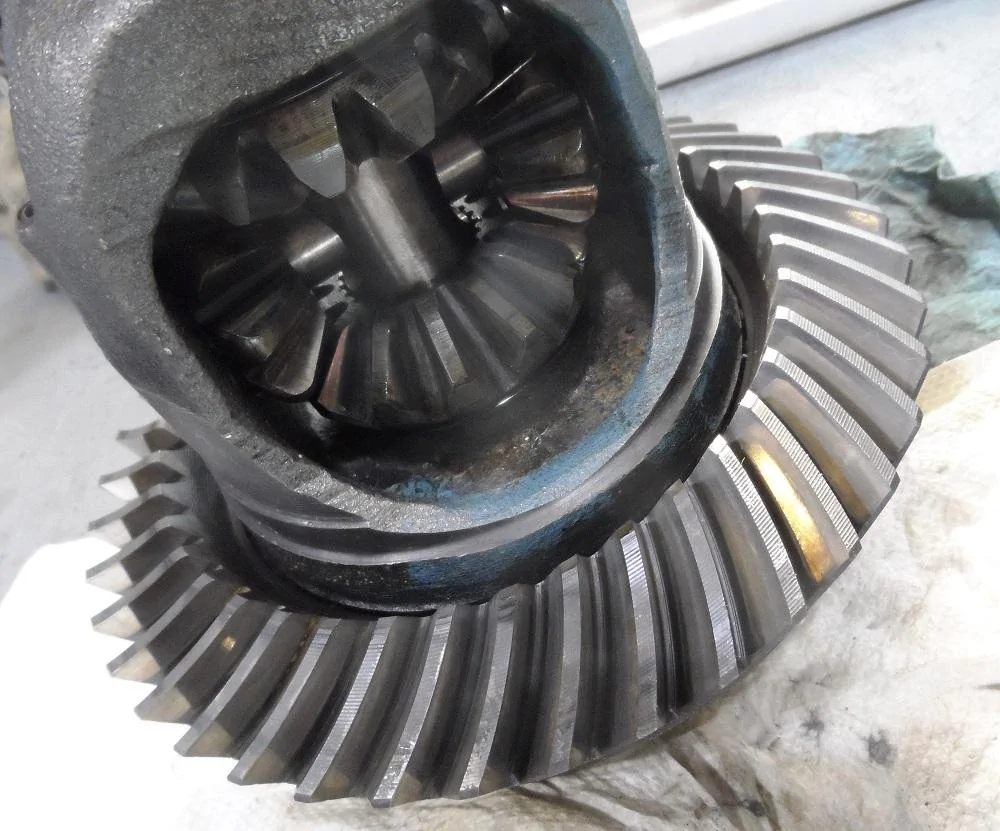
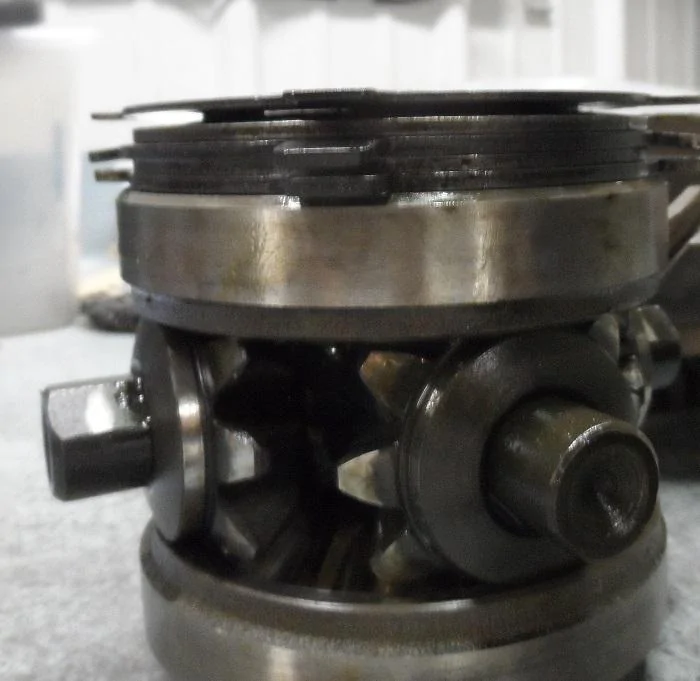
Can't recall which carrier this is - maybe out of one of my AMCs, perhaps an Eagle, but can anyone show a reason those carrier gears would put any more force on one side gear over the other?

Jeep Gladiator Leaking axle seal? misc-camera_4-16-17 037


Even with this style limited slip - the forces of the carrier gears are applied equally to each side gear or "differential gear" because the teeth are the same, the distances are the same, the same forces are applied exactly equally in all directions, forcing the clutch plates together equally on each side, locking the axles together. That means the forces have to be the same to each axle to apply the clutches equally - if it was open, same thing, forces are applied equally.

(it's a limited slip I rebuilt not long ago)

Jeep Gladiator Leaking axle seal? posi-plates_2015
 
Last edited:

Maximus Gladius

Well-Known Member
First Name
Kevin
Joined
Jan 30, 2021
Threads
74
Messages
2,905
Reaction score
3,696
Location
Calgary, AB, Canada
Vehicle(s)
2021 JTR, 2023 JTR
The right side is the "drive wheel"? Really? Care to explain how the differential works for those of us who don't know what a "drive wheel" is?
Thinking old school. I’ll shut up now and go to my corner.

So what about this thought… We all park our vehicles on the street from time to time and maybe more than others. Usually the angle of the street tilts toward the curb so if your parked there, wouldn’t the oil run toward that right wheel seal and pool there. The angle on highways are the same when driving so you’d naturally have oil flowing more and pooling to the right side. Ok, I’m done now.
 

GlockStar66

Member
First Name
Jeff
Joined
Dec 27, 2020
Threads
0
Messages
10
Reaction score
15
Location
Maryland
Vehicle(s)
2021 Jeep Gladiator Rubicon, 2018 Audi S5 Sportback
My understanding is that it is an assembly issue at Dana. Ford Rangers use a similar differential made by Dana and the right rear axle seal leaks on them as well. Once the axles are replaced (installed by a person instead of a robot), using the same part numbers, they stop leaking and you don’t have leaks again. My leaking axles were replaced and no longer leak.
 

NachoRuby

Well-Known Member
First Name
Chad
Joined
Apr 28, 2021
Threads
28
Messages
2,992
Reaction score
4,428
Location
Pennsylvania
Vehicle(s)
'21 JTR , '18 JLU, 73 VW Bug, 97 VW Jetta, all MTs
Got a regular oil change today and they spotted that my right rear axle is leaking. They ordered that part and sent me on my way.

He attributed it my mopar lift, but also said it was covered under warranty.
It's definitely not your lift. I'm stock other than 35s, but mine started leaking on the stock tires. 2 weeks strong with no leak now haha
 

OHJeeper

Well-Known Member
First Name
Austin
Joined
Oct 27, 2021
Threads
8
Messages
1,248
Reaction score
1,547
Location
Ohio
Website
youtube.com
Vehicle(s)
2022 JTR, '08 JKUX, '08 JKUS
If that is true - then Wranglers would not be impacted, except Rubicon, but then are the Wrangler Rubicon Dana 44s the same as the Gladiator 44s??
I had a JLUR and it was listed as M210 and M220 axles which is the same on my JTR build sheet. But I've also read there are differences. I'm not sure what the reality is!
Sponsored


Top