OP
OP
Chris Blake
Active Member
- First Name
- Christopher
- Joined
- May 21, 2020
- Threads
- 3
- Messages
- 31
- Reaction score
- 49
- Location
- Shreveport, LA
- Vehicle(s)
- 2020 JTR LE
- Build Thread
- Link
- Occupation
- Plumber, Daytrader
- Thread starter
- #16
Thank you for the reply. Most of the online videos are on the older version of the engine. I noticed the part numbers not mating up on the Mopar site. The only way to see if this is the problem (to my knowledge) is to break it down and look. Are there any other ways to chase this? Previously on a post, you said something about sending oil off for testing to see if there is metal in the oil but that doesn't guarantee it's the cam. I just don't understand how the noise can come and go without any real pattern at all. I hit a bump in the road the other day and it went away for 10 sec then came back.The current generation with VVL doesn't have that same roller and bearing setup.
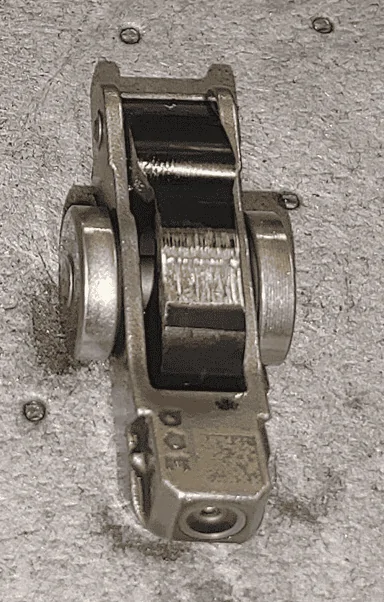
What is failing on these is the high lift portion of the rocker or follower. There's no bearings involved.
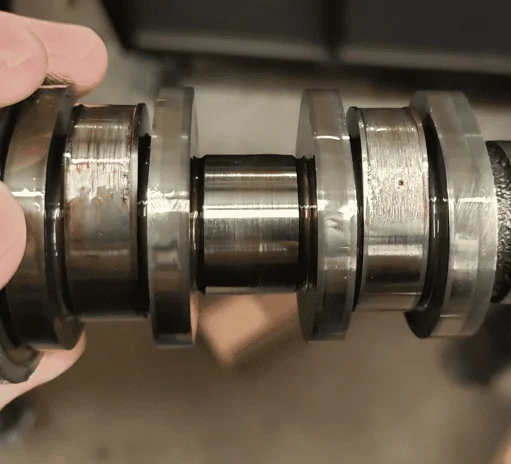
And the cam is damaged right away. When these fail, the current generation with VVL - it's the rocker and cam that are both damaged at the same time. There's no fixing a bearing and saving the cam.
Oil viscosity has nothing to do with this. Likely you ended up with oil that has a better film protection - can handle higher pressure.
Just because you had no other problems doesn't prove the oil fixed it because many thousands don't ever have the problem.
This is not a viscosity issue - check back at all of the posts and pictures of this and the diagrams I've supplied.
The damage is on the portion that operates more like a flat tappet cam setup.
This is the cam damage-

This is the follower damage - not related to any bearing at all - when it's damaged it's trash -

Sponsored