Sponsored

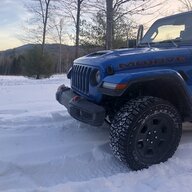
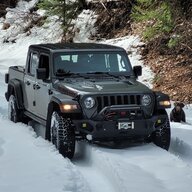
downsizing wheels

RudeJeepin

Well-Known Member
First Name
Carl
Joined
May 6, 2022
Threads
5
Messages
1,500
Reaction score
2,366
Location
Washington
Vehicle(s)
2022 JTRD
Build Thread
Link
That's correct. But i think hurt once up front is easier to forget than getting hurt at every fill up. Plus extra torque ?
Don't forget the extra range of the diesel. I regularly see 400+ miles between fill up.
Sponsored


Raven65

Well-Known Member
Joined
Oct 25, 2022
Threads
12
Messages
275
Reaction score
427
Location
SC
Vehicle(s)
2022 Jeep Gladiator Sport S
Forgot "Costs $10K more up front" and "Diesel fuel cost significantly more than regular unleaded gas", and "Diesels cost more to maintain and repair" (which you will be doing more often than with the Pentastar)".

Diesels are great for towing/hauling if you need to do that a lot - or if you just enjoy the higher torque. They do NOT, however, save you ANY money over the gasser. None. Nada. they cost MORE to buy, MORE to maintain, and MORE to run (in stock or close to stock form anyway... I'll give you that a diesel running 37's will probably cost less to run than a gasser on 37's - but you still paid about $10k more up front for that privilege - and you still have the higher maintenance costs and lower reliability).

Speaking of math (and to get back on topic), who spends $50k-$60k (or more) on a Gladiator Mojave and then worries about saving a few hundred dollars a YEAR on gasoline?!? If you're that concerned about MPG, trade it in on a Maverick Hybrid and pocket about $30k.
 

Sponsored

RudeJeepin

Well-Known Member
First Name
Carl
Joined
May 6, 2022
Threads
5
Messages
1,500
Reaction score
2,366
Location
Washington
Vehicle(s)
2022 JTRD
Build Thread
Link
I agree on "who spends 50k on a Jeep and then worries about mpg."
But it's really on $4650 to upgrade to the diesel if you start with the auto anyways. Or 2k more compared to the 6spd.
So far I haven't seen any extra significant costs for maintenance, and I'm not new to diesels. This is my 2nd Eco, and I've had Cummins and Duramax also.
Fuel cost per mile is cheaper for me than my mom with her gasser. But that is regional.

Ya, I'm a diesel fan boy, but if your gonna spout "facts" about the cost of ownership make sure their correct.


Weight of tires are just as important as size for mpg. I put stock size tires on my last pickup and lost roughly 1/2 mpg vs the stock light weight tires. Height and width was the same, highway all season vs Falken ATs.
 

JTMXT

Active Member
First Name
Richard
Joined
Feb 26, 2023
Threads
9
Messages
38
Reaction score
25
Location
Dublin Georgia
Vehicle(s)
2021 jeep gladiator sport max tow
Occupation
General contractor
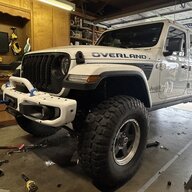
wait why is it when people go up in size an inch or two their mpg drops by 3-4 mpg but if you downsize it wouldnt matter? would overland wheels clear the shocks in your opinion?
Would be best to keep your rims and install new tires / takeoffs on them to maintain offset. Also your Mojave is geared for 285/70/17. Going down in size probably not going to help you very much. Unlike a gladiator set up for 245/75/17 going up to 35's losing 3-5 mph . It was geared and tuned for that size.
 

dcmdon

Well-Known Member
First Name
Don
Joined
Mar 31, 2021
Threads
60
Messages
3,656
Reaction score
4,427
Location
Boston Metro-West, Northern NH
Vehicle(s)
.
I think a solution to the OP is a diesel.
The solution is to do some math and see that the solution is to drive what he has and possibly switch up tires en the old onea are dead.

The payback period for the diesel is going to be 200k miles if he has to trade it in this relatively soft market and then buy a new truck for $20k more.

Nobody does math anymore. Its a useful skill. It lets you see when your instincts are wrong.


I agree on "who spends 50k on a Jeep and then worries about mpg."
But it's really on $4650 to upgrade to the diesel if you start with the auto anyways.

Fuel cost per mile is cheaper for me than my mom with her gasser. But that is regional.

Ya, I'm a diesel fan boy, but if your gonna spout "facts" about the cost of ownership make sure their correct.
Lets do some math on diesel cost per mile. Of course the assumptions are important.

According to the US DOE, the current cost of regular on the East Coast is 3.30
The average cost of diesel in the same area is $4.65

Obviously the cost of the fuel negates much of the benefits of better gas mileage.

I'm going generous on the mileage difference.
Lets assume the gaser gets 16 mpg and the diesel gets 25 mpg.

Thats a cost per mile of

3.30/16 = $0.206 per mile

4.65/25 = $0.186 per mile.

So the diesel driver saves 2.00 cents per mile in fuel.

So in 100,000 miles, the diesel driver saves $2000 in fuel.

So we have not even begun to eat into the extra purchase cost. Where the payback period, figuring taxes and interest would ruon about 250,000 miles. Now figure in extra maintenance costs and the payback period is probably at 300,000.

In short. You are an idiot to buy a diesel to save money.

If you want it for the gobbs of torque, or just like diesels, fantastic. But its not even close to a money saver.


Weight of tires are just as important as size for mpg. I put stock size tires on my last pickup and lost roughly 1/2 mpg vs the stock light weight tires. Height and width was the same, highway all season vs Falken ATs.
Weight vs size is very dependent on where and how the truck is driven.

Weight is important around town and when accelerating. Its irrelevant at a steady state speed.

At a steady state speed the relevant factors are rolling resistance and how the size of the replacement impacts aerodynamic drag of the entire vehicle. Lower and/or skinnier tires will reduce both rolling resistance and aerodynamic drag.

So around town, weight matters.
On the highway, size matters.
 
Last edited:

MPMB

Well-Known Member
First Name
Michael
Joined
Apr 30, 2021
Threads
12
Messages
1,820
Reaction score
2,716
Location
Utah
Vehicle(s)
'21 JTR - SG
Occupation
Check your inbox.
But at least with the Diesel, you'll never have a heater go out.

Jeep Gladiator downsizing wheels Fmedia0.giphy.com%2Fmedia%2FGbgOieNUkq5Gg%2Fsource
 

RudeJeepin

Well-Known Member
First Name
Carl
Joined
May 6, 2022
Threads
5
Messages
1,500
Reaction score
2,366
Location
Washington
Vehicle(s)
2022 JTRD
Build Thread
Link
The solution is to do some math and see that the solution is to drive what he has and possibly switch up tires en the old onea are dead.

The payback period for the diesel is going to be 200k miles if he has to trade it in this relatively soft market and then buy a new truck for $20k more.

Nobody does math anymore. Its a useful skill. It lets you see when your instincts are wrong.


Lets do some math on diesel cost per mile. Of course the assumptions are important.

According to the US DOE, the current cost of regular on the East Coast is 3.30
The average cost of diesel in the same area is $4.65

Obviously the cost of the fuel negates much of the benefits of better gas mileage.

I'm going generous on the mileage difference.
Lets assume the gaser gets 16 mpg and the diesel gets 25 mpg.

Thats a cost per mile of

3.30/16 = $0.206 per mile

4.65/25 = $0.186 per mile.

So the diesel driver saves 2.00 cents per mile in fuel.

So in 100,000 miles, the diesel driver saves $2000 in fuel.

So we have not even begun to eat into the extra purchase cost. Where the payback period, figuring taxes and interest would ruon about 250,000 miles. Now figure in extra maintenance costs and the payback period is probably at 300,000.

In short. You are an idiot to buy a diesel to save money.

If you want it for the gobbs of torque, or just like diesels, fantastic. But its not even close to a money saver.


Weight vs size is very dependent on where and how the truck is driven.

Weight is important around town and when accelerating. Its irrelevant at a steady state speed.

At a steady state speed the relevant factors are rolling resistance and how the size of the replacement impacts aerodynamic drag of the entire vehicle. Lower and/or skinnier tires will reduce both rolling resistance and aerodynamic drag.

So around town, weight matters.
On the highway, size matters.
I bet the locals around here would love your East coast prices.
It's more like $4.30 and $4.89, so by your formula, roughly 5 cents a mile. Pay back in 100k or so.
But like I stated before, for me, it has a lot to do with the range per tank. Plus the extra power when pulling my cargo trailer.
 

Sponsored

dcmdon

Well-Known Member
First Name
Don
Joined
Mar 31, 2021
Threads
60
Messages
3,656
Reaction score
4,427
Location
Boston Metro-West, Northern NH
Vehicle(s)
.
I bet the locals around here would love your East coast prices.
It's more like $4.30 and $4.89, so by your formula, roughly 5 cents a mile. Pay back in 100k or so.
But like I stated before, for me, it has a lot to do with the range per tank. Plus the extra power when pulling my cargo trailer.
I checked the DOE site and "West Coast, less California" its

4.36 for gas and
4.86 for diesel.

So yes, that changes things hugely. Lets run some numbers.
I assumed absolutely worst case for the gasser before because I didn't want the payback period to get into the 400k mile range. So now I'll be a bit more realistic. I average about 18 mpg and I think most people in stock jeeps end up there also.

4.36/18 = $0.2422 / mile
4.86/25 = $0.1944 / mile

So now we're looking at 4.78 cents per mile difference in fuel costs.

So based strictly on fuel cost, the payback period is 84,000 miles.

Figure in interest and maintenance costs and you are up in the 125,000 mile range.

Reasonable, but still more than many people keep their vehicles. I tend to run my vehicles longer so it would be a reasonable option if I could get a Mojave with a diesel.

But overall, its still not a money saver.

Thank you. I didn't realize that the delta between diesel and gas prices varied so much regionally. Its a huge factor in the overall cost of a diesel.
 

Camaroboi13

Well-Known Member
First Name
Justin
Joined
Aug 22, 2022
Threads
13
Messages
1,810
Reaction score
2,901
Location
SoCal
Vehicle(s)
87 XJ Pioneer, 17 WK2 3.6, 18 JLU 3.6, 22 JTOD 3.0
Occupation
LEO - Life in Chino
Maybe I shouldn’t tell anyone that I paid the same price for diesel as the price of unleaded was this morning, on the west coast ?
 

Raven65

Well-Known Member
Joined
Oct 25, 2022
Threads
12
Messages
275
Reaction score
427
Location
SC
Vehicle(s)
2022 Jeep Gladiator Sport S
But it's really on $4650 to upgrade to the diesel if you start with the auto anyways. Or 2k more compared to the 6spd.
I just checked the configurator too - and your're right... it's currently an additional $4,650 to go to the auto diesel from the auto gasser ($4,150 for the diesel engine + $500 for the heavier-duty 8HP75 auto) - and $6,650 more to go from the manual gasser to the diesel ($4,150 for the diesel engine + $2500 for the 8HP75 auto). Seeing as how the manual is not even available at the moment (if it ever will be again), I guess we can just say the diesel is $4,650 more than the gasser.

However... that is only if you order one. If you can find a diesel sitting on a lot, they will have dealer markups added - bringing the total a lot closer to the 10-grand I stated. Even now that the market has turned... because the dealers know that you diesel fanboys will pay it.

I still say even if you order one and pay "only" the additional $4,650, it WILL cost more to own the EcoDiesel in the long run than the gasser all things considered. Plus the reliability of that Italian-made VM Motori engine is not great. The Pentastar is not perfect either, but the current gen has a much better track record than the EcoDiesel. I have a friend who a Ram EcoDiesel and it was nothing but constant trouble. He just traded out of it after less than a year to the same truck with a hemi gasser instead. Lost his ass on that trade too, but he was sick of the hassle. I realize that's just one data point, but this forum is littered with plenty of other people talking about problems with them. If you truly NEED it for heavy towing/hauling often, then great... good luck... but I'd argue that if those are your needs, you'd be better off with a Ram 2500 with a Cummins. Anyway... Sorry... don't mean to come of as a jerk. I like diesels... just not this one. I hope you have good luck with yours... I'm sure some people do.
 

Vtur

Well-Known Member
First Name
Le
Joined
Mar 6, 2021
Threads
11
Messages
1,924
Reaction score
2,276
Location
Norcal
Vehicle(s)
JTOD
Occupation
Electrical Foreman
The solution is to do some math and see that the solution is to drive what he has and possibly switch up tires en the old onea are dead.

The payback period for the diesel is going to be 200k miles if he has to trade it in this relatively soft market and then buy a new truck for $20k more.

Nobody does math anymore. Its a useful skill. It lets you see when your instincts are wrong.


Lets do some math on diesel cost per mile. Of course the assumptions are important.

According to the US DOE, the current cost of regular on the East Coast is 3.30
The average cost of diesel in the same area is $4.65

Obviously the cost of the fuel negates much of the benefits of better gas mileage.

I'm going generous on the mileage difference.
Lets assume the gaser gets 16 mpg and the diesel gets 25 mpg.

Thats a cost per mile of

3.30/16 = $0.206 per mile

4.65/25 = $0.186 per mile.

So the diesel driver saves 2.00 cents per mile in fuel.

So in 100,000 miles, the diesel driver saves $2000 in fuel.

So we have not even begun to eat into the extra purchase cost. Where the payback period, figuring taxes and interest would ruon about 250,000 miles. Now figure in extra maintenance costs and the payback period is probably at 300,000.

In short. You are an idiot to buy a diesel to save money.

If you want it for the gobbs of torque, or just like diesels, fantastic. But its not even close to a money saver.


Weight vs size is very dependent on where and how the truck is driven.

Weight is important around town and when accelerating. Its irrelevant at a steady state speed.

At a steady state speed the relevant factors are rolling resistance and how the size of the replacement impacts aerodynamic drag of the entire vehicle. Lower and/or skinnier tires will reduce both rolling resistance and aerodynamic drag.

So around town, weight matters.
On the highway, size matters.
I'm fully aware of the math. Like i said, it easier to forget the $4k up front cost than to feel it at every fills up. The convenience of the extended range and the extra torque has to account for something too right? Any modifications to the 3.6 to gains additional hp or tq gonna be close to that $4k anyway.
 

dcmdon

Well-Known Member
First Name
Don
Joined
Mar 31, 2021
Threads
60
Messages
3,656
Reaction score
4,427
Location
Boston Metro-West, Northern NH
Vehicle(s)
.
I'm fully aware of the math. Like i said, it easier to forget the $4k up front cost than to feel it at every fills up. The convenience of the extended range and the extra torque has to account for something too right? Any modifications to the 3.6 to gains additional hp or tq gonna be close to that $4k anyway.
You may be aware of the math. But others aren't. So it adds value here.

Now you are talking how it all makes you FEEL. You are a unique individual.

I pay for gas with my credit card and don't even look at the total. So I don't get those emotions.

Financial decisions are best made based on numbers, not emotions.

The driving experience is absolutely relevant. Range is relevant. But my point here is mainly just on the idiocy of trading a gasser in to get a diesel to "save money". Total idiocy.

(Because everyone is so sensitive these days, please note that I'm not saying you are an idiot. I'm saying simply that buying a diesel to save money is an idiotic thing to do)

If you want a diesel, you want a diesel, for all the reasons you mentioned. Plus some guys like to have stinky hands and gooey residue down the side of their truck. And DEF is great fun. But the torque and effortless power are fantastic.

But don't try to delude yourself or anyone else that its to save money. The numbers simply don't bear that out.

One other factor that weighs in favor of the diesel, that I didn't include in my math is resale value. I don't know if it makes a Gladiator easier to sell or harder. It may vary by region for all I know. But it is a factor. Either way, you will probably get at least a portion of the $4k back.

Like I said, on balance, I'd have bought a diesel if I could have and if it had proven to be a high mile engine. I keep vehicles for a while. The Jeep is going to become a secondary vehicle after 5 years or so.
Sponsored


Top